

Zarabanda House
Zarabanda House in Honduras features an industrial design that integrates with its forest setting, expanding living space while maximizing views and maintaining privacy.
 illustrarch Editoral Team26 August 20202 Mins read363


Zarabanda House is a mountain residence in Honduras, designed by Esdras Castell, that gains an industrial character while opening fully to the pine forest surrounding it. The main objective of the project is the completion of the house, adding a second level and expanding areas on the first level so that both fit together as a single coherent home. The concept builds on the privileged setting in the middle of the forest, where the clarity of large windows creates an opening from the interior to the exterior and offers memorable landscapes across the slopes.
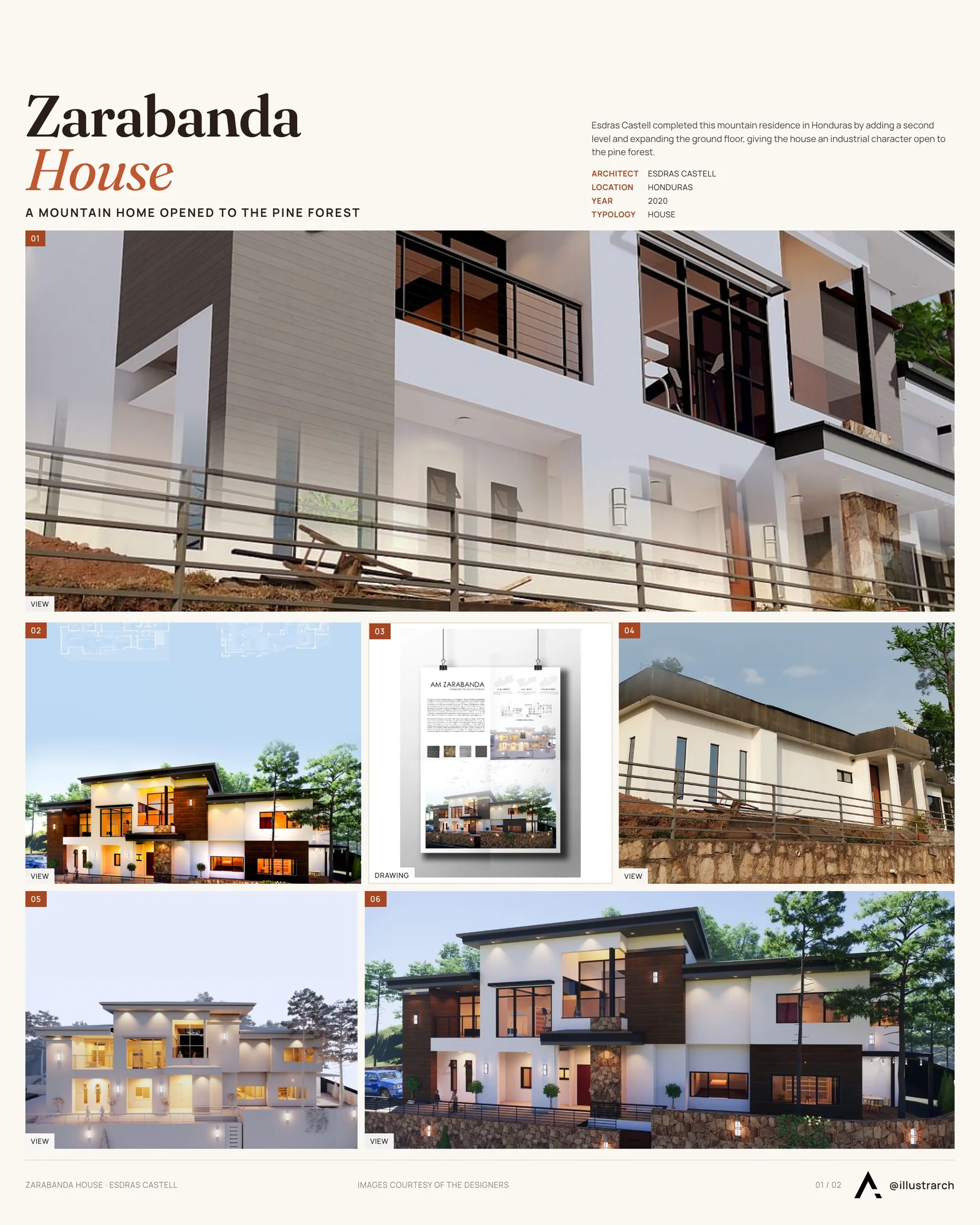
Mountain housing carries design demands that flatter sites rarely impose. The structure must respond to grade changes, frame the best views without overexposing interior rooms, and balance privacy against the desire for light. Here that balance is handled by glazing the public spaces generously while keeping the bedrooms anchored and quiet. Working in a pine forest also shapes the architecture, since the trees define sightlines and give the industrial palette a softer, living frame.
The expansion at ground level adds a games room, dining room, service bedrooms, laundry, and machine room, along with a new full bathroom and an outdoor deck. Doubling the area on a second level maximizes the opportunity for a better view. That upper floor is conceived as an open space without interior columns, where the rooms are separated only by the furniture and a detailed interior decoration design specific to each space, a strategy that keeps the plan flexible and the sense of openness intact.
An Open Upper Floor for Living and Views
On the second level sit three bedrooms, each with its own bathroom and private closet, alongside an open master bedroom that includes a bar, reading area, gym, full bathroom, and two closets. The connection between the rooms is carried out by means of an exterior bridge that arrives from the stands on the first level, turning circulation into another way to experience the landscape. At the end, the house gains two terraces at the front and a corridor at the back, extending interior life outward.

This approach to house design, rooted in the climate and topography of Honduras, shows how an existing home can be reimagined rather than replaced. By layering new volume onto the original, Zarabanda House lets the forest, the light, and the views set the terms of a comfortable contemporary residence.



Living Typologies by Stela Boldur
Living Typologies by Stela Boldur is a student masterplan for the former...
illustrarch Editoral Team2 Mins read
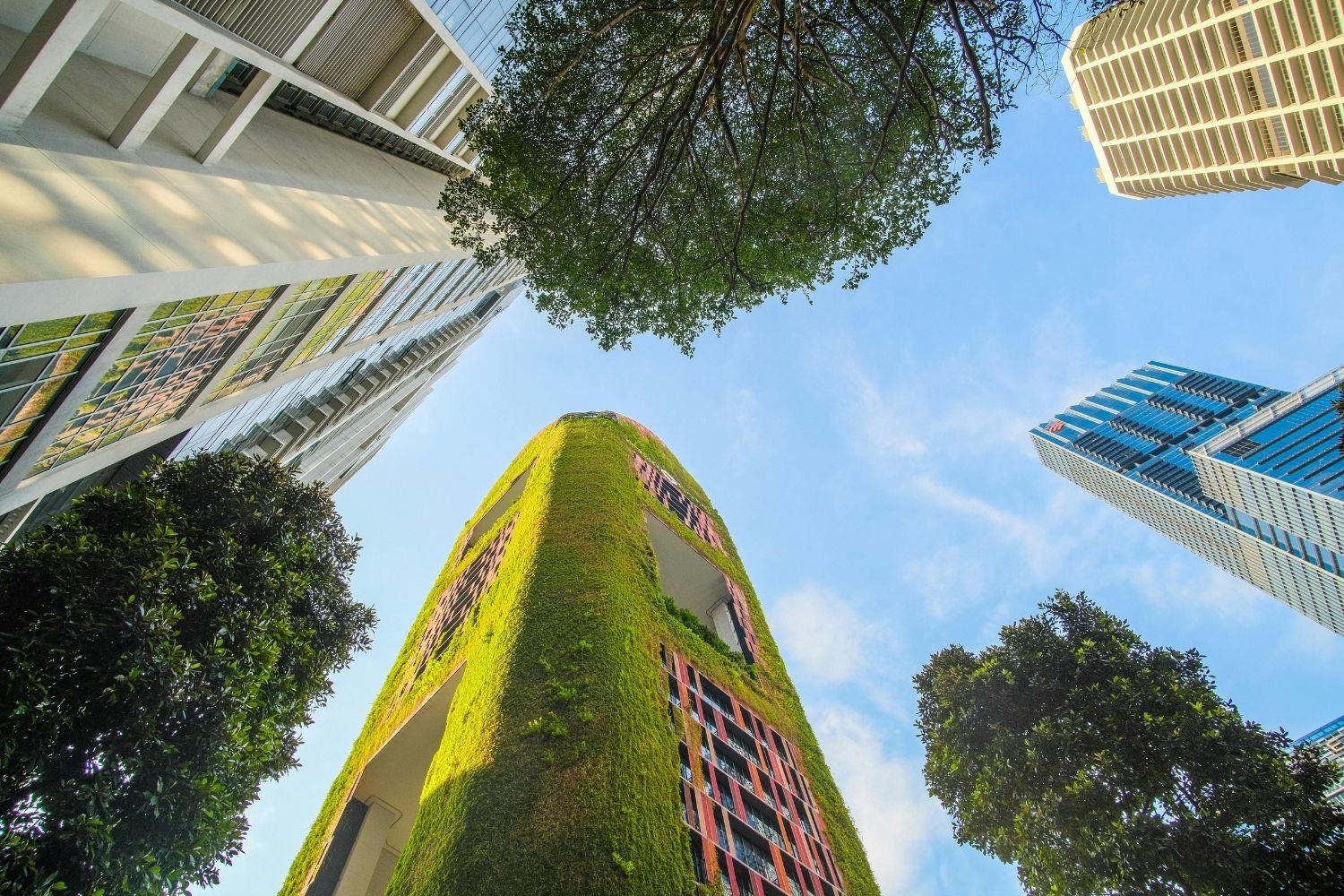
Residential Architecture Face-Off: Co-Living vs Traditional Apartment for Urban Housing
Co-living and traditional apartments represent two distinct approaches to residential architecture in...
 Furkan Sen8 Mins read

Designing a Liminal Space Where Urban Meets Coastal
The Liminal House by Mcleod Bovell Modern Houses in West Vancouver is...
 Elif Ayse Sen5 Mins read
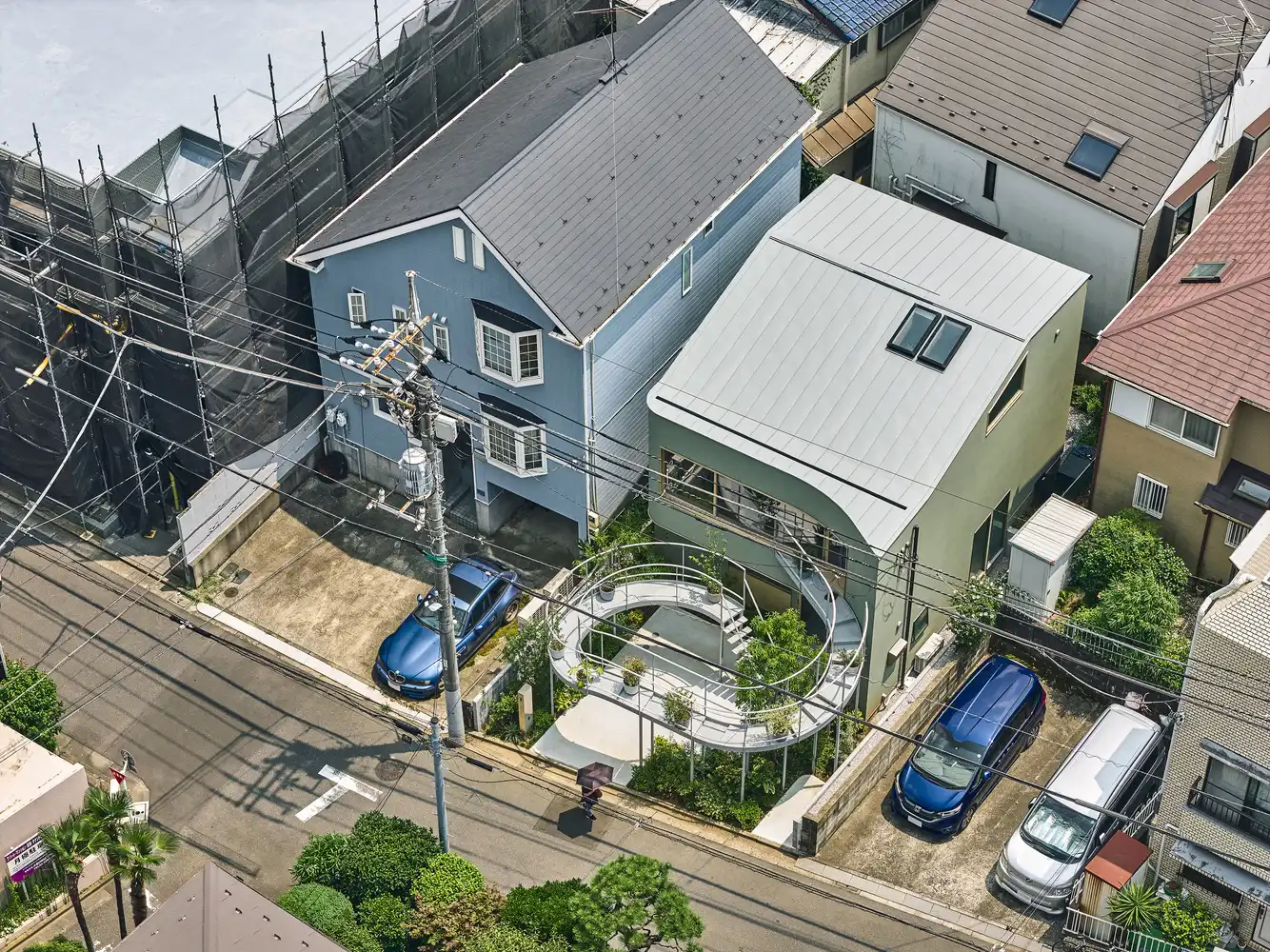
House in Nakano: A 96 m² Tokyo Architecture Marvel by HOAA
House in Nakano, designed by HOAA, creatively addresses urban density challenges by...
 Bahattin Duran6 Mins read


Leave a comment