

Stefan Żeromski Theatre by WXCA
Revitalised by WXCA, the Stefan Żeromski Theatre in Kielce combines meticulous heritage restoration with one of Europe’s most advanced theatre stages, redefining its role as a contemporary civic and cultural landmark.
 Begum Gumusel22 December 20254 Mins read232


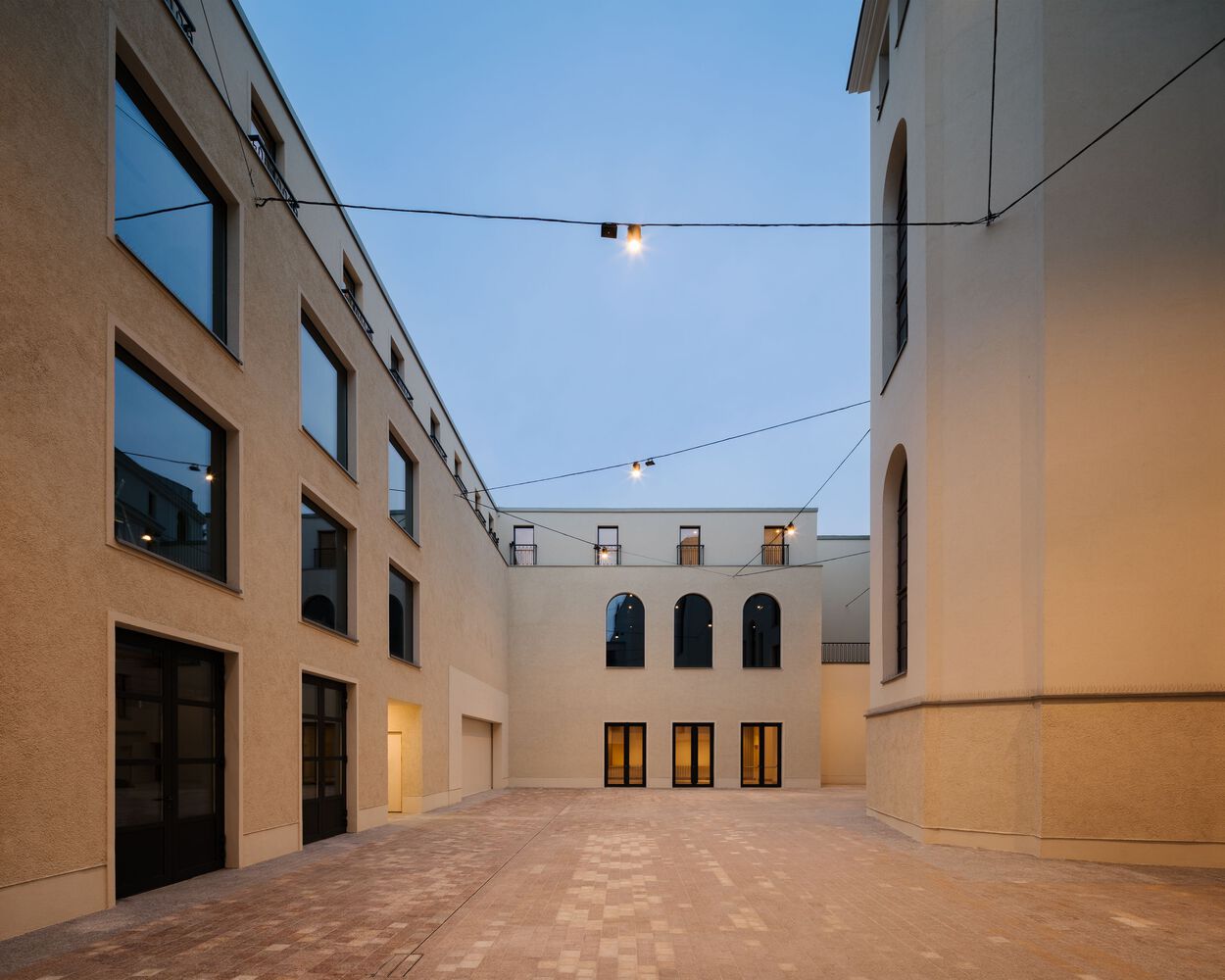

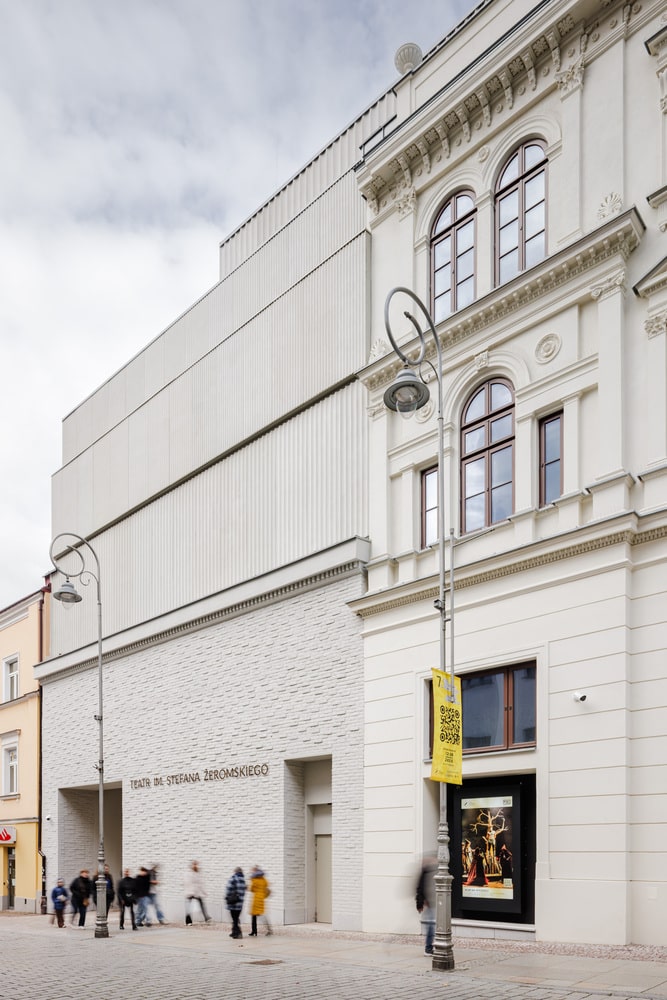

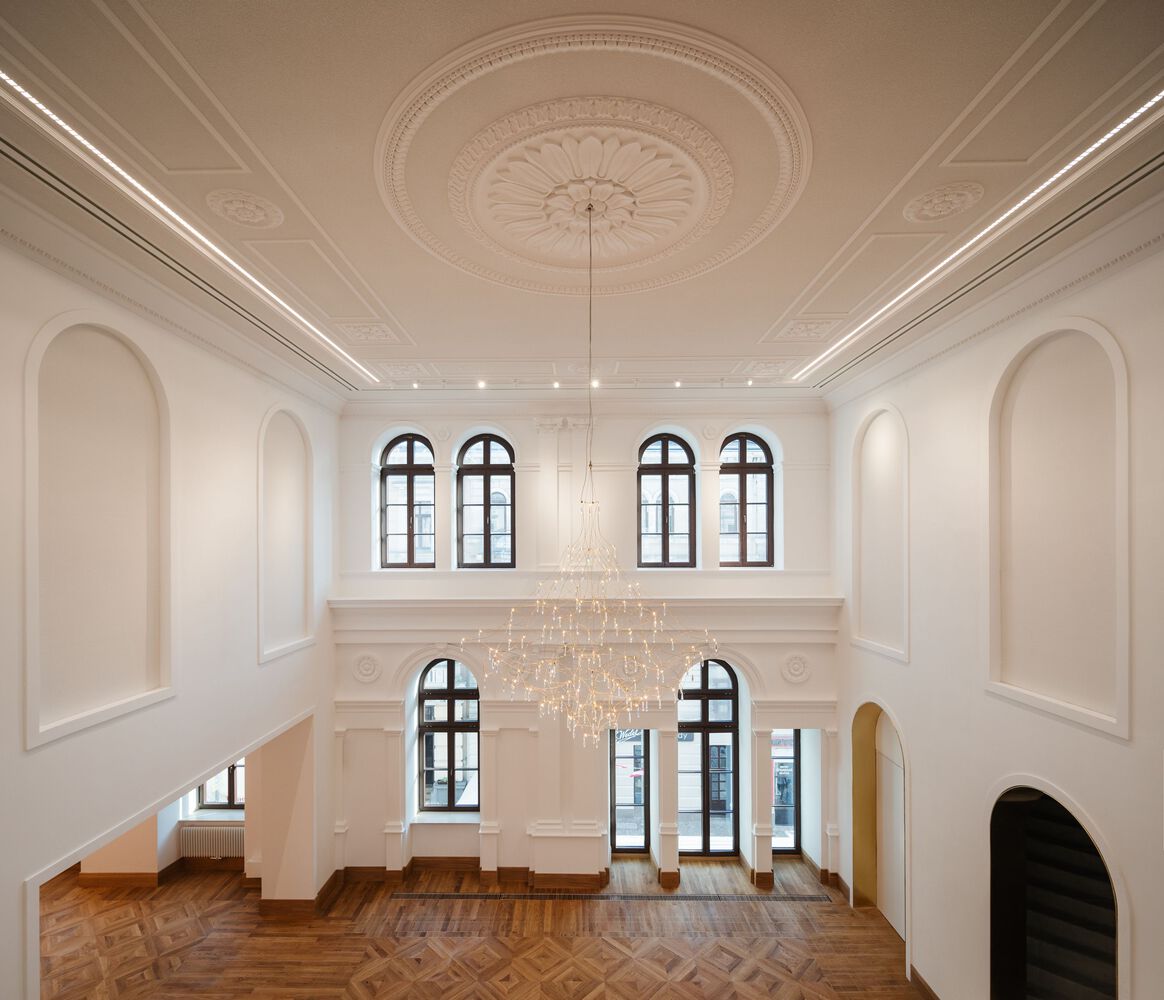


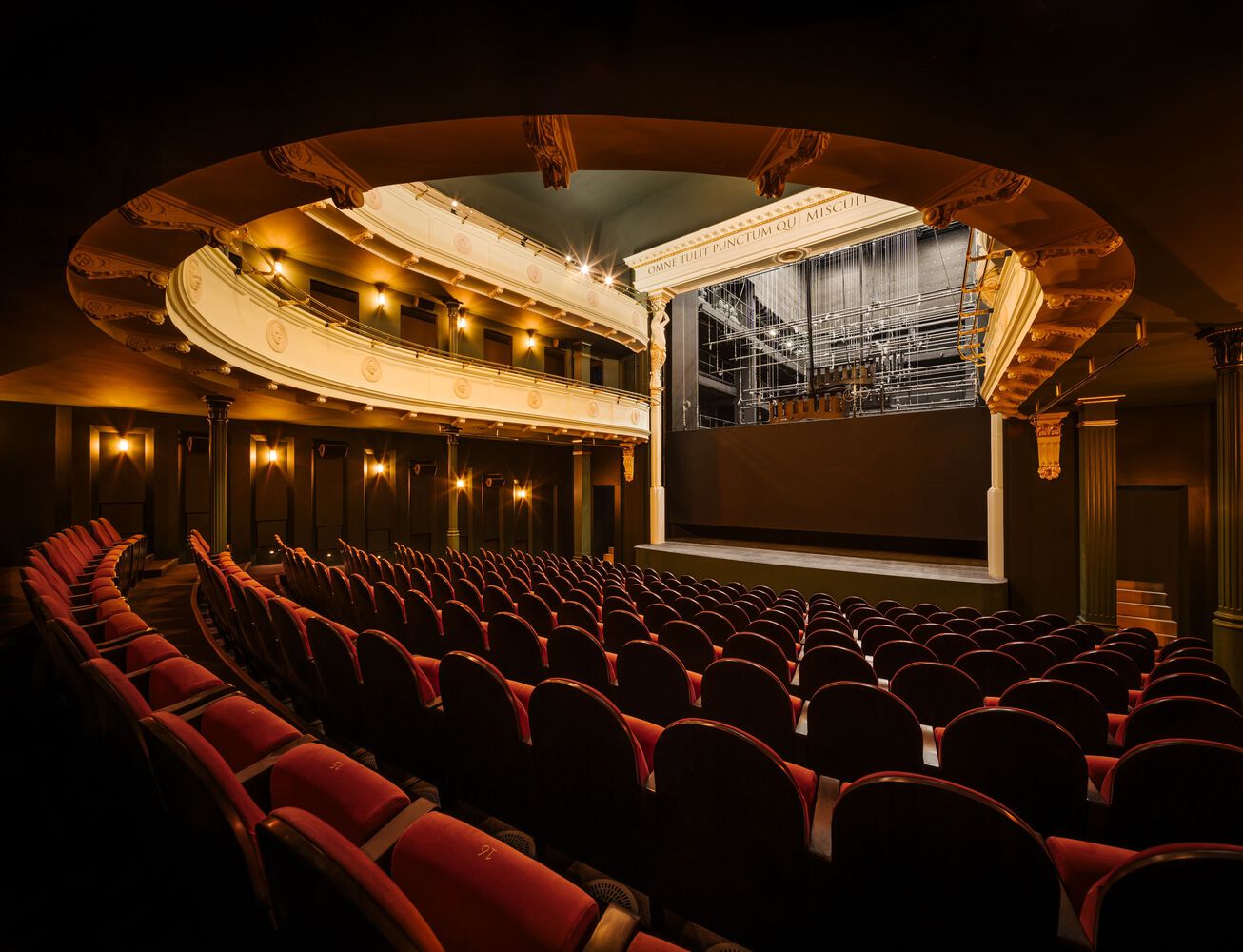

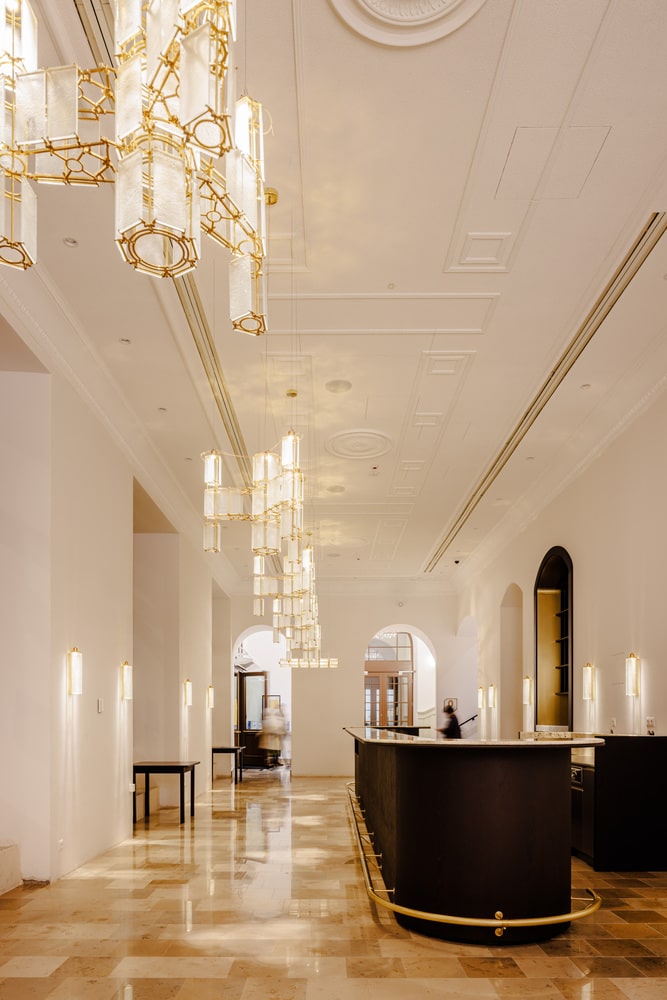

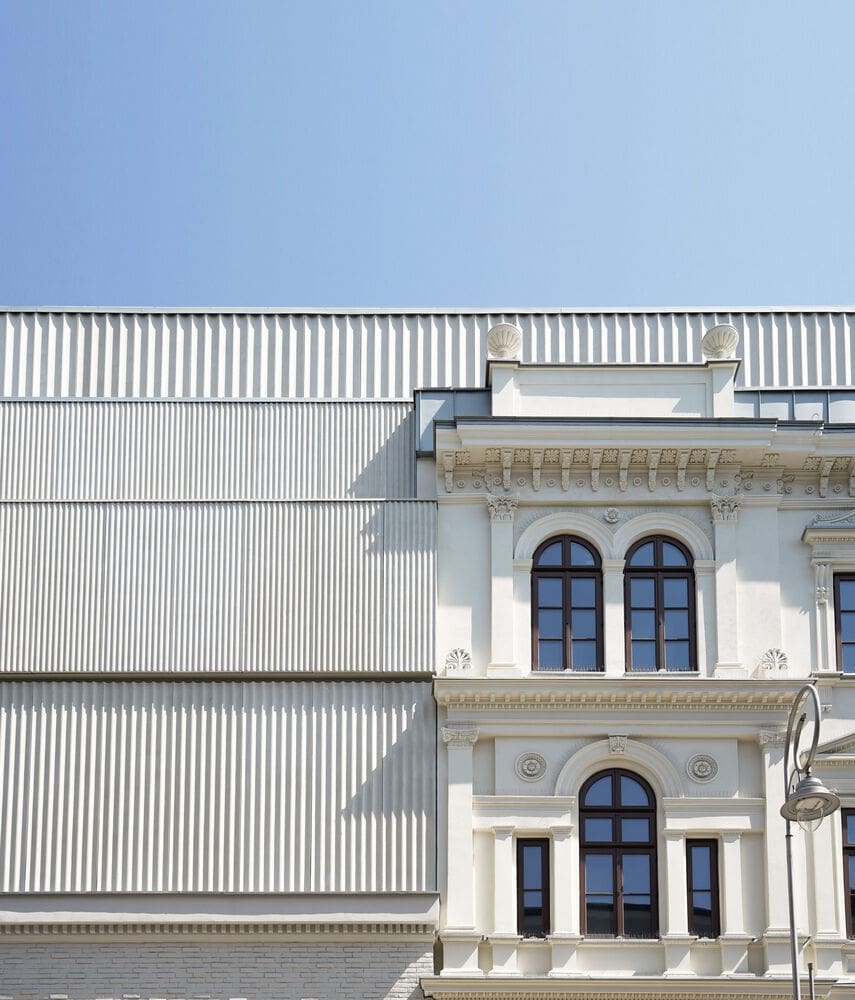
Table of Contents Show
The Stefan Żeromski Theatre in Kielce, revitalised by WXCA, stands today as one of the most remarkable examples of how historical architecture can be renewed without losing its soul. Recently nominated for the EU Mies van der Rohe Award 2026, the project marks WXCA’s third recognition by one of the world’s most prestigious architectural honours. More than a restoration, the transformation repositions one of Poland’s oldest theatres as a technologically advanced, open, and community-oriented cultural institution with capabilities unique on a European scale.

A Theatre Shaped by Romance and History
Established in the heart of Kielce, the theatre’s story begins in the late 19th century. Construction started in 1877, and the inaugural performance took place in 1879, witnessed by an audience of nearly 800 people. According to a local legend, the building was commissioned by Ludwik Stumpf, a wealthy industrialist who reportedly built the theatre as an act of love for an actress from Warsaw. The design was entrusted to Franciszek Ksawery Kowalski, a prominent architect and student of Henryk Marconi.
The original building featured an eclectic façade adorned with statues of four theatrical muses, symbolising its cultural mission. From its earliest days, the theatre served not only as a performance venue but as a key social and civic space, deeply embedded in the collective memory of Kielce’s residents.
The Need for Renewal and a Contemporary Vision
Over decades of use, the theatre’s technical condition declined significantly, limiting its functional potential and staging possibilities. In response, an architectural competition was launched in 2017 to address both restoration and expansion. The goal was ambitious: to preserve the historic character while equipping the theatre for the demands of contemporary performance.
WXCA’s winning concept embraced this dual challenge. Rather than prioritising visual spectacle, the architects focused on craftsmanship, spatial clarity, and technological advancement, allowing the historic architecture to regain its prominence while introducing a new operational backbone. Today, the Żeromski Theatre is recognised not only in Poland but internationally for the sophistication of its staging capabilities.
Restoring the Spirit of the Historic Interiors
A central aspect of the project was the meticulous conservation of the theatre’s historic interiors. Surviving architectural elements were carefully restored, while missing details were reconstructed based on archival research. The 19th-century façade was returned to its former dignity, with the four muses reinstated after more than sixty years of absence.
Inside, the representative foyer and ceremonial staircases once again guide visitors through a sequence of spaces that gradually intensifies the theatrical atmosphere. Entering the Main Stage is conceived as a moment of culmination, a transition into what the architects describe as a contemporary “temple of culture.”
Art, Ornament, and Contemporary Interventions
The restoration extended to the stage itself, including the conservation of the caryatids framing the stage opening. Decorative medallions featuring literary figures, originally fifteen in number, were reconstructed on the lower balcony. At the initiative of WXCA, this historical gallery was expanded with medallions portraying contemporary writers on the upper balcony, sculpted by Piotr Maślanka.
A distinctly modern accent appears above the Main Stage in the form of a hand-hammered, gilded brass ceiling element. This feature performs both acoustic and aesthetic roles, bridging past and present through material expression. The renewed colour palette, gold, pastel pink, and light and dark greens, draws directly from the theatre’s original fin-de-siècle interiors, reinforcing continuity across eras.

One of Europe’s Most Advanced Theatre Stages
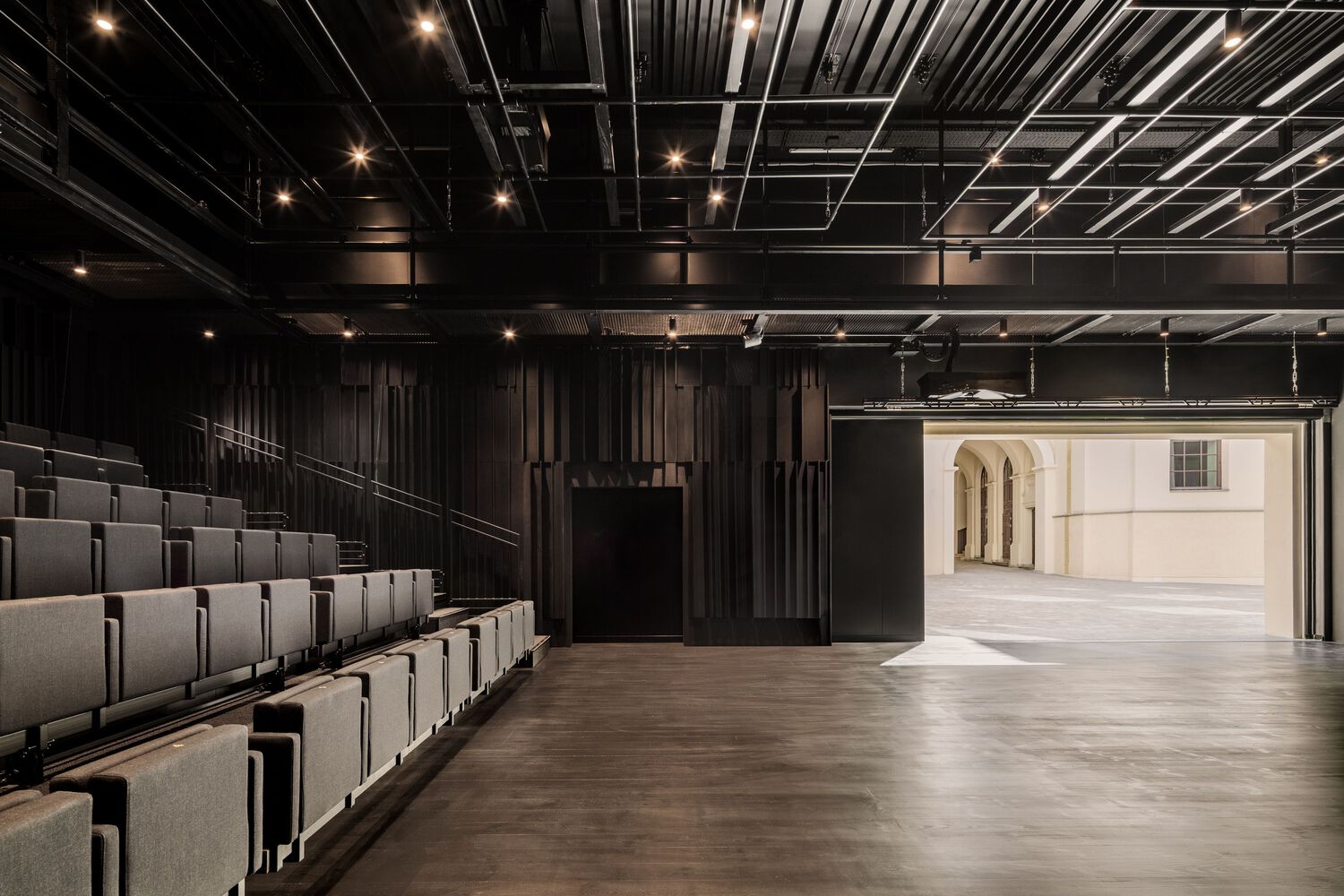
The technical modernisation of the Żeromski Theatre represents one of the most ambitious aspects of the project. The Main Stage has been transformed into the most technologically advanced theatre stage in Poland, equipped with a six-metre revolving platform, mobile auditoriums, and six double-level trapdoors. This system allows rapid scene changes, full 360-degree rotations, and performances staged in three directions.
To accommodate these innovations, the stage area was more than doubled through the expansion and adaptation of an adjacent building, while crucially preserving the original position of the auditorium. These interventions elevate the theatre’s artistic potential, enabling productions of unprecedented complexity.
New Spaces for Creation and Production
Beyond the Main Stage, the theatre gained a second contemporary stage, two rehearsal halls, a recording studio, scenography workshops, underground storage, and technical facilities. Artists’ residences and renovated dressing rooms further support the daily life of the institution. WXCA paid particular attention to spatial organisation and circulation, ensuring functional efficiency and comfortable working conditions for performers, technicians, and staff alike.
The new architectural volume is expressed in a restrained contemporary language, designed to complement rather than compete with the historic structure. Clad in fluted concrete panels, the façade continues the rhythm and proportions of the original frontage. Courtyard wings respond to classical architecture through carefully calibrated window compositions, establishing dialogue instead of contrast.
Opening the Theatre to the City
One of the most transformative gestures of the project is urban rather than theatrical. For the first time in its 150-year history, the former backstage courtyard has been opened to the public, becoming a new urban interior within Kielce’s dense city centre. This courtyard now hosts outdoor performances, exhibitions, workshops, and informal gatherings, extending cultural life beyond scheduled theatre hours.
A newly introduced stage window opens directly onto the courtyard, allowing performances to spill outdoors. Fully accessible design solutions ensure inclusivity for people with reduced mobility as well as hearing and visual impairments, reinforcing the theatre’s role as a civic space for all.
A Theatre Renewed for the Future
The revitalisation of the Stefan Żeromski Theatre demonstrates how historic architecture can be renewed with precision, humility, and ambition. By uniting conservation excellence with cutting-edge stage technology and urban openness, WXCA has redefined the role of the contemporary theatre, not as a closed monument to the past, but as a living, evolving institution.

The nomination for the EU Mies van der Rohe Award 2026 confirms the international significance of this achievement. More importantly, the project ensures that one of Poland’s most cherished theatres continues to inspire audiences, artists, and the city itself for generations to come.
Photography: Nate Cook Photography, Adam Grzesik, Oliwia Pakuszewska





Sheep Field Barn by DSDHA
DSDHA doubles the Sheep Field Barn at Henry Moore Studios and Gardens...
 illustrarch Editoral Team3 Mins read

New York’s Office-to-Housing Super-Conversions: A Designer’s Field Guide
New York's office-to-housing conversions are transforming underutilized towers into residential spaces, with...
 Furkan Sen6 Mins read
Thoravej 29 by pihlmann architects
pihlmann architects’ Thoravej 29 in Copenhagen transforms a 1967 factory into a...
Begum Gumusel3 Mins read
Mess Hall by Architecture Architecture
Mess Hall by Architecture Architecture transforms a Victorian terrace into a light-filled,...
Begum Gumusel3 Mins read


Leave a comment