

Tiny House Architecture vs Micro Apartments: Urban Minimalism Compared
A side-by-side look at tiny house architecture and micro apartment design for urban minimalists. This article compares spatial strategies, building codes, construction costs, sustainability metrics, and real-world project examples to help you decide which compact living model suits your goals.
 Furkan Sen15 May 202611 Mins read51
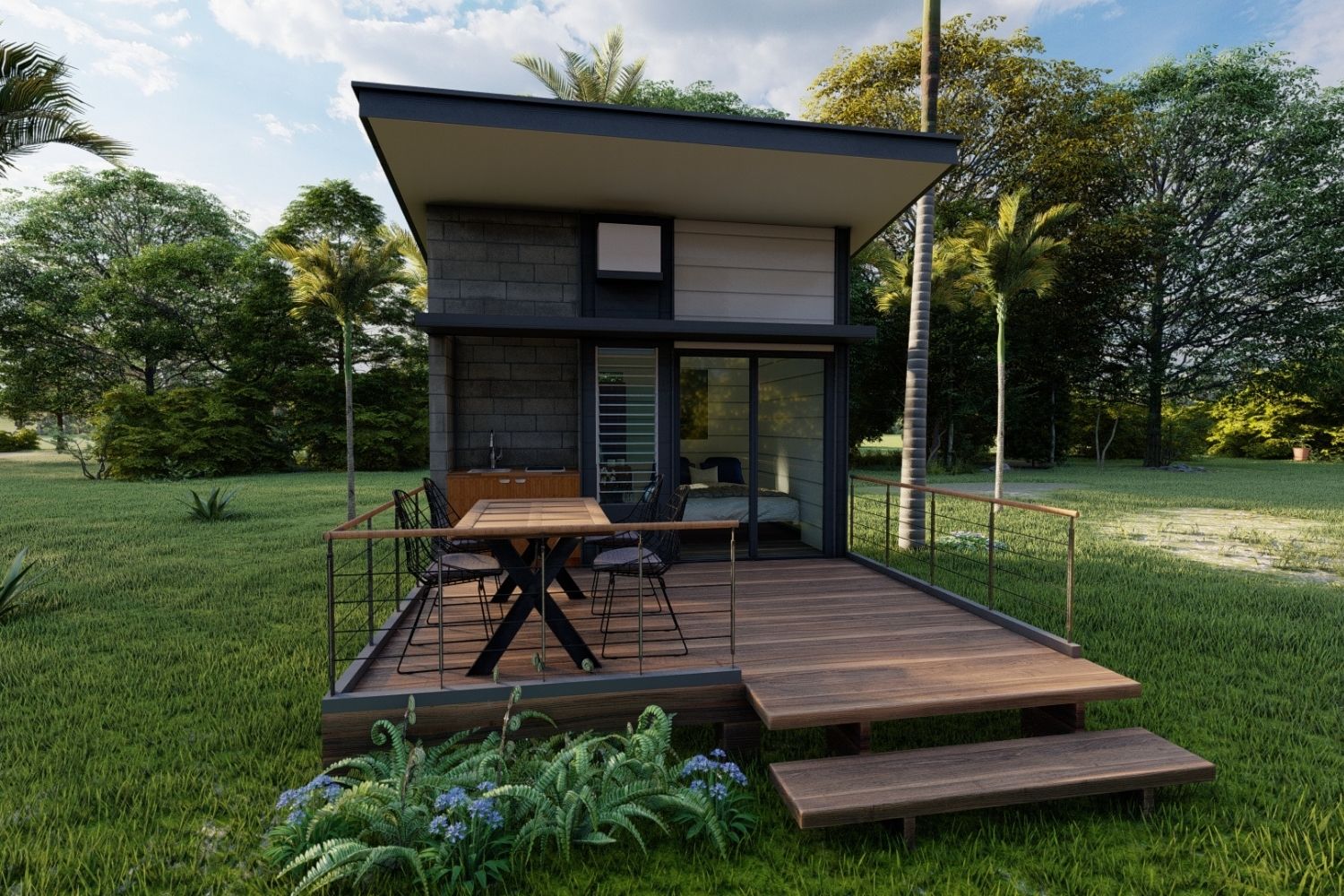
Table of Contents Show
Tiny house architecture and micro apartment architecture represent two distinct responses to the same urban challenge: how to live well in less space. Tiny houses are freestanding structures, typically 100 to 400 square feet, built on wheels or permanent foundations. Micro apartments are rental units inside larger buildings, usually 150 to 400 square feet, located in dense city centers. Both prioritize efficient design, but they differ sharply in ownership, mobility, zoning, and community structure.
What Defines Tiny House Architecture?
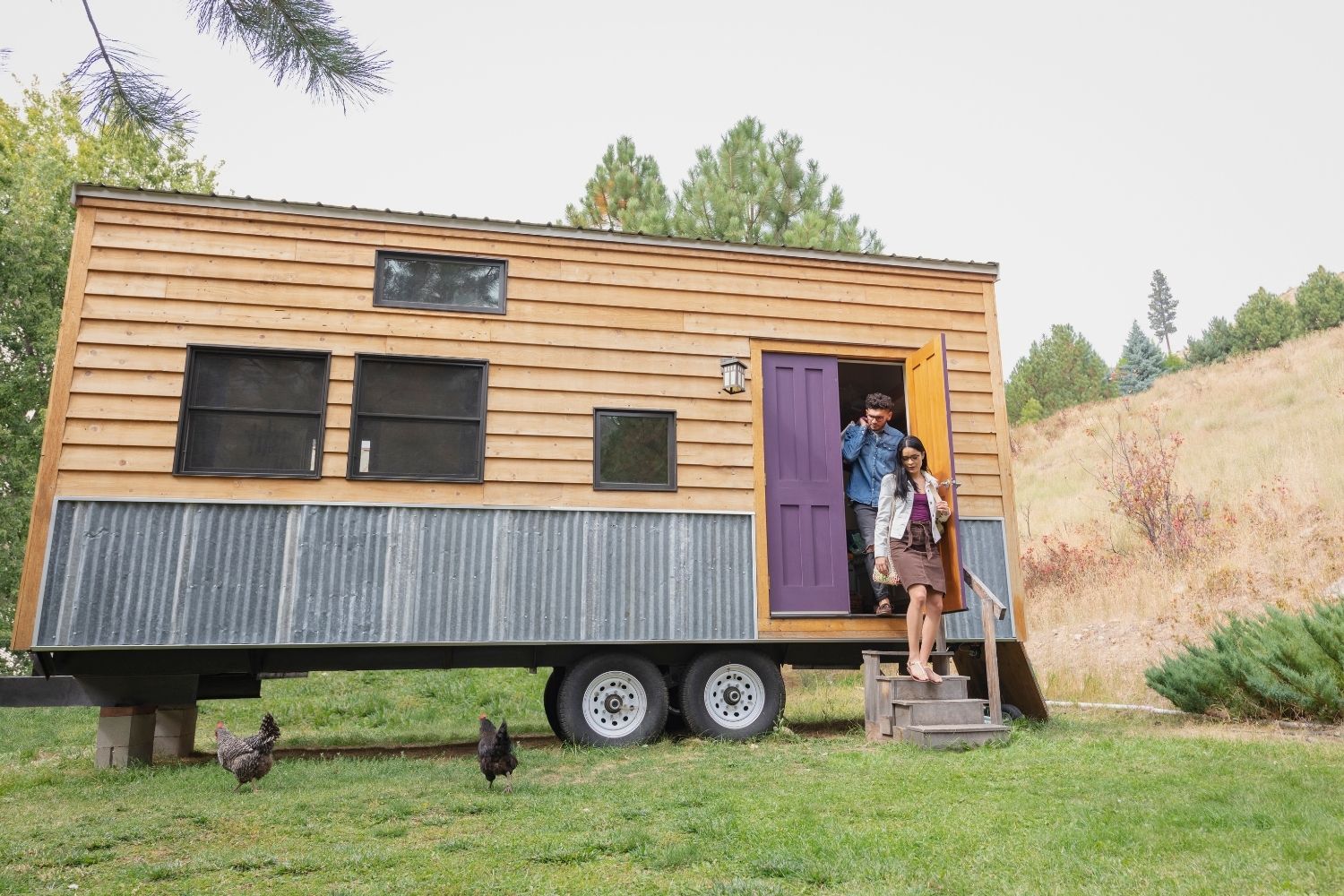
A tiny house is a self-contained dwelling designed to fit an entire living program into roughly 100 to 400 square feet. The architectural design of a tiny house centers on vertical space, multi-use furniture, and carefully zoned floor plans that separate sleeping, cooking, and living areas without interior walls. Lofted sleeping platforms, fold-down desks, and under-stair storage are standard features. Most tiny houses sit on trailers for legal and practical reasons, though a growing number are built on permanent foundations as accessory dwelling units (ADUs).
What sets tiny house architecture design apart from simple downsizing is intentionality. Every window placement, every cabinet depth, and every ceiling height serves a specific purpose. Architects working in this space often spend more time per square foot on design than they would on a conventional home. The result is a structure where nothing is accidental and no space goes unused.
💡 Pro Tip
If you are designing a tiny house on wheels, keep total weight under 10,000 pounds to stay within standard towing limits for most pickup trucks. Exceeding this threshold requires a commercial-grade tow vehicle and, in many U.S. states, a special driver’s license class. Choose lightweight framing materials like steel studs or SIPs (structural insulated panels) to keep the structure road-legal without sacrificing insulation performance.
Material choices in architecture tiny house design lean toward lightweight, durable options. Cedar siding, standing-seam metal roofing, and SIP panels are common on exteriors. Interiors frequently use plywood or bamboo for cabinetry. Because the entire structure must function as a single, self-contained unit, plumbing and electrical systems are compact but complete, often including composting toilets, tankless water heaters, and 30-amp electrical panels.
Tiny house design also responds to its owner’s lifestyle in a way mass housing rarely does. A remote worker’s tiny house might dedicate 30% of floor area to a desk zone with built-in monitor arms. A couple who cooks frequently might sacrifice closet space for a full-width kitchen counter. This level of customization is one of the strongest draws of the tiny house model. For a full walkthrough of the building process, the step-by-step guide to building a tiny house covers budgeting, zoning, framing, and finishing in detail.
How Micro Apartment Architecture Works
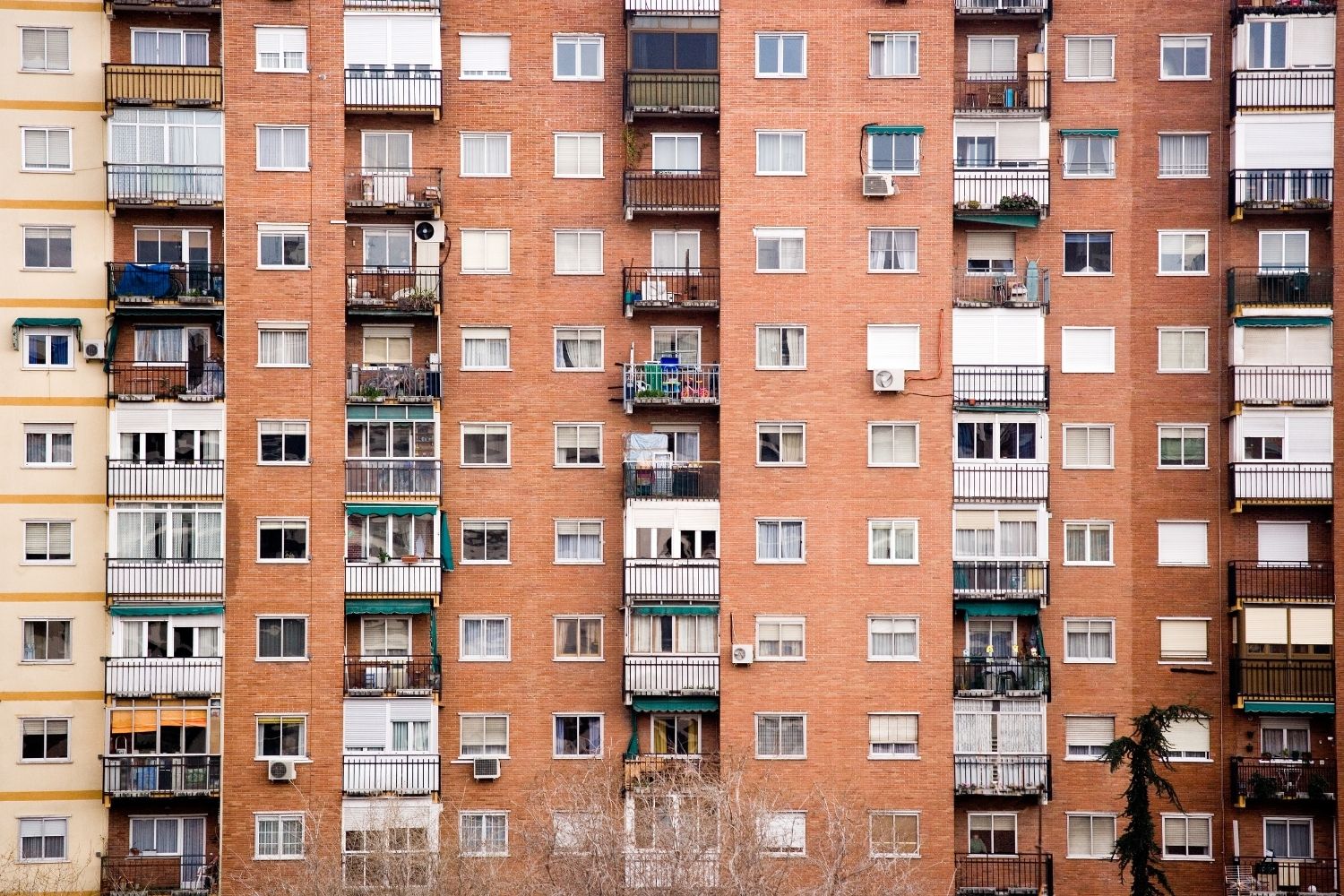
Micro apartments exist inside multi-unit buildings. They are typically studio-format rental units ranging from 150 to 400 square feet, with a private kitchen and bathroom contained within each unit. The floor plan is dictated as much by building codes and plumbing stacks as by design ambition. In most U.S. cities, accessibility requirements (ADA-compliant bathroom clearances, minimum door widths) and fire egress rules set hard constraints on layout possibilities.
The result is a surprisingly uniform typology. Walk into a micro apartment in Chicago, Seattle, or Minneapolis, and you will likely find a galley kitchen along one wall, a bathroom module near the entry, and a single open room serving as bedroom, office, and living area. Architects designing micro apartment architecture work within these fixed parameters to create units that feel larger than their square footage suggests.
Strategies include floor-to-ceiling windows to maximize perceived depth, sliding barn doors instead of swing doors to save floor space, and integrated furniture systems like Murphy beds with attached shelving. Some developers partner with furniture companies to install wall-mounted fold-down desks and retractable dining surfaces as standard fixtures. The building itself compensates for what the unit lacks: shared coworking lounges, rooftop terraces, communal kitchens, gyms, and package rooms extend residents’ functional living space beyond their front door.
🏗️ Real-World Example
Carmel Place (New York City, 2016): Formerly known as My Micro NY, this was New York’s first micro-apartment building, with 55 units ranging from 260 to 360 square feet. Developed by nArchitects, the prefabricated modular units were stacked on-site in just four weeks. The project demonstrated that factory-built micro units could reduce construction timelines by roughly 40% compared to conventional on-site building methods while maintaining full code compliance in one of the most regulated housing markets in the world.
For a broader look at how compact apartments function in growing cities, the guide to small apartments in an expanding world covers layout strategies, community amenities, and policy shifts that make micro living viable at scale.
Tiny House vs Micro Apartment: Key Differences at a Glance
The following table breaks down the core distinctions between these two compact living models across the factors that matter most to prospective residents and designers.
| Factor | Tiny House | Micro Apartment |
|---|---|---|
| Typical Size | 100–400 sq ft | 150–400 sq ft |
| Ownership Model | Owner-built or purchased; 68% carry no mortgage | Rented from developer or property manager |
| Location | Rural, suburban, or designated tiny house communities | Dense urban cores near transit and employment |
| Mobility | Mobile (on wheels) or fixed (on foundation) | Fixed within a multi-story building |
| Average Cost | $30,000–$67,000 to build or buy | $1,000–$2,200/month rent in major U.S. cities |
| Design Freedom | High; fully custom floor plans common | Low; constrained by building codes and plumbing stacks |
| Shared Amenities | Community-dependent (gardens, workshops in some villages) | Standard (gyms, coworking, rooftops, package rooms) |
| Zoning Complexity | High; varies widely by municipality, often restrictive | Moderate; allowed in most multifamily-zoned areas |
Design Strategies: How Architects Approach Each Typology
The architectural thinking behind a tiny house and a micro apartment starts from fundamentally different constraints. A tiny house architect begins with a blank slate, often a flatbed trailer or a small plot, and designs outward from the occupant’s daily routines. The design process resembles furniture design as much as architecture: every element is custom, every dimension is questioned, and the final product is a single, bespoke object.
Micro apartments architecture, by contrast, is a systems problem. The architect designs one unit type (or a small family of unit types) that will be repeated dozens or hundreds of times within a single building. Efficiency is measured not per unit but per floor plate. The plumbing stack, the structural grid, and the corridor width are the primary drivers. Individual unit design happens within whatever footprint remains after these building-scale decisions are locked in.
🎓 Expert Insight
“Micro-units are a plumbing problem disguised as an architecture problem. The kitchen and bathroom have to sit on the wet wall, and that wall has to align with the unit above and below. Everything else is negotiable.” — Stewart Hicks, Associate Professor of Architecture, University of Illinois Chicago
This observation highlights why micro apartment floor plans look so similar across different cities. The structural and mechanical logic of a multi-story building imposes a design template that individual architects can refine but rarely escape.
Both typologies share a reliance on vertical storage, multi-functional furniture, and careful natural light management. But tiny house architecture design tends to produce more varied, craft-driven results, while micro apartments architecture favors repeatable, code-compliant solutions optimized for speed and cost at scale.
How Much Does Each Option Really Cost?
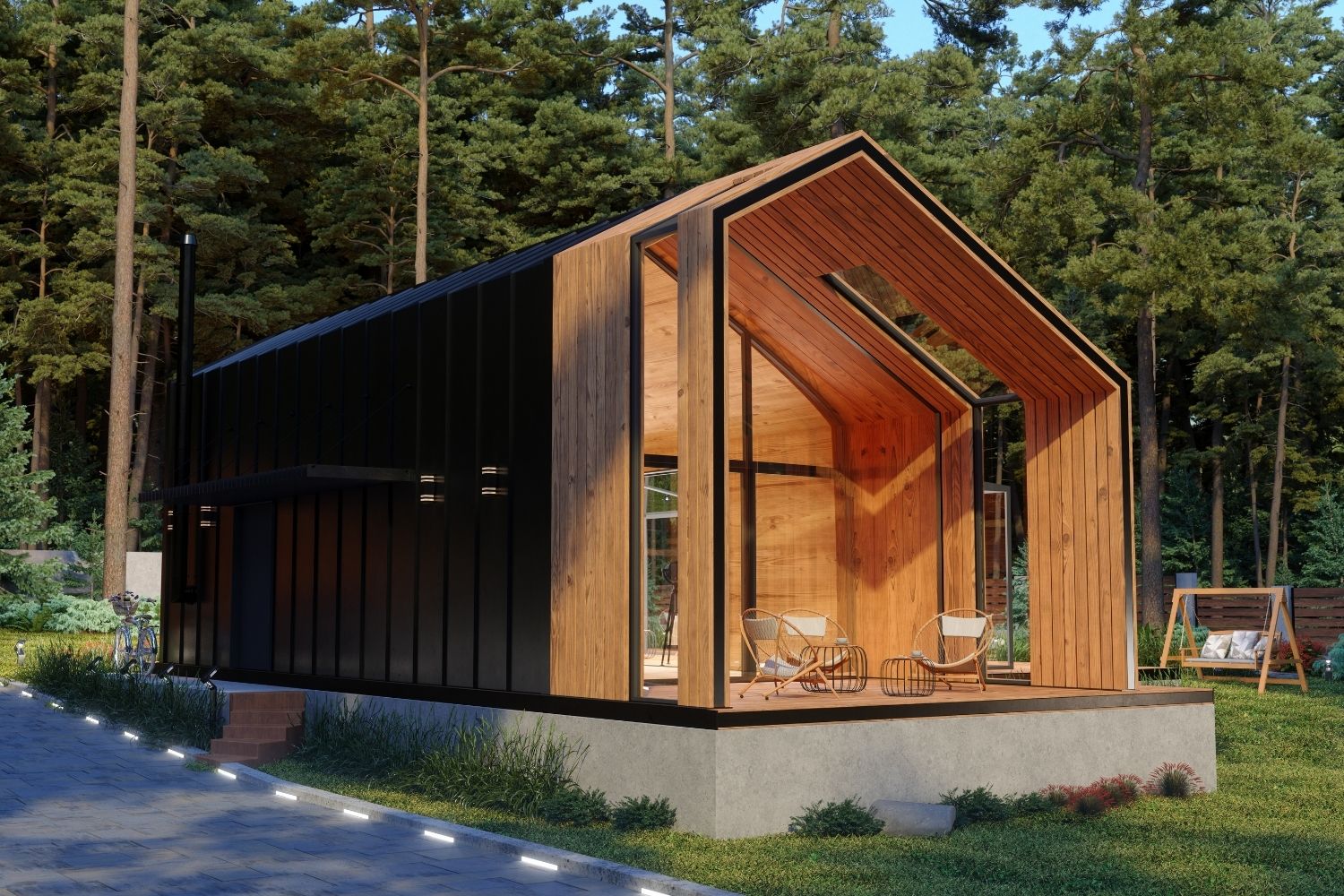
Cost is the most common deciding factor between these two models, and the comparison is not as straightforward as it appears. A tiny house involves a one-time capital expense. According to data compiled by the illustrarch tiny house statistics report, the average tiny house in the U.S. costs around $67,000, with DIY builds starting as low as $30,000. The global tiny home market reached $21.9 billion in 2024 (Business Research Insights) and is projected to hit $29.9 billion by 2033. Critically, 68% of tiny house owners carry no mortgage at all, which eliminates monthly housing payments entirely.
Micro apartments operate on a rental model. In Chicago, average rent for a micro unit runs about $1,263 per month, roughly half the $2,420 average for a conventional apartment in the same market (StorageCafe, 2025). In San Francisco, where nearly 15% of the local housing stock qualifies as micro, rents are higher but still offer significant savings over standard units. Over five years, a micro apartment renter in Chicago would spend roughly $75,780 in rent alone, more than double the cost of purchasing a tiny house outright.
🔢 Quick Numbers
- Global tiny home market valued at $21.9 billion in 2024, projected to reach $29.9 billion by 2033 (Business Research Insights, 2024)
- 68% of tiny house owners in the U.S. carry no mortgage (RubyHome, 2025)
- In San Francisco, roughly 15% of local housing stock consists of micro units under 415 sq ft (StorageCafe/Yardi Matrix, 2025)
- Micro apartments use up to 40% less energy than traditional apartments due to smaller footprints (Boverket, 2025)
However, tiny house owners face costs that renters avoid: land purchase or lot rental, utility hookups (which can run $500 to $20,000 for sewer connections alone), insurance, and ongoing maintenance. Micro apartment renters trade equity for convenience, paying a predictable monthly amount that includes access to amenities, maintenance, and prime urban locations.
Zoning and Legal Challenges: Where Can You Actually Live?
Zoning is where the practical gap between tiny houses and micro apartments becomes most visible. Micro apartments, as standard rental units within code-compliant buildings, face relatively few legal barriers. Most cities that allow multifamily housing also allow micro units, and recent zoning changes in cities like Seattle now permit micro projects in all multifamily-zoned areas. The Urban Land Institute has documented how single-person households are the fastest-growing demographic in many metro areas, driving policy support for smaller unit types.
Tiny houses face a more complicated regulatory landscape. Around 40% of U.S. urban municipalities still impose restrictions on tiny home construction, according to Business Research Insights. Minimum square footage requirements, which range from 200 to 1,000 square feet depending on the municipality, can make many tiny house designs non-compliant for permanent residential use. Homes on trailers typically fall under RV regulations rather than residential building codes, limiting where they can be parked long-term.
⚠️ Common Mistake to Avoid
Many first-time tiny house buyers assume they can park their home on any residential lot they own. In reality, most municipalities require a primary dwelling on the lot before a tiny house (classified as an ADU or RV) can be placed there. Always check local zoning codes and obtain permits before purchasing land specifically for a tiny house. States like Oregon, Colorado, California, and Texas have made the most progress in easing these restrictions, but rules still vary city by city.
That said, the legal environment is shifting. The guide to the best tiny house communities in the USA tracks how designated tiny house villages and ADU-friendly municipalities are expanding across the country, creating legal pathways that did not exist five years ago.
Sustainability: Which Model Has a Smaller Footprint?
Both tiny houses and micro apartments perform well on sustainability metrics compared to conventional housing, but they achieve it through different mechanisms. Tiny houses reduce material consumption at the construction stage. A structure under 400 square feet requires a fraction of the lumber, concrete, drywall, and wiring that a standard 2,300-square-foot American home demands. Many tiny house builders also integrate off-grid features like solar panels, composting toilets, and rainwater collection systems, further reducing their operational footprint.
Micro apartments benefit from the efficiency of shared infrastructure. A 200-unit micro apartment building shares one foundation, one elevator system, one HVAC plant, and one set of common walls. Per-unit energy consumption drops significantly because of shared thermal mass and reduced exterior surface area per resident. According to Boverket analyses, a typical micro apartment of 20 to 30 square meters uses up to 40% less energy than a standard apartment.
The sustainability question also depends on location. A tiny house in a rural area may require a car for every trip, adding transportation emissions that offset its small building footprint. A micro apartment near a transit hub allows car-free living, which can reduce a household’s total carbon output more dramatically than the building itself. For a deeper look at how small-footprint design connects to broader green building principles, the sustainable future architecture guide covers the technologies and strategies driving the field forward.
Video: Why Micro Apartments Are Spreading Across American Cities
This video from Stewart Hicks (University of Illinois Chicago) breaks down the building code logic, demographic shifts, and economic forces behind the rapid spread of micro apartments in U.S. cities. It is a strong visual companion to the design and zoning topics covered above.
Who Lives in Tiny Houses vs Micro Apartments?
The demographic profiles of tiny house residents and micro apartment tenants overlap in some areas but diverge in others. Tiny house owners skew older than many people assume. According to RubyHome (2025), approximately 39% of tiny homeowners are over 50, making older adults the single largest age group. Adults aged 30 to 40 and those under 30 each account for about 21%. Women make up roughly 55% of the tiny house community, and among couples, 60% of women report being the person who initiated the decision to go tiny.
Micro apartment tenants trend younger. The StorageCafe analysis of U.S. micro housing describes the typical micro tenant as a young professional, recent graduate, or downsizing empty-nester who prioritizes proximity to work and entertainment over square footage. In cities like Minneapolis, where 10.4% of rental units qualify as micro-sized, the tenant base includes traveling nurses, tech consultants on short-term contracts, and corporate relocations.
The motivation also differs. Tiny house residents frequently cite financial independence and environmental values as primary drivers. Micro apartment tenants are more likely to cite location and convenience. Both groups value intentional living, but they express it through different choices: ownership versus access, rural freedom versus urban density, self-sufficiency versus shared services.
Urban Minimalism: Where Tiny Houses and Micro Apartments Converge
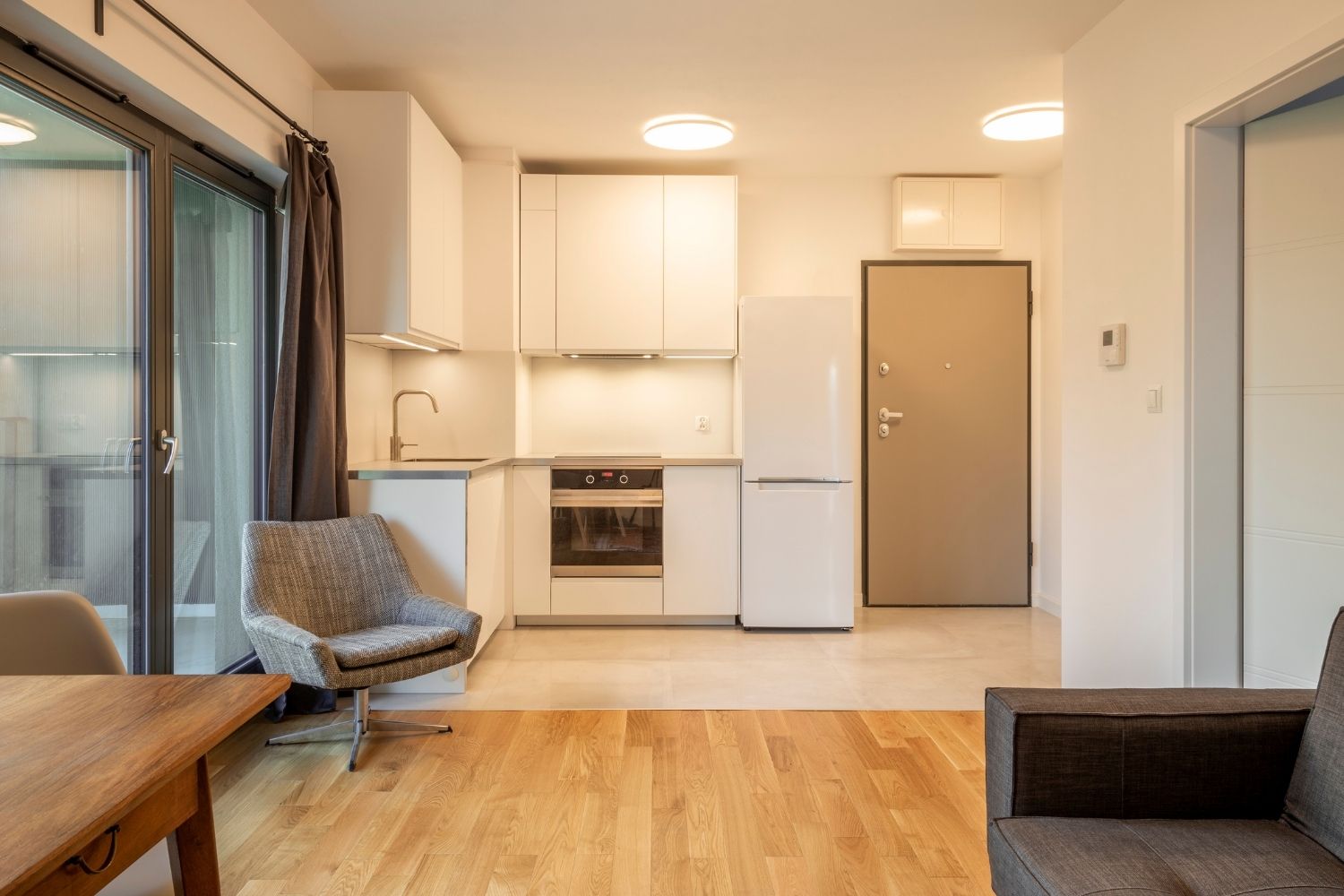
Despite their differences, both models feed into the same broader cultural shift toward urban minimalism. This is not minimalism as a style trend (white walls, bare shelves) but as a spatial philosophy: the idea that a well-designed small space can support a higher quality of life than a poorly designed large one. The principles of minimalism in architecture, such as reducing design to its essential elements, maximizing natural light, and letting materials speak honestly, apply directly to both tiny houses and micro apartments.
The convergence is also happening physically. Some developers are now building “micro villages” that combine the community model of tiny house neighborhoods with the density and shared-amenity structure of apartment buildings. These hybrid projects place individual small units (300 to 500 square feet) around shared courtyards, kitchens, and workspaces, borrowing from both traditions. The microhousing architecture overview examines how this blended model is emerging in cities that need affordable density without sacrificing individual autonomy.
💡 Pro Tip
If you are torn between a tiny house and a micro apartment, start by mapping your daily routine on paper. Write down every activity you do in a typical week, where you do it, and how much space it requires. People who spend most of their time at home (remote workers, retirees, creatives) tend to benefit more from the customization a tiny house offers. People who use their home primarily for sleeping and quick meals often find a micro apartment’s location and amenity package more valuable than extra square footage.
What Does the Future Hold for Compact Living?

The trajectory for both models points toward growth. On the tiny house side, zoning reform is accelerating. More states are passing ADU-friendly legislation, and the Pew Charitable Trusts has documented how micro-unit conversions of vacant office buildings could add thousands of low-cost housing units in cities like Los Angeles and Houston, with rents as low as $700 to $1,000 per month.
On the micro apartment side, construction pipelines are expanding rapidly. Seattle leads with roughly 66% of planned rental supply falling into the micro category, followed by Boston at 56.2% and Newark at 49.8% (StorageCafe, 2025). Modular and prefabricated construction methods are reducing build times and costs, making micro developments viable in mid-sized cities that previously could not support them.
Technology will also play a role. Smart home systems, robotic furniture (wall beds that transform into desks with a button press), and improved insulation materials are making smaller spaces more functional per square foot every year. The question for the next decade is not whether people will live smaller, but which version of small living will best serve different populations, different cities, and different life stages.
✅ Key Takeaways
- Tiny house architecture offers full design freedom and ownership (68% mortgage-free), while micro apartments provide turnkey urban access with shared amenities.
- Micro apartment floor plans are largely dictated by building codes and plumbing stacks, resulting in a uniform typology across cities. Tiny houses allow for fully custom, occupant-driven design.
- A tiny house averages $67,000 to buy; a micro apartment in Chicago rents for about $1,263/month. The cost comparison shifts depending on time horizon, land costs, and location.
- Both models outperform conventional housing on sustainability metrics, but through different mechanisms: material reduction (tiny houses) versus shared infrastructure efficiency (micro apartments).
- Zoning remains the biggest barrier for tiny houses, with 40% of U.S. municipalities still restricting them. Micro apartments face fewer legal obstacles in most multifamily zones.
Final Thoughts
Choosing between a tiny house and a micro apartment is not a question of which is “better” in the abstract. It is a question of what you value most: ownership or flexibility, rural quiet or urban energy, total customization or zero maintenance. Both paths lead to a smaller footprint and a more intentional relationship with space. The best choice depends on your career, your location, your finances, and how you spend your time at home. The good news is that both options are more accessible, better designed, and more widely accepted than they were even five years ago, and the gap keeps closing.
Zoning regulations, building codes, and housing costs vary significantly by city and state. Always consult local authorities and verify current rules before committing to a tiny house purchase or micro apartment lease.







Tiny House Water Systems: Your Complete Guide to Plumbing, Rainwater Harvesting and Off-Grid Solutions
A practical guide to designing a tiny house water system, covering PEX...
 Bahattin Duran14 Mins read
Off-Grid Tiny House Living: Complete Setup Guide for Beginners
This guide walks you through every stage of setting up an off-grid...
Bahattin Duran15 Mins read
Tiny House with Loft: Design Ideas, Plans and Building Tips for Vertical Living
A complete guide to designing and building a tiny house with loft,...
Bahattin Duran15 Mins read
8+ Best Tiny Home Communities in Michigan: Great Lakes Tiny Living Guide
Explore tiny home communities in Michigan. Great Lakes lifestyle, affordable land, and...
Bahattin Duran18 Mins read


Leave a comment