

Best Tiny House Communities in the USA: Ultimate Guide & Rankings
Explore the top tiny house communities across the United States. This comprehensive guide covers featured communities like Escalante Village, Village at Flat Rock, Tiny Estates, and Dancing Rabbit Ecovillage with detailed cost comparisons, amenities, zoning laws by state, and step-by-step instructions for joining a tiny home community. Whether you're looking for off-grid living, luxury tiny homes, beach communities, or affordable Midwest options, find the perfect tiny house neighborhood that fits your lifestyle and budget.
 Bahattin Duran5 January 202640 Mins read2k

Table of Contents Show
Quick Answer: Tiny house communities are neighbourhoods built for compact, often mobile homes, offering shared amenities and lower living costs. The best in the USA combine affordability, a good location and a strong community, giving residents a simpler, more sustainable lifestyle without sacrificing comfort.
Tiny house communities have reshaped the American housing landscape, offering a simpler, more sustainable way of life rooted in intentional design and shared values. As more people seek to downsize and minimize their environmental footprint, tiny home communities across the United States are blossoming. These tiny house neighborhoods provide unique, supportive environments for like-minded individuals who value connection over square footage.
From the sun-drenched coasts of California to the serene forests of North Carolina, these tiny house villages offer a range of amenities and lifestyles. Whether you are looking for off-grid living, urban convenience, a luxury tiny home community, or a close-knit rural setting, there is a tiny house community that fits your dreams. In this guide, we explore the best tiny house communities in the USA, key factors to consider before joining, and the latest trends shaping tiny home developments in 2026 and beyond. We also cover where you can live in a tiny house across various states, from small house communities in North Carolina to tiny home parks in the Midwest.
2026 Trends: How Tiny House Communities Are Evolving in the USA
As we move into 2026, tiny house communities in the United States are no longer just about downsizing. They are becoming intentional lifestyle ecosystems. One of the strongest trends is the rise of eco-integrated communities, where solar energy, rainwater harvesting, and shared green spaces are no longer optional but expected. Buyers and renters are increasingly prioritizing sustainability over pure affordability when choosing a tiny home neighborhood.
Another major 2026 trend is the shift toward hybrid zoning models. Many tiny home communities now blend tiny houses with co-living spaces, shared work hubs, and flexible short-term rental zones. This makes tiny house developments attractive not only for retirees, but also for remote workers, digital nomads, and young families seeking affordability without sacrificing social connection. Additionally, luxury tiny home communities are emerging with high-end finishes, smart home technology, and resort-style amenities. Small home community living does not mean compromising on quality.
Developers are also exploring modular construction techniques for faster, cost-effective builds. These methods integrate smart technologies, like energy-efficient systems, to create sustainable and modern living solutions. Examples include off-grid energy setups and water-saving designs, aligning with increased emphasis on environmental preservation. In fact, some developers are now drawing inspiration from tiny house designs to influence the layout and sustainability features of new home communities on the East Coast.
Tiny house communities for seniors are also growing rapidly. Many micro housing communities now include age-friendly design features such as single-story layouts, wider doorways, and proximity to healthcare services. Tiny home retirement communities provide a lower-maintenance alternative to traditional senior housing while preserving independence and social engagement. States like Florida, North Carolina, and Arizona are leading this movement with dedicated tiny homes retirement communities designed for active adult living.
Collaboration with urban planners may further expand tiny house villages into cities, addressing housing shortages in urban areas. These spaces could provide solutions for young professionals, retirees, and those transitioning to low-maintenance living. Such developments highlight tiny homes as adaptive residences for various demographics. Potential growth in state and federal grants could also influence tiny house community expansions, with incentives aimed at affordable housing initiatives encouraging these projects and fostering access for individuals seeking alternative housing options.
Top Tiny House Communities in the USA: Quick Overview
Below is a curated summary of every tiny house community featured in this guide. Use this table to quickly compare locations, costs, and lifestyle types, then scroll down to each community’s full profile with photos, contact details, and resident insights.
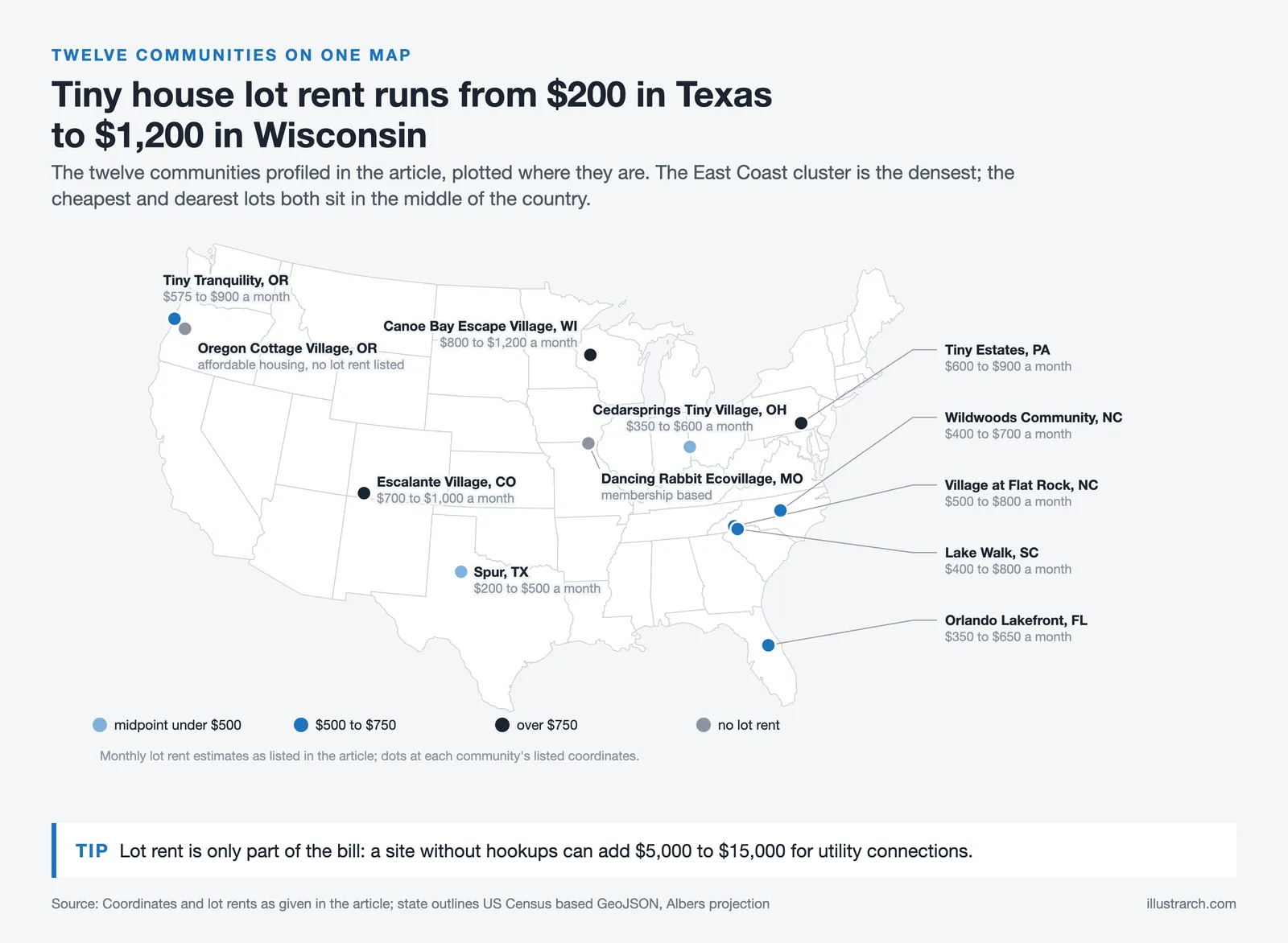
| Community | Location | Setting | Lot Rent (est.) | Best For | Off-Grid / Solar |
|---|---|---|---|---|---|
| Village at Flat Rock | Flat Rock, NC | Mountain / Wooded | $500 – $800/mo | Retirees, nature lovers | Eco-friendly design |
| Wildwoods Community | Pittsboro, NC | Rural / Wooded | $400 – $700/mo | Eco-living, sustainability-focused | Solar-powered, composting |
| Orlando Lakefront | Orlando, FL | Lakeside / Urban | $350 – $650/mo | Lakeside living, social community | Grid-connected |
| Tiny Estates | Elizabethtown, PA | Farmland / Rural | $600 – $900/mo | Try-before-you-buy, weekend getaways | Grid-connected |
| Canoe Bay Escape Village | Chetek, WI | Woodland / Lakeside | $800 – $1,200/mo | Luxury living, lake retreats | Eco-friendly materials |
| Tiny Tranquility | Waldport, OR | Coastal / Rural | $575 – $900/mo | Coastal living, DIY community | Eco-friendly design |
| Oregon Cottage Village | Eugene, OR | Urban / Residential | Affordable housing | Green living, craftsmanship | Solar, rainwater harvesting |
| Dancing Rabbit Ecovillage | Rutledge, MO | Rural / Prairie | Membership-based | Fully off-grid, intentional living | Fully off-grid (solar, wind, rainwater) |
| Cedarsprings Tiny Village | New Paris, OH | Rural / Wooded | $350 – $600/mo | Nature-centric, Midwest affordability | Grid-connected |
| Lake Walk | Greer, SC | Lakeside / Suburban | $400 – $800/mo | Lakeside living, Southern charm | Grid-connected |
| Spur Freedom Community | Spur, TX | Arid Plains / Rural | $200 – $500/mo | Off-grid, budget-friendly, pioneers | Off-grid options |
| Escalante Village | Durango, CO | Riverside / Mountain | $700 – $1,000/mo | Outdoor enthusiasts, mountain living | Sustainable practices |
Lot rent estimates are based on current market data and may vary. Contact communities directly for up-to-date pricing. Scroll down for detailed profiles with photos, schema cards, and resident insights.
Overview of Tiny House Communities in the United States
Tiny house communities (also known as tiny home parks, tiny house neighborhoods, or tiny home communes) have become popular across the USA, offering diverse living environments. These communities provide various amenities and cater to different lifestyles, from urban settings with easy access to city amenities to rural areas promoting sustainable living. Each tiny houses community often features shared spaces that foster a genuine sense of belonging among residents. Whether structured as a planned tiny home development or an organic tiny house commune, the common thread is a commitment to sustainable, intentional living.
Developers often design these communities with zoning regulations and local ordinances in mind, ensuring compliance while leveraging underutilized spaces. Many communities focus on eco-friendly initiatives, including renewable energy sources and water-saving systems. Some communities embrace specific lifestyles or demographics, such as veterans, retirees, or artists, creating tailored environments. Others operate as vacation spots, offering short-term rentals and communal living experiences.

Exploring the Tiny House Movement in the USA: A Growing Trend for Simplicity and Sustainability
Urban Tiny House Communities
Urban tiny house communities offer proximity to city centers, making daily commutes easy and granting access to essential services. For example, Boneyard Studios in Washington, D.C., provides tiny house living within a bustling metropolitan area, while still offering a tight-knit community environment. Cities like Portland, Austin, and Seattle have also embraced urban tiny home developments, with progressive zoning regulations that allow accessory dwelling units (ADUs) and cottage court developments within residential districts.
In Chicago, new tiny house community projects are emerging in neighborhoods that previously struggled with vacant lots. These micro home communities transform underutilized urban land into vibrant small house neighborhoods, offering affordable housing options close to public transit and employment hubs. The tiny house movement is proving especially effective in cities with high housing costs, where capsule houses and compact dwellings give residents a path to homeownership that was previously out of reach.
Rural Tiny House Communities
Rural communities provide a serene backdrop for tiny house living. Many emphasize sustainable living and self-sufficiency. Communities like The Village at Flat Rock in North Carolina offer residents large green spaces and communal gardens, promoting a lifestyle closely connected to nature. Tiny Estates in Lancaster, Pennsylvania is another tiny home community that’s on the rapid rise, drawing tons of inspiration from the Amish and woodworking communities in terms of design, says Keith Panzer of Snyder’s Amish Furniture. These rural tiny house neighborhoods offer the perfect balance between privacy and community engagement, with many featuring walking trails, shared farming plots, and communal gardening spaces.
If you are wondering where can you live in a tiny house in a rural setting, states like North Carolina, Missouri, and Ohio provide some of the most welcoming environments. The tiny home community in North Carolina scene is especially active, with multiple small house communities in North Carolina offering permanent residency on wooded acreage.
Off-Grid Tiny House Communities
Off-grid tiny house communities enable residents to live independently from traditional utilities. With a focus on renewable energy and resource conservation, they attract those wanting to minimize their ecological footprint. These tiny home communes represent the most self-sufficient end of the spectrum, where residents collectively manage resources and share infrastructure costs. For those interested in the technical side of off-grid building, learning how to build a tiny house with renewable energy systems is an essential first step.
Dancing Rabbit Ecovillage, Rutledge, Missouri
Dancing Rabbit Ecovillage, located on 280 acres of rolling prairie near Rutledge, Missouri, is one of the most established off-grid tiny house communities in the United States. Founded in 1997, this intentional community operates entirely on renewable energy, with solar panels, wind turbines, and rainwater harvesting systems powering daily life. Residents build their own homes using natural and reclaimed materials, including straw bale, cob, and recycled lumber, keeping construction costs significantly below national averages.
What sets Dancing Rabbit apart from other tiny home communities is its membership-based governance model. Rather than paying traditional lot rent, residents join through a membership process that includes a visitor period, a provisional membership phase, and finally full membership with land-use rights. The community collectively manages shared resources, including communal vehicles, a community kitchen, organic gardens, and a village common house used for meetings and social events. This cooperative structure makes it one of the most deeply intentional tiny house communes in the country.
Dancing Rabbit also runs education and outreach programs, hosting visitors and interns who want to learn about sustainable building, permaculture, and off-grid living. For those asking where can you live in a tiny house while embracing a fully self-sufficient lifestyle, Dancing Rabbit Ecovillage remains a leading answer. It is particularly well-suited for environmentally conscious individuals, homesteaders, and those seeking a deep community bond built around shared ecological values.

Tiny House Beach Communities
Tiny house beach communities are becoming one of the most sought-after living arrangements on both the East and West Coasts. Coast tiny homes offer residents oceanfront or near-beach living at a fraction of traditional beachfront property costs. Communities in South Carolina, Florida, and Oregon lead the way, with tiny home beach communities featuring shared boardwalks, kayak storage, and outdoor gathering areas steps from the shore. For anyone searching for tiny house communities on the beach, these developments combine the simplicity of small home living with the lifestyle benefits of coastal proximity.
Amenities in Tiny House Communities
Amenities in tiny house communities vary widely. Some common features include shared gardens, communal kitchens, and recreational areas. More upscale communities might offer fitness centers, craft workshops, and even coworking spaces. To add a personal touch, residents often incorporate home accessories like those from NUHR, blending style and functionality to make their tiny homes more inviting. Luxury tiny home communities are now introducing amenities such as heated pools, yoga studios, and farm-to-table dining programs. Shared amenities are expected to continue evolving, with future designs including co-working spaces, fitness areas, and community kitchens to meet diverse needs. By providing these amenities, communities enhance the living experience and encourage social interaction among residents.
Economic Benefits
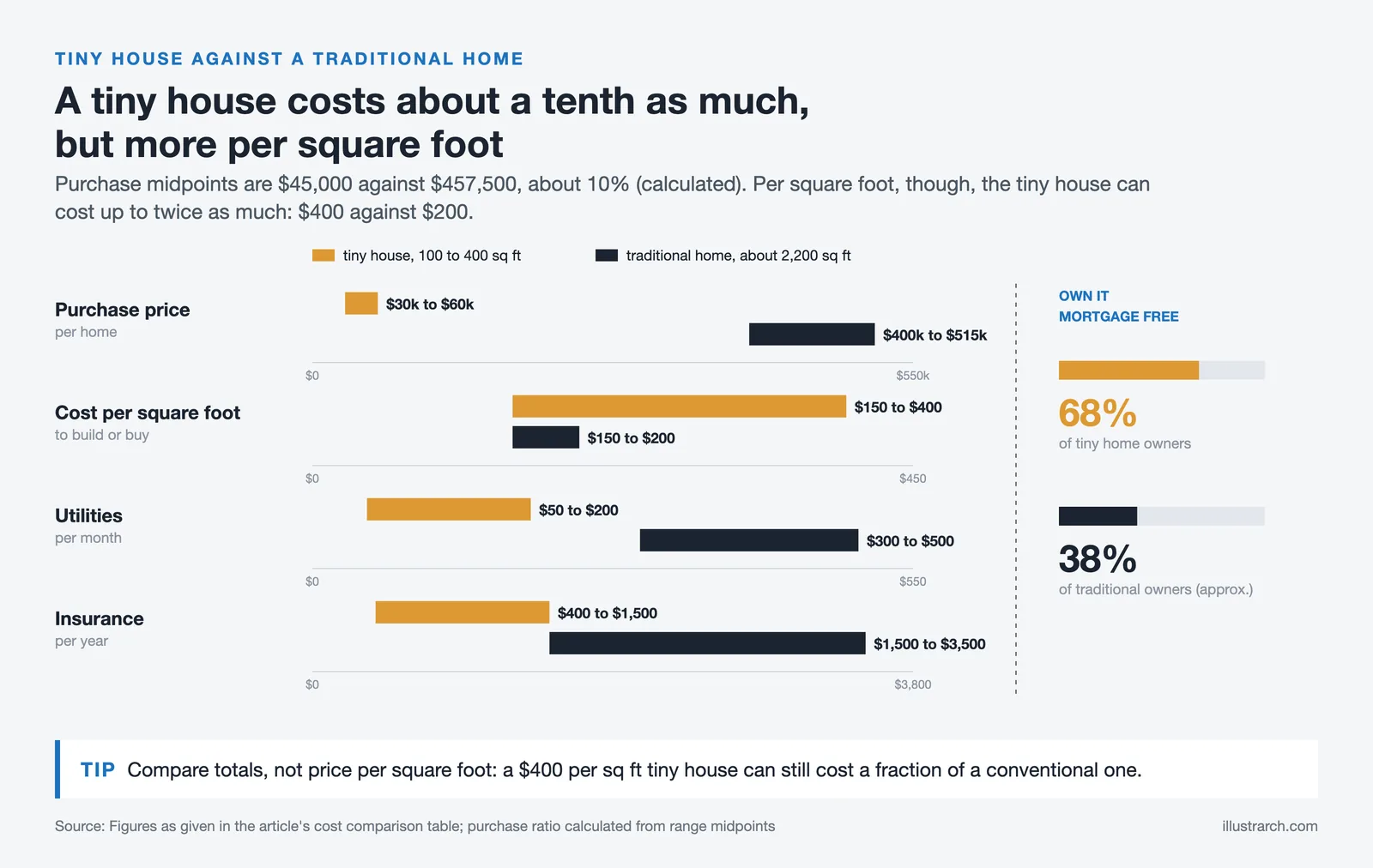
Living in a tiny house community can offer significant economic benefits. Lower housing costs and reduced utility expenses, including lowered HVAC maintenance costs, are common advantages. Many communities also emphasize cost-sharing for amenities, making it easier for residents to maintain a higher quality of life on a budget. According to industry data, the average tiny house costs between $30,000 and $60,000, which is a fraction of the median traditional home price that exceeds $400,000 in many markets. Explore more about the financial benefits of buying a tiny house to understand the full economic picture.
Tiny House vs. Traditional Home: Cost Comparison (2026)
| Cost Category | Tiny House (100–400 sq ft) | Traditional Home (avg. 2,200 sq ft) |
|---|---|---|
| Average Purchase Price | $30,000 – $60,000 | $400,000 – $515,000 |
| Cost Per Square Foot | $150 – $400 | $150 – $200 |
| Average Monthly Utilities | $50 – $200 | $300 – $500 |
| Community Lot Rent (if applicable) | $300 – $1,000/month | N/A (property taxes: $200–$600/month) |
| Insurance (annual) | $400 – $1,500 | $1,500 – $3,500 |
| Mortgage-Free Owners | 68% of tiny home owners | ~38% of traditional homeowners |
💡 Pro Tip: While tiny homes cost more per square foot than traditional homes, the dramatically smaller footprint means overall costs are 50–70% lower over a 10-year ownership period. Always factor in land or lot rent, utility hookups ($5,000–$15,000), and transportation costs ($1,000–$5,000 for moves over 250 miles) when calculating your total budget.
Step-by-Step Guide on How to Build Your Own Tiny House in the USA
The tiny house movement‘s growing popularity highlights a shift towards more sustainable, community-oriented living. By exploring urban, rural, and off-grid tiny home communities in the US, potential residents can find a setting that aligns with their values and lifestyle preferences.
Benefits of Living in Tiny Home Communities
Living in tiny house communities presents numerous advantages. These benefits extend beyond just financial savings to include environmental and social gains that make tiny home neighborhoods a compelling lifestyle choice.
Cost Savings and Affordability
Tiny house communities often offer lower housing costs. Many communities have shared amenities, reducing individual expenses for utilities and maintenance. For instance, communal gardens and shared workspaces eliminate the need for personal investments in these areas. Living in a tiny house community reduces costs compared to traditional housing, including lower utility bills and maintenance expenses. Communities often focus on eco-friendly designs, like solar panels and shared resources, to minimize environmental impact while keeping costs down.
Environmental Impact
Tiny houses require fewer resources. Building materials and energy consumption during construction and operation are minimal. Communities like Dancing Rabbit Ecovillage in Missouri focus on sustainability, using renewable energy sources and promoting eco-friendly practices among residents. Many tiny home developments now incorporate solar panel systems as a standard feature, further reducing the carbon footprint of the entire community. Some communities implement communal gardens, water conservation systems, and energy-efficient home designs, promoting sustainability at every level.
Social Interaction and Sense of Community
Communal living fosters a sense of belonging. Residents often share communal spaces such as gardens, fitness centers, and recreation areas. This setup encourages socializing and supports a strong community bond, creating an inclusive environment. In a tiny house commune or intentional community, this social fabric is often the primary draw for new residents seeking deeper human connections. Residents participate in group events, like potlucks or workshops, strengthening connections and creating a supportive neighborhood atmosphere.
Simplified Lifestyle and Minimalist Freedom
Tiny house living promotes a minimalist lifestyle. With limited space, residents prioritize possessions, reducing clutter and focusing on essentials. This simplification enhances mental clarity and reduces stress. The compact spaces encourage intentional living, making it easier to focus on what matters. Many residents enjoy the freedom to travel, save money, or pursue hobbies, freed from the burden of large mortgages or extensive upkeep. Those looking for creative ways to maximize their small spaces can explore inspiring tiny house design ideas that balance aesthetics with functionality.

Mobility
Many tiny houses are mobile. This mobility allows residents to relocate without significant costs or logistical challenges. Communities often allow flexible leases or short-term stays, providing residents with both stability and freedom. This is especially appealing for those exploring tiny home communities in the US who want to test different regions before committing to a permanent location.

Security
Community living enhances security. With neighbors in close proximity, there’s an added layer of vigilance. Residents collectively look out for each other, deterring potential security threats. Well-designed tiny house neighborhoods incorporate thoughtful site planning with clear sightlines and communal gathering areas that naturally promote safety.
Health and Wellness
Access to shared fitness centers and outdoor spaces promotes physical health. Communal gardens provide fresh produce, supporting nutritious eating habits. Additionally, the sense of belonging and reduced stress levels improve mental well-being.
Common Mistakes to Avoid When Choosing a Tiny House Community
One of the most common mistakes people make is focusing solely on home price while ignoring community regulations and zoning laws. Some tiny house communities have strict size limits, mobility restrictions, or long-term residency rules that can conflict with your lifestyle goals. In 2026, understanding local compliance is more important than ever due to updated housing regulations across multiple states. Before committing to any tiny home neighborhood, always verify that the community meets local zoning requirements for tiny homes and that permanent residency is legally permitted.
Another frequent mistake is underestimating shared infrastructure costs. While many communities advertise low monthly fees, utilities, maintenance, and communal amenities can significantly increase overall expenses. Always evaluate the full cost breakdown (not just rent or purchase price) before committing to a tiny house community. Failing to visit a tiny home park or development in person before signing an agreement can also lead to unpleasant surprises regarding noise levels, maintenance standards, and community culture.
💡 Pro Tip: Before signing any community agreement, request a full cost disclosure that includes lot rent, utility fees, HOA dues, maintenance assessments, and any seasonal surcharges. Ask current residents what their actual total monthly expense is — not just the advertised rate. Many experienced tiny home owners recommend spending at least one weekend staying in the community (many offer short-term rental options) before committing long-term.
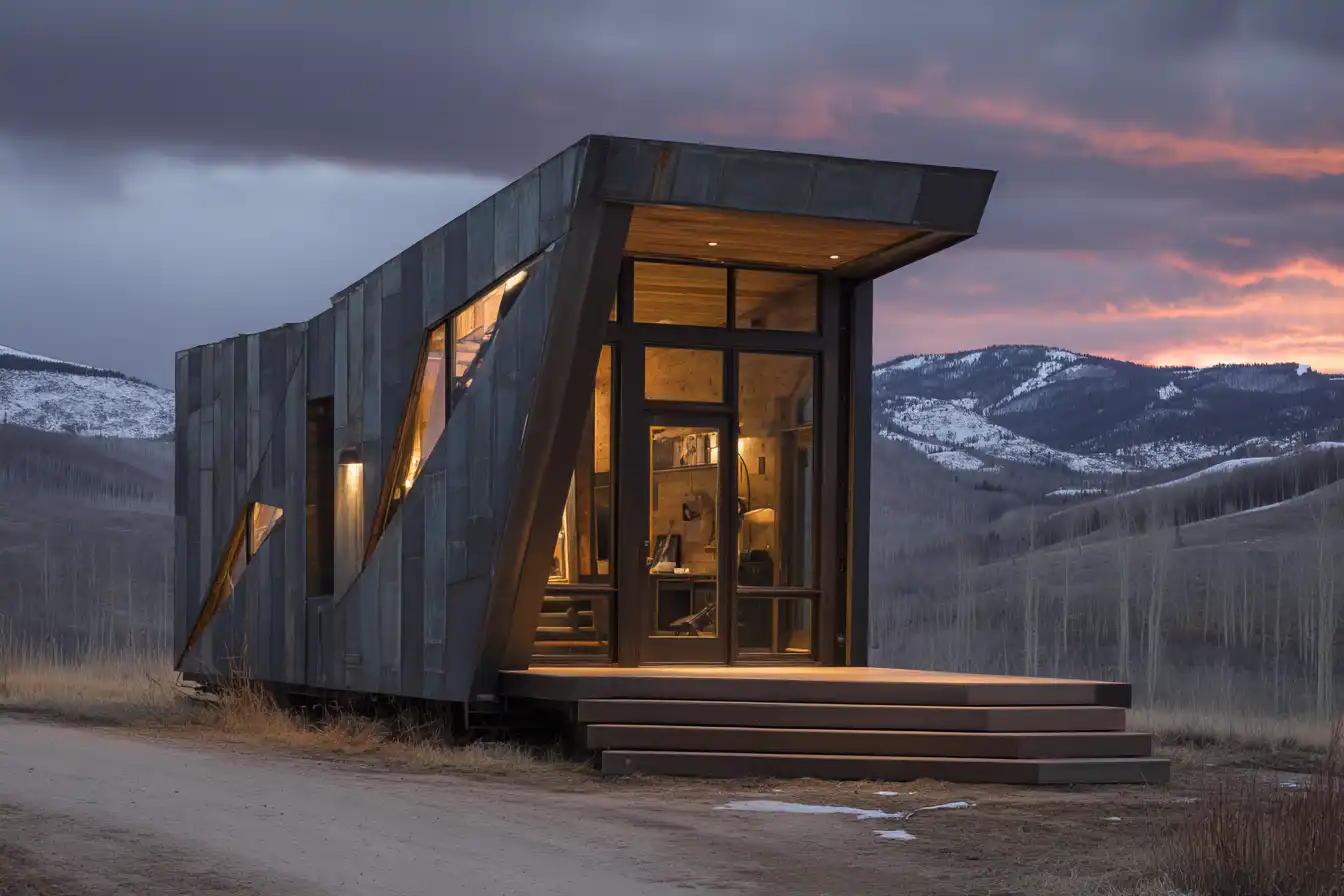
Financial Freedom Through Tiny Home Communities
Lower housing costs enable financial freedom. Residents can save more and reduce debt faster. This freedom allows for investment in experiences, education, or retirement savings, improving overall quality of life. Many residents of tiny home communities in the United States report eliminating mortgage debt entirely, which opens up possibilities for entrepreneurship, travel, and early retirement that would be impossible with conventional housing expenses.
By exploring these benefits, it’s clear why tiny house communities offer an attractive lifestyle choice for many Americans seeking a more intentional way of living.
Tiny House Build vs. Buy: Cost and Timeline Comparison
| Factor | DIY Build | Prefab / Kit Home | Custom Professional Build |
|---|---|---|---|
| Cost Range | $15,000 – $45,000 | $50,000 – $120,000 | $80,000 – $150,000+ |
| Build Timeline | 6 – 12 months | 2 – 4 months | 4 – 8 months |
| Skill Level Required | Intermediate to advanced | Basic assembly | None (handled by builder) |
| Warranty | None | Varies by manufacturer | Typically 1–5 years |
| Financing Eligibility | Limited (personal loans) | RV/personal loans | RV, construction, or personal loans |
| Best For | Budget-conscious builders with time | Quick move-in, moderate budget | Personalized design, turnkey solution |
💡 Pro Tip: About 68% of tiny home owners are mortgage-free, compared to roughly 38% of traditional homeowners. If you are building DIY, budget an additional 15–25% for unexpected costs including permits, certification fees, transportation, and site preparation. Construction loans can work for stationary tiny houses if you own land, though finding lenders familiar with tiny homes can be challenging.
Tiny Home Communities East Coast: Top Picks
The East Coast offers diverse tiny home communities east coast residents love, catering to various lifestyles and budgets. From North Carolina’s wooded retreats to Florida’s lakeside settings, the eastern seaboard provides some of the most established tiny house neighborhoods in the country. Let’s explore standout communities in this region.
The Village at Flat Rock, North Carolina
The Village at Flat Rock in North Carolina features over 60 tiny homes within a tranquil, wooded landscape. It includes shared amenities like a clubhouse, swimming pool, and green spaces. Residents enjoy outdoor activities such as hiking trails and kayaking due to its proximity to the Blue Ridge Mountains. This community supports eco-friendly living and fosters a tight-knit neighborhood atmosphere. The Village at Flat Rock is one of the most recognized small house communities in North Carolina, offering a balanced blend of nature access, social engagement, and sustainable infrastructure for long-term residents.

Wildwoods Community, Pittsboro, North Carolina
Wildwoods Community, located in Pittsboro, North Carolina, blends sustainability with natural beauty. This community spans over 30 acres and emphasizes eco-friendly living. Residents here benefit from shared gardens, a community kitchen, and various outdoor recreation options. The focus on sustainability includes solar-powered homes and composting toilets. As one of the most recognized tiny home communities in the US, Wildwoods demonstrates how communal living and environmental stewardship can go hand in hand. It stands as a leading tiny home community in NC for those who value both nature and neighborly living.

Orlando Lakefront at College Park, Florida
Orlando Lakefront at College Park, situated in Florida, offers a vibrant lakeside setting. This community features 50 tiny houses, encouraging a close-knit atmosphere. Residents enjoy amenities such as a communal dock, fishing opportunities, and a shared workshop space. The emphasis is on fostering collaboration and a sense of belonging through regular community events. This tiny home park is one of the best-known tiny house communities in the United States, drawing visitors and prospective residents from across the country. For those seeking Orlando Lakefront tiny home community reviews, long-term residents frequently praise its walkability, lakeside atmosphere, and welcoming culture. The Orlando Lakefront tiny home community location on the shores of Lake Fairview makes it one of the most scenic tiny homes community destinations in Orlando, Florida.

Tiny Estates, Lancaster, Pennsylvania
Tiny Estates in Lancaster County, Pennsylvania has rapidly grown into one of the most popular tiny home communities east coast enthusiasts recommend. Set on 30 acres of scenic farmland, this community features over 80 uniquely designed tiny homes, a clubhouse, and community fire pits. The development draws inspiration from the surrounding Amish craftsmanship tradition, resulting in beautifully handcrafted homes with exceptional attention to detail. Tiny Estates operates as both a residential community and a hospitality destination, allowing visitors to experience tiny house living before making a commitment. It is also a popular tiny home rental community for travelers wanting a weekend getaway. Communal areas, including a pond, walking trails, and event spaces, encourage resident interaction and provide flexibility for those wanting to experience tiny living or transition into it.

Tiny Home Communities in Virginia and Maryland
The Mid-Atlantic region is gaining attention for its growing number of tiny home communities in Virginia and Maryland. Virginia’s tiny home village projects include emerging developments in the Shenandoah Valley and near Charlottesville, where zoning reforms have made it easier to establish permanent tiny home communities. Similarly, tiny home community Maryland options are expanding around the eastern shore and in rural areas west of Baltimore. For anyone seeking tiny house communities in Maryland or a tiny house community in Virginia, these regions provide a blend of natural beauty, moderate climate, and reasonable land costs.
These East Coast tiny house communities exemplify sustainable living combined with strong community bonds.
West Coast Tiny House Communities
The West Coast is renowned for its innovation and progressive attitudes towards sustainable living. These tiny home developments benefit from some of the most forward-thinking zoning laws and building codes in the country, particularly in states like Oregon and California. Here are some standout tiny house communities in this region, plus one Midwest pick, Canoe Bay in northwest Wisconsin.
Canoe Bay Escape Village, Wisconsin
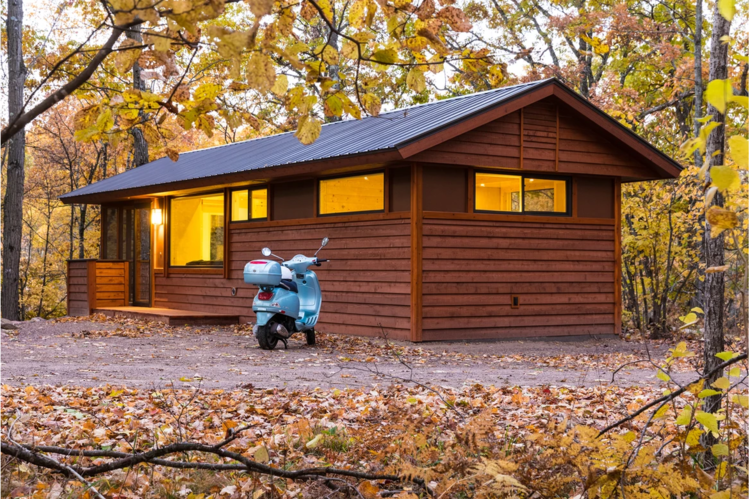
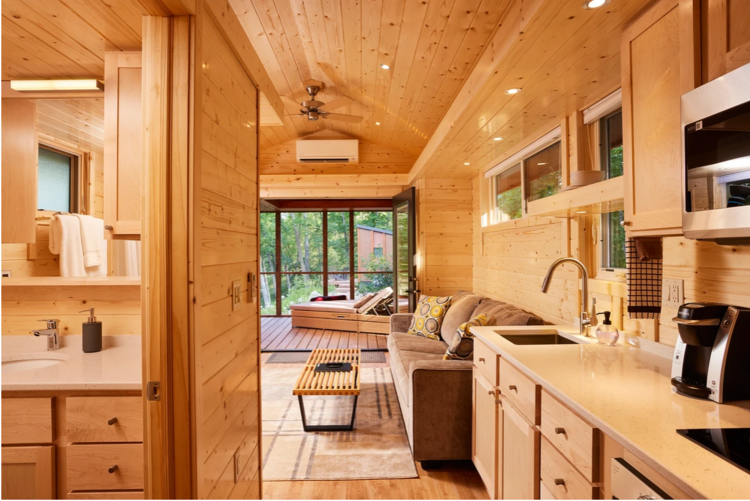
Canoe Bay Escape Village offers a picturesque setting with acres of woodland and lakes. Located in northwest Wisconsin, it caters to tiny house enthusiasts seeking tranquility. Each tiny home integrates eco-friendly designs and materials. Residents enjoy an array of outdoor activities like hiking, fishing, and kayaking. Social areas and community events promote interaction among residents. This luxury tiny home community is ideal for those who want upscale small home community living surrounded by nature. As a notable Wisconsin tiny house community, Canoe Bay sets the standard for canoe bay tiny house design and quality.
Tiny Tranquility, Oregon
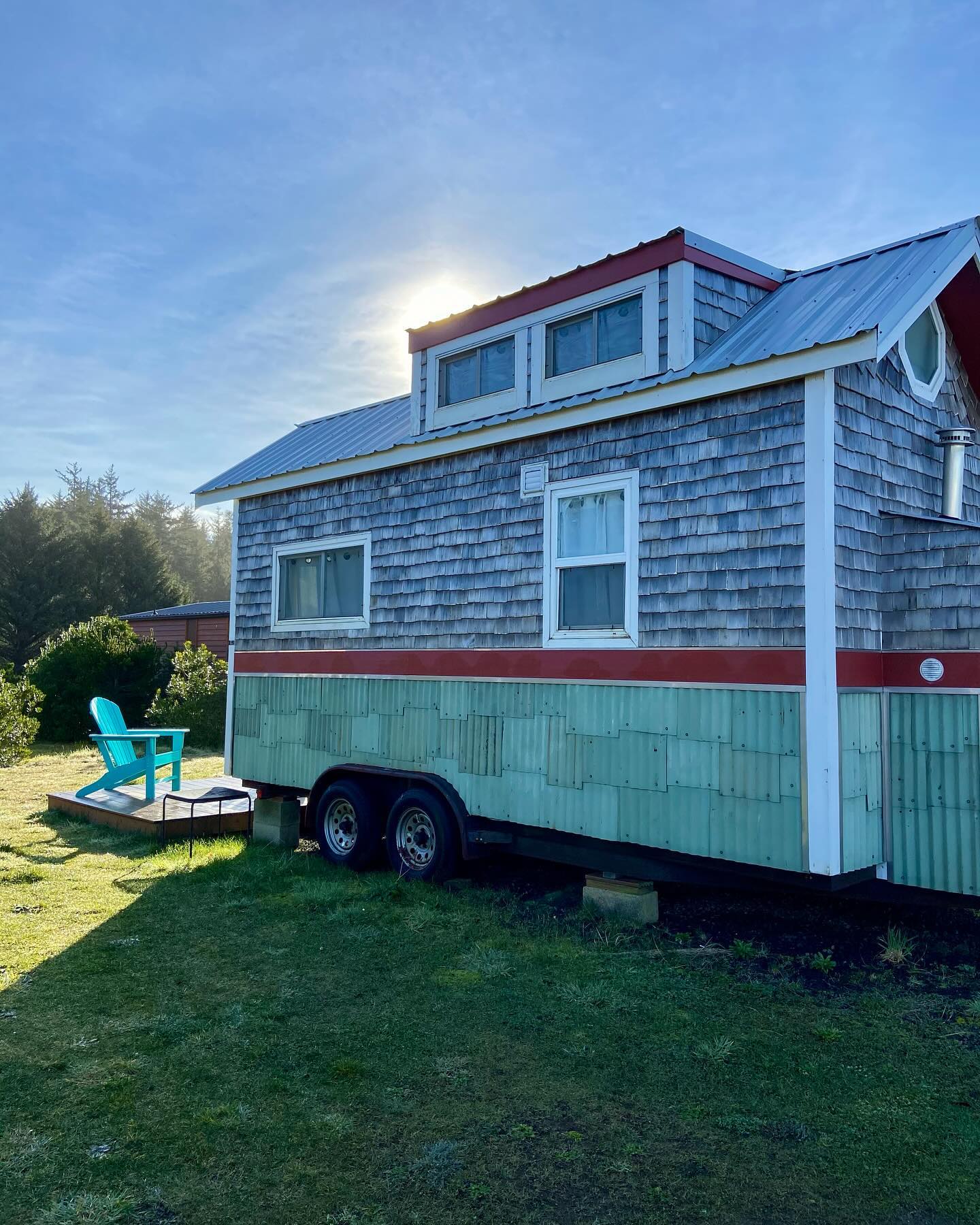
Situated along the Oregon coast, Tiny Tranquility combines scenic beauty with a robust sense of community. It includes over 40 tiny home sites and communal spaces like a lodge, greenhouse, and activity barns. Each resident has access to shared amenities, promoting economic and social benefits. Regular events and DIY workshops foster a strong community spirit among inhabitants. Oregon’s progressive approach to tiny home developments makes communities like Tiny Tranquility a model for how tiny house neighborhoods can thrive within supportive regulatory frameworks. For those searching for a Portland Oregon tiny house community or broader Oregon options, the state remains one of the best for tiny house village living.

Oregon Cottage Company Village, Eugene, Oregon
The Oregon Cottage Company Village in Eugene, Oregon, specializes in custom tiny homes, providing units for permanent residence or rental. This community emphasizes sustainable construction with energy-efficient features like rainwater harvesting systems and solar panels. Shared gardens and recreational spaces enhance community engagement, making it a hub for those prioritizing green living and craftsmanship. The Oregon Cottage Company Village demonstrates how custom-built tiny homes can create a cohesive, environmentally responsible neighborhood that attracts residents seeking both quality construction and a strong sense of community.

Bay Area and California Tiny House Communities
California continues to push the boundaries of tiny house living, particularly in the Bay Area where housing costs are among the highest in the nation. Bay area tiny house community projects, along with capsule houses in the USA and ADU-based developments, are giving residents alternatives to the conventional housing market. Cities like Oakland and San Jose have adopted accessory dwelling unit policies that enable tiny home subdivisions within existing residential zones. In Southern California, initiatives such as the Boyle Heights tiny home village demonstrate how small house villages can also serve as transitional housing solutions for underserved communities.
Midwest Tiny House Communities
Tiny house living has gained traction in the Midwest, offering unique tiny home communities that blend simplicity and sustainability. The Midwest provides some of the most affordable land in the country, making it an excellent region for tiny house developments and tiny home parks. Here are notable tiny house communities in this region:
Cedarsprings Tiny Village, Ohio
Cedarsprings Tiny Village, located in New Paris, Ohio, encompasses 26 acres and caters to tiny house enthusiasts. With 30 spacious lots available, each resident enjoys a private area surrounded by nature. Shared amenities include a communal fire pit, walking trails, and a fishing pond. This community fosters a nature-centric lifestyle, creating a perfect retreat while still providing proximity to nearby cities like Dayton. As a well-established tiny home park in the Midwest, Cedarsprings demonstrates how small home community living can thrive in a rural setting. For those looking for tiny house Dayton Ohio or cedar springs tiny village photos online, the community frequently showcases its scenic lots and custom-built homes on social media.

Tiny House Estates, Kansas
Tiny House Estates, situated in Kansas City, Kansas, offers a close-knit tiny home neighborhood with modern conveniences. It’s designed for those seeking a minimalist lifestyle without compromising on comfort. The community features a shared clubhouse, community garden, and laundry facilities. Each tiny home is connected to utilities, ensuring all residents have access to essential services. This community focuses on fostering neighborly connections and shared experiences through regular social events and communal spaces, making it an ideal choice for tiny house living enthusiasts looking for tiny home communities in the United States.
Michigan Tiny House Community Options
Michigan is becoming a notable destination for tiny house communities in Michigan, with several new developments taking shape across the state. Communities near Grand Rapids and along the western Michigan lakeshore offer scenic locations paired with affordable lot prices. The state’s updated building codes have made it easier to establish permanent tiny home communities on private land, attracting both retirees and young professionals. For those researching tiny house communities in the US, Michigan’s combination of four-season living, lake access, and lower-than-average land costs makes it worth serious consideration. Tiny house builders in the Midwest also serve this market, offering custom builds delivered directly to community lots.
Tiny Home Communities in Indiana
Indiana is also seeing growth in tiny home communities in Indiana, particularly near Indianapolis and Bloomington. These Midwest tiny home villages cater to those looking for affordable, community-oriented living in a region with relatively relaxed building regulations. Several tiny home subdivisions offer full utility hookups, community gardens, and pet-friendly lots, making them practical for both singles and families exploring tiny home locations in the heartland.
Southern Tiny House Communities
The Southern USA hosts some of the most vibrant tiny house communities, offering warmth, hospitality, and unique living experiences. These tiny home developments combine sustainability with Southern charm, and states like Texas, Georgia, and North Carolina are increasingly adopting tiny-house-friendly zoning ordinances that encourage the growth of new tiny house neighborhoods.
Lake Walk Tiny Home Community, Greer, South Carolina
Lake Walk Tiny Home Community, located in Greer, South Carolina, embraces lakeside living with all the charm of the South. It features:
- Lakeside Views: Every home has access to serene lakeside vistas.
- Recreational Activities: Residents enjoy kayaking, fishing, and walking trails.
- Community Events: Regular social gatherings like BBQs and holiday celebrations foster a strong sense of belonging.
This greer tiny house community (often searched as tiny house community in Greer SC or Greer SC tiny house community) is frequently cited as one of the best south carolina tiny home communities. The lake walk tiny house community consistently receives positive reviews from residents who appreciate its balance of privacy and social engagement.

Spur, Texas: America’s First Tiny-House-Friendly Town
Spur, Texas made headlines as the first town in the United States to officially declare itself tiny-house-friendly. Located in West Texas, this pioneering small home community removed minimum square footage requirements for residential construction, opening the door for tiny home developments of all sizes. The Spur Freedom Community welcomes individuals ready for off-grid living, with relaxed zoning laws that make building tiny homes easier. It caters to those wanting a more autonomous lifestyle, with opportunities for creating personalized spaces and engaging with fellow tiny home enthusiasts. The town actively welcomes tiny house enthusiasts, remote workers, and retirees seeking affordable, community-oriented living. Spur’s approach has inspired other municipalities to reconsider their zoning codes, making it a landmark case study in the tiny house movement. For anyone searching for tiny homes communities in Texas, Spur remains the gold standard for alternative housing solutions.

Tiny Homes Communities in Georgia
Georgia has become a growing hub for tiny homes communities in Georgia, particularly around the Atlanta metro area and the North Georgia mountains. Several tiny home villages near Blue Ridge and Dahlonega provide mountain-retreat settings at affordable price points. The state’s updated ADU policies in select counties are making it easier to establish new tiny home subdivisions, and communities outside Savannah are exploring tiny house beach communities along the coast. Georgia’s warm climate, combined with relatively low property costs, positions it as one of the best states for tiny homes in the Southeast.
Mountain and Western Tiny House Communities
Escalante Village, Durango, Colorado
Escalante Village, situated in Durango, Colorado, accommodates 24 tiny homes on the scenic Animas River. It combines outdoor recreation with tiny living, attracting nature lovers who enjoy exploring Colorado’s rugged terrain. Amenities include community gardens, bike trails, and a central gathering space. Escalante Village focuses on sustainable practices and promotes an active lifestyle, making it ideal for outdoor enthusiasts. The community’s emphasis on outdoor recreation and sustainability has made it a model for mountain tiny house living. For those searching for tiny house community Colorado Springs alternatives or broader Colorado tiny home options, Escalante Village represents the best of what the state has to offer.

Before and After: Life Outside vs. Inside a Tiny House Community
Before joining a tiny house community, many individuals struggle with high housing costs, isolation, or lack of flexibility. Living alone in traditional housing often means higher utility bills, limited social interaction, and long-term financial pressure, especially in high-demand urban or suburban areas.
After transitioning into a tiny house community, residents frequently report improved financial stability and a stronger sense of belonging. Shared amenities, intentional social design, and lower living expenses allow residents to focus more on experiences rather than possessions. In 2026, this lifestyle shift is increasingly seen as a quality-of-life upgrade, not a compromise.
Why More Remote Workers Are Choosing Tiny House Communities in 2026
In 2026, remote work is no longer a temporary trend. It has become a permanent lifestyle for millions of professionals across the USA. As a result, tiny house communities are emerging as a highly practical living solution for remote workers who prioritize flexibility, affordability, and focus. Unlike traditional housing, these tiny home neighborhoods offer low fixed costs, simplified living, and environments specifically designed to support work-life balance.
One of the key drivers behind this shift is location independence. Remote workers are no longer tied to major metropolitan areas, allowing them to choose tiny house communities in scenic, low-cost regions without sacrificing career opportunities. Many tiny home developments now intentionally market themselves to digital professionals by offering high-speed fiber internet, quiet work-friendly layouts, and shared coworking spaces. These features were rare just a few years ago.
From a financial perspective, tiny house communities enable remote workers to dramatically reduce living expenses. Lower rent, minimal utility usage, and shared amenities make it easier to save money, invest, or travel while working remotely. In 2026, this financial flexibility is especially valuable as inflation and housing prices continue to pressure traditional renters and homeowners.
Average Monthly Living Costs: Tiny Home Community vs. Traditional Apartment (2026)
| Monthly Expense | Tiny Home Community | Traditional 1BR Apartment |
|---|---|---|
| Rent / Lot Lease | $300 – $1,000 | $1,200 – $2,200 |
| Utilities (electric, water, internet) | $50 – $200 | $150 – $350 |
| Insurance | $35 – $125 | $100 – $300 |
| Maintenance Reserve | $50 – $150 | Included in rent (typically) |
| Estimated Total | $435 – $1,475 | $1,450 – $2,850 |
Beyond cost and location, there is a strong psychological and productivity benefit. Remote workers living in isolated apartments often struggle with burnout, lack of routine, and social disconnection. Tiny house communities counter this by offering a balance between privacy and social interaction. Residents can work independently during the day and still access communal spaces, events, or outdoor areas that promote mental well-being.
Another real-world use case is mobility and scalability. Many tiny house communities allow short- to mid-term stays, making them ideal for remote workers who prefer seasonal relocation or testing new regions before settling long-term. In 2026, this flexibility aligns perfectly with the growing “work-from-anywhere” mindset shaping modern careers.
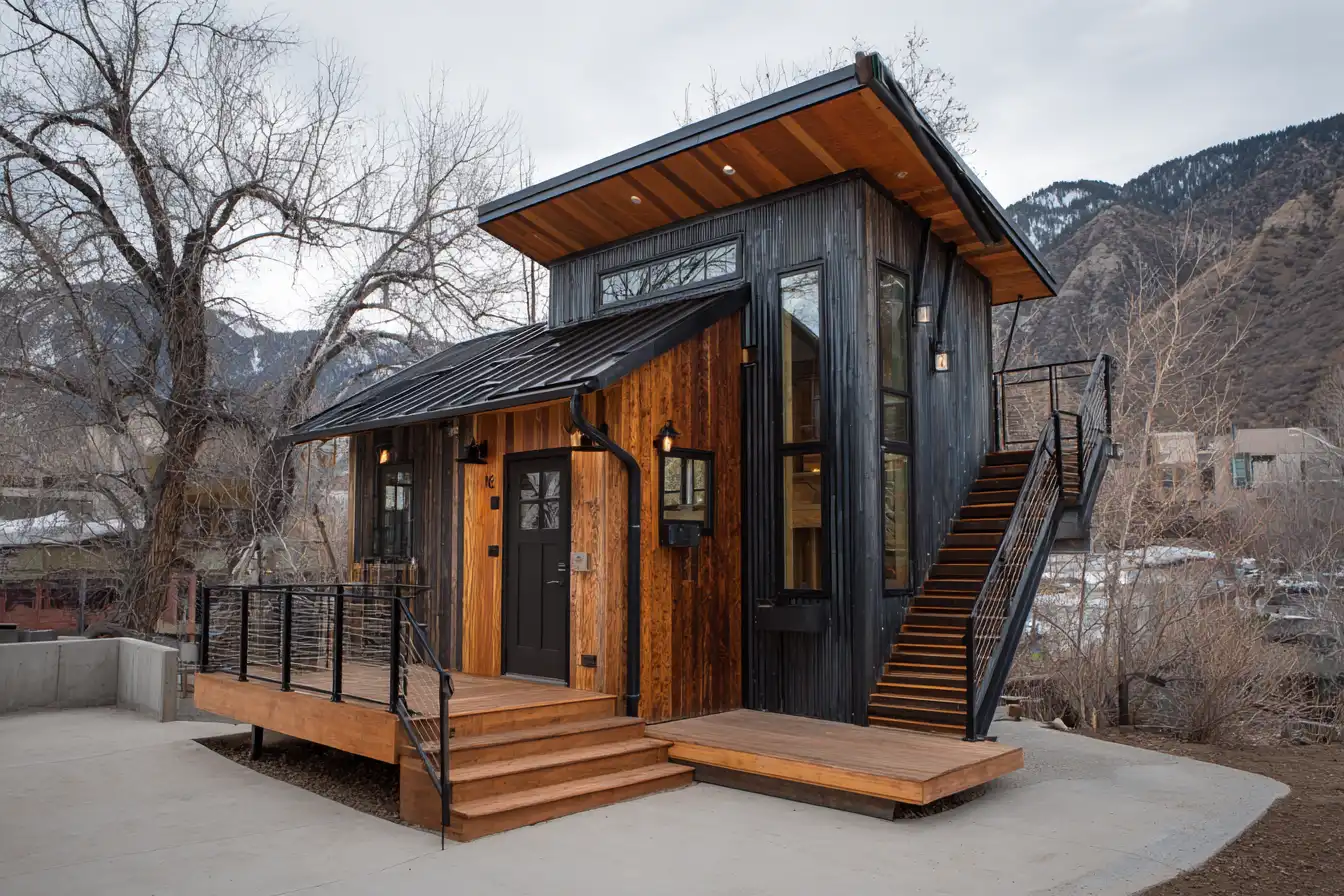
Ultimately, tiny house communities are no longer just an alternative housing option. They represent a strategic lifestyle choice for remote workers. By combining cost efficiency, community-driven living, and work-ready infrastructure, these tiny home communities in the US are redefining how and where people choose to live while working remotely in 2026.
Tiny Home Communities in the US: Zoning and Legal Landscape in 2026
One of the biggest factors influencing where tiny house communities can exist is local zoning legislation. In 2026, several states have made significant progress in accommodating tiny home developments. Texas remains a leader with towns like Spur that have eliminated minimum dwelling size requirements. California and Oregon continue to expand accessory dwelling unit (ADU) regulations that directly benefit tiny home parks and neighborhoods. North Carolina, Colorado, and Florida are also emerging as favorable states for tiny house communities in the United States, with updated building codes that recognize tiny homes as legitimate primary residences.
However, challenges remain. Many municipalities still enforce minimum square footage requirements (often between 600 and 1,000 square feet) that effectively prohibit tiny houses. States like Alaska, Iowa, and New Jersey maintain stricter regulations that limit where tiny homes can be placed. For aspiring tiny house community residents, it is essential to consult local planning departments and review the International Residential Code (IRC) Appendix Q, which provides specific construction guidelines for dwellings under 400 square feet. Understanding these regulations upfront helps avoid costly legal complications down the road.
Tiny House Friendly States: Where Can You Live in a Tiny House?
If you’re asking “where can you live in a tiny house” or “what state has the best tiny home communities,” the answer depends on your priorities. The following table compares several of the most tiny house friendly states based on key criteria.
Comparison of Tiny House Friendly States (2026)
The following table summarizes key differences across popular states for tiny home living:
| State | Avg. Lot Cost | ADU/Tiny Home Laws | Notable Communities |
|---|---|---|---|
| Texas | $15,000 – $40,000 | Very favorable; Spur eliminated minimums | Spur Freedom Community, Austin area developments |
| Oregon | $25,000 – $60,000 | Progressive ADU regulations statewide | Tiny Tranquility, Oregon Cottage Company Village, Portland area |
| North Carolina | $20,000 – $50,000 | Updated codes in select counties | Village at Flat Rock, Wildwoods, Acony Bell |
| Florida | $20,000 – $55,000 | Supportive in many counties | Orlando Lakefront, various coast communities |
| Colorado | $30,000 – $70,000 | Growing acceptance, varies by municipality | Escalante Village (Durango), Colorado Springs area projects |
| Pennsylvania | $15,000 – $45,000 | Supportive in select counties | Tiny Estates (Lancaster County) |
| Michigan | $10,000 – $35,000 | Improving; varies by county | Grand Rapids area, western lakeshore |
| Wisconsin | $15,000 – $40,000 | Supportive in rural areas | Canoe Bay Escape Village |
Colorado Springs, in particular, is emerging as a popular destination for tiny house community Colorado Springs projects. The city’s mix of mountain scenery, growing job market, and evolving zoning laws make it an attractive spot for both tiny home communities Utah residents and Colorado locals. Other states worth watching include Tennessee (tiny home community Tennessee options are expanding), New York (tiny home communities in NY near the Hudson Valley), and New Hampshire (tiny house community NH developments are in early stages).
Key Factors to Consider When Choosing a Tiny House Community
Location and Climate
Proximity to essential services like healthcare, schools, and grocery stores boosts convenience and quality of life. Check local climate conditions; harsh winters or sweltering summers may impact comfort and energy needs. Community surroundings, whether urban, suburban, or rural, also influence lifestyle preferences. When evaluating tiny home communities in the United States, consider proximity to major transportation routes and employment centers, especially if you plan to commute or travel frequently. Communities like The Village at Flat Rock in North Carolina offer mild climates with access to nature, while Spur Freedom Community in Texas caters to individuals embracing off-grid living in arid plains. Mountain regions may appeal to outdoor enthusiasts, but coastal areas often attract those seeking milder winters.

Community Culture and Rules
Evaluate the social dynamics and values in the community. Some tiny home communes emphasize sustainability and eco-friendly living, while others prioritize social activities and neighbor interactions. Gauge if the community’s culture aligns with personal values and lifestyle. Visit potential communities during events or open houses to get an authentic feel for the daily social environment. For example, some communities, like Escalante Village in Colorado, emphasize outdoor recreation and sustainability, while others might cater to artists, retirees, or families. Review HOA regulations, pet policies, and activity rules to ensure compatibility.
Legal Considerations
Zoning laws and building codes vary by region. Ensure that the tiny house community complies with local regulations to avoid potential legal issues. Check if there are restrictions on property modifications or residency duration within the community. In 2026, many states are updating their codes to be more accommodating toward tiny home developments, but it is still crucial to verify compliance before making any financial commitments.
💡 Pro Tip: Always request a copy of the community’s certificate of occupancy and verify that it specifically allows full-time residential use for tiny homes. Some communities are technically zoned as RV parks or campgrounds, which may limit your legal residency rights and affect your eligibility for a permanent mailing address, voter registration, or homeowner’s insurance.
Essential Guide to USA Construction Laws and Regulations: What You Need to Know
Amenities and Accessibility
Amenities such as shared gardens, recreational spaces, and communal kitchens enhance living experiences. Compare offered amenities against personal needs and lifestyle preferences. High-quality amenities can significantly improve everyday living. The best tiny house communities invest in infrastructure that supports both individual privacy and communal engagement. Locations like Tiny Estates in Pennsylvania provide extensive amenities, such as laundry facilities and event spaces, appealing to residents valuing modern conveniences. Assess accessibility to essential services, such as grocery stores, healthcare, and schools, based on your needs.

Cost
Community living costs vary widely. Factor in initial purchase expenses, monthly fees, and additional costs for shared facilities or utilities. Determine if the cost structure is sustainable based on individual financial situations. Some luxury tiny home communities charge premium rates for enhanced amenities, while more basic tiny home parks may offer significantly lower monthly fees.
Safety and Security
Assess the safety measures in place within the tiny home neighborhood. Secure entrances, well-lit common areas, and surveillance systems contribute to a safe living environment. Community-organized safety programs also enhance resident security.
Accessibility
Tiny house communities should be accessible to all residents, including those with disabilities. Look for wheelchair ramps, wide doorways, and other accessibility features. Easy access improves livability for everyone. For those interested in designing accessible tiny homes, incorporating universal design principles from the start ensures comfort for residents of all abilities.
Environmental Impact
Prioritize communities with eco-friendly practices. Solar panels, rainwater harvesting systems, and energy-efficient appliances reduce environmental footprints. Communities committed to sustainability promote a healthier planet. The best tiny home communities in the US integrate environmental stewardship into every aspect of their design and operations.
By considering these key factors, you can make informed choices that align with your lifestyle and values, ensuring a rewarding tiny house living experience.
Best Tiny House Communities in the USA: Updated 2026 Rankings
When evaluating the best tiny house communities to consider in the USA, the updated 2026 perspective emphasizes more than location. Community governance, sustainability practices, long-term scalability, and lifestyle compatibility are now the defining criteria. The most successful tiny home communities in the United States are those that evolve with residents’ needs rather than remaining static developments.
Choosing the right tiny house community in 2026 means looking beyond aesthetics and focusing on future-proof living. Tiny home developments that integrate flexibility, social design, and environmental responsibility are leading the next generation of tiny house living. For a broader look at minimalist and sustainable housing alternatives, you may also want to explore container homes as an innovative alternative or learn about the broader microhousing architecture movement.
Additional Tiny Home Communities by State
The tiny house movement continues to expand into new regions. Here is a quick overview of emerging tiny home communities across several states that are worth watching:
In Tennessee, tiny home community Tennessee developments are growing around Chattanooga and the Smoky Mountains region. These tiny home villages pair mountain scenery with affordable lot prices and a growing support network for tiny house builders. In Utah, tiny home communities Utah options are still limited but expanding, particularly in areas south of Salt Lake City where zoning reforms are underway.
Residents interested in Oklahoma can find tiny house communities in Oklahoma near Tulsa and Oklahoma City, where land costs remain among the lowest in the nation. Missouri also offers tiny house communities in Missouri anchored by eco-villages like Dancing Rabbit. In the Northeast, tiny home communities in NY are gaining traction in the Hudson Valley, and Maine (tiny home community Maine) is seeing interest from retirees seeking affordable downsizing options. Those in the Las Vegas area can explore emerging tiny home communities in Las Vegas designed for desert-climate living, featuring energy-efficient builds and xeriscaped common areas.
How to Get Started with Tiny House Community Living
Making the transition to a tiny house community involves several practical steps. First, define your priorities. Are you seeking financial freedom, environmental sustainability, social connection, or all three? Next, research tiny home communities in the US that match your preferred region and climate. Visit communities in person whenever possible, and speak directly with current residents about their experiences.
To get a visual overview of what tiny house community living actually looks like, watch this helpful video tour:
Before committing financially, consult with local zoning authorities to verify the legal status of the community and your rights as a resident. If you plan to build a custom tiny home, familiarize yourself with the step-by-step process of building a tiny house in the USA. For those considering purchasing a pre-built home, research the best tiny house building companies to ensure quality construction and warranty support. Finally, consider starting with a short-term stay or rental to experience tiny house community living before making a long-term commitment. Explore our guide on getting started with the tiny house movement in the USA for a roadmap.
If you’re searching for “tiny house communities near me” or “is there a tiny home community near me,” the best starting point is to identify your preferred state and then narrow your search by community type, whether that’s a tiny home rental community, a permanent tiny home community, or a tiny house vacation community for seasonal stays. Websites like Dezeen’s tiny house features and local tiny house society groups can also connect you with regional resources and upcoming tiny home village openings.
💡 Pro Tip — Your Tiny Home Community Evaluation Checklist:
- Verify zoning compliance — Confirm the community is legally permitted for full-time residential use in its municipality.
- Request a full cost disclosure — Get lot rent, utilities, HOA fees, maintenance, and any seasonal surcharges in writing.
- Visit in person — Stay for a weekend if possible; many communities offer short-term rental trials.
- Talk to current residents — Ask about hidden costs, community culture, noise levels, and management responsiveness.
- Check utility infrastructure — Verify water, sewer, electric hookups, and internet speed (especially if working remotely).
- Review community rules — Understand pet policies, guest restrictions, exterior modification rules, and subletting terms.
- Confirm exit terms — Know the lease termination process, any penalties, and resale rights for your home or lot.
Frequently Asked Questions
Tiny house communities are neighbourhoods built for compact homes, often with shared amenities, offering affordable and simpler living.
They are spread across many states, and the best balance affordability, location, amenities and a strong community.
They can offer low living costs and flexibility, but rules, land ownership and resale vary, so research each community carefully.
Building a Tiny House Community: What Developers Need to Know
For those interested in building a tiny house community rather than joining one, the process starts with securing appropriately zoned land. Developers must navigate local building codes, utility infrastructure planning, and community design standards. Building a tiny home community in 2026 requires attention to sustainability certifications, ADA accessibility, and resident governance structures. Many successful tiny home developments started with a clear vision document, a phased construction plan, and partnerships with established tiny house builders on the East Coast or Midwest tiny house builders who specialize in community-scale projects. The initial investment for building a tiny house community typically ranges from $500,000 to $2 million depending on location, lot count, and infrastructure requirements.
Conclusion
Choosing the right tiny house community involves carefully evaluating multiple factors. Location significantly impacts daily living, affecting access to facilities, climate, and overall lifestyle satisfaction. Ensuring the community culture aligns with personal values enhances the living experience, fostering a sense of belonging and connection within the tiny home neighborhood.
Legal considerations are critical since zoning laws and building codes vary widely across the United States. Tiny home communities with clear, favorable regulations ensure smoother transitions and fewer legal hurdles. Amenities play a crucial role in daily comfort and convenience. Prioritizing essential services like utilities, waste management, and communal spaces can enhance quality of life in any tiny house development.

Cost is a decisive factor. Evaluating upfront expenses and ongoing costs ensures the choice fits within budget constraints. Safety and security cannot be overlooked. Assessing the tiny house community’s measures for personal and property protection provides peace of mind. Accessibility to public transportation, healthcare, and other essential services is vital, especially for those with mobility issues or specific health needs.
Considering the environmental impact of the community aligns with sustainable living values. Tiny home communities with eco-friendly initiatives and practices contribute positively to the environment and promote sustainable living for future generations. As local governments refine zoning laws and building codes to accommodate tiny homes, the future points to broader acceptance and continued innovation in community design.
By thoroughly examining these elements, you can select a tiny house community that offers a harmonious, fulfilling, and sustainable lifestyle, whether you are drawn to luxury tiny home communities, affordable tiny home parks, off-grid tiny house communes, or vibrant tiny house neighborhoods near major cities. From tiny home communities for seniors to modern tiny house villages for remote workers, the options in 2026 are broader and more accessible than ever before.
Frequently Asked Questions About Tiny House Communities
What is a tiny house community?
A tiny house community is a designated neighborhood where residents live in compact homes, typically ranging from 100 to 400 square feet. These communities provide legal parking or building spots for tiny homes, along with shared amenities like community gardens, clubhouses, walking trails, and recreational areas. They can be located in urban, suburban, or rural settings and may operate as rental communities, ownership developments, or hybrid models. Unlike isolated tiny home placements, these neighborhoods foster social connection and shared resources among like-minded residents.
How much does it cost to live in a tiny house community?
Monthly costs in tiny house communities typically range from $200 to $1,200 depending on location, amenities, and community type. Budget-friendly communities like Spur Freedom in Texas start around $200–$500 per month, while luxury options like Canoe Bay Escape Village in Wisconsin can reach $800–$1,200 per month. These figures generally cover lot rent only. Utilities, insurance, and maintenance can add an additional $100–$350 per month. Purchasing a tiny home itself ranges from $30,000 to $150,000 depending on whether you build DIY, buy prefab, or commission a custom professional build.
Where can I legally live in a tiny house in the USA?
Several states have adopted tiny-house-friendly zoning laws, making legal tiny home living easier. Texas leads with towns like Spur that have eliminated minimum square footage requirements. Oregon has progressive statewide ADU regulations, and North Carolina, Florida, Colorado, and Pennsylvania all have established tiny home communities with legal permanent residency options. However, zoning laws vary significantly by municipality, so always verify with local planning departments before committing. Review the International Residential Code (IRC) Appendix Q, which provides specific guidelines for dwellings under 400 square feet.

What are the best tiny house communities in the United States?
Some of the top-rated tiny house communities in the USA include: The Village at Flat Rock in North Carolina for retirees and nature lovers, Orlando Lakefront in Florida for lakeside living, Tiny Estates in Pennsylvania for try-before-you-buy experiences, Escalante Village in Colorado for mountain enthusiasts, Tiny Tranquility in Oregon for coastal living, Canoe Bay Escape Village in Wisconsin for luxury retreats, Spur Freedom Community in Texas for budget-friendly off-grid living, Cedarsprings Tiny Village in Ohio for Midwest affordability, and Dancing Rabbit Ecovillage in Missouri for fully off-grid intentional living. Each community offers different amenities, price ranges, and lifestyle focuses.
Can I bring my own tiny house to a community?
Yes, many tiny house communities allow you to bring your own tiny home on wheels (THOW), provided it meets specific certification and size requirements. Most communities require RVIA, NOAH, or state-level certification for tiny homes on wheels, along with up-to-date registration and title. Some communities also accept park model RVs or stick-built tiny homes on foundations. Each community has its own guidelines regarding maximum dimensions, exterior aesthetics, and utility hookup compatibility, so always confirm requirements directly with the community before transporting your home.
Are there tiny house communities for seniors and retirees?
Yes, tiny house communities for seniors are one of the fastest-growing segments in 2026. Many communities now include age-friendly design features such as single-story layouts, wider doorways, grab bars, and proximity to healthcare services. States like Florida, North Carolina, and Arizona lead this movement with dedicated tiny home retirement communities designed for active adult living. The Village at Flat Rock in North Carolina and Simple Life communities are popular choices among retirees. These communities provide a lower-maintenance alternative to traditional senior housing while preserving independence, social engagement, and financial flexibility.
What amenities do tiny house communities typically offer?
Amenities vary by community but commonly include community gardens, walking trails, fire pits, dog parks, clubhouses, laundry facilities, and shared recreational areas. More upscale communities may offer swimming pools, fitness centers, coworking spaces, yoga studios, craft workshops, and farm-to-table dining programs. Utility hookups for water, sewer, and electricity are standard in most established communities. Some communities also provide internet access, on-site storage, and organized social events like potlucks, movie nights, and seasonal celebrations.

How do I find tiny house communities near me?
Start by identifying your preferred state and narrowing your search by community type, whether you want a rental community, permanent ownership, or a vacation-style stay. Online resources like TinyHouseCommunity.com, local tiny house society Facebook groups, and directories on sites like Tiny Living and Choose Tiny can help you locate communities by state. Visiting communities in person is highly recommended. Many offer short-term rental stays so you can experience the lifestyle before committing long-term. Additionally, attending tiny house events and conferences is a great way to discover new communities and connect with the tiny house movement.
What is the difference between a tiny house community and an RV park?
While both accommodate small, mobile dwellings, there are key differences. Tiny house communities are designed for long-term or permanent residency with a focus on neighborhood culture, shared amenities, and intentional living. They often have stricter design standards, community governance, and resident engagement programs. RV parks, on the other hand, primarily cater to transient travelers and recreational vehicle users with shorter stay durations. Some tiny house communities are technically zoned as RV parks, which can affect your legal residency rights, mailing address eligibility, and insurance options. Always verify the community’s zoning classification before making a long-term commitment.
How do I start a tiny house community?
Starting a tiny house community begins with securing appropriately zoned land. States like Florida, Oregon, Texas, and California tend to have more flexible building ordinances. You will need to navigate local zoning laws, building codes, and utility infrastructure planning for water, sewer, electricity, and waste removal. As a general guideline, plan for at least half an acre of land per home, plus space for roads and communal areas. The initial investment typically ranges from $500,000 to $2 million depending on location, lot count, and infrastructure. Developers should also create community governance documents (CC&Rs), pursue sustainability certifications, and establish partnerships with experienced tiny house builders for community-scale projects.
How to Join a Tiny House Community: Step-by-Step Guide
Joining a tiny house community involves more than just finding an open lot. From initial research to signing a lease or purchasing a home, each step requires careful planning to ensure the community aligns with your lifestyle, budget, and long-term goals. Follow these steps to make a smooth transition into tiny house community living in 2026.

Step 1: Define Your Priorities and Lifestyle Goals
Before searching for a community, determine what matters most to you. Are you seeking financial freedom, environmental sustainability, social connection, or a combination of all three? Decide whether you prefer urban, rural, or coastal living, and identify must-have amenities such as coworking spaces, gardens, or pet-friendly policies. Clarifying your priorities early will narrow your search to communities that genuinely match your needs rather than wasting time on incompatible options.Step 2: Research Communities by State and Region
Use online directories such as TinyHouseCommunity.com, Tiny Living, and state-specific Facebook groups to identify active tiny house communities in your preferred area. Compare communities by lot rent, amenities, climate, proximity to services, and community culture. Pay attention to whether the community allows tiny homes on wheels, requires foundation-built homes, or accepts park model RVs. Create a shortlist of three to five communities that meet your criteria for a deeper evaluation.Step 3: Verify Zoning Laws and Legal Compliance
Contact local planning departments to confirm that the community is legally permitted for full-time residential use. Ask whether the community is zoned as residential, RV park, or campground, as this directly affects your residency rights, mailing address eligibility, voter registration, and insurance options. Review the International Residential Code (IRC) Appendix Q for dwellings under 400 square feet, and request a copy of the community’s certificate of occupancy.Step 4: Visit the Community in Person
Never commit to a tiny house community without visiting in person. Many communities offer short-term rental stays or trial weekends that allow you to experience daily life before signing a lease. Walk the grounds, observe the condition of shared amenities, check noise levels at different times of day, and evaluate the overall atmosphere. This is also the best opportunity to meet current residents and ask them candid questions about their experience.Step 5: Talk to Current Residents
Current residents are your most valuable source of information. Ask about hidden costs beyond advertised lot rent, how responsive management is to maintenance requests, the quality of internet and utility hookups, and how well the community enforces its rules. Learn about the social dynamics and whether the community culture matches what you are looking for. Residents can also share practical tips about move-in logistics, nearby services, and seasonal considerations that you will not find on a website.
Step 6: Request a Full Cost Disclosure
Ask the community management for a complete breakdown of all monthly and annual costs, including lot rent, utility fees, HOA dues, maintenance assessments, insurance requirements, and any seasonal surcharges. Factor in one-time costs such as utility hookup fees ($5,000–$15,000), transportation of your tiny home ($1,000–$5,000 for moves over 250 miles), and site preparation expenses. Compare the total monthly cost against your budget to ensure long-term sustainability.Step 7: Review Community Rules and Lease Terms
Carefully read the community’s rules, covenants, and lease agreement before signing. Pay close attention to pet policies, guest restrictions, exterior modification rules, quiet hours, subletting terms, and vehicle parking limits. Understand the lease termination process, including any penalties for early departure and your rights regarding resale of your home or lot assignment. If anything is unclear, ask for written clarification before committing.Step 8: Secure or Prepare Your Tiny Home
If you already own a tiny house, confirm that it meets the community’s certification requirements (RVIA, NOAH, or state-level certification) and size specifications. If you need to purchase or build a tiny home, research reputable tiny house builders and allow four to twelve months for construction depending on your chosen build method. Ensure your home’s utility connections (water, sewer, electric) are compatible with the community’s hookup systems before scheduling delivery.Step 9: Arrange Transportation and Move-In Logistics
Coordinate the delivery of your tiny home with a licensed and insured transport company experienced in moving oversized loads. Confirm the community’s move-in procedures, including designated delivery days, site preparation requirements, and utility activation timelines. Most communities require advance notice of at least two to four weeks for new home arrivals. Plan for site setup tasks like leveling, skirting, and connecting utilities, which may require professional assistance.Step 10: Settle In and Engage with the Community
Once you are moved in, take time to introduce yourself to neighbors, attend community events, and participate in shared activities like garden projects, potlucks, or workshops. Engaging early helps you build relationships, learn unwritten community norms, and establish yourself as a valued member of the neighborhood. The social fabric of a tiny house community is one of its greatest benefits, so invest in it from day one.Last updated:



18 Comments


Tiny House Water Systems: Your Complete Guide to Plumbing, Rainwater Harvesting and Off-Grid Solutions
A practical guide to designing a tiny house water system, covering PEX...
Bahattin Duran14 Mins read
Off-Grid Tiny House Living: Complete Setup Guide for Beginners
This guide walks you through every stage of setting up an off-grid...
Bahattin Duran15 Mins read
Tiny House with Loft: Design Ideas, Plans and Building Tips for Vertical Living
A complete guide to designing and building a tiny house with loft,...
Bahattin Duran15 Mins read
8+ Best Tiny Home Communities in Michigan: Great Lakes Tiny Living Guide
Explore tiny home communities in Michigan. Great Lakes lifestyle, affordable land, and...
Bahattin Duran18 Mins read


These are a Brilliant Amazing Ideas…Love them.
Great
Frank Lloyd Wright on a tiny scale. Angles and straight lines.
Amazing point of view!
I think tiny houses are interesting. They seem to save money and help the environment.
And sustainable.
Living in a tiny house community might be nice. It sounds good for meeting people.
That is true!
Tiny houses look cute, but I wonder if they are comfortable for everyone.
It should be designed well according to the number of people.
I think tiny houses are interesting. It seems like a good way to save money and live simpler.
You don’t pay rent, your electricity comes from panels and much more. It’s incredibly cheap and sustainable.
The idea of tiny house communities is okay. They have shared spaces, which could be nice for meeting people.
Yes, it is a great place to meet people and expand your sphere of influence.
This article talks about tiny house communities. It seems like a good idea for people who want to live simply and save money. I think some parts are interesting, but I’m not sure if it’s for me.
The article talks about tiny house communities. They seem interesting for people who want a simpler life. The different types of communities are good to know.
I love the idea of tiny house living! It sounds so peaceful and friendly. I can’t wait to find a nice community to be part of!
This article gives a lot of information about tiny house communities. I didn’t know there were so many options and benefits. It seems like a nice way to live simply and connect with others.