

UNStudio’s RIVUS: How a Former Factory Becomes a Cluj-Napoca Riverfront District
UNStudio has revealed RIVUS, a river-oriented master plan that reconnects Cluj-Napoca to the Someș River. Built on the former Carbochim industrial platform, the 14-hectare district pairs adaptive reuse with new public space, two pedestrian bridges, and a mixed-use program now under construction.
 Elif Ayse Sen6 June 20267 Mins read3
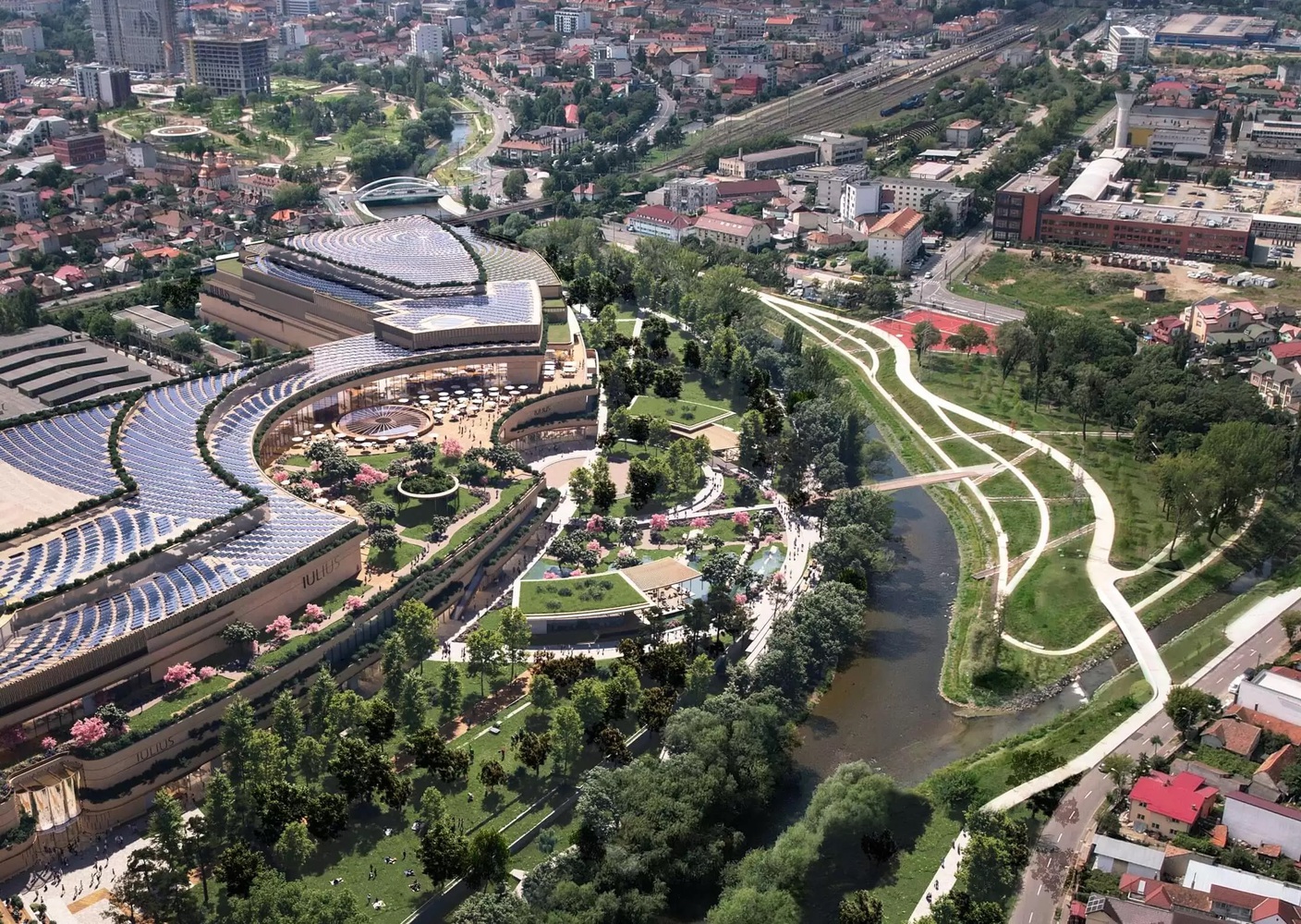
Table of Contents Show
UNStudio’s RIVUS master plan in Cluj-Napoca transforms the former Carbochim industrial platform into a 14-hectare riverfront district along the Someș River. Designed with Felixx Landscape Architects and Planners for developers IULIUS and Atterbury Europe, the project brings adaptive reuse, public space, and new mobility infrastructure together in a single mixed-use neighborhood, with construction now underway.
For decades, this stretch of the Someș sat behind factory walls. The land that once carried the name “Meadowland Garden” became an industrial center that fed the city’s growth while cutting residents off from the water. RIVUS sets out to reverse that, opening the riverbank back up to public life while keeping the memory of the site’s industrial past visible in the new district. After the zonal urban plan was approved in 2025 and the building permit followed in March 2026, demolition, excavation, and the restoration of two heritage structures are already happening on site.
What Is the RIVUS Master Plan in Cluj-Napoca?
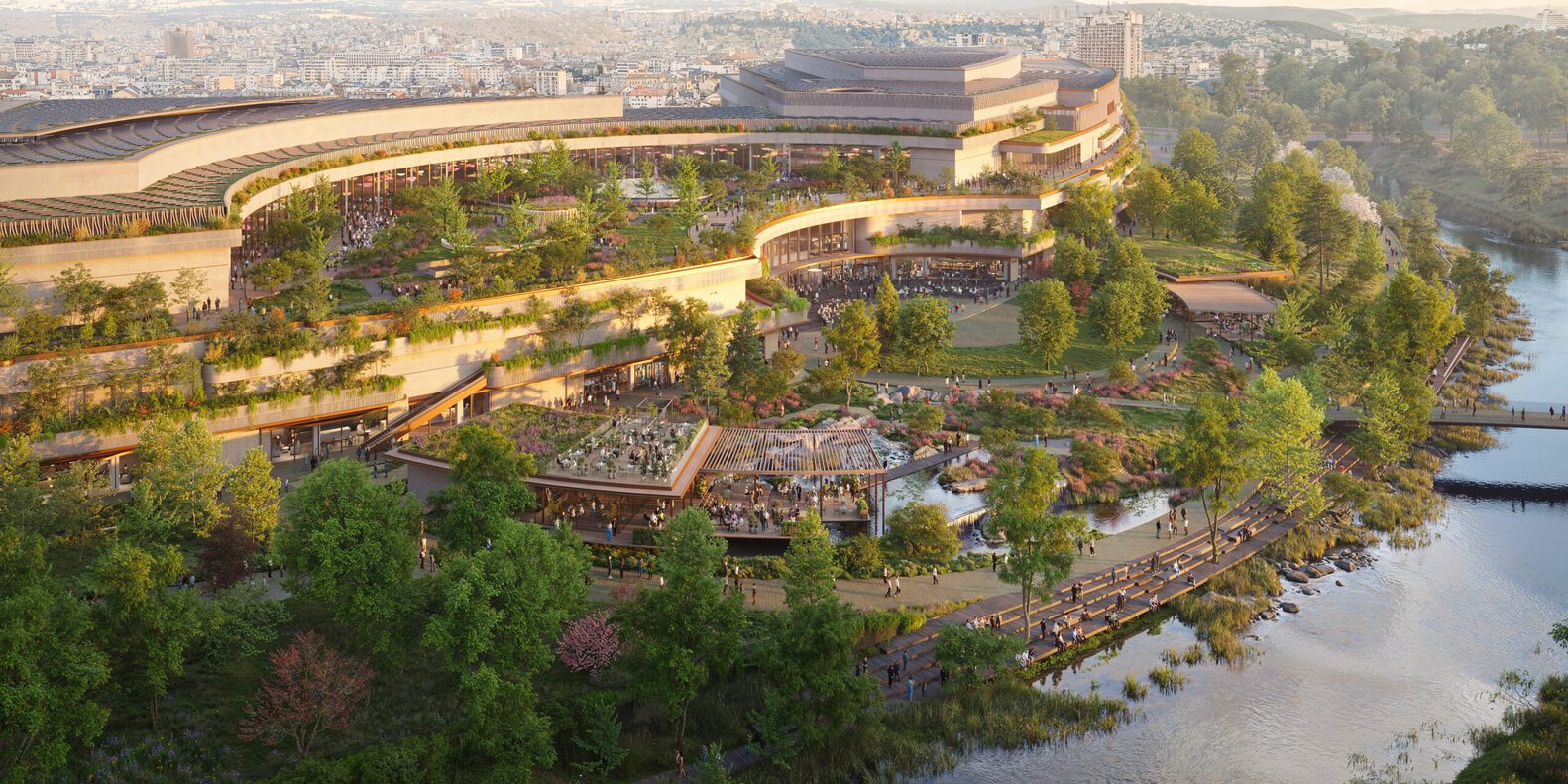
RIVUS is a large-scale urban regeneration project that converts the former Carbochim factory grounds into a mixed-use riverfront district. UNStudio leads the design, working alongside Felixx on the landscape strategy. The brief came from IULIUS and Atterbury Europe through Rivus Investments S.R.L, and the plan was shaped by a public consultation process that fed local requests directly into the design.
The name comes from the Latin word for river, a deliberate nod to the Someș as the organizing element of the whole scheme. Rather than treating the water as an edge, the plan pulls activity toward it. The building form steps down in terraces as it approaches the riverbank, and the architecture borrows from the movement and geometry of water through fluid facade lines and circular forms. The result reads less like a single shopping destination and more like a piece of city stitched back into its surroundings.
Project at a Glance
The table below summarizes the core figures behind the development:
| Detail | RIVUS, Cluj-Napoca |
|---|---|
| Lead architect | UNStudio, with Felixx Landscape Architects and Planners |
| Developers | IULIUS and Atterbury Europe (Rivus Investments S.R.L) |
| Site | Former Carbochim platform, more than 14 hectares |
| Program | 400+ stores, 30+ restaurants and cafés, offices, culture, riverfront park |
| Preserved buildings | 2 former Carbochim structures |
| Status | Building permit granted March 2026, construction underway |
From Carbochim Factory to Riverfront District
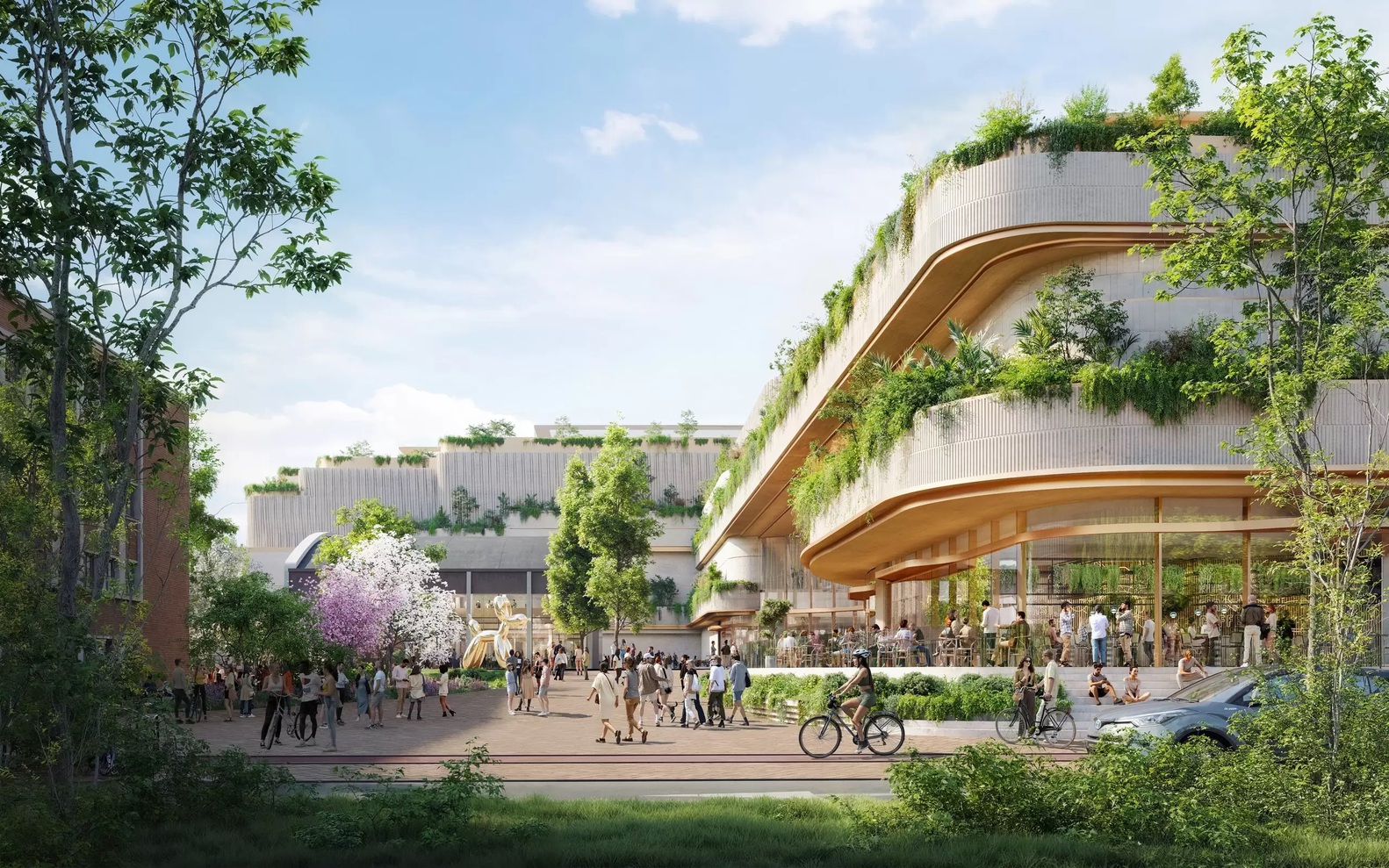
Carbochim was founded in 1949 and grew into Romania’s largest producer of professional abrasives. Its brick and arcade buildings became part of the city’s industrial identity, even as the working platform kept the public away from the river behind it. Instead of clearing the whole site, the plan keeps two of these structures and gives them a second life.
The former administrative building will be adapted into coworking and entrepreneurial space, while the arcade hall becomes a cultural venue tied into the public life of the riverfront. This is the part of the project where heritage and new construction meet most directly, and it sets the tone for how RIVUS treats the past as material to build with rather than something to erase. For readers weighing this approach on their own sites, our breakdown of adaptive reuse versus new construction covers the cost and design trade-offs in detail.
💡 Pro Tip
When working on former industrial platforms like Carbochim, commission a Phase II environmental site assessment before locking in any reuse layout. Decades of manufacturing usually leave soil and groundwater contamination that dictates which structures can stay and where new foundations are viable. Discovering it late can reset an entire master plan schedule and budget.
Reusing existing fabric also carries a quieter environmental argument. Keeping a structure preserves the carbon already locked into its concrete, brick, and steel, which is one reason the practice has moved from a niche interest to standard urban strategy. If you want the wider picture, our look at adaptive reuse and sustainable design traces how the idea has spread across cities.
How UNStudio Designed RIVUS Around the Someș River
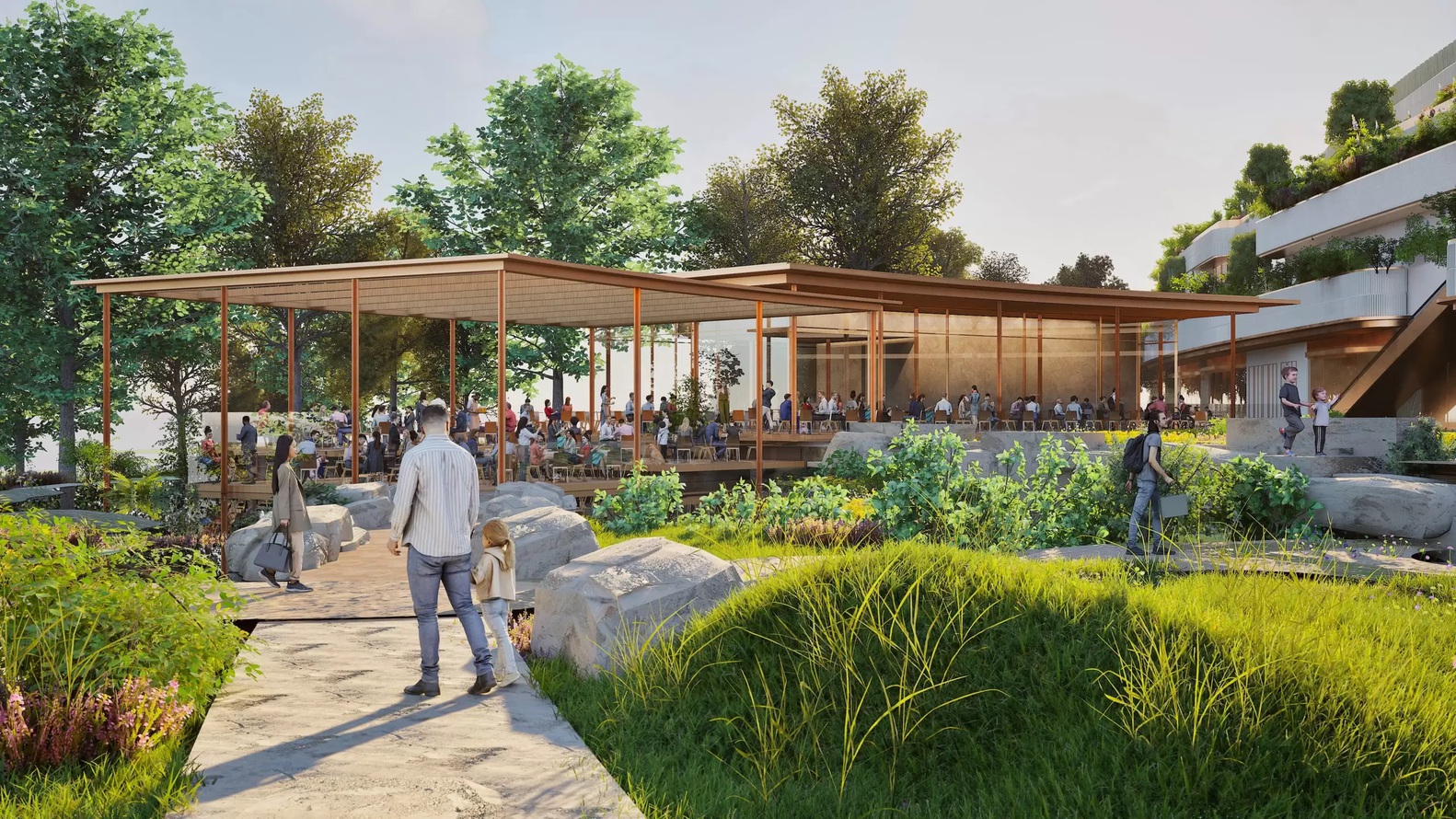
The river is the spine of the plan. UNStudio’s concept treats the Someș as a connector rather than a boundary, extending the green corridor along the north of the city and reclaiming a riverbank that has been off limits for generations. Roughly a third of the total site is given over to a new urban garden and riverfront park, a striking ratio for a development that also houses Romania’s largest retail area.
That balance of program and open space is consistent with how Ben van Berkel and his studio have worked across their portfolio, from the Erasmus Bridge in Rotterdam to the Mercedes-Benz Museum in Stuttgart. Readers new to the practice can find the full story in our profile of Ben van Berkel’s career and design approach, which traces the fluid, infrastructure-scale thinking on display at RIVUS.
🎓 Expert Insight
“We want to bring the people on the Carbochim site back to the water” — Arjan Dingsté, Director and Senior Architect, UNStudio
Dingsté’s framing explains the whole logic of the plan. Every move, from the terraced massing to the two new bridges, works to shorten the distance between residents and a riverbank that industry kept locked away for decades.
UNStudio’s water-driven language is not only decorative. The circular geometries and stepped terraces create sightlines toward the river from inside the district, while the landscape framework manages how rainwater moves across a large, formerly paved site.
Inside the Mixed-Use Program
RIVUS is built as a layered district rather than a mall with a park attached. The plan brings together more than 400 stores, over 30 restaurants and cafés overlooking the river, offices, coworking areas, cultural venues, and dedicated platforms for local producers and entrepreneurs. The leasable area reaches 165,000 square meters, which makes it one of the widest mixes of uses in any Romanian development.
This diversity of program is what separates RIVUS from a conventional retail box. Daily errands, work, culture, and recreation are meant to sit close enough that the riverfront stays active across the day rather than emptying out after shops close. The approach echoes other recent riverfront schemes, including MVRDV and OODA’s Marvila master plan in Lisbon, which reorganizes a fragmented industrial waterfront into connected neighborhoods.
🔢 Quick Numbers
- Total investment estimated above 550 million euro, making RIVUS the largest urban reconversion currently underway in Romania (Romania Insider, 2026)
- 400 million euro in financing secured, the largest loan for a new real estate development in Romania, with 180.3 million euro from the European Bank for Reconstruction and Development (Romania Insider, 2025)
- 165,000 square meters of total leasable area across the district (Real Asset Insight, 2025)
New Public Infrastructure and Mobility
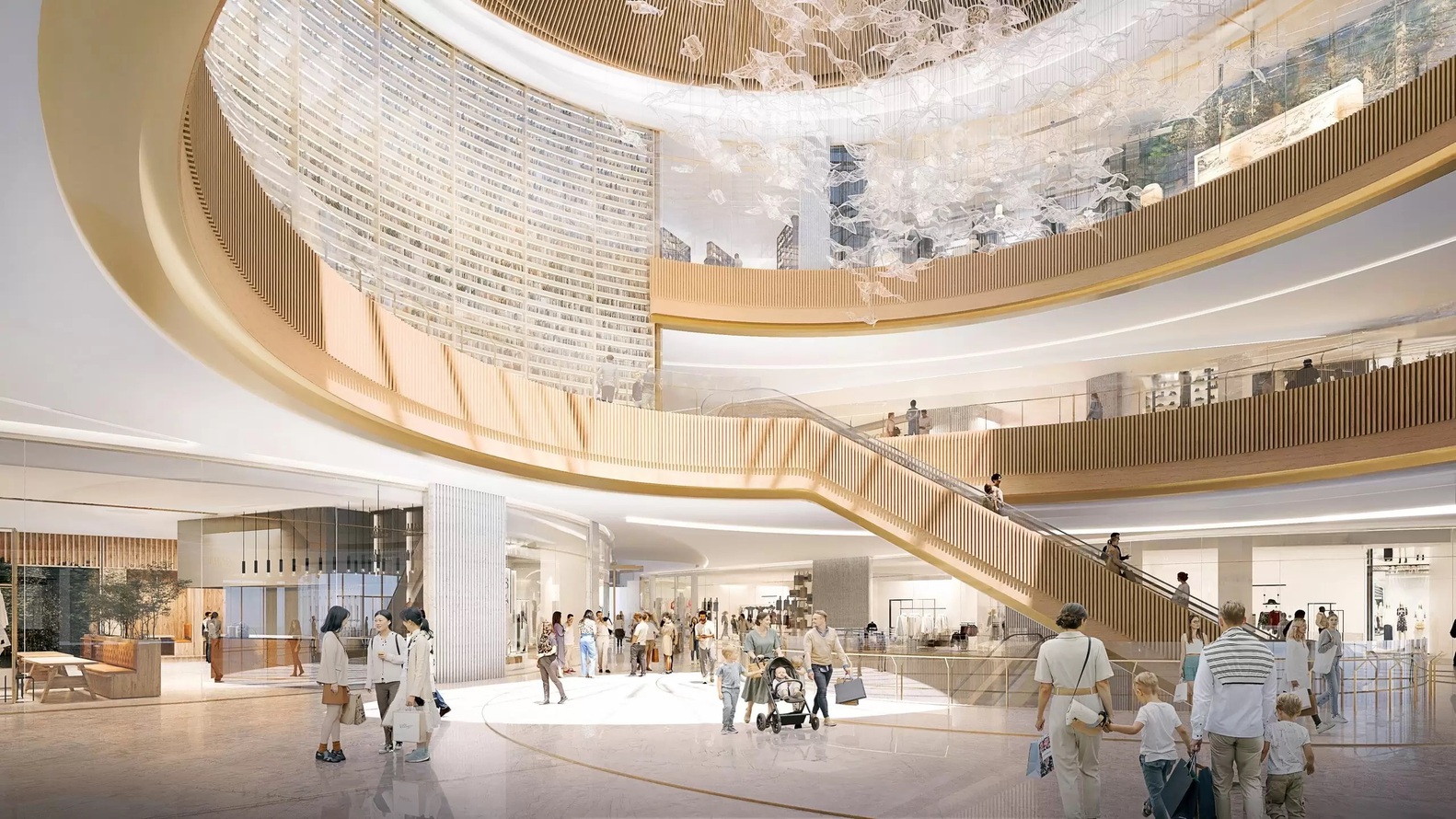
A district this size only works if people can reach it on foot and by bike, not just by car. The wider urban strategy weaves together pedestrian, bicycle, and road infrastructure to improve access across the area. Two new pedestrian bridges will cross the Someș, linking the district to the rest of the city, and the surrounding streets are being upgraded with bicycle lanes and new roundabouts.
Several of these moves came directly out of the public consultation. The bridges and street upgrades reflect requests raised by residents during that process, and part of the new infrastructure is set to be handed to the Municipality of Cluj-Napoca for community use once complete. That detail matters, because it folds the project into the city’s public network rather than keeping it as a private enclave.
Sustainability and Landscape Strategy
The environmental thinking runs through the whole site rather than sitting in a single feature. Green roofs, planted facades, and locally adapted vegetation are used to slow and absorb rainwater runoff, a real concern on a large site that was previously hard paving. The landscape framework, developed with Felixx, treats planting as structure for the district rather than surface decoration.
The numbers behind the greening are substantial. The plan calls for more than 700 trees and over 100,000 plants, with the riverfront park and urban garden forming the green core of the development. These choices also feed into the project’s certification targets.
📐 Technical Note
RIVUS is targeting LEED Platinum, EDGE Advanced, and NZEB compliance. NZEB stands for Nearly Zero-Energy Building, a benchmark defined under the EU Energy Performance of Buildings Directive that requires very high energy performance with the small remaining demand covered largely by renewable sources. Hitting all three at master plan scale sets a demanding bar for a mixed-use district of this size.
Pairing heritage retention with these performance targets is where adaptive reuse and sustainability reinforce each other. Keeping two existing buildings reduces demolition waste and embodied carbon, while the new construction is held to current energy standards.
🏗️ Real-World Example
Tate Modern (London, 2000): The conversion of the disused Bankside Power Station into a major art museum showed how a single industrial relic could anchor an entire stretch of riverfront and draw millions of visitors a year. RIVUS applies a similar instinct at district scale, using preserved Carbochim structures to give the new neighborhood a cultural and historical center of gravity.
What RIVUS Means for Cluj-Napoca and UNStudio’s Romania Debut
RIVUS is UNStudio’s first built project in Romania, which gives it weight beyond its size. For a practice with work spanning Amsterdam, Frankfurt, Shanghai, Dubai, and beyond, entering a new national market with a riverfront regeneration of this scale signals confidence in Cluj-Napoca as a design destination. The city has spent the past decade building a reputation as one of Central Europe’s faster growing urban centers, and a project that reconnects it to its river fits that trajectory.
For the city itself, the payoff is access. A riverbank that industry kept closed for generations becomes public ground again, with parks, bridges, and everyday uses that pull life toward the water. UNStudio’s track record on civic-scale work, including recent projects covered in our review of UNStudio’s Wasl Tower and Milan Design Week 2026, suggests the studio is comfortable working at exactly this intersection of infrastructure, public space, and identity. Its retail and experience work, such as the Huawei flagship store in Shanghai, shows the same interest in how people actually move through and occupy space.
✅ Key Takeaways
- UNStudio’s RIVUS master plan converts the former Carbochim industrial platform in Cluj-Napoca into a 14-hectare mixed-use riverfront district.
- Two preserved Carbochim buildings become coworking and cultural spaces, anchoring the project in the site’s industrial heritage.
- The plan organizes everything around the Someș River, with terraced massing, two new pedestrian bridges, and an urban garden covering roughly a third of the site.
- The program includes 400+ stores, 30+ restaurants, offices, and culture across 165,000 square meters of leasable area, backed by an investment estimated above 550 million euro.
- Sustainability targets include LEED Platinum, EDGE Advanced, and NZEB compliance, supported by more than 700 trees and 100,000 plants.
- RIVUS is UNStudio’s first project in Romania, with construction underway following the March 2026 building permit.
Final Thoughts
RIVUS is the kind of project that tests whether large mixed-use development can serve a city rather than just sit inside it. By keeping pieces of Carbochim, prioritizing the riverbank, and handing infrastructure back to the municipality, UNStudio and its partners have framed the scheme around public access first. Whether the lived result matches the renderings will depend on the years of construction ahead, but the intent set out in the master plan points Cluj-Napoca firmly back toward its river.
To follow the project from the source, see the official RIVUS project site and the architects at UNStudio. Further coverage is available through ArchDaily and reporting on the financing and construction start from Romania Insider.





How to Draw an Architectural Section: 7 Easy Steps
Drawing an architectural section means slicing vertically through a building to reveal...
Elif Ayse Sen7 Mins read

iPad Pro M4 for Architects: Site Documentation and Markup Workflow Tested
A hands-on look at how the iPad Pro M4 performs for architects...
 Furkan Sen12 Mins read
Architectural Detail Drawings: What They Are and How to Create Them
A practical guide to architectural detail drawings covering their purpose in construction...
Elif Ayse Sen15 Mins read

MSI Titan 18 HX Review for Architects: Specs, Performance, and Limitations
A detailed MSI Titan 18 HX review through the lens of architectural...
Furkan Sen15 Mins read


Leave a comment