

The Shard London: How Renzo Piano’s Glass Tower Redefined the City Skyline
Standing at 309.6 metres in Southwark, the Shard is the United Kingdom's tallest building and a defining example of Renzo Piano's design philosophy. This article covers the tower's origin story, its double-skin glass facade system, the vertical city programme stacking offices, a hotel, apartments, and the UK's highest viewing gallery, and its impact on London Bridge regeneration.
 Furkan Sen20 June 20266 Mins read243
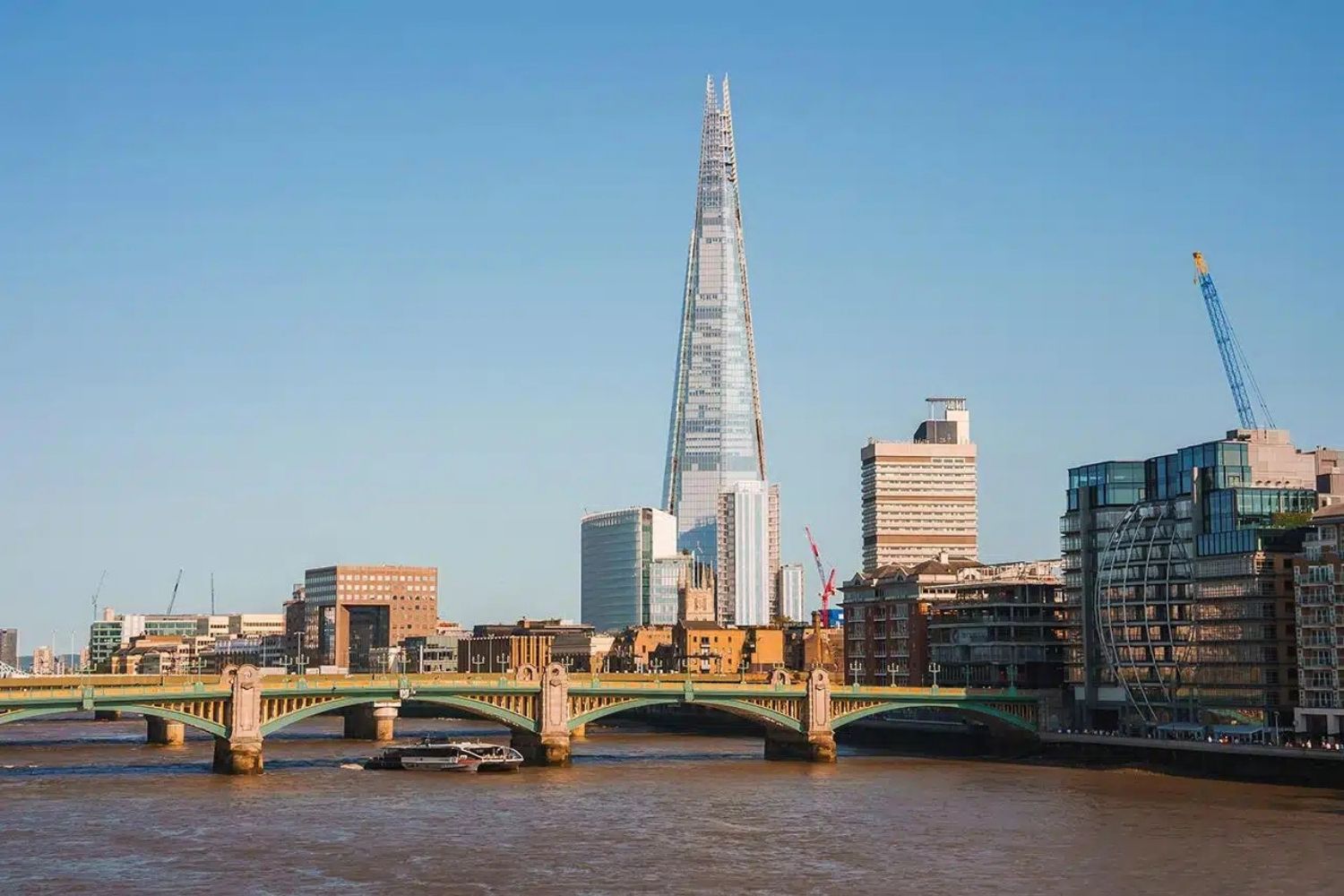
Table of Contents Show
The Shard London is a 309.6-metre mixed-use skyscraper in Southwark, designed by Renzo Piano and completed in 2012. As the tallest building in the United Kingdom and Western Europe, it functions as a vertical city containing offices, restaurants, a five-star hotel, luxury apartments, and the country’s highest public viewing gallery.
From Napkin Sketch to Skyline Icon
The story of the Shard began over a lunch meeting in Berlin in 2000. Developer Irvine Sellar met Italian architect Renzo Piano to discuss building a tower beside London Bridge Station, one of the busiest transport hubs in the capital. Piano reportedly sketched the initial concept on a restaurant menu, drawing a slender spire tapering into the sky. He took visual cues from the spires of London’s churches and the masts of tall ships painted by the 18th-century Venetian artist Canaletto.
What set this project apart from other tall building proposals was Piano’s stated dislike of skyscrapers. He viewed most of them as aggressive and isolated from street life. His response was to design a structure that would belong to the public as much as to its tenants, with only 48 parking spaces, signalling that the Shard was built for pedestrians and public transport users rather than private car owners.
Construction started in 2009 and reached completion in just three years. The building was formally inaugurated in July 2012 with a light show visible across London. Since then, the Shard building London UK has become one of the most photographed structures in Europe, appearing on postcards, film sets, and architecture course reading lists around the world.
🎓 Expert Insight
“This is my vision: I foresee the tower as a vertical city, for thousands of people to work in and enjoy, and for millions to take to their heart.” — Renzo Piano, RPBW
Piano’s description of a “vertical city” was not marketing language. The building’s mixed programme, stacking offices, hospitality, residences, and public observation space, was the primary driver behind its tapered form.
How Tall Is the Shard in London?
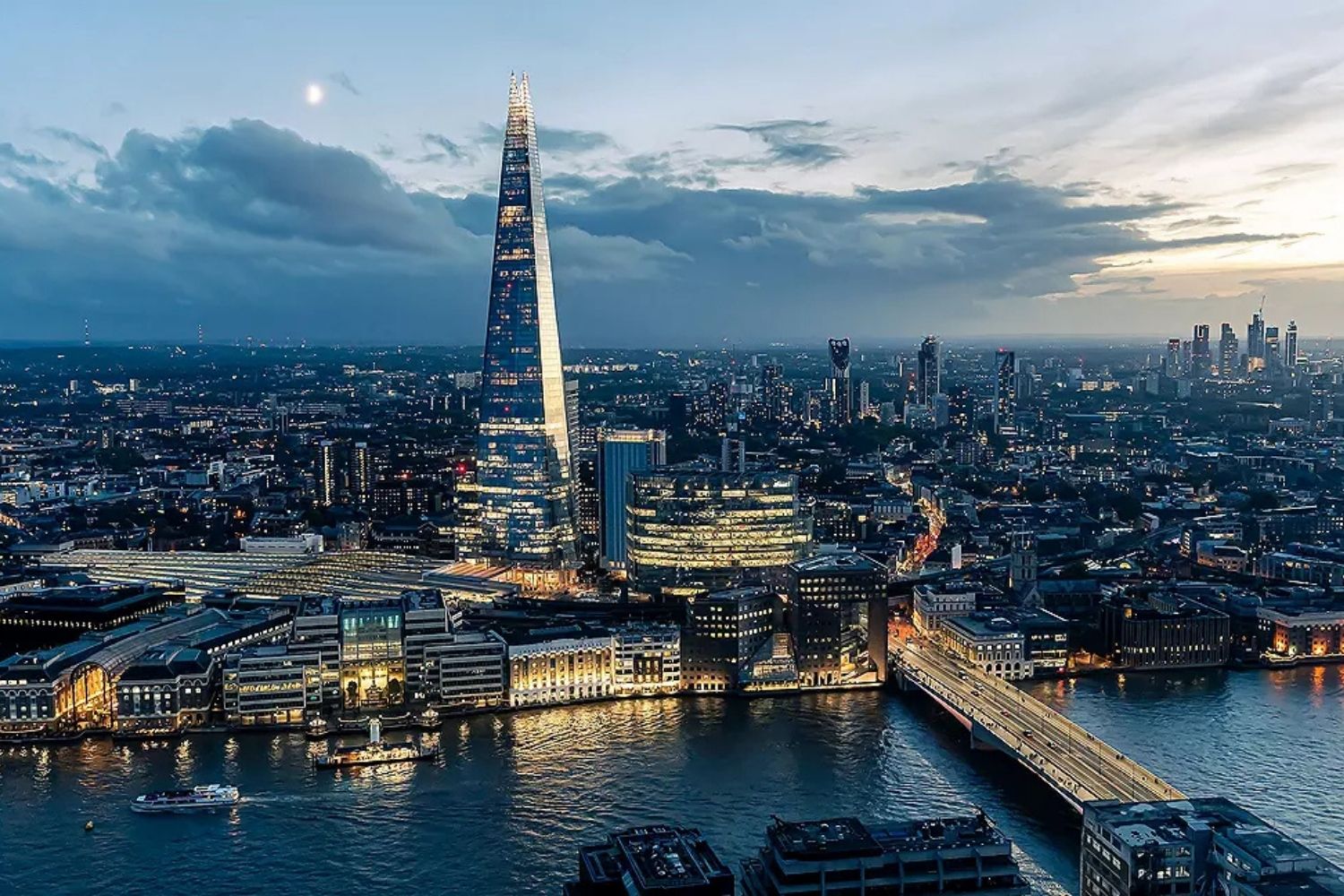
The Shard stands 309.6 metres (1,016 feet) tall, making it a supertall skyscraper by the Council on Tall Buildings and Urban Habitat (CTBUH) classification. It contains 95 storeys in total, though only 72 of those are habitable floors. The remaining levels form the glass-and-steel spire that disappears into the clouds on overcast London days.
For context, the Shard tower in London is roughly three times the height of the nearby Tower of London and about 30 metres shorter than the Eiffel Tower. Within the UK, no other building comes close. The next tallest, 22 Bishopsgate in the City of London, reaches 278 metres. Across Western Europe, it still holds the top position, ranking among the tallest 10 buildings on the entire continent according to Britannica.
📐 Technical Note
The Shard’s foundation consists of a concrete raft supported by 72 concrete piles driven up to 53 metres into London clay. The structural frame uses a concrete core with steel perimeter columns, engineered to handle wind loads at supertall heights while minimizing sway felt by occupants on upper floors.
The Shard’s Architectural DNA: Glass, Steel, and Light

Piano designed the Shard skyscraper in London as a sculpture of light rather than a solid mass. Eight irregular glass planes, or “shards,” lean against each other without ever meeting at the top. The gaps between these planes create fractures that allow natural ventilation and give the building its distinctive appearance: depending on the weather and time of day, the tower can look silver, blue, gold, or nearly transparent.
Eight Glass Shards and a Double-Skin Facade
The exterior consists of approximately 11,000 glass panels made from low-iron extra-white glass, which allows maximum light transmission without the greenish tint common in standard architectural glass. The facade system is a passive double-skin design. An outer layer of glass protects a mechanised roller blind in the cavity, which provides solar shading. This setup works like external blinds, keeping solar heat gain out of the interior, but the extra glass layer shields those blinds from London’s wind and rain at height.
Between the eight glass planes, opening vents create winter gardens that function as meeting rooms in the office floors and private conservatories in the residential levels. These spaces offer something rare in tall buildings: direct contact with outside air, birdsong, and rain. Most towers of this scale are sealed environments, so the Shard’s approach stands out for prioritising occupant comfort and a sensory connection to the city below.
This facade strategy also contributes to energy performance. The double-skin system reduces the building’s reliance on mechanical cooling, while internal blinds respond automatically to changing light levels throughout the day. For architects studying facade design principles, the Shard’s envelope is a case worth examining in detail.
A Vertical City Above London Bridge
Renzo Piano’s concept of a vertical city was not just a slogan. The Shard in London stacks five distinct functions within a single tapering form, and the layout follows a logical gradient from public to private as you ascend.
What Can You Find Inside the Shard?
Levels 4 through 28 contain 55,277 square metres of office space, with large open floor plates suited to corporate tenants. Three restaurant floors sit above the offices on levels 31 to 33, offering dining with panoramic views. The Shangri-La Hotel occupies levels 34 to 52, providing 202 rooms and the distinction of being the highest hotel in Western Europe. Above the hotel, ten exclusive residential apartments fill levels 53 to 65, where the tower’s narrowing footprint means every unit gets views on all four sides.
The most publicly accessible part of the Shard sits at its upper reaches. The View from The Shard, spread across levels 68 to 72, offers 360-degree views up to 65 kilometres on a clear day. Since opening in February 2013, it has attracted roughly 900,000 visitors in its first year alone and has become one of London’s most visited paid attractions. The partially outdoor gallery on level 72 is the highest publicly accessible point in the UK.
This mix of uses means the building stays active around the clock. Office workers arrive in the morning, tourists visit the viewing gallery during the day, diners fill the restaurants in the evening, and hotel guests and residents keep the lights on overnight. Few architects of Piano’s generation have committed so fully to the mixed-use tower model.
The Shard’s Impact on Southwark and Beyond
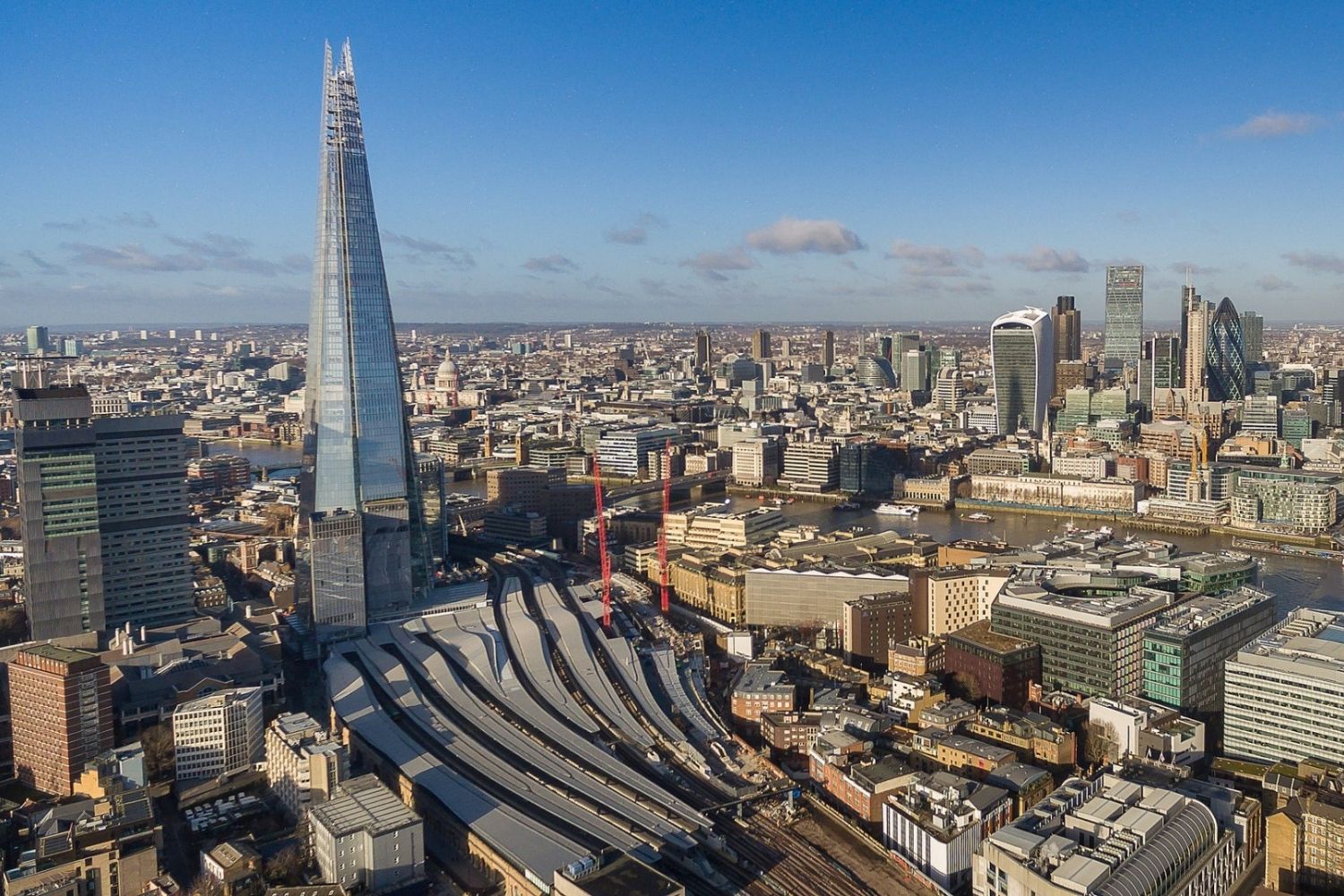
Before the Shard’s construction, the area around London Bridge Station was a relatively overlooked stretch of Southwark’s riverside. The tower changed that. The surrounding neighbourhood, now branded as the Shard Quarter, has seen billions of pounds in regeneration investment. New restaurants, hotels, and office buildings have appeared in the immediate vicinity, and London Bridge Station itself received a major concourse expansion as part of the original project.
The building’s location was deliberate. Piano and Sellar chose a site directly above one of London’s busiest transport nodes, where National Rail, the Underground, and bus services converge. This decision aligned with the Mayor of London’s policy of encouraging high-density development at major transit hubs, an approach that has since been repeated across the capital.
🏗️ Real-World Example
Shard Quarter Regeneration (London, 2012-present): The area surrounding the Shard has attracted over £2 billion in new development since the tower’s completion. Guy’s Hospital, the Tate Modern extension by Herzog & de Meuron, and the redesigned London Bridge Station concourse all sit within walking distance, forming an increasingly dense cultural and commercial corridor along the South Bank.
The Shard London England also sparked a broader conversation about tall buildings in a city historically resistant to them. London’s skyline was long defined by St. Paul’s Cathedral and the protected sightlines around the Tower of London, a UNESCO World Heritage Site. The Shard’s arrival pushed planning authorities and heritage groups to reconsider where height was acceptable and where it was not. The result has been a more structured approach to tall building clusters, visible in the growing concentration of towers around Vauxhall, Nine Elms, and Canary Wharf.
For those planning an architectural travel itinerary through London, the Shard pairs well with Piano’s nearby buildings along the South Bank and the collection of historic and modern structures visible from its observation floors.
The Bigger Picture
Tall buildings often age as symbols of corporate ambition, standing impressive but disconnected from the streets around them. The Shard took a different bet: that a skyscraper could function more like a neighbourhood stacked on end, alive at every hour and open to anyone willing to buy a train ticket to London Bridge. Whether that bet fully pays off depends on how the building adapts over the next few decades, but the regeneration of Southwark’s riverside already suggests Piano drew something more lasting than a tower on that restaurant menu in Berlin.
Height figures and floor counts referenced in this article are based on data published by Renzo Piano Building Workshop and the Council on Tall Buildings and Urban Habitat (CTBUH).









Oscar Niemeyer’s Cathedral of Brasília: The Hyperboloid Concrete Hymn
The Cathedral of Brasília reads as a single gesture, yet it stood...
Furkan Sen7 Mins read

What Technology Does a Modern Workplace Need?
A modern workplace needs more than fast computers. A framework covering network,...
 illustrarch Editoral Team8 Mins read
How Do You Choose Durable Shutters That Suit Your Budget?
Shutters can look identical in a showroom and perform very differently after...
illustrarch Editoral Team8 Mins read
How Can Window Coverings Improve Indoor and Outdoor Comfort?
Window coverings work as a home’s adjustable climate layer. A practical guide...
illustrarch Editoral Team9 Mins read




Leave a comment