

Atlassian Central: World’s Tallest Hybrid Timber Skyscraper
Atlassian Central in Sydney is rising as the world’s tallest hybrid timber tower, combining mass timber with steel and concrete in a 39-storey structure. The project presents a new model for sustainable skyscrapers by focusing on natural materials, energy efficiency, and human-centred office design.
 Elif Ayse Sen10 January 20263 Mins read281
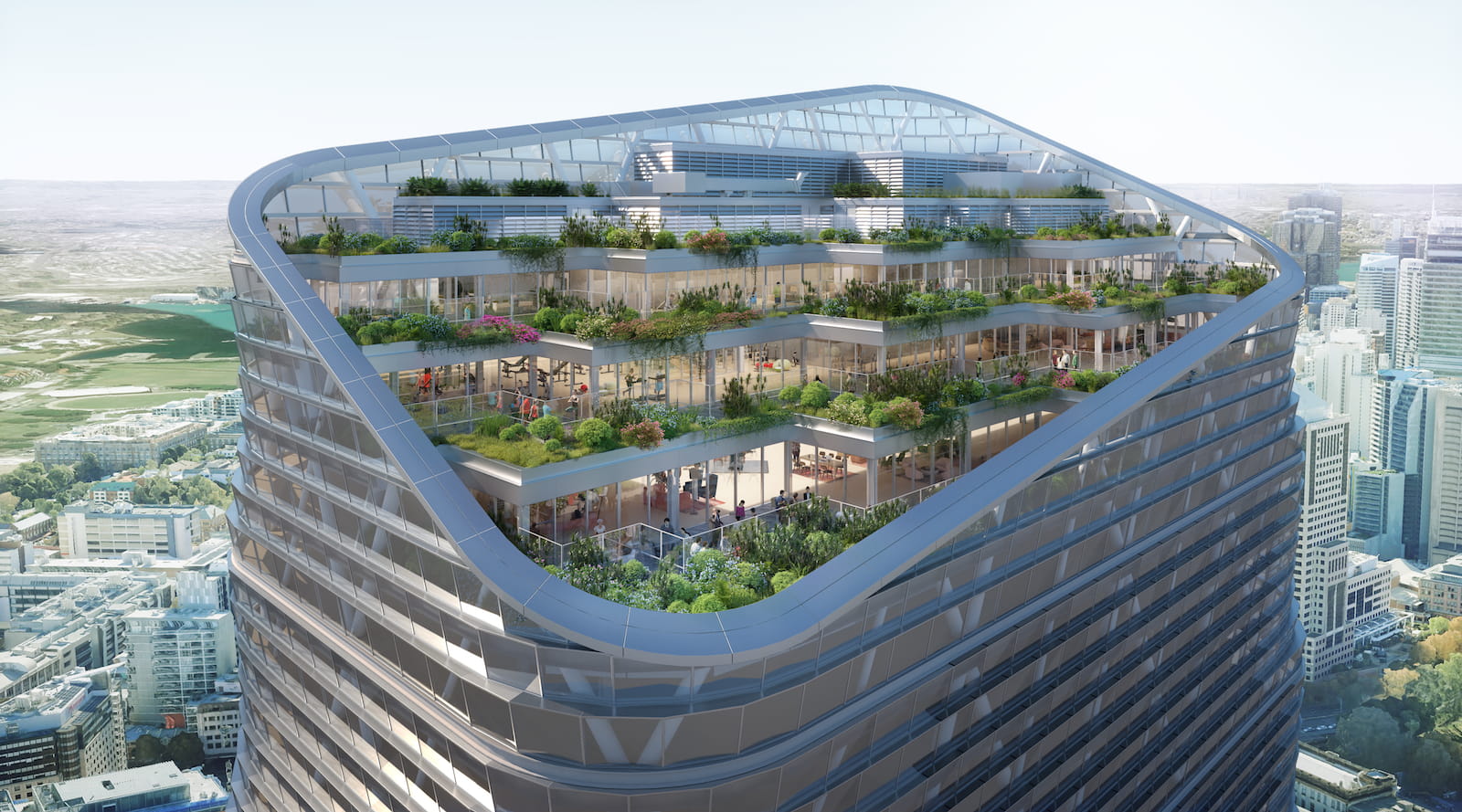
Table of Contents Show
A major new tower is rising in Sydney’s Haymarket district. Designed by SHoP Architects together with BVN Architecture, the Atlassian Central project will reach 39 floors and a height of 183 meters. When finished in late 2026, it is expected to be the world’s tallest hybrid timber tower, setting a new direction for high-rise design.
Atlassian Central is a mixed-use building that combines mass timber with steel and concrete. Instead of treating timber as a small feature, the project places it at the center of the design. This approach shows how natural materials can work at a large, urban scale while still meeting the technical needs of a modern skyscraper. The building is part of a wider renewal area that connects major universities and Sydney’s growing technology sector. Its location helps link education, research, and innovation within the city.

A Highly Connected Urban Site
The tower stands next to Central Railway Station, one of Sydney’s most important transport hubs. Trains, buses, light rail, and the metro all meet here, making the building easy to reach from across the city. This central position supports daily workers, visitors, and the wider public.
Offices Designed Like Small Neighborhoods
Rather than creating one large office block, the tower is divided into seven vertical “habitats.” Each habitat is four floors high and designed to feel more human in scale. Within each group are three timber-framed office levels and one larger shared floor.
This layout supports flexible working, informal meetings, and collaboration. It also helps people feel more connected to their workspace, even high above the ground.

Bringing History into the Project
An important heritage structure, the Inwards Parcels Shed from the early 1900s, is carefully included in the design. The building is taken apart, restored, and placed back on site. It now works as the main lobby and a public gathering space, linking Sydney’s past with its future.
Timber, Light, and Nature
The structure uses glued laminated timber beams and columns together with cross-laminated timber floors. These materials give the interior a warm and natural feeling. Every habitat includes planted areas and access to outdoor air, allowing people to step outside without leaving the building.
An operable façade lets fresh air flow through the offices when weather conditions allow, reducing the need for mechanical cooling and improving comfort.

How the Tower Stands So Tall
Timber alone cannot support a building of this height, so engineers developed a hybrid system. A reinforced concrete core provides stability, while a steel exoskeleton around the outside helps resist wind forces. The timber office zones sit between these strong structural elements.
This system allows large, open office floors with fewer columns, giving more freedom in how spaces are used.

Energy and Environmental Goals
The building’s outer skin includes glass, steel, and built-in solar panels. These panels are placed within sun-shading elements, helping the tower produce its own renewable energy while reducing heat from direct sunlight.
By using mass timber and on-site energy generation, Atlassian Central aims for net-zero carbon performance. The project targets high sustainability ratings, including 5.5-star NABERS Energy and 6-star Green Star.

A Building Active Day and Night
The lower levels of the tower include a 500-bed YHA Australia hostel. This adds life to the area outside normal office hours and supports visitors and travelers. By mixing work, public space, and accommodation, the project helps create a lively, 24-hour urban environment.
Atlassian Central shows how tall buildings can be greener, more social, and more connected to people. By combining timber, smart engineering, and urban thinking, the project offers a clear example of how future skyscrapers may be designed in cities around the world.






MoMA’s Full Disclosure Exhibition Traces Information Design from Hand-Drawn Data to AI Memories
Full Disclosure: The Edge of Information Design, curated by Paola Antonelli, is...
 illustrarch Editoral Team2 Mins read
Zumthor’s Three New Buildings Open at Fondation Beyeler in Riehen
Peter Zumthor's Wyss Museum, Ammann Pavilion and Erlen Torhaus open at Fondation...
illustrarch Editoral Team4 Mins read

Benthem Crouwel Completes the Afsluitdijk Revamp with a Fish Passage and Domed Pumping Stations
The 32 km Afsluitdijk in the Netherlands has been raised, armoured and...
illustrarch Editoral Team2 Mins read
Luxembourg Pavilion Tackles the Overconsumption of Living Space at the 2027 Venice Biennale
Curated by Céline Zimmer and Exutoire, the Luxembourg Pavilion's Excess! will compare...
illustrarch Editoral Team2 Mins read


Leave a comment