

Architecture Through Cinema: 10 Films That Shape Spatial Thinking
Cinema and architecture share a powerful relationship rooted in space, movement, and atmosphere. This curated list of ten essential films explores how built environments shape behavior, identity, and social structure, offering architects and designers a deeper spatial perspective beyond drawings and plans.
 Sinan Ozen10 January 20265 Mins read287
Table of Contents Show
Cinema and architecture operate through remarkably similar mechanisms. Both organize space, guide movement, control perspective, and construct emotional atmospheres. For architects and designers, films can function as spatial laboratories, testing ideas about scale, density, power, intimacy, and the human condition. Rather than offering literal lessons in building design, the films below reveal how environments shape behavior and identity. Each title presents a distinct architectural worldview, making them essential references for anyone engaged with contemporary spatial culture.

| Film | Year | Director | Genre | Key Architectural Theme | IMDb |
|---|---|---|---|---|---|
| Playtime | 1967 | Jacques Tati | Comedy / Satire | Modernist urbanism critique | 7.9 |
| Metropolis | 1927 | Fritz Lang | Sci-Fi / Drama | Vertical social hierarchy | 8.3 |
| Blade Runner | 1982 | Ridley Scott | Sci-Fi / Neo-Noir | Urban decay & layered density | 8.1 |
| Her | 2013 | Spike Jonze | Sci-Fi / Romance | Human-centered soft futurism | 8.0 |
| Gattaca | 1997 | Andrew Niccol | Sci-Fi / Thriller | Modernist control & surveillance | 7.7 |
| Brazil | 1985 | Terry Gilliam | Sci-Fi / Dark Comedy | Bureaucratic spatial chaos | 7.9 |
| The Truman Show | 1998 | Peter Weir | Drama / Satire | Masterplanned artificiality | 8.2 |
| High-Rise | 2015 | Ben Wheatley | Drama / Thriller | Vertical class stratification | 5.6 |
| Columbus | 2017 | Kogonada | Drama | Architecture as emotional presence | 7.2 |
| In the Mood for Love | 2000 | Wong Kar-wai | Romance / Drama | Intimacy through spatial constraint | 8.1 |
Playtime
Jacques Tati’s Playtime is one of the most precise cinematic critiques of modernist urbanism ever produced. Through rigid grids, reflective glass, and endlessly repetitive interiors, the film exposes how standardized design can erase individuality and disorient human behavior. Architecture becomes a comic but unsettling machine, where people struggle to assert personality within perfectly controlled systems. For architects, the film is a reminder that efficiency and clarity, when taken too far, can undermine social richness and human comfort.

Metropolis
Few films have shaped architectural imagination as deeply as Metropolis. Its vertical city, where elites live above and workers toil below, uses architecture as a physical expression of social hierarchy. Monumental towers, vast underground halls, and mechanical infrastructure turn the city into a living organism. The film remains relevant because it demonstrates how urban form can embody ideology, reminding designers that spatial organization inevitably reflects political and economic systems.
Blade Runner
Blade Runner presents a city defined by accumulation rather than order. Layers of infrastructure, neon signage, rain-soaked surfaces, and decaying buildings form an urban environment shaped by time, technology, and neglect. This vision challenges the idea of the city as a clean, rational system, instead portraying it as a dense and evolving landscape. For architects, the film underscores the importance of adaptability, atmosphere, and the acceptance of imperfection in urban life.

Her
In contrast to dystopian futures, Her imagines a calm, emotionally sensitive city. Soft light, generous interiors, and minimal architectural gestures create an environment that supports introspection and human connection. Architecture here does not compete for attention but quietly frames daily life. The film suggests a future where design prioritizes emotional well-being, making it especially relevant for architects exploring human-centered and post-digital spatial approaches.
Gattaca
Gattaca uses real modernist buildings to construct a world governed by control, order, and genetic determinism. Clean lines, symmetry, and disciplined proportions reinforce a society obsessed with perfection and exclusion. Architecture becomes an instrument of surveillance and hierarchy rather than freedom. The film offers a powerful lesson on how formal purity and monumental clarity can carry ethical implications beyond aesthetics.

Brazil
In Brazil, architecture manifests as a chaotic bureaucratic maze. Endless corridors, oppressive interiors, and invasive infrastructure visualize a world where systems overpower individuals. The built environment feels both absurd and threatening, revealing how poorly conceived spatial systems can suffocate creativity and autonomy. For designers, the film is a cautionary tale about neglecting clarity, flexibility, and human experience in complex institutional environments.
The Truman Show
The perfectly designed town of The Truman Show reveals how architecture can be used as a tool of control beneath a façade of comfort. Orderly streets, idealized public spaces, and predictable routines create a believable yet artificial reality. The film raises critical questions about authenticity, authorship, and manipulation in designed environments, issues increasingly relevant in masterplanned cities and themed developments.

High-Rise
High-Rise compresses an entire social system into a single residential tower. As conditions deteriorate, the building’s vertical organization amplifies class divisions and power struggles. Architecture here is not a neutral backdrop but an active catalyst for conflict. The film demonstrates how spatial hierarchy, access, and infrastructure distribution directly influence social behavior.
Columbus
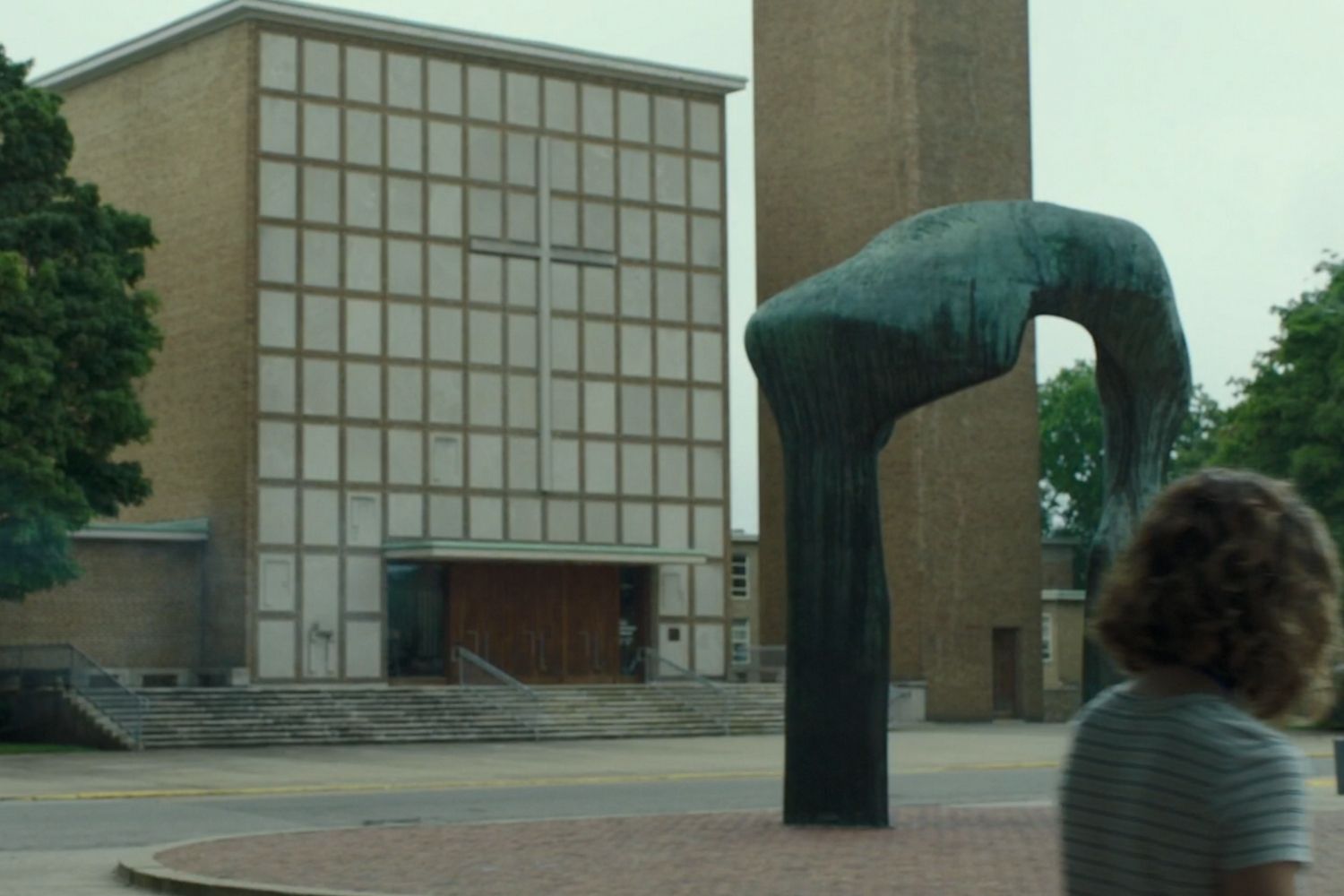
Columbus treats architecture with extraordinary restraint and sensitivity. Modernist buildings are framed as spaces for reflection, conversation, and emotional growth rather than visual dominance. The film’s stillness and compositional precision highlight how architecture can support human presence without overwhelming it. For architects, it is a powerful reminder of the value of proportion, silence, and thoughtful spatial sequencing.
In the Mood for Love
Although not overtly about architecture, In the Mood for Love uses space masterfully to shape intimacy. Narrow corridors, doorways, staircases, and layered interiors intensify emotional tension and proximity. The film illustrates how spatial constraints and circulation patterns influence relationships, making it a subtle but profound study in human-scale design.
| Film | Dominant Spatial Elements | Architectural Style Depicted | Key Filming Locations / Sets |
|---|---|---|---|
| Playtime | Rigid grids, reflective glass, repetitive interiors | International Style Modernism | Custom-built “Tativille” set near Paris |
| Metropolis | Monumental towers, underground halls, vertical division | Art Deco / Expressionist Futurism | UFA Studio Babelsberg, Berlin |
| Blade Runner | Layered infrastructure, neon signage, decaying buildings | Cyberpunk / Retrofuturism | Warner Bros. backlot, Bradbury Building, Ennis House (Los Angeles) |
| Her | Soft light, generous interiors, elevated walkways | Post-Digital Minimalism | Los Angeles + Shanghai Pudong District |
| Gattaca | Clean lines, symmetry, disciplined proportions | Late Modernism / Brutalism | Marin County Civic Center (Frank Lloyd Wright), CLA Building (Los Angeles) |
| Brazil | Endless corridors, oppressive interiors, invasive ducts | Dystopian Industrial / Retro-Futurism | Lee Valley Sludge Works, Croydon Power Station (UK) |
| The Truman Show | Orderly streets, idealized public spaces, predictable layouts | New Urbanism / Suburban Idealism | Seaside, Florida (masterplanned community) |
| High-Rise | Vertical stratification, enclosed common spaces, rooftop isolation | Brutalism / Social Housing Tower | Bangor, Northern Ireland; Elstree Studios (UK) |
| Columbus | Restrained composition, reflective surfaces, open plans | Mid-Century Modernism | Columbus, Indiana (I.M. Pei, Eero Saarinen, César Pelli buildings) |
| In the Mood for Love | Narrow corridors, doorways, staircases, layered interiors | 1960s Hong Kong Vernacular | Bangkok sets replicating 1960s Hong Kong tenements |
| Film | Architecture’s Role | Spatial Atmosphere | Takeaway for Architects |
|---|---|---|---|
| Playtime | Machine of disorientation | Sterile, repetitive, comic | Over-standardization erases individuality and human comfort |
| Metropolis | Physical expression of ideology | Monumental, oppressive, divided | Spatial organization reflects political and economic power |
| Blade Runner | Evolving urban palimpsest | Dense, atmospheric, decaying | Cities are adaptive organisms; imperfection has value |
| Her | Quiet emotional support | Warm, soft, introspective | Design can prioritize emotional well-being over spectacle |
| Gattaca | Instrument of surveillance | Pristine, cold, exclusionary | Formal purity can carry ethical consequences beyond aesthetics |
| Brazil | Bureaucratic labyrinth | Absurd, claustrophobic, threatening | Poorly conceived systems suffocate creativity and autonomy |
| The Truman Show | Tool of concealed control | Idealized, artificial, deceptive | Masterplanning can mask manipulation behind comfort |
| High-Rise | Active catalyst for conflict | Enclosed, hierarchical, volatile | Spatial hierarchy directly influences social behavior |
| Columbus | Space for emotional growth | Still, contemplative, balanced | Proportion, silence, and restraint create meaningful presence |
| In the Mood for Love | Shaper of intimacy | Confined, layered, sensual | Spatial constraints and circulation patterns shape relationships |
Conclusion
These ten films demonstrate that architecture in cinema is never passive. It guides movement, encodes values, and shapes emotional experience. For architects and designers, watching films through a spatial lens sharpens critical awareness and expands design intuition. As architectural practice continues to negotiate technology, social responsibility, and cultural meaning, cinema remains a vital reference point, one that challenges designers to think beyond form and engage deeply with the lived reality of space.





Vitra Museum Stages First Major Geoffrey Bawa Retrospective in Decades
Vitra Design Museum opens the first major Geoffrey Bawa retrospective in 20...
 illustrarch Editoral Team2 Mins read
Ai Weiwei Installs 500 Cast-Iron Helmets Outside Sydney Museum
Ai Weiwei's 500 cast-iron helmets opened outside Sydney's MCA on 25 September,...
illustrarch Editoral Team2 Mins read
Isamu Noguchi at Lever House Traces Sculptor’s Decades-Long Collaboration with Bunshaft
Lever House's new exhibition pairs Noguchi sculptures with unbuilt garden designs made...
illustrarch Editoral Team2 Mins read

The Frida Kahlo Apartment Building in San Francisco Is Listed for $8 Million
The San Francisco apartment building where Frida Kahlo and Diego Rivera lived...
 Elif Ayse Sen9 Mins read


Leave a comment