

Inside the Great Mosque of Mecca: How Architecture Shapes Sacred Experience
The Great Mosque of Mecca, known as Masjid al-Haram, stands as the most extraordinary example of sacred architecture in human history. This article examines how Kaaba architecture, ritual movement at massive scale, continuous expansion across dynasties, and material restraint define the mosque's spatial logic — offering profound lessons for mosque design principles, religious architecture, and the relationship between belief and built environment.
 Sinan Ozen1 February 20268 Mins read254

Table of Contents Show
Few architectural sites in the world carry the combined weight of faith, history, ritual, and global cultural consciousness as profoundly as the Great Mosque of Mecca, known as Al-Masjid al-Haram. As the holiest site in Islam and the largest mosque in the world, Masjid al-Haram is more than a monumental religious structure—it functions as a living spatial system, one that is continuously inhabited, reinterpreted, and expanded in response to the needs of a global community exceeding 1.8 billion believers. Architecture here is not a static artifact frozen in time; it is a vessel for ritual movement, collective memory, and transcendent meaning. To engage with the Great Mosque of Mecca is to confront architecture at its most charged intersection with belief, where space is inseparable from spiritual intention and where design decisions reverberate across centuries.
From an architectural perspective, the Great Mosque challenges conventional categories. It is simultaneously ancient and perpetually under construction, minimalist in symbolic center yet vast in physical scale, deeply local in orientation yet universal in reach. Its significance does not lie in stylistic bravura or formal novelty, but in its ability to choreograph one of the largest recurring human gatherings on Earth with remarkable spatial clarity. In an era when architecture often prioritizes visual distinction, the Great Mosque of Mecca invites a different reflection: what happens when architecture’s highest purpose is not to be seen, but to be enacted?

The Kaaba as the Absolute Architectural Center of Masjid al-Haram
At the heart of the Great Mosque stands the Kaaba, an unadorned cuboid structure whose architectural simplicity belies its immense symbolic gravity. The Kaaba architecture is defined by radical reduction: a near-cubic form draped in the black Kiswah cloth, standing approximately 13.1 meters high with sides measuring between 10.5 and 12.8 meters. As the qibla—the directional focal point toward which Muslims around the world orient their daily prayers—the Kaaba functions as a global spatial anchor, collapsing geographic distance into a shared directional consciousness. Architecturally, its power emerges not from complexity but from reduction: a near-abstract form that allows meaning to eclipse materiality. The Kaaba establishes a rare condition in architecture where the surrounding space derives its hierarchy not from visual dominance alone, but from ritual centrality, transforming the mosque into a concentric system organized around movement, orientation, and devotion rather than spectacle.
This condition fundamentally reshapes how space is perceived and used within al Haram mosque Mecca. Circulation flows, sightlines, and spatial thresholds all defer to the Kaaba’s presence, producing an architecture governed by centrifugal logic. Unlike civic centers or religious cathedrals where axial processions lead toward an elevated altar, the Great Mosque invites continuous circular motion—the Tawaf, in which pilgrims circumambulate the Kaaba seven times counterclockwise. This ritual reinforces equality among worshippers and dissolves conventional frontality. For architects and designers, this challenges dominant Western paradigms of spatial hierarchy and offers an alternative model where meaning is distributed through collective ritual rather than architectural form alone.

Key Landmarks Within the Great Mosque of Mecca Structure
Beyond the Kaaba, the Great Mosque of Mecca structure encompasses several architecturally and spiritually significant landmarks that together define the spatial experience of al Haram mosque Mecca Saudi Arabia. The Black Stone (al-Hajar al-Aswad), embedded in the eastern corner of the Kaaba, serves as the starting and ending point for the Tawaf circuit, creating a critical spatial marker within the circular movement pattern. Maqam Ibrahim, a small glass and metal enclosure near the Kaaba, houses the stone believed to bear the footprints of Prophet Abraham, establishing a direct link between the mosque’s physical fabric and its Abrahamic origin narrative.
The Zamzam Well, located approximately 20 meters east of the Kaaba, has been integrated into the basement infrastructure of the mosque, with water distributed through thousands of coolers across the complex. The hills of Safa and Marwa, connected by the enclosed Mas’a gallery, form a 450-meter long corridor where pilgrims perform the Sa’i—the ritual walking between the two hills. This gallery, now a multi-level air-conditioned structure, demonstrates how the Masjid al-Haram design adapts ancient topographical features into modern architectural infrastructure without erasing their original meaning.
Sacred Expansion and the Architecture of Continuity
One of the most complex architectural narratives of the Great Mosque of Mecca is its continuous expansion across centuries, dynasties, and technological eras. Unlike preservation models that prioritize frozen authenticity, the mosque embodies a philosophy of sacred continuity—one where change is not a threat to heritage but a necessity for sustaining ritual relevance. From early Umayyad and Abbasid interventions to Ottoman additions and contemporary Saudi expansions, each layer reflects its time while maintaining allegiance to the mosque’s essential spatial logic.
This ongoing transformation raises critical questions for contemporary architectural practice: how can large-scale interventions respect symbolic permanence while accommodating unprecedented growth? The Great Mosque demonstrates that continuity does not require stylistic imitation but spatial coherence. New materials, structural systems, and infrastructural technologies are integrated not to assert authorship, but to remain subservient to ritual function. In doing so, the mosque operates as a living case study in adaptive sacred architecture—one that prioritizes user experience, crowd safety, and legibility over formal consistency, without eroding its spiritual core.
Historical Timeline: How Islamic Architecture Shaped Mecca Mosque Saudi Arabia
Understanding the Great Mosque of Mecca structure requires tracing its architectural evolution across nearly 1,400 years. Each major phase of construction reflects shifting approaches to Islamic architecture in Mecca and the evolving demands of pilgrimage.
The mosque’s formal architectural history begins in 638 CE, when Caliph Umar ibn al-Khattab ordered the first enclosure wall around the Kaaba to accommodate growing numbers of worshippers. His successor, Caliph Uthman ibn Affan, added a covered roof supported by wooden columns and arches. The major Umayyad renovation of 692 CE under Abd al-Malik ibn Marwan raised the outer walls, covered the ceiling with teak, and introduced gold-painted column capitals. Al-Walid I later replaced wooden columns with marble and added the first minaret.
The Abbasid period brought the most significant pre-modern expansion. Caliph al-Mahdi (775–785 CE) rebuilt the mosque on a grid plan centered on the Kaaba, establishing the concentric spatial logic that persists today. His expansion measured 196 by 142 meters and incorporated marble columns from Egypt and Syria with gilt teak inlay—a sophisticated example of early mosque architecture design.
Ottoman contributions in the 16th century replaced the flat roof with small domes and introduced the architectural vocabulary of minarets and decorative stonework that characterized the mosque for centuries. The 20th-century Saudi expansions, beginning under King Saud in 1955 and continuing through King Fahd’s major 1984 project, fundamentally transformed the holy mosque in Mecca into its modern form. The first Saudi expansion increased the total area from approximately 27,000 to 152,000 square meters with a capacity of 500,000 worshippers. King Fahd’s expansion brought the area to approximately 356,800 square meters, accommodating 820,000 worshippers and introducing escalators, pedestrian tunnels, and advanced air-conditioning systems.
The most recent Third Saudi Expansion, launched in 2011 by King Abdullah and inaugurated by King Salman in 2015, represents the largest expansion in the mosque’s history. This project increased the building footprint to 1.47 million square meters, raised the capacity to approximately 1.85 million worshippers, and added four new minarets, six prayer floors, and 188 entrances. Looking ahead, the announced King Salman Gate project will add an estimated 900,000 additional prayer spaces and further integrate the mosque with surrounding urban infrastructure, making it a defining example of large-scale religious architecture design.
Architecture for Ritual Movement at Massive Scale
Few buildings in history have been designed to accommodate ritual movement at the scale demanded by the Hajj pilgrimage, where millions of bodies move, pause, circulate, and congregate within a tightly choreographed temporal window. The Great Mosque is not merely a container for worship; it is an infrastructure of motion. Its expansive courtyards, multi-level prayer halls, ramps, and circulation corridors are calibrated to guide collective flow while preserving individual spiritual focus.
From an architectural standpoint, this is an extraordinary feat of spatial planning within Mecca mosque architecture. The mosque reconciles the tension between density and dignity, ensuring that extreme crowding does not collapse into chaos. The Mataf courtyard surrounding the Kaaba—expanded multiple times to manage Tawaf capacity—now accommodates over 107,000 worshippers performing circumambulation per hour. The design implicitly acknowledges that architecture can shape behavior not through control, but through spatial generosity and clarity. For contemporary urban designers grappling with mass gatherings, transport hubs, and public infrastructure, the Great Mosque offers lessons in humane crowd architecture—where movement becomes an extension of meaning rather than a logistical afterthought.

Mosque Design Principles: Material Restraint and Symbolic Economy
Despite its immense scale, the architectural language of the Great Mosque remains notably restrained—offering a masterclass in mosque design principles rooted in spiritual intention. Marble surfaces, rhythmic colonnades, and controlled ornamentation dominate, creating an environment that emphasizes light, proportion, and repetition over visual excess. This material economy serves a deliberate purpose: to minimize distraction and foreground the act of worship. Ornament exists, but it operates as background texture rather than focal spectacle, allowing the human presence and ritual action to animate the space.
In an age of image-driven architecture, this restraint carries profound relevance for anyone studying spiritual architecture. The Great Mosque resists the impulse toward iconic singularity, instead embracing an architecture of support and humility. Its design suggests that meaning can emerge through disciplined repetition and material consistency, rather than novelty. For architects, this challenges contemporary assumptions about authorship and expression, proposing a model where the highest architectural achievement lies in enabling collective experience rather than asserting formal identity. This approach stands in deliberate contrast to landmarks like the Sagrada Família, where sacred architecture is expressed through maximal formal complexity—yet both achieve their spiritual aims through deeply considered relationships between space, light, and intention.
Global Orientation and Spatial Universality
Perhaps the most radical architectural implication of the Great Mosque lies beyond its physical boundaries. Through the act of prayer, its spatial influence extends into homes, streets, and landscapes across the world. Every mosque, prayer room, and personal prayer mat aligned toward Mecca becomes a satellite of its geometry. In this sense, the kaaba mosque in Mecca operates as the invisible center of the largest distributed spatial network in human history.
This condition reframes architecture as a planetary system rather than a site-specific object. The mosque’s impact is not limited to those who physically enter it; it shapes daily spatial awareness for millions who may never visit. For architectural theory, this challenges the notion that buildings are defined solely by their material footprint. The Great Mosque demonstrates how architecture can exist simultaneously as a physical space and a cognitive orientation—an idea with profound implications for how we understand spatial culture in an increasingly interconnected world.

The Dialogue Between Preservation and Progress in Masjid al-Haram Design
The continuous modernization of Masjid al-Haram design has not been without controversy. Each expansion has required the demolition of surrounding neighborhoods and, in some cases, structures of historical significance. Critics have noted that Ottoman-era porticos, early Islamic schools, and centuries-old residential fabric have been removed to accommodate new construction. This tension between preservation and functional necessity is one of the most pressing challenges in Islamic architecture today.
Yet the Great Mosque offers a nuanced perspective on this debate. Unlike museums or heritage monuments where the primary value lies in material authenticity, the mosque’s significance is anchored in continuous ritual use. The architecture must serve a living community whose needs evolve with demographic growth, technological capacity, and safety requirements. Advanced systems now deployed in the mosque—including crowd-counting sensors, digital wayfinding, climate-controlled prayer zones, and emergency evacuation tunnels—represent a new frontier in religious architecture design where performance and safety coexist with spiritual purpose. For architects working on large-scale sacred or civic projects, the Masjid al-Haram demonstrates that heritage preservation and functional modernization need not be mutually exclusive, provided the core spatial logic and ritual purpose remain intact.
Conclusion
The Great Mosque of Mecca stands as a singular architectural phenomenon not because of stylistic innovation, but because it reveals architecture’s deepest potential: to organize meaning, movement, and memory at a civilizational scale. It reminds us that architecture can be both monumental and modest, expansive yet centered, continuously evolving without losing its essence. In a profession often preoccupied with novelty and authorship, the mosque offers a counter-narrative grounded in service, continuity, and collective experience.
For architects, educators, and students, engaging with the Great Mosque is less about replicating its forms than understanding its principles. It invites reflection on how architecture can respond to belief systems, ritual practices, and global communities without reducing them to visual motifs. As contemporary design grapples with questions of scale, inclusivity, and cultural responsibility, the Great Mosque of Mecca remains a powerful reference point—demonstrating that the most enduring architecture is not that which demands attention, but that which quietly sustains meaning across time. To explore more examples of how faith shapes the built environment, see our articles on remarkable mosques in the Arabian Peninsula and contemporary sacred spaces around the world.


1 Comment


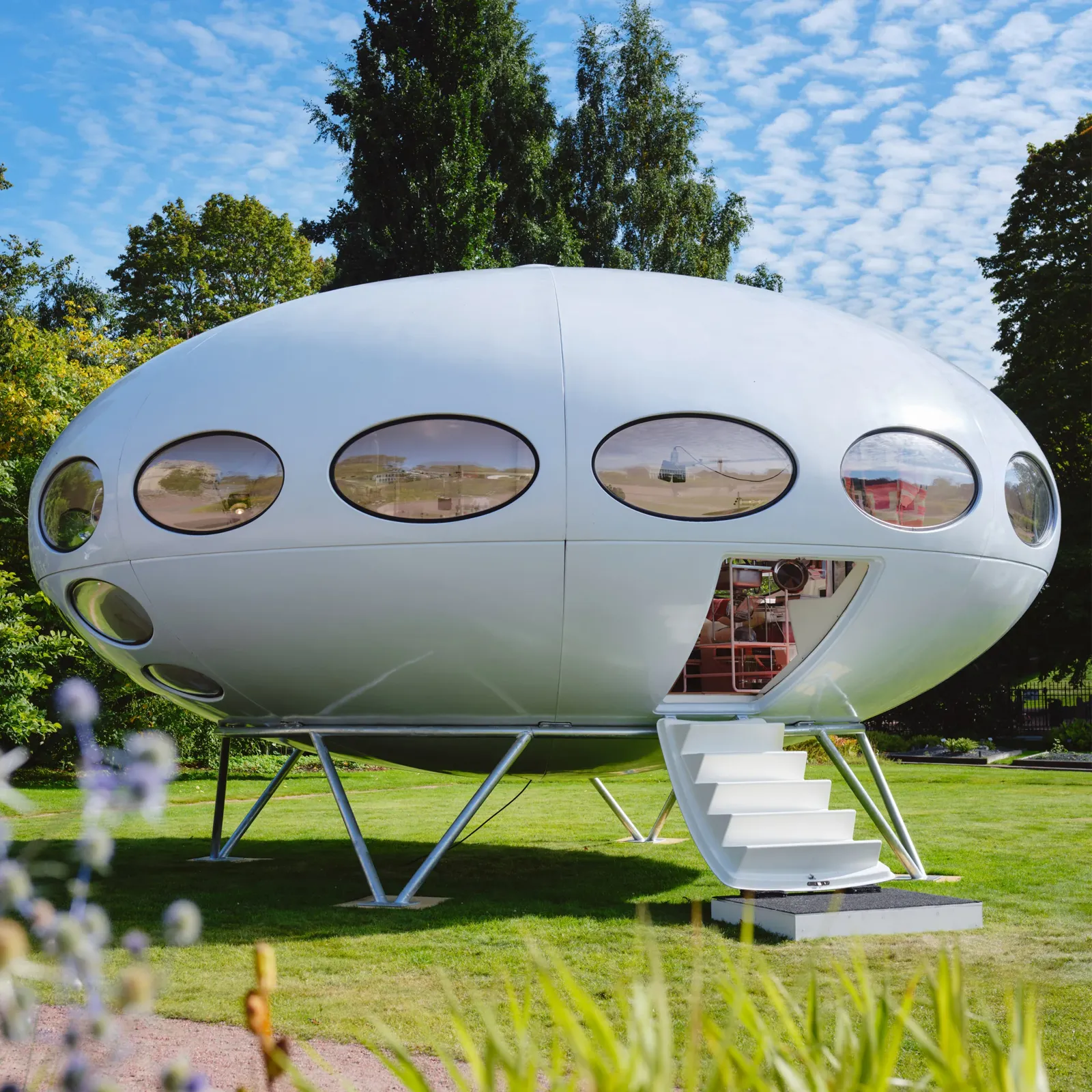
Futuro House Production Revived in Finland After Decades-Long Hiatus
A Facebook listing for abandoned moulds led to the first new Futuro...
 illustrarch Editoral Team3 Mins read
Building Your Dream Home in NSW: What You Should Know About Montgomery Homes
Montgomery Homes has been building across Sydney, Newcastle, the Hunter, Wollongong and...
illustrarch Editoral Team4 Mins read
Designing a Home Theater: Where Drapery Fits Into the Plan
In a media room the curtains are a performance layer, not decoration....
illustrarch Editoral Team3 Mins read
Oscar Niemeyer’s Cathedral of Brasília: The Hyperboloid Concrete Hymn
The Cathedral of Brasília reads as a single gesture, yet it stood...
 Furkan Sen7 Mins read


This article talks about the Great Mosque of Mecca and its importance. It seems like a very special place for many people. I learned that the Kaaba is really important for prayers. The way the mosque changes over time is interesting too.