

Hagia Sophia Interior: Mosaics, Dome & Architecture Guide
The Hagia Sophia interior stands as one of architecture's most layered sacred spaces, where Byzantine mosaics meet Ottoman calligraphy beneath a revolutionary dome. Built in 537 AD under Emperor Justinian I, Hagia Sophia has served as a cathedral, mosque, museum, and mosque again — each transformation reshaping its interior without erasing its past. This guide explores the dome architecture, pendentive engineering, mosaic art, and spatial design that make the interior of Hagia Sophia a timeless reference for architects and designers worldwide.
 Sinan Ozen5 February 20269 Mins read243

Table of Contents Show
Few buildings in the world resist singular definition as powerfully as the Hagia Sophia interior. Standing at the heart of Istanbul, it is neither merely a monument nor simply a sacred space; it is an architectural text written and rewritten by empires, beliefs, and political ambitions over nearly fifteen centuries. Hagia Sophia challenges the idea that architecture is static. Instead, it demonstrates how buildings can accumulate meaning, absorb contradiction, and act as living witnesses to cultural transformation. To encounter the interior of Hagia Sophia is to confront architecture not as a frozen artifact, but as a dynamic intersection of power, faith, technology, and spatial imagination.
For architects and designers, Hagia Sophia remains compelling not only because of its scale or beauty, but because it embodies architecture’s capacity to negotiate ideology. Its form has outlived regimes, its space has adapted to shifting rituals, and its presence continues to provoke debate about heritage, identity, and adaptive reuse. In an era where architecture is increasingly asked to respond to social complexity, this Hagia Sophia mosque in Istanbul stands as a profound reminder that buildings are never neutral—they are active participants in history.

What Was the Hagia Sophia? A Brief Historical Overview
Before examining its architecture, it is essential to understand what was the Hagia Sophia and how its identity evolved. Originally consecrated as a Christian cathedral in 537 AD, it served as the principal church of the Byzantine Empire for nearly a thousand years. After the Ottoman conquest of Constantinople in 1453, it was converted into a mosque. In 1934, under Mustafa Kemal Atatürk’s secular reforms, the Hagia Sophia museum era began — opening the building to global visitors and scholars. In 2020, it was reconverted into a functioning mosque, reigniting worldwide debate about Hagia Sophia museum history and cultural heritage preservation.
For those asking “where Hagia Sophia” is located: it sits in Istanbul’s historic Sultanahmet district, directly across from the Blue Mosque — a pairing that makes the Hagia Sophia and Blue Mosque ensemble one of the most iconic architectural panoramas in the world. This proximity also highlights the dialogue between Byzantine and Ottoman architectural traditions that defined Istanbul’s skyline.
Hagia Sophia Pronunciation
A common question among visitors and students alike is the correct Hagia Sophia pronunciation. It is typically pronounced “HAH-juh soh-FEE-uh” in English, derived from the Greek Ἁγία Σοφία (Hagía Sophía), meaning “Holy Wisdom.” In modern Turkish, it is known as Ayasofya.

When Was the Hagia Sophia Built? A Radical Experiment in Spatial Engineering
When was the Hagia Sophia built? Construction began in 532 AD and was completed in just five years, in 537 AD, under Emperor Justinian I. This represented a radical departure from established architectural norms. Neither a traditional basilica nor a centralized plan, its spatial logic merged longitudinal procession with an unprecedented domed volume, creating an interior that felt both directional and infinite. The massive central dome, seemingly suspended by light, was not simply a technical achievement but a deliberate spatial statement: architecture as a manifestation of divine order rendered through geometry and structure.
The ingenuity of its engineers, Anthemius of Tralles and Isidore of Miletus, lay in transforming structural necessity into spatial poetry. Pendentives dissolved the visual weight of the dome, allowing it to hover above a ring of windows that fractured mass into luminosity. This was not just construction—it was spatial choreography. Hagia Sophia demonstrated that engineering and symbolism could coexist seamlessly, setting a precedent that continues to influence how architects think about the relationship between structure, light, and experiential scale.

Hagia Sophia Dome Architecture: Which Architectural Component Supports the Dome?
One of the most frequently asked questions in architectural education is: which architectural component supports the dome of the Hagia Sophia? The answer lies in its revolutionary use of pendentives — concave, triangular structural elements that create a smooth transition from the square base of the building to the circular base of the dome of Hagia Sophia. Four massive pendentives channel the dome’s enormous weight downward through the piers to the foundation, allowing a circular dome to rest elegantly on a rectangular plan.
The Hagia Sophia dome architecture was groundbreaking for its era. The central dome measures approximately 31.87 meters (104.6 feet) in diameter and rises 55.6 meters (182 feet) above the floor. Forty arched windows encircle its base, flooding the Hagia Sophia inside with natural light and creating the famous illusion that the dome is floating — a quality that the 6th-century historian Procopius described as though it were “suspended from heaven by a golden chain.” Two semi-domes on the east and west sides extend the central spatial volume, creating an uninterrupted nave of approximately 76 meters in length.
Hagia Sophia Architecture Plan
The Hagia Sophia architecture plan reveals a carefully calibrated hybrid: a longitudinal basilica overlaid with a centralized domed space. The floor plan features a central nave flanked by side aisles and a gallery level above. The narthex (entrance hall) leads into the vast main space, while the apse at the eastern end originally housed the altar. This combination allowed the building to serve both liturgical procession and imperial ceremony, making the Hagia Sophia a reference point for centuries of architectural history. For architectural students exploring Hagia Sophia drawing exercises, the plan offers rich opportunities to study dome-to-pier transitions, spatial hierarchy, and the interplay between centralized and linear spatial organizations.

Architecture as an Instrument of Imperial Power
Beyond its technical brilliance, Hagia Sophia was a calculated political project. Built as the principal church of the Byzantine Empire, it functioned as a spatial assertion of imperial authority, translating political dominance into architectural form. Its scale dwarfed earlier churches, signaling not humility but supremacy—both earthly and divine. The building was designed to impress, to overwhelm, and to legitimize power through spatial awe.
This fusion of architecture and authority did not end with Byzantium. When the Ottomans conquered Constantinople in 1453, Hagia Sophia was transformed into a mosque, yet its architectural core was preserved rather than erased. Minarets, mihrab, and medallions were added, not to replace the structure’s identity, but to reframe it within a new ideological system. The Hagia Sophia church interior was thus adapted rather than destroyed, revealing how architecture can be appropriated by successive powers, each layering meaning without fully dismantling the past—a lesson in adaptability that resonates deeply in contemporary debates about adaptive reuse and cultural continuity.
Hagia Sophia Before Islam: Sacred Space and the Politics of Transformation
Understanding Hagia Sophia before Islam is crucial for appreciating the layers visible in its interior today. For nearly a millennium (537–1453), it was the world’s largest cathedral and the spiritual center of Eastern Orthodox Christianity. The original Byzantine interior glittered with gold mosaics, marble revetments, and sacred iconography. The emperor’s box, the patriarch’s throne, and the vast liturgical spaces all served a highly choreographed religious ritual that integrated architecture, sound, and light.
Hagia Sophia’s shifting function—from cathedral to mosque, to the Hagia Sophia museum, and back to mosque—exposes the tension between sacred architecture and political decision-making. Each transformation altered not only ritual use but also the perception of space. Christian mosaics and Islamic calligraphy coexist within the same interior, creating a rare visual dialogue between faiths that is spatial rather than verbal.
This layered sacredness challenges architects to reconsider purity in design. Hagia Sophia is not a “clean” object; it is complex, hybrid, and unresolved. Its power lies precisely in this ambiguity. In a world where architecture is often expected to take clear ideological positions, the interior of the Hagia Sophia demonstrates that spatial richness can emerge from contradiction. It suggests that architecture can hold multiple narratives simultaneously, resisting simplification while remaining deeply meaningful.

Hagia Sophia Mosaics: Byzantine Art Inside a Living Monument
The Hagia Sophia mosaics are among the most significant surviving examples of Byzantine art, and they form one of the most compelling reasons to study the Hagia Sophia inside. Created over several centuries, these mosaics in Hagia Sophia depict religious figures, imperial portraits, and abstract decorative patterns using thousands of small tesserae made from glass, gold leaf, silver, and colored stone.
Key examples of Hagia Sophia mosaic art include the Deësis Mosaic in the upper gallery — widely regarded as a masterpiece of Byzantine artistic expression — depicting Christ flanked by the Virgin Mary and John the Baptist. The Apse Mosaic, showing the Virgin and Child enthroned, dates from the post-Iconoclasm period (after 843 AD) and represents the restoration of figurative imagery. Other notable works include the Comnenus Mosaic (showing Emperor John II Comnenus and Empress Irene) and the Zoe Panel, both illustrating how imperial portraiture was integrated into sacred space.
During the Ottoman period, many of these mosaics in Hagia Sophia were plastered over but not destroyed — a fact that contributed to their remarkable preservation when they were uncovered during the Fossati brothers’ 19th-century restoration. Today, pictures of Hagia Sophia church interiors reveal the remarkable coexistence of these Byzantine mosaics alongside Ottoman-era calligraphic medallions and mihrab decorations, making the building a unique palimpsest of artistic and spiritual traditions. For visual reference and high-resolution Hagia Sophia pictures, architectural photography collections and UNESCO heritage documentation offer detailed views of these interior layers.
Light, Material, and the Emotional Intelligence of Space
One of Hagia Sophia’s most enduring qualities is its mastery of atmosphere. Light enters not as illumination alone, but as an architectural material, shaping perception and emotion. The shimmering mosaics, marble surfaces, and gold backgrounds interact with daylight to create a constantly shifting interior—never fixed, never fully graspable. This dynamic quality transforms the building into an experiential environment rather than a static composition.
For contemporary architects, this sensitivity to sensory experience remains profoundly relevant. Hagia Sophia reminds us that architecture communicates through more than form or function; it speaks through mood, rhythm, and bodily perception. In an age dominated by visual renderings and digital clarity, the Hagia Sophia interior offers a counterpoint: a space designed to be felt as much as seen, where ambiguity enhances meaning rather than diminishing it. This principle connects to broader discussions about the intersection of architecture and art — where sensory and spatial qualities transcend pure function.

Hagia Sophia as a Global Architectural Reference
Hagia Sophia’s influence extends far beyond Istanbul. Its structural principles informed Ottoman mosque architecture, most notably in the works of Mimar Sinan, whose designs reinterpret the central dome with increasing clarity and confidence. Sinan’s masterworks — including the Süleymaniye Mosque in Istanbul and the Selimiye Mosque in Edirne — directly engage with the spatial logic of Hagia Sophia while pushing its structural ideas further. Beyond the Islamic world, Hagia Sophia has inspired generations of architects fascinated by its synthesis of structure and symbolism, from Renaissance thinkers to modern historians of space.
What makes Hagia Sophia enduring is not imitation, but interpretation. Architects return to it not to replicate its form, but to understand its logic: how architecture can operate simultaneously as technology, ideology, and cultural memory. In this sense, Hagia Sophia functions as an architectural reference point—a reminder that innovation does not always mean rupture, and that the most powerful buildings often emerge from dialogue with the past.

Hagia Sophia and Blue Mosque: A Dialogue Across Centuries
The spatial relationship between Hagia Sophia and Blue Mosque (Sultan Ahmed Mosque, completed in 1616) offers a masterclass in architectural dialogue. Positioned facing each other across the Sultanahmet Square, the two structures represent different eras of dome construction, decorative philosophy, and spatial ambition. While the Blue Mosque’s interior is defined by its over 20,000 İznik tiles, Hagia Sophia’s interior draws its power from the interplay of marble, mosaic, and structural light. Together, they encapsulate Istanbul’s identity as a living museum of architecture.
The Hagia Sophia Coin: Architecture as Cultural Symbol
Beyond its physical presence, the Hagia Sophia coin and various numismatic depictions across centuries reflect the building’s status as a political and cultural symbol. Byzantine coins occasionally depicted the cathedral as a symbol of imperial power, while modern Turkish commemorative coins have featured the monument as an emblem of national heritage. These representations underscore how architecture extends its influence far beyond the built environment — into currency, identity, and collective memory.
Conclusion
Hagia Sophia stands today not as a resolved monument, but as an ongoing question posed to architecture itself. It asks how buildings can survive political upheaval without losing relevance, how sacred space can evolve without erasing memory, and how architecture can embody power while remaining open to reinterpretation. Its endurance is not rooted in permanence alone, but in its capacity to absorb change.
For architects, students, and designers, the Hagia Sophia interior offers more than historical fascination. It provides a framework for thinking about architecture as a cultural agent—one that shapes and is shaped by belief systems, governance, and collective identity. In an era marked by rapid transformation and contested narratives, Hagia Sophia reminds us that architecture’s greatest strength lies not in certainty, but in its ability to hold complexity, to invite reflection, and to remain relevant across time. As both a definition of architecture at its most ambitious and a lesson in cultural resilience, the interior of Hagia Sophia continues to teach, inspire, and provoke.


1 Comment


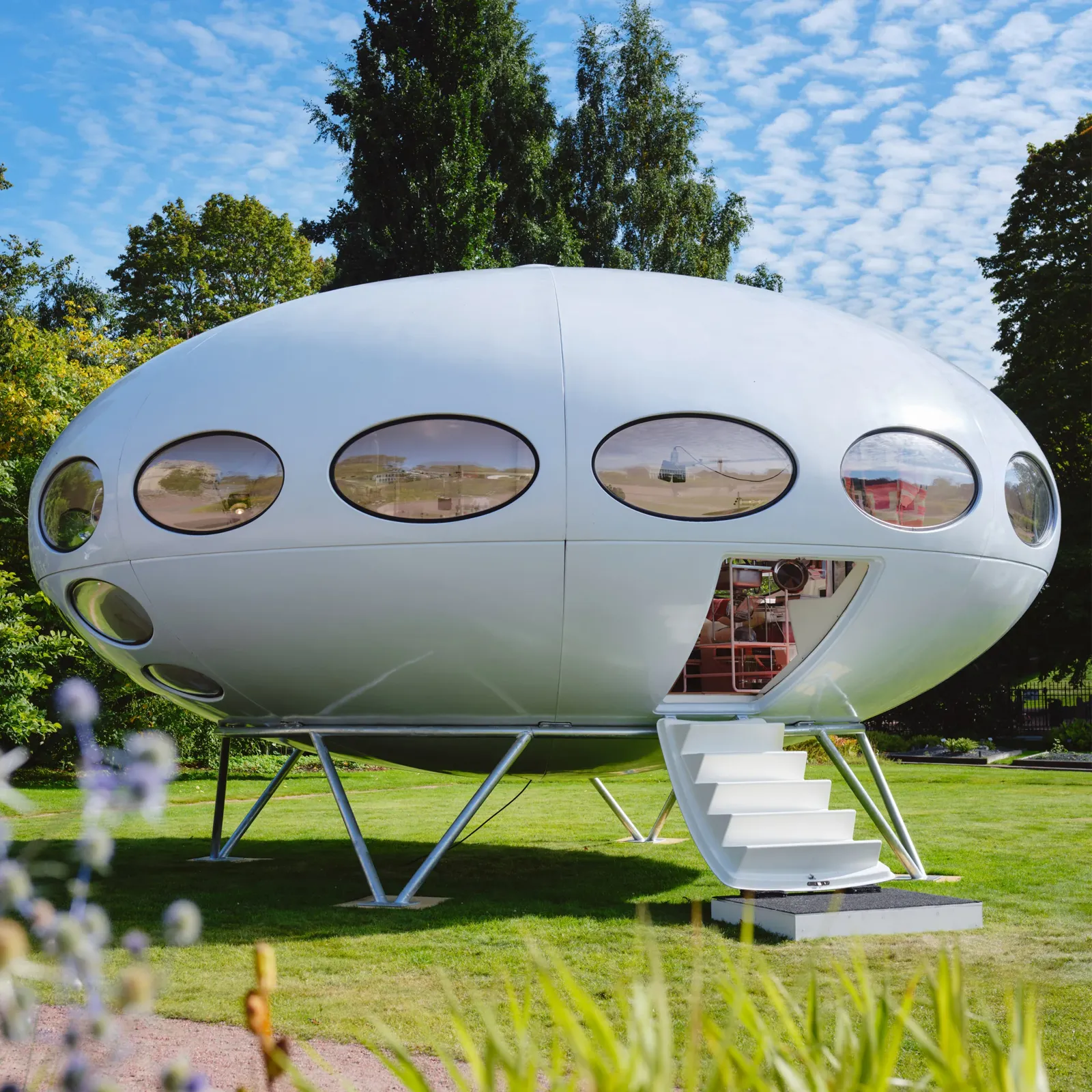
Futuro House Production Revived in Finland After Decades-Long Hiatus
A Facebook listing for abandoned moulds led to the first new Futuro...
 illustrarch Editoral Team3 Mins read
Building Your Dream Home in NSW: What You Should Know About Montgomery Homes
Montgomery Homes has been building across Sydney, Newcastle, the Hunter, Wollongong and...
illustrarch Editoral Team4 Mins read

Designing a Home Theater: Where Drapery Fits Into the Plan
In a media room the curtains are a performance layer, not decoration....
illustrarch Editoral Team3 Mins read
Oscar Niemeyer’s Cathedral of Brasília: The Hyperboloid Concrete Hymn
The Cathedral of Brasília reads as a single gesture, yet it stood...
 Furkan Sen7 Mins read


This article talks a lot about Hagia Sophia and its importance. It seems to be a very interesting building with a lot of history. I didn’t know it had changed so much over time.