

Jin Mao Tower: Art Deco Meets Chinese Pagoda in Shanghai’s Iconic Skyscraper
Jin Mao Tower in Shanghai stands as one of the most architecturally significant skyscrapers ever built, weaving classical Chinese pagoda symbolism into a bold Art Deco silhouette. This article explores how SOM's Adrian Smith fused two distinct traditions into a single 420.5-meter landmark that reshaped Pudong's skyline.
 Sinan Ozen21 March 20267 Mins read235

Table of Contents Show
The Jin Mao Tower in Shanghai is one of the most architecturally layered skyscrapers ever built, fusing the stepped silhouette of a traditional Chinese pagoda with the geometric precision of Art Deco modernism. Designed by Skidmore, Owings & Merrill (SOM) and completed in 1999, the 88-story, 420.5-meter tower stood as China’s tallest building at the time and remains a defining landmark of the Pudong skyline.

What Makes Jin Mao Tower Architecturally Unique?
At its core, Jin Mao Tower is a study in cultural translation. SOM’s lead designer Adrian D. Smith faced a challenging brief: create a supertall skyscraper in China’s most ambitious new business district while honoring the country’s architectural heritage. The result is a building that reads differently depending on where you stand.
From a distance, the tower’s silhouette echoes the tiered, tapering form of a Chinese pagoda. Up close, the aluminum and steel cladding, the setback rhythm, and the crown detailing carry strong Art Deco references. Neither element overwhelms the other. Instead, they coexist in a postmodern conversation that was genuinely novel in 1999.
💡 Pro Tip
If you’re studying Jin Mao Tower for a design project or academic work, pay attention to how the setbacks are mathematically derived from the number 8, not just symbolically, but structurally. The base is 16 stories, and each successive segment is one-eighth shorter than the one below. That kind of deep integration between cultural symbolism and structural logic is rare in supertall design, and worth documenting in your analysis.

The Number 8 as Architectural DNA
Few buildings in history have embedded cultural numerology as deeply into their structure as Jin Mao Tower. In Chinese culture, the number 8 (八, bā) sounds similar to 发 (fā), meaning prosperity or good fortune. SOM didn’t treat this as superficial decoration. The number 8 became an organizational logic that runs through the entire building.
The tower rises 88 floors. The floor plan is based on an octagonal shape. Eight exterior composite supercolumns and eight steel columns ring the central core. The building’s 88 floors are divided into 16 segments, with each segment one-eighth shorter than the one below. Even the official dedication date, August 28, 1998, was selected to include as many eights as possible. This degree of intentional repetition transforms a cultural preference into a coherent architectural system.
📌 Did You Know?
Jin Mao Tower’s foundation rests on a 4-meter-thick concrete raft supported by 1,062 steel piles driven approximately 83 meters into Pudong’s soft alluvial soil. That’s roughly the depth of a 25-story building underground, hidden below one of China’s most recognizable skyline icons. The structure was also engineered to withstand typhoon-force winds and seismic events up to magnitude 7. (Source: The Infrastructure Index, 2025)
The Pagoda Influence: More Than Surface-Level
The pagoda form is not simply mimicked, it is reinterpreted. Classical Chinese pagodas step back at each tier, with slightly flared eaves that catch the eye and slow the visual ascent of the tower. Jin Mao Tower uses the same logic at urban scale. Each of the 11 tiers above the 16-story base flares slightly outward at its top before the next setback begins, creating exactly that pagoda rhythm in a contemporary steel-and-glass skin.
This design decision does several things simultaneously. It breaks the vertical mass into readable segments, which helps human perception at street level. It creates terrace opportunities that were used for mechanical floors and, later, visitor amenities. And it gives the building a silhouette that is instantly recognizable from across the Huangpu River, which was partly the point. Jin Mao Tower was the first of the three Lujiazui supertalls to be completed, and it needed to signal Shanghai’s arrival on the global stage.
🎓 Expert Insight
“The pagoda-like profile of the 88-story Jin Mao Tower was meant to assert the arrival of China and Shanghai on the world stage of global business and architectural culture.”
The Skyscraper Museum, New York
This framing is significant. Jin Mao was not designed in isolation, it was conceived as a symbol of national ambition, and its architectural language was chosen to communicate continuity with Chinese history while projecting international confidence. That dual message is what makes the building’s design decisions legible even decades later.

Structural Engineering: Innovation Beneath the Symbolism
The Jin Mao Tower’s structural system is as notable as its appearance. SOM’s structural engineers, led by Bill Baker, developed a composite steel-and-concrete frame built around a central octagonal concrete core. Sixteen exterior columns, eight made of steel-reinforced concrete and eight of structural steel, connect to the core via radiating floor beams at each level.
The structure needed to handle two specific threats common in the Pudong area: typhoon-level wind loads and seismic activity. A wind tunnel model at 1:500 scale was tested extensively by the RWDI wind engineering group to calibrate the building’s aerodynamic behavior. The result is a tower that deflects but does not oscillate dangerously in high winds, which is a critical performance criterion for buildings of this height in coastal China.
Below grade, the engineering challenges were equally serious. Pudong is built on soft alluvial soil deposited by the Yangtze River over centuries. A 30-meter-deep slurry wall was constructed around the construction site to prevent groundwater intrusion, and more than 1,000 bearing piles were driven to a depth where the soil stiffens enough to carry the tower’s enormous load.
📐 Technical Note
Jin Mao Tower’s octagonal concrete core measures approximately 27 meters in diameter. Three sets of outrigger trusses spanning two stories each connect the core to the perimeter columns at six floors, adding lateral stiffness without adding significant mass. This outrigger-and-belt truss system, used at floors 24-26, 51-52, and 85-87, became a structural template replicated in many subsequent supertall towers built in China and across Asia. (Source: SOM structural documentation; The Skyscraper Museum)
The Grand Hyatt Atrium: A Skyscraper Interior Unlike Any Other
One of the most spectacular interior spaces in modern architecture sits inside Jin Mao Tower, largely invisible from the outside. The Grand Hyatt Shanghai begins on the 53rd floor and occupies the building up to the 87th floor. At the hotel’s core is a cylindrical atrium that rises 115 meters from the 56th floor to the 87th floor, with a diameter of 27 meters.
From the ground level of the atrium, 28 annular corridors wrap the interior in a spiral, each corridor containing hotel rooms that look inward into this vertiginous void. The effect is deliberately disorienting in the best possible way, guests can look up and see the ceiling 115 meters above, or peer down through the glass rail and count the rings of corridor below. It was, at the time of completion, one of the largest hotel atriums in the world by height.
This interior experience was not just a design flourish. The atrium solved a real planning problem. Because the tower’s floor plate tapers significantly as it rises, each tier being one-eighth smaller than the one below, the upper floors would be too small for efficient office layouts. By switching to a hotel program at the 53rd floor and wrapping the rooms around a central void, SOM extracted maximum value from the floor plates that remained while creating a signature amenity.

How Jin Mao Tower Changed Chinese Skyscraper Design
When Jin Mao Tower opened in 1999, it established a template that shaped supertall design across China for two decades. Its most influential contribution was the mixed-use typology it demonstrated at scale: retail at the base, offices in the middle, hotel above, and public observation at the crown. This stacked program became standard practice in virtually every major Chinese supertall that followed.
The Shanghai World Financial Center, completed next door in 2008, and the Shanghai Tower, completed in 2015, both follow a similar organizational logic, even as their architectural expressions move toward greater abstraction and away from the cultural historicism of Jin Mao. In this sense, Jin Mao’s real influence is structural and programmatic rather than stylistic.
The building also demonstrated that Western firms could work productively within Chinese cultural constraints without producing watered-down architecture. ArchDaily has documented numerous Chinese supertalls that attempted similar cultural-modern fusions; few executed it as coherently as Jin Mao.
⚠️ Common Mistake to Avoid
A frequent error in architectural writing is to describe Jin Mao Tower as purely “postmodern” because it borrows historical forms. That label is only partially accurate. The building is better understood as a transitional work: postmodern in its willingness to reference historical motifs, but modernist in its structural honesty and its refusal to use historical decoration as mere surface ornament. The pagoda form is structurally integrated, not applied. Calling it straightforwardly postmodern flattens the sophistication of what SOM achieved.
Jin Mao Tower Today: LEED Gold and the Skywalk Experience
The Jin Mao Tower in Shanghai has remained operationally relevant well beyond its initial completion. In 2013, it became the tallest and longest-operated building in China to earn LEED-EB: O+M (Existing Buildings: Operations and Maintenance) Gold certification, according to the CTBUH (Council on Tall Buildings and Urban Habitat). This certification recognized the building’s computerized energy management system, which has tracked electricity, water, and natural gas consumption since 1999, and its low carbon footprint relative to buildings of comparable size and age.
In 2016, the observation experience was upgraded significantly with the introduction of the Skywalk, a 60-meter-long, 1.2-meter-wide glass walkway extending from the 88th-floor observatory at 340.6 meters above street level. The walkway has no handrails, relying instead on a tethering system for visitors. It is reported to be the highest handrail-free walkway in the world at the time of its opening.
For visitors planning a trip to the Jin Mao Tower hotel or the observation deck, the building remains one of the most architecturally rewarding stops in Shanghai. The Grand Hyatt’s atrium, in particular, is worth experiencing regardless of whether you are staying as a guest. You can access the hotel lobby bar to look up into the atrium without booking a room. See also our guide to the world’s most iconic supertall towers for a broader comparison with its neighbors across the plaza.
💡 Pro Tip
When visiting the Jin Mao Tower observation deck, go on a weekday morning, the Skywalk has a 30-minute security check requirement and visitor limits, and weekends can see significant wait times. The 56th-floor hotel atrium lookdown point (accessible from the lobby bar) is far less crowded and gives you arguably the most dramatic interior view in any building in China.
🔢 Quick Numbers
- 420.5 meters / 1,380 feet tall, tallest building in China and Asia at completion in 1999 (CTBUH, 1999)
- 1,062 foundation piles driven 83 meters into Pudong’s alluvial soil (SOM structural documentation)
- 115 meters: interior height of the Grand Hyatt atrium, one of the tallest hotel atriums by clear height globally (The Infrastructure Index, 2025)
- US$530 million: estimated construction cost (Wikipedia / China Jin Mao Group data)
✅ Key Takeaways
- Jin Mao Tower blends Chinese pagoda form with Art Deco geometry by embedding the number 8 as a structural and organizational system throughout the building.
- SOM’s structural solution, an octagonal concrete core with outrigger trusses, became a template for supertall design across Asia in the two decades that followed.
- The Grand Hyatt atrium, rising 115 meters inside the tower’s upper floors, is one of the most dramatic interior spaces in contemporary architecture.
- The building’s mixed-use stacking (retail, offices, hotel, observation) established the program model for Chinese supertalls through the 2010s.
- In 2013, Jin Mao Tower earned LEED-EB Gold certification, demonstrating that a late-1990s supertall could meet contemporary sustainability benchmarks through operational management (CTBUH).





Famous Buildings in Los Angeles: Icons of LA Architecture
Nine of the most famous buildings in Los Angeles profiled: architect, year,...
 illustrarch Editoral Team9 Mins read
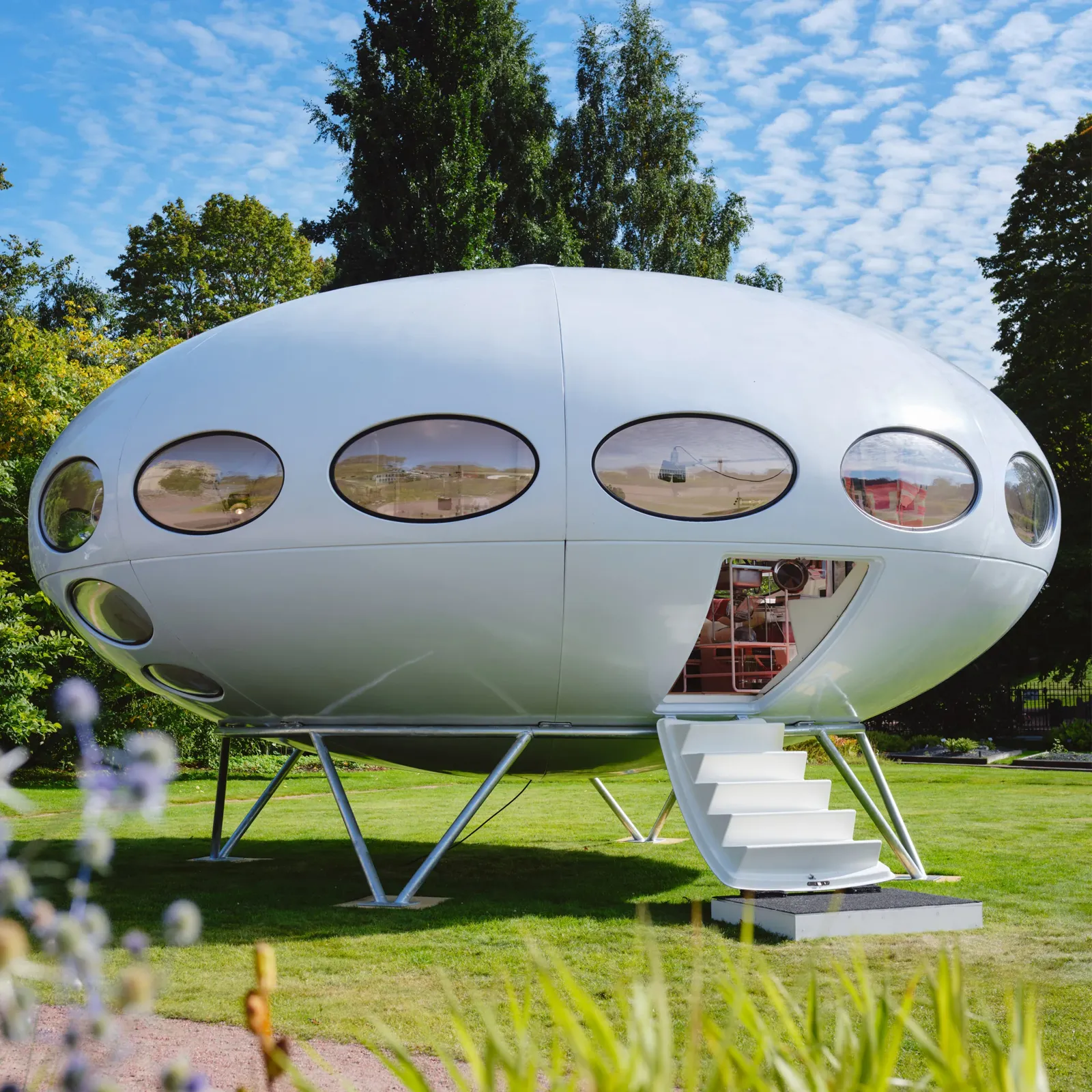
Futuro House Production Revived in Finland After Decades-Long Hiatus
A Facebook listing for abandoned moulds led to the first new Futuro...
illustrarch Editoral Team3 Mins read
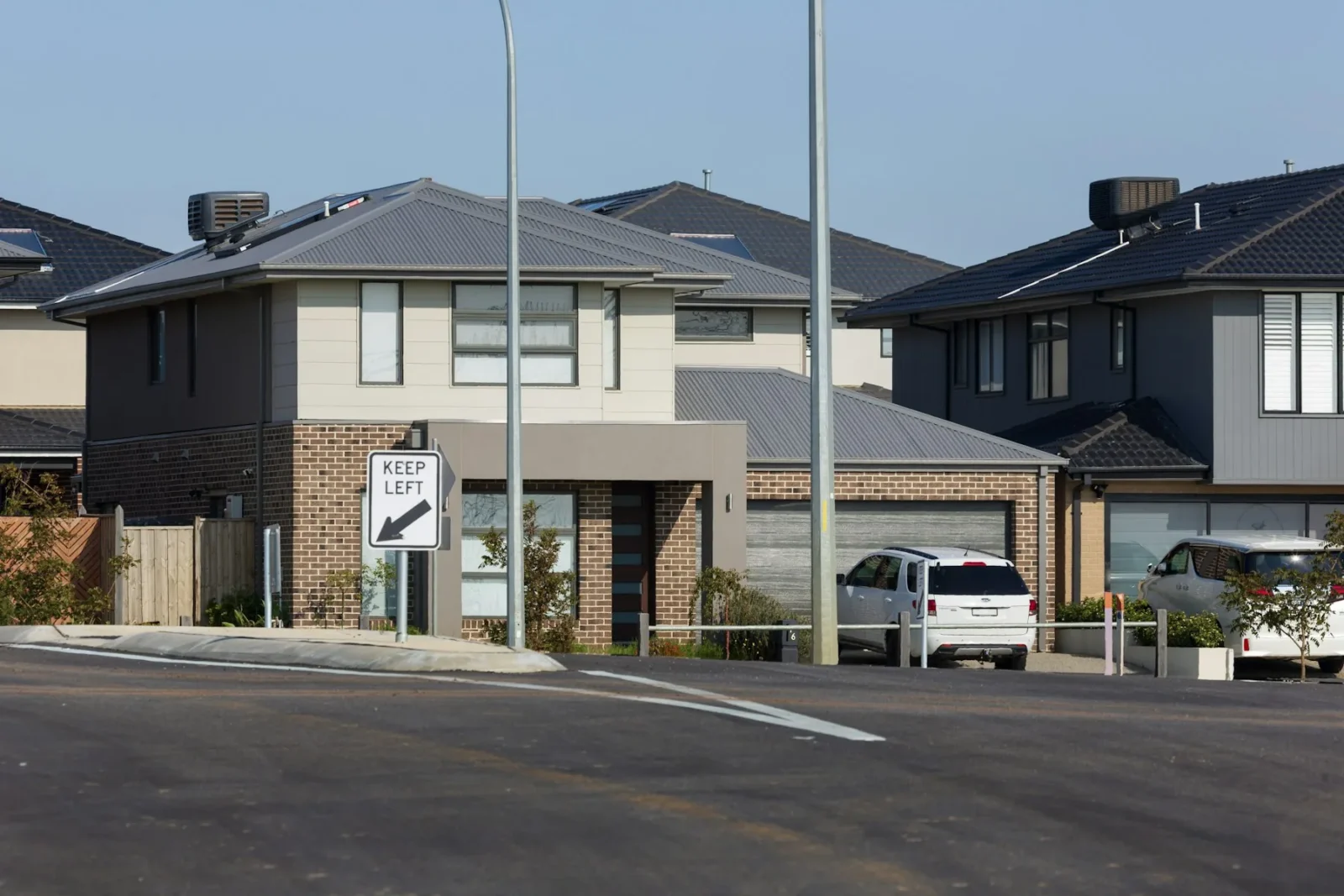
Building Your Dream Home in NSW: What You Should Know About Montgomery Homes
Montgomery Homes has been building across Sydney, Newcastle, the Hunter, Wollongong and...
illustrarch Editoral Team4 Mins read
Designing a Home Theater: Where Drapery Fits Into the Plan
In a media room the curtains are a performance layer, not decoration....
illustrarch Editoral Team3 Mins read


Leave a comment