

Palácio da Alvorada: Oscar Niemeyer’s Palace of the Dawn in Brasília
The Palácio da Alvorada stands on the shores of Lake Paranoá in Brasília, completed in 1958 as the official residence of Brazil's president. Designed by Óscar Niemeyer, the palace is celebrated for its sculptural marble columns and its role as a founding symbol of Brazilian modernism.
 Sinan Ozen26 March 20269 Mins read226

Table of Contents Show
The Palácio da Alvorada is the official residential palace of the President of Brazil, located on a peninsula along the shores of Lake Paranoá in Brasília. Completed in 1958 and designed by Óscar Niemeyer, the palace is considered one of the architect’s greatest achievements and a defining symbol of Brazilian modernism. Its distinctive marble colonnade and transparent facades remain among the most photographed architectural images in South America.

What Is the Palácio da Alvorada?
The name translates directly to “Palace of the Dawn,” a phrase drawn from President Juscelino Kubitschek’s own words: “What is Brasília, if not the dawn of a new day for Brazil?” Inaugurated in 1958, the palace predated the official founding of Brasília itself by two years, making it one of the very first completed structures in the new capital city.
The building covers approximately 7,000 square meters and comprises three floors: two above ground and one below. The underground level houses service and administrative functions, including a kitchen, laundry, medical center, and a small cinema. The ground floor holds the ceremonial state rooms used for official functions, while the upper floor contains the private presidential apartment, guest suites, and residential spaces.
📌 Did You Know?
The Palácio da Alvorada was inaugurated in 1958, two full years before Brasília became the official capital of Brazil in 1960. Niemeyer completed it first so that President Kubitschek would have a presidential residence ready to receive foreign dignitaries during the construction phase of the city. It is listed as a National Historic Heritage Site of Brazil and is directly referenced in the city’s official coat of arms.

Palácio da Alvorada Architecture: Form, Structure, and Meaning
The palácio da alvorada architecture is defined above all by its colonnade: a row of slender, diamond-shaped marble columns that run the full length of the building’s exterior on both the north and south facades. These are not merely decorative. The columns carry the structural load of the roof, allowing the glass curtain walls behind them to be entirely non-load-bearing. The result is an interior where the distinction between inside and outside almost disappears.
Niemeyer designed the columns with a profile that narrows dramatically at the midpoint before widening again at both the base and the crown. This gives each column a sculptural, almost organic quality that contrasts sharply with the rectilinear glass box it surrounds. The columns are faced in white marble, chosen partly for aesthetic purity and partly because marble reflects and diffuses the intense light of the Brazilian cerrado landscape.
The horizontal emphasis of the building is equally deliberate. The palace sits low to the ground, its roofline almost parallel with the flat plateau of the surrounding landscape. This horizontality, combined with the transparency of the glass facades and the visual porosity of the colonnade, was Niemeyer’s response to the vastness of the Brazilian interior. Rather than competing with the landscape, the building opens itself to it.
💡 Pro Tip
When studying the Alvorada’s colonnade as a design reference, pay close attention to how Niemeyer resolved the column-to-slab connection. The parabolic profile tapers to a narrow point at mid-height, concentrating loads visually without reducing structural capacity. This detail has been widely reproduced but rarely matched in execution, largely because the proportional relationships between shaft width, taper angle, and crown spread were calibrated specifically to the building’s span and the marble’s compressive strength.
Óscar Niemeyer and the Vision Behind the Palace
To understand the palácio da alvorada architecture fully, it helps to understand what Óscar Niemeyer was reacting against. Brazilian architecture in the 1940s and early 1950s was still largely tethered to European academic traditions and colonial-era ornament. Niemeyer, trained under Lúcio Costa and briefly under Le Corbusier, had absorbed the Five Points of modern architecture, but he had already begun to question them. Where Le Corbusier favored straight lines and rational geometry, Niemeyer was drawn to curves and sculptural freedom.
The works by Oscar Niemeyer at Pampulha in the early 1940s, particularly the Church of Saint Francis of Assisi, had already demonstrated that reinforced concrete could be treated as a plastic material rather than a structural given. By the time he received the commission to design Brasília’s major civic buildings in 1956, his approach was fully developed: use concrete structurally, but refuse to let its structural logic constrain the architectural form.
At the Alvorada, this philosophy is most visible in the columns. A strictly rational engineer might have designed a simpler, more economical profile. Niemeyer chose the parabolic form not because it was the easiest solution, but because it was the most beautiful one he could justify structurally. This willingness to pursue formal elegance within structural honesty is what separates the palace from mere functionalism.
🎓 Expert Insight
“It is not the right angle that attracts me, nor the straight line, hard and inflexible, created by man. What attracts me is the free and sensual curve, the curve that I see in the mountains of my country, in the sinuousness of its rivers, in the waves of the ocean, and in the body of the beloved woman.”
Óscar Niemeyer
This conviction is visible in every detail of the Alvorada’s colonnade. The columns are not simply structural members shaped for convenience; they are formal statements about what modern architecture in a tropical landscape should look and feel like.

The Columns: Symbol of a Nation
The marble columns of the Palácio da Alvorada have become one of the most recognizable architectural motifs in Brazilian visual culture. Their profile appears directly in the official flag and coat of arms of Brasília, and they have been reproduced in graphic form across government documents, tourism materials, and public signage throughout the country’s history. This level of symbolic integration is unusual even among national landmarks, and it reflects the degree to which the building was understood from the very beginning as representing something beyond its own program.
The columns were constructed using marble sourced from Brazil, reinforcing Kubitschek’s political message that the new capital would be built with Brazilian materials and Brazilian labor. The structural system they form, carrying the roof slab on exterior pilotis while leaving the interior free of columns, follows the Corbusian principle of the free plan, but translates it into a distinctly Brazilian formal language.
A reflecting pool runs along the exterior of the palace, designed to create a visual doubling of the colonnade. This relationship between built form and water was not incidental. Niemeyer understood that the palace would be approached from a distance across the flat plateau, and that the reflected image would extend the visual presence of the building in a landscape where there are few competing vertical elements.
🏗️ Real-World Example
Palácio do Planalto (Brasília, 1960): Niemeyer’s design for the presidential working palace uses the same parabolic column profile as the Alvorada, demonstrating how he established a visual language consistent enough to unify a new city’s civic architecture. The Planalto’s columns were later adapted slightly in profile and spacing, but their debt to the Alvorada prototype is unmistakable and was deliberate: Niemeyer wanted both buildings to read as part of the same architectural family.
Brasília as a UNESCO World Heritage Site and the Alvorada’s Role
In 1987, Brasília became a UNESCO World Heritage Site, one of the youngest cities ever to receive the designation. The citation recognized both the urban plan by Lúcio Costa and the architectural ensemble by Óscar Niemeyer as works of exceptional universal value. The Palácio da Alvorada was specifically identified as one of the key structures that justified this status.
For historians of modern architecture, the Alvorada sits within a broader context of mid-century civic architecture that includes Chandigarh in India (Le Corbusier), Dhaka in Bangladesh (Louis Kahn), and various post-war government complexes in Europe. What distinguishes the Brasília ensemble is the speed of its execution, the consistency of its formal language, and the ambition of its urban scale. No other modernist civic project of the same period achieved the same degree of formal unity across such a large number of buildings.
The palace was also the site where Niemeyer demonstrated that Brazilian modernism was not simply derivative of European precedents. The combination of sculptural columns, tropical materials, and landscape integration represented a genuinely regional interpretation of the modern movement. Architectural historians including Kenneth Frampton have cited Brasília, and the Alvorada in particular, as key evidence for what Frampton termed “critical regionalism” the idea that modernism could absorb local cultural and environmental conditions without abandoning its fundamental principles. For more on this context, the UNESCO World Heritage entry for Brasília provides the original designation text and its architectural rationale.
💡 Pro Tip
If you’re using the Alvorada as a case study in architectural education, focus specifically on the relationship between the column profile and the structural span. Niemeyer resolved a wide-span roof load using a column that narrows to its minimum section exactly where the bending moment is highest in a conventional post, a formally audacious choice that required precise engineering collaboration with Joaquim Cardozo, who served as structural engineer for the Brasília projects. The Niemeyer-Cardozo collaboration is an underexplored model for how architects and structural engineers can produce genuinely joint creative outcomes.

The Interior and Landscape Design
The Alvorada’s interior was largely designed in collaboration with Roberto Burle Marx, Brazil’s most influential landscape architect and one of Niemeyer’s closest collaborators across the Brasília projects. Burle Marx was responsible for the garden and grounds design, creating a landscape setting that treated the building as an object within a curated natural composition rather than as a structure imposed upon cleared land.
Inside the palace, the state rooms on the ground floor are finished in a combination of Brazilian hardwoods, stone, and textile works by Brazilian artists. The Banquet Room, designed by Niemeyer’s daughter Anna Maria Niemeyer, features a dining table with fifty seats and is decorated with tapestries and period furniture from the Catete Palace, integrating historical Brazilian cultural artifacts into the explicitly modernist setting.
The second-floor residential level contains four presidential suites, two guest apartments, and ancillary private rooms. The deliberate separation between the public ceremonial floor and the private residential floor reflects a functional clarity that runs throughout Niemeyer’s civic work: the building is organized to make its program legible in section, not just in plan.
Influence on Brazilian and International Architecture
The palácio da alvorada’s influence on subsequent Brazilian architecture was immediate and wide-ranging. Its colonnade profile was replicated and varied across government buildings, universities, and commercial structures throughout Brazil in the 1960s and 1970s, in some cases with genuine understanding of its structural logic and in others as a purely stylistic quotation. This popularization of the Niemeyer column is one reason why Brasília’s architectural language diffused so quickly into Brazilian civic building culture.
Internationally, the Alvorada contributed to a broader reassessment of what reinforced concrete could achieve as an expressive material. Niemeyer’s approach influenced architects in Portugal, Mozambique, Angola, and elsewhere in the Portuguese-speaking world, but its impact was also felt in the wider Latin American context, where Colombian, Venezuelan, and Mexican architects drew on the Brasília example as evidence that modernism could be adapted to tropical environments without losing formal rigor.
For a detailed survey of related works by Oscar Niemeyer, the Google Arts & Culture feature on Niemeyer’s modernist buildings provides a well-curated visual overview. The ArchDaily archive of Niemeyer projects covers the full range of his output with project descriptions and original photography. For the broader context of Brazilian modernism, Niemeyer’s Wikipedia entry remains a reliable starting point, drawing on multiple academic sources. You can also explore illustrarch’s guide to the 15 most influential architects of the 20th century, which covers Niemeyer’s place in the broader history of modern architecture.

Conservation and Restoration
The palace underwent a significant restoration between 2004 and 2006. Unlike many government-funded heritage projects, this restoration was financed through private corporate sponsorship coordinated by the National Institute of Historic and Artistic Heritage (IPHAN), reflecting both the building’s symbolic importance and the funding constraints that frequently affect the maintenance of modernist heritage structures.
The restoration addressed structural and material degradation typical of mid-century reinforced concrete: carbonation of the concrete shell, corrosion of internal reinforcement, and deterioration of the marble column facings. It also involved the careful cleaning and stabilization of the interior finishes and the recalibration of the building’s environmental systems to meet contemporary standards without compromising the original spatial quality.
The Alvorada’s conservation history is representative of a wider challenge facing twentieth-century modernist buildings globally. Unlike masonry structures that deteriorate slowly and visibly, reinforced concrete buildings can appear stable long after their internal reinforcement has begun to fail. The 2004-2006 restoration at the Alvorada was notable for the rigor of its pre-intervention survey, which informed a targeted approach to repair rather than wholesale replacement. You can also read about similar conservation challenges in illustrarch’s coverage of Fallingwater’s structural stabilization, which deals with comparable issues of concrete preservation in an iconic modernist building.
For those interested in the broader history of Brazilian modernist architecture, illustrarch’s article on Postmodernism vs Modernism provides useful comparative context, and the Brutalist Architecture overview explores the Le Corbusier tradition from which Niemeyer drew and then diverged. To see how Niemeyer fits within the wider gallery of influential modernist figures, illustrarch’s profile of the world’s most famous architects places his work in comparative perspective.
✅ Key Takeaways
- The Palácio da Alvorada was completed in 1958, two years before Brasília became Brazil’s official capital, and was designed by Óscar Niemeyer as the president’s official residence.
- Its defining architectural feature is the exterior colonnade of parabolic marble columns, which carry the roof load and free the glass curtain walls from structural function.
- The column profile became so emblematic that it was incorporated into Brasília’s coat of arms and is widely reproduced in Brazilian public iconography.
- Niemeyer collaborated with structural engineer Joaquim Cardozo and landscape architect Roberto Burle Marx to produce a building in which architecture, structure, and landscape function as a unified composition.
- The palace was a central justification for Brasília’s UNESCO World Heritage designation in 1987 and remains one of the most studied examples of twentieth-century Brazilian modernism.




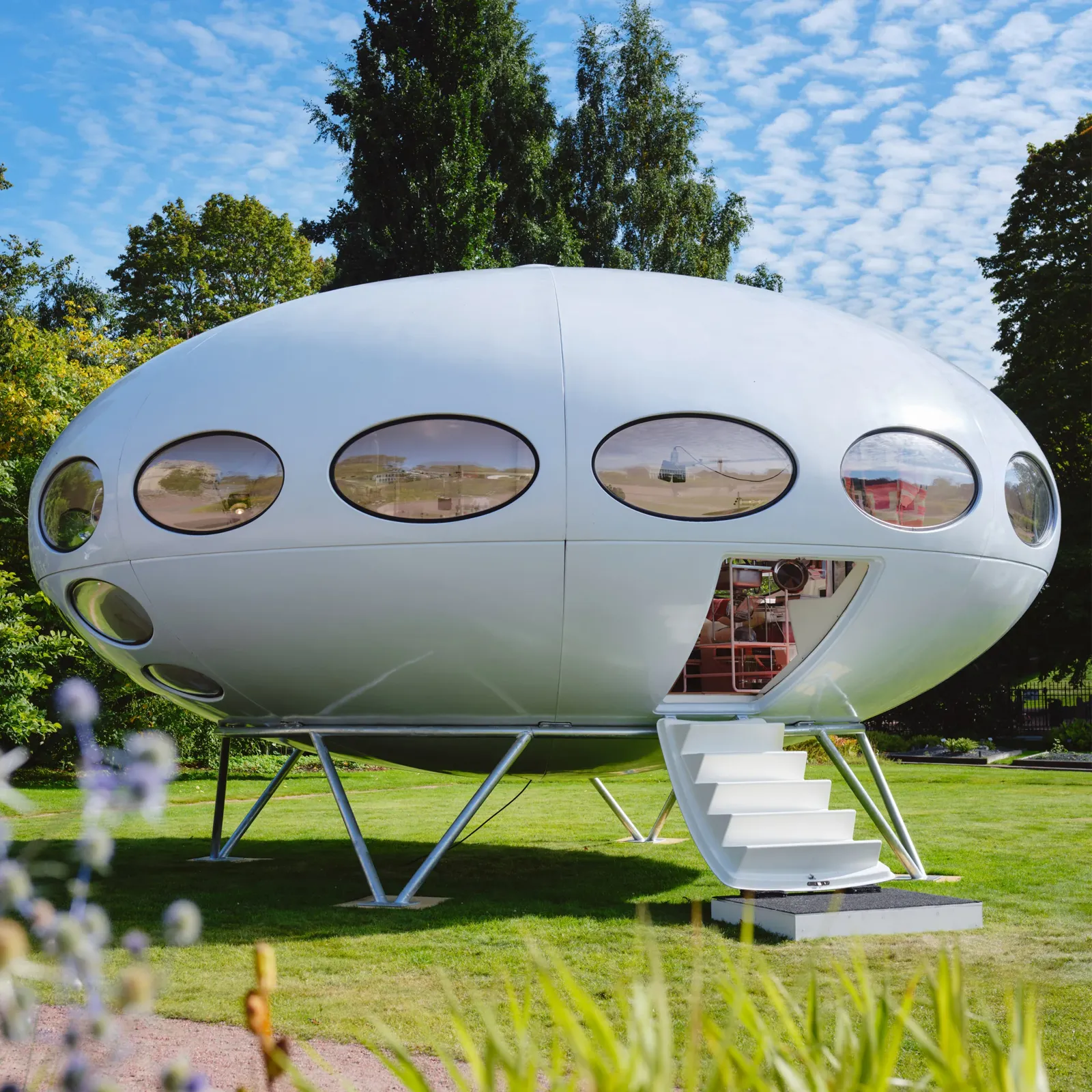
Futuro House Production Revived in Finland After Decades-Long Hiatus
A Facebook listing for abandoned moulds led to the first new Futuro...
 illustrarch Editoral Team3 Mins read
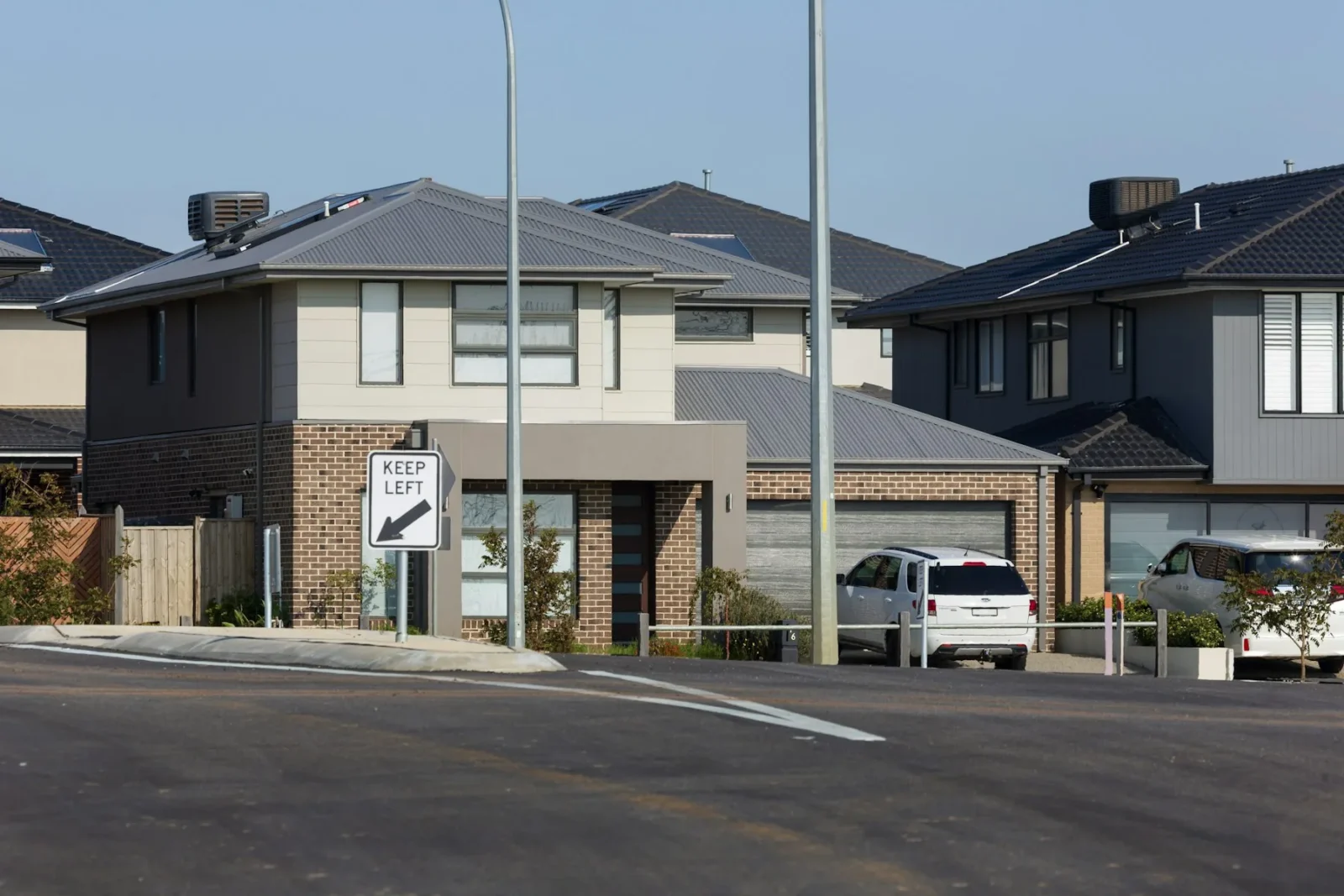
Building Your Dream Home in NSW: What You Should Know About Montgomery Homes
Montgomery Homes has been building across Sydney, Newcastle, the Hunter, Wollongong and...
illustrarch Editoral Team4 Mins read
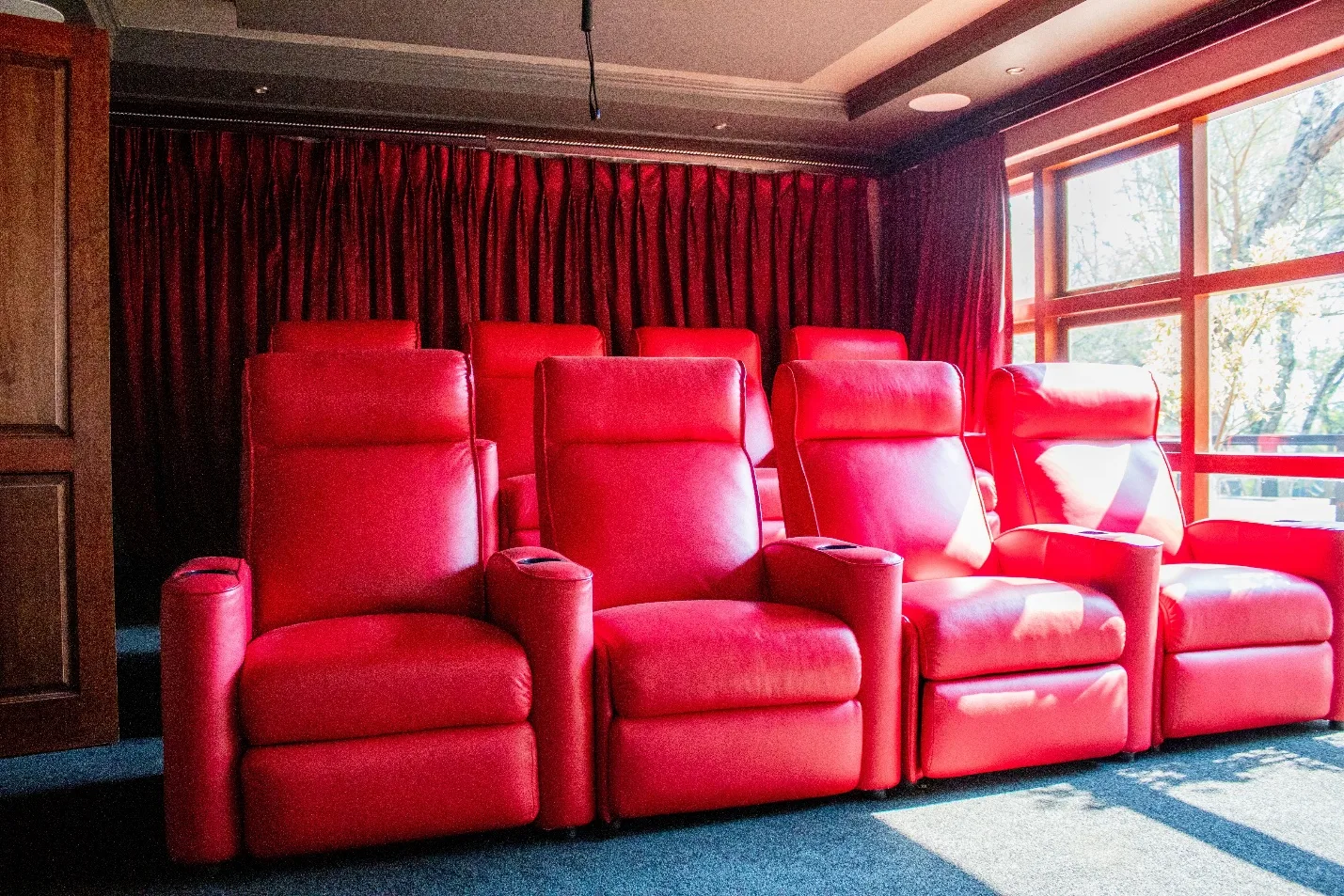
Designing a Home Theater: Where Drapery Fits Into the Plan
In a media room the curtains are a performance layer, not decoration....
illustrarch Editoral Team3 Mins read
Oscar Niemeyer’s Cathedral of Brasília: The Hyperboloid Concrete Hymn
The Cathedral of Brasília reads as a single gesture, yet it stood...
 Furkan Sen7 Mins read


Leave a comment