

One World Trade Center: Symbol of Resilience and Modern Engineering
One World Trade Center rises 1,776 feet above Lower Manhattan, making it the tallest building in the Western Hemisphere. This article covers its symbolic height, the engineering innovations behind its design, the One World Observatory experience, and what the building represents for New York City and the nation.
 Furkan Sen13 April 20269 Mins read394

Table of Contents Show
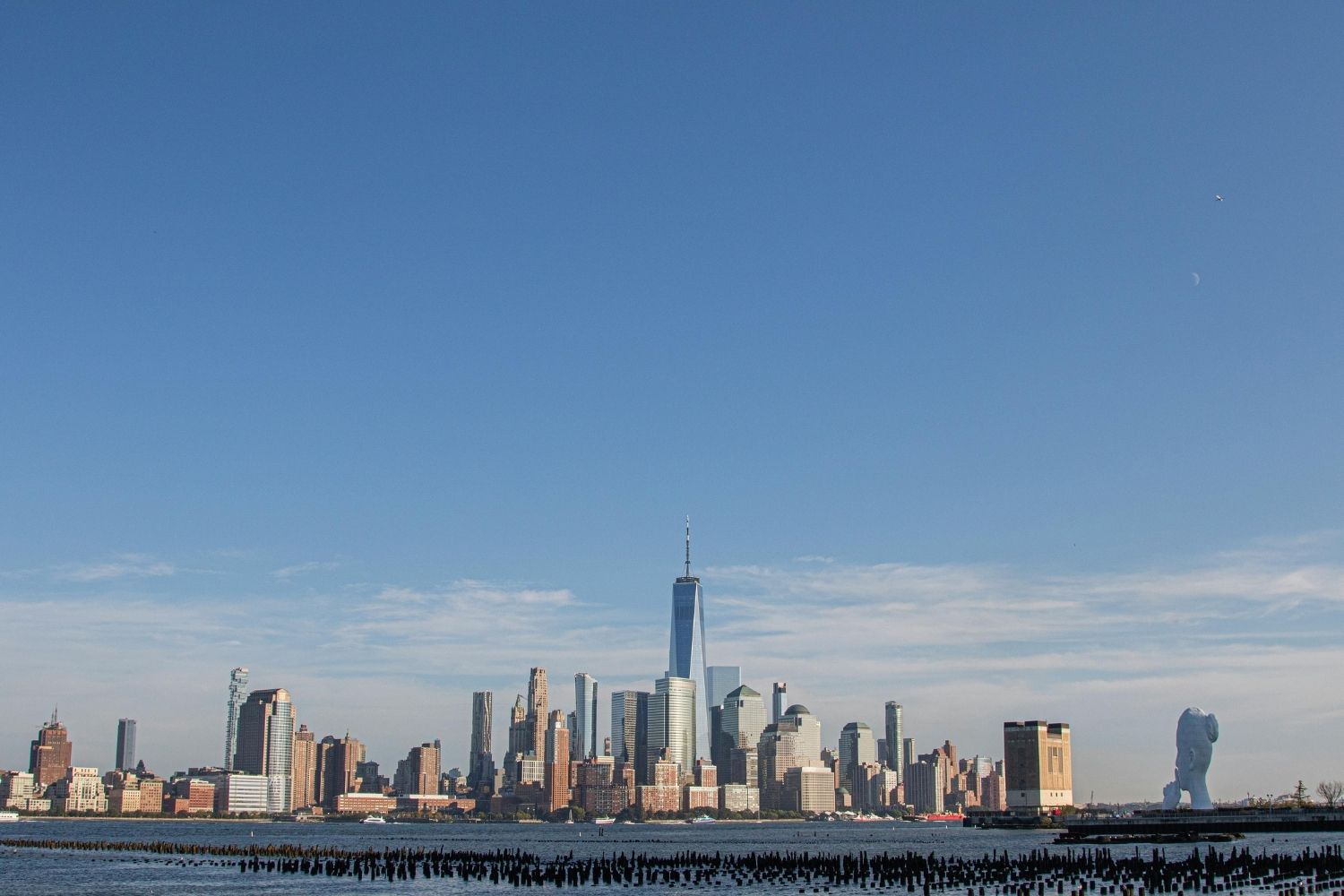
One world trade center is the tallest building in the Western Hemisphere, rising 1,776 feet (541 meters) above Lower Manhattan. Designed by David Childs of Skidmore, Owings & Merrill, it was completed in 2014 on the site of the original Twin Towers destroyed on September 11, 2001. The height is a deliberate reference to the year the United States declared independence.
How Tall Is One World Trade Center?
The one world trade center height of 1,776 feet is not accidental. The figure is a direct reference to 1776, the year the Declaration of Independence was signed. At 541 meters, the building holds the title of tallest in the Western Hemisphere and ranked fourth-tallest in the world at the time of completion.
The height question has generated real debate. Critics have argued about what counts toward the official measurement. The Council on Tall Buildings and Urban Habitat (CTBUH) settled the matter by ruling that the tower’s antenna qualifies as an architectural spire rather than a broadcast mast, which means the full 1,776 feet counts. Without the spire, the building’s roof stands at approximately 1,368 feet.
🔢 Quick Numbers
- 1,776 feet (541 m) total height, including spire (SOM / Port Authority of New York and New Jersey, 2014)
- 104 floors of occupied office space, covering approximately 3.5 million square feet of gross area (SOM, 2014)
- $3.9 billion total construction cost, making it the most expensive skyscraper ever built at the time of completion (Council on Tall Buildings and Urban Habitat, 2014)
- One World Observatory spans floors 100 through 102, with the observation deck sitting at approximately 1,250 feet above street level (One World Observatory, 2015)
So how many floors is one world trade center? The building has 104 stories. The floor numbering skips some levels due to mechanical floors and the structural concrete base, but 104 is the official count. For context, the original North Tower had 110 floors. The new tower is shorter by floor count but taller by measurement because of higher floor-to-ceiling heights and the symbolic spire.
The Design: Architecture of a National Symbol

The one world trade center building is the product of a long and politically charged design process. An international competition in 2002 produced a master plan by Daniel Libeskind, whose original concept called for a twisting glass tower reaching 1,776 feet. Commercial and security pressures eventually reshaped almost every aspect of that vision. What remained was the height.
David Childs of SOM (Skidmore, Owings & Merrill) developed the final design. The building’s geometry is deceptively simple. At its base, the footprint is a 200-foot square, matching the footprints of the original Twin Towers. As the tower rises, the corners are chamfered back, creating eight elongated triangular faces. At mid-height, the building forms a perfect octagon in cross-section. The top culminates in a 150-foot square rotated 45 degrees from the base, completing a form that shifts appearance depending on where you stand.
This shape-shifting quality was intentional. According to SOM’s project description, the tower appears to transform from a solid recalling the original twins, to an obelisk referencing the Washington Monument, depending on the viewer’s angle and the position of the sun. The glass facade catches and refracts light throughout the day, making the tower look different at dawn, midday, and dusk.
🎓 Expert Insight
“One World Trade Center speaks about the future and hope as it rises upward in a faceted form filled with, and reflecting, light.”
David Childs, Design Partner, SOM
This framing was central to the entire design philosophy. The building was never meant to be simply tall. It was meant to communicate something about what comes after loss, which is why the geometry avoids the aggressive gestures common in supertall towers and instead opts for restraint and optical elegance.
For further architectural analysis of how supertall buildings define cities, this piece on skyscrapers and urban identity covers the broader context in which One World Trade Center sits.
Engineering Innovations: Building for Safety and the Future
The engineering behind one world trade center new york went far beyond standard skyscraper practice. The September 11 attacks exposed specific vulnerabilities in the original Twin Towers: steel-and-sheetrock cores that could not withstand impact, stairwells that became impassable, and sprinkler systems inadequate for fires fueled by aviation fuel. The new building was designed to address each of these failures directly.
The concrete core is the most consequential change. Where the original towers used steel frames wrapped in sheetrock, One World Trade Center has a reinforced concrete core that runs the full height of the building. This core houses the emergency stairwells and is engineered to resist both blast loading and the kind of impact forces that destroyed the original towers’ structural frames. The concrete mix used was specially developed for the project, achieving compressive strengths well above those available in standard commercial construction at the time.
📐 Technical Note
The concrete used in One World Trade Center’s core achieved compressive strengths of up to 14,000 psi (96 MPa), significantly exceeding the 4,000 to 6,000 psi typical for commercial high-rise construction. The 200-foot-square base includes a 185-foot-tall reinforced concrete podium encased in blast-resistant glass panels, designed to the standards set by the Port Authority’s post-9/11 security requirements. Structural engineering was led by WSP Cantor Seinuk.
The base of the building also received special treatment. The lower 185 feet are clad in blast-resistant glass prisms and reinforced concrete rather than the curtain wall typical of most skyscrapers. This section of the building is designed to deflect or absorb explosive force before it reaches the occupied floors above. The design was developed in collaboration with security consultants and tested against established federal protective standards.
Wind loads presented a separate challenge. At 1,776 feet, the tower experiences significant lateral forces, especially near the top. The octagonal cross-section at mid-height was chosen in part because it reduces wind-induced vortex shedding, a phenomenon that causes buildings to sway rhythmically in wind. Engineers from RWDI (Rowan Williams Davies & Irwin) conducted extensive wind tunnel testing to optimize the building’s performance across a range of wind speeds and directions.
💡 Pro Tip
When studying how One World Trade Center manages wind loads, pay attention to how the chamfered corners contribute to aerodynamic performance. This is a practical lesson for any high-rise project: geometric decisions made for aesthetic reasons often carry structural benefits. The octagonal cross-section at mid-height is a good example of how form and engineering can reinforce each other rather than compete.
To understand how One World Trade Center fits into the broader history of supertall structural systems, this guide to iconic supertall towers covers the engineering lineage from SOM’s early bundled-tube systems to today’s hybrid approaches.
Sustainability: LEED Gold in Lower Manhattan
One world trade center achieved LEED BD+C Gold certification, which reflects a significant sustainability program for a building of its size and complexity. The sustainability measures were integrated from the early design stages rather than added after the fact.
Rainwater collection systems capture and reuse water for cooling towers and irrigation. The building uses a high-performance curtain wall system that reduces solar heat gain without sacrificing natural light. Energy-efficient lighting systems throughout the occupied floors were designed to reduce electrical load substantially compared to older office towers of comparable size.
The building also uses 100% wind-sourced electricity through Renewable Energy Certificates, making it carbon-neutral for its electricity consumption under this accounting method. This was a commitment made by the building’s primary developer, the Port Authority of New York and New Jersey, in partnership with the Durst Organization.
📌 Did You Know?
One World Trade Center was the most expensive skyscraper ever built at the time of its completion, with a total cost of approximately $3.9 billion. This figure is more than double the original budget estimate from the early 2000s. The overruns were driven largely by post-9/11 security requirements, multiple design changes, and the complexity of building on an active memorial site with extensive underground transit infrastructure directly below.
What’s the Point of the One World Trade Center Height?
The question comes up often: what’s the point of one world trade center height being specifically 1,776 feet? The answer is both literal and symbolic. The number refers to 1776, the year the Continental Congress adopted the Declaration of Independence. The choice was carried forward from Daniel Libeskind’s original master plan, even as every other aspect of his design was revised or abandoned.
The symbolism was debated. Some critics felt it was too literal, even nationalistic in a way that could complicate the building’s international reception. Others argued that symbolic height gave the project a clear identity that transcended architecture. The CTBUH’s ruling that the spire counts as architectural height was important to this story: had the antenna been classified as broadcast equipment, the official height would have dropped to around 1,368 feet and the symbolic number would have been lost.
The broader point of the height, beyond the specific number, is that rebuilding was itself a statement. The Twin Towers defined the Lower Manhattan skyline for three decades. Their absence after September 11 left a visible wound in the city. The decision to build tall again, rather than leave the footprints as open space, was a deliberate choice to assert continuity with the city’s history of vertical ambition.
For a broader look at how New York’s tallest towers stack up today, this guide to the tallest skyscrapers in New York City provides full context across all eight of Manhattan’s current record holders.
One World Observatory: Visiting the Tower

The one world observatory at one world trade center occupies floors 100, 101, and 102. It opened to the public in May 2015, about eight months after the tower’s official opening. The observation deck sits at roughly 1,250 feet above street level, offering views extending more than 40 miles in clear conditions.
The visitor experience begins at street level on the Fulton Street side of the building. One world trade center fulton street new york ny marks the primary public entrance for the observatory. The ground-floor lobby contains the Sky Pod elevators, which travel at approximately 2,000 feet per minute and are fitted with screen panels that display a time-lapse of New York City’s development from a single farmhouse to the current skyline during the 47-second ascent.
Floors 100 and 101 contain observation decks with floor-to-ceiling windows providing 360-degree views. Floor 102 houses a restaurant and event space. The views encompass the September 11 Memorial pools directly below, the Hudson and East Rivers, the Statue of Liberty, and on clear days, the Connecticut and New Jersey shorelines.
💡 Pro Tip
If you’re visiting the One World Observatory, book tickets online in advance to secure a specific time slot. Morning visits on weekdays tend to have shorter queues and better lighting for photography facing east toward Brooklyn. The best views of the September 11 Memorial pools are from the south-facing windows on floor 100, which offer a direct line of sight down to the reflective pools.
The observatory is operated by a private operator under license from the building’s owners. Ticket prices change seasonally. For current pricing and booking, visit the One World Observatory official site.
One World Trade Center in the Broader World Trade Center Complex
The new world trade center is more than a single building. The 16-acre site now includes One World Trade Center, three additional office towers (3 WTC by Richard Rogers, 4 WTC by Fumihiko Maki, and 7 WTC by SOM completed in 2006), the September 11 Memorial and Museum, Santiago Calatrava’s transportation hub known as the Oculus, and the Perelman Performing Arts Center completed in 2023.
One World Trade Center anchors the northwest corner of the site and is by far the largest structure in the complex. Its position was chosen to maximize its visibility from both the Hudson River to the west and the approaching streets from Midtown to the north. The building’s address is 1 World Trade Center, and it is accessible from multiple subway lines including the A, C, E, J, N, R, W, Z, 1, 2, and 3 trains, as well as the PATH train from New Jersey.
🏗️ Real-World Example
7 World Trade Center (New York, 2006): The first building to rise on the rebuilt site, 7 WTC was designed by SOM and completed eight years before One World Trade Center. Its construction served as a proving ground for the security and structural systems later applied at scale to 1 WTC. The building achieved LEED Gold certification and demonstrated that high security and sustainable design could coexist within a commercial office tower in dense urban conditions, directly influencing the approach taken for the larger tower that followed.
The World Trade Center complex represents one of the most architecturally significant urban rebuilding efforts in modern history. For context on how similar supertall structures approach the relationship between engineering and symbolism, this overview of skyscraper architecture history traces the lineage from Chicago’s early steel frames through to today’s supertalls.
One World Trade Center’s Place in Architectural History
One world trade center stands as a practical achievement and a cultural document. It is the product of specific political pressures, a post-disaster rebuilding mandate, post-9/11 security requirements, and competing commercial interests. The fact that it was completed at all, given the complexity of the site and the weight of what it was meant to represent, is itself significant.
Architecturally, it does not belong to a single design movement. It draws on the American tradition of the commercial office tower, the supertall structural systems developed by SOM in earlier decades, and the symbolic language of monumental architecture. Its geometry is restrained rather than dramatic. This was a deliberate choice to create a building that could stand for decades without looking dated, prioritizing timelessness over spectacle.
The building received the CTBUH Award of Excellence (10 Year Award) in 2024, recognizing its sustained design quality a decade after completion. For detailed architectural documentation, ArchDaily’s project page and the SOM official project page both provide comprehensive records of the design process and technical specifications.
For anyone studying tall building design, this guide to the world’s tallest buildings provides essential comparative context across the global supertall landscape.
✅ Key Takeaways
- One World Trade Center stands 1,776 feet tall, a deliberate reference to 1776, the year of American independence. The CTBUH confirmed the spire qualifies as architectural height, making this figure official.
- The building has 104 floors and 3.5 million square feet of gross area, making it the largest office building in the Western Hemisphere by height and one of the largest by floor space.
- SOM’s design, led by David Childs, uses a chamfered square base that transitions to an octagonal mid-section and a rotated square at the top, producing a shape that appears to shift depending on viewing angle and light.
- Post-9/11 security engineering drove major technical decisions, including the reinforced concrete core, blast-resistant base cladding, and widened emergency stairwells, all of which addressed failures identified in the original towers.
- The One World Observatory on floors 100 through 102 offers views exceeding 40 miles and is accessible via sky pod elevators from the Fulton Street entrance.
- The building achieved LEED Gold certification and received the CTBUH Award of Excellence in 2024, confirming its architectural standing a decade after completion.






Famous Buildings in Los Angeles: Icons of LA Architecture
Nine of the most famous buildings in Los Angeles profiled: architect, year,...
 illustrarch Editoral Team9 Mins read
Futuro House Production Revived in Finland After Decades-Long Hiatus
A Facebook listing for abandoned moulds led to the first new Futuro...
illustrarch Editoral Team3 Mins read
Building Your Dream Home in NSW: What You Should Know About Montgomery Homes
Montgomery Homes has been building across Sydney, Newcastle, the Hunter, Wollongong and...
illustrarch Editoral Team4 Mins read
Designing a Home Theater: Where Drapery Fits Into the Plan
In a media room the curtains are a performance layer, not decoration....
illustrarch Editoral Team3 Mins read


Leave a comment