

Parramatta Powerhouse: Design, Construction and Late Opening at 2026
Powerhouse Parramatta is Australia's largest cultural infrastructure project since the Sydney Opera House. This guide covers the museum's steel exoskeleton structure, seven exhibition spaces, sustainability achievements including 6-Star Green Star rating, construction milestones, and what visitors can expect when the $915 million museum opens in late 2026.
 Elif Ayse Sen12 May 202611 Mins read279

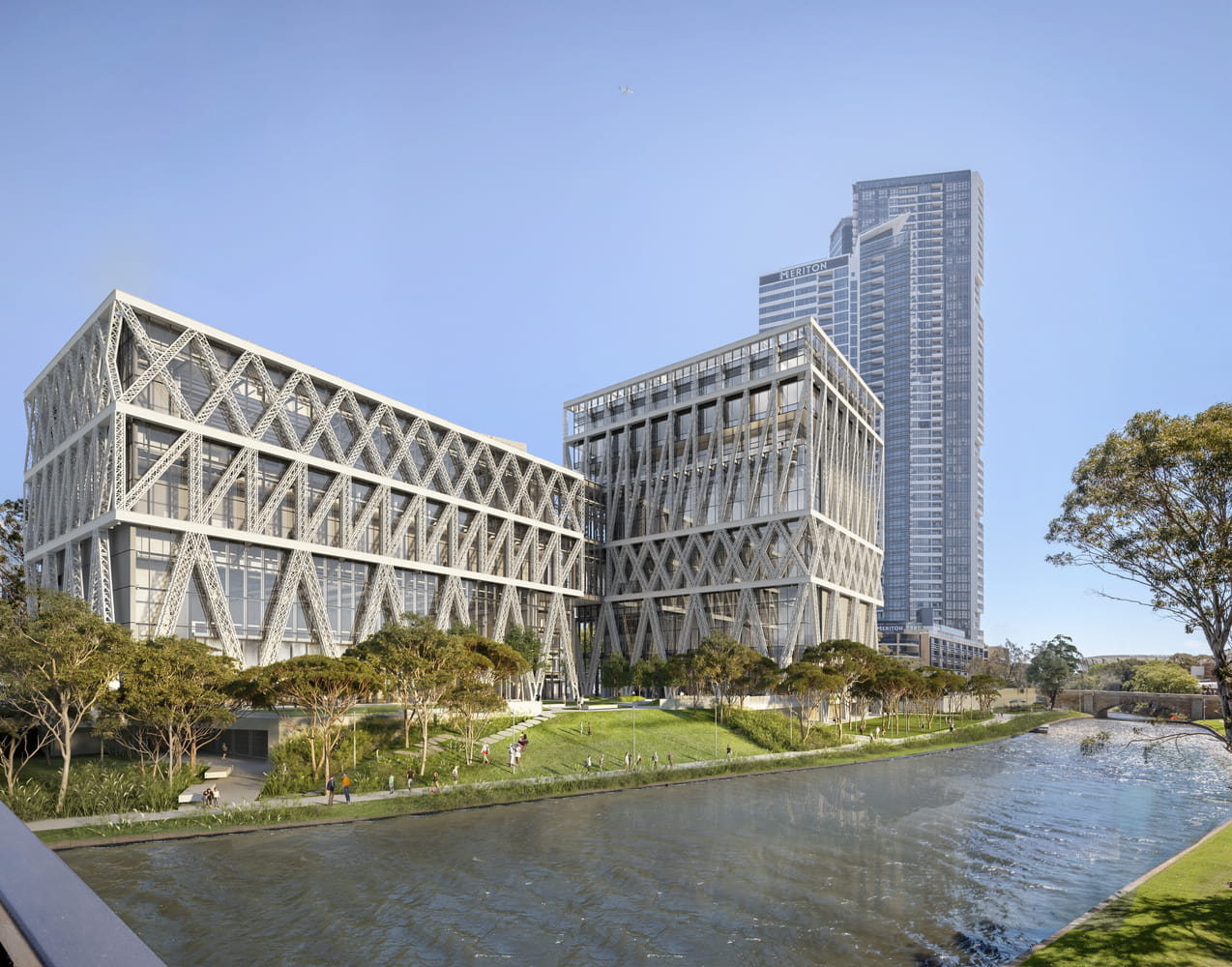
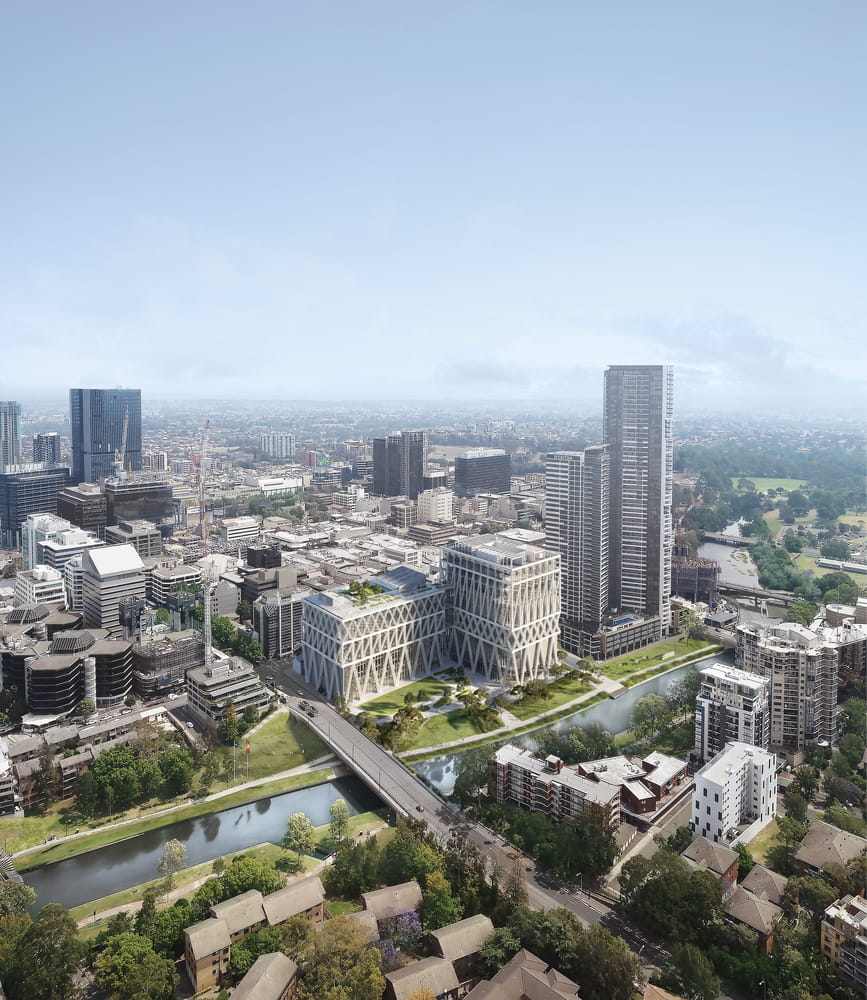

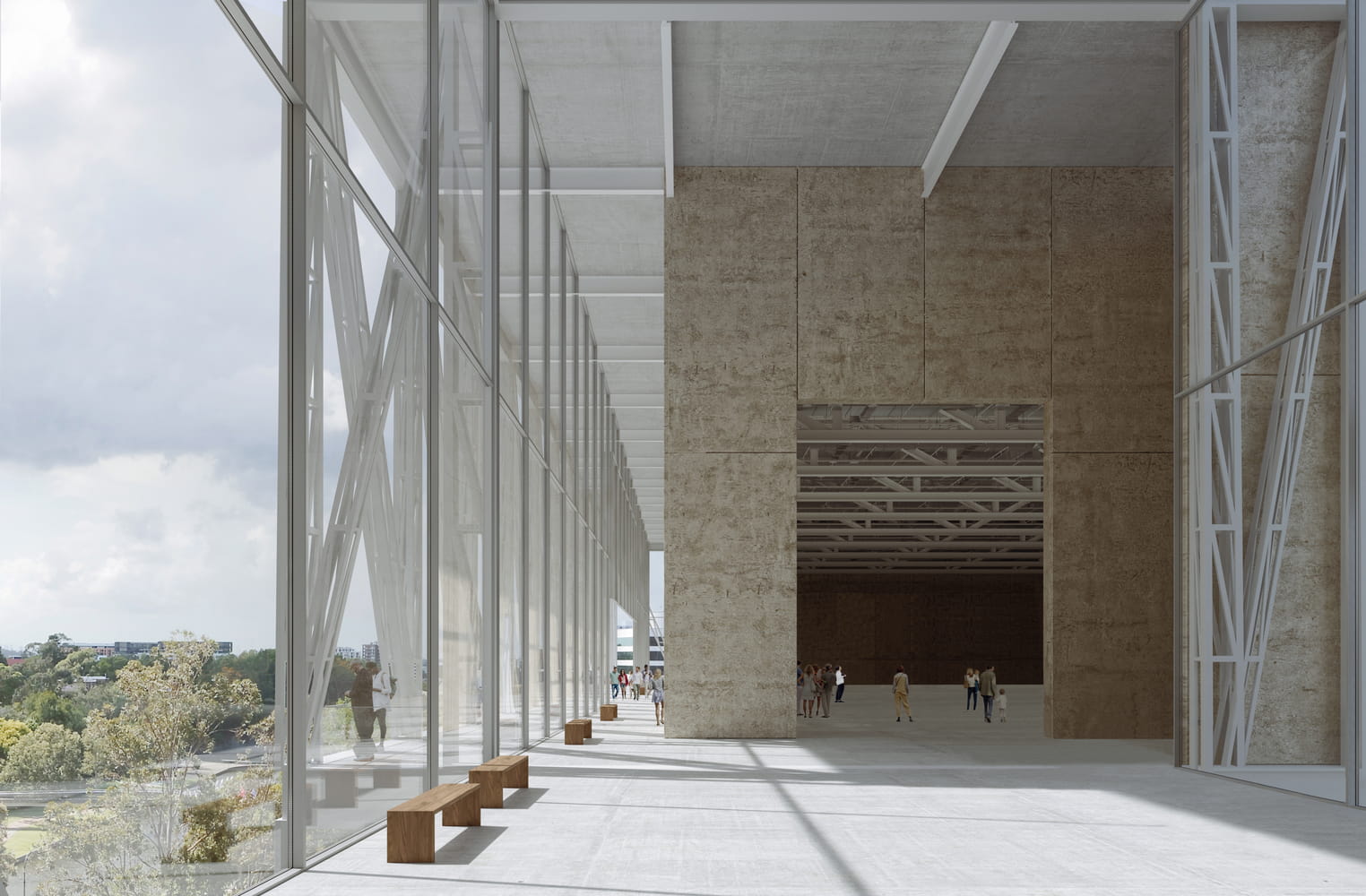
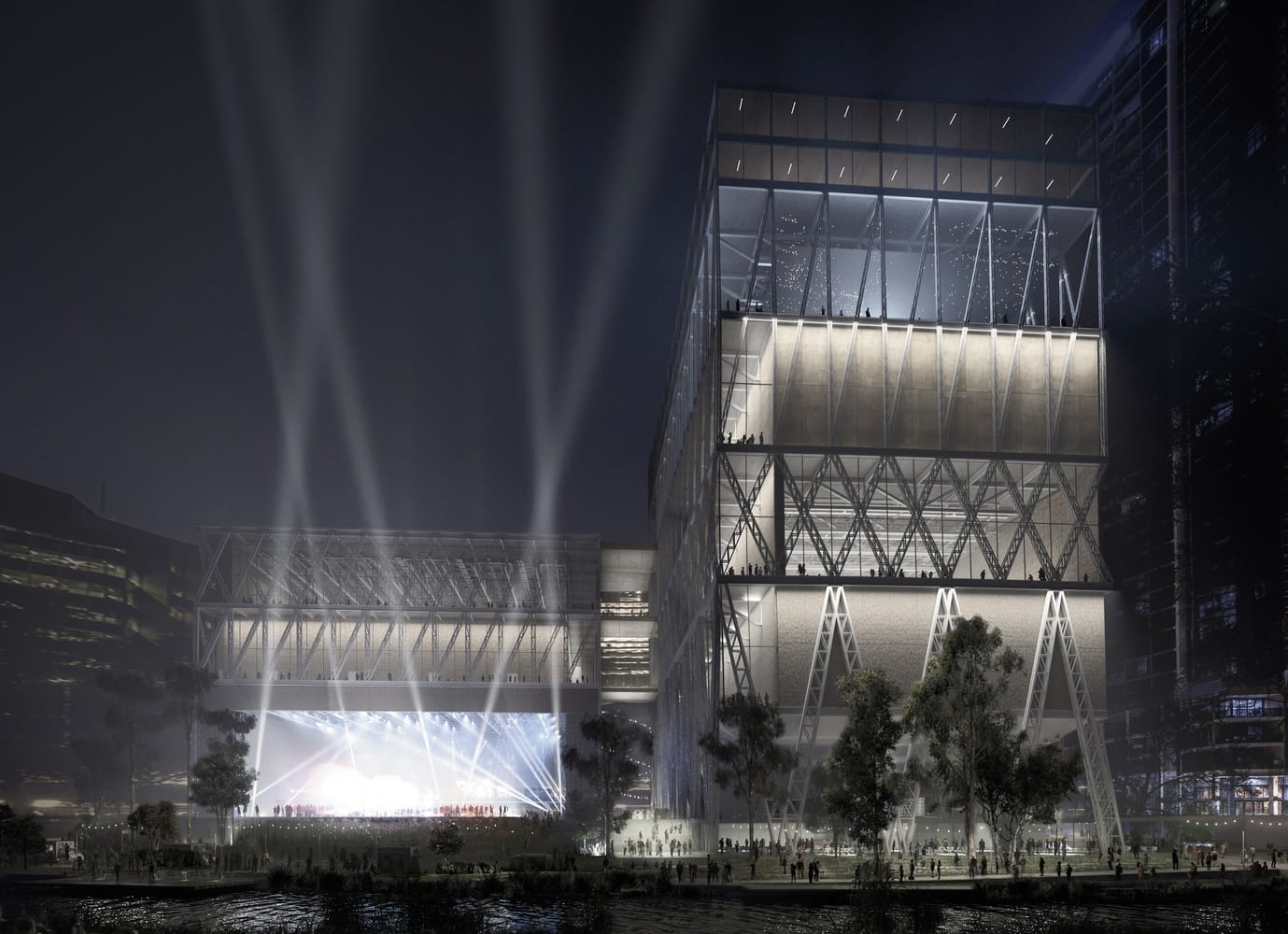
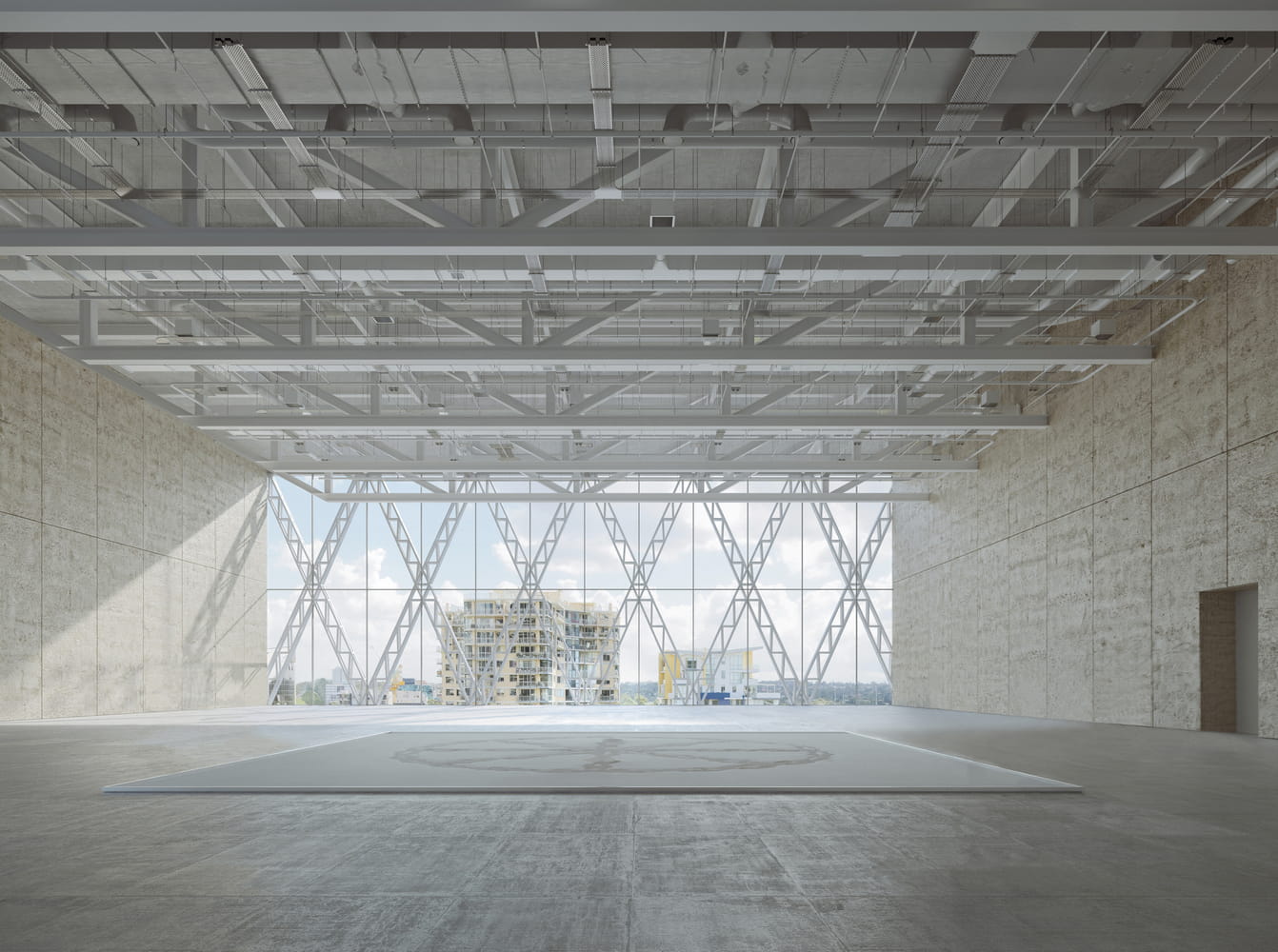
Table of Contents Show
Parramatta Powerhouse is a 30,000-square-metre museum designed by Moreau Kusunoki and Genton on the banks of the Parramatta River in Western Sydney. Funded by the NSW Government at a cost of AUD $915 million and built by Lendlease, the museum is set to open in late 2026 as Australia’s largest cultural infrastructure project since the Sydney Opera House.
Western Sydney has waited decades for a cultural institution of this scale. Powerhouse Parramatta fills that gap with seven large exhibition spaces, a 900-seat theatre, a cinema, 30 residential artist studios, rooftop gardens, and a 200-seat demonstration kitchen. The building sits on Dharug land in the City of Parramatta, directly beside the river, and it marks the first NSW State Cultural Institution ever built in Western Sydney. The project grew out of an international design competition held in 2019, where 74 teams and 529 individual firms submitted proposals. Moreau Kusunoki, a Franco-Japanese practice based in Paris, won unanimously in collaboration with Australian firm Genton.
What makes this museum different from a standard gallery or exhibition hall is its structural ambition and civic purpose. Rather than designing a sealed box for objects, the architects treated the building as an open civic platform that connects its community, its river, and its city. The result is a building where the structure itself becomes the defining visual and functional feature.
Design Concept Behind Powerhouse Parramatta Museum
Nicolas Moreau and Hiroko Kusunoki approached the Powerhouse Parramatta museum with a clear intent: question the traditional museum model. Instead of compartmentalized galleries arranged along corridors, the architects envisioned what they call “hyper-platforms,” a series of large, flexible presentation spaces that can be reconfigured as exhibitions, technology, and audiences change over time.
The core of the building is composed of seven distinct presentation spaces, each with its own form and program. These seven volumes were stacked vertically across the building’s two wings, and the shape of the overall structure grew directly from this stacking arrangement. Between these enclosed volumes, the architects wove a continuous layer of open, interstitial space. In Japanese spatial philosophy, this concept is known as “ma” (the in-between), and it plays a central role in Moreau Kusunoki’s broader design approach. These transitional spaces are filled with natural light, offer views toward the Parramatta River, and serve as places for rest, interaction, and reflection.
The building rises to seven storeys across two wings connected by a glazed two-storey bridge. This bridge anchors the museum to Parramatta’s city grid while maintaining a visual connection between the eastern and western volumes. At the ground level, the design prioritizes porosity. A significant portion of the site was deliberately left open to extend the public domain and reconnect Parramatta’s centre to the river. A green landscaped area between the museum and the water will remain open 24 hours a day, supporting festival events and programs for up to 10,000 people.
💡 Pro Tip
When studying museum designs that use stacked volumes, pay close attention to how the interstitial spaces between those volumes are treated. At Powerhouse Parramatta, these “in-between” zones handle circulation, daylight distribution, and visitor decompression simultaneously, a strategy worth examining for any large-scale cultural project.
The Steel Exoskeleton: How Parramatta Powerhouse Construction Works
The most immediately visible feature of the Parramatta Powerhouse construction is its steel exoskeleton. Unlike conventional buildings where the structure is hidden behind cladding or within walls, Powerhouse Parramatta pushes its load-bearing framework to the outside. This externalized skeleton carries the building’s primary loads, freeing the interior from columns and beams entirely.
The exoskeleton concept was developed in collaboration with structural engineer Jun Sato, who co-created what the team calls “lattice3,” a system of three types of steel lattice wrapped around the museum’s presentation spaces. The exoskeleton is made up of over 1,300 individual pieces of steel in W, X, N, and A shapes, ranging from 4 metres to over 20 metres in height. During construction, these sections were assembled on the ground before being lifted into place by tower cranes.
The project required 12,000 tonnes of steel, triple the amount used to build Sydney’s Allianz Stadium. A large portion of that steel went directly into the exoskeleton. One of the three tower cranes on site was the Favelle Favco M2480D, the world’s largest capacity tower crane, standing as tall as a 50-storey building and capable of lifting 330 tonnes in a single lift. In an Australian first, all three cranes were powered by 100% renewable energy.
The exoskeleton serves multiple purposes beyond structure. It controls solar gain by filtering light through the lattice, gives the museum a distinctive identity visible from across the river, and allows natural light to reach interior circulation spaces while keeping exhibition galleries protected. At night, the completed frame gives the building a lantern-like presence along the Parramatta River waterfront.
📐 Technical Note
The Powerhouse Parramatta exoskeleton installation used approximately 147,000 nuts, bolts, and washers across the build. The building’s foundations required 230 reinforced concrete piles, and roughly 35,000 tonnes of soil were removed during excavation, equivalent to about 14 Olympic-sized swimming pools. The building topped out at 75 metres above the Parramatta River.
What Is Inside Powerhouse Parramatta?
Powerhouse Parramatta holds over 18,000 square metres of exhibition and public space spread across its seven storeys, making it the largest museum in New South Wales. Each of the seven presentation spaces is designed for a changing program, and their scale is notable. One gallery alone spans 2,000 square metres with an 18-metre ceiling height and a 200-tonne hoisting door, making it one of the largest column-free exhibition spaces in Australia.
The museum’s opening exhibition, Task Eternal, will occupy this flagship gallery. Developed in partnership with architectural practice Open (led by Li Hu and Huang Wenjing) and inspired by the work of author Ted Chiang, the exhibition traces humanity’s pursuit of flight and space through an immersive experience.
Beyond the galleries, the building includes:
- A 900-seat theatre and a cinema for performances, screenings, and public programs
- The Vitocco Family Kitchen, a 200-seat demonstration kitchen that connects food science, technology, and culture
- The Lang Walker Family Academy, offering STEM learning programs with accommodation for 60 students and teachers, and overnight residencies for 10,000 secondary students annually
- 30 residential studios for visiting scientists, researchers, and artists from Australia and around the world
- A rooftop terrace with an observatory featuring a retractable roof, a greenhouse, a productive garden with Indigenous plant species, and a pavilion for public events
- Learning and digital studios throughout the building
The contemporary museum architecture approach here is clear: the building is not just an exhibition container but a full ecosystem of education, research, food culture, public gathering, and artistic collaboration. Powerhouse is custodian to over half a million objects of national and international significance, and Powerhouse Parramatta will significantly expand public access to this collection.
🎓 Expert Insight
“Powerhouse Parramatta is a new generation museum, conceived to redefine the role of cultural institutions in contemporary life. Through its infrastructure and programs, Powerhouse will create a dynamic ecology that will bring together industry and community, present collections, histories, and ideas in new ways.”
Lisa Havilah, Powerhouse Chief Executive
Havilah’s statement reflects a broader shift in museum thinking: the building’s value lies not only in what it displays but in the relationships and programs it can sustain over decades.
Sustainability and the 6-Star Green Star Rating
Powerhouse Parramatta will open with net-zero emissions from its first day of operation. It is the first public building in Australia, and the first project in Western Sydney, to achieve a 6-Star Designed rating under the Green Building Council of Australia’s new Green Star Buildings assessment tool. This is the highest possible rating and sets a benchmark for public infrastructure sustainability in the country.
The sustainability strategy is not limited to a single system. It spans water harvesting, renewable energy integration, zero-waste exhibition practices, and a landscape approach developed through Caring for Country principles in collaboration with First Nations communities of Sydney. The rooftop garden includes Indigenous plant species and a greenhouse, connecting the building’s ecological footprint to its cultural programming.
The museum’s compact built form was itself a sustainability decision. By concentrating the building’s footprint and stacking vertically, the design freed up a large portion of the site for green public space and river connection. This reduces the building’s ground-level impact while maximizing the social value of the riverfront land. The green architecture principles at work here show how sustainability can be embedded into spatial planning decisions, not just mechanical systems.
📌 Did You Know?
During construction, all three tower cranes on the Powerhouse Parramatta site were powered by 100% renewable energy, marking an Australian first for a project of this scale. The construction effort involved over 4,000 workers across 2.7 million hours, with three-quarters of the workforce drawn from Western Sydney and $329 million in contracts awarded to businesses in the region.
Powerhouse Parramatta Opening Date and Project Timeline
The powerhouse parramatta opening date is confirmed for late 2026. Construction, led by delivery partner Lendlease, began over four years ago. The main building structure was completed in early 2026, and interior exhibition fit-outs are currently underway across the site.
Here is a summary of the key project milestones:
Parramatta Powerhouse Museum Timeline
The following table outlines the major dates in the project’s development:
| Year | Milestone |
|---|---|
| 2019 | International design competition won by Moreau Kusunoki and Genton |
| 2020-2021 | Design development, planning approvals, and builder procurement |
| 2022 | Lendlease commences on-site construction |
| 2023-2024 | Exoskeleton installation, world’s largest tower crane deployed on site |
| May 2025 | Exoskeleton installation completed, encasing both main buildings |
| Early 2026 | Main building construction completed, tower cranes dismantled |
| Late 2026 | Museum opens to the public with inaugural exhibitions |
The powerhouse parramatta completion date of late 2026 puts the museum on track to welcome an estimated 2 million visitors per year once fully operational. The opening exhibition program will be revealed later in 2026. NSW Premier Chris Minns has indicated the opening could come as early as September 2026, though Powerhouse has officially confirmed only “late 2026.”
The Architects: Moreau Kusunoki and Genton
Nicolas Moreau and Hiroko Kusunoki founded Moreau Kusunoki Architectes in Paris in 2011. Kusunoki earned her degree from the Shibaura Institute of Technology in Tokyo and began her career in the studio of Pritzker laureate Shigeru Ban. The practice has gained international recognition for projects that balance restraint with spatial generosity. Before Powerhouse Parramatta, they were selected to lead the renovation of the Centre Pompidou in Paris (Centre Pompidou 2030) alongside Frida Escobedo, further cementing their position in the global museum architecture conversation.
Genton, the local Australian firm, brought essential knowledge of the Sydney construction environment, local building codes, and climate conditions. Their collaboration ensured that the design vision translated accurately into a buildable, climate-appropriate structure.
The broader project team included Jun Sato Engineering for the exoskeleton concept design, ARUP for structure, building services, facade, and acoustics, McGregor Coxall for landscape design, L’Observatoire International for architectural lighting, and DEP for kinetic structure.
💡 Pro Tip
The Powerhouse Parramatta competition brief attracted 74 teams from around the world. If you are studying competition entries, look at the shortlisted firms: AL_A with Architectus, Bernardes Architecture with Scale Architecture, Chrofi with Reko Rennie, and Steven Holl Architects with Conrad Gargett. Comparing the winning entry against these finalists reveals how juries weigh civic ambition, structural innovation, and site response.
Powerhouse Museum Parramatta Location and Urban Context
The powerhouse museum parramatta location sits on the southern bank of the Parramatta River, on a site previously occupied by a David Jones car park. Parramatta is already NSW’s second-largest economy, with annual output estimated at up to $29 billion and a jobs base of around 178,000. The local government area is on track to pass 500,000 residents by 2050, and the council is targeting an additional 150,000 jobs by that date.
Placing a state cultural institution here is a deliberate move to rebalance Sydney’s cultural geography. Until now, the city’s major museums and galleries have been concentrated in the eastern harbour area. Powerhouse Parramatta becomes the first NSW State Cultural Institution based in Western Sydney, anchoring a new precinct along the river and connecting to the planned Civic Link transport corridor.
The broader precinct is designed to function as a seven-day, 24-hour destination. Cafes, bars, retail, and event spaces surrounding the museum will activate the area beyond gallery hours. The 24-hour public domain between the museum and the river can host festivals for up to 10,000 people, turning the waterfront into an active civic space rather than a building perimeter.
Powerhouse Museum is part of a larger $1.3 billion infrastructure renewal program across its four sites: Powerhouse Parramatta (the flagship), expanded research and public facilities at Powerhouse Castle Hill, the renewal of Powerhouse Ultimo, and the ongoing heritage restoration of Sydney Observatory.
🏗️ Real-World Example
Sydney Fish Market (Sydney, 2025): Completed by 3XN/GXN with BVN and ASPECT Studios, the new Sydney Fish Market is another recent example of a major public building designed to activate a waterfront site and serve as a civic anchor. Like Powerhouse Parramatta, it uses its architecture to draw people to the water’s edge while housing diverse public programs, showing a broader trend in Sydney’s approach to cultural infrastructure along its waterways.
Video: Powerhouse Parramatta Construction Progress
This news segment from 9 News Australia covers the completion of the main building and provides a look at the museum as it enters its exhibition fit-out phase ahead of the late 2026 opening.
How Powerhouse Parramatta Compares to Other Major Museums
Powerhouse Parramatta’s $915 million budget and 30,000 square metres place it among the most significant museum projects built anywhere in recent years. For context, the building is repeatedly described as Australia’s largest cultural infrastructure project since the Sydney Opera House. Its column-free gallery with an 18-metre ceiling and 2,000-square-metre floor area puts it in the same conversation as major international exhibition spaces.
Key Figures: Powerhouse Parramatta at a Glance
The following table provides a quick reference for the project’s essential data:
| Category | Detail |
|---|---|
| Total Floor Area | 30,000 sqm (32,579 sqm total built) |
| Exhibition and Public Space | 18,000+ sqm |
| Budget | AUD $915 million |
| Architects | Moreau Kusunoki (Lead) + Genton (Local) |
| Structural Steel | 12,000 tonnes |
| Exhibition Spaces | 7 large-scale galleries |
| Sustainability Rating | 6-Star Green Star Buildings (first public building in Australia) |
| Expected Annual Visitors | 2 million |
| Opening | Late 2026 |
The exoskeleton approach distinguishes Powerhouse Parramatta from most other recent museum buildings. While institutions like the V&A East Museum in London (by O’Donnell + Tuomey, opened 2026) and LACMA’s David Geffen Galleries (by Peter Zumthor, opened 2026) pursue very different structural and material strategies, Powerhouse Parramatta’s externalized steel frame is arguably the most structurally expressive of the group. The concept of making the building’s bones its primary visual identity links it more closely to high-tech precedents like the Centre Pompidou than to the smooth-skinned museums of recent decades.
For a broader look at how iconic museum designs have shaped cities and cultural identity worldwide, Powerhouse Parramatta adds an important chapter: it proves that a museum can anchor an entirely new cultural district outside a traditional city centre.
🔢 Quick Numbers
- AUD $915 million total project cost, funded by the NSW Government (Infrastructure NSW, 2026)
- Over 4,000 workers contributed 2.7 million construction hours, with 75% of the workforce from Western Sydney (Lendlease / Powerhouse, 2026)
- $329 million in contracts awarded to Western Sydney businesses during construction (Powerhouse, 2026)
- Part of a broader $1.3 billion infrastructure renewal program across four Powerhouse sites (NSW Government, 2026)
Powerhouse Museum Parramatta News: Latest Updates
The most significant powerhouse museum parramatta news as of May 2026 is the confirmation that main building construction is complete. Lendlease has finished the primary structure, and the project has moved into its final phase: interior exhibition fit-out and public domain landscaping works. Two of the three tower cranes have been dismantled, clearing the way for waterfront public domain construction.
Five of the museum’s seven exhibition spaces and the Lang Walker Family Academy are now physically built. The remaining spaces are in their final construction stages, with exhibition fit-outs running in parallel. The rooftop pavilion’s steel structure has been assembled at the highest point of Building B. Powerhouse Trust President David Borger confirmed the milestone: the museum’s construction completion signals “a major driver of jobs, opportunity and cultural participation” for Western Sydney.
The opening exhibition program will be announced later in 2026. What is already confirmed is the inaugural exhibition Task Eternal in the flagship gallery, the Vitocco Family Kitchen, and the Lang Walker Family Academy’s STEM programs. The museum will also house an extensive collection of over half a million objects spanning arts, design, science, and technology.
⚠️ Common Mistake to Avoid
Many people confuse Powerhouse Parramatta with the existing Powerhouse Museum in Ultimo. Powerhouse Parramatta is an entirely new building on a new site in Western Sydney. The Ultimo museum will continue to operate and is undergoing its own separate renewal as part of the broader $1.3 billion program. They are two distinct locations within the same museum group.
Final Thoughts
✅ Key Takeaways
- Powerhouse Parramatta is a 30,000 sqm museum costing AUD $915 million, designed by Moreau Kusunoki and Genton, and set to open in late 2026.
- Its steel exoskeleton, composed of over 1,300 individual pieces and 12,000 tonnes of steel, is the building’s defining structural and visual feature, enabling column-free interiors.
- The museum is the first public building in Australia to achieve a 6-Star Green Star Buildings rating and will operate at net-zero emissions from day one.
- Seven large exhibition spaces, a 900-seat theatre, 30 artist studios, a demonstration kitchen, rooftop observatory, and STEM academy make it far more than a traditional gallery.
- As the first NSW State Cultural Institution in Western Sydney, Powerhouse Parramatta is designed to anchor a new cultural precinct and attract 2 million visitors annually.
Powerhouse Parramatta represents a rare convergence of structural ambition, civic purpose, and sustainable design at a national scale. The decision to build a $915 million museum in Western Sydney rather than adding to the eastern harbour’s existing cluster is itself a statement about where Australia sees its cultural future. Whether you are following the project for its engineering, its architecture, or its potential to reshape how cities invest in culture, the building opening along the Parramatta River in late 2026 will be one to watch closely.
Project data, budgets, and timelines referenced in this article are sourced from official Powerhouse, Infrastructure NSW, and NSW Government communications current as of May 2026. Construction costs and schedules may be subject to updates as the project enters its final phase.



- parramatta powerhouse
- parramatta powerhouse construction
- parramatta powerhouse museum
- powerhouse museum parramatta
- powerhouse museum parramatta location
- powerhouse museum parramatta news
- powerhouse parramatta
- powerhouse parramatta completion date
- powerhouse parramatta museum
- powerhouse parramatta opening date



MoMA’s Full Disclosure Exhibition Traces Information Design from Hand-Drawn Data to AI Memories
Full Disclosure: The Edge of Information Design, curated by Paola Antonelli, is...
 illustrarch Editoral Team2 Mins read
Zumthor’s Three New Buildings Open at Fondation Beyeler in Riehen
Peter Zumthor's Wyss Museum, Ammann Pavilion and Erlen Torhaus open at Fondation...
illustrarch Editoral Team4 Mins read

Benthem Crouwel Completes the Afsluitdijk Revamp with a Fish Passage and Domed Pumping Stations
The 32 km Afsluitdijk in the Netherlands has been raised, armoured and...
illustrarch Editoral Team2 Mins read
Luxembourg Pavilion Tackles the Overconsumption of Living Space at the 2027 Venice Biennale
Curated by Céline Zimmer and Exutoire, the Luxembourg Pavilion's Excess! will compare...
illustrarch Editoral Team2 Mins read


Leave a comment