

The Empire State Building: Art Deco Icon and the Race to the Sky
Completed in 1931 after a fierce race to the sky, the Empire State Building turned a zoning law and Depression-era ambition into the world's most recognizable Art Deco skyscraper. A look at its design, record construction, and lasting fame.
 Furkan Sen7 July 20265 Mins read232
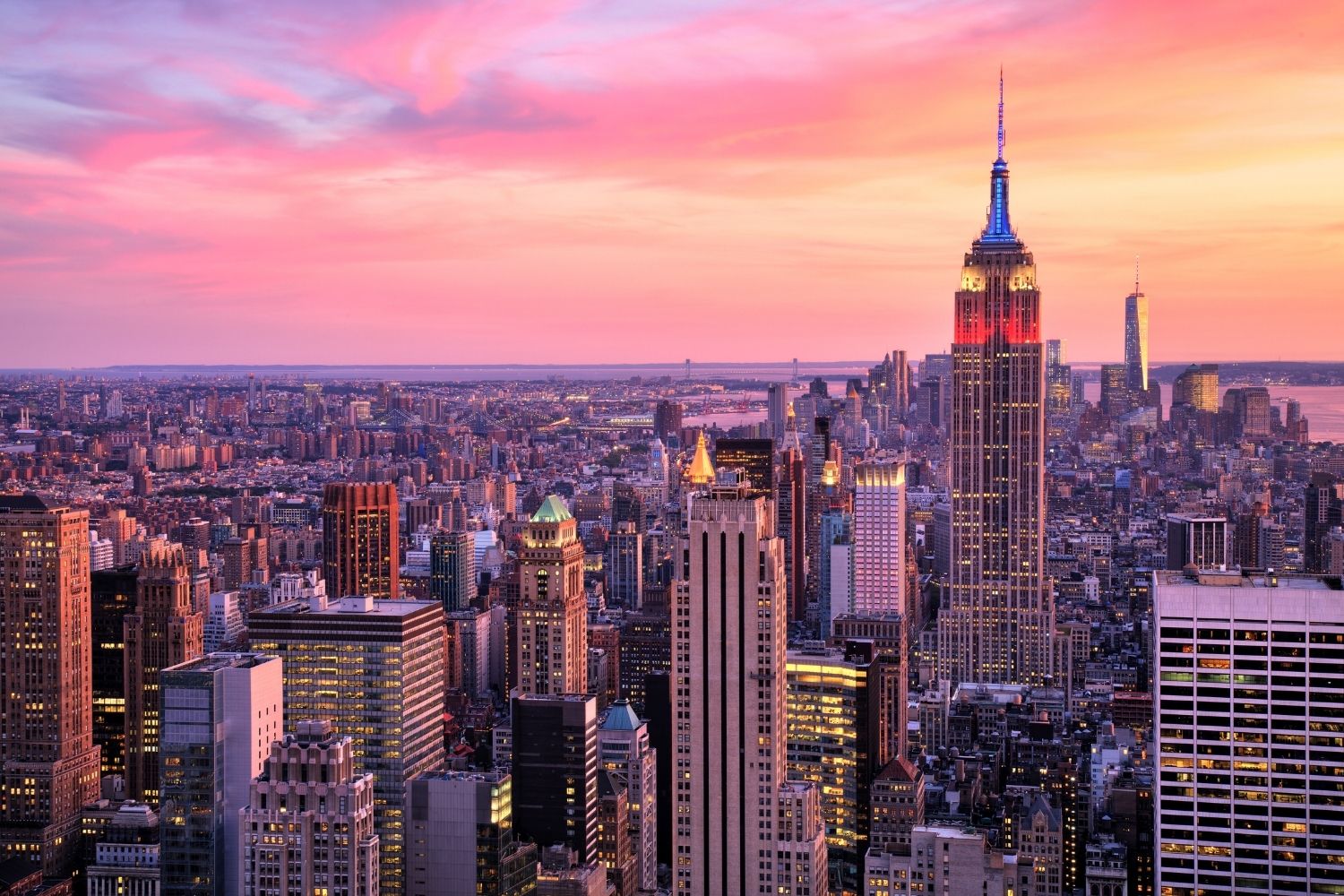
Table of Contents Show
The Empire State Building is a 102-story Art Deco skyscraper in Midtown Manhattan, completed in 1931. Designed by Shreve, Lamb and Harmon, it rises 1,454 feet to the top of its antenna and held the title of the world’s tallest building for nearly 40 years, becoming a defining symbol of New York City.
Few buildings carry as much weight in the public imagination as this Fifth Avenue tower. It went up in just over a year during the depths of the Great Depression, and it turned a strict zoning rule into one of the most recognizable silhouettes on earth. The story behind it is part engineering feat, part design statement, and part contest for the sky.
The Race to the Sky That Crowned a Champion
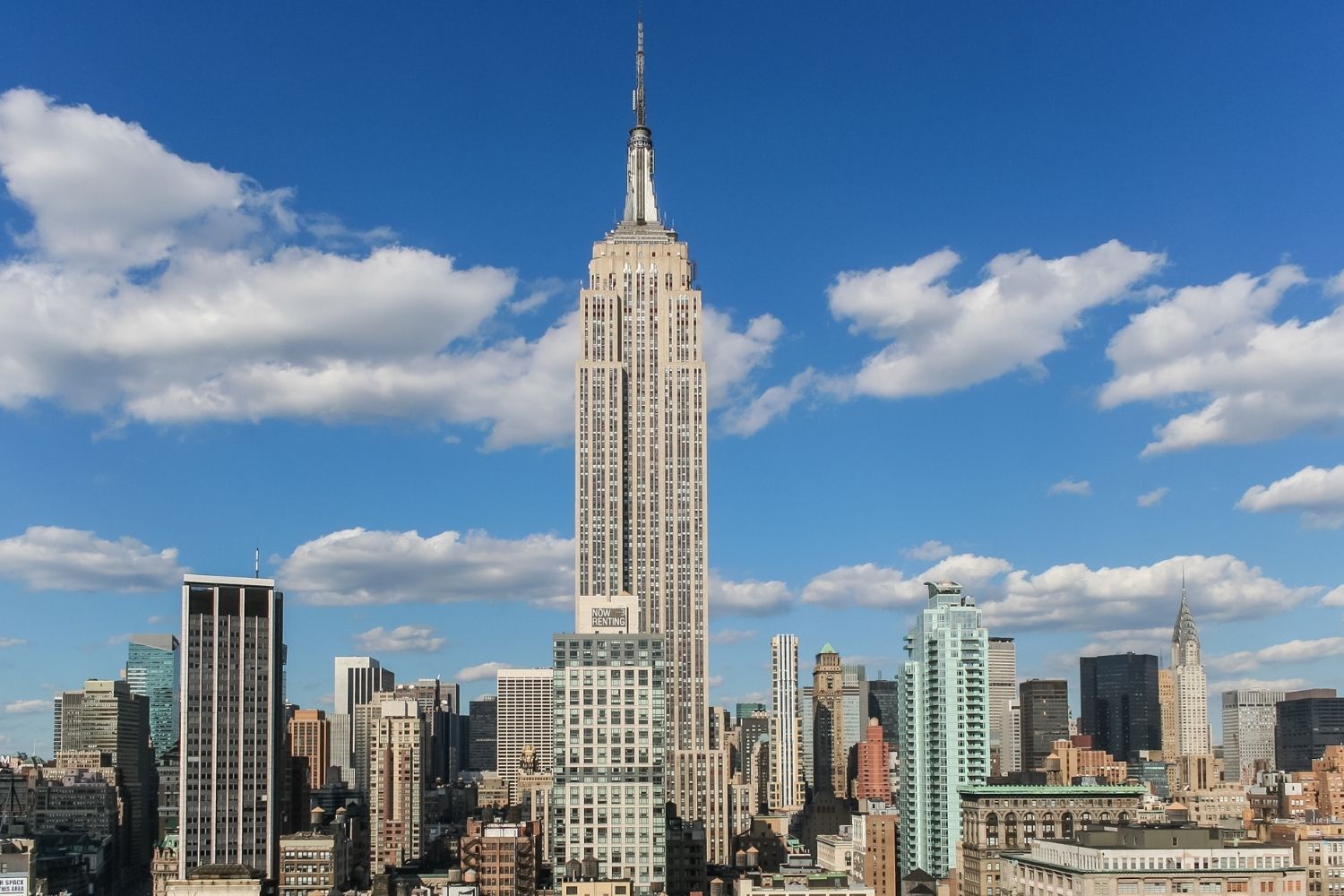
In the late 1920s, New York developers were locked in a contest to claim the world’s tallest building. Three serious contenders pushed the limit higher within the span of just two years, and the rivalry between them produced some of the boldest architecture of the century.
The driving force behind the project was an unlikely pair. John J. Raskob, a former finance chairman at General Motors, teamed up with Al Smith, the former governor of New York. According to Encyclopaedia Britannica, the two formed the Empire State Corporation in 1929 and chose the former site of the original Waldorf-Astoria Hotel for their record-breaking tower.
Their main rival was Walter Chrysler, whose Chrysler Building was rising at the same time a few blocks north. The competition between the two became one of architecture’s most famous stories.
🏗️ Real-World Example
Chrysler Building (New York, 1930): Architect William Van Alen kept a 185-foot stainless-steel spire hidden inside the structure, then raised it through the crown in roughly 90 minutes to briefly claim the title of world’s tallest building. At 1,046 feet, that reign lasted less than a year before the Empire State Building surpassed it.
When the Empire State Building opened in 1931, it settled the argument for a generation. The pace was as striking as the height. The Skyscraper Museum records that at peak activity the steel frame climbed at a rate of about a story a day, with the full tower finished in roughly 13 months. Even more remarkable, the project came in under budget during one of the worst economic stretches in American history.
How the Race to the Sky Played Out
The table below compares the towers that competed for the title in the years leading up to 1931:
| Building | Height | Stories | Completed | Architect |
|---|---|---|---|---|
| Woolworth Building | 792 ft | 57 | 1913 | Cass Gilbert |
| 40 Wall Street | 927 ft | 70 | 1930 | H. Craig Severance |
| Chrysler Building | 1,046 ft | 77 | 1930 | William Van Alen |
| Empire State Building | 1,250 ft | 102 | 1931 | Shreve, Lamb and Harmon |
Heights reflect each tower’s architectural top at completion. The Empire State Building later reached 1,454 feet with the addition of a broadcast antenna, but its spire topped out at 1,250 feet when it opened.
Is the Empire State Building Art Deco?
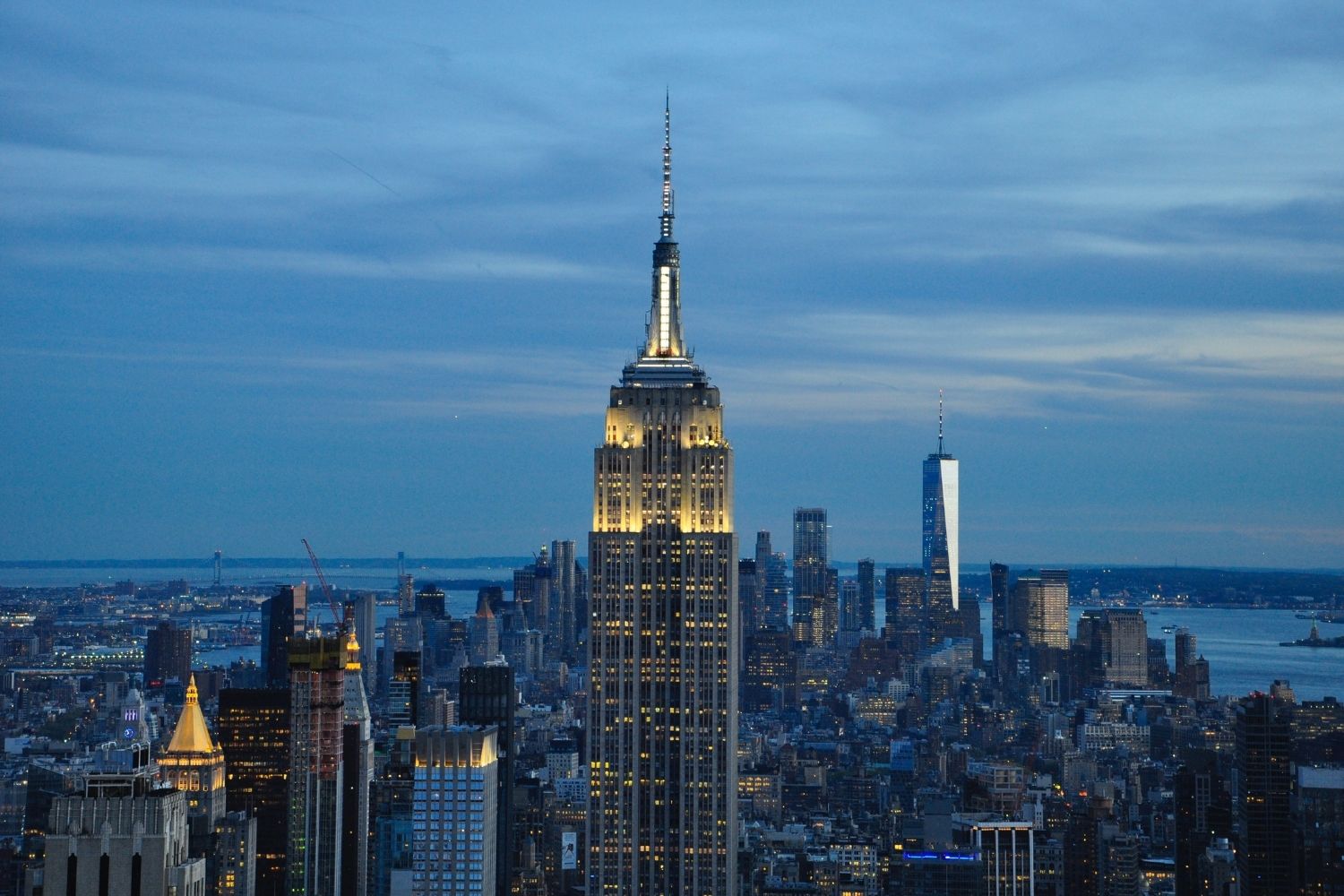
Yes. The Empire State Building is one of the clearest examples of Art Deco architecture in the world. Its stepped massing, strong vertical lines, streamlined ornament, and materials such as limestone, aluminum, and stainless steel all belong to the Art Deco language that defined American skyscrapers in the late 1920s and 1930s.
Art Deco grew out of a fascination with speed, industry, and modern life. The style traded historical ornament for bold geometry, which set it apart from the revival styles that came before. For the full background on where the movement started and what makes it distinct, our guide to Art Deco style covers its origins and signatures.
On the tower itself, the influence shows in the rhythm of the facade, the soaring central shaft, and the crowning spire. Instead of copying Greek columns or Gothic arches, the design pushed upward in clean, repeating lines that made height itself the main statement.
The Art Deco Design of the Empire State Building
The exterior reads as a series of stacked volumes that grow narrower as they climb. This stepped form was not only an aesthetic choice.
📐 Technical Note
The building’s setbacks were shaped by New York’s 1916 Zoning Resolution, which required tall buildings to step back from the street so daylight could reach the sidewalks below. Architect William F. Lamb turned this legal limit into the tower’s signature stepped profile, often described as a wedding-cake silhouette.
Above the fifth-floor setback, the tower climbs without a break to the 86th floor. Vertical bands of windows and stone run the full height, pulling the eye upward and making the building feel even taller than it measures. The official Empire State Building architecture overview describes how Indiana limestone and granite cover the facade, finished with aluminum and stainless-steel trim that catches the changing light.
The decorative details stay restrained next to the flamboyant Chrysler Building, yet the Art Deco character is clear. Sunburst patterns, chevrons, and stepped geometric forms appear in the metalwork and around the entrances. The same motifs run through Art Deco buildings around the globe, as our look at geometric Art Deco designs explains.
The official figures, published by Empire State Realty Trust, put the scale of the Art Deco architecture of the Empire State Building in perspective:
🔢 Quick Numbers
- 102 stories and a roof height of 1,250 feet (Empire State Realty Trust)
- 10 million bricks and 200,000 cubic feet of Indiana limestone and granite in the exterior (Empire State Realty Trust)
- 730 tons of aluminum and stainless steel across the facade and trim (Empire State Realty Trust)
- 73 Otis elevators serving the building (Empire State Realty Trust)
Inside the Art Deco Lobby of the Empire State Building
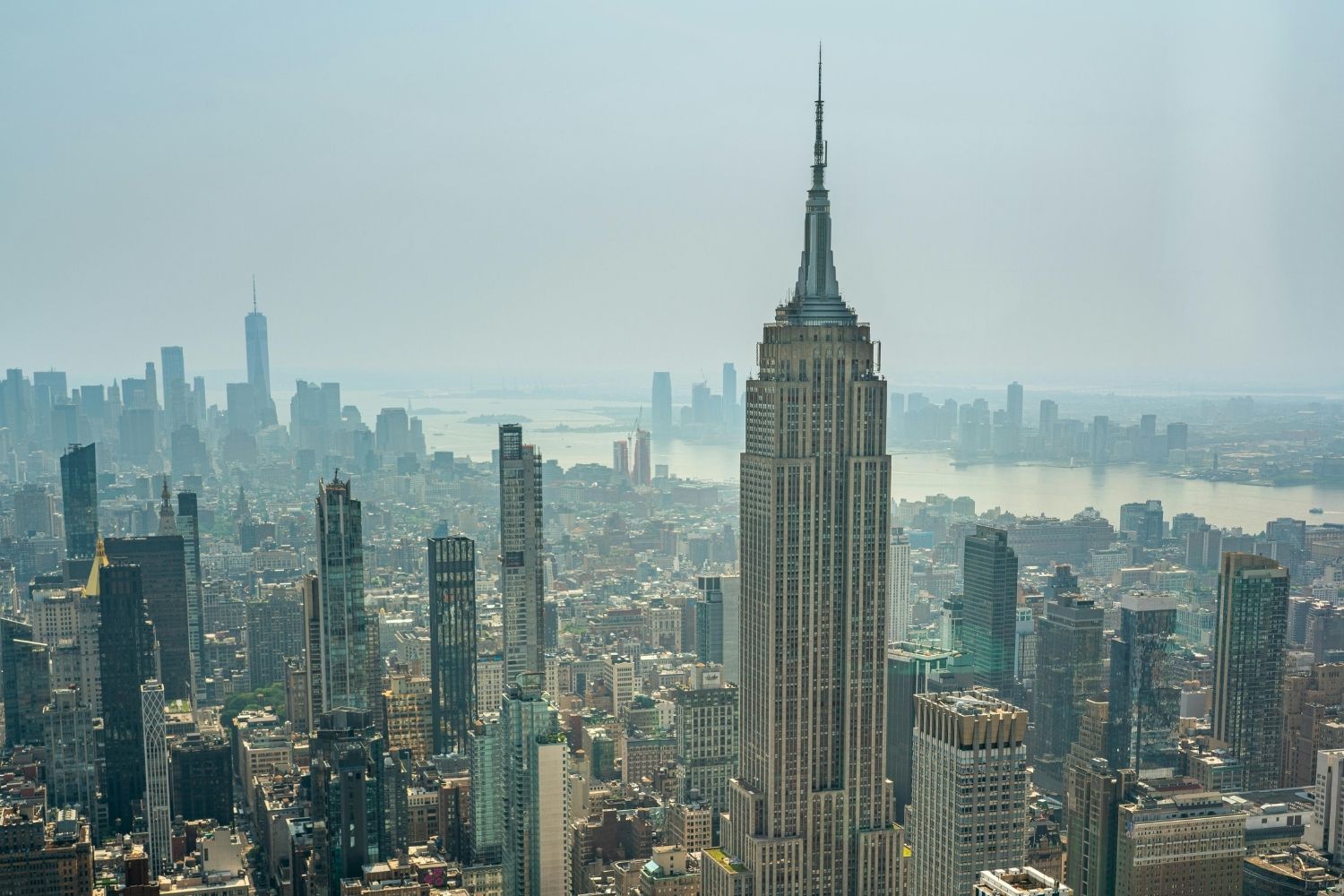
The three-story lobby ranks among the finest Art Deco interiors in New York and holds its own protected status as a designated city landmark. For most visitors, the ceiling is the first thing that draws the eye.
A vast mural in aluminum and gold leaf stretches overhead, showing the building set against the sun, stars, and gears that stand for the machine age. Marble from France, Germany, Italy, and Belgium lines the walls, paired with terrazzo floors and bronze detailing. Together, these materials create the polished, modern feeling that defines the art deco Empire State Building interior.
During the building’s recent restoration, artisans recreated the original gold and aluminum ceiling and replaced damaged marble to match the 1931 work. The result keeps the lobby close to what the first visitors would have seen when the doors opened.
From Skyscraper to Global Icon
Almost from the day it opened, the Empire State Building became more than an office tower. It stepped straight into popular culture when King Kong climbed its spire in the 1933 film, fixing its image in the minds of audiences worldwide.
Those clean Art Deco lines have also made it a favorite subject for artists and printmakers. The classic art deco Empire State Building poster, with its bold geometry and dramatic upward view, remains a staple of print shops and home decor decades later. Few buildings translate so well into graphic form.
Its fame rests on hard numbers too. As History notes, the tower gave New Yorkers a rare source of pride during the Great Depression, and it went on to become one of the most visited buildings on earth. A 2011 Cornell University study that analyzed millions of photographs named it the most photographed building in the world.
Today it shares the skyline with far taller neighbors, part of the longer story of skyscraper architecture that keeps reaching higher. Our guide to the tallest skyscrapers in New York City shows how the modern giants rise around it, yet none has taken its place as the city’s signature landmark.
The Bigger Picture
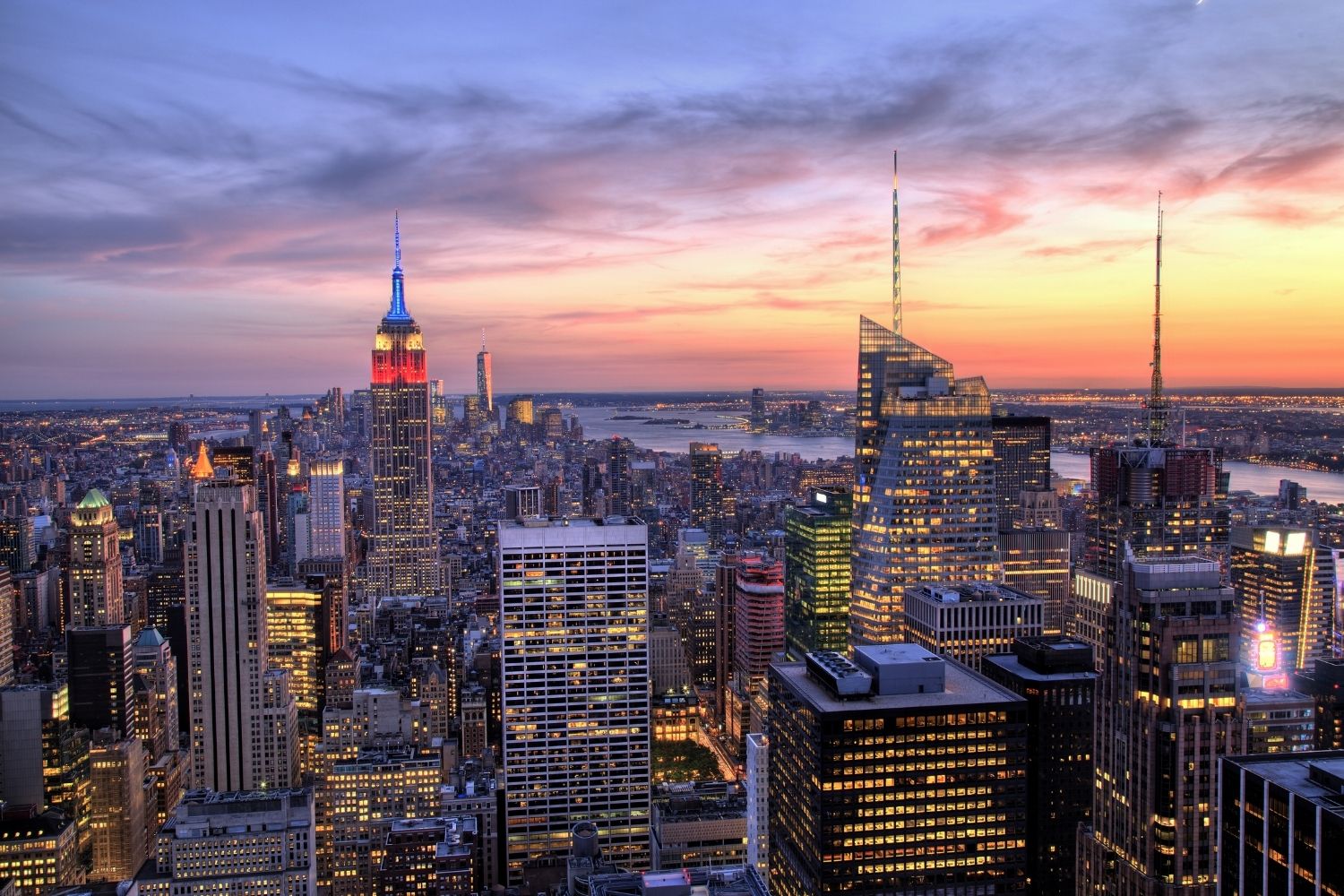
The race to build the tallest tower looked, on paper, like a contest of feet and floors. What the Empire State Building really proved was harder to measure: that a city could raise a monument to confidence in the middle of its worst economic collapse. Nearly a century later, taller buildings have come and gone from the record books, but that act of optimism is still the reason people stop and look up.






Futuro House Production Revived in Finland After Decades-Long Hiatus
A Facebook listing for abandoned moulds led to the first new Futuro...
 illustrarch Editoral Team3 Mins read

Building Your Dream Home in NSW: What You Should Know About Montgomery Homes
Montgomery Homes has been building across Sydney, Newcastle, the Hunter, Wollongong and...
illustrarch Editoral Team4 Mins read

Designing a Home Theater: Where Drapery Fits Into the Plan
In a media room the curtains are a performance layer, not decoration....
illustrarch Editoral Team3 Mins read
Oscar Niemeyer’s Cathedral of Brasília: The Hyperboloid Concrete Hymn
The Cathedral of Brasília reads as a single gesture, yet it stood...
Furkan Sen7 Mins read


Leave a comment