

Building Obsolescence: Why Some Buildings Last Centuries and Others Do Not
Most buildings are not lost because the structure fails. They come down over land value, layout, regulation or a missing legal protection. Demolition data from thirteen cities shows what building obsolescence looks like in practice.
 Furkan Sen17 August 20267 Mins read156

Table of Contents Show
Building obsolescence, not structural failure, ends most buildings. Across roughly 14,900 demolished buildings in nine US and four European cities, the average age at demolition was 71 years, and most of those losses came from decisions about land, layout and use rather than from a frame that gave way.
A Roman aqueduct still carries its arches across a valley. A 1970s office block comes down at forty. The instinct is to blame the concrete, and sometimes that is fair. Most of the time it is not.
Buildings rarely die of old age. They are taken down, on a date that somebody chooses, for reasons recorded in a valuation spreadsheet rather than a structural report. Knowing which reasons those are tells you more about a building’s chances than its material specification does. The material side of the story is covered in our look at why old buildings last longer. This piece is about the decision.
What Is Building Obsolescence?
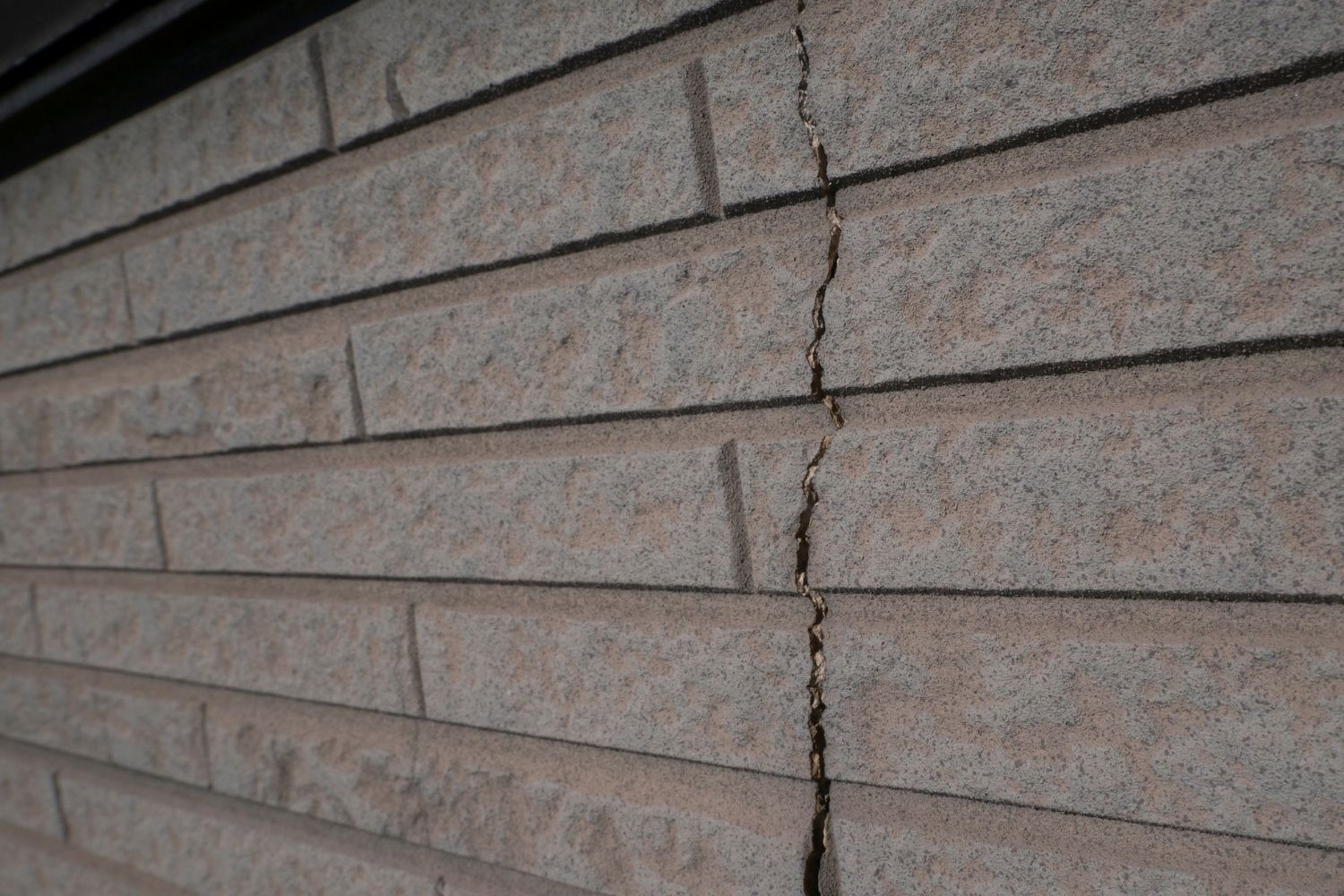
Building obsolescence means a building going out of use. Researchers split it in two. Deterioration-based obsolescence is the case everyone pictures: the fabric genuinely fails, and repair stops making sense. Decision-based obsolescence is the far more common case, where a sound structure is judged not worth keeping because of its location, its layout, its running costs or its legal status.
The split matters because the construction industry plans for one and gets the other. Under Eurocode EN 1990, the design working life of most buildings is 50 years, rising to 100 years for monumental civil structures. ISO 15686-1 then frames service life planning as the process of making sure a building’s actual service life meets or exceeds that design life. Notably, ISO 15686-2 states that its service life prediction procedures do not cover limits caused by obsolescence. The standards handle the physics and leave the decision alone.
That gap is where most buildings are lost. Setting service life targets layer by layer, with the structure, the envelope, the services and the fit-out each carrying their own number, is the practical answer, and our playbook on designing buildings for longevity and durability works through how to write those targets into a brief.
How Long Do Buildings Actually Last?
An average of 71 years, based on the largest recent dataset of real demolitions. A 2025 study in the peer-reviewed journal Buildings & Cities cleaned and analysed 14,879 demolished buildings across thirteen cities, finding a mean age at demolition of 71 years with a standard deviation of 28. US buildings averaged 81 years, European ones 65.
🔢 Quick Numbers
- 71 years: average age at demolition across 14,879 demolished buildings in nine US and four European cities (Berglund-Brown et al., Buildings & Cities, 2025)
- 77%: share of demolished buildings rated average condition or better at the time of demolition, in the same study’s Pittsburgh and Raleigh sample
- 50 years: design working life assumed for most buildings under Eurocode EN 1990, rising to 100 years for monumental structures
- 30 years: expected life of the RAAC roof panels installed in UK public buildings between the 1950s and the 1990s (UK Department for Education guidance, 2023)
The averages hide wide variation, and the variation is the interesting part. Cambridge, Massachusetts averaged 120 years, Pittsburgh 113, while Raleigh sat at 53 and Helsinki at 49. Helsinki was founded in 1550 and Raleigh two centuries later, so the age of the city clearly does not set the age of what gets knocked down. Building type separates the results more sharply than geography does.
Average Age at Demolition by Building Attribute
The figures below come from the same dataset, with the material and use breakdowns drawn from the cities that recorded those attributes.
| Category | Group | Average age at demolition |
|---|---|---|
| Region | United States, nine cities | 81 years |
| Region | Europe, four cities | 65 years |
| Use | Institutional buildings, US | 55 years |
| Use | Commercial buildings, Europe | 43 years |
| Structure | Concrete and steel | 67 years |
| Structure | Wood frame | 91 years |
| Structure | Brick | 110 years |
Read that table twice. The materials sold on strength posted the shortest lives, and the two categories with the lowest averages of all, institutional and commercial, are the ones whose owners change strategy fastest. Lifespan tracks the owner more closely than the load path.
Five Reasons Good Buildings Come Down Before Their Time

Each of the causes below appears repeatedly in demolition records. Only the first is a genuine failure of the building.
1. A Material System With a Short Clock
Some assemblies carry an end date from the day they are installed. Reinforced autoclaved aerated concrete, the lightweight panel material used across British schools and hospitals from the 1950s onward, was understood to have a working life of about thirty years. Panels installed in the 1970s were therefore expired well before the closures that followed, and in August 2023 the UK government told affected schools to vacate spaces containing it unless mitigations were in place. Reinforcement corrosion in ordinary concrete works the same way but more quietly, since carbonation and chloride ingress attack the steel behind an intact-looking surface.
⚠️ Common Mistake to Avoid
A 50 year design life is not an expiry date, and it is not a guarantee either. In Eurocode terms it is the period over which the structure is assumed to perform with expected maintenance, nothing more. Plenty of buildings pass it and stay sound for another century, while others are lost at half that age for reasons the number never described. Write separate targets for structure, envelope, services and fit-out instead of quoting one figure for the whole building.
2. Land Worth More Than the Building on It
Once the redevelopment value of a site exceeds the value of the standing building plus the cost of bringing it up to standard, the building becomes a liability on its own plot. This is why the demolition data punishes tall commercial buildings on valuable ground. In the cities that recorded storey counts, high-rise buildings of ten to fourteen storeys were demolished between the ages of 13 and 56, while low-rise and mid-rise buildings spanned 6 to 356 years. Height concentrates land value, and land value shortens lives.
3. Floor Plates That Cannot Take a New Use
A building survives by being useful to whoever owns it next, and geometry decides whether that is possible. Low floor-to-floor height leaves nowhere to run new services. Deep plans without daylight resist residential conversion. Risers sized for 1970s ventilation cannot carry today’s equipment.
The clearest illustration is a celebrated building rather than a mediocre one. The American Folk Art Museum in New York opened in 2001 to critical acclaim, and demolition began in 2014 as part of the expansion of the Museum of Modern Art. As Dezeen reported at the time, MoMA concluded after a six-month study of retention options that the building could not be kept. The objections were that its floor levels would not align with the adjoining galleries and that its opaque facade did not suit the new scheme. Nothing was wrong with the structure. It simply did not fit the next use, which is the whole argument for weighing conversion early, as our comparison of adaptive reuse against new construction sets out.
4. Rules the Building Cannot Economically Meet
Codes move, and existing buildings are periodically asked to catch up. Seismic strengthening requirements, fire safety and cladding remediation, accessibility upgrades and tightening energy performance rules all arrive with a price attached. Each one is survivable on its own. Arriving together on an ageing asset with a thin income, they push the refurbishment case past the replacement case, and the decision is made on that spreadsheet rather than on any judgement about architecture.
5. No Legal Protection and No Constituency
Statutory protection arrives late by design. In England, a building cannot be listed until it is at least ten years old, and Historic England’s selection criteria mean that anything under thirty years old is listed only if it is of outstanding quality and under threat. Post-1945 buildings have to be exceptionally important to qualify at all.
That leaves a wide unprotected window running from completion to roughly the fortieth birthday, which is precisely when commercial and institutional buildings are most likely to be judged obsolete. Buildings caught in that window depend on affection rather than law, and affection takes time to accumulate. Stewart Brand made the point in How Buildings Learn that respect for a building tends to grow as it ages, which also explains why so many are lost before anyone thinks to defend them. The same filter operates on whole movements, as our look at why some architectural styles endure and others fade describes.
What Actually Buys a Building Time

If demolition is mostly a decision, then longevity is mostly about staying easy to say yes to. A handful of choices at design stage do most of the work.
- Generous floor-to-floor height, which is the single dimension that decides whether a future conversion is even possible
- A regular structural grid with few internal constraints, so partitions can move without touching the frame, a distinction our guide to identifying a load-bearing wall explains at the practical level
- Services kept separate from structure, in risers and voids with spare capacity, so systems can turn over on their own thirty-year cycle
- An envelope that can be reached, inspected and replaced in parts rather than as one bonded assembly
- Records that survive the first owner, since as-built drawings and a maintenance history make an existing building far easier to underwrite than an unknown one
The buildings that reach a second or third century tend to combine those traits with something less technical: continuous ownership by an institution with a reason to keep spending on them. The Pantheon in Rome has stood for nineteen centuries partly because of Roman concrete and partly because it has never stopped being in use, first as a temple and then as a church, with someone responsible for the roof throughout.
Adaptability is the trait that shows up in every long-lived example, and it is cheaper to buy at design stage than at any point afterwards. Three hundred millimetres of extra floor-to-floor height costs a little in a rising frame and almost nothing in a drawing. It costs a demolition to add later.
For architects working now, the useful shift is to stop asking how long a building can stand and start asking how long someone will want it standing. The frame turns out to be the easy part. Almost everything that decides the answer, the height of a floor, the reach of a riser, the plainness of a plan, is fixed in the first weeks of design and is close to impossible to revisit later.
Building codes, heritage designation rules and structural assessment requirements vary by jurisdiction, and the lifetime figures quoted here are averages drawn from specific cities. Any decision about a particular building should rest on advice from a licensed engineer or architect familiar with local regulations.
A building left between uses sits in the transitional stage that also drives gentrification at neighbourhood scale.







Interior Design for Commercial Spaces: Enhancing Functionality and Brand Identity
Commercial interior design has to serve brand, function and regulation at once....
 Begum Gumusel4 Mins read

Futuro House Production Revived in Finland After Decades-Long Hiatus
A Facebook listing for abandoned moulds led to the first new Futuro...
 illustrarch Editoral Team3 Mins read
Building Your Dream Home in NSW: What You Should Know About Montgomery Homes
Montgomery Homes has been building across Sydney, Newcastle, the Hunter, Wollongong and...
illustrarch Editoral Team4 Mins read
Designing a Home Theater: Where Drapery Fits Into the Plan
In a media room the curtains are a performance layer, not decoration....
illustrarch Editoral Team3 Mins read


Leave a comment