

Urban Green Spaces: 5 Trends Reshaping Modern Cities
Urban green spaces now work as city infrastructure. This look at parks, rooftops, green corridors, and pocket parks covers the trends reshaping how greenery fits into dense cities.
 Bahattin Duran15 January 20255 Mins read531

Table of Contents Show
Urban green spaces are planted public areas such as parks, rooftop gardens, green corridors, and pocket parks that bring nature back into dense cities. Current design trends treat these spaces as working infrastructure, using them to cool hot streets, manage stormwater, support wildlife, and give residents daily contact with greenery.
As cities grow denser, architects and planners are rethinking where nature belongs in the urban plan. Instead of adding a park here and a planter there, design teams now weave greenery through streets, roofs, walls, and leftover lots so that vegetation becomes part of how a city works rather than a decorative afterthought.
The shift matters because the pressure on cities keeps rising. Heat waves, flooding, and poor air quality hit dense neighborhoods hardest, and planted public space is one of the few tools that answers several of these problems at once. That practical value is what pushes green space to the center of contemporary urban design.
How Urban Green Spaces Are Changing City Design
For most of the twentieth century, urban greenery meant a fixed set of parks surrounded by roads and buildings. Nature stayed in its zone, and the rest of the city stayed gray. That model is giving way to connected green networks where parks, tree-lined streets, planted rooftops, and waterway edges link into a continuous system that people move through every day.
This change rests on a simple idea: greenery works better when it is distributed rather than concentrated. A single large park cools its immediate surroundings, but a web of smaller planted sites spreads shade, drainage, and habitat across a much wider area. Architects increasingly design buildings and public spaces to plug into that web, treating a facade or a courtyard as one node in a larger green grid.
🎓 Expert Insight
“On dense sites, the most useful green space is rarely the biggest one. A string of small planted areas that people pass every day changes a neighborhood more than a single park they visit twice a year.”, Licensed landscape architect with 15+ years in urban projects
This reflects a broad shift in practice toward continuous green networks over isolated set-piece parks, which is why distribution has become a leading design metric.
From Reserved Parks to Living Networks
Early urban parks kept people and plants in separate compartments. Contemporary projects blur that line. Green corridors filled with trees and understory planting now connect neighborhoods, replacing bare medians and fenced-off strips with routes that pedestrians and pollinators can both use. These corridors also carry stormwater and cut the heat that builds up along paved routes.
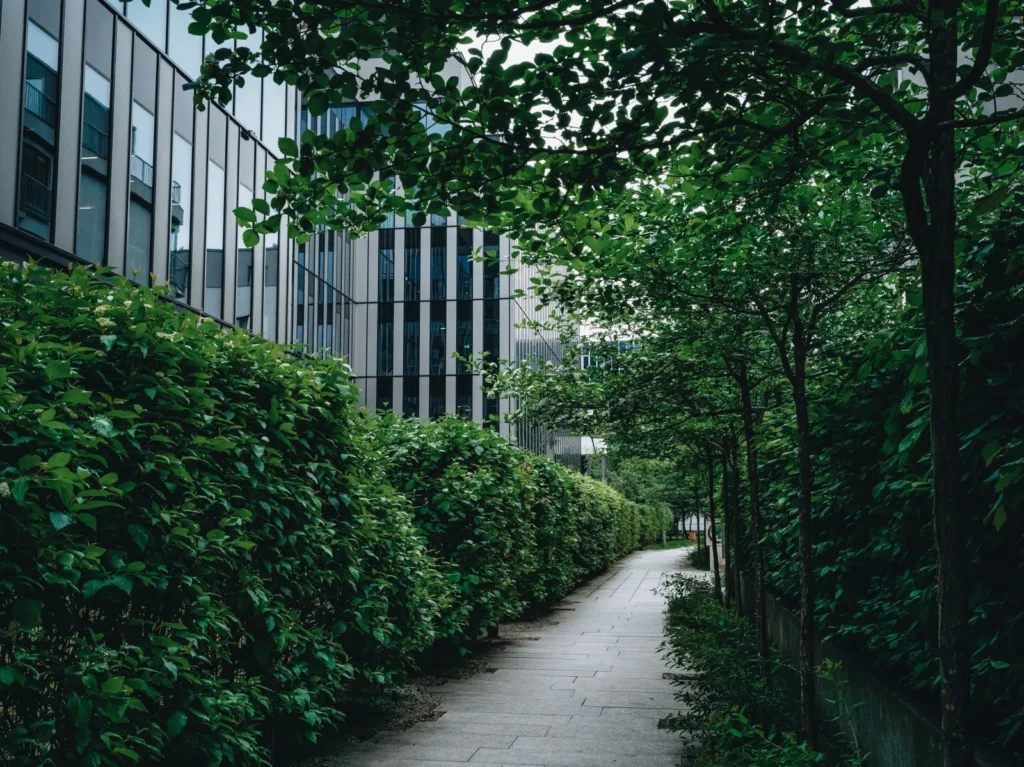
This approach pairs closely with the idea of bringing plant life into the built form itself, an approach explored further in nature integrated architecture. The two directions reinforce each other: buildings that hold greenery need networks to connect to, and networks work better when the buildings along them contribute planted surfaces.
Green Space Trends Reshaping Shared City Space
Several distinct types of urban green space are gaining ground, each solving a specific city problem. The table below groups the leading trends by their main benefit and a real project that shows the type in use.
Leading Green Space Types at a Glance
The following table summarizes how each green space type earns its place in the urban plan:
| Green Space Type | Main Benefit | Example |
|---|---|---|
| Green corridors | Connect habitats and cool walking routes | Cheonggyecheon, Seoul |
| Raised linear parks | Reuse old infrastructure as public space | The High Line, New York |
| Rooftop gardens | Add greenery and insulation without new land | Kensington Roof Gardens, London |
| Pocket parks | Bring green space to underserved blocks | Paley Park, New York |
| Community gardens | Grow food and strengthen local ties | Prinzessinnengarten, Berlin |
What links these types is a move away from ornamental planting toward green space that does measurable work. A rooftop garden manages rainwater and lowers cooling loads. A green corridor gives wildlife a safe route and gives people a shaded walk. Design decisions now start from those functions, with visual appeal following rather than leading. Project archives such as ArchDaily’s green space collection track how quickly this functional approach is spreading across new work.
📌 Did You Know?
The World Health Organization recommends that people live within about 300 meters of a green space of at least half a hectare. Its Urban Green Spaces and Health review links this level of access to lower stress, more physical activity, and reduced rates of cardiovascular disease.
Turning Small and Leftover Sites Into Green Space
Land is the hardest thing to find in a dense city, so much of the current work happens on sites that were never meant to be parks. Vacant lots, disused rail lines, rooftops, and narrow street edges are being converted into planted space that serves the blocks around them.
Pocket parks show how small this can go and still matter. A single lot, sometimes only a few hundred square meters, can give a dense neighborhood its only patch of shade and seating. These parks are cheap to build, quick to open, and easy to spread across a district, which makes them a favorite tool for filling gaps in green access.
💡 Pro Tip
When planning a small urban site, check the soil depth and drainage before choosing plants. Many pocket park and rooftop failures trace back to shallow or compacted soil that cannot hold water or support root growth, so the planting dies within a season no matter how good the design looks on paper.
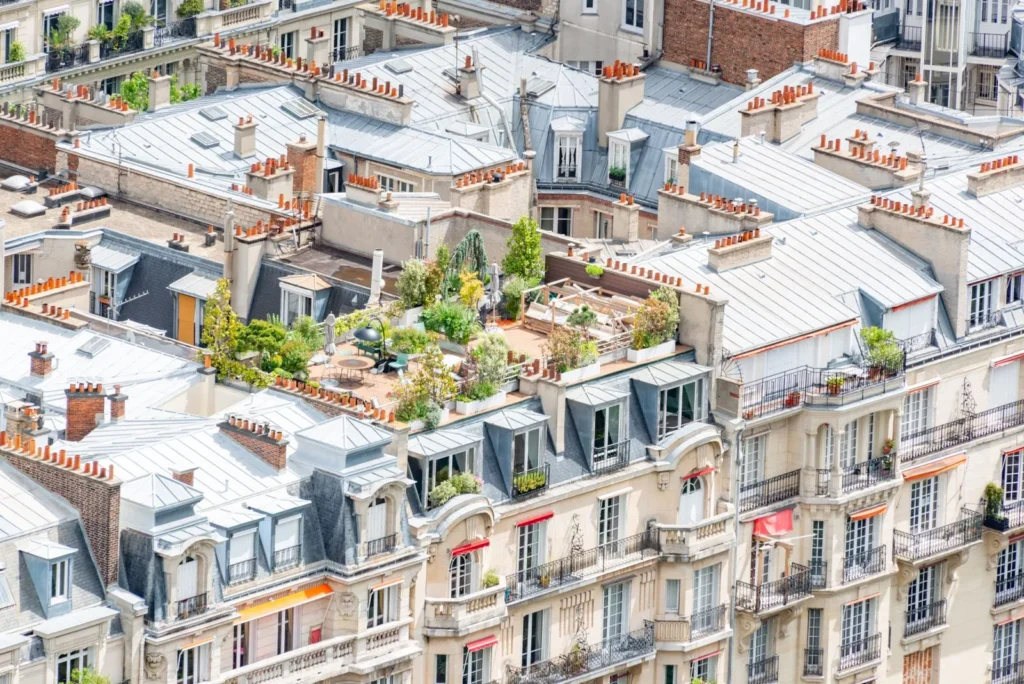
Rooftops extend the same logic upward. A planted roof adds green space on land the city already uses, cutting the heat a bare roof throws off and slowing the rainwater that would otherwise rush into drains. Paired with rainwater harvesting and solar panels, these roofs turn a building’s fifth facade into an active part of the green network. For gardens at street level, seasonal planning matters too, and our notes on winter garden design cover how planting choices shift across the year.
🏗️ Real-World Example
The High Line (New York, 2009 onward): Built on a disused raised freight line, this linear park designed by James Corner Field Operations and Diller Scofidio + Renfro turned about 2.3 kilometers of abandoned rail into a planted walkway. It became a model for reusing derelict infrastructure as connected green space.
Policy and Planning Behind Urban Greenery
Green space rarely appears without rules that require it. Zoning codes now push developers to include green roofs, permeable surfaces, and planting corridors in new projects, while some cities offer tax incentives or density bonuses to designs that go further. These planning levers decide how much greenery a city gets and where it lands.
Equity has moved to the front of this conversation. Older neighborhoods and low-income districts often hold the least tree cover and the highest summer temperatures, so many planning programs now direct new green space toward the blocks that lack it. Professional bodies such as the American Society of Landscape Architects and reference material from the United States Environmental Protection Agency on green infrastructure both stress this link between planted public space and public health.
Guidance from the World Green Building Council and public space work by UN-Habitat pushes the same point at a larger scale, framing green space as basic infrastructure rather than an amenity. That framing changes budgets, because infrastructure gets funded and maintained in a way that decoration does not. Case studies on community spaces show how these policies land at the neighborhood level.
What Comes Next for Urban Green Spaces
The near future points toward green space that is measured, connected, and managed with data. Sensors track soil moisture and adjust irrigation so water goes only where it is needed. Modular planting systems let vertical gardens and rooftops adapt as buildings change use. Cities are also mapping tree cover and surface heat block by block to target where the next planting should go.
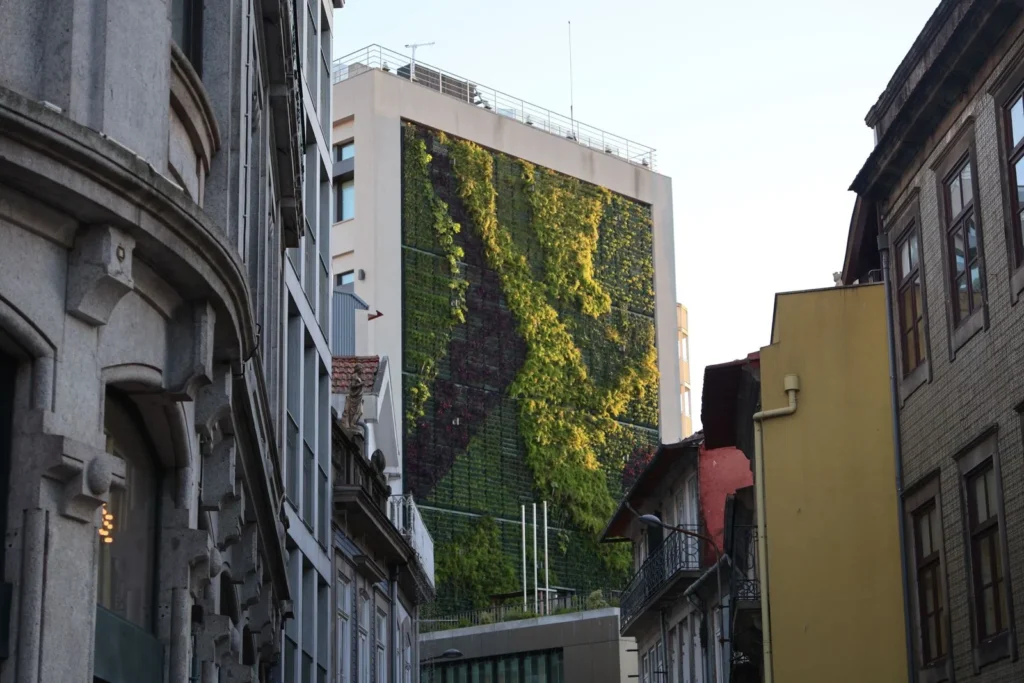
Living walls and green facades keep spreading, tying building surfaces into the wider network of parks and corridors. Techniques covered in our look at vertical gardens and urban jungles show how vertical planting reaches greenery into space that ground-level parks cannot serve, while helping cut the urban heat island effect that makes dense districts uncomfortable in summer.
What holds all of this together is a change in how cities value green space. When planted public areas are treated as working systems that cool, drain, feed, and connect, they earn steady funding and long-term care. The greenest urban future may not be the one with the most spectacular park, but the one where nature runs quietly through every street, roof, and leftover corner.


Famous Sustainable Buildings: 6 Green Skyscrapers Leading the Future
From Milan's Bosco Verticale to Sydney's record hybrid timber tower, six green...
 Furkan Sen6 Mins read
Best Orientation for a House: Why North Orientation Matters
North orientation shapes a home's light, warmth, and running costs, and its...
Furkan Sen6 Mins read
Passive Design Architecture: A Practical Guide to Low-Energy Buildings
Passive design uses a building's orientation, form, and materials to control heat,...
Furkan Sen8 Mins read
Passive House vs LEED Certification: Which Green Standard Should You Pursue?
Passive House focuses on strict energy performance and airtightness, while LEED scores...
 Sinan Ozen8 Mins read


Leave a comment