

Long Lake Cottage by Dubbeldam Architecture & Design
Long Lake Cottage by Dubbeldam Architecture + Design is an off-grid, accessible retreat in Ontario, featuring elevated living spaces, natural materials, and year-round connection to forest and lake landscapes.
 Begum Gumusel20 December 20254 Mins read224


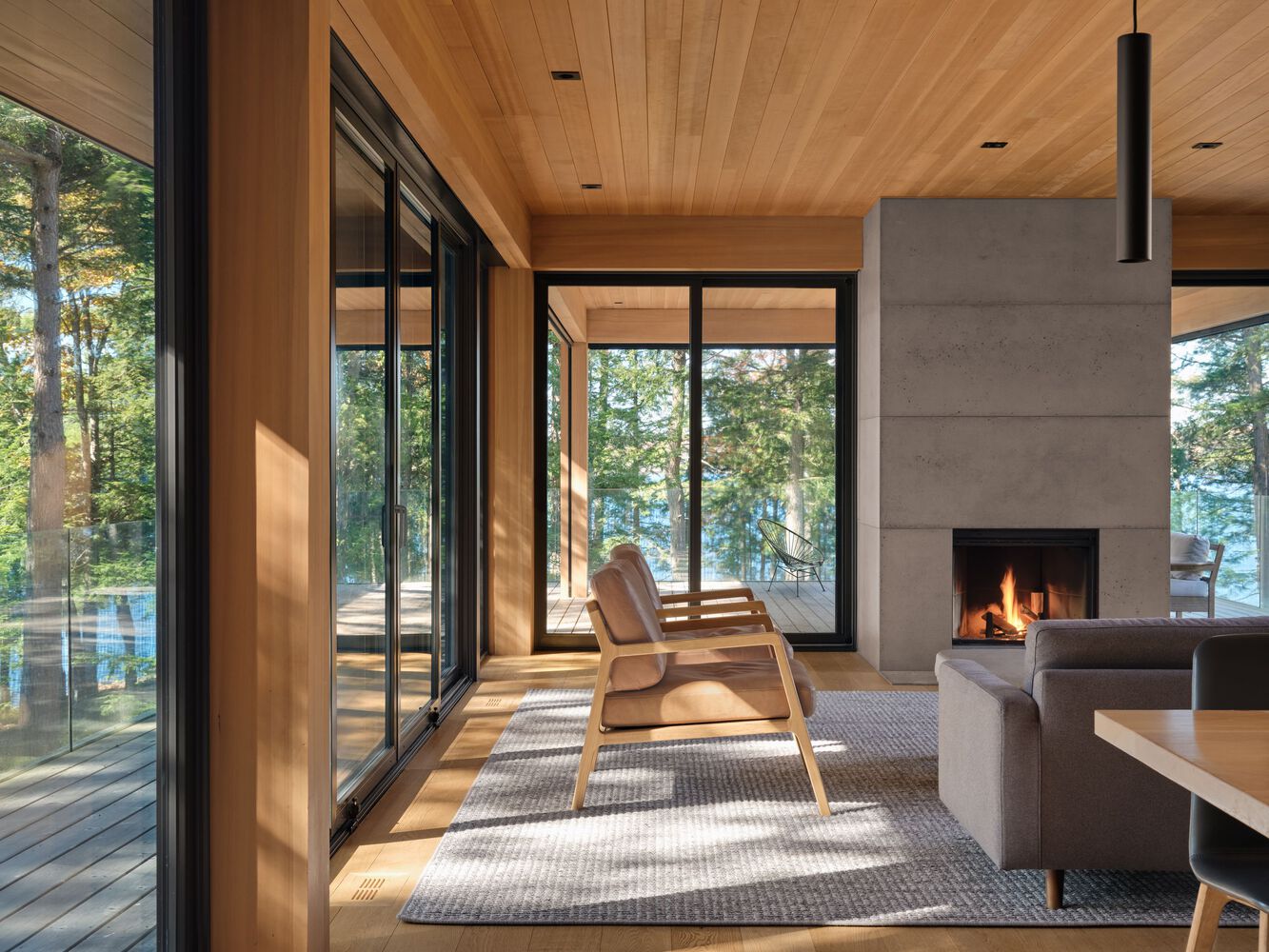


Table of Contents Show
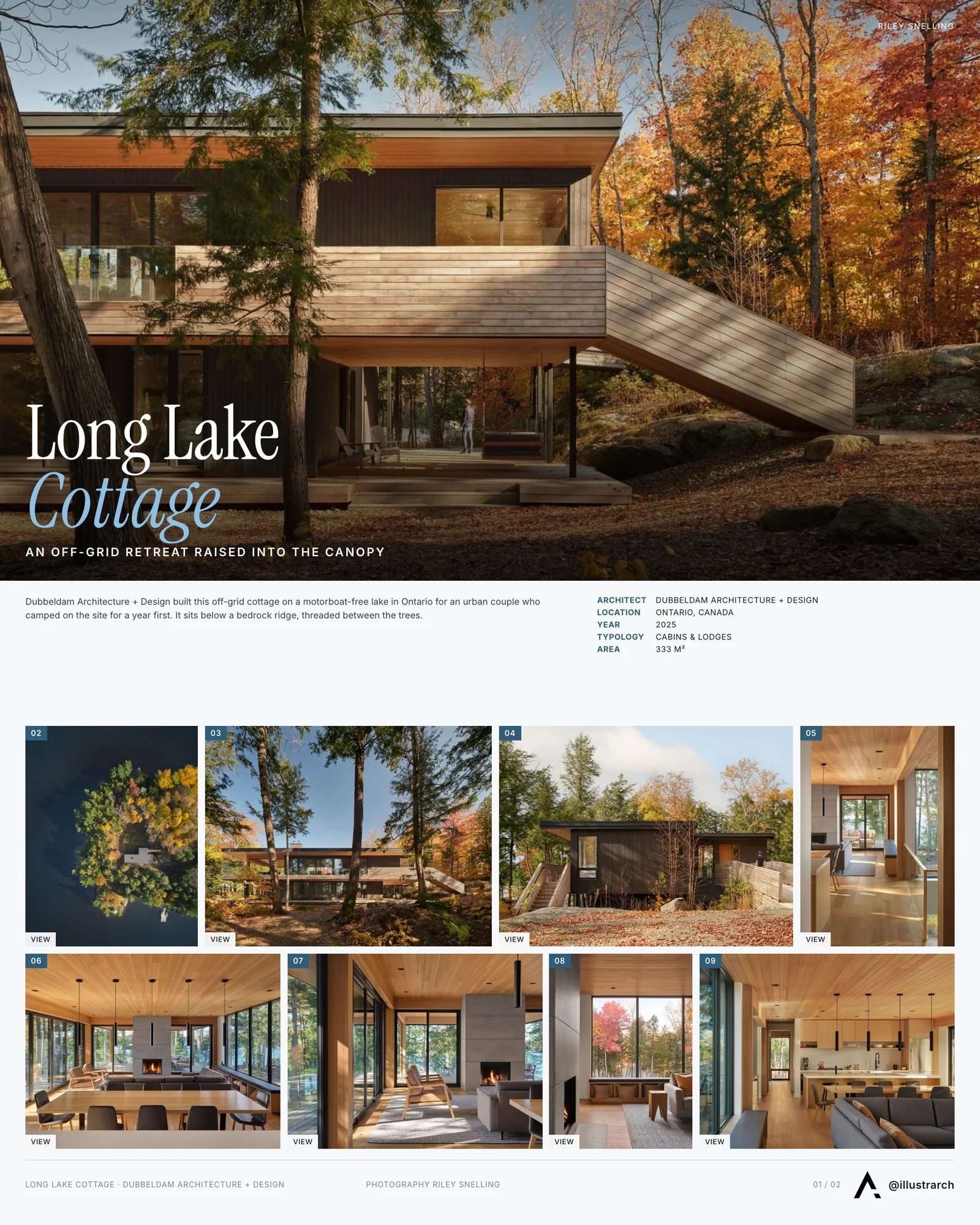
Designed by Dubbeldam Architecture + Design, Long Lake Cottage is a carefully considered off-grid retreat located on a secluded, motorboat-free lake in the forests of Ontario. Set on a quiet peninsula surrounded by water and mature woodland, the cottage was conceived as a deeply immersive refuge for an urban couple seeking reconnection with nature, family, and slower rhythms of life. After spending a year camping on the site to understand its seasonal changes and spatial qualities, the owners committed to building a home that would feel elevated yet grounded, private yet welcoming, capable of supporting accessible, multigenerational living throughout the year.
Reading the Landscape and Building Lightly on the Land
The site is defined by dense forest, exposed bedrock, and expansive views across Long Lake. Rather than imposing a dominant structure on this sensitive landscape, the architects adopted a light-touch strategy that works with the site’s natural contours. Positioned below a ridge of bedrock, the lower portion of the cottage remains largely hidden from view on approach, reducing visual impact and preserving the sense of untouched wilderness.
The building is composed as a two-level volume carefully threaded between trees. This placement allows the cottage to settle into the terrain while opening outward toward the lake and forest canopy. The architecture does not compete with nature; instead, it frames and amplifies it.
An Elevated Entry and Accessibility as a Design Driver
One of the defining architectural decisions was locating the main living spaces on the upper level, accessed by a bridge that gently connects the landscape to the heart of the home. This elevated entry was not merely aesthetic, it was essential to ensuring full accessibility for a family member who uses a wheelchair.
By shifting communal spaces upward, the architects achieved the clients’ dream of a living area that appears to float above the forest floor, while also meeting universal design principles. This approach allows all generations to gather comfortably in the most meaningful spaces of the home, reinforcing inclusion as a core architectural value.
Communal Living in the Tree Canopy
The upper floor is organized as a generous open-plan living, dining, and kitchen space, surrounded by expansive glazing that frames views of the lake through the trees. Wrap-around windows and large sliding doors dissolve the boundary between inside and out, allowing light, weather, and seasonal change to become part of daily life.
At the center of the space, a cast concrete hearth anchors the room both physically and emotionally. Seating gathers naturally around it, reinforcing the cottage’s role as a place for conversation and shared experience. A built-in 17-foot window bench provides additional seating and integrated storage, creating a relaxed zone for reading, resting, or simply watching the forest.
The kitchen is defined subtly through white oak millwork and engineered stone surfaces. A long island with generous seating encourages informal meals and collective cooking, while maintaining visual openness across the living space.
Material Warmth and Interior Atmosphere
Material selection throughout the interior emphasizes warmth, tactility, and longevity. Floors are finished in brush-finished oak, while a continuous ceiling of western hemlock boards runs overhead, softening acoustics and enriching the sensory quality of the space. This timber ceiling extends seamlessly from interior to exterior, reinforcing continuity between architecture and landscape.
The restrained material palette allows the surrounding environment, light, water, trees, to remain the primary focus, while still creating a comfortable and inviting atmosphere suited to year-round use.
Bedrooms Integrated with the Forest Floor
The lower level houses five bedrooms, each with floor-to-ceiling windows and direct exterior access. These private spaces open straight onto the forest, offering guests a sense of independence and an intimate connection to nature. Waking up here means stepping immediately into the landscape, an experience reminiscent of camping, but with the comfort of a fully enclosed retreat.
The primary bedroom faces west, taking advantage of evening light and sunset views. Its ensuite bathroom includes an outdoor shower, a deliberate nod to the owners’ love of camping and outdoor living. A sixth bedroom and bathroom on the upper level, fully accessible, ensure that all family members can comfortably share the cottage without compromise.
Outdoor Rooms Formed by Architectural Offset
The two levels of the cottage are subtly offset along their length, creating two distinct outdoor living spaces that are protected and deeply connected to the building’s form. The upper deck, adjacent to the main living area, offers sweeping views on three sides and functions as an outdoor extension of the interior. Retractable screens provide protection from insects, while an outdoor wood-burning fireplace mirrors the indoor hearth, allowing gatherings to continue well into colder seasons.
Below, a shaded deck nestles between the projecting upper floor and a bedrock outcrop. Naturally cooled by stone and lake breezes, this space remains comfortable during summer months and offers a quieter, more sheltered outdoor experience.

Off-Grid Living and Sustainable Construction
Long Lake Cottage operates entirely off-grid, powered by a substantial solar array. Sustainability is embedded not only in energy systems but also in construction choices. The building is crafted from locally milled, sustainably harvested wood, reducing transportation impact and strengthening ties to the region.
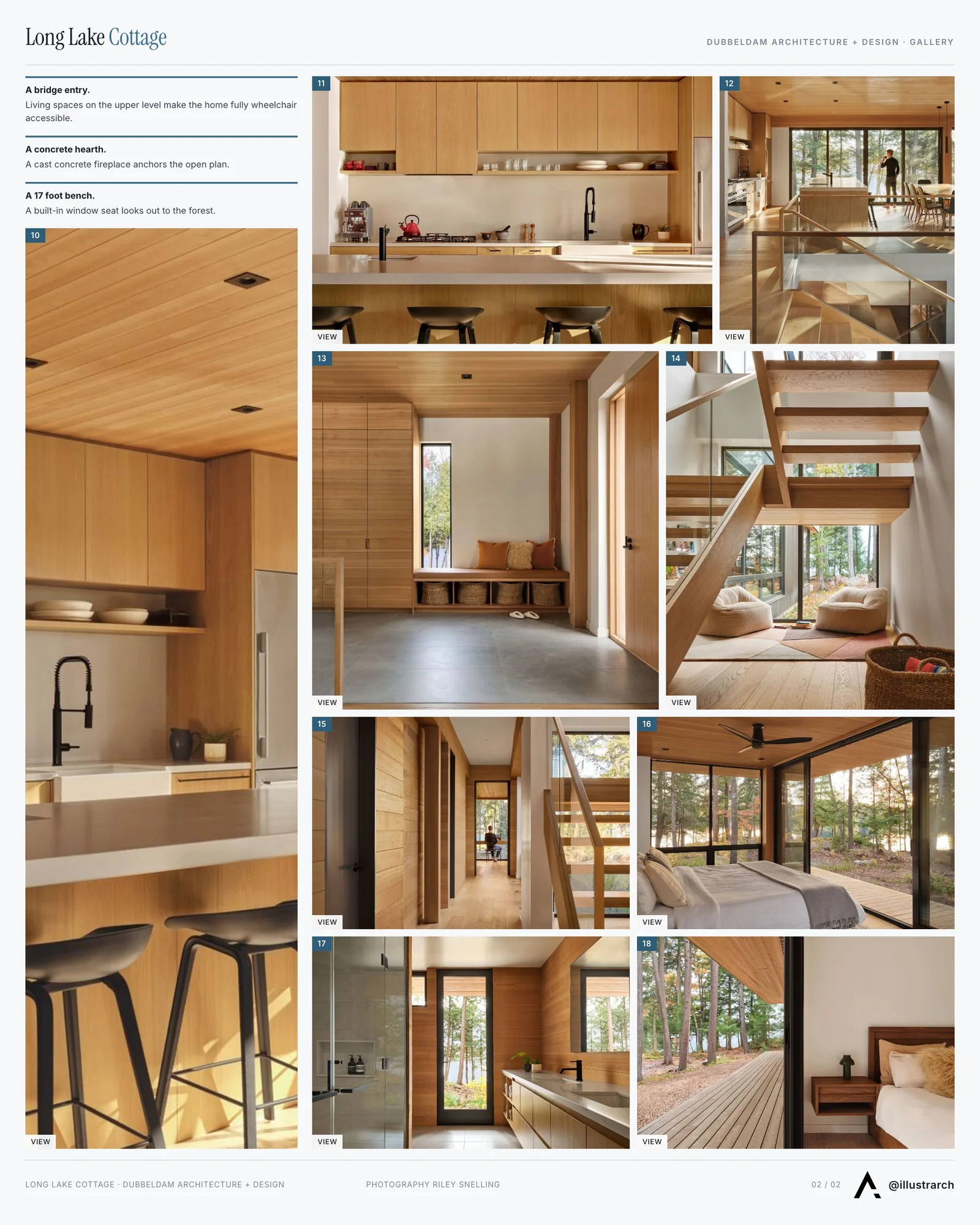
The exterior is clad in greyed cedar and charcoal-stained spruce, tones that allow the building to visually recede into the forest. Inside, a lighter palette enhances brightness and warmth, creating a gentle contrast that remains calm and timeless.
Fully winterized, the cottage functions comfortably throughout the year, adapting to snow-covered landscapes as seamlessly as summer greenery.
A Year-Round Refuge Rooted in Nature
More than a seasonal escape, Long Lake Cottage is a place for ongoing connection, to family, to landscape, and to the rhythms of nature. Through elevated living spaces, inclusive design, and material honesty, Dubbeldam Architecture + Design has created a retreat that feels both protective and expansive. It offers a model for how off-grid architecture can be responsible, accessible, and emotionally resonant, proving that living lightly on the land does not mean sacrificing comfort, beauty, or belonging.
Photography: Riley Snelling


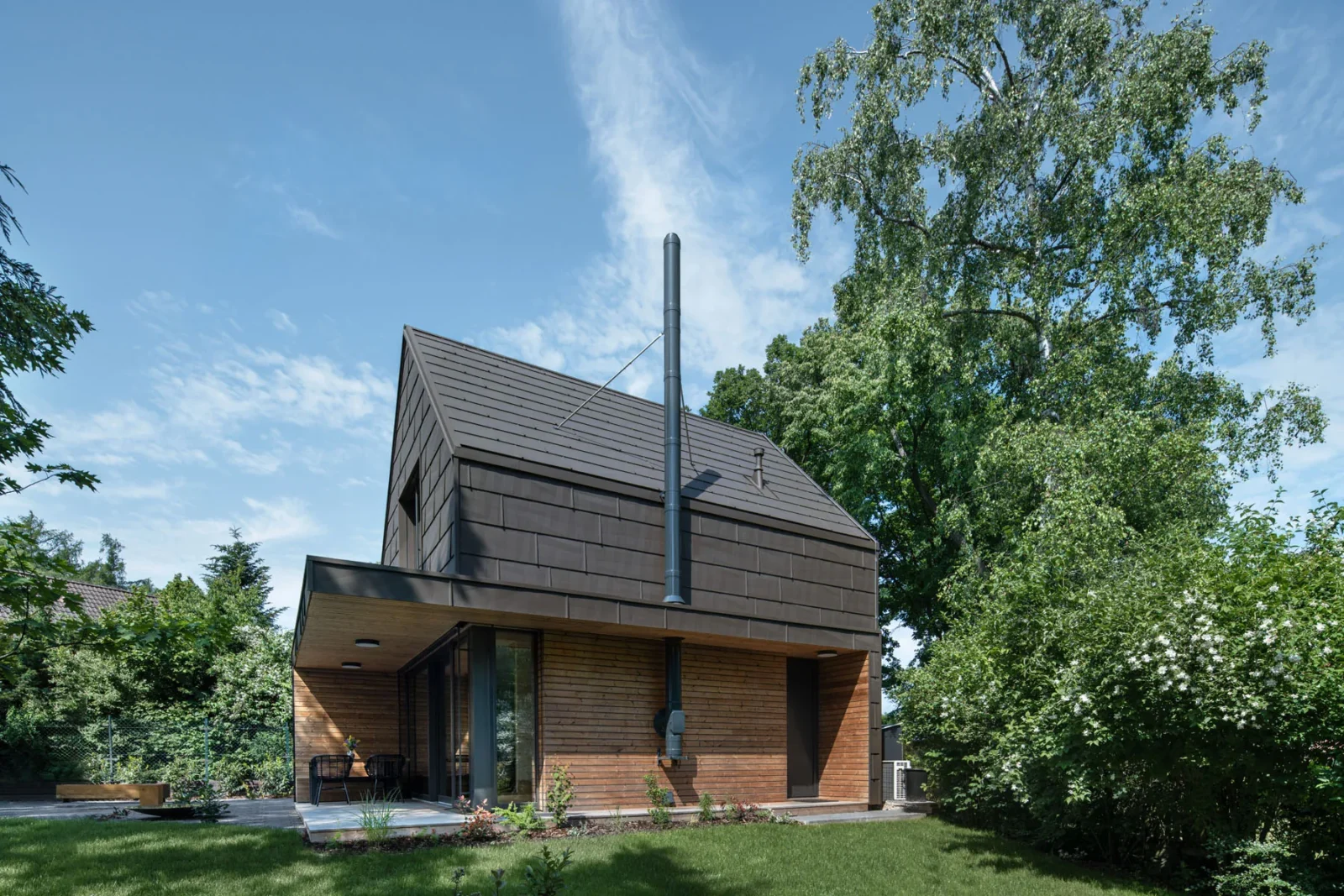
Cottage by archicraft
The most interesting architectural opportunities often emerge from the strictest constraints. This...
 illustrarch Editoral Team2 Mins read
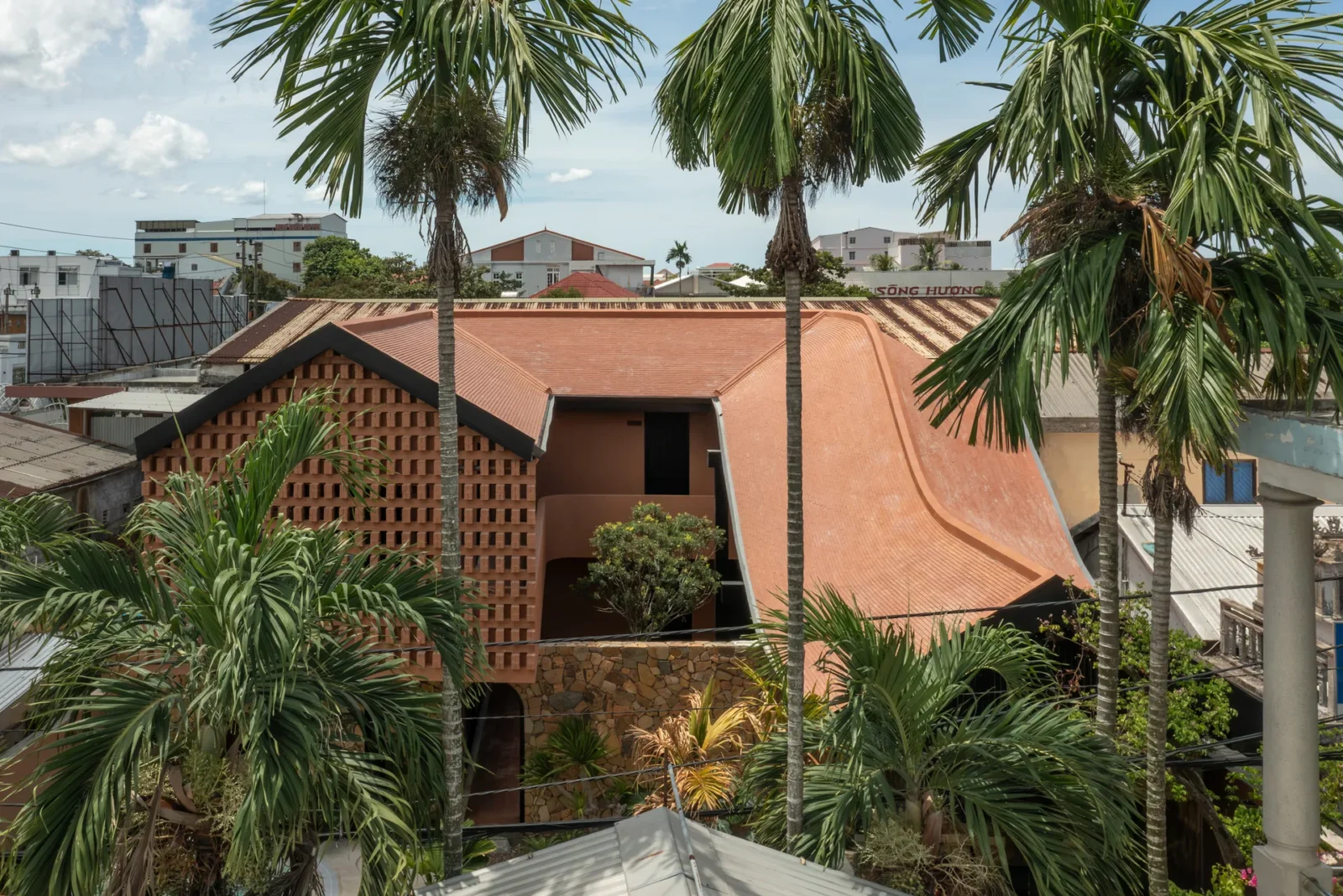
Da Homestay by 3fconcept
In a narrow alley in Hue, 3fconcept abstract the truong lang, the...
illustrarch Editoral Team2 Mins read

Merryda by Wiki World: Secret Camp, A Forest Retreat Between Birds and Dreams
In the serene forests of Wuhan, Merryda Wiki World • Secret Camp...
 Elif Ayse Sen3 Mins read
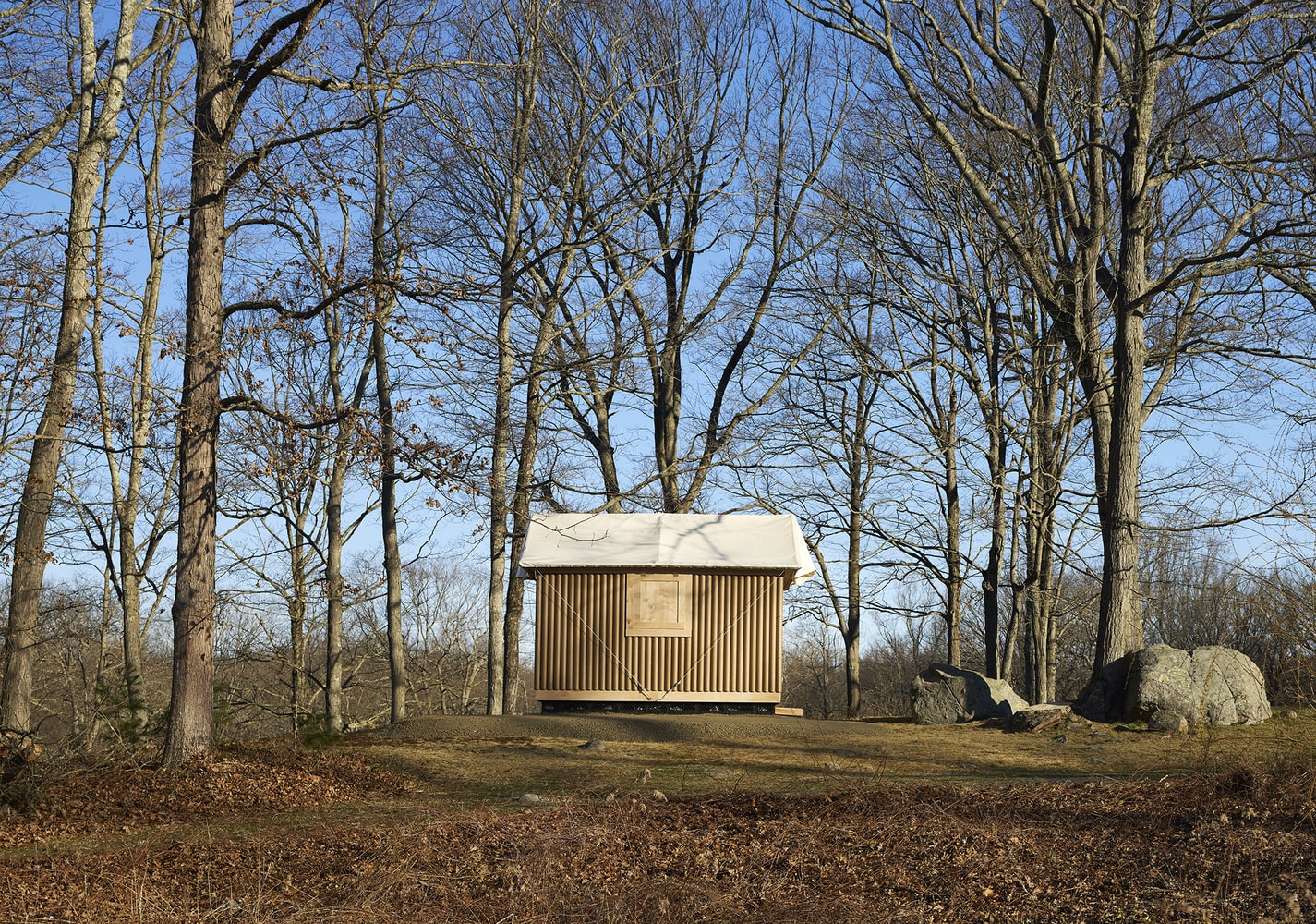
Architecture of Hope: Shigeru Ban’s Paper Log House for Los Angeles
Shigeru Ban’s Paper Log House for Los Angeles transforms paper tubes into...
Elif Ayse Sen3 Mins read


Leave a comment