

Basketball Court – Ralph C. Wilson Jr. Centennial Park by Adjaye Associates
Designed by Adjaye Associates, the basketball court at Ralph C. Wilson Jr. Centennial Park anchors Detroit’s transformed riverfront with a flexible pavilion that celebrates sport, community, and year-round public life.
 Begum Gumusel17 December 20254 Mins read266
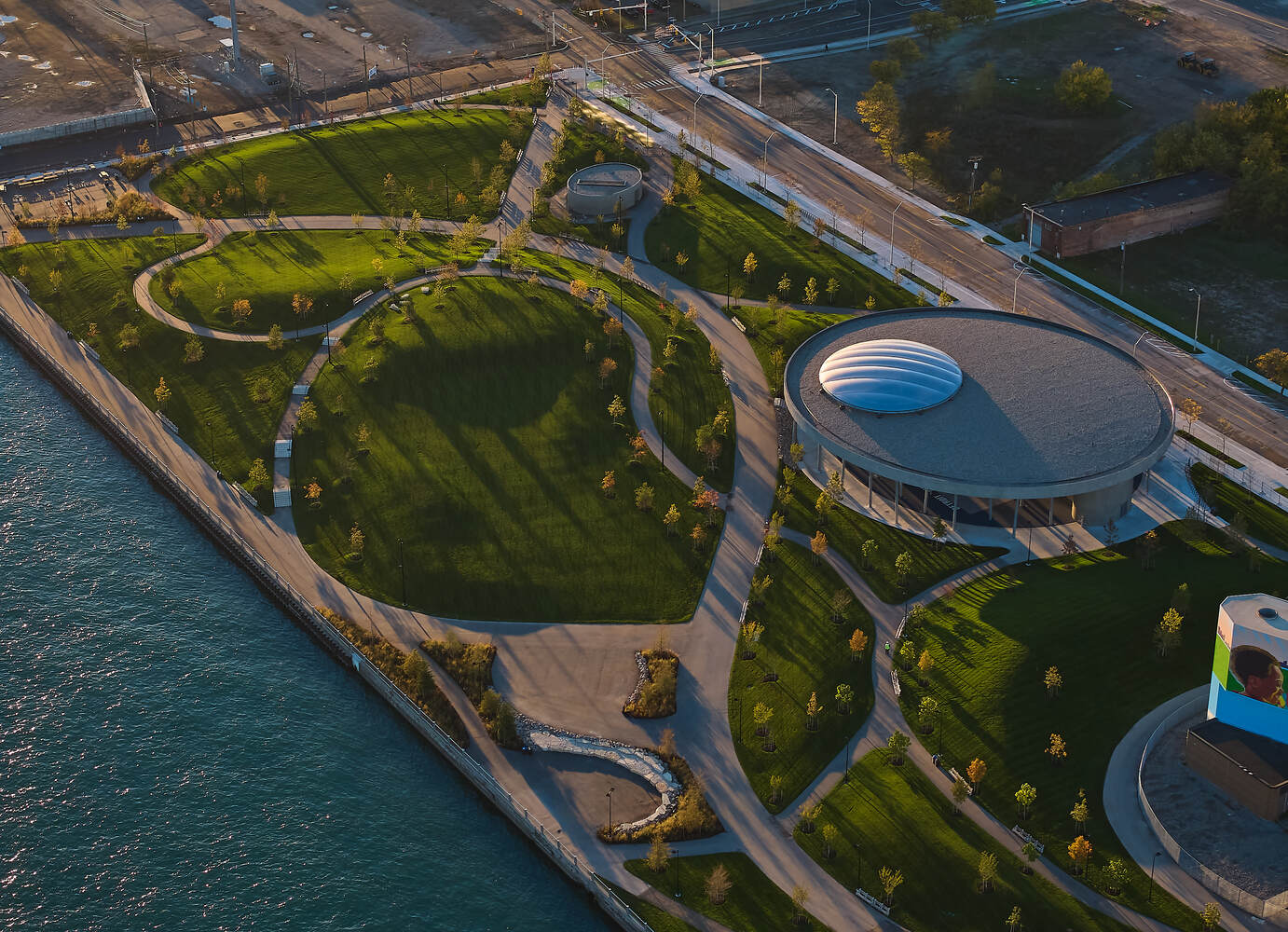
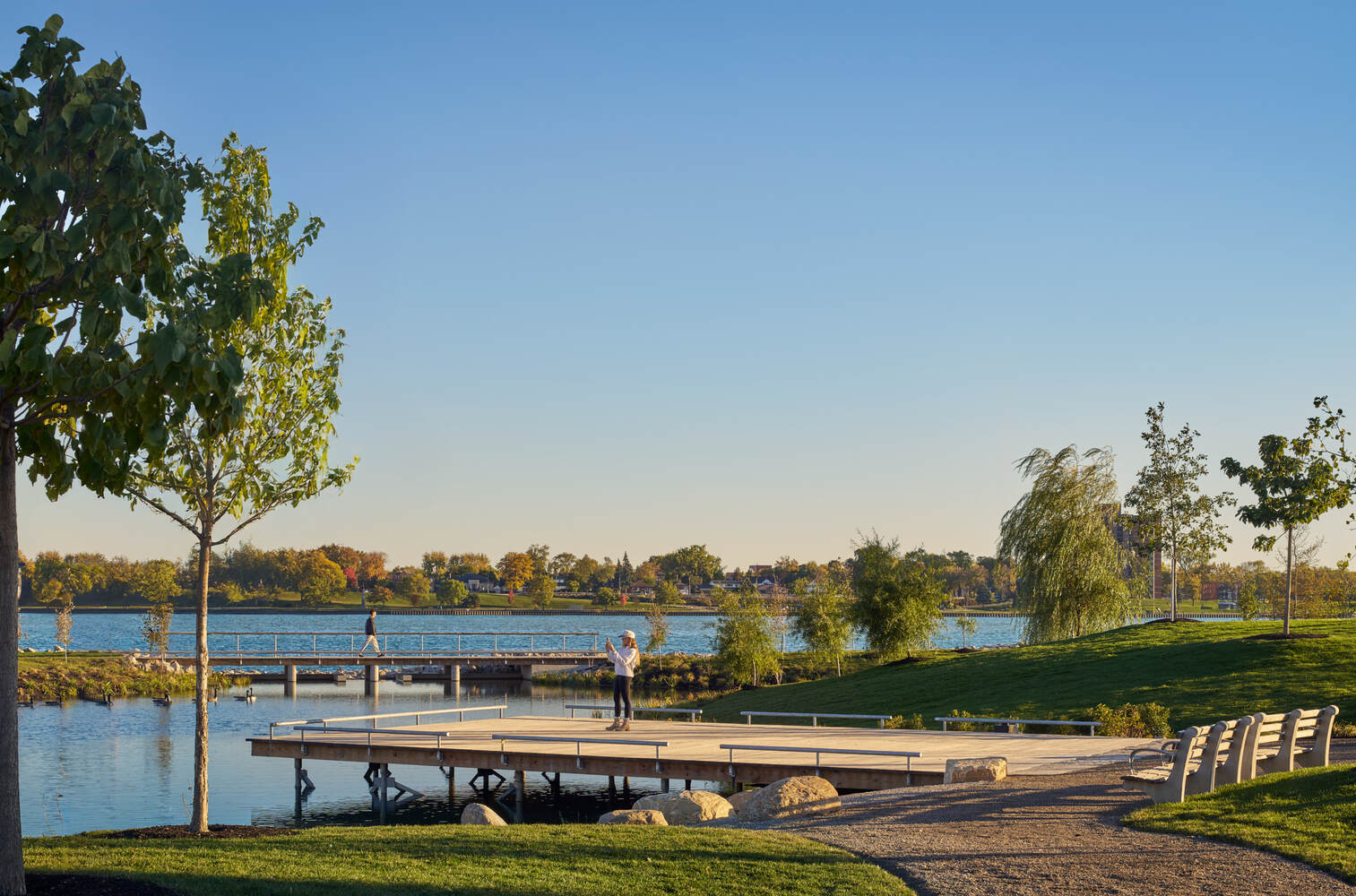
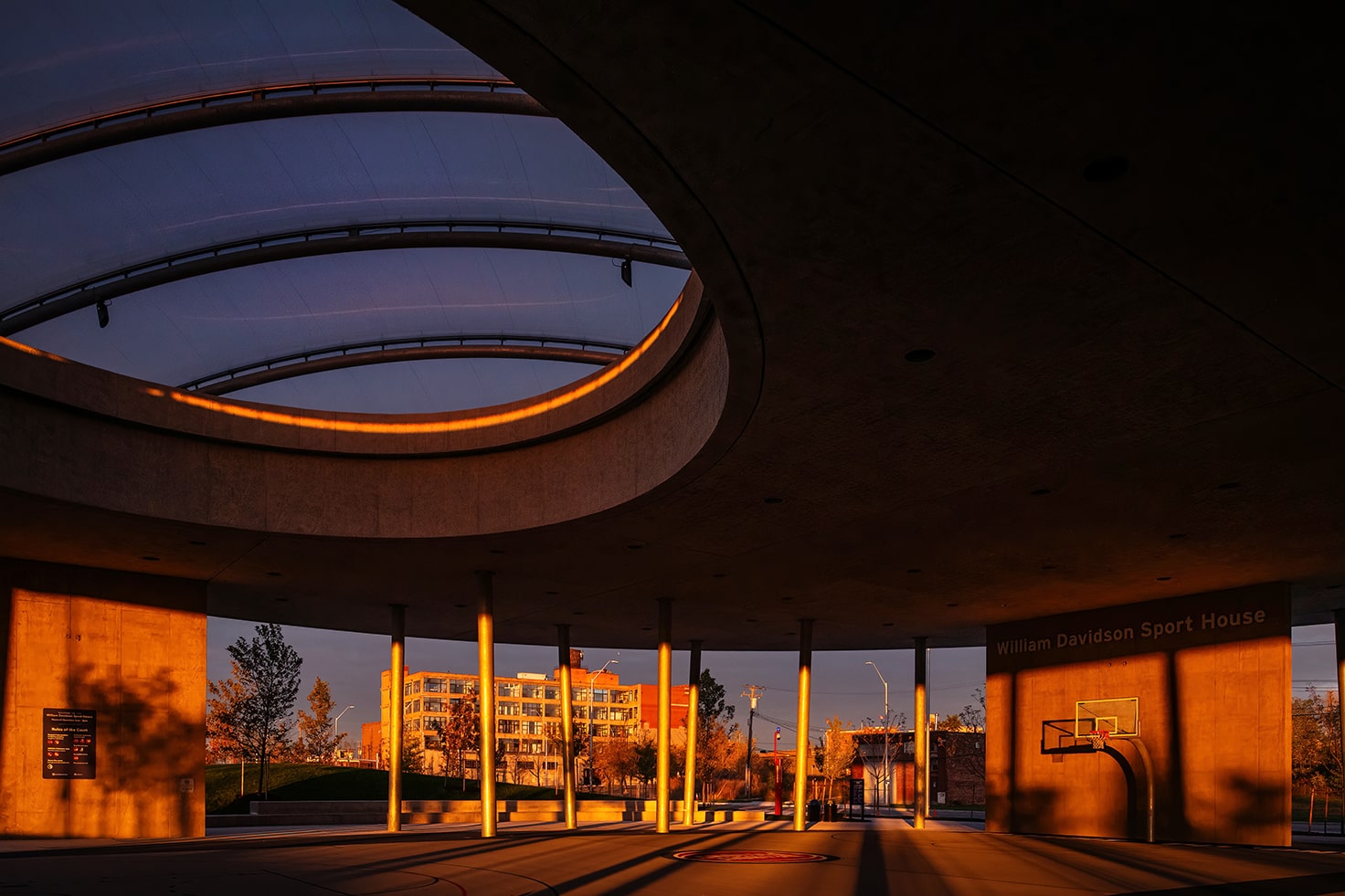

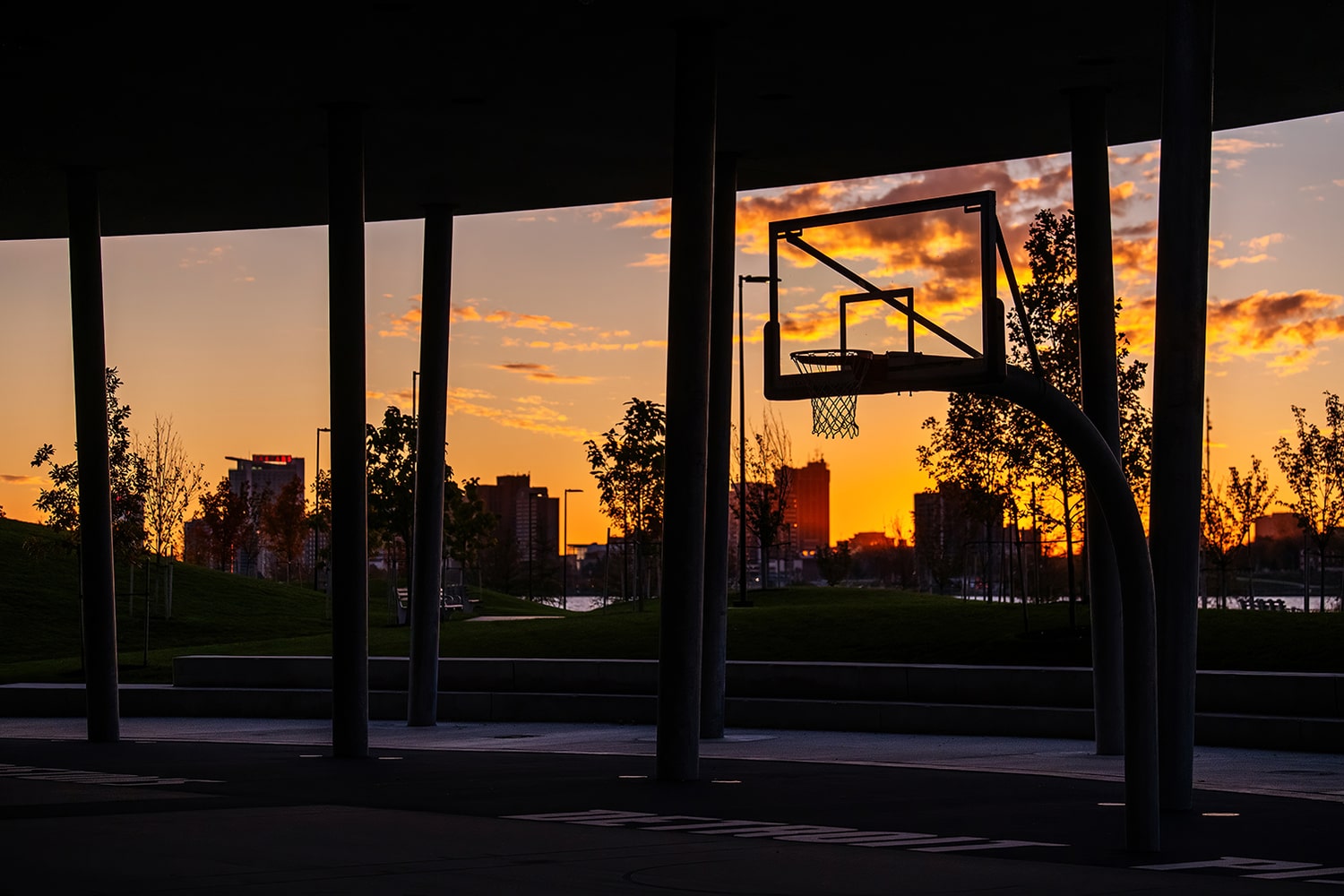
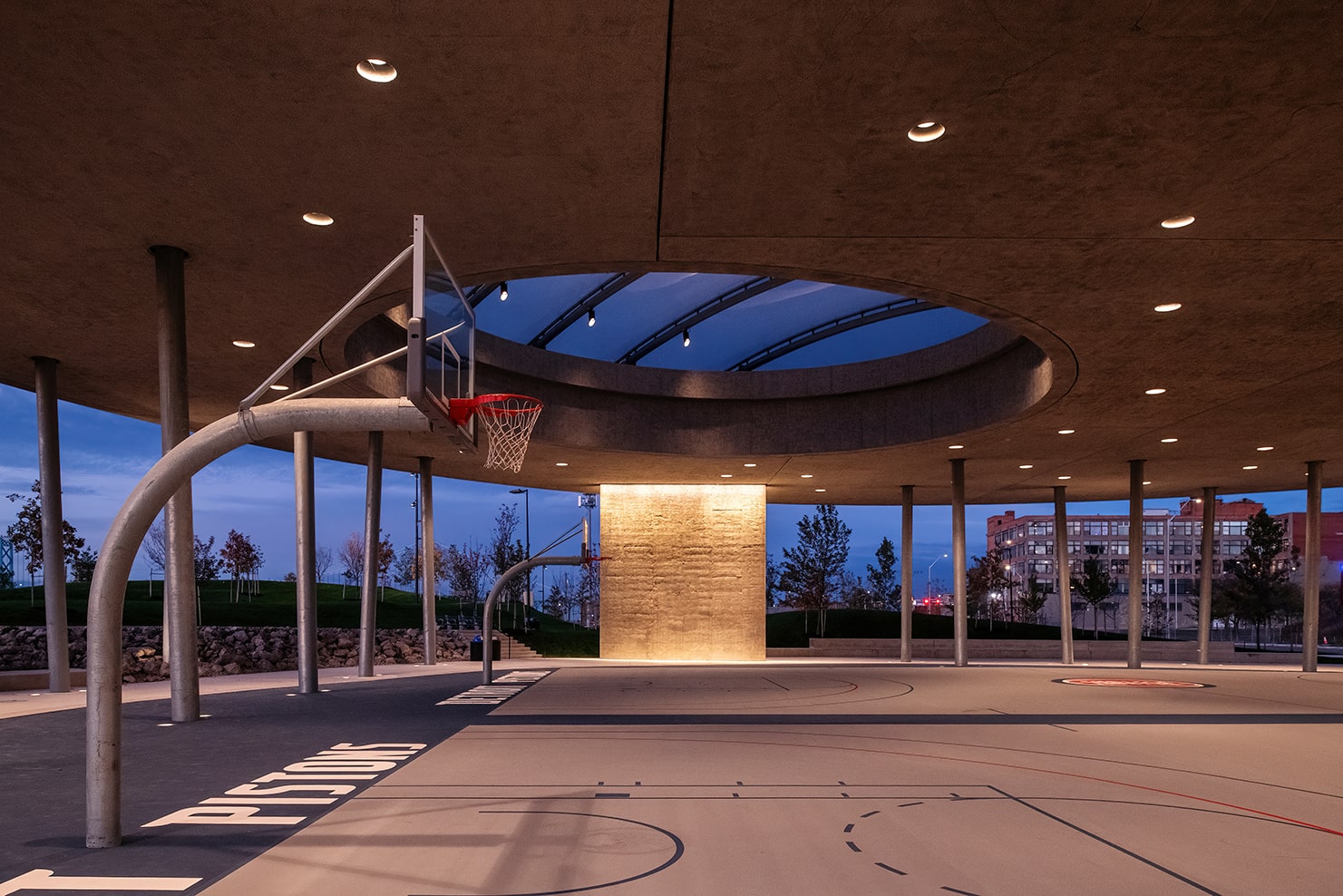


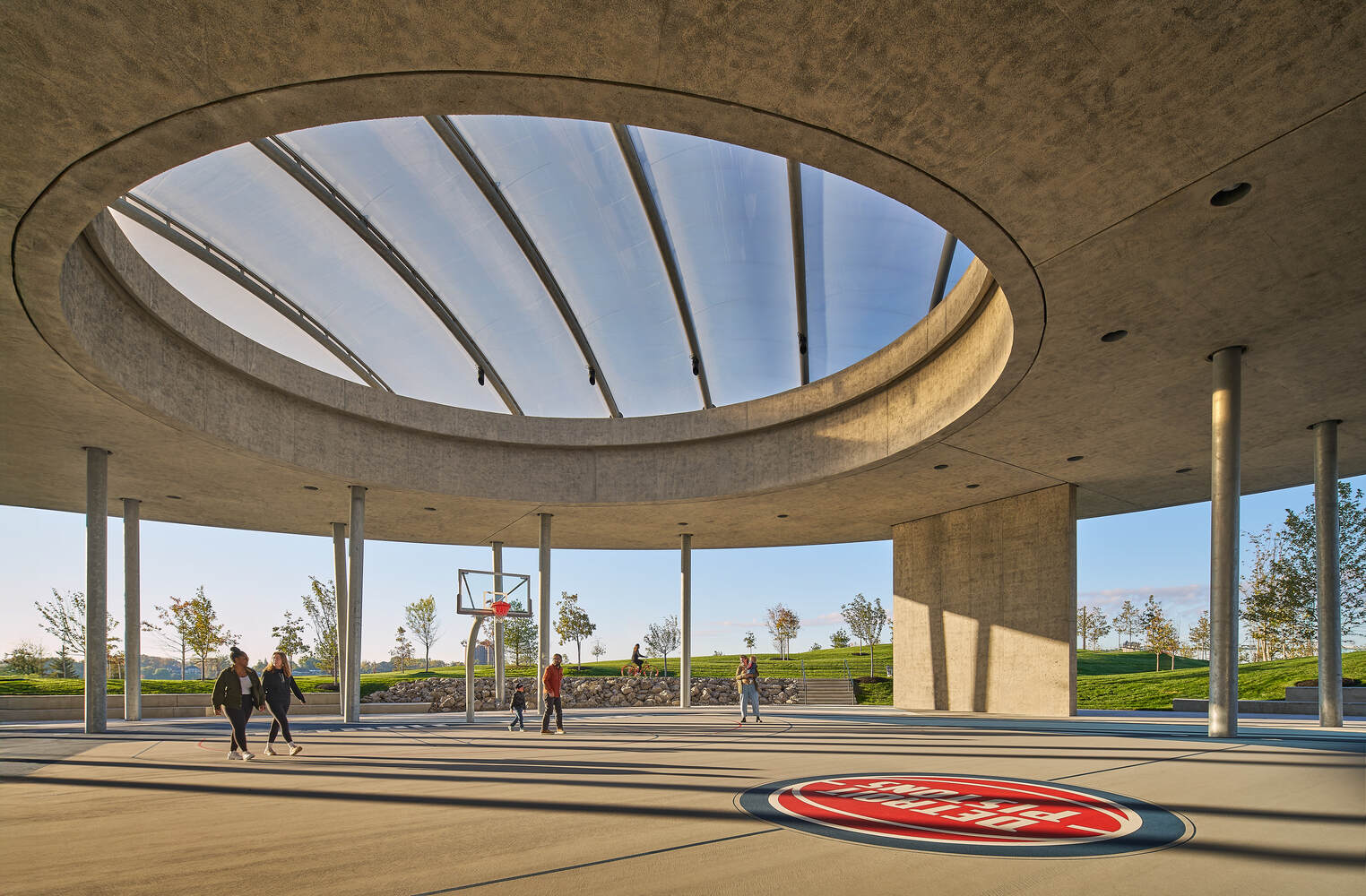

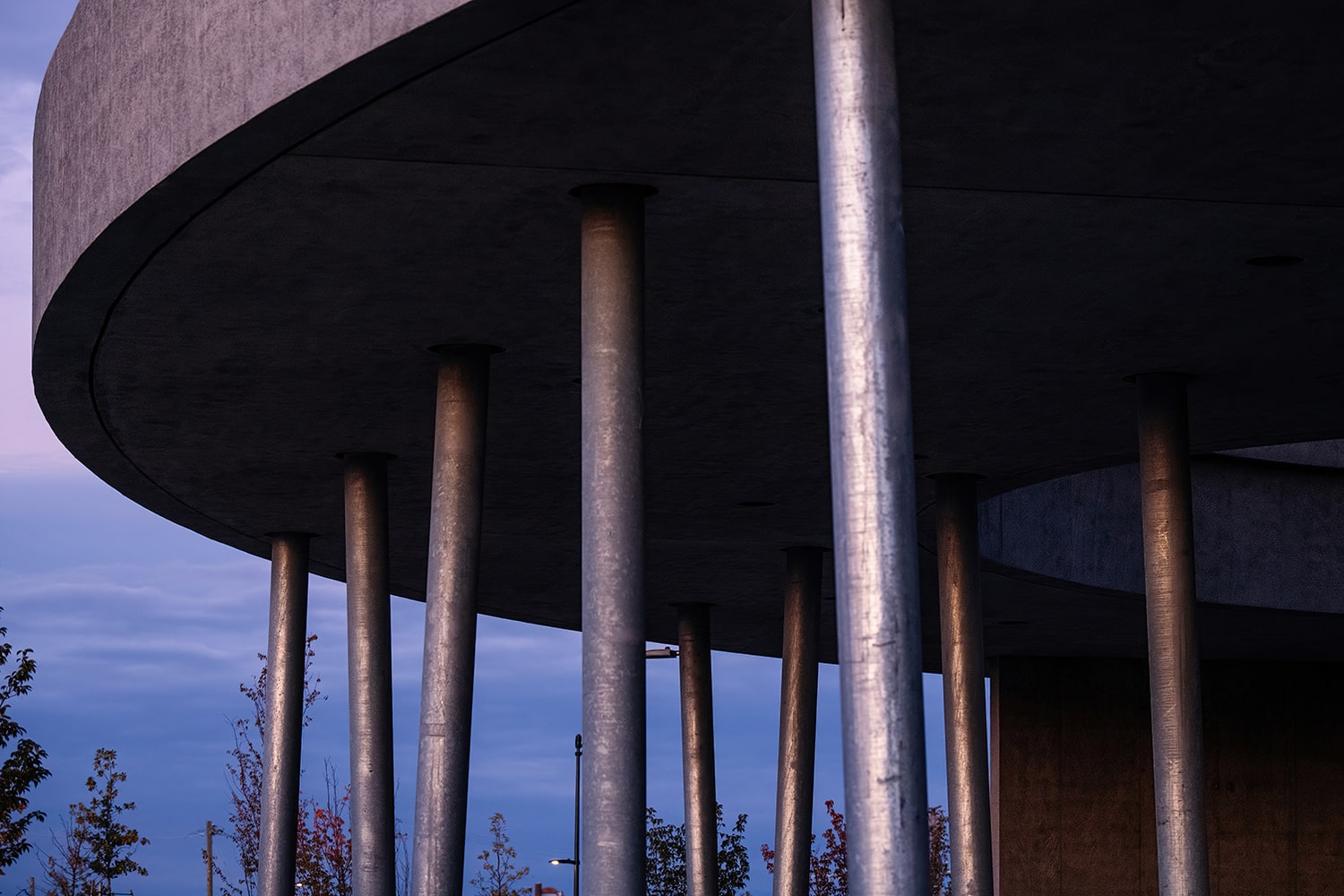


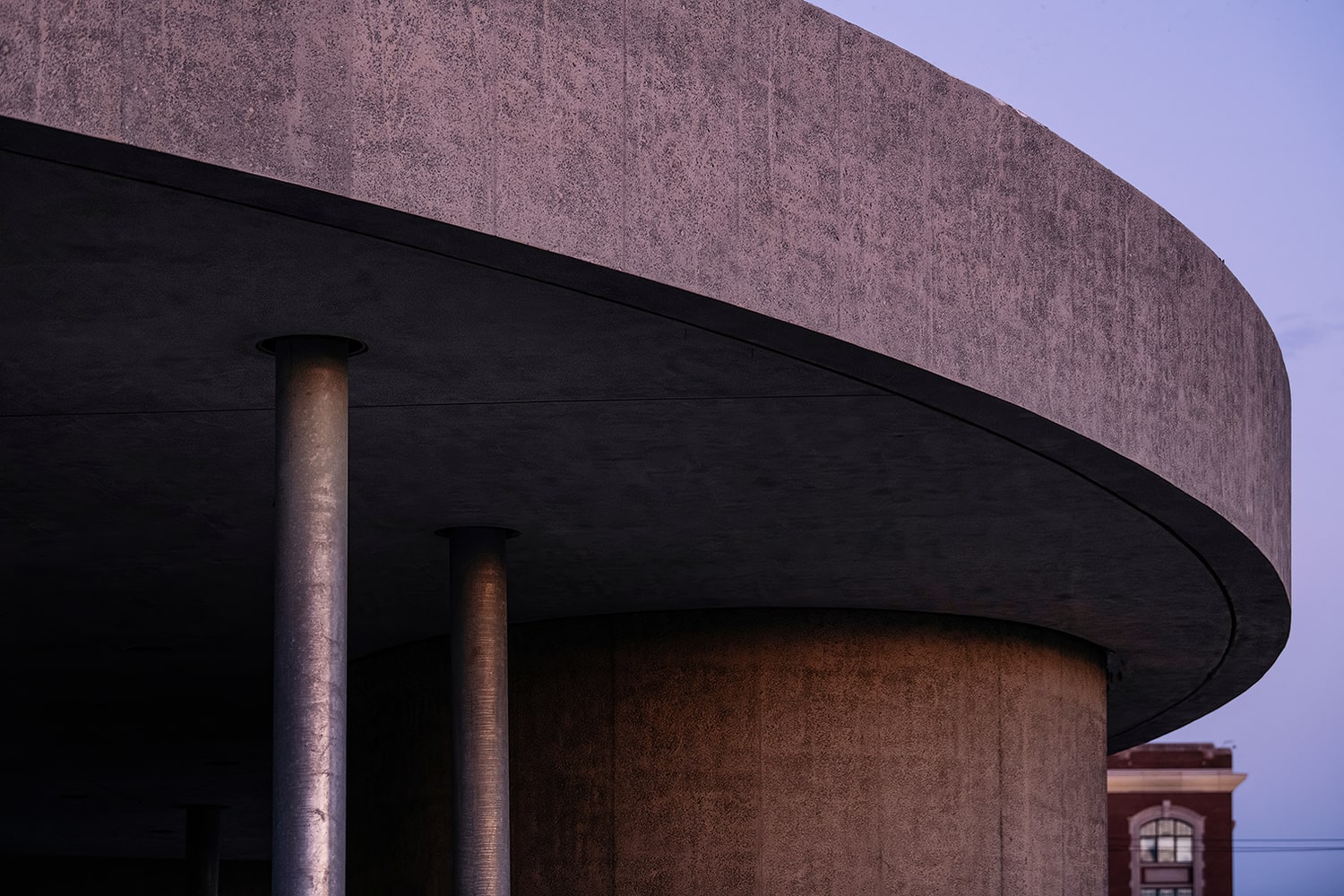

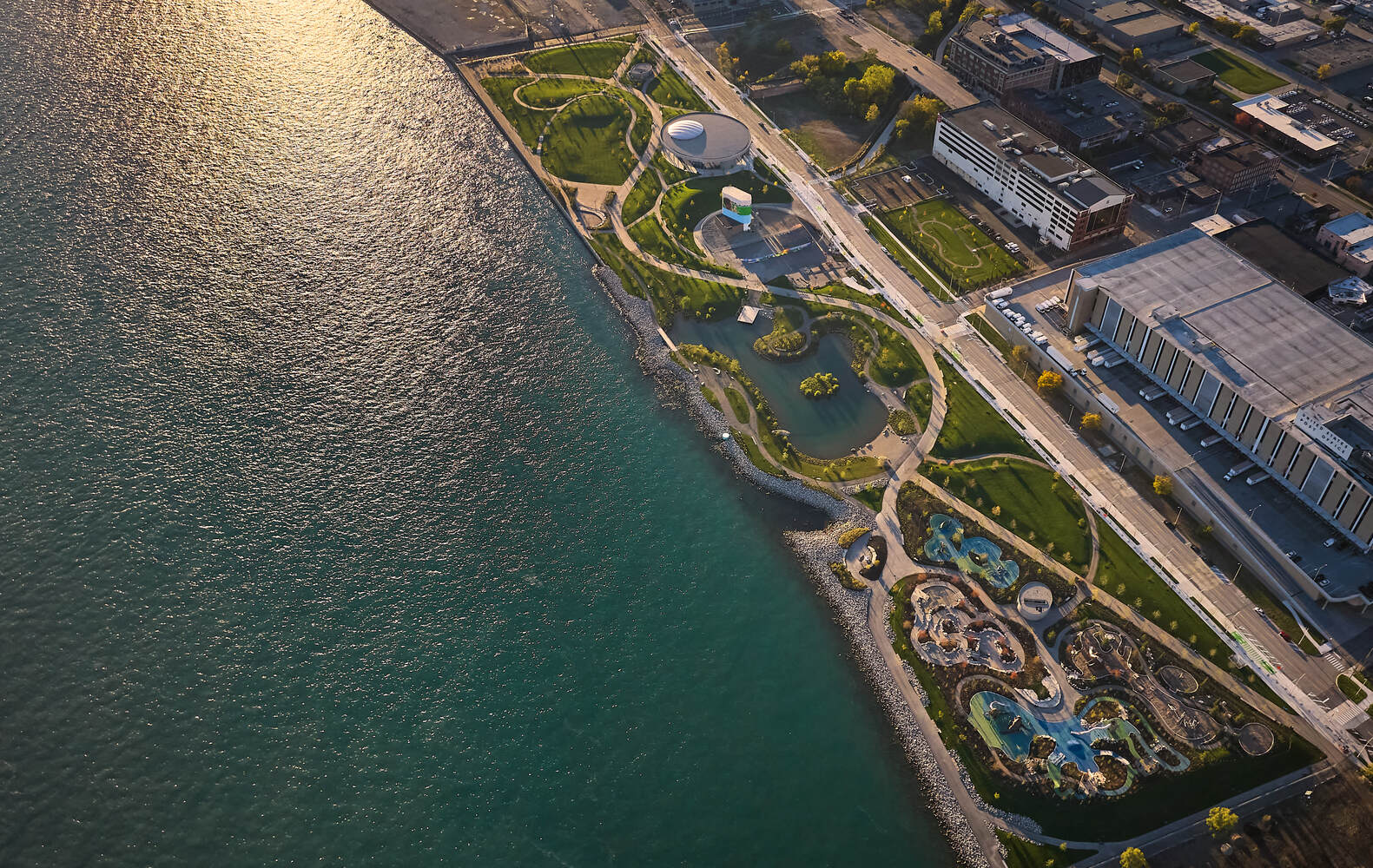

Table of Contents Show
The Basketball Court at Ralph C. Wilson Jr. Centennial Park, designed by Adjaye Associates as part of a broader collaboration with Michael Van Valkenburgh Associates (MVVA), is a defining element within one of Detroit’s most ambitious public-space transformations. Situated along the Detroit Riverfront, the 22-acre park converts a formerly derelict industrial zone into a vibrant, inclusive civic landscape. More than a recreational facility, the basketball court and its accompanying pavilion function as an urban anchor, reconnecting the city to the river while celebrating sport, community, and shared public life.

From Industrial Edge to Civic Waterfront
For decades, this stretch of the riverfront remained disconnected from everyday urban life, shaped by industry rather than public use. The redevelopment of Ralph C. Wilson Jr. Centennial Park reframes this condition, positioning the waterfront as a new civic interface between Detroit and the river. Selected through an international design competition organized by the Detroit Riverfront Conservancy, the team led by Adjaye Associates and MVVA embraced the site’s scale and significance, envisioning a park that is resilient, accessible, and deeply rooted in Detroit’s social fabric.
An extensive community engagement process played a decisive role in shaping the project. Between 2018 and 2021, more than 800 residents participated in six major public meetings, supported by school workshops, block club discussions, and exhibitions across the city. In total, over 5,000 Detroiters contributed feedback, ensuring the final design reflects local identity, aspirations, and everyday needs.
Landscape as Infrastructure and Social Ground
MVVA’s landscape strategy establishes the framework within which the basketball court operates. Designed as a four-season park, the landscape integrates flexible lawns, play zones, ecological systems, and connective pathways that support year-round use. Green infrastructure mitigates environmental challenges while fostering biodiversity and comfort across seasons.
This resilient ground plane allows architecture and landscape to work together rather than compete. Recreational programs, cultural events, and informal gatherings coexist naturally, reinforcing the idea that public space is both infrastructure and experience.
The William Davidson Sport House as Civic Landmark
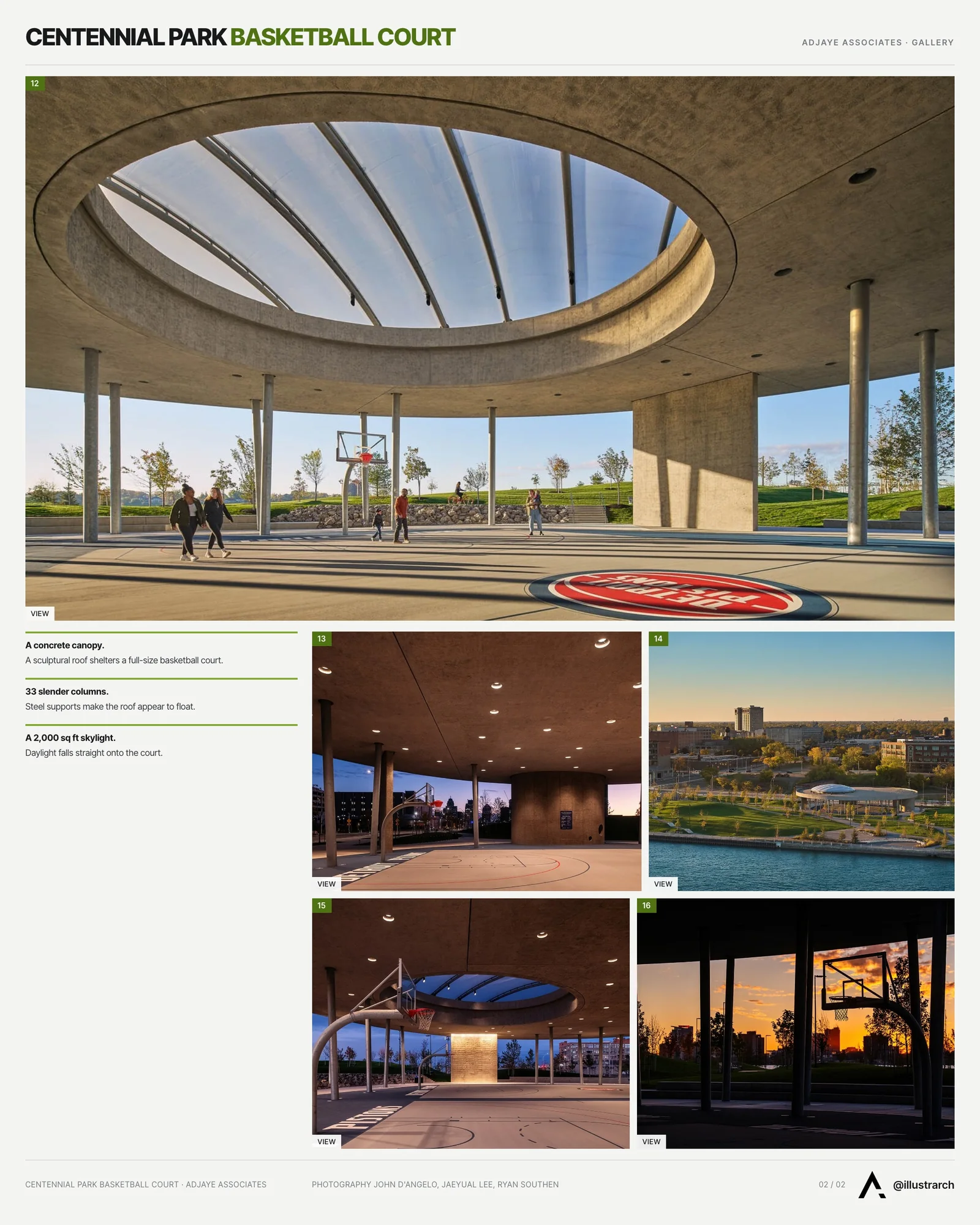
At the architectural core of the basketball experience stands the William Davidson Sport House, designed by Adjaye Associates. This 28,000-square-foot pavilion houses a full-size basketball court beneath a sculptural concrete canopy, giving the park a strong architectural identity without overwhelming the landscape.
Supported by 33 slender steel columns, the roof appears to float lightly over the court. Above, an expansive skylight of approximately 2,000 square feet floods the space with natural daylight, reducing reliance on artificial lighting and establishing a direct connection to the sky. The court, marked as a Detroit Pistons regulation-size court, is usable day and night, throughout all seasons, reinforcing the pavilion’s role as a truly public amenity.
Flexibility Between Indoors and Outdoors
A defining feature of the Sport House is its adaptability. The pavilion is conceived as a flexible indoor, outdoor structure, capable of shifting between open-air and enclosed conditions depending on weather and programming. This adaptability allows the basketball court to host casual pick-up games, organized tournaments, community events, and youth programs without being limited by seasonal constraints.
The enclosure system responds dynamically to climate and use, transforming the pavilion from a sheltered outdoor space in warmer months to a fully enclosed environment during colder seasons. This flexibility ensures continuous activation of the park and reinforces the principle of equitable year-round access.
Supporting Pavilions and Everyday Comfort
In addition to the main Sport House, Adjaye Associates designed two comfort pavilions distributed across the park. These structures provide restrooms and flexible community spaces, supporting both recreational use and large public gatherings. Their understated architectural language complements the main pavilion while maintaining a consistent civic presence throughout the site.
Together, these architectural elements establish a network of support spaces that allow the park to function not only as a recreational destination, but also as a venue for festivals, neighborhood events, and informal social encounters.
Basketball as Urban Culture and Social Connector
Basketball holds a deep cultural resonance in Detroit, extending far beyond organized sport. By placing a prominent, high-quality basketball court at the heart of a major waterfront park, the project recognizes sport as a social infrastructure, a catalyst for gathering, mentorship, and intergenerational exchange.
The court is not isolated or fenced off as a specialized facility. Instead, it is embedded within a broader landscape of movement and leisure, where spectators, passersby, and participants coexist. This openness transforms the basketball court into a public stage, where daily activity contributes to the life and visibility of the park.
Architecture Shaped by Community Input
What distinguishes Ralph C. Wilson Jr. Centennial Park, and its basketball facilities in particular, is the depth of public involvement behind its design. Community feedback influenced decisions ranging from programming priorities to spatial openness and accessibility. The result is an environment that feels locally owned rather than imposed, reinforcing trust between civic institutions and residents.
This participatory approach ensures the basketball court is not a symbolic gesture, but a genuinely used and valued asset, one that responds to real patterns of play, gathering, and celebration.
A New Model for Waterfront Public Space
The Basketball Court at Ralph C. Wilson Jr. Centennial Park exemplifies how architecture, landscape, and social engagement can converge to reshape urban space. Adjaye Associates’ sculptural yet restrained pavilion, combined with MVVA’s resilient landscape framework, creates a setting where recreation becomes civic life.
By transforming an industrial relic into a place of movement, play, and connection, the project strengthens Detroit’s relationship with its river and affirms public space as a cornerstone of urban renewal. In doing so, the basketball court becomes more than a sports facility, it becomes a symbol of shared ownership, resilience, and collective future on the waterfront.
Photography: John D’Angelo, Jaeyual Lee, Ryan Southen Photography


BIG Builds a Temporary City in Madrid Designed to Be Taken Apart
Bjarke Ingels Group turned a 185,000 square metre Madrid venue into Macondo...
 illustrarch Editoral Team2 Mins read

Xinhepu Historical and Cultural Precinct Core Area Enhancement Project by Atelier cnS
The Xinhepu Historical and Cultural Precinct Core Area Enhancement Project by Atelier...
Begum Gumusel4 Mins read
DC Alexander Park by Brooks + Scarpa Architects
Explore the redesign of DC Alexander Park by Brooks + Scarpa Architects,...
Begum Gumusel3 Mins read

Suan San Pocket Park by Shma Company Limited
Suan San Pocket Park in Bangkok transforms a derelict riverside site into...
Begum Gumusel3 Mins read


Leave a comment