

What Is Organic Architecture? Principles, History, and Iconic Examples
Organic architecture is a design philosophy where buildings grow from their site like a plant grows from soil. This guide covers Frank Lloyd Wright's founding principles, key examples like Fallingwater and the Guggenheim, and how modern organic architecture continues to shape sustainable design today.
 Furkan Sen10 May 202613 Mins read61
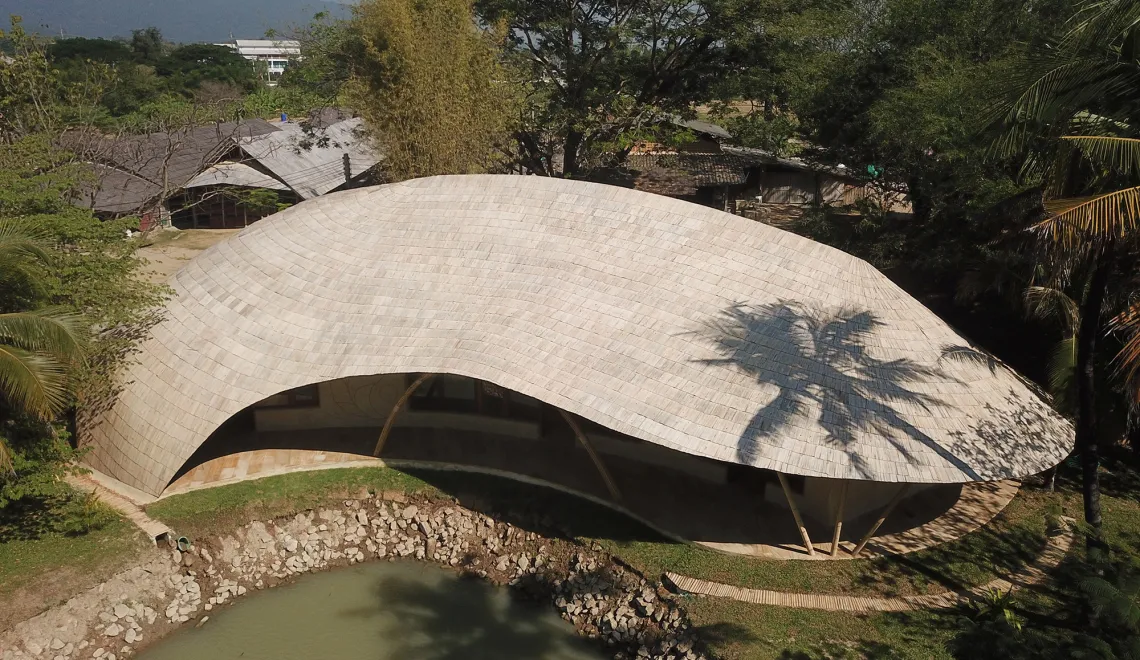
Table of Contents Show
Organic architecture is a design philosophy that calls for buildings to grow from their site rather than be placed upon it, integrating structure, materials, landscape, and human use into a single unified composition. Coined by Frank Lloyd Wright in 1908, the approach treats nature as a guide for proportion, materials, and spatial logic, and continues to shape sustainable and biophilic design today.
Walk into a Frank Lloyd Wright building and the first thing you notice is what the building is not doing. It is not announcing itself. It is not competing with the trees, the rocks, or the slope of the land. The building seems to belong, the way a stand of pines belongs to a hillside. That impression is not accidental, and it is not just an aesthetic effect. It is the practical outcome of a specific design philosophy that Wright began articulating more than a century ago and that still shapes how thoughtful architects work in 2026.
This guide explains what organic architecture really is, where the term came from, what its core principles look like in practice, how it differs from styles people often confuse it with, and how modern organic architecture continues to influence residential and institutional design today.
What Is Organic Architecture?
Organic architecture is a design philosophy that promotes harmony between human habitation and the natural world. Buildings are designed to integrate with their site, materials, and use, so that structure, surroundings, and inhabitants form a single coherent whole. The term was coined by Frank Lloyd Wright in 1908, as a refinement of his mentor Louis Sullivan’s idea that “form follows function.”
The simplest organic architecture definition comes from Wright himself: a building should grow from its site the way a plant grows from soil. That metaphor is doing a lot of work. It rejects the idea of architecture as an object dropped onto a piece of land. It also rejects the idea of architecture as a “style” you can apply, like wallpaper, regardless of context. Wright went further than Sullivan and replaced “form follows function” with “form and function are one,” arguing that the two are not cause and effect but a single unified expression.
The Frank Lloyd Wright Foundation describes the approach as a relationship in which architecture and its surrounding environment are integrated into an organic whole. That phrasing matters. The word “organic” here does not mean curved, plant-shaped, or made of natural materials. It refers to the way the parts of a building relate to each other and to the site, the same way the parts of a living organism relate to each other and to their environment.
💡 Pro Tip
When designing in the spirit of organic architecture, start with a long site visit before sketching anything. Map the sun path, prevailing winds, mature trees, drainage lines, and views you want to keep or screen. The design decisions that follow will be far stronger if the site has already done most of the talking.
Where Did the Term Come From?
Wright first used “organic” to describe his work in a 1908 essay collection titled In the Cause of Architecture, published in Architectural Record. He returned to the idea throughout his career, eventually delivering four lectures at the Royal Institute of British Architects in London in 1939 that were later compiled into the book An Organic Architecture. By 1957, two years before his death, he summarized his approach in A Testament, an essay collection that laid out nine principles he believed defined the new architecture.
The Frank Lloyd Wright organic architecture vocabulary did not appear out of nowhere. Wright trained under Louis Sullivan in Chicago in the late 1880s, and Sullivan’s slogan “form follows function” became the rallying cry of modern architecture. Wright respected the slogan but found it incomplete. To him, function and form were not sequential. They emerged together, the way a tree’s structure and its biological function emerge together. That subtle revision is the conceptual seed of organic architecture.
The term has also been used by other architects with different emphases. Hugo Häring, Hans Scharoun, and Rudolf Steiner in Europe pursued their own versions, often with more sculptural, expressionist results. Alvar Aalto in Finland developed a quieter, material-driven version rooted in regional landscape and craftsmanship. So when people use “organic architecture” today, it is worth checking which lineage they mean.
The Core Principles of Organic Architecture
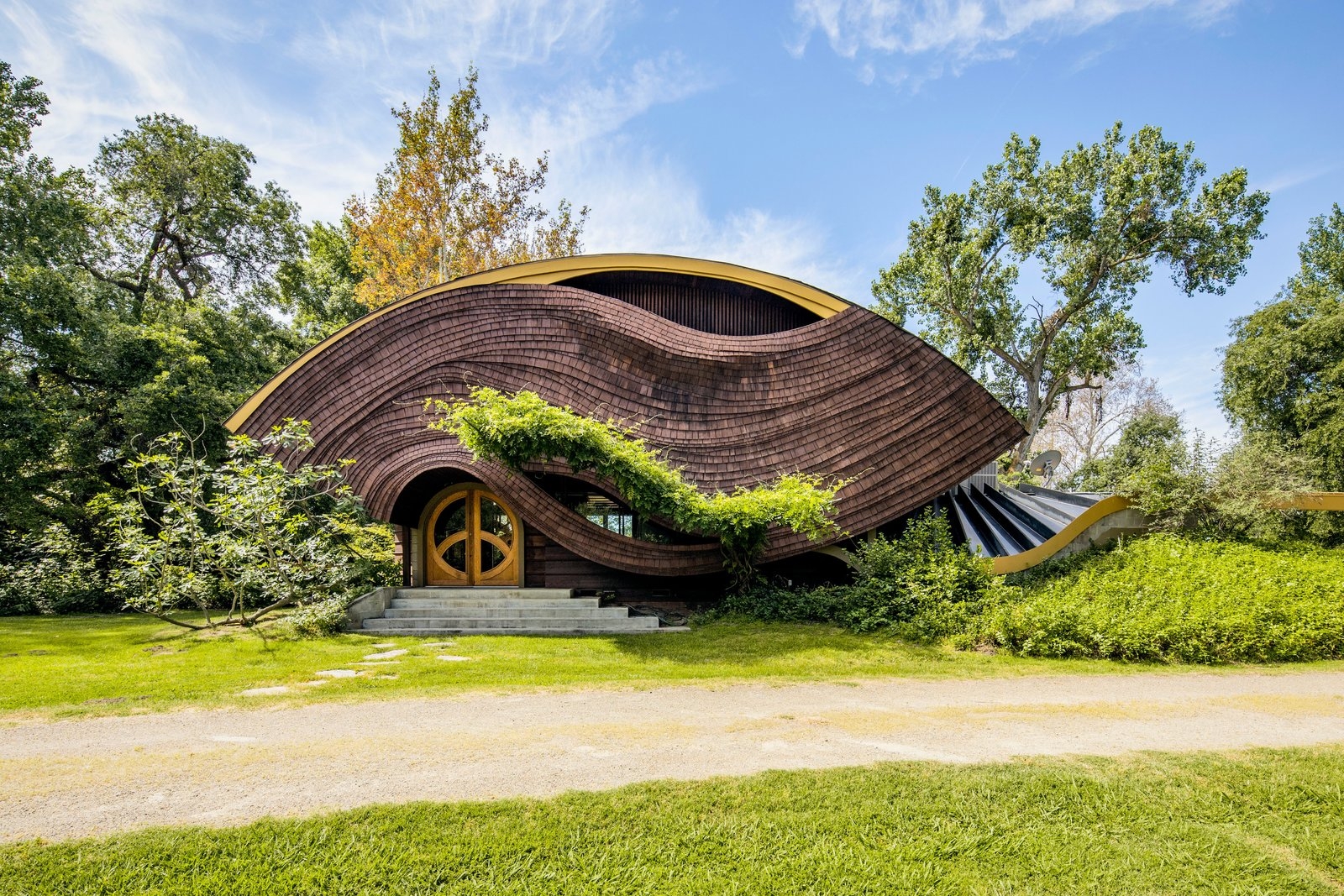
Wright never reduced his philosophy to a single tidy checklist, but a fairly stable set of principles runs through his writings and his built work. These are the ideas that turn a building from a neutral container into an organic whole.
1. Site Is the Starting Point
A building should respond to its specific site rather than ignore it. That means responding to topography, climate, orientation, vegetation, and the materials available nearby. Wright’s Prairie Houses in the American Midwest stretch horizontally to echo the flat horizon. Taliesin West in Arizona uses local desert rock to anchor the building to its sun-baked landscape. The site does not just receive the building. It shapes it.
2. Materials Should Be Honest
Stone is treated as stone, wood as wood, concrete as concrete. Each material’s properties should determine how it is used, not be hidden behind decorative finishes. At Fallingwater, Wright used Pottsville sandstone quarried directly on the property, so the masonry walls read as a continuation of the existing rock outcrops in the stream bed below.
3. Form and Function Are One
Spatial planning, structure, and use should arise from a single design idea rather than be reconciled after the fact. The Guggenheim Museum’s spiral ramp is the gallery, the circulation, and the structural concept simultaneously. You cannot remove one and keep the others.
4. Spaces Flow Into One Another
Organic architecture rejects the room-as-box approach. Walls become partial, ceilings change height to define zones, and interior spaces open into one another and to the outdoors. The Robie House (1910) in Chicago is the canonical example, with its long horizontal sight lines and broad overhanging eaves dissolving the boundary between living room and porch.
5. Ornament Grows from the Structure
Decoration, when present, should emerge from the construction itself rather than be applied as a separate layer. The art glass windows in Wright’s Prairie Houses are not added afterward. They are part of how the structural rhythm of the building expresses itself.
6. The Human Scale Governs Everything
Ceiling height, corridor width, door placement, and window sill height should all be calibrated to the human body. Wright was famously short and his buildings sometimes show it, but the principle is sound: architecture is for people first.
🎓 Expert Insight
“No house should ever be on a hill or on anything. It should be of the hill. Belonging to it. Hill and house should live together each the happier for the other.”
Frank Lloyd Wright, An Autobiography
This single sentence captures the central conviction behind every Wright project, from Taliesin to Fallingwater. The building is never the figure and the landscape never the ground. They are designed and read as one continuous thing.
Iconic Organic Architecture Examples
The clearest way to understand organic architecture is to look at the buildings that defined it. Each of the following projects illustrates the principles above in a different way, and together they show why Wright’s ideas spread so widely.
Fallingwater (1937), Mill Run, Pennsylvania
Fallingwater is the most cited example of Frank Lloyd Wright organic architecture, and for good reason. Built for the Kaufmann family on a wooded site at Bear Run in southwestern Pennsylvania, the house sits directly above a waterfall rather than beside it. Reinforced concrete cantilevers extend from a central stone core, and locally quarried Pottsville sandstone ties the structure visually to the rock formations in the stream below. The American Institute of Architects has called it the best all-time work of American architecture, and in 2019 it was inscribed on the UNESCO World Heritage List along with seven other Wright buildings.
The Robie House (1910), Chicago, Illinois
The Robie House is the defining work of Wright’s Prairie Style, the regional movement that applied organic principles to Midwestern domestic architecture. Long horizontal lines, deep overhanging eaves, an open central plan, and bands of art glass windows extend the building into its flat suburban context rather than fight with it.
The Solomon R. Guggenheim Museum (1959), New York
The Guggenheim demonstrates that organic architecture is not limited to natural settings. In a dense Manhattan block, Wright designed a single continuous spiral ramp that carries visitors past the artwork in one unbroken sequence. The exhibition space, the structure, and the visitor’s experience are governed by the same coherent geometric idea.
Taliesin West (1937), Scottsdale, Arizona
Wright’s winter home and studio uses desert masonry walls made from local rocks set in concrete, with a translucent canvas roof originally chosen for the way it filtered Arizona light. Today it is the headquarters of the Frank Lloyd Wright Foundation and is also UNESCO World Heritage listed.
The Sydney Opera House (1973), Sydney, Australia
Jørn Utzon was strongly influenced by Alvar Aalto and is often associated with the broader organic tradition even though he did not use the label himself. The Opera House’s sail-like shells respond to Sydney Harbour and to maritime culture, and the building reads as if it grew from the headland rather than being placed on top of it.
🏗️ Real-World Example
Thorncrown Chapel (Eureka Springs, Arkansas, 1980): Designed by E. Fay Jones, a former apprentice of Wright, this 48-foot-tall wooden chapel uses 425 windows and a lattice of pine beams to dissolve the line between worship space and surrounding Ozark forest. The chapel was selected by the American Institute of Architects in 2006 as the fourth most important American building of the twentieth century, showing that organic principles can produce work that rivals the master’s own.
What Organic Architecture Is Not
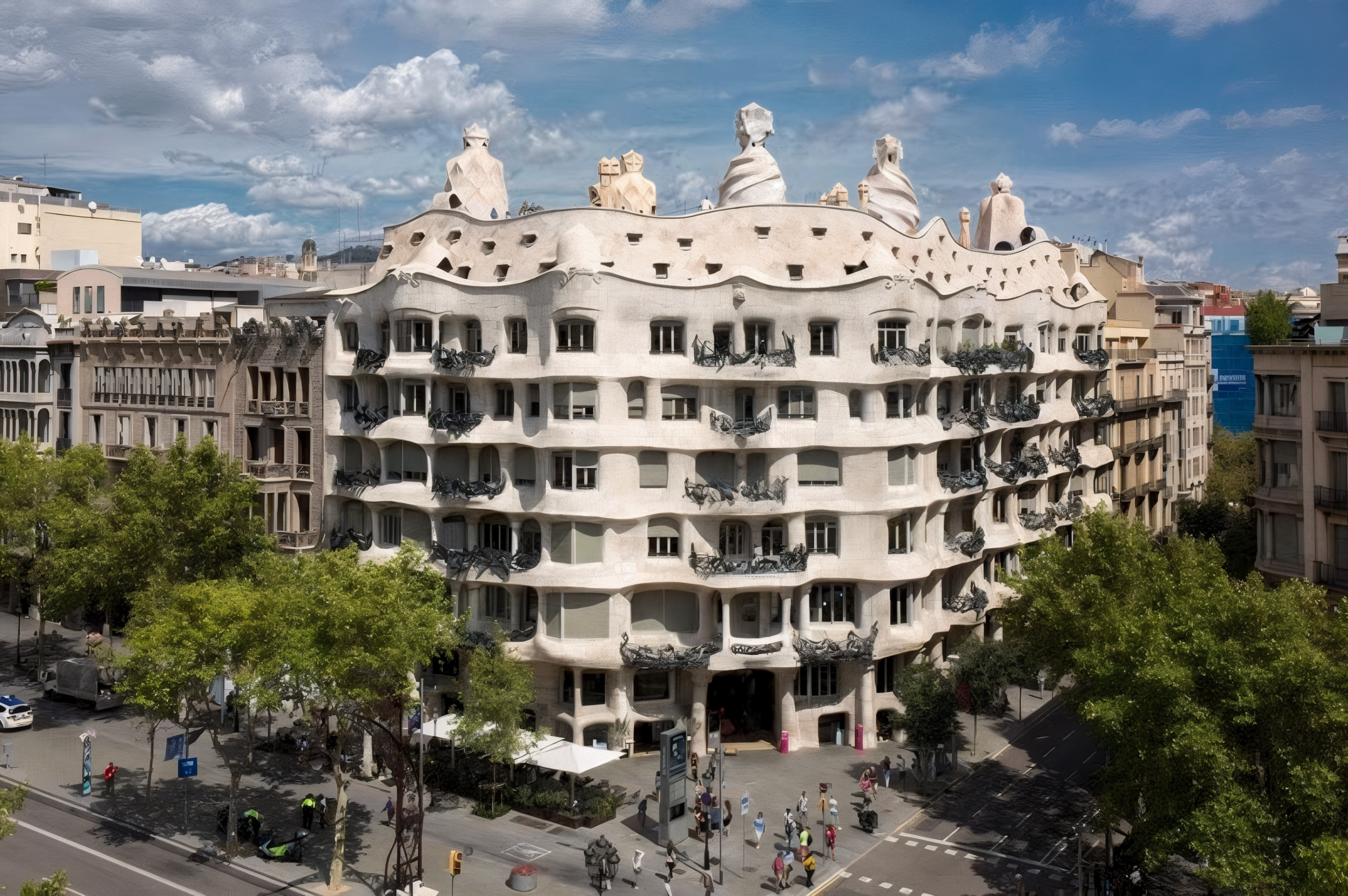
One of the most common confusions in architectural writing is to treat any curved, plant-shaped, or sculptural building as “organic.” That is a category error. Curved walls and biomorphic forms can appear in organic architecture, but they do not define it. Many strictly geometric Wright buildings, including the Robie House and parts of the Guggenheim, are organic in the philosophical sense, even though they include almost no curves.
It is also worth distinguishing organic architecture from a few related but separate ideas, because the terms get used loosely in popular media.
⚠️ Common Mistake to Avoid
Many students and practitioners confuse organic architecture with biomorphic design, assuming that curved walls or plant-shaped forms automatically qualify. They do not. Wright’s organic philosophy is structural and spatial, not cosmetic. The Guggenheim’s spiral ramp is organic because the entire spatial experience grows from a single coherent geometric idea, not because the ramp resembles a nautilus shell.
Organic Architecture vs. Biomimicry
Biomimicry copies specific structural strategies found in nature, such as termite-mound ventilation in the Eastgate Centre in Harare or honeycomb geometries in lightweight structural panels. Organic architecture is broader and more philosophical. It uses nature as an instructor for proportion, integration, and material logic, but it does not require literal imitation of biological systems.
Organic Architecture vs. Biophilic Design
Biophilic design is a research-driven approach to introducing natural elements such as daylight, plants, water, and views of greenery into interiors to improve occupant wellbeing. Biophilic design is often a downstream consequence of organic principles, but it is a narrower toolkit focused on health and experience rather than the building’s overall relationship to its site.
Organic Architecture vs. Sustainable Architecture
Sustainable architecture is concerned with measurable performance: energy use, embodied carbon, water consumption, and life-cycle impact. Many organic buildings perform well by these metrics because site response and material honesty tend to produce efficient buildings, but performance is a side effect rather than the goal. Wright was designing in this spirit decades before sustainability became a formal discipline.
Modern Organic Architecture: How the Idea Evolved
Wright’s followers and successors carried organic architecture in several directions, and the modern organic architecture you see today owes as much to them as to Wright himself.
John Lautner, a Wright apprentice in the 1930s, took the philosophy to mid-century California, designing residences such as the Chemosphere House and the Sheats-Goldstein Residence in Los Angeles. His work emphasized flowing interior volumes, dramatic structural cantilevers, and uninterrupted views of the surrounding landscape.
Bruce Goff built unconventional houses in Oklahoma and the Midwest that pushed the philosophy into more experimental territory, often using salvaged or unexpected materials in highly site-specific compositions.
E. Fay Jones, a Goff student and later a Wright apprentice, became known for chapels and houses in Arkansas that used wood structure to mediate between human enclosure and forest landscape. The Thorncrown Chapel and the Pinecote Pavilion are widely studied examples.
Bart Prince, who trained under Goff, has continued the tradition into the present, often designing houses that begin with intensive site analysis and emerge as highly customized responses to terrain and light.
Helena Arahuete, who worked alongside Lautner for 23 years before establishing her own firm in 1994, is one of the few architects still practicing strictly according to organic principles in 2026, adapting them to contemporary technologies and material systems.
In Europe, the organic line passes through Alvar Aalto’s Finnish work, including the Viipuri Library and Villa Mairea, into figures like Hans Scharoun, whose Berlin Philharmonie demonstrates how organic spatial logic can scale up to civic and cultural buildings.
The modern organic architecture movement is also visible at urban scale. Stefano Boeri’s Bosco Verticale in Milan layers thousands of trees and plants across two residential towers, treating vegetation as a working part of the building rather than decoration. Many of today’s nature-integrated towers and pavilions draw directly on the vocabulary Wright established more than a century ago.
How Organic Architecture Compares to Other Approaches
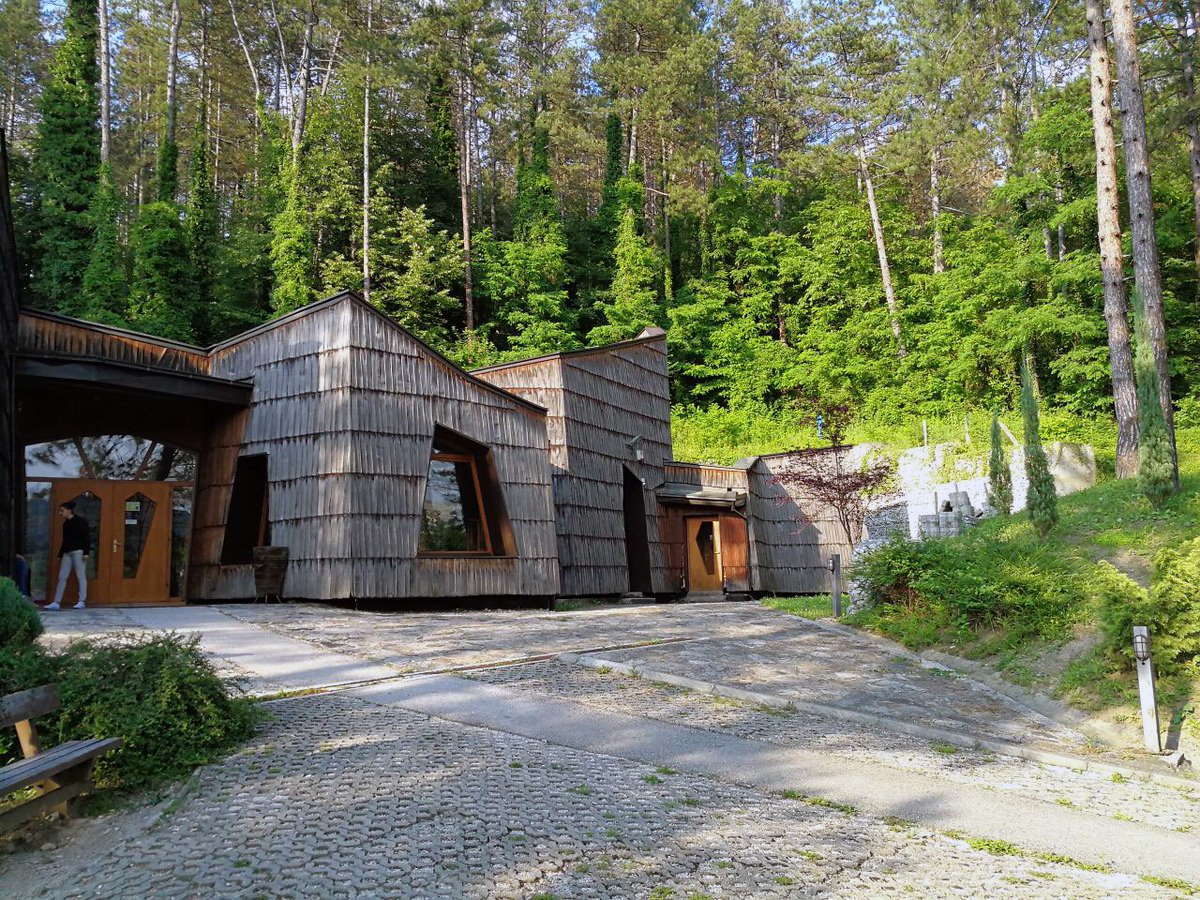
Because organic architecture often gets blurred with sustainable, biophilic, and biomimetic design, the table below sets out where each approach focuses and how they overlap.
Comparing Organic, Biophilic, Biomimetic, and Sustainable Architecture
| Approach | Primary Focus | Typical Tools | Measured By |
|---|---|---|---|
| Organic Architecture | Building as a unified whole tied to its site | Site analysis, local materials, integrated form and function | Coherence of building, site, and use |
| Biophilic Design | Occupant wellbeing through nature contact | Daylight, views, greenery, water, natural textures | Health, stress, productivity outcomes |
| Biomimicry | Copying biological structural strategies | Pattern analysis, parametric modeling, material innovation | Performance against the natural reference |
| Sustainable Architecture | Reducing environmental impact | Energy modeling, low-carbon materials, certification systems | Quantitative metrics, often via LEED or similar |
The categories overlap. A serious modern organic project often draws on biophilic strategies for interiors, biomimetic ideas for structure, and sustainability metrics for verification. The difference lies in what comes first and what the building is fundamentally trying to do.
Organic Architecture Homes Today
Most clients searching for “organic architecture homes” are not commissioning a Fallingwater. They want a house that feels rooted in its site, uses honest materials, brings the outdoors in, and ages gracefully. That is a perfectly reasonable expression of the philosophy.
In practice, modern organic architecture homes share several recurring traits:
- Strong site response: the plan reacts to the slope, the trees, and the views, rather than imposing a stock floor plan.
- Local and natural materials, including stone, timber, brick, rammed earth, or concrete derived from local sources, with finishes that show the material rather than hide it.
- Continuous indoor-outdoor flow through large openings, covered porches, courtyards, and decks that extend living space into the landscape.
- Daylight used as a design tool, with window placement calibrated to sun path rather than to elevation symmetry.
- Roofs that work with the climate, such as wide overhangs, pitched roofs sized for regional weather, and sometimes living green roofs.
- Honest structural expression, where beams, columns, and joinery are visible rather than concealed and contribute to the room’s character.
The “organic modern” or “organic modernism” label has also become a popular interior design term in recent years. In that usage, the focus tends to be on warm neutral palettes, curved silhouettes, natural materials, and biophilic touches inside otherwise modern envelopes. That is a related but more cosmetic interpretation of the philosophy. It can produce beautiful interiors, but it is worth understanding that Wright’s idea was always about the whole building, not just the surfaces.
💡 Pro Tip
If you are briefing an architect on an organic-inspired home, resist the urge to send only interior mood boards. Share photos of the actual site at different times of day, talk about how you want to move through the day in the house, and discuss which existing trees or rock features must stay. Decisions made at this stage have far more influence on the result than any interior finish selection.
Why Organic Architecture Still Matters in 2026
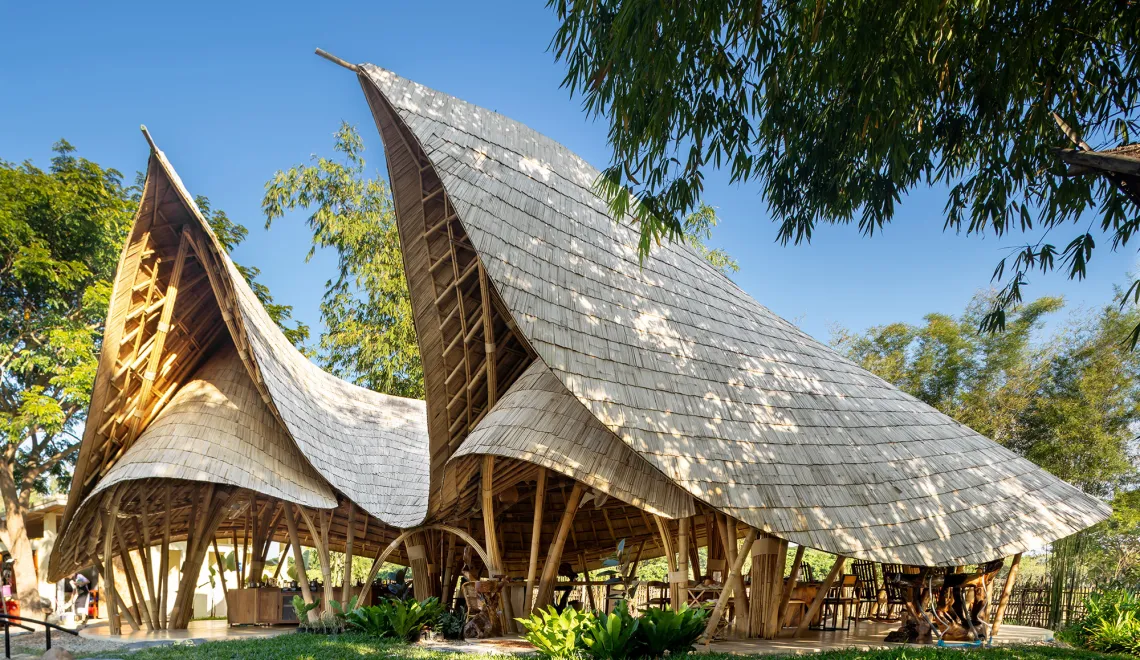
You could argue that organic architecture is more relevant now than at any point since Wright introduced the term. Climate-responsive design, embodied carbon accounting, regional material sourcing, and the renewed interest in vernacular construction all align with principles he was articulating in 1908. The Frank Lloyd Wright Foundation continues to develop educational programs around these ideas, and the eight Wright buildings inscribed on the UNESCO World Heritage List in 2019 are now studied internationally as templates for site-responsive design.
The philosophy also offers a counterweight to the generic global aesthetic that dominates much commercial development. A glass office tower in Dubai, Toronto, and Singapore can look almost identical, but a building designed in the spirit of organic architecture would inevitably look different in each place because it would respond to a different site, climate, and material context. That regional specificity is increasingly valued by clients and communities tired of architecture that could be from anywhere.
For students and practicing architects, the takeaway is not to imitate Wright. He was clear that imitation would be the opposite of organic. The takeaway is to internalize the discipline of starting with the site, treating materials honestly, integrating form with function, and designing with the human scale in mind. Those habits travel well into contemporary work with biomaterials, parametric design, and adaptive reuse.
✅ Key Takeaways
- Organic architecture is a design philosophy, not a style. It calls for buildings to grow from their site as a unified whole rather than be placed upon it.
- Frank Lloyd Wright coined the term in 1908 and refined it across more than 50 years of writing and built work.
- The core principles include site response, material honesty, unity of form and function, flowing interior space, and human-scaled design.
- Fallingwater, the Robie House, the Guggenheim, Taliesin West, and the Sydney Opera House remain the defining examples.
- Organic architecture is distinct from biophilic, biomimetic, and sustainable design, although the four often overlap in practice.
- Modern organic architecture homes apply these principles at residential scale, while contemporary architects continue to extend the tradition into urban and institutional projects.
Final Thoughts
Organic architecture started as one architect’s attempt to articulate why his buildings felt different from the styles around him. More than a century later, it has outlived nearly every movement that competed with it. The reason is simple. The principles describe a sensible, durable way to design buildings that last, fit their place, and serve the people who use them. Whether the next great organic architecture project is a private residence carved into a hillside, a museum on a tight urban block, or a vertical forest rising out of a dense city, the underlying logic will be the same. The building belongs where it is. It could not be anywhere else. That is the test Wright proposed, and it is still the right one.
For deeper reading on the founding philosophy, the Frank Lloyd Wright Foundation maintains the most authoritative biography and archive of his work, and the Solomon R. Guggenheim Foundation’s teaching materials offer a clear introduction to how Wright applied the philosophy at urban scale. The UNESCO inscription of eight Wright buildings remains the official international recognition of his contribution to twentieth-century architecture, and PBS’s documentary essay on organic architecture traces the philosophy across his seventy-year career.
If you want to see how organic principles connect to current practice, our coverage of Frank Lloyd Wright’s organic philosophy and the buildings that defined it, the contrast between high-tech and organic architecture, the role of biophilic design in contemporary buildings, and the arc of Wright’s architectural career all extend the picture sketched here.





Architecture in Geometry: From Basic Shapes to Complex Forms
Geometry gives architecture its order. This breakdown shows how basic shapes like...
Furkan Sen7 Mins read

Best Portable Monitors for Architects: 2026 Buying Guide
Portable monitors let architects keep a dual-screen workflow on site visits, in...
Furkan Sen7 Mins read
Why Custom Kitchens Are Becoming a Must-Have in Modern Homes
Table of Contents Show Designed for the Reality of NYC LivingMaximizing Every...
 illustrarch Editoral Team2 Mins read
Designing Physical Brand Touchpoints for Architecture Studios
Table of Contents Show Think Beyond the LogoMatch the Object to the...
illustrarch Editoral Team5 Mins read


Leave a comment