

Architecture and Nature: How Nature Inspires Building Design
Discover how architecture draws inspiration from nature through organic forms, sustainable materials, biomimicry, and biophilic design. Explore iconic nature-inspired buildings from Fallingwater to Bosco Verticale and the latest trends shaping.
 Elif Ayse Sen30 January 202611 Mins read1.4k
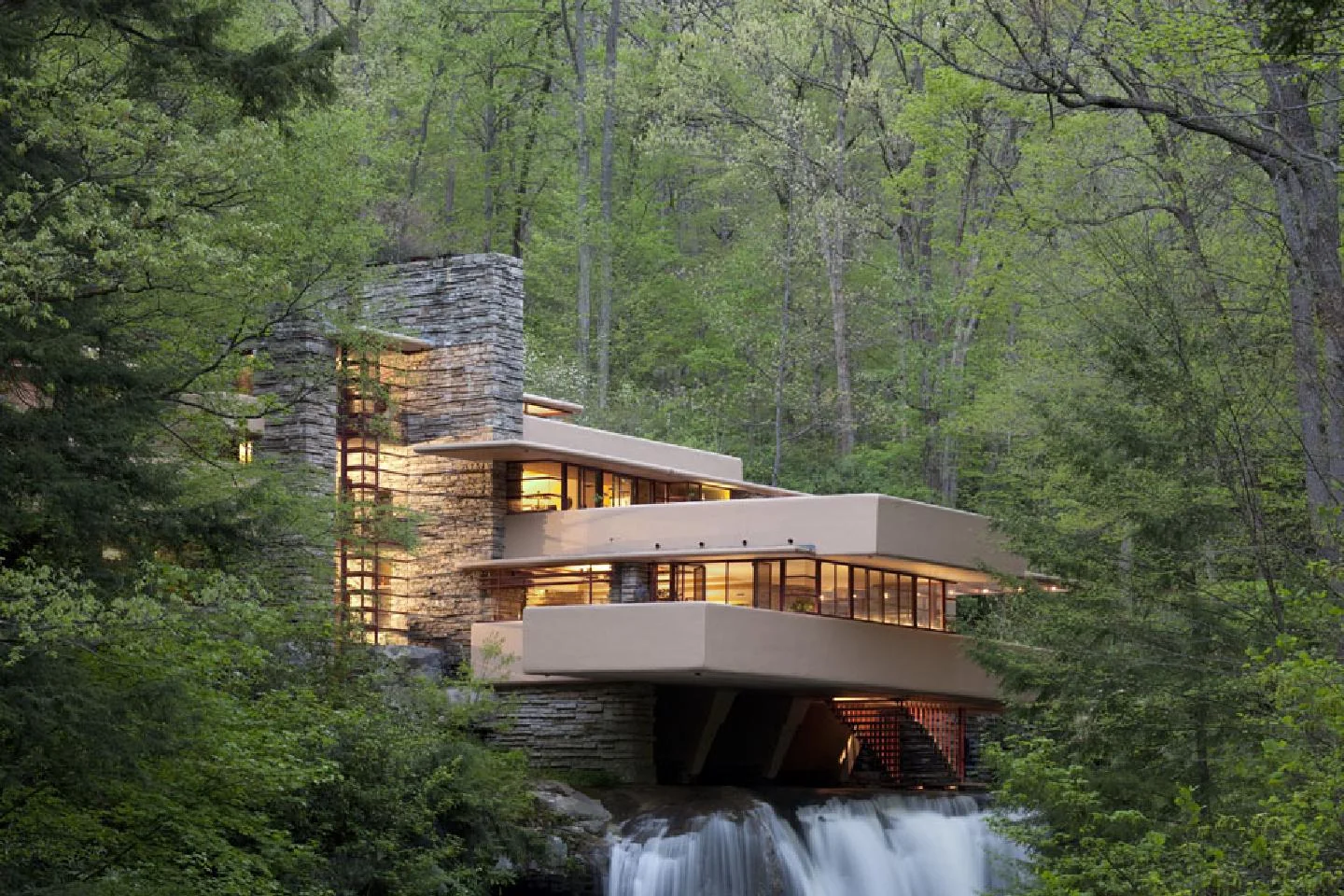
Table of Contents Show
Nature inspired architecture is a design approach that draws directly from natural systems, organic forms, and biological processes to create buildings that perform better, use fewer resources, and connect people to the living world around them. From termite-mound ventilation to tree-branch column structures, architects have found that nature already holds tested answers to the problems buildings face, structural efficiency, climate control, material durability, and human well-being.
What Is Nature Inspired Architecture?
Nature inspired architecture refers to any design practice that takes meaningful cues from nature, whether through the physical appearance of organic forms, the structural logic of natural systems, or the environmental performance of biological processes. It spans several overlapping fields: biomimicry in architecture, biophilic design, organic architecture, and nature integrated architecture. What unites them is the same starting point: before the sketch begins, designers ask what the natural world has already figured out.
🔢 Quick Numbers
- 40% of global raw material consumption and total energy demand comes from the building sector (MDPI Sustainability, 2025)
- 30% of worldwide greenhouse gas emissions are generated by buildings, predominantly CO2 (MDPI Sustainability, 2025)
- Up to 90% energy reduction achieved by the Eastgate Centre in Harare through passive cooling modeled on termite mounds (Mick Pearce, architect)
Why Do Architects Look to Nature for Inspiration?
The bond between architecture and nature and human civilization is as old as building itself. Early humans constructed shelters using branches, leaves, and animal hides, the most basic form of natural architecture. The nature of architecture is fundamentally about creating shelter that serves human needs, and nature provides the most efficient models. Whether it is the structural integrity of a honeycomb, the ventilation of a termite mound, or the aerodynamic shape of a bird in flight, nature offers blueprints that architects continue to study and apply.
Understanding how the environment has changed architecture over time reveals a fascinating evolution. Climate, geography, and local ecosystems have always dictated building forms. Today, nature architects use advanced computational tools to analyze environmental data and design buildings that respond dynamically to their surroundings, a new chapter in the long history of architecture inspired from nature.
Natural Materials in Architecture: Wood, Stone, and Beyond
One of the most significant ways nature has influenced architecture is through natural materials. For centuries, architects used stone, wood, and clay to build in harmony with their surroundings. Sustainable eco-friendly materials like bamboo, cork, and recycled composites have gained renewed interest.
One of the primary reasons that natural materials have been used in architecture natural design is their ready availability. Stone, wood, and clay are abundant in many regions, making them logical building choices. Stone withstands weathering and erosion; wood has served construction for centuries. The growing field of architecture nature wood design continues to push the boundaries of what timber structures can achieve.

Natural materials carry a unique aesthetic that is difficult to replicate synthetically. Wood grain adds warmth; stone patterns create timelessness. Modern innovations include cross-laminated timber (CLT), rammed earth, and mycelium composites. Recent advances in timber construction technology demonstrate that engineered wood can rival steel and concrete in structural performance.
💡 Pro Tip
When specifying cross-laminated timber panels for large-span structures, always account for a 1-2% moisture expansion tolerance in your detailing. Overlooking this during the design phase frequently causes warping and on-site adjustments that push project timelines back by weeks. Verify the moisture content of panels at delivery against the design specification before installation begins.
Sustainable Material Selection for Nature-Inspired Buildings
When selecting materials for architecture with nature, architects increasingly consider the full lifecycle impact. According to a 2025 Sustainability study published by MDPI, the building sector consumes 40% of raw materials and total energy demand globally, while generating 30% of worldwide greenhouse gas emissions. Materials like bamboo and hempcrete represent the future of naturalistic architecture and nature-inspired buildings. For a broader look at sustainability strategies, see illustrarch’s guide to green architecture and sustainable future.
Organic Forms: Architecture Inspired by Nature’s Shapes
Nature’s forms have influenced building design profoundly. The curves of a seashell or the shape of a leaf have inspired architects to create buildings that mimic nature’s shapes. Frank Lloyd Wright was famous for his organic forms, such as the Guggenheim Museum’s curves. This approach, known as organic architecture, creates buildings in harmony with their natural surroundings.

Many contemporary architects continue to explore architecture inspiration nature through parametric design. Antoni Gaudí’s Sagrada Família remains one of the most powerful examples of architecture inspiration by nature, with forest-like columns derived from the study of trees and bones. Its final spire is expected to be completed in 2026. Firms like Zaha Hadid Architects and Studio Gang use digital modeling to push the boundaries of what nature buildings can look like.
Another striking case is the Sydney Opera House, designed by Jørn Utzon, whose iconic roof sections were derived from the geometry of a single sphere, a solution Utzon reached by studying how orange segments peel apart. The building stands as proof that nature’s geometry, when understood rather than merely copied, yields structural elegance.
Biomorphic Architecture: Designing with the Shapes of Living Things
Biomorphic architecture is the branch of nature-inspired design that borrows the look of living forms: shells, petals, bones, cells, wings, and the soft curves of the human body. The word joins the Greek bios (life) and morphe (form). As the Tate glossary of art terms explains, it came into use around the 1930s to describe the abstract, organic imagery of artists such as Joan Miró and Jean Arp. Architects later carried the same vocabulary into concrete, steel, and glass.
The useful distinction is between form and function. A biomorphic building evokes a living thing through its shape, while a biomimetic building copies how an organism works, for example how it cools itself or spreads loads. Many projects do both, but the two ideas are separate, and the difference changes how a design should be judged. Organic architecture, in the sense Frank Lloyd Wright used the term, is a third idea again: a building that grows out of its site and materials rather than one that resembles a creature.
Well-known examples of biomorphic architecture include:
- TWA Flight Center, New York (1962): Eero Saarinen’s terminal at JFK Airport uses thin concrete shells that read as a bird about to take off. The headhouse reopened as part of the TWA Hotel in 2019.
- Lotus Temple, New Delhi (1986): Fariborz Sahba’s Bahá’í House of Worship, pictured above, is formed by 27 free-standing marble-clad concrete petals arranged in three rings of nine around a central hall.
- Kunsthaus Graz, Austria (2003): Peter Cook and Colin Fournier wrapped this contemporary art museum in a curved skin of blue acrylic panels. Its shape earned it the nickname “Friendly Alien” and made it a reference point for blob architecture.
Biomorphic forms became far easier to build once designers adopted digital modeling and fabrication. Curved surfaces that once required hand-built timber formwork, as Saarinen’s shells did, can now be broken down into buildable panels with parametric software and cut by CNC machines. The design risk has not changed since the 1960s, though. A shape chosen only because it resembles a plant or animal can produce awkward interiors, expensive cladding, and difficult junctions. The strongest biomorphic buildings use the organic form to do real work, such as spanning a large hall, shaping daylight, or giving a civic building an identity people remember.
Biomimicry: How Does Nature Influence Building Design?
Biomimicry in architecture takes the concept of architecture from nature a step further by understanding and replicating natural systems and processes. The Eastgate Centre in Harare, Zimbabwe, designed by architect Mick Pearce, uses a passive cooling system modeled on termite mounds, reducing energy consumption by up to 90%. The Beijing National Aquatics Center draws its structure from soap bubble geometry. London’s Gherkin, designed by Foster + Partners, mimics the Venus flower basket sponge to optimize airflow. These examples demonstrate that nature and architecture can solve complex engineering challenges sustainably.
⚠️ Common Mistake to Avoid
A building with leaf-shaped windows is not necessarily biomimetic. True biomimicry in architecture is about function, not surface appearance. If a design borrows the look of a natural form without adopting the underlying system, how it manages heat, distributes loads, or moves water, it is organic aesthetics, not biomimicry. The distinction matters because functional biomimicry delivers measurable performance gains; decorative organic form does not.
🏗️ Real-World Example
BIQ House (Hamburg, Germany, 2013): The world’s first algae-powered building integrates bioreactor panels filled with freshwater algae into its south and west facades. The algae grow under sunlight to produce biomass that is harvested for biogas, while also providing dynamic solar shading. The facade adjusts its own density in response to light conditions, a self-regulating system with no mechanical control. Energy output from the algae layer supplements the building’s heating and hot water systems.
Architecture and Trees: Nature’s Structural Masterclass
The relationship between architecture and trees is profound. Trees have inspired architects from ancient Egyptian columns to Gaudí’s branching supports. Sou Fujimoto’s House of Music in Budapest incorporates living trees through the roof. Dendriform columns, which mimic tree branching, distribute loads efficiently, as seen in Stuttgart Airport. This focus on architecture and trees reflects a shift where nature and buildings coexist harmoniously.
Integration with Outdoor Spaces: Architecture in Nature
Nature has also shaped outdoor space design. Gardens, courtyards, and outdoor living areas have been common throughout history, but there is now renewed focus on seamlessly integrating indoor and outdoor spaces.
This approach, known as biophilic design, connects people with nature and promotes well-being. Natural landscaping materials, such as Kentucky bluegrass sod, enhance outdoor aesthetics while creating a more inviting atmosphere.
The natural climate of a region significantly influences outdoor space design. Buildings in hot climates feature shaded courtyards, while those in colder climates incorporate heating elements. Understanding how architecture in nature responds to local climate conditions is essential for energy-efficient design.
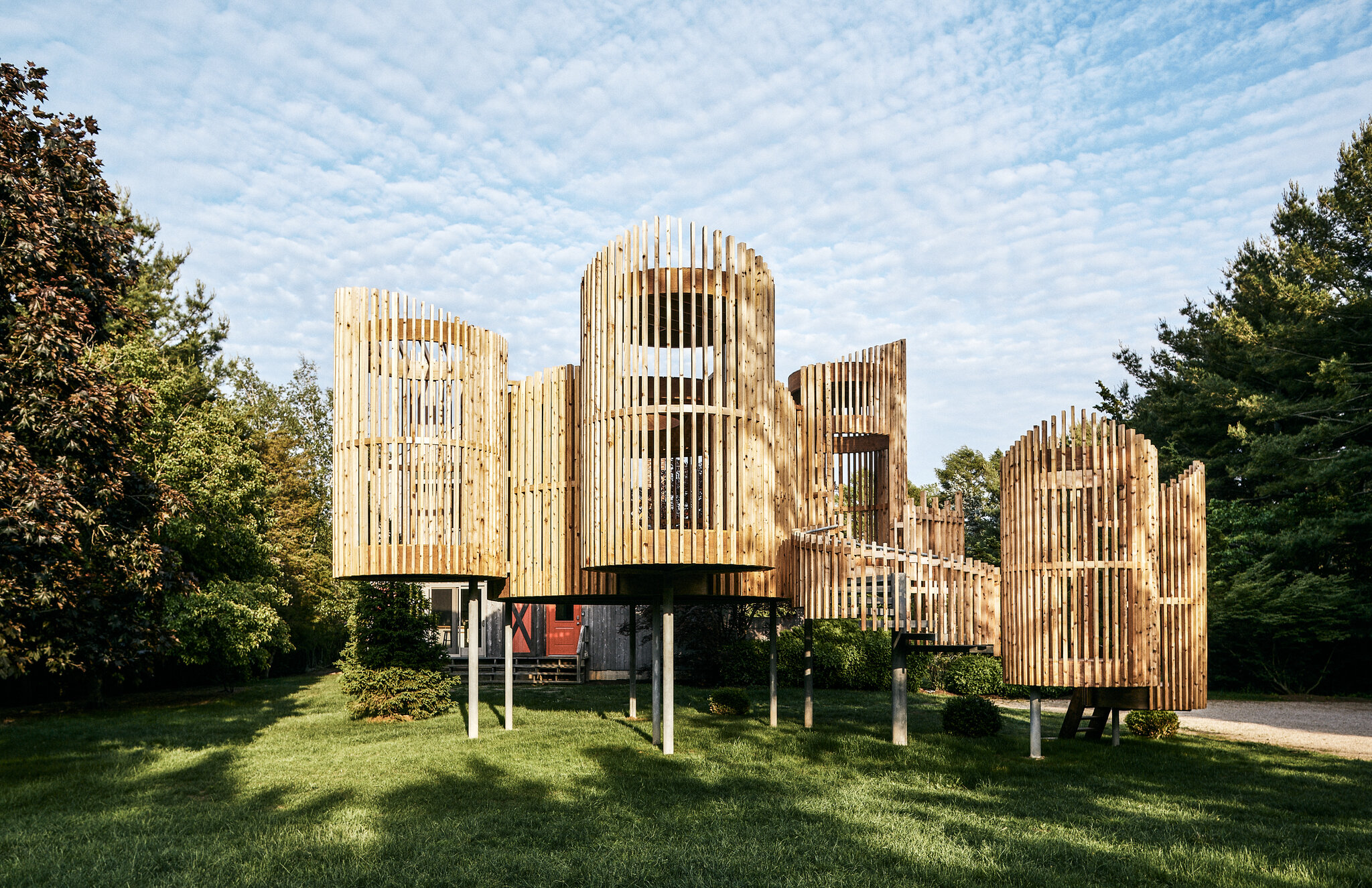
The natural features of a site, topography, vegetation, water, also shape outdoor design. A hillside building may use terraced gardens, while one near water may incorporate a deck or pier. This approach to architecture for nature ensures buildings enhance rather than disrupt surrounding ecosystems.
Biophilic Design: Bringing Nature Indoors
Biophilic interior design extends nature in architecture into the building itself. Natural elements, daylight, plants, water features, reduce stress and boost productivity. Research cited in the University of Michigan’s environmental psychology studies found that even a 10-minute exposure to a natural setting measurably improves cognitive function and lowers symptoms of depression. The Amazon Spheres in Seattle and Bosco Verticale in Milan are standout examples of architects in nature design. Nature integrated architecture is central to contemporary urban planning, with LEED certification rewarding biophilic elements. For a deeper look, illustrarch’s article on biophilic design in urban spaces covers practical applications across city-scale projects.
💡 Pro Tip
When adding biophilic elements on a limited budget, window placement delivers more return than any planted installation. Repositioning seating toward existing windows or adding light shelves to push daylight deeper into a floor plan costs far less than living walls, yet the occupant well-being benefits are comparable. Start with light and views before investing in vegetation systems.
Green Building: Architecture for Nature and Sustainability
The influence of nature on architecture is evident in green building. From green roofs to solar panels, architects design buildings that reduce environmental impact. The World Green Building Council tracks that the construction industry accounts for nearly 39% of global carbon emissions, making sustainable material and system choices one of the highest-leverage decisions in any project. Passive house standards, net-zero buildings, and Living Building Challenge certifications reflect this transformation. Institutions including the AIA and the RIBA now position ecological integration as a core professional responsibility, not an optional feature.
Nature has played an important role in shaping building design throughout history. From natural materials to outdoor spaces, architects have drawn architecture inspiration nature from the natural world. As environmental challenges intensify, nature architecture will only grow in importance.

Which Is an Example of the Influence of Nature on Architecture?
When people ask which is an example of the influence of nature on building design, these landmark buildings inspired by nature provide compelling answers:
Fallingwater (1939) by Frank Lloyd Wright: Built over a waterfall in Pennsylvania, Fallingwater is the most celebrated example of architecture in nature. Its cantilevered terraces and locally quarried stone walls make it appear as an organic extension of the landscape.
The Eden Project (2001) by Grimshaw Architects, Located in Cornwall, England, this complex houses plant species from around the world within geodesic dome structures inspired by soap bubbles and natural cellular patterns, a striking example of architecture inspired from nature.
Bosco Verticale (2014) by Stefano Boeri: These residential towers in Milan are covered with over 900 trees and 20,000 plants, demonstrating how architecture and nature can coexist in urban environments.
Singapore’s Gardens by the Bay (2012): The Supertree structures exemplify how nature buildings serve as both ecological infrastructure and public spaces.
The Gherkin, London (2003) by Foster + Partners: This skyscraper uses biomimicry inspired by the Venus flower basket sponge to achieve natural ventilation, exemplifying nature inspired architecture in commercial design.
Benin’s National Parliament (2025) by Kéré Architecture, Mirroring the African Palaver tree, this building uses natural ventilation and perforated facades, a recent example of architecture nature inspired design in new cultural contexts.
Sydney Opera House (1973) by Jørn Utzon: The roof shells were solved geometrically by studying the surface of a sphere, much as Utzon himself described the breakthrough as coming from peeling an orange. The result is one of the most recognizable examples of organic form in the built world.
📌 Did You Know?
The Eastgate Centre in Harare was designed with no conventional air conditioning or heating system. By replicating the passive cooling logic of African termite mounds, architect Mick Pearce achieved indoor temperatures within a narrow, comfortable range year-round. The building uses an estimated 90% less energy for climate control than a conventionally air-conditioned building of equivalent size, a result that no computational model alone could have reached; it came from studying how termites manage heat exchange in sub-Saharan conditions.
How Has the Environment Changed Architecture?
Buildings now account for roughly 40% of global energy consumption, prompting a real shift toward architecture for nature. Passive house standards, net-zero buildings, and Living Building Challenge certifications reflect this transformation. Environmental adaptation through architecture natural design is now a baseline expectation rather than a premium feature. Explore illustrarch’s coverage of sustainable future architecture for a detailed look at how these standards are reshaping practice globally.
Nature Inspired Architecture: Trends in 2025-2026
As urbanization intensifies, architecture and nature grows more critical. Regenerative design creates buildings that actively restore ecosystems rather than simply reducing damage. Bio-concrete that self-heals, algae facades generating biofuel, and mycelium panels grown to specification, symbiotic design now places buildings as active participants in natural systems rather than objects sitting within them.
The AIA and the International Living Future Institute promote frameworks pushing architects toward ecological integration. As computational tools advance, the optimization of architecture for nature continues to expand into territory that was not practically achievable a decade ago.
Recent projects confirm that nature inspired architecture is the defining direction of design in 2025 and 2026. MAD Architects’ Lucas Museum in Los Angeles and the Wadden Sea Centre in the Netherlands demonstrate that architecture with nature is now mainstream. As RIBA and leading institutions champion sustainability, the future of nature and buildings will be shaped by designs that genuinely learn from and give back to the natural world.
✅ Key Takeaways
- Nature inspired architecture spans biomimicry, organic form, biophilic design, and nature-integrated construction, they share the same starting point but operate at different levels of depth.
- True biomimicry delivers measurable performance gains (passive cooling, structural efficiency, natural ventilation) rather than just visual references to nature.
- Natural materials including CLT, rammed earth, bamboo, and mycelium composites now compete directly with conventional construction materials on structural and environmental performance.
- Biophilic design, daylight, plants, water, natural materials indoors, is supported by documented health and productivity benefits and is increasingly required by LEED and WELL certification standards.
- The building sector accounts for 30-40% of global carbon emissions and raw material consumption; nature-based design strategies are among the most direct levers available to reduce this impact.
- In 2025-2026, regenerative design has moved beyond sustainability to actively restore ecosystems, positioning buildings as contributors to natural systems rather than burdens on them.



Overlapping Concrete Walls and One Roof Shape a House in Okinawa
IGArchitects built Overlapping Spaces in Okinawa from reinforced concrete walls, columns and...
 illustrarch Editoral Team1 Mins read
Futuro House Production Revived in Finland After Decades-Long Hiatus
A Facebook listing for abandoned moulds led to the first new Futuro...
illustrarch Editoral Team3 Mins read

Building Your Dream Home in NSW: What You Should Know About Montgomery Homes
Montgomery Homes has been building across Sydney, Newcastle, the Hunter, Wollongong and...
illustrarch Editoral Team4 Mins read
Designing a Home Theater: Where Drapery Fits Into the Plan
In a media room the curtains are a performance layer, not decoration....
illustrarch Editoral Team3 Mins read


Leave a comment