

How to Present Your Work in an Architecture Portfolio Interview
Reaching the interview means your work earned a closer look, but presenting it live is a different skill from building it. This guide covers how to prepare your architecture portfolio interview, structure your walkthrough, present in person or online, and answer the questions employers ask.
 Furkan Sen2 July 20267 Mins read141
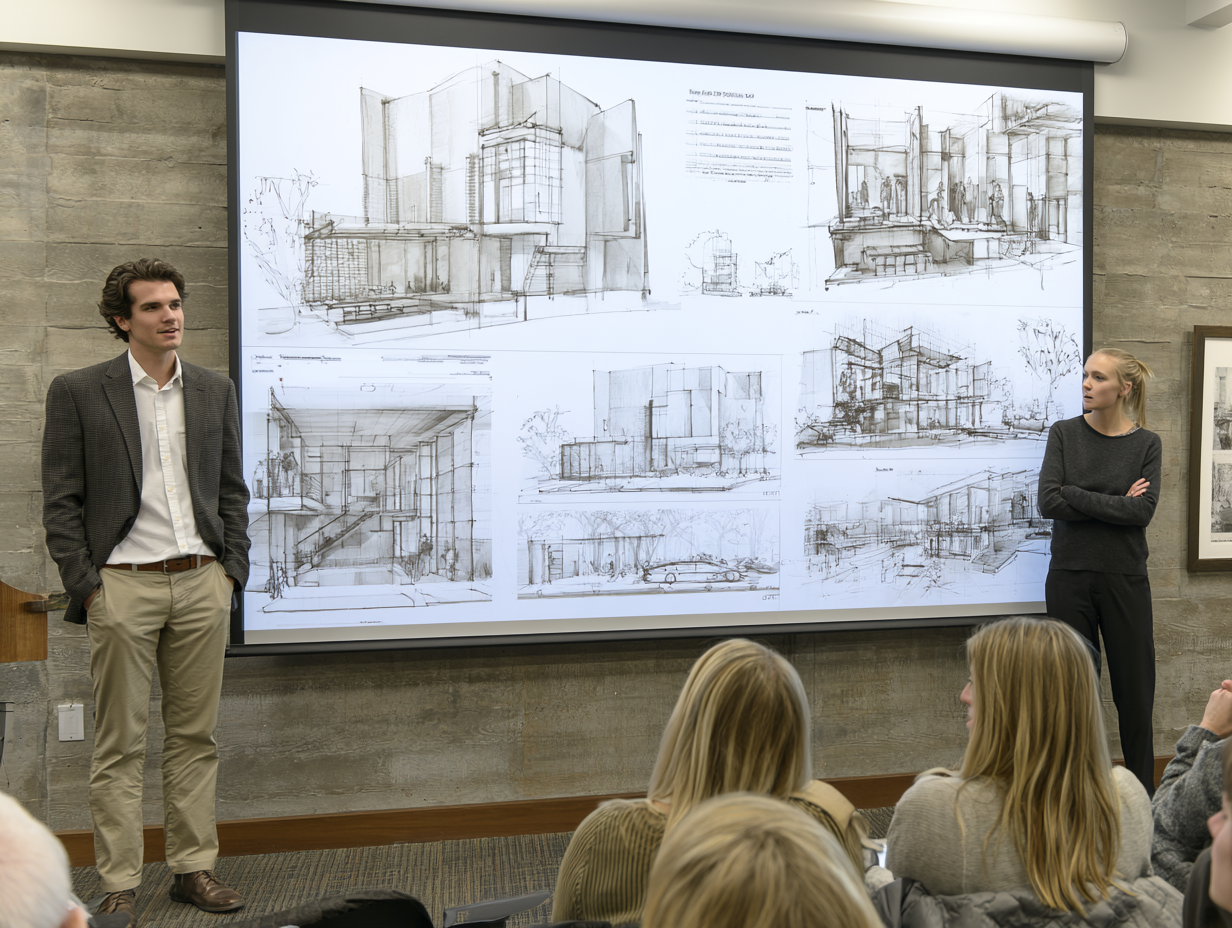
Table of Contents Show
An architecture portfolio interview is the stage where you walk an employer through your projects in person or on screen, explaining your design thinking, your role, and your results. Success depends less on polished renders and more on a clear story: choosing the right projects, structuring your narrative, and answering questions with composure. You have spent weeks refining your layouts and tuning your renders. Now a firm wants to meet you, and the document on your screen has to do something it never had to do before, which is hold a live conversation. Presenting a portfolio is a different skill from building one. It asks you to read the room, defend your choices, and connect your work to what the studio actually does. This guide covers how to prepare, what to say, and how to handle the moment when an interviewer points at a drawing and asks why you made that decision.
Why the Architecture Portfolio Interview Matters

The portfolio review is usually the deciding stage of architecture hiring. By the time you reach the room, the firm has seen your application and decided your work is worth a closer look. The interview tests something a PDF cannot show on its own: how you think, how you communicate under light pressure, and whether you would fit the team. A well-built portfolio gets you the invitation, but the way you present it in the architecture portfolio interview often determines the offer.
📌 Did You Know?
The U.S. Bureau of Labor Statistics projects about 7,800 openings for architects each year through 2034. With a limited number of roles and many qualified applicants, how clearly you present your work in the interview frequently separates the candidates who advance from those who do not.
Two candidates can have similar drawings. The one who explains the reasoning behind them tends to win the role. That is good news if your renders are not the flashiest in the applicant pool, because your thinking and how you communicate it carry real weight here.
How Should You Prepare Your Portfolio Before the Interview?
Preparation starts well before you open the file. Research the firm’s built work, identify which of your projects speak to their focus, and rehearse a short walkthrough out loud. A portfolio for an architecture interview should feel edited for that specific studio, not handed over as a generic catalog of everything you have ever drawn. If you are still assembling the document itself, start with our guide on how to build a strong architecture portfolio before you worry about the live presentation.
Tailor Your Selection to the Firm
If the practice designs healthcare buildings, lead with your most technical, program-heavy project. If they are known for housing or public space, foreground that. You do not need new work, you need to reorder and reframe what you already have so the most relevant pieces come first. Spend an hour on the studio’s website and recent projects before you decide your running order, and treat the same care you put into your applications, like the approach in these architect job search tips, as the baseline for interview prep too.
Choose Print, Digital, or Both
Most interviews now happen on screen, yet a printed book still carries weight in person. Decide based on the format the firm requested and the setting of the meeting. Settling on page count and dimensions is easier once you understand standard architecture portfolio size and format conventions, since an interview copy follows the same rules as a submission copy.
💡 Pro Tip
Bring a printed copy even when the interview is virtual or the firm plans to use a screen. A physical book gives interviewers something to flip back to during the conversation, and it signals that you prepared for a real in-person discussion rather than a quick file share.
How to Structure Your Portfolio Presentation
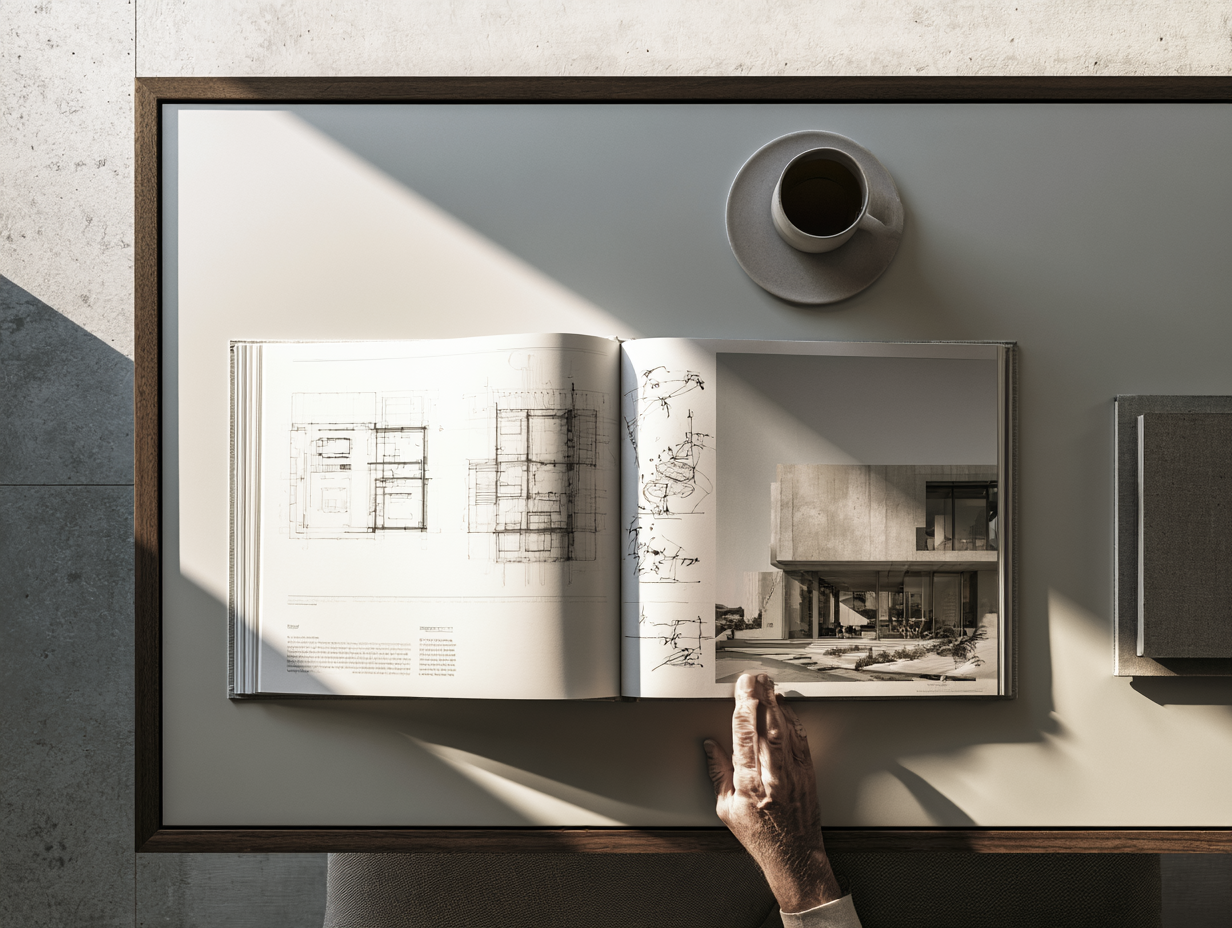
A good presentation has a shape. Open with a one-line summary of who you are and the kind of work you care about. Then move through three to five projects, giving the strongest one the most time. Close by tying your interests back to the studio. Aim for roughly ten to fifteen minutes of talking and leave room for questions. The general principles in these architecture portfolio tips apply to a spoken walkthrough just as much as to the page.
Lead With Your Strongest Project
First impressions form fast, so your opening project sets the tone for everything that follows. Pick the piece that best demonstrates the skills the firm needs and the one you can talk about most fluently. Walk through it as a short story: the problem, your concept, the key moves, and the outcome. Resources like ArchDaily publish portfolio reviews worth studying to see how strong projects get framed and sequenced.
Explain Your Role, Not Just the Result
Interviewers want to know what you actually did, especially on team or studio projects. Be honest and specific. Saying you led the facade detailing and coordinated the structural model tells them more than any single render. If a project was collaborative, name your contribution clearly instead of letting the polished final image imply you did all of it.
⚠️ Common Mistake to Avoid
A frequent mistake is reading your captions out loud word for word. Interviewers can read the page themselves. What they want to hear is the thinking behind the work, the trade-offs you weighed, and the part you personally played. Narrate decisions, not labels.
Presenting in Person vs. Virtually
The medium changes how you present. In person, you can hand over a book and watch where the interviewer’s eye lands. Virtually, you control the pace through screen share, which means you set the rhythm and have to keep it engaging. Each setting rewards different preparation, and knowing the difference ahead of time keeps you from being caught off guard.
In-Person vs. Virtual: Key Differences
The table below summarizes how the two formats compare and what to prioritize for each:
| Aspect | In-Person Interview | Virtual Interview |
|---|---|---|
| Format used | Printed book or tablet | Screen-shared PDF |
| First impression driver | Print quality and layout | Slide clarity and your voice |
| Pacing control | Interviewer flips at will | You set the page-by-page rhythm |
| Key preparation | Clean print and binding | Test screen share, audio, file size |
| Common pitfall | Fumbling pages or poor print | Scrolling too fast or tech glitches |
For virtual interviews, share the PDF and move through it page by page rather than scrolling quickly past your own work. Test your screen share, audio, and file the day before so technical friction does not eat into your limited time.
📐 Technical Note
For digital portfolios shown live, an A4 or A3 landscape PDF kept under 10 MB loads reliably on most firm laptops and screen-sharing tools. Export images at around 150 dpi for screen viewing, which keeps the file responsive without visibly softening your renders.
What to Say When Walking Through Your Work

Narration is where many candidates lose momentum. The aim is to talk about decisions, not to describe what is already visible on the page. For each project, cover the brief, your central idea, one or two design moves you are proud of, and what you learned. Keep your sentences short and let the interviewer interrupt with questions, because a conversation lands better than a monologue. If you are targeting an internship rather than a full role, the emphasis shifts slightly toward learning and process, as our guide to the architecture portfolio for internship explains. Professional bodies such as the American Institute of Architects and the RIBA publish career and interview guidance that reinforces the same point: clear communication of your reasoning is what hiring panels remember.
Handling Questions About Your Portfolio
Expect questions about your process, your weakest project, your software, and how you respond to feedback. Answer calmly and treat hard questions as a sign of interest rather than attack. For a fuller list to rehearse against, see our breakdown of common architecture interview questions. If a question stumps you, pausing for a second before answering is fine, since composure reads as confidence. And if an interview does not go your way, there is real value in learning from interview rejections rather than taking them personally.
Where to Go From Here

Your Next Step: Pick your three strongest projects tonight and rehearse a five-minute walkthrough of each out loud, ideally to a friend who will keep asking why. Record yourself once and watch it back, which will show you exactly where your narration drags or where you are describing the page instead of explaining the decision behind it.
Frequently Asked Questions
How long should an architecture portfolio be for an interview?
For the interview walkthrough itself, plan to present three to five projects in ten to fifteen minutes. Your full document can run longer, but you will only talk through your strongest pieces. Clarity and editing matter more than sheer volume.
Should I bring a printed portfolio to an architecture interview?
If the interview is in person, yes. A printed book lets the interviewer flip back and forth and signals strong preparation. For virtual interviews, a clean PDF you can screen-share is enough, though some candidates still keep a printed copy on hand as a backup.
How do you present an architecture portfolio in a virtual interview?
Share your screen, open the PDF, and move through it page by page at a steady pace. Test your audio, camera, and file in advance. Narrate your design decisions rather than reading captions, and pause for questions between projects.
What should you say when presenting your work?
For each project, explain the brief, your central concept, one or two key design moves, and your specific role. Focus on decisions and trade-offs, not on describing what the interviewer can already see on the page.
How many projects should I include in an interview portfolio?
Three to five well-chosen projects work best for most interviews. Lead with your strongest and most relevant piece, and be ready to go deeper on any of them if the interviewer asks follow-up questions.
- architectural portfolio review interview
- architecture interview portfolio
- architecture interview portfolio tips
- architecture job interview portfolio
- architecture portfolio for interview
- architecture portfolio for job interview
- architecture portfolio interview
- portfolio architecture interview
- portfolio for architecture interview






Can You Become a Licensed Architect Through Experience Only?
Twenty-one US jurisdictions let candidates qualify for licensure with documented experience instead...
 Sinan Ozen5 Mins read

InDesign Alternatives for Architects: 6 Tools That Handle Portfolios and Boards
Adobe InDesign is still the default layout tool in architecture, but the...
Furkan Sen7 Mins read
What It’s Like Working as an Architect: 5 Things Architecture School Doesn’t Teach You
Architecture school teaches design. Practice runs on construction documents, fee phases, consultant...
Furkan Sen7 Mins read

Architecture Competitions for Students: Are They Worth Your Time?
A practical look at whether architecture competitions are worth a student's time,...
Sinan Ozen6 Mins read




Leave a comment