

Petronas Towers: Islamic Geometry Meets Modern Skyscraper Design
Designed by Cesar Pelli and completed in 1998, the Petronas Twin Towers in Kuala Lumpur draw their floor plan from the Rub el Hizb, an Islamic geometric motif of two interlocking squares. This article covers the geometry, structural engineering, skybridge design, and cultural significance of the tallest twin towers on Earth.
 Sinan Ozen22 June 20265 Mins read224
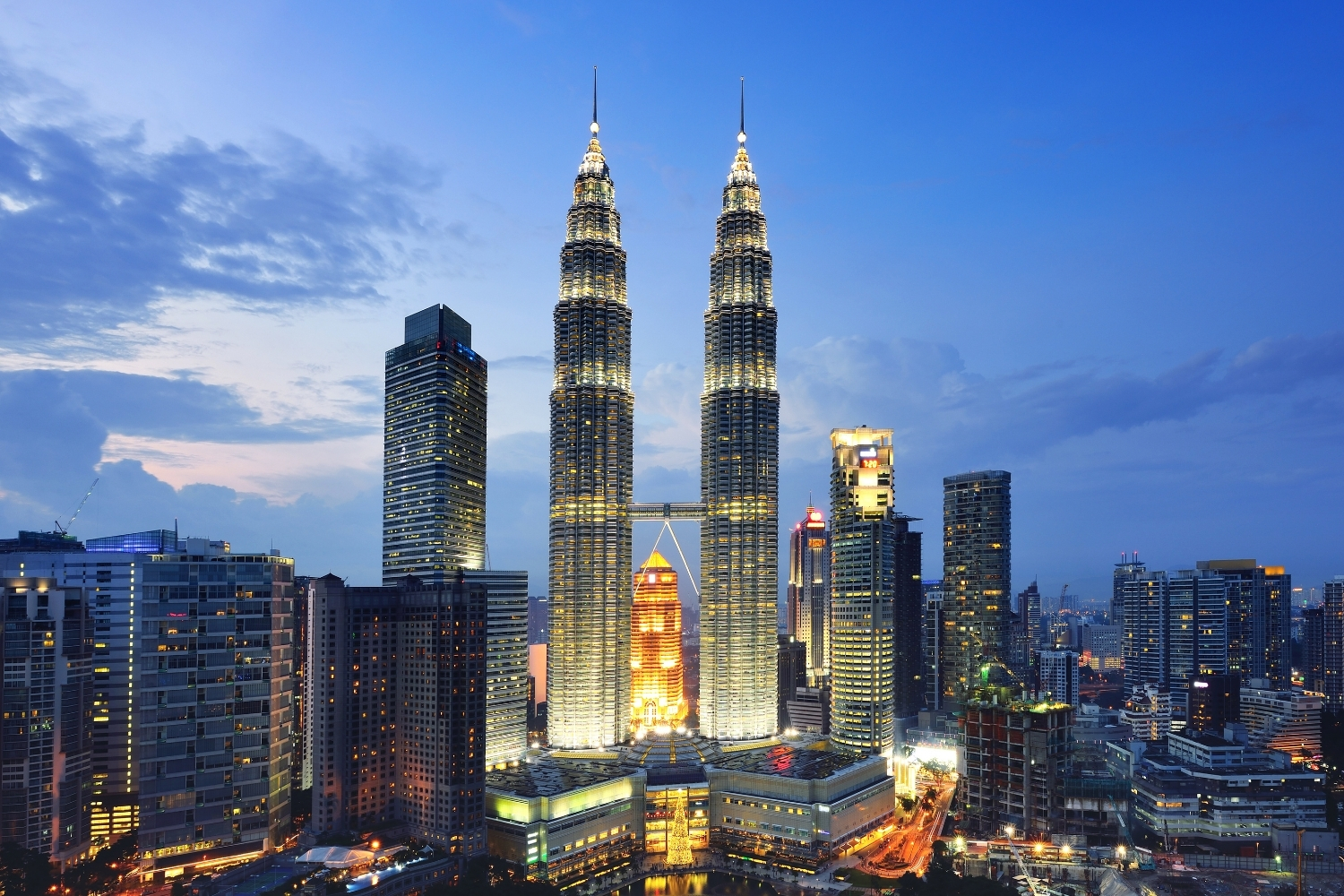
Table of Contents Show
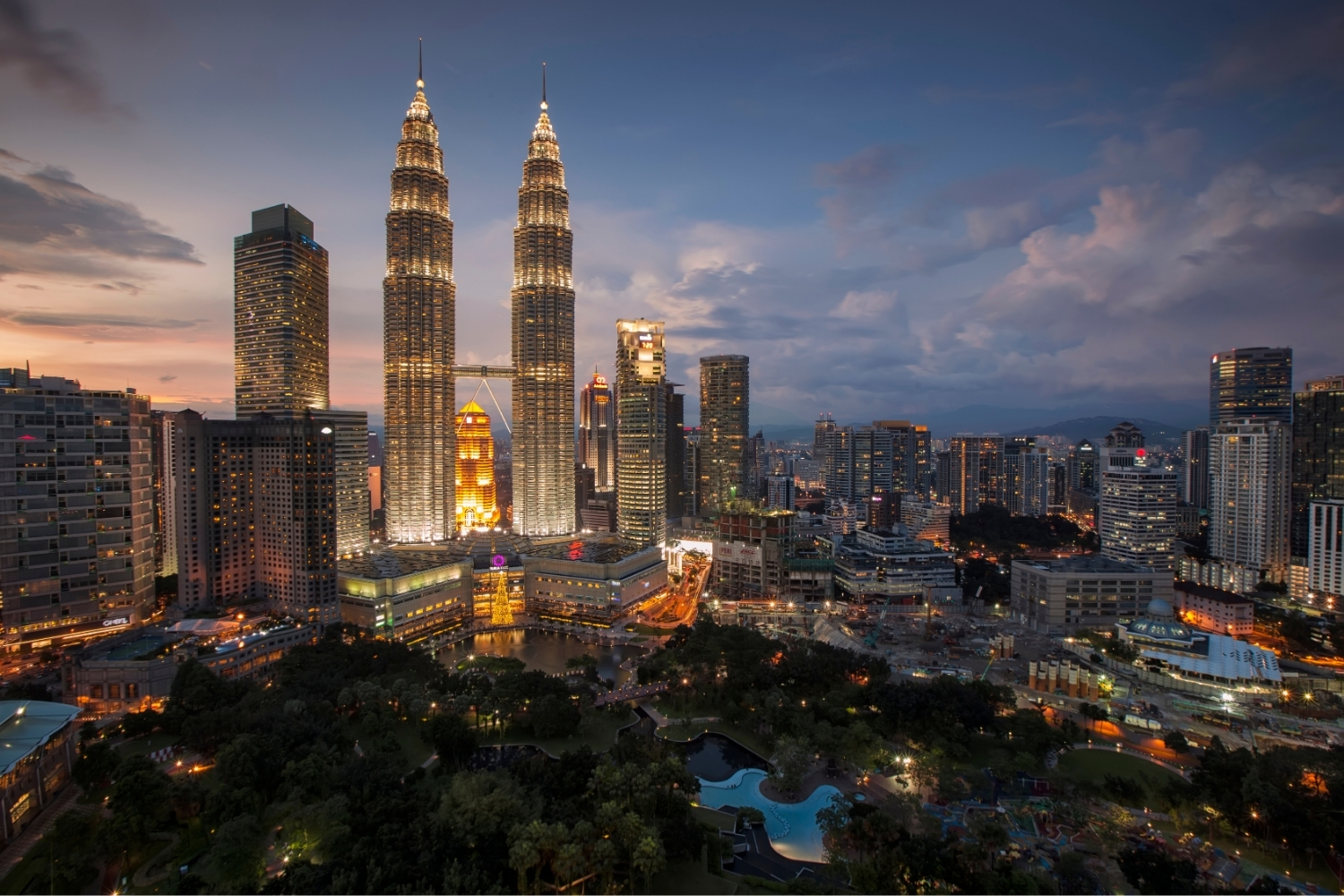
The Petronas Towers in Kuala Lumpur, Malaysia, are an 88-story twin skyscraper complex designed by Argentine-American architect Cesar Pelli. Completed in 1998, the Petronas Twin Towers draw their floor plan from the Rub el Hizb, an Islamic geometric symbol formed by two interlocking squares rotated 45 degrees to create an eight-pointed star. Standing 451.9 meters tall, they remain the tallest twin structures on Earth.
Origins and Vision Behind the Petronas Twin Towers
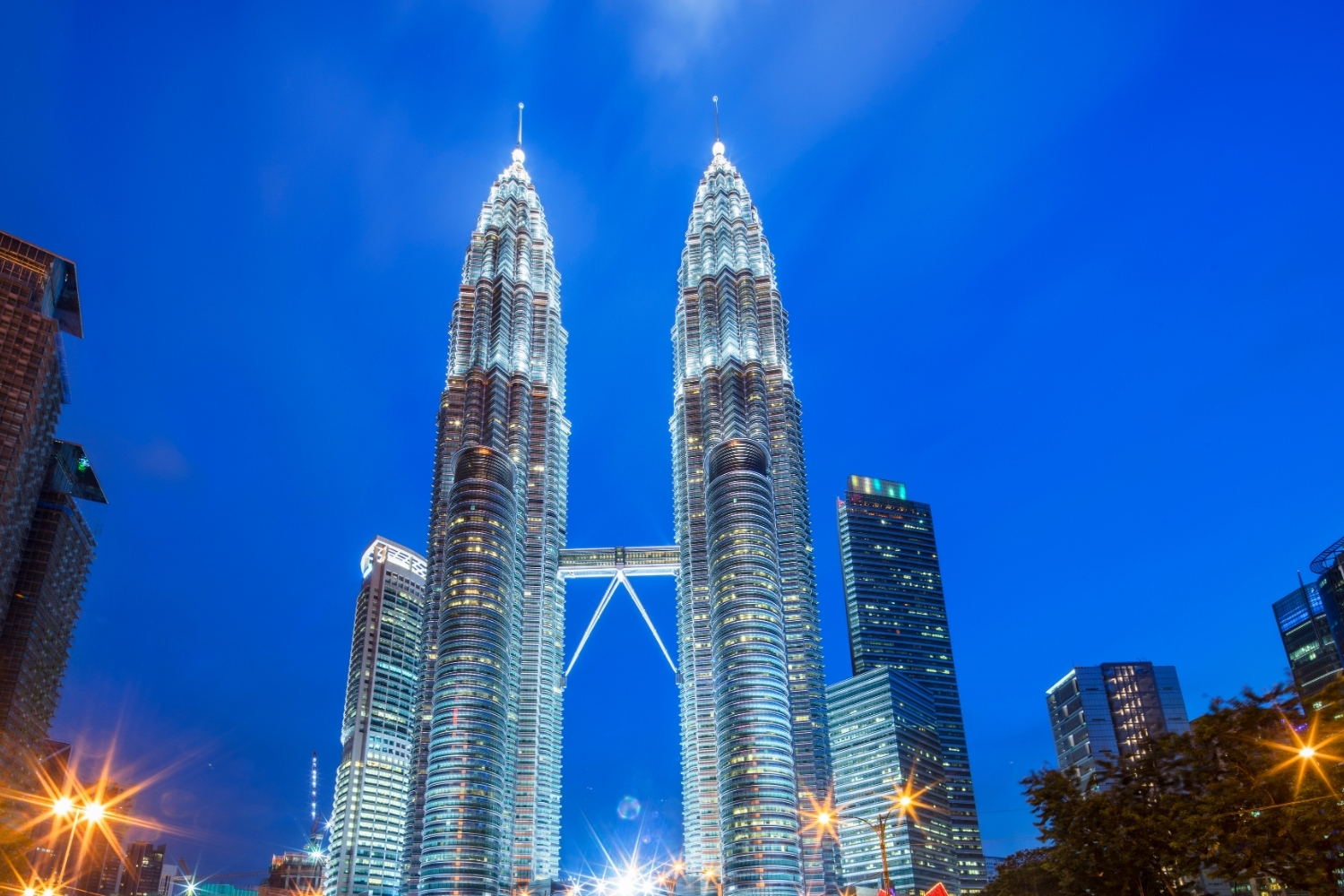
Malaysia’s Prime Minister Mahathir Mohamad commissioned the Petronas Towers in the early 1990s as a headquarters for the national petroleum company Petronas and as a symbol of the country’s economic ambitions. The project required more than a tall building. It needed a structure that reflected Malaysian identity on the global stage. Site planning began in January 1992, and excavation started in March 1993 on a 40-hectare site in the Kuala Lumpur City Centre district.
Cesar Pelli won the design commission, but his initial proposals were rejected by the government for not adequately representing Malaysian culture. Mahathir himself intervened, sketching a floor plan based on two interlocking squares, a motif rooted in Islamic architecture and its relationship with modern design. Pelli refined this concept into the final eight-pointed star plan, adding semicircular lobes at each intersection to maximize usable floor area. The result was a tower footprint that merged traditional Islamic geometry with the practical demands of a 395,000-square-meter commercial complex.
How Did Islamic Geometry Shape the Floor Plan?
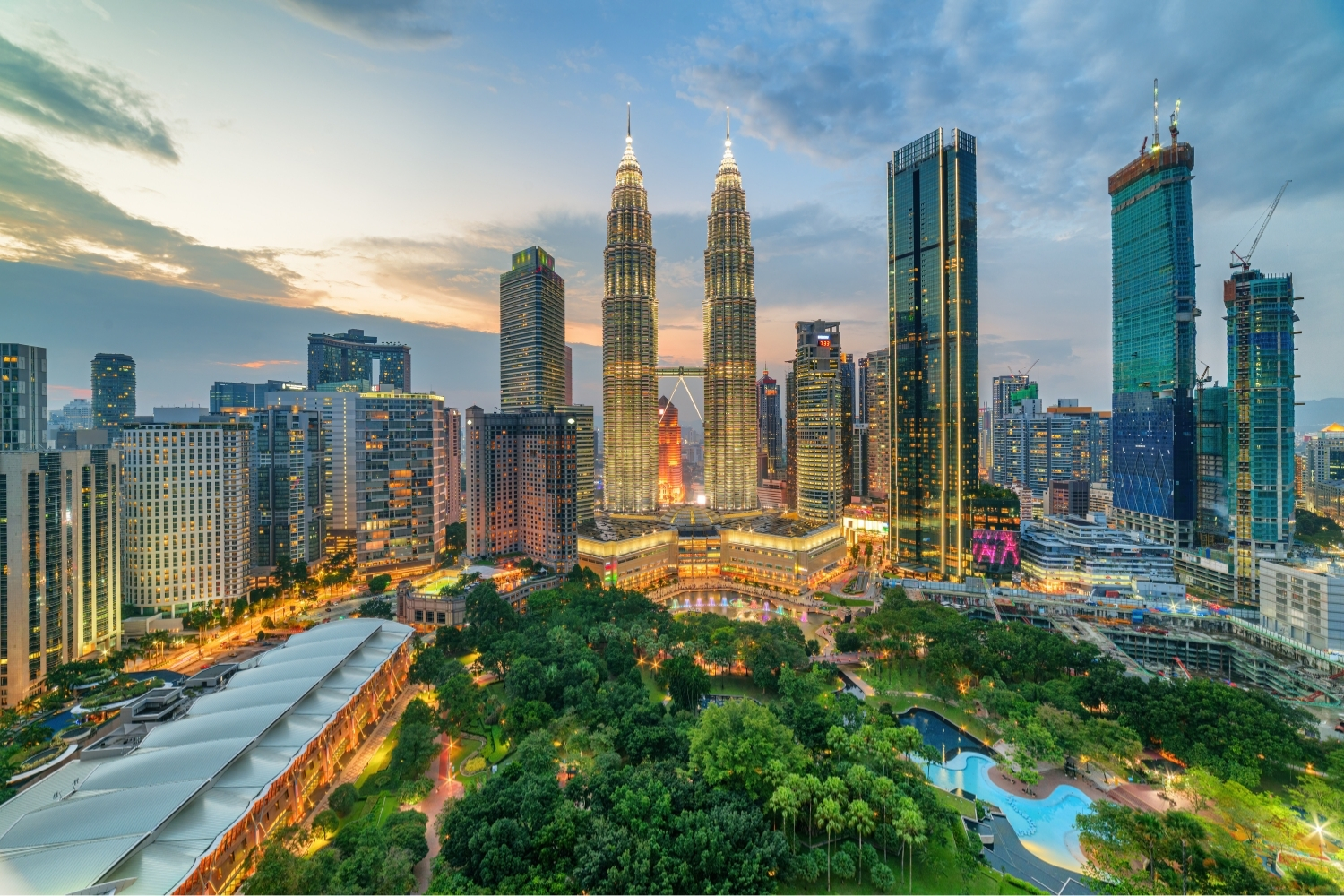
The floor plan of each tower is derived from the Rub el Hizb, a symbol used throughout Islamic art to mark chapters in the Quran and to represent unity and harmony. Two squares, one rotated 45 degrees over the other, form an eight-pointed star. This motif appears across centuries of Islamic architectural ornament, from the tessellated walls of the Alhambra in Granada to mosque tile patterns across Central Asia.
Pelli did not treat this geometry as decoration alone. The eight-pointed star became the organizing principle for structural columns, elevator cores, and the stainless steel curtain wall system. Each point of the star corresponds to a structural column cluster, and the semicircular infill sections between the points house additional office space that a simple square or circular plan would not have allowed. The geometry is visible from ground level through the tower’s tapered profile, where the star shape narrows as it rises, and the spires at the summit echo the form of traditional Malay mosque minarets.
🔢 Quick Numbers
- 451.9 meters total height to spire tip, with 88 occupied floors (Council on Tall Buildings and Urban Habitat)
- US$1.6 billion total construction cost for both towers (CTBUH project data)
- 33,000 panels of laminated vision glass with UV filtering installed across both facades (Petronas Twin Towers official site)
- 395,000 square meters of total floor area across both towers (Thornton Tomasetti structural data)
This approach to geometry was not unique to these towers, but the scale was unprecedented. No supertall tower before it had used a culturally specific geometric motif as the literal structural blueprint for an entire building. The design proved that Islamic patterns, often dismissed as surface ornament in Western architectural discourse, could function as load-bearing organizational systems at the highest level of structural engineering.
Structural Engineering and Material Choices
The Petronas Twin Towers broke from the standard skyscraper construction approach of the era by using high-strength reinforced concrete rather than a steel frame as the primary structural system. Engineers at Thornton Tomasetti specified Grade 80 concrete for the core and perimeter columns, achieving compressive strengths roughly twice the density of structural steel. This decision was both economic and practical: concrete was more readily available in Malaysia than structural steel, and its greater mass helped dampen wind-induced sway in a region subject to tropical storms.
A concrete core at the center of each tower connects to 16 perimeter super-columns via ring beams spaced every 24 floors. This hybrid system distributes lateral wind loads while keeping floor-to-floor deflection within the L/500 standard. The stainless steel and glass curtain wall was assembled off-site in panels up to 14 square meters each, a prefabrication strategy that reduced the facade installation schedule by several months.
📐 Technical Note
The foundations required piles driven up to 115 meters deep into the underlying limestone bedrock, making them among the deepest building foundations in the world at the time of construction. During early geotechnical surveys, the original site center was shifted 60 meters southeast after soil testing revealed that part of the site sat above a boundary between limestone and softer Kenny Hill formation, which would have created uneven settlement under the massive structural loads.
Construction was split between two contractors working simultaneously: Japan’s Hazama Corporation on Tower 1 and South Korea’s Samsung Engineering & Construction on Tower 2. Each team managed roughly 1,000 workers across three shifts, completing one floor every four days compared to the industry average of ten. This competitive arrangement, deliberate on the part of the client, accelerated the overall schedule and led to an early structural completion in 1996.
The Skybridge Connecting the Petronas Twin Towers Kuala Lumpur
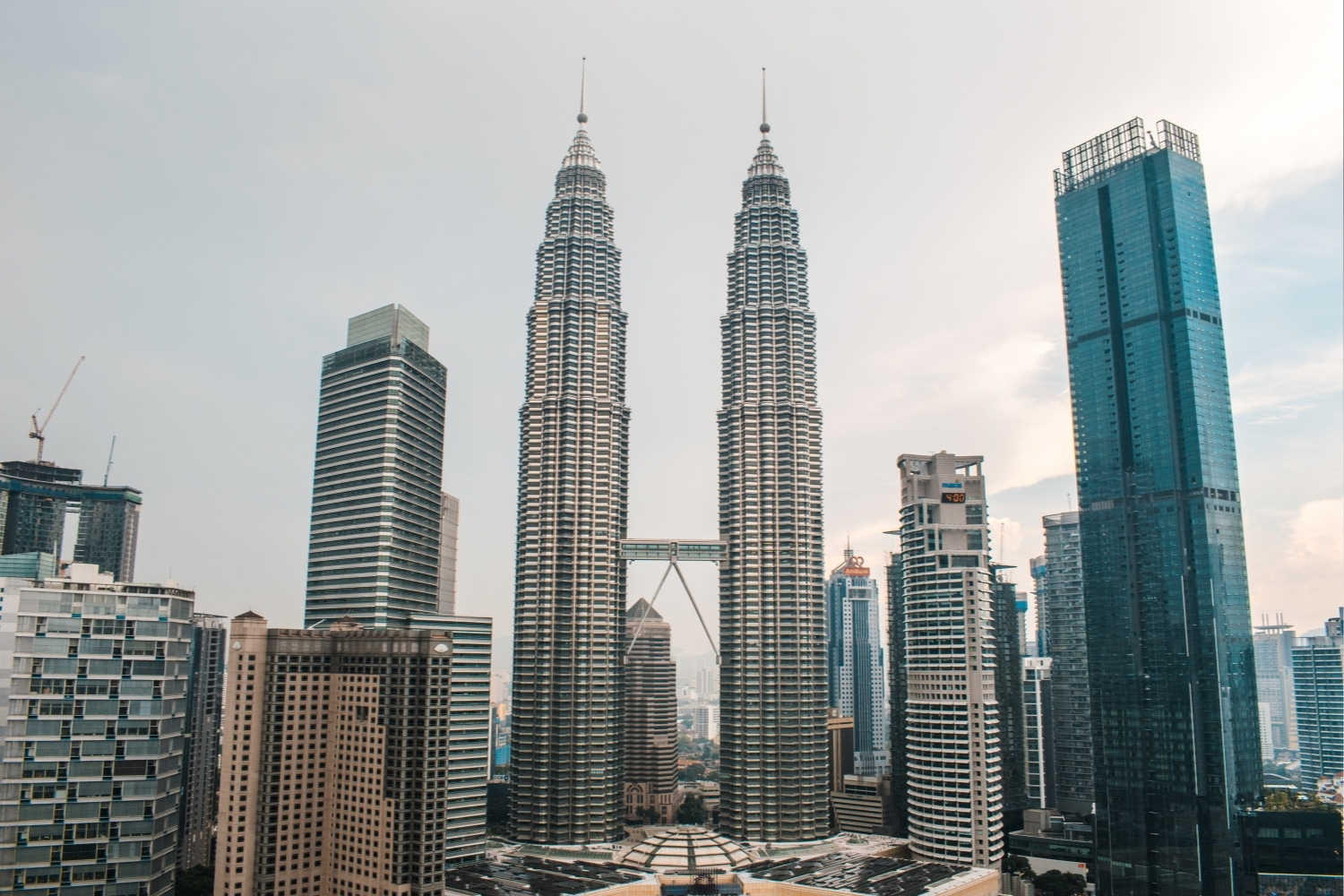
The double-deck skybridge at floors 41 and 42 is one of the most recognized features of the Petronas Twin Towers Malaysia. Positioned 170 meters above ground level, it spans 58 meters between the two towers and weighs approximately 750 tonnes. Unlike most connecting structures between tall buildings, this skybridge is not rigidly fixed to either tower. Instead, it rests on spherical bearings that allow it to slide up to 300 millimeters as each tower sways independently in the wind.
This pinned connection was a critical engineering choice. Because each tower has its own foundation and structural system, they respond differently to wind loads and even thermal expansion throughout the day. A rigid bridge would have generated destructive stress concentrations at the connection points. The sliding bearing solution allows the skybridge to function as a stable, comfortable public viewing platform while accommodating the natural movement of two separate 450-meter structures.
🏗️ Real-World Example
Merdeka 118 (Kuala Lumpur, 2023): Standing 678.9 meters tall, Merdeka 118 surpassed the twin towers as Malaysia’s tallest building and currently ranks as the world’s second tallest structure. While the original pair used Islamic geometry as a floor plan generator, Merdeka 118 draws its triangulated facade pattern from the raised hand gesture of Malaysia’s independence declaration. Together, the two projects show how Malaysian skyscrapers consistently tie national identity to structural form rather than treating cultural references as applied surface decoration.
Why Do the Petronas Towers Still Matter?
The towers held the title of world’s tallest buildings from 1998 until 2004, when Taipei 101 surpassed them. Their height record may have passed, but the significance of the Petronas Towers extends well beyond that metric. They remain the tallest twin towers on the planet, a record no other project has challenged in over two decades.
More importantly for architectural practice, the project demonstrated that a non-Western geometric tradition could organize a building at the highest technical level. César Pelli’s work on the Petronas Towers Kuala Lumpur influenced a generation of architects working in Muslim-majority countries who sought to express cultural identity through structure rather than applied ornament. The official Petronas Twin Towers site notes that the eight-pointed star motif governs everything from column placement to the curtain wall module, making geometry inseparable from engineering.
The Council on Tall Buildings and Urban Habitat (CTBUH) recognized the towers with its Global Icon Award in 2024, confirming their lasting relevance to the field. For architecture students studying how postmodern architecture connects cultural meaning with structural logic, the Petrona Towers remain one of the clearest built examples in the world.
The Bigger Picture
The Petronas Twin Towers Kuala Lumpur proved something that many architects had theorized but few had built at this scale: geometry inherited from centuries of Islamic art can do structural work in a modern skyscraper. The eight-pointed star is not a sticker on a glass box. It is the box. Every column, every floor plate, every curtain wall panel follows a pattern that originated in Quranic manuscript margins and mosque courtyard tiles. That a 452-meter tower in Southeast Asia can carry that lineage forward, without pastiche or compromise, is worth studying long after the height record moved on.



Futuro House Production Revived in Finland After Decades-Long Hiatus
A Facebook listing for abandoned moulds led to the first new Futuro...
 illustrarch Editoral Team3 Mins read
Building Your Dream Home in NSW: What You Should Know About Montgomery Homes
Montgomery Homes has been building across Sydney, Newcastle, the Hunter, Wollongong and...
illustrarch Editoral Team4 Mins read
Designing a Home Theater: Where Drapery Fits Into the Plan
In a media room the curtains are a performance layer, not decoration....
illustrarch Editoral Team3 Mins read
Oscar Niemeyer’s Cathedral of Brasília: The Hyperboloid Concrete Hymn
The Cathedral of Brasília reads as a single gesture, yet it stood...
 Furkan Sen7 Mins read


Leave a comment