

New Digging Season at the Mieza Gymnasium Uncovers Alexander’s School Complex
New digs at Mieza uncover teaching halls and mosaic banquet rooms at the gymnasium tied to Aristotle's teaching of Alexander the Great.
 illustrarch Editoral Team15 October 20262 Mins read1
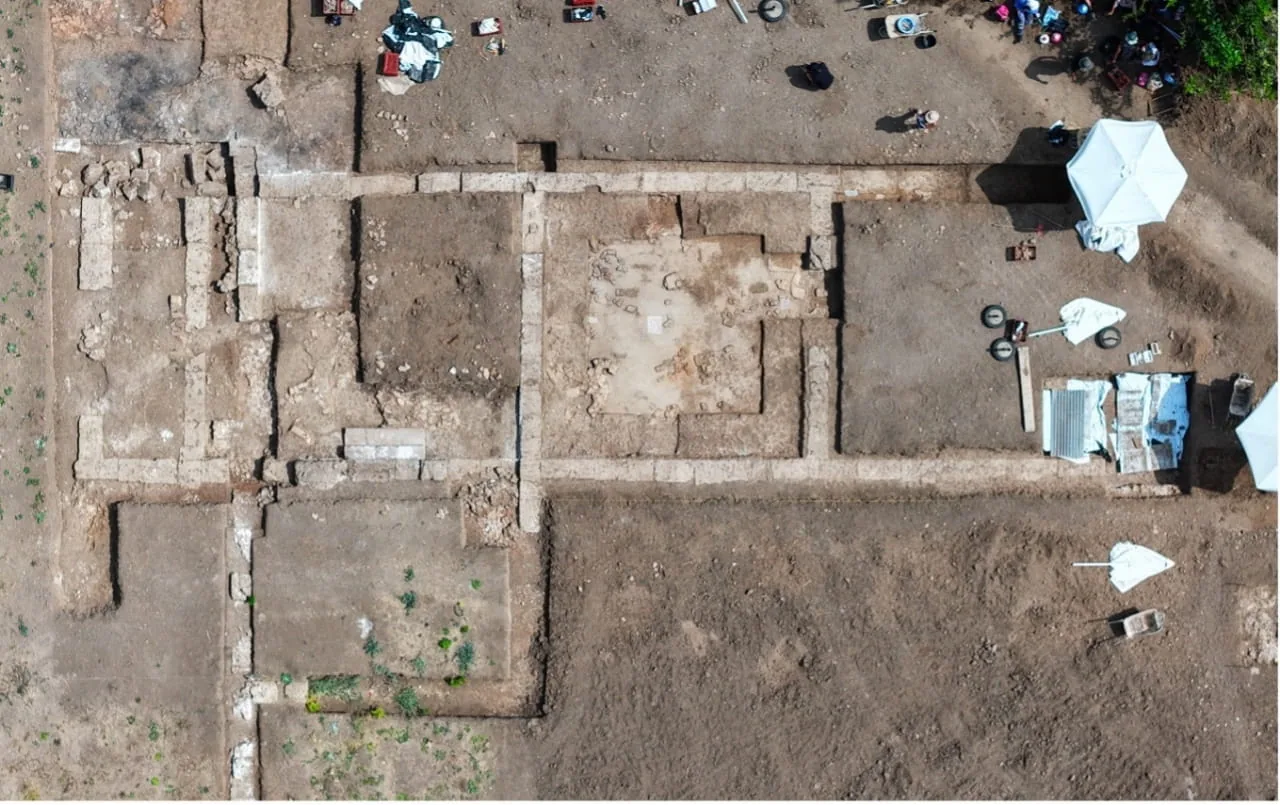
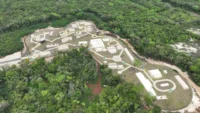
Archaeologists working at the ancient site of Mieza in northern Greece have uncovered new sections of the royal Mieza gymnasium long associated with Aristotle’s tutoring of Alexander the Great, including a large teaching building with mosaic floors and stone benches once used for lectures. The dig, led by archaeologist Angeliki Kottaridi, has been running since 2024 as part of a joint research effort between Greece’s Ministry of Culture and the Municipality of Naousa.
This season’s work concentrated on the eastern half of the complex, where the palaestra, an open training courtyard, connects to a structure known as the Didaskaleion, or teaching hall. Inside that building, excavators found stone seating arranged for lectures, along with a three-part hall covering more than 160 square meters.
The Mieza Gymnasium in Ancient Times
The gymnasium at Mieza is thought to date from the middle of the 4th century BCE, placing its construction during the reign of Philip II, Alexander’s father. The site spans roughly 30 acres and includes a palaestra, a stadium, colonnaded walkways, water channels, and a covered running track, or xystos, that runs for about 200 meters, among the longest known from this period.
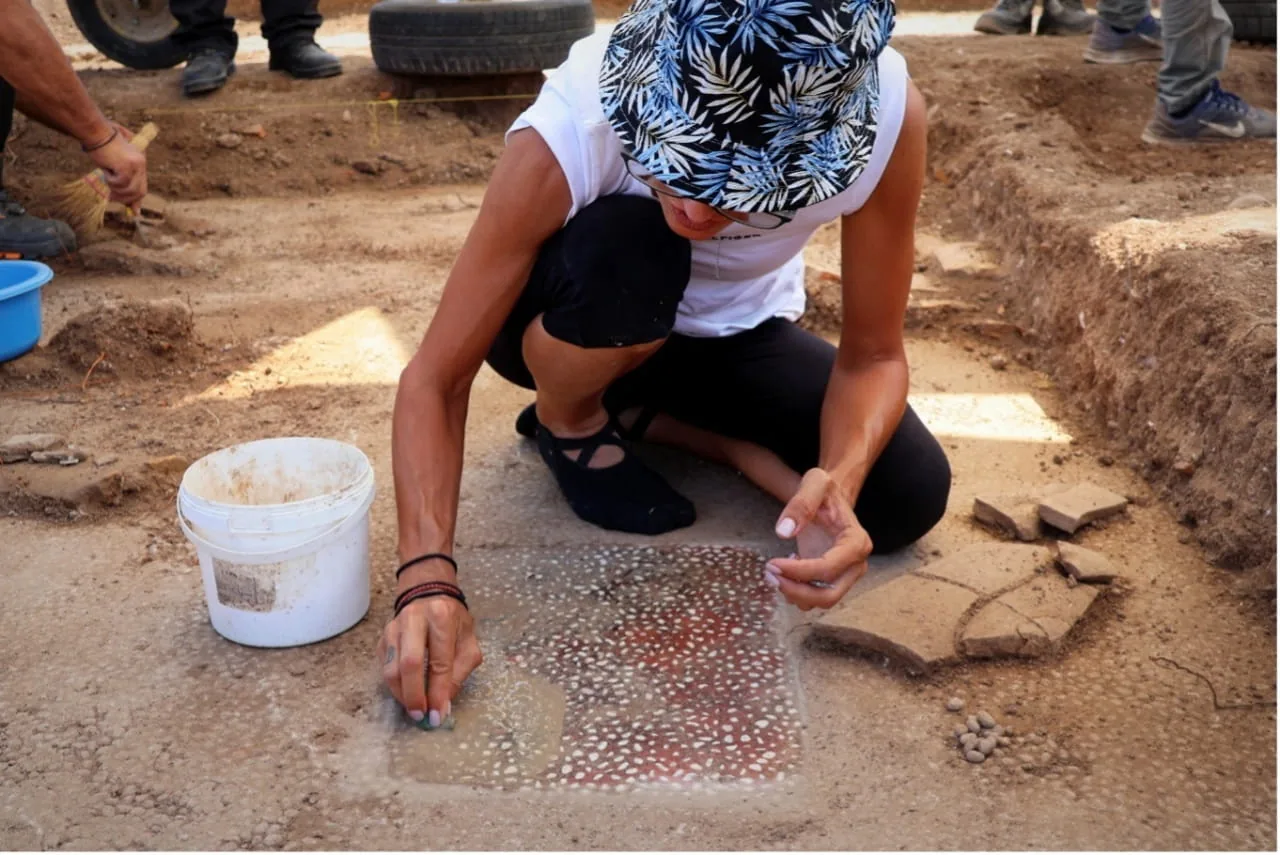
Among this year’s discoveries were two andrones, rooms built for formal drinking gatherings, entered through a shared central hall. Each room held space for ten dining couches, meaning roughly 20 people could recline there at once. Their mosaic floors and raised couch platforms closely resemble flooring found at the royal palace of Aigai, suggesting the same craftsmen or workshop traditions were involved. Other recovered fragments, including pieces of an Ionic frieze, a column, a capital, and part of a Doric corner architrave, are expected to help researchers reconstruct how the palaestra’s surrounding colonnade originally looked. Smaller finds from the excavation include writing styli, pottery, and coins.
Destruction after Pydna and what survived
Much of the gymnasium was torn down by Roman forces following their victory at the second Battle of Pydna in 168 BCE, when Macedon fell under Roman control. Despite that destruction and later burning, portions of finely plastered walls and original flooring survived beneath the rubble, giving archaeologists physical evidence to work from even in areas the Romans dismantled.
Researchers say the newly exposed rooms and their layout strengthen the long-standing identification of Mieza as the gymnasium where Aristotle instructed Alexander and other young Macedonian nobles, since gymnasiums of this era combined athletic training with intellectual and social education for future leaders.
Wider heritage visit in the region
The Mieza excavation was highlighted during a broader cultural visit to the area that also included Greece’s Minister of Culture, Lina Mendoni, who took part in the return of two restored Ottoman monuments to the community of Veria. One was the Orta Mosque, dated to around 1490 or 1491, where restoration addressed the dome, structural damage, flooring, plasterwork, and the minaret, supported by €450,000 in funding from the Recovery and Resilience Fund. The second, the Twin Ottoman Bath, also called Tuztsi Hamam, dates to the late 15th century and includes separate men’s and women’s bathing sections; its men’s section contains rare painted scenes of hunting and exotic animals, including an elephant and a giraffe. The bath remained in use until 1930.
Officials say the continuing excavation at Mieza is expected to further clarify how the gymnasium’s teaching, athletic, and social spaces were organized and used by the students who trained there.



Herzog & de Meuron Builds Amherst College Student Center Atop Old Foundations
Herzog & de Meuron built a mass-timber student center at Amherst College...
illustrarch Editoral Team2 Mins read

Brussels’s €230m Kanal Museum Nears Opening as Questions Grow over Its Future Funding
Housed in a converted Citroën garage, Brussels's Kanal museum opens on 28...
illustrarch Editoral Team1 Mins read
MoMA’s Full Disclosure Exhibition Traces Information Design from Hand-Drawn Data to AI Memories
Full Disclosure: The Edge of Information Design, curated by Paola Antonelli, is...
illustrarch Editoral Team2 Mins read
Zumthor’s Three New Buildings Open at Fondation Beyeler in Riehen
Peter Zumthor's Wyss Museum, Ammann Pavilion and Erlen Torhaus open at Fondation...
illustrarch Editoral Team4 Mins read


Leave a comment