

Most Beautiful Museums in the World 2026: The Prix Versailles Selection
The Prix Versailles has announced its 2026 list of the world's most beautiful museums, selecting seven recently opened institutions across four continents. From the falcon-wing towers of the Zayed National Museum in Abu Dhabi to a fragrance museum in Guangzhou with 300 interactive smelling stations, each project redefines what a museum can be.
 Elif Ayse Sen20 May 202611 Mins read256
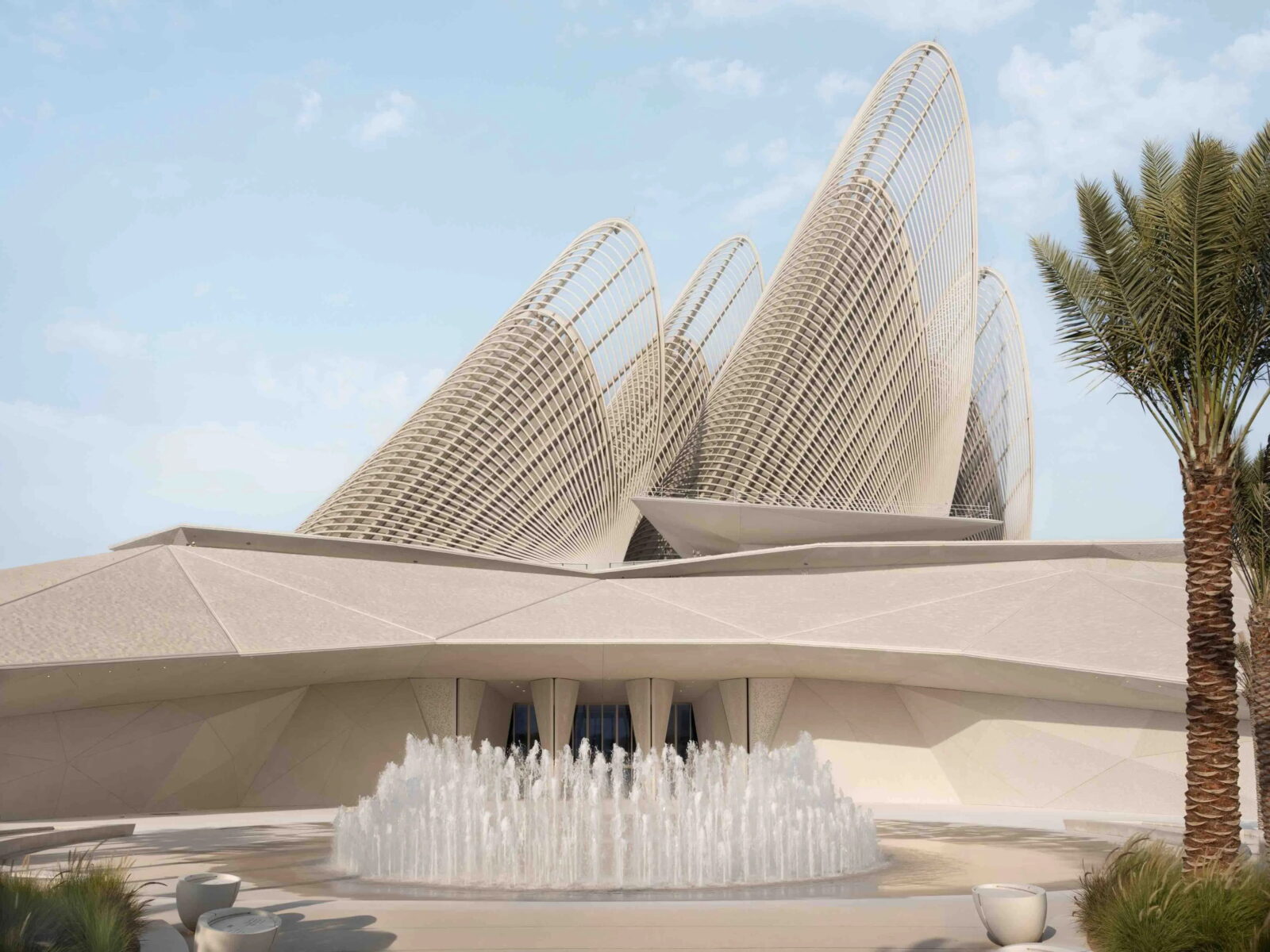
Table of Contents Show
The most beautiful museums in the world for 2026, as chosen by the Prix Versailles, include seven recently opened institutions from Abu Dhabi to Texas. Selected for their architectural quality, narrative power, and cultural ambition, these museums represent a new generation of civic buildings where design, memory, and landscape work together to shape public experience.
On 4 May 2026, the Prix Versailles announced its 12th annual selection of the world’s most beautiful museums. The award, held each year at UNESCO headquarters in Paris since 2015, recognizes architecture that combines innovation, cultural responsiveness, and ecological awareness. This year’s seven museums span four continents and cover subjects from national history and military valor to perfumery and science fiction-grade technology.
Jérôme Gouadain, Secretary General of the Prix Versailles, described the 2026 selection as standing out for the quality of its architectural interpretation and staging. Three of the seven museums will receive additional World Titles in the categories of Prix Versailles, Interior, or Exterior, with those distinctions announced later in the year.
Below is a closer look at each museum, what makes it architecturally significant, and why the jury selected it.
What Is the Prix Versailles?
The Prix Versailles is an international architecture award that has operated in collaboration with UNESCO since 2015. It evaluates public buildings across eight categories: museums, hotels, restaurants, emporiums, airports, campuses, passenger stations, and sports venues. The jury assesses projects on innovation, creativity, reflection of local heritage, ecological efficiency, and the values of social interaction and participation.
The museum category was added in 2024, marking the award’s 10th anniversary. Each year, the jury selects a shortlist of seven museums from around the world, then awards three World Titles at a ceremony in Paris. Past jury chairs have included former UNESCO Director-General Irina Bokova, and panelists have ranged from architects like Ma Yansong and Thom Mayne to figures from film, music, and fashion.
📌 Did You Know?
The Prix Versailles takes its name not as a model to imitate, but as an incentive. The Château de Versailles is treated as a historic example of how architecture and design can shape shared environments. The award encourages contemporary projects to pursue that same ambition through current materials, technologies, and cultural contexts.
The 7 Most Beautiful Museums of 2026
The 2026 list brings together projects that differ widely in geography, scale, and subject matter. What connects them is the ability to turn the museum into a spatial and narrative device, one that goes beyond storing objects and actively shapes how visitors experience history, science, memory, and culture.
Zayed National Museum, Abu Dhabi (Foster + Partners)

The Zayed National Museum sits at the heart of the Saadiyat Cultural District in Abu Dhabi, a cluster that already includes the Louvre Abu Dhabi by Jean Nouvel. Designed by Foster + Partners and inaugurated on 3 December 2025, the museum is dedicated to the legacy of Sheikh Zayed bin Sultan Al Nahyan, the founding father of the United Arab Emirates.
The building is immediately recognizable by its five steel towers, inspired by the wings of a falcon in flight. These structures are not purely symbolic. They incorporate natural ventilation principles, drawing hot air upward and away from the gallery spaces while channeling daylight into the interior. The museum sits within an artificial hill that shields the galleries from overheating, a direct response to the extreme desert climate of the region.
Inside, six permanent galleries trace more than 300,000 years of history through the land that became the UAE. The warm, sandy tones of the interiors and the carefully managed natural light create spaces that feel connected to the surrounding landscape. Al Masar Garden extends the museum toward the coast, blurring the line between building and terrain.
💡 Pro Tip
If you are studying climate-responsive museum design, the Zayed National Museum is worth examining alongside Foster + Partners’ earlier Zayed International Airport in the same city. Both projects use form and orientation as primary strategies for managing solar gain, rather than relying solely on mechanical systems.
Shenzhen Science and Technology Museum, China (Zaha Hadid Architects)
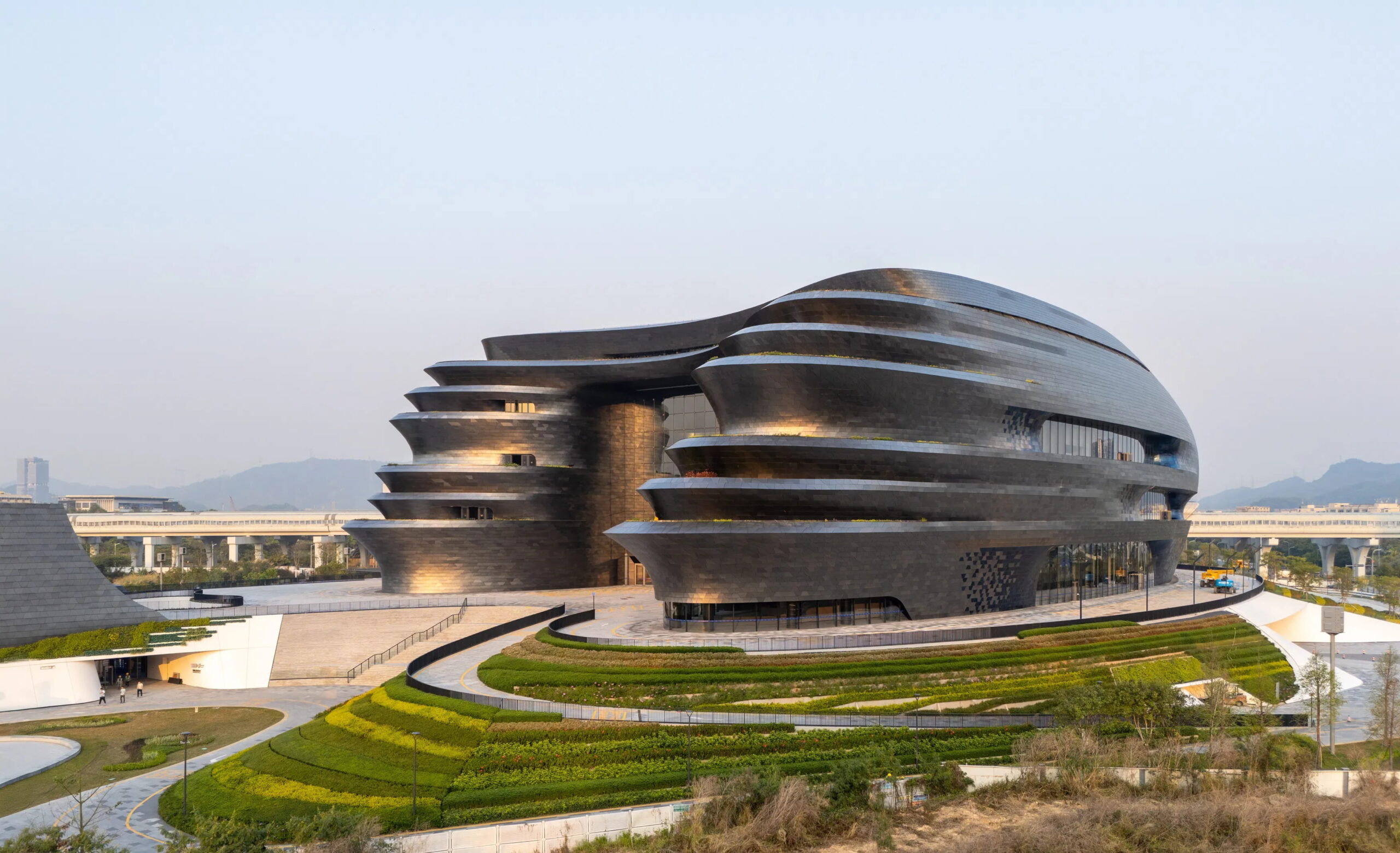
Inaugurated on 1 May 2025, the Shenzhen Science and Technology Museum is the largest project in the city’s Guangming District and a new architectural icon for the Greater Bay Area. Zaha Hadid Architects designed the building as a response to the site’s subtropical climate, accounting for annual solar radiation, temperature swings, humidity, prevailing winds, and air quality.
The result is a structure often described as a vast spaceship embracing the city. Its facade consists of approximately 95,000 irregularly shaped stainless steel panels, arranged in a color gradient that shifts from deep blue to various shades of grey depending on the angle of light. The effect changes throughout the day, making the building a different visual experience in the morning than it is at sunset.
A sequence of outdoor terraces overlooking the adjacent park extends the indoor galleries into the landscape. The building demonstrates something that Zaha Hadid Architects has refined across projects like the Guangzhou Opera House and the Heydar Aliyev Center: the capacity to make large-scale public buildings feel responsive to their environment rather than imposed on it.
Video: Inside the Shenzhen Science and Technology Museum
This walkthrough by Inside of Architecture covers the museum’s completed interior, its facade system, and how the building relates to its park setting in Guangming District.
Xuelei Fragrance Museum, Guangzhou (Shenzhen Huahui Design Co.)
The Xuelei Fragrance Museum is presented as the world’s largest museum dedicated to perfumery. Designed by Shenzhen Huahui Design Co., the building takes the form of eight red-brick cylindrical volumes that reference the processes of distillation and refinement behind fragrance production.
The architecture guides visitors along a path designed like a scent trail, with around 300 interactive smelling stations leading up to a rooftop garden. The museum treats an intangible cultural heritage, the history and craft of fragrance, as something that can be spatially experienced rather than simply displayed behind glass.
Within just half a year of opening, the Xuelei Fragrance Museum earned both a Guinness World Record and a Prix Versailles selection. The achievement signals that Guangzhou’s cultural tourism is expanding from traditional sightseeing into more sensory and experiential territory.
🏗️ Real-World Example
Xuelei Fragrance Museum (Guangzhou, 2025): Two of the seven museums on the 2026 Prix Versailles list are located in Guangdong Province, China. The Xuelei Fragrance Museum and the Shenzhen Science and Technology Museum together represent the province’s strategy of combining technology, culture, and architecture to attract international visitors and reposition itself as a global cultural destination.
MoN Takanawa: The Museum of Narratives, Tokyo (Kengo Kuma)
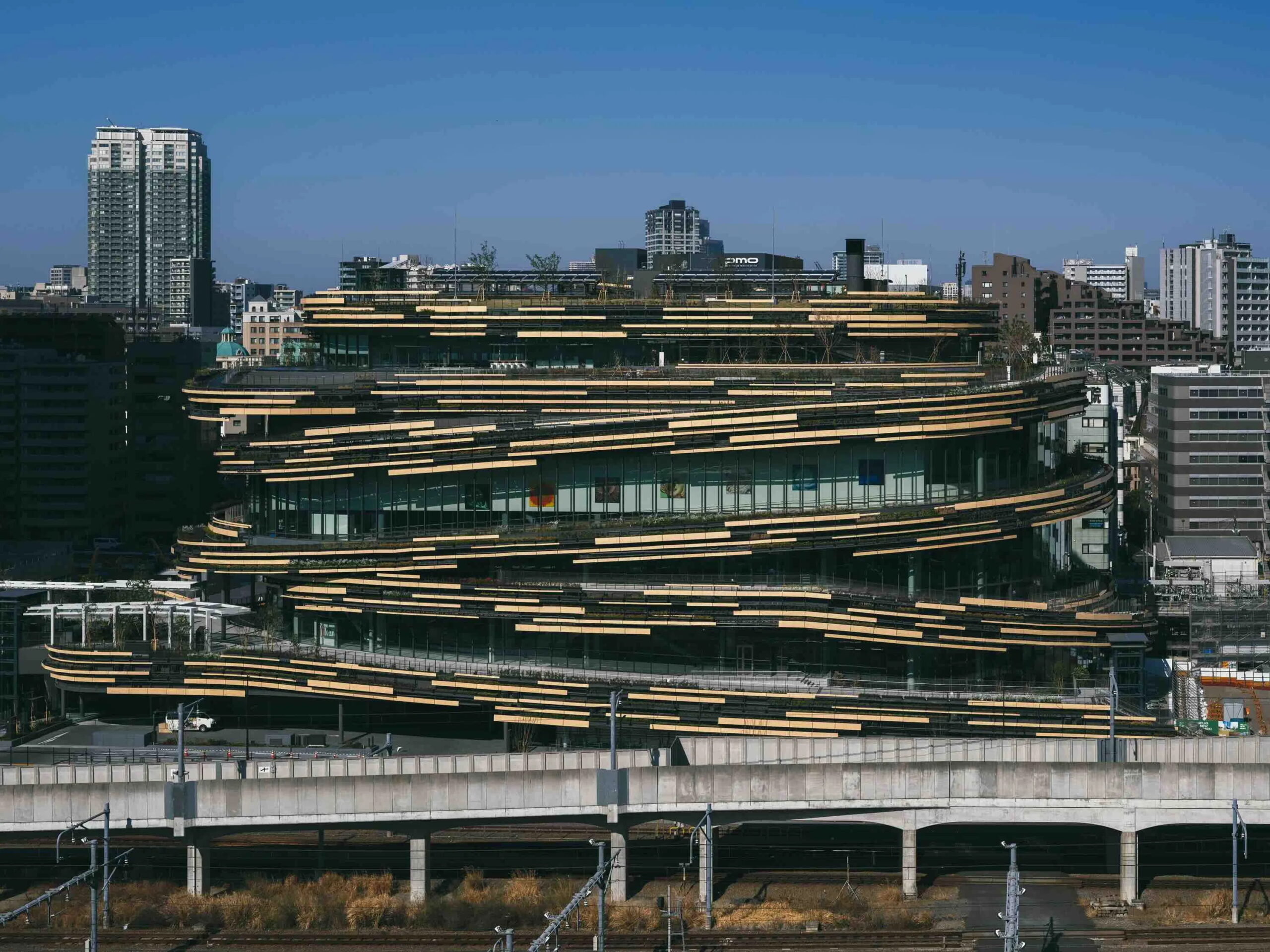
Opened on 28 March 2026, MoN Takanawa: The Museum of Narratives spans approximately 29,000 square meters within the Takanawa Gateway City development in Tokyo. The site sits on the exact location of Japan’s first railway line, adding a layer of historical weight to a project that looks firmly forward.
Designed by Kengo Kuma, the museum is conceived as an immersive cultural hub at the intersection of art, tradition, technology, and education. Its architecture, made of wood, layered glass, perforated surfaces, and diffused light, dissolves the boundary between interior and exterior. More than 200 plant species grow throughout the complex, reinforcing Kuma’s long-standing interest in architecture that blurs into landscape.
Set against the surrounding skyscrapers and heavy infrastructure of central Tokyo, the MoN Takanawa stands out precisely because it is quiet. It proposes a different version of the contemporary city, one built on porosity, fragility, and seasonal transformation rather than permanence and scale. For architects following Kuma’s work, this project extends the principles visible in the Earth | Tree installation at Copenhagen Contemporary and his earlier V&A Dundee museum.
🎓 Expert Insight
“My philosophy is about humility, harmony and dissolving boundaries. I don’t want buildings to shout. I want them to whisper and blend into the landscape.” — Kengo Kuma, Kengo Kuma & Associates
This approach defines MoN Takanawa. While neighboring towers compete for visual dominance, Kuma’s museum retreats into layered materials and living greenery, proving that architectural presence does not require architectural volume.
The Lost Shtetl Jewish Museum, Lithuania (Rainer Mahlamäki)

Located in the plains of Lithuania near the historic center of Šeduva, The Lost Shtetl Jewish Museum tells the story of the vanished shtetl communities, the small Jewish towns that existed across the country before the Holocaust destroyed them.
Finnish architect Rainer Mahlamäki, working with Enea Landscape Architecture, designed the complex as a small village. A sequence of “houses,” each corresponding to a different chapter of the exhibition, recreates the spatial rhythm of the communities the museum commemorates. The blind gables and grey tiled exteriors seem to dissolve into the rural landscape, avoiding monumental gestures in favor of something closer to quiet presence.
An adjacent Memorial Park extends the museum’s role as a living monument. The architectural strategy here is one of restraint: no grand entrance hall, no towering atrium, just a collection of forms that sit low in a field and ask visitors to slow down and pay attention. Among the seven museums on the 2026 list, The Lost Shtetl is the only one located in Europe.
National Medal of Honor Museum, Texas (Rafael Viñoly Architects)
The National Medal of Honor Museum in Arlington, Texas, honors recipients of the United States’ highest military decoration for valor. The project is the final completed work by Rafael Viñoly, who passed away in 2023, making the building both a civic landmark and a capstone to a distinguished career.
The design centers on a large steel-clad Exhibition Hall suspended approximately 12 meters above an open landscaped courtyard called the “Field of Honor.” Five megacolumns support the structure, each representing a branch of the U.S. Armed Forces. A central oculus symbolically refers to the U.S. Space Force. Spiral staircases and fully glazed lifts turn the entrance into the galleries into an ascending journey, reinforcing the museum’s theme of courage and upward striving.
The museum is the only project from the Western Hemisphere on the 2026 Prix Versailles list. Linbeck, the construction firm, described the project as one where every team member understood they were providing a home for stories of extraordinary courage and sacrifice.
💡 Pro Tip
When studying memorial or commemorative museum design, pay attention to the relationship between suspended volumes and ground-level voids. The National Medal of Honor Museum uses the gap between the elevated gallery and the ground as a threshold for reflection. This technique appears in other memorial projects like Daniel Libeskind’s Jewish Museum Berlin, where spatial dislocation carries symbolic meaning.
Islamic Civilization Center, Tashkent, Uzbekistan
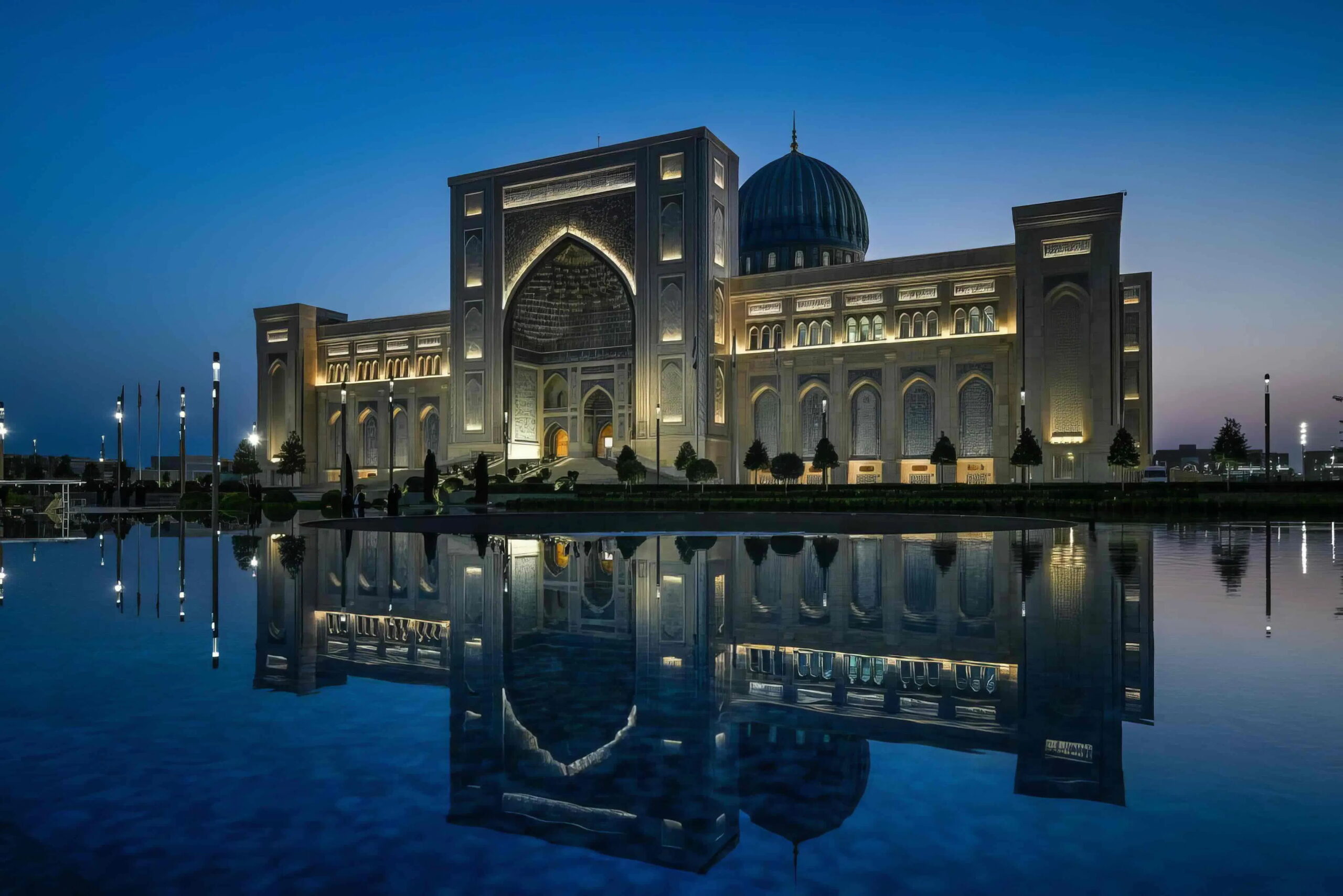
The Islamic Civilization Center in Tashkent completes the 2026 list. Initiated by Uzbekistan’s President Shavkat Mirziyoyev, the project functions as both a tribute to the country’s architectural traditions and a new contemporary landmark for the capital.
The design draws from the monumental vocabulary of the Timurid era, with large portals and a dome rising 65 meters into the air. At the center of the complex, the Qur’an Hall combines light, sound, and multimedia to create a contemplative interior atmosphere. The broader program includes a research center, library, Islamic academy, archive, and conference facilities.
What distinguishes this project from a purely historical recreation is its scientific ambition. Around 1,500 researchers from more than 40 countries contributed to the museum’s content program, turning the building into an active tool for intercultural exchange rather than a static monument. The center represents a model where architecture, education, and diplomacy operate through the same institution.
How Are the World’s Most Beautiful Museums Selected?
The Prix Versailles selection process begins with a broad pool of recently inaugurated projects worldwide. An international jury, typically chaired by a major cultural figure and composed of architects, designers, artists, and public intellectuals, evaluates the candidates. The criteria go beyond visual appearance.
Projects are assessed on five dimensions: innovation in design, creativity in spatial and material solutions, reflection of local heritage and cultural context, ecological efficiency and environmental performance, and the values of social interaction and public participation. The jury specifically looks for buildings that contribute to their cities and communities, not just buildings that photograph well.
From the shortlist of seven, three museums receive additional World Titles: the Prix Versailles (overall winner), a Special Prize for Interior, and a Special Prize for Exterior. These final distinctions are announced at a ceremony at UNESCO headquarters, typically held in December.
Comparison of the 2026 Prix Versailles Museum Selections
The table below summarizes key details of all seven museums on the 2026 list:
| Museum | Location | Architect | Opened | Focus |
|---|---|---|---|---|
| Zayed National Museum | Abu Dhabi, UAE | Foster + Partners | December 2025 | National history, heritage |
| Shenzhen Science & Technology Museum | Shenzhen, China | Zaha Hadid Architects | May 2025 | Science and technology |
| Xuelei Fragrance Museum | Guangzhou, China | Shenzhen Huahui Design Co. | 2025 | Perfumery, sensory heritage |
| MoN Takanawa | Tokyo, Japan | Kengo Kuma | March 2026 | Art, narrative, technology |
| The Lost Shtetl Jewish Museum | Šeduva, Lithuania | Rainer Mahlamäki | 2025 | Jewish heritage, Holocaust memory |
| National Medal of Honor Museum | Arlington, Texas, USA | Rafael Viñoly Architects | 2025 | Military valor, civic memory |
| Islamic Civilization Center | Tashkent, Uzbekistan | Not publicly credited | 2025 | Islamic heritage, intercultural dialogue |
What Do the 2026 Selections Tell Us About Museum Architecture?
Taken together, the seven projects selected by the Prix Versailles 2026 point to several directions in contemporary museum architecture.
First, the museum is no longer only a place of preservation. Every project on this list functions as a civic platform. The Zayed National Museum connects national identity to landscape. MoN Takanawa integrates art, education, and urban life into a single porous structure. The Islamic Civilization Center operates simultaneously as museum, research institute, and diplomatic tool.
Second, climate response has moved from a secondary consideration to a primary design driver. The falcon-wing towers in Abu Dhabi function as ventilation systems. The stainless steel facade in Shenzhen manages solar gain and visual character simultaneously. These are not green features bolted onto conventional buildings. They are the buildings.
Third, the 2026 list includes projects that use architecture to address loss and memory without relying on conventional memorial language. The Lost Shtetl Jewish Museum uses the form of a village to recreate what was destroyed. The National Medal of Honor Museum uses suspended mass and void to create spaces of reflection. Both demonstrate that the architecture of museums can carry emotional weight through spatial strategies rather than surface decoration.
⚠️ Common Mistake to Avoid
Many people assume that “most beautiful museum” lists are based purely on visual appearance. The Prix Versailles criteria are substantially broader: innovation, cultural sensitivity, ecological performance, and social impact all carry weight. A building can be visually striking but still fail the evaluation if it ignores its urban context or excludes the community it is supposed to serve.
Previous Prix Versailles Museum Winners
The museum category is relatively new to the Prix Versailles, having been introduced in 2024 for the award’s 10th anniversary. In 2025, the seven shortlisted museums included the Grand Palais in Paris (following its major restoration), the Audeum Audio Museum in Seoul designed by Kengo Kuma, and the Cleveland Museum of Natural History in the United States. The Audeum received the Special Prize for Interior at the 2025 ceremony.
The 2024 list included projects such as the Simose Art Museum in Hiroshima, which won the Prix Versailles title, the Smritivan Museum in Bhuj, India, and the Polish History Museum in Warsaw. Across all three years, the selections have favored recently opened or renovated institutions that push architectural boundaries while maintaining a strong relationship with their local cultural and environmental context.
If you are interested in how iconic museums around the world shape cultural identity, the Prix Versailles archive provides one of the most carefully judged annual snapshots of where museum design stands at a given moment.
Final Thoughts
The Prix Versailles 2026 list of the world’s most beautiful museums is not a ranking. It is a curated group of seven projects that, in the jury’s view, represent what a museum can be in 2026: a place where architecture tells stories, responds to climate, engages communities, and gives physical form to ideas that matter.
From the impressive museum designs of earlier decades to the latest generation of climate-aware, narrative-driven buildings, the evolution is clear. The most beautiful museums are no longer the ones with the most expensive facades or the tallest atria. They are the ones that serve their cities, honor their subjects, and prove that architecture still has the power to move people, not just house them.
✅ Key Takeaways
- The Prix Versailles 2026 selected seven museums across four continents, evaluating them on innovation, cultural sensitivity, ecological efficiency, and social impact.
- Climate-responsive design is a primary driver in multiple selections, from the falcon-wing ventilation towers in Abu Dhabi to the 95,000-panel stainless steel facade in Shenzhen.
- Two Chinese museums from Guangdong Province made the list, signaling the region’s growing investment in cultural architecture as a global strategy.
- The Lost Shtetl Jewish Museum in Lithuania is the only European project on the list, using village-scale architecture to address memory and loss without monumental gestures.
- Three World Titles (Prix Versailles, Interior, Exterior) will be awarded from this shortlist at a ceremony at UNESCO headquarters later in 2026.



Groupwork Completes 10-Storey Loadbearing Granite Flats in London
Groupwork's Petra Heights on Finchley Road is a 10-storey block of 22...
 illustrarch Editoral Team2 Mins read
Ai Weiwei Installs 500 Cast-Iron Helmets Outside Sydney Museum
Ai Weiwei's 500 cast-iron helmets opened outside Sydney's MCA on 25 September,...
illustrarch Editoral Team2 Mins read
Isamu Noguchi at Lever House Traces Sculptor’s Decades-Long Collaboration with Bunshaft
Lever House's new exhibition pairs Noguchi sculptures with unbuilt garden designs made...
illustrarch Editoral Team2 Mins read
Relocated Maya Structures at Mexico’s Balam Tun Memory Park Face Legal Challenge
INAH archaeologists have filed a complaint against 26 officials over Balam Tun...
illustrarch Editoral Team2 Mins read


Leave a comment