

CVU 2026 Award of Excellence: World’s Best Tall Buildings Honored
The Council on Vertical Urbanism named 73 winners of its 2026 Award of Excellence, spanning 20 countries and 20 categories. From 270 Park Avenue to Dubai's Wasl Tower, here is who was honored, how the categories work, and why the former CTBUH changed its name.
 Elif Ayse Sen3 June 20268 Mins read265




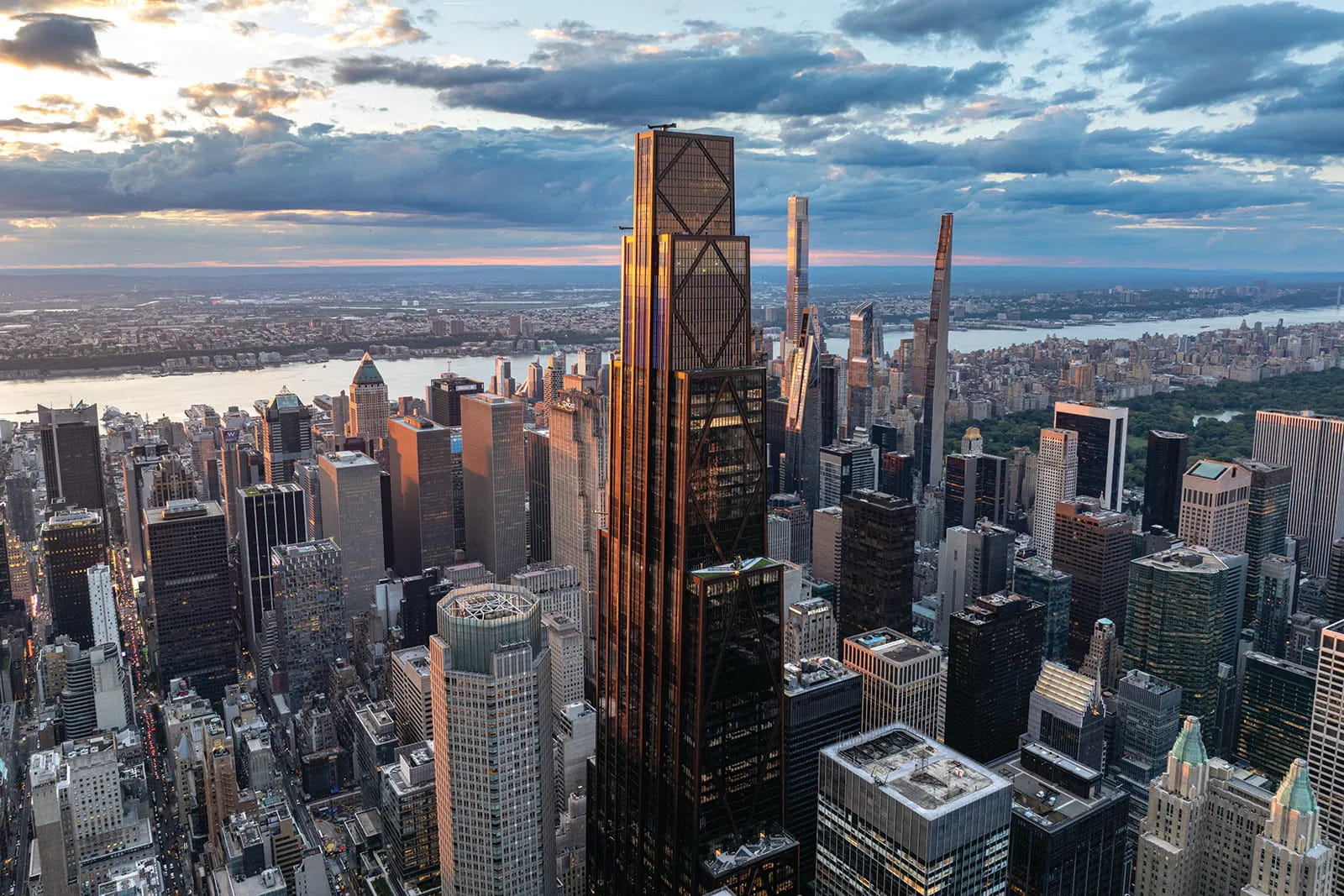

Table of Contents Show
The CVU 2026 Award of Excellence recognized 73 tall buildings, concepts and initiatives from 20 countries across 20 categories and subcategories. Announced in May 2026 by the Council on Vertical Urbanism, formerly the Council on Tall Buildings and Urban Habitat, the honors point to projects that balance density, sustainability and long-term urban value, with final category winners decided at the London VU Summit in October.
This year’s announcement carried more weight than usual. The organization that has crowned the “world’s tallest building” for over two decades arrived under a new name, and its 2026 winners read less like a height contest and more like a statement about where cities are heading. Below is who was honored, how the awards are judged, and why the name change matters for anyone who follows the world’s tallest buildings.
What Is the CVU 2026 Award of Excellence?
The Award of Excellence is the first stage of the Council on Vertical Urbanism’s annual Awards Program, now in its 24th year. Multidisciplinary juries review submissions from architects, engineers, developers, planners, contractors and researchers, then select winners in each category. Those winners are not the final story. They advance to live presentations at the Vertical Urbanism Summit, where separate juries pick the overall “best in category” honors.
The 2026 cycle drew entries at every scale, from single buildings and structural systems to district infrastructure and urban regeneration plans. What set the winners apart, according to the CVU, was a shift away from isolated architectural gestures toward projects that connect mobility, climate-responsive public space, mixed-use density and adaptable building systems. You can review the full program and winner list on the CVU Awards Program page.
The timeline gives a sense of how rigorous the process is. The call for submissions opened in December 2025, with a February 2026 deadline and first-round judging in March. Winners were notified in early May, then announced publicly on 26 May from the council’s Chicago base. That spread of months allows juries to assess documentation in depth before any project advances, which keeps the Award of Excellence meaningful as a first filter rather than a participation badge.
🔢 Quick Numbers
- 73 projects, concepts and initiatives honored (Council on Vertical Urbanism, 2026)
- Winners drawn from 20 countries across 20 categories and subcategories (CVU, 2026)
- 24th consecutive year of the CVU Awards Program (CVU, 2026)
From the CTBUH to the Council on Vertical Urbanism
The biggest change in 2026 is not a single building. It is the name on the trophy. The Council on Tall Buildings and Urban Habitat, the Chicago-based nonprofit that has served as the global arbiter of building height since the 1970s, rebranded as the Council on Vertical Urbanism. The shift signals a wider remit: tall buildings still sit at the center, but the organization now frames them inside the larger systems that shape daily life, including density, infrastructure, livability, climate responsiveness and public realm.
That reframing tracks with how the industry itself has moved. Height alone no longer settles the argument about whether a building succeeds. Connectivity, resource use, adaptability and the everyday experience of the street now carry as much weight in the judging. The same logic shows up in how writers and planners increasingly read skylines as records of policy and economics, a theme covered in our piece on why tall buildings define cities.
Paul De Santis, a partner at Goettsch Partners who chaired the construction category jury, framed the change plainly. He noted that buildings can no longer be judged by their individual presence alone, and that the most consequential work now considers how a project supports connectivity, sustainability and the daily life of the city around it. That perspective, he said, ran through many of the year’s submissions, which is part of why the rebrand felt overdue rather than abrupt.
📌 Did You Know?
The CVU maintains the most detailed public record of tall buildings anywhere, with information and images for more than 45,000 structures worldwide. It is also the body that officially confers the title of “world’s tallest building,” a role it has held across its years as the CTBUH.
For readers who followed the predecessor conferences, the continuity is clear. The 2025 edition in Toronto already centered on low-carbon construction and city-making, themes we covered in our look at CTBUH 2025. The 2026 rebrand formalizes that direction rather than reversing it.
Notable CVU 2026 Award Winners
The full roster spans towers, mid-rise hubs, district plans and forward-looking concepts. A handful of completed supertalls drew particular attention for combining ambition with measurable performance. Architecture outlets including Dezeen have tracked several of these projects through construction over the past two years.
270 Park Avenue, New York
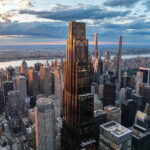
Foster + Partners’ new global headquarters for JPMorganChase took the “Best 300m+” honor. Rising 1,388 feet (423 meters) across 60 stories, it became New York City’s largest all-electric tower, powered entirely by upstate hydroelectric energy and designed for net-zero operational emissions. The tower targets LEED Platinum and WELL standards, and it doubled the ground-level public space of the building it replaced. Project details are available on the Foster + Partners site. If you want the wider context of Manhattan’s vertical record, our guide to the tallest skyscrapers in New York City places it among the city’s defining towers.
🎓 Expert Insight
“the future of vertical urbanism will not be defined by height alone”
Javier Quintana de Uña, CEO, Council on Vertical Urbanism
His comment captures the thread running through the 2026 winners. Density still matters, but the awards now reward how a building conserves resources, supports public life and adapts over time, not just how far it climbs.
Wasl Tower, Dubai
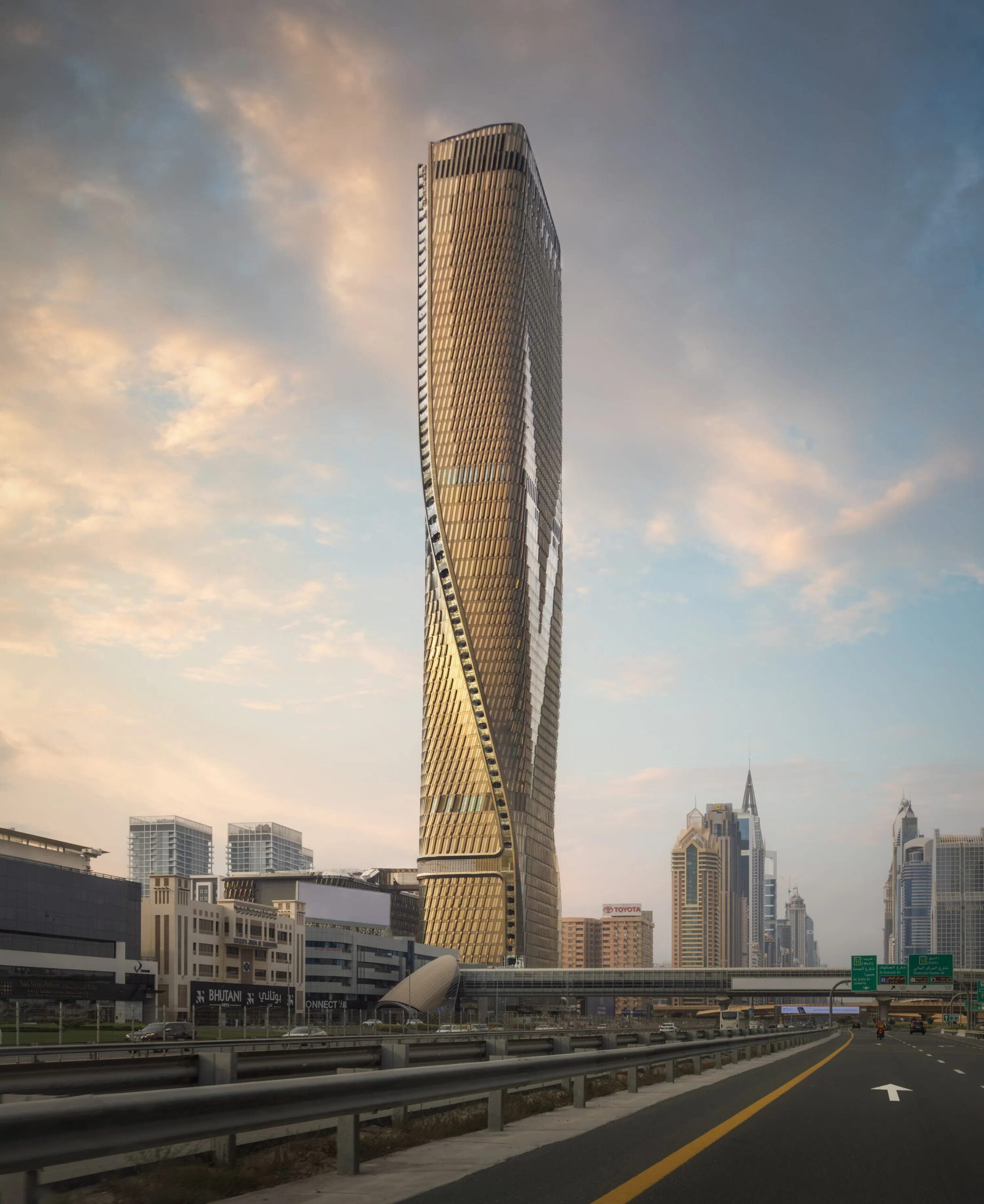
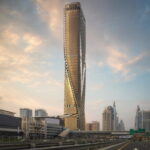
Designed by UNStudio with structural engineer Werner Sobek, the Wasl Tower earned recognition for its performance-driven design. The 302-meter, 64-story tower twists along its vertical axis in a sculptural pose and wears one of the tallest ceramic facades in the world. Thousands of glazed clay fins, each angled at 12.8 degrees through parametric modeling, cut heat gain and improve daylighting in a punishing desert climate. A vertical seam of balconies and green terraces runs up its spine. More on the project sits on the UNStudio site.
CPIC Xintiandi Commercial Center, Shanghai
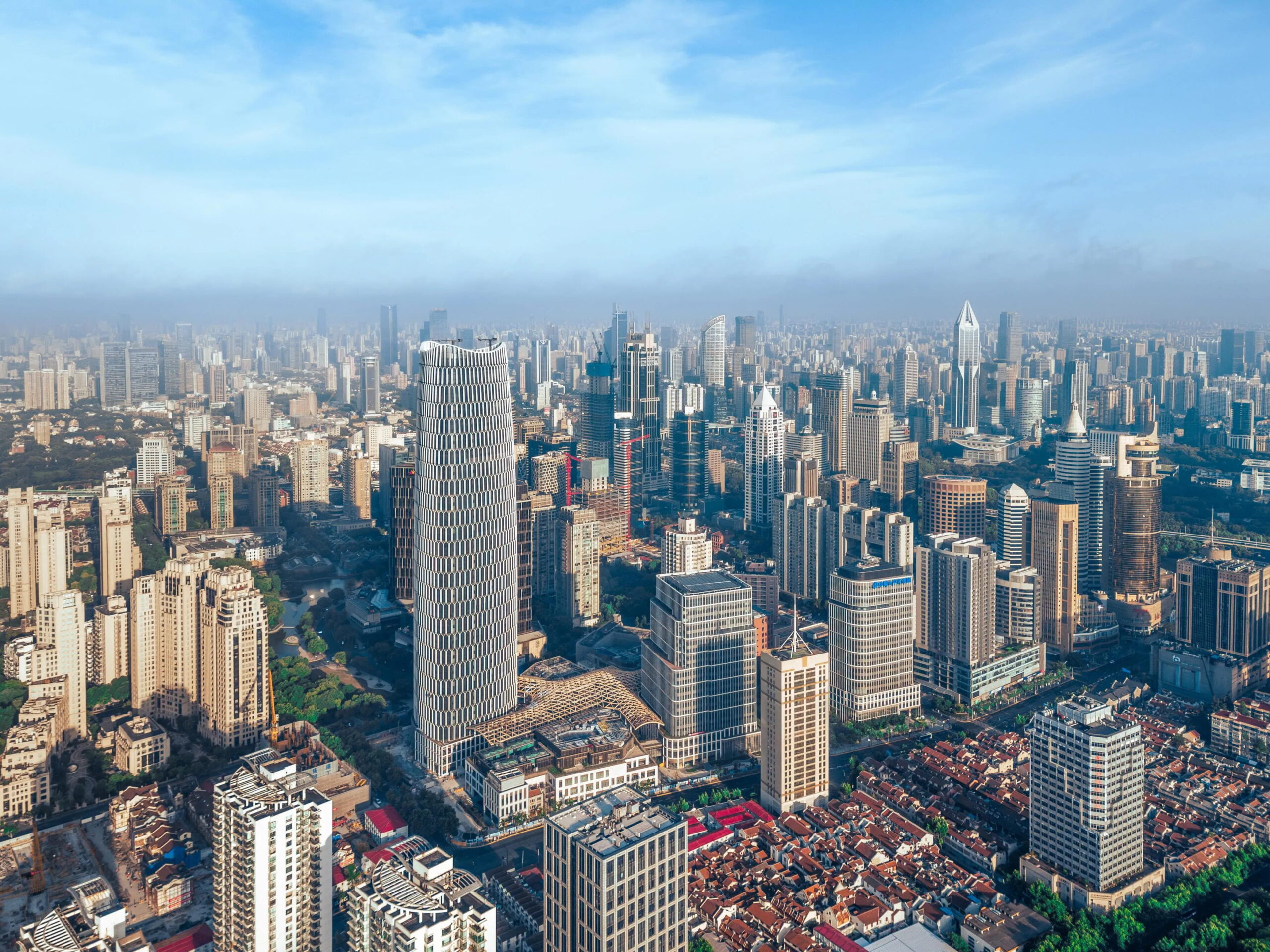
Kohn Pedersen Fox’s mixed-use development in Shanghai’s Huangpu District also drew significant recognition. Its 250-meter signature tower carries a curved form with two-story white metal fins that reference the Shikumen arches of historic Shanghai. The wider scheme weaves retail, office space, preserved heritage buildings and public cultural venues into a pedestrian-focused district, with the signature tower targeting LEED Platinum. Project information is on the KPF site.
2026 Winners at a Glance
The table below summarizes the three standout completed towers and what each was recognized for.
| Project | Location | Architect | Height | Recognized For |
|---|---|---|---|---|
| 270 Park Avenue | New York, USA | Foster + Partners | 423 m (60 floors) | All-electric, net-zero operations, Best 300m+ |
| Wasl Tower | Dubai, UAE | UNStudio | 302 m (64 floors) | Climate-responsive ceramic facade |
| CPIC Xintiandi Commercial Center | Shanghai, China | Kohn Pedersen Fox | 250 m signature tower | Mixed-use, heritage-led urban renewal |
How the CVU Award Categories and Judging Work
The program spans more than 20 categories that go well beyond a single best-building prize. Winners are recognized across height bands, including under 100 meters, 100 to 300 meters, and over 300 meters, alongside regional honors for the Americas, Asia, Europe, Middle East and Africa, and Oceania. Further categories cover urban habitat, innovation, renovation, interior design, construction and engineering, plus forward-looking concept and specialized awards.
Judging runs in two rounds. Expert juries first review online submissions and name the Award of Excellence winners in each category. Those winners then present live at the VU Summit, where juries gather again to choose the overall winner per category. This structure rewards both the documented quality of a project and how well a team can defend its thinking in front of peers.
One detail worth noting for the headline categories: for Best Tall Building, Urban Habitat and Repositioning, presentations must include members of both the ownership and the design team to be considered for the overall award. That requirement reflects a belief baked into the program, that a tower’s success is a shared outcome between who commissions it and who designs it. It also pushes back against the idea that vertical urbanism is purely an aesthetic exercise, since the people paying for and operating a building have to stand behind its performance too.
💡 Pro Tip
If you are studying award shortlists for design references, read the category a project won, not just its name. A tower honored under “construction” or “renovation” often holds more useful lessons for your own work than one that simply won on height or regional prestige.
Sustainability and the Carbon Commitment Initiative
For the second year running, the CVU asked award participants to submit embodied carbon and material usage data through its Carbon Commitment Initiative. The voluntary effort aims to build shared global benchmarks for lower-carbon tall building development. Nearly 50 projects had already contributed data over two years, and the CVU is targeting more than 100 before it releases initial findings at the London summit. The data will feed a public benchmarking dashboard built on the CarbonSpace platform, developed with sustainability partner MVRDV NEXT.
The focus on embodied carbon reflects a hard truth about modern construction. For buildings going up between now and 2050, more than half of their lifetime emissions will come from materials and construction rather than operations. That reality is pushing the field toward reuse, lower-carbon materials and smarter structural systems, themes we examine in our comparison of adaptive reuse versus new construction and our overview of sustainable solutions in contemporary architecture.
What makes the initiative notable is the move from anecdote to shared data. Until recently, claims about a tower’s carbon performance were hard to compare across projects and regions. A public benchmarking dashboard changes that by giving designers a reference point for what good actually looks like at a given height and use type. If the council hits its target of more than 100 contributed projects, the 2026 findings could become one of the first credible global baselines for embodied carbon in tall buildings.
What Comes Next: The 2026 VU Summit in London
The Award of Excellence is the qualifying round. The 2026 VU Summit, running 26 to 29 October in London, is where the winners present their projects live before international juries. Final “best in category” distinctions and the overall awards will be announced at the conference’s awards ceremony and dinner on 28 October. That is also where the CVU plans to publish the first results from its carbon benchmarking work.
For architects, developers and students tracking the field, the summit is worth watching even from a distance. The presentations reveal not just which buildings won, but the reasoning the juries respond to, which is a useful signal for where the profession is setting its bar. If you are newer to high-rise design, our guide to skyscraper architecture covers the history and engineering behind these towers.
✅ Key Takeaways
- The CVU 2026 Award of Excellence honored 73 projects from 20 countries across 20 categories.
- The Council on Tall Buildings and Urban Habitat rebranded as the Council on Vertical Urbanism, widening its focus from height to whole urban systems.
- Standout completed towers include 270 Park Avenue (Foster + Partners), Wasl Tower (UNStudio) and CPIC Xintiandi Commercial Center (KPF).
- Embodied carbon data collection through the Carbon Commitment Initiative is now a recurring part of the program.
- Final category and overall winners will be decided at the 2026 VU Summit in London on 28 October.
Final Thoughts
The 2026 Award of Excellence is a snapshot of a profession recalibrating what success means at height. The winning projects still reach for the sky, but they earn their place through energy strategy, public space, adaptable structure and honest material use. The name change from CTBUH to CVU puts that priority in writing. The real verdicts come in London this October, and they will tell us which of these buildings the industry decides to hold up as the standard.



Groupwork Completes 10-Storey Loadbearing Granite Flats in London
Groupwork's Petra Heights on Finchley Road is a 10-storey block of 22...
 illustrarch Editoral Team2 Mins read
Ai Weiwei Installs 500 Cast-Iron Helmets Outside Sydney Museum
Ai Weiwei's 500 cast-iron helmets opened outside Sydney's MCA on 25 September,...
illustrarch Editoral Team2 Mins read
Isamu Noguchi at Lever House Traces Sculptor’s Decades-Long Collaboration with Bunshaft
Lever House's new exhibition pairs Noguchi sculptures with unbuilt garden designs made...
illustrarch Editoral Team2 Mins read
Relocated Maya Structures at Mexico’s Balam Tun Memory Park Face Legal Challenge
INAH archaeologists have filed a complaint against 26 officials over Balam Tun...
illustrarch Editoral Team2 Mins read


Leave a comment