

MALBA Buenos Aires: Where Contemporary Architecture Meets Latin American Art
MALBA Buenos Aires is Argentina's leading museum of Latin American modern and contemporary art, located in a prize-winning building by Atelman, Fourcade, and Tapia in Palermo. This guide covers the museum's architectural design, permanent collection, key artists like Frida Kahlo and Tarsila do Amaral, temporary exhibitions, and everything you need to plan a visit.
 Sinan Ozen30 May 20268 Mins read190

Table of Contents Show
MALBA Buenos Aires (Museo de Arte Latinoamericano de Buenos Aires) is a private, non-profit museum in Argentina’s capital dedicated to collecting, preserving, and exhibiting modern and contemporary Latin American art. Housed in a prize-winning limestone and glass building by AFT Arquitectos, the museum holds over 700 works spanning the 20th and 21st centuries and draws more than one million visitors each year.

What Is MALBA and Why Does It Matter?
The MALBA art museum Buenos Aires opened its doors on September 21, 2001, founded by Argentine real estate developer and collector Eduardo F. Costantini. Costantini donated more than 200 works from his personal holdings to establish the museum, creating a permanent foundation that would grow well beyond his original gift. The institution’s mission is clear: collect, preserve, study, and share Latin American art from the early 1900s to the present day.
What makes MALBA Buenos Aires Argentina stand apart from other impressive museum designs in the region is its focused scope. Rather than casting a wide net across global art history, the museum concentrates on work produced across Latin America, from Mexico and the Caribbean to the Southern Cone. That tight focus has allowed curators to build one of the strongest collections of its kind anywhere in the world. Artists from Argentina, Brazil, Colombia, Cuba, Chile, Ecuador, Mexico, Uruguay, and Venezuela are all represented, giving visitors a panoramic view of a continent’s creative output.
📌 Did You Know?
In December 2025, MALBA acquired the entire Daros Latinamerica Collection from Zurich, adding 1,233 works by 117 artists to its holdings. The acquisition, one of the largest in Latin American art history, focuses on post-1950 works and has prompted plans to expand the museum’s physical facilities.
Beyond exhibitions, the museo Buenos Aires MALBA functions as a full cultural center. It runs film screenings, literature programs, workshops, public lectures, and educational initiatives aimed at audiences of all ages. Partnerships with institutions like the Tate Modern and Museo Reina Sofía have brought international traveling exhibitions to Buenos Aires, reinforcing the museum’s position as a global reference point for Latin American art.
The Architecture of MALBA: A Building Designed for Art
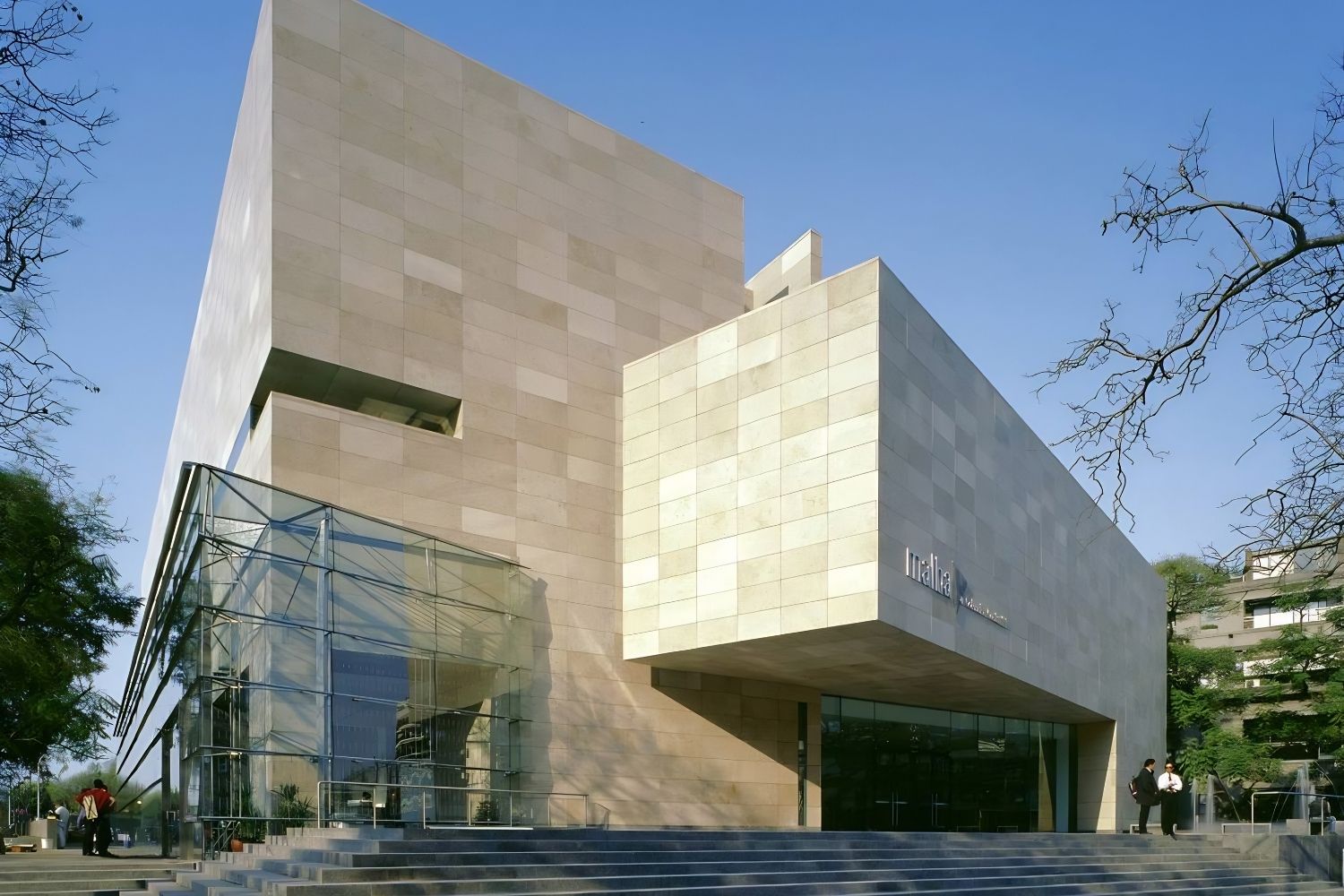
The MALBA museum Buenos Aires sits on Avenida Figueroa Alcorta in the upscale Palermo Chico neighborhood, and its building tells a story of architectural ambition. In the late 1990s, the International Union of Architects organized an open competition within the framework of the VII Buenos Aires Architecture Biennial (BA/97). The contest attracted 450 proposals from 45 countries, and an international jury that included Norman Foster, César Pelli, and Mario Botta selected the winning design.
The first prize went to three young Argentine architects: Gastón Atelman, Martín Fourcade, and Alfredo Tapia, working under the firm AFT Arquitectos. Their design combined large prismatic volumes clad in Argentine limestone with expansive planes of glass, creating a building that balances visual weight with transparency. The structure rises as a series of interlocking geometric blocks, a composition that has been described as polyhedral and influenced by deconstructivist principles while remaining grounded in practical gallery requirements.
💡 Pro Tip
When visiting MALBA, pay close attention to how natural light enters the upper galleries through the building’s glass facades. The architects calibrated glazing angles to prevent direct sunlight from reaching the artwork while still flooding circulation areas with daylight, a detail that keeps gallery temperatures stable and reduces the need for artificial lighting during daytime hours.
Inside, the layout is organized around a central atrium that connects four levels. Galleries sit on the upper floors, where ceiling heights and wall surfaces were designed to comply with international museum conservation standards. The ground floor, renovated in 2017, expanded the entrance hall and improved visitor circulation, responding to the museum’s growing attendance. Neutral wall tones and carefully controlled artificial lighting ensure that the art, not the architecture, remains the focal point once you step into a gallery.
The building also integrates nature into its experience. Mature trees and green courtyards frame the exterior, creating quiet moments between the busy avenue and the museum’s entrance. That boundary between city and culture is handled with the kind of permeable design that has become a benchmark for 21st-century museum architecture.
Key Works in the MALBA Collection
The permanent collection at MALBA in Buenos Aires spans more than a century of Latin American creativity. The semi-permanent exhibition “Third Eye” displays around 220 works from the museum’s holdings alongside highlights from Costantini’s personal collection, and it rotates regularly as new acquisitions enter the inventory.
Several pieces have become internationally iconic. Tarsila do Amaral’s “Abaporu” (1928), purchased by Costantini in 1995 for nearly $1.5 million, is one of the most recognizable paintings in Brazilian art. Frida Kahlo’s “Autorretrato con chango y loro” (1942) and her 1949 portrait “Diego y yo” (acquired at Sotheby’s in 2021 for $34.9 million, the most expensive Latin American artwork ever sold at auction at that time) anchor the Mexican holdings. Diego Rivera’s “Baile en Tehuantepec” (1928), which Costantini purchased at Phillips in 2016, adds further depth to the museum’s representation of early 20th-century Latin American modernism.
The collection moves chronologically from the vanguard movements of the 1920s and 1930s through the surrealism of the 1940s and 1950s, into conceptual, minimalist, and pop art from the 1960s and 1970s, and on to contemporary installation and multimedia work. Argentine artists are especially well represented: Antonio Berni’s trajectory from social realism (“Manifestación,” 1934) to eclectic assemblage shows how one artist’s practice can mirror an entire continent’s political and cultural shifts. Works by Jorge de la Vega, Marta Minojín, Xul Solar, Roberto Matta, Wifredo Lam, and Joaquín Torres-García fill out a roster that few museum collections can match for Latin American breadth.
🎓 Expert Insight
“Before MALBA, there was no single institution of this scale and focus for Latin American modern and contemporary art. It filled a void that the global art world needed.” — Eduardo F. Costantini, Founder of MALBA
Costantini’s vision of creating a centralized home for Latin American art has influenced how institutions worldwide approach regional art collecting, proving that a focused geographic scope can generate global relevance.

Temporary Exhibitions and Cultural Programs
Buenos Aires MALBA museum runs an average of three major temporary exhibitions per season, each lasting roughly three months. These shows are produced in-house, co-produced with partner institutions, or brought to Buenos Aires as traveling exhibitions. Recent collaborations have included joint projects with Qatar Museums and institutions across Europe and the Americas, cementing MALBA’s status as one of the top cultural architecture destinations in the Southern Hemisphere.
The museum’s cultural programming extends well beyond gallery walls. A dedicated Film Department screens classic and contemporary cinema from Argentina and abroad in the first-floor auditorium, typically Thursday through Sunday. The Literature Department hosts readings, residencies (including the annual REM writers’ residency), and book presentations. Education programs serve schools, families, seniors, and visitors with disabilities, including guided tours led by members of the deaf community.
Since 2024, MALBA has also operated MALBA Puertos, a satellite space in the town of Escobar, about 50 km north of the city. Designed by Herreros Arquitectos from Spain, this 5,500-square-meter venue blends galleries, public spaces, gardens, and woodlands. It offers free admission and brings MALBA’s programming to communities outside the capital, an expansion that reflects the museum’s broader ambition to decentralize access to Latin American art.
Video: MALBA, One of Latin America’s Best Museums
This video provides an overview of the MALBA museum, its collection highlights, and its role within the cultural landscape of Buenos Aires.
How MALBA Buenos Aires Influenced Museum Design in Latin America
The MALBA Buenos Aires museum did more than add a building to the Palermo skyline. It demonstrated that a focused, privately funded institution could achieve international credibility rapidly, a model that has since been replicated across the continent. The competition process itself, attracting 450 entries from 45 countries and judged by some of the most influential architects of the era, signaled that Buenos Aires could host architectural talent on a global stage.
AFT Arquitectos’ design influenced how subsequent Latin American museums approached the relationship between building envelope and gallery interior. The MALBA’s limestone-and-glass vocabulary offered an alternative to the titanium spectacle of Frank Gehry’s Guggenheim Bilbao (1997), proving that a contemporary museum could make a strong architectural statement through material restraint and geometric clarity rather than sculptural excess. The building’s integration into its neighborhood, sitting at street level with accessible green space rather than behind a fortress-like plaza, anticipated the civic-minded museum design that has become standard in the 2020s.
🏗️ Real-World Example
MALBA Puertos (Escobar, 2024): This satellite venue by Herreros Arquitectos covers 5,500 m² and was designed without rigid circulation paths. Galleries, gardens, and woodland areas merge into a single experience with free admission. The project shows how established urban museums can extend their reach into suburban and rural communities without replicating the flagship building’s formal language.
Planning Your Visit to MALBA Buenos Aires
The museum is located at Avenida Figueroa Alcorta 3415, in the Palermo Chico (Barrio Parque) section of Buenos Aires. It sits within walking distance of several parks, including the Jardín Japonés and the Rosedal (Rose Garden).

Opening Hours and Access
MALBA en Buenos Aires is open Wednesday through Monday, from 12:00 to 20:00, with Wednesday hours starting at 11:00. The museum is closed every Tuesday. On December 24 and 31, it closes at 18:00, and it remains closed on December 25 and January 1. Galleries close 15 minutes before the museum’s closing time.
Getting there is straightforward. Several bus lines stop within a short walk, including lines 10, 37, 67, 102, 124, and 130. The nearest subway station is Facultad de Derecho on Line H, about 700 meters away. An Ecobici (public bike-sharing) station sits near the main entrance. Tickets can be purchased online in advance to skip the line.
💡 Pro Tip
Visit on a Wednesday morning, when the museum opens an hour earlier at 11:00. Crowds are typically lighter in the first hour, giving you quieter access to the permanent collection galleries before the afternoon rush. After your visit, the Palermo parks are right next door for a walk.
Visitor Amenities
The ground-floor cloakroom accepts bags larger than 30 x 40 cm (required for gallery access). Non-flash personal photography is allowed. The Coronado Restaurant operates on the ground level with extended hours, and a smaller café on the first floor is open during regular museum hours. MALBA is fully accessible, with elevators connecting all floors, ramps, adapted restrooms, and strollers available on request.
The museum offers discounts for students, teachers, and seniors with valid ID. Members of CIMAM, ICOM, and SiPreBA receive additional benefits. Group visits of more than 10 people require advance booking.

MALBA in the Context of Buenos Aires Architecture
Buenos Aires has no shortage of architectural landmarks, from the Beaux-Arts grandeur of the Teatro Colón to the modernist housing blocks along Avenida del Libertador. MALBA fits into this landscape as a marker of the city’s late-1990s cultural confidence, a period when private investment in the arts was reshaping entire neighborhoods. The Palermo district, already home to parks, embassies, and cultural venues, gained a new anchor that connected fine art with cultural architecture tourism.
For visitors interested in architecture, pairing a MALBA visit with a walk through Palermo’s residential streets reveals how Buenos Aires layers different eras on top of each other. Art Nouveau townhouses sit beside mid-century apartment blocks and new glass-fronted residential towers. The museum itself, with its angular limestone planes and generous glazing, reads as a product of the same period that produced the contemporary architecture that defines Palermo’s current identity.
⚠️ Common Mistake to Avoid
Many visitors assume MALBA covers all Argentine art. It does not. The museum’s scope is specifically Latin American art from the 20th century onward, not Argentine art alone or art from earlier periods. For colonial-era and 19th-century Argentine art, the Museo Nacional de Bellas Artes, located a short walk away on Avenida del Libertador, is the better destination.
Final Thoughts
MALBA Buenos Aires occupies a rare position. It is simultaneously a world-class art institution, a piece of notable contemporary architecture, and a civic space that has reshaped the cultural identity of an entire neighborhood. Eduardo Costantini’s original donation created the foundation, but the museum’s ongoing acquisitions, its expanding satellite network, and its deep programming in film, literature, and education have turned it into something larger than any single collection could sustain on its own.
For architects, the building by Atelman, Fourcade, and Tapia remains a case study in how geometric restraint, honest materials, and careful site integration can produce a museum that serves its art without disappearing behind it. For art lovers, MALBA offers a concentrated, deeply informed view of Latin American creativity that few institutions can rival. And for anyone visiting Buenos Aires, it is simply one of the best ways to spend an afternoon in Palermo.
Visiting hours, ticket prices, and exhibition schedules are subject to change. Check the official MALBA website for the most current information before planning your visit.


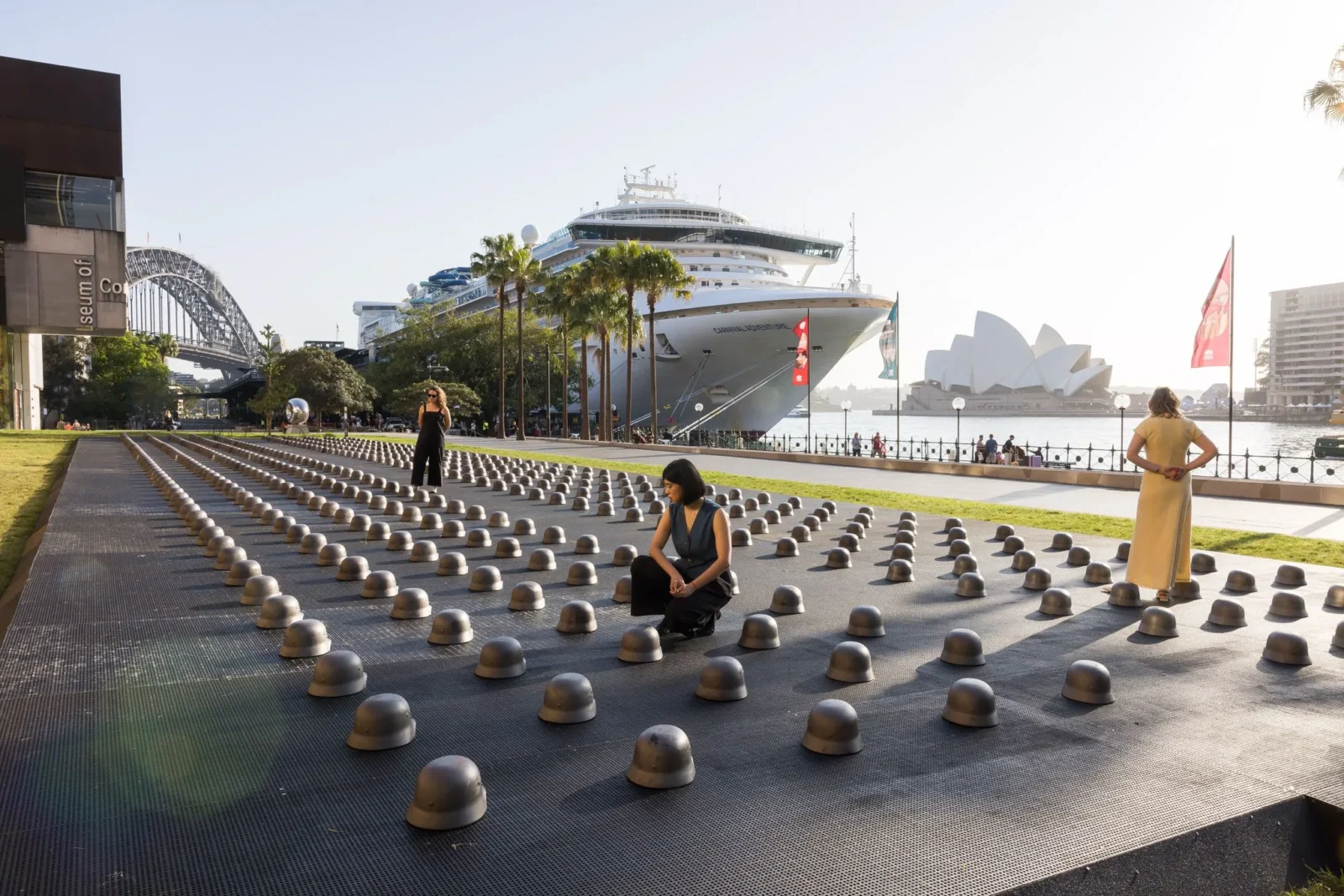
Ai Weiwei Installs 500 Cast-Iron Helmets Outside Sydney Museum
Ai Weiwei's 500 cast-iron helmets opened outside Sydney's MCA on 25 September,...
 illustrarch Editoral Team2 Mins read
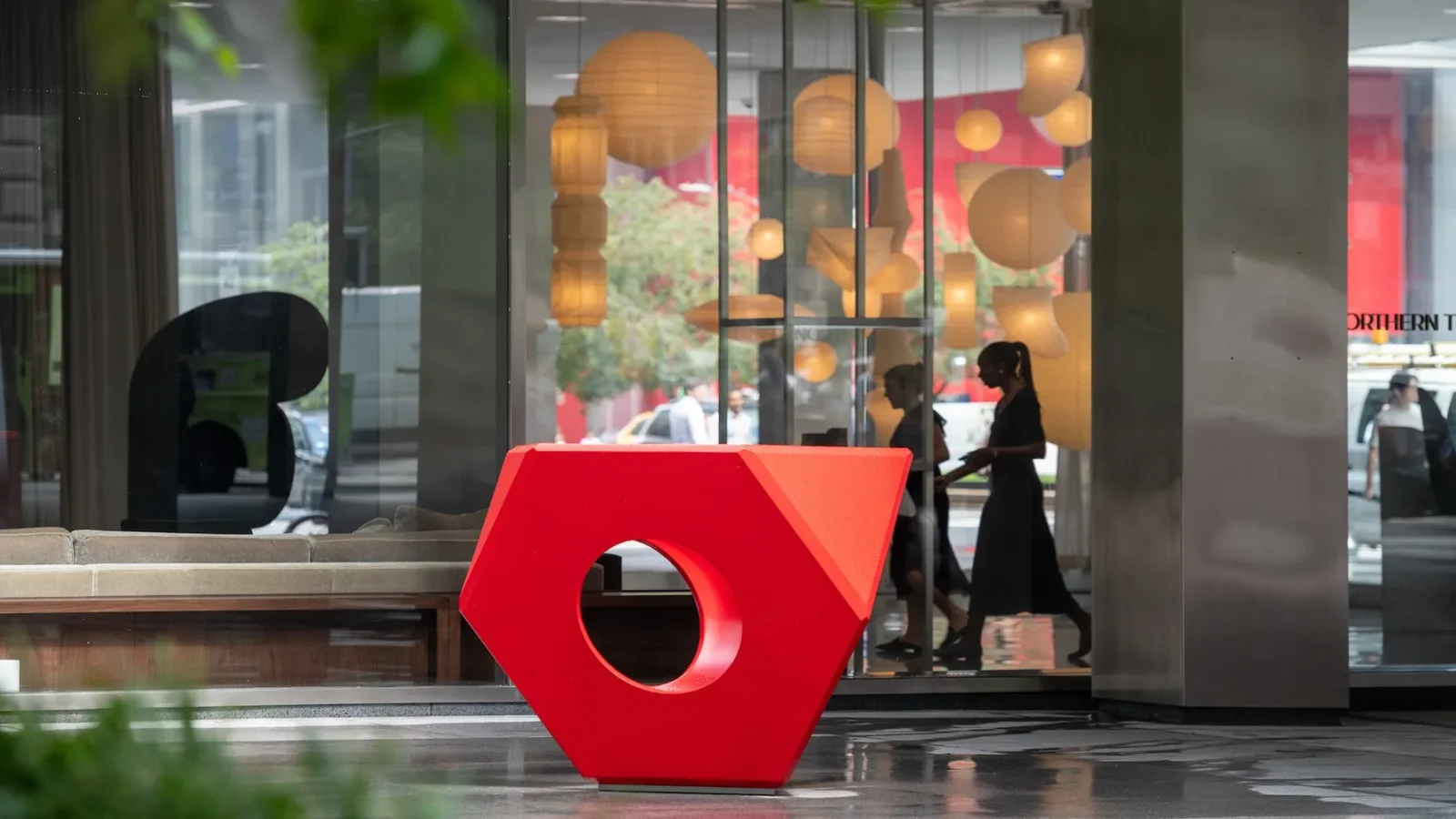
Isamu Noguchi at Lever House Traces Sculptor’s Decades-Long Collaboration with Bunshaft
Lever House's new exhibition pairs Noguchi sculptures with unbuilt garden designs made...
illustrarch Editoral Team2 Mins read

The Frida Kahlo Apartment Building in San Francisco Is Listed for $8 Million
The San Francisco apartment building where Frida Kahlo and Diego Rivera lived...
 Elif Ayse Sen9 Mins read
Museum Cafes: 7 of the World’s Most Stunning Places to Sit Down
7 museum cafes where the architecture does the work: Victorian refreshment rooms...
Elif Ayse Sen9 Mins read


Leave a comment