

Golden Ratio in Architecture
The Golden Ratio, also called Phi or the Divine Proportion, appears throughout nature and architecture. From the Great Pyramid of Giza and the Parthenon to Buddhist stupas and Islamic mosques, this timeless proportion has influenced harmony, balance, and beauty in architectural design.
 Bahattin Duran28 January 202621 Mins read4.9k
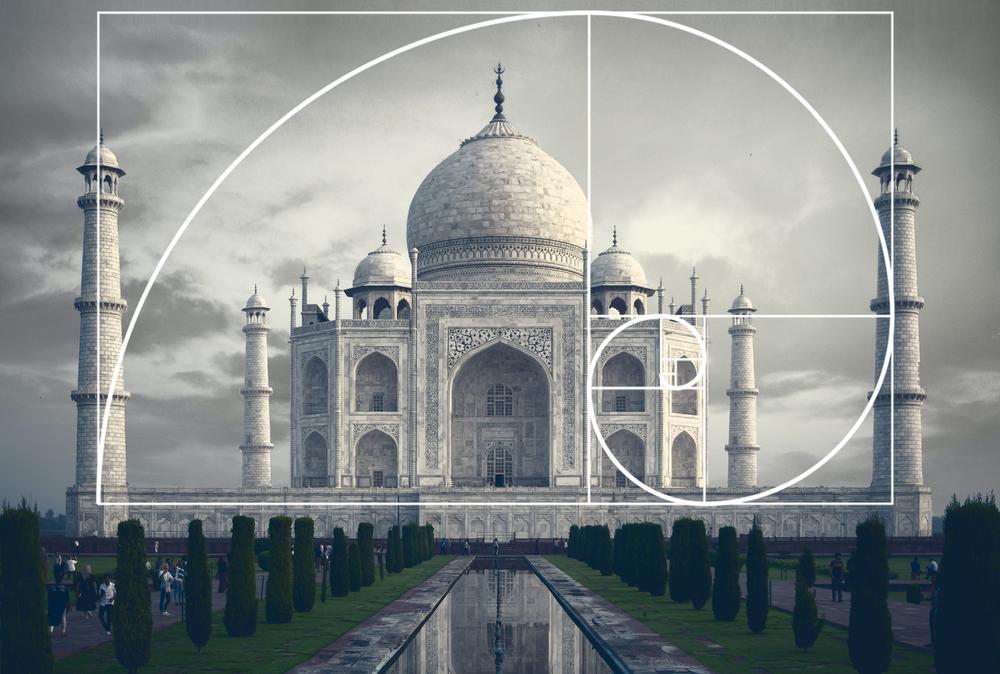
Table of Contents Show
Quick Answer: The golden ratio is a proportion of roughly 1:1.618 that many architects use to create balanced, harmonious designs. Found in nature and used since antiquity, it guides the proportions of facades, floor plans and openings in buildings from the Parthenon to Notre-Dame, helping spaces feel naturally pleasing to the human eye.
What is the Golden Ratio?
Different names have been used to define the Golden Ratio in the past and in the present. A few examples include Phi (Φ), the Golden Mean, the Divine Section, the Golden Proportion, the Divine Proportion, and the Divine Ratio. Sometimes referred to as the sacred ratio or aurea proportion, this number has inspired thinkers for millennia. Almost all of nature’s elements contain this golden ratio (1:1.618). The golden ratio can be found in nature in everything from the structure of the universe to the human body, clouds to flowers and leaves — making it one of the most striking examples of divine proportion in nature. Nearly all of the lovely things in the world around us have this ratio. This same principle of harmony continues to inspire designers today. Even in modern interior design, platforms like AweDeco explore how proportions, balance, and symmetry influence the way we experience spaces.
In nature, the golden ratio can be found repeatedly. Additionally, it has the power to balance and beautify elements. As a result, since ancient times, mankind have used the same proportion in mathematics, art, music, and building. Let’s make an effort to comprehend this proportion’s origins more thoroughly. In this article, we will talk about the assumptions and pioneering works about how the golden ratio emerged in architecture. The concept has fascinated mathematicians since Euclid first described it around 300 BCE in his treatise “Elements.” Understanding what is the golden ratio in architecture begins with appreciating its mathematical foundation and its profound influence on both art and the built environment.

What Is the Golden Ratio in Architecture?
The golden ratio in architecture refers to a mathematical proportion of approximately 1.618, historically associated with visual harmony, balance, and natural order. Also known as the golden section in architecture, the golden number, or simply phi in architecture, this ratio is used by architects to define relationships between building elements such as height and width, façade divisions, window placement, column spacing, interior layouts, and even urban proportions. When exploring what is golden ratio in architecture, we discover a timeless design principle that connects mathematical precision with aesthetic beauty.
Rather than functioning as a rigid rule, the golden ratio acts as a guiding framework that helps designers create compositions that feel intuitively pleasing to the human eye. It appears frequently in nature, classical art, and historic architecture, which explains why spaces designed around this proportion often feel calm, balanced, and timeless. In architecture, the golden proportion in architecture bridges mathematics and aesthetics, transforming abstract numbers into spatial experience. Understanding these proportional relationships is essential for both architectural presentations and practical design work. The golden proportion ratio in architecture continues to guide designers in creating visually compelling spaces.
Free Online Golden Ratio Calculator
Nearest Fibonacci Numbers
Golden Rectangle
Image Golden Ratio Overlay

What Is the Mathematics Behind the Golden Ratio?
The golden ratio is closely connected to the Fibonacci sequence—a series of numbers where each number is the sum of the two preceding ones: 0, 1, 1, 2, 3, 5, 8, 13, 21, 34, 55, 89, and so on. As the sequence progresses, the ratio between consecutive numbers approaches 1.618. This connection between Fibonacci and architecture has influenced designers for centuries. This sequence was introduced to Western mathematics by Leonardo of Pisa (Fibonacci) in his 1202 book “Liber Abaci.”
Mathematically, the golden ratio formula can be expressed as:
- a/b = (a+b)/a = 1.618…
- Where ‘a’ is the longer segment and ‘b’ is the shorter segment
- The value of the golden ratio (Phi) is exactly (1 + √5) / 2 ≈ 1.6180339887
This equation creates a unique property: when you divide a line into two parts so that the whole length divided by the longer part equals the longer part divided by the shorter part, you get the golden ratio — also called the golden section ratio or golden cut ratio. This relationship produces the golden rectangle—a shape that can be subdivided infinitely while maintaining the same proportions.
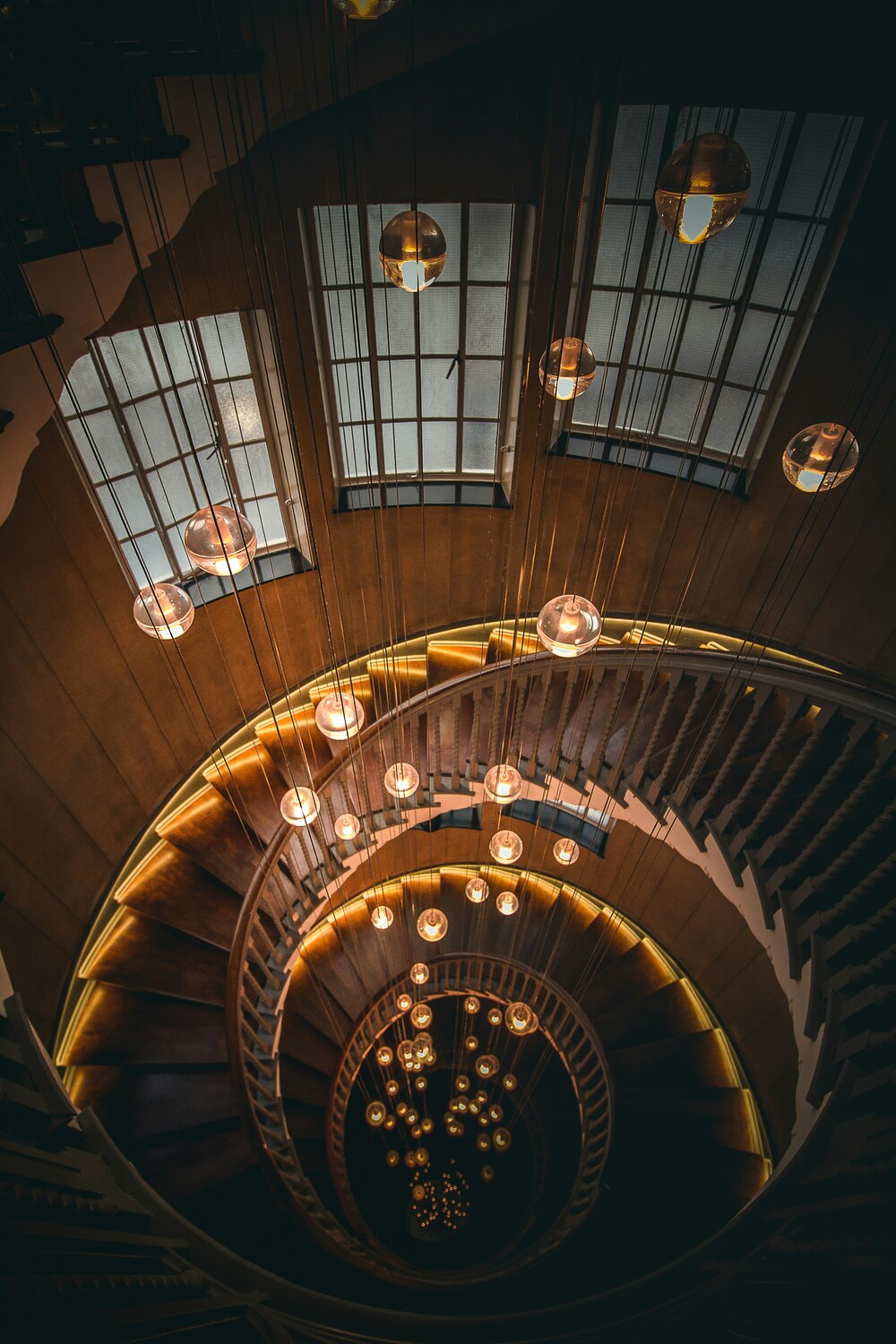
The golden spiral emerges when you draw quarter circles through a series of golden rectangles, creating a logarithmic spiral that appears throughout nature—from nautilus shells to hurricane formations to the spiral arms of galaxies. Related geometric forms include the golden ratio triangle (also known as the golden gnomon) and various golden ratio circle constructions found in sacred geometry. This mathematical foundation is essential for understanding how the golden ratio is used in architecture and why it produces such visually pleasing results.
Watch: Understanding the Golden Ratio
Video: Vox explains the science and myth behind the Golden Ratio

How Is the Golden Ratio Used in Architecture and Art?
The relationship between the golden ratio in architecture and art has been explored for millennia. Artists and architects share the same proportional language, using the 1.618 ratio to create visual harmony across different media. The golden rectangle, for instance, has been a foundational compositional tool in painting since the Renaissance, just as it has guided façade design in buildings.
From Leonardo da Vinci’s Vitruvian Man — which famously mapped the divine proportion in the human body — to the proportions of Renaissance paintings, the golden ratio has unified artistic and architectural practice. The golden mean ratio connects canvas composition and building façades through the same mathematical principle: a proportion that feels naturally balanced. The golden ratio also appears in human anatomy, from the segments of our fingers to the proportions of the face, which may partly explain why phi-based compositions feel so instinctively right. The question of where the golden ratio exists in architecture and art can be answered by examining how both disciplines use the same mathematical principles to achieve visual perfection.
How Is the Golden Ratio Used in Architecture?
Many people have asserted that ancient monuments have proportions that closely equal 1.618 but frequently rely on conjectural interpretations and approximate measurements. For instance, assertions have been made regarding the proportions of the golden ratio in Chinese, Olmec, Egyptian, Sumerian, and Greek vases, as well as Cretan and Mycenaean artifacts from the late Bronze Age. These predate the Greek mathematicians who are the first to be known to have studied the golden ratio by about 1,000 years. The historical sources, however, are sketchy, and because the analyses make use of various methodologies, it is challenging to compare them. For instance, it’s said that Stonehenge’s concentric circles have the golden ratio’s dimensions.
Understanding how is golden ratio used in architecture requires examining both historical precedents and modern applications. The question of how is the golden ratio used in architecture can be answered by looking at specific design strategies that architects employ to achieve visual harmony.
Practical Applications in Building Design
Architects apply the golden ratio in building design in several ways to achieve balanced compositions:
- Façade proportions: The relationship between a building’s width and height
- Window and door placement: Positioning openings at golden ratio intervals
- Column spacing: The distance between columns relative to their diameter
- Room dimensions: Length-to-width ratios in floor plans
- Structural grids: Organizing building layouts using golden rectangles
- Decorative elements: Proportioning ornamental details and moldings
- Interior layouts: Applying golden ratio principles in interior design and furniture placement
These applications demonstrate how golden ratio is used in architecture to create spaces that resonate with human perception. The golden ratio in building elements creates a sense of order that viewers find inherently satisfying.
What Are Examples of the Golden Ratio in Historical Buildings?
Throughout history, buildings with golden ratio proportions have captivated observers with their sense of harmony and balance. These examples of golden ratio in architecture span cultures and centuries, demonstrating the universal appeal of this mathematical proportion. Let’s explore the most significant examples of the golden ratio in architecture.
The Great Pyramid of Giza (c. 2570 BC)
One of the oldest and best golden ratio examples in architecture, the Great Pyramid of Giza (2570 BC) demonstrates early use of Phi. The pyramid’s height divided by one of its base’s sides yields a ratio that roughly equals Phi — making the golden ratio pyramid connection one of the most studied in architectural history. According to historian John F. Pile, Egyptian architects sought golden proportions, and it is common to see the 1.618:1 ratio in their architectural details, art, and everyday objects. However, some scholars argue these proportions may have been coincidental rather than intentional, as the Egyptians may not have known the mathematical concept we now call the golden ratio. This building with golden ratio proportions remains one of the most debated structures when it comes to the phi ratio in ancient construction.

The Parthenon, Athens (447-432 BC)
Greek artists and architects were aware of or applied the golden ratio as a rule of proportion for aesthetics — a tradition deeply rooted in the golden ratio in Greek design philosophy. The Acropolis‘ construction is said to have begun approximately 600 BC, although the pieces allegedly showing the golden ratio proportions were produced between 468 and 430 BC. Greek goddess Athena had a temple called The Parthenon. It is said that a series of golden rectangles encircle the Parthenon’s facade, as well as other parts of it and elsewhere. This is perhaps the most famous example of where does the golden ratio exist in architecture.
Key observations about the Parthenon and the golden ratio:
- The width to height ratio of the façade approximates 1.618
- Column spacing relates to column diameter by the golden ratio
- The height of the columns to the height of the entablature
Important note: Recent scholarly analysis suggests the Parthenon may actually use a 4:9 ratio system rather than the golden ratio specifically. The debate continues among architectural historians about where does the golden ratio exist in architecture art and whether ancient builders intentionally employed these proportions.

Credit: List of works designed with the golden ratio – Wikipedia
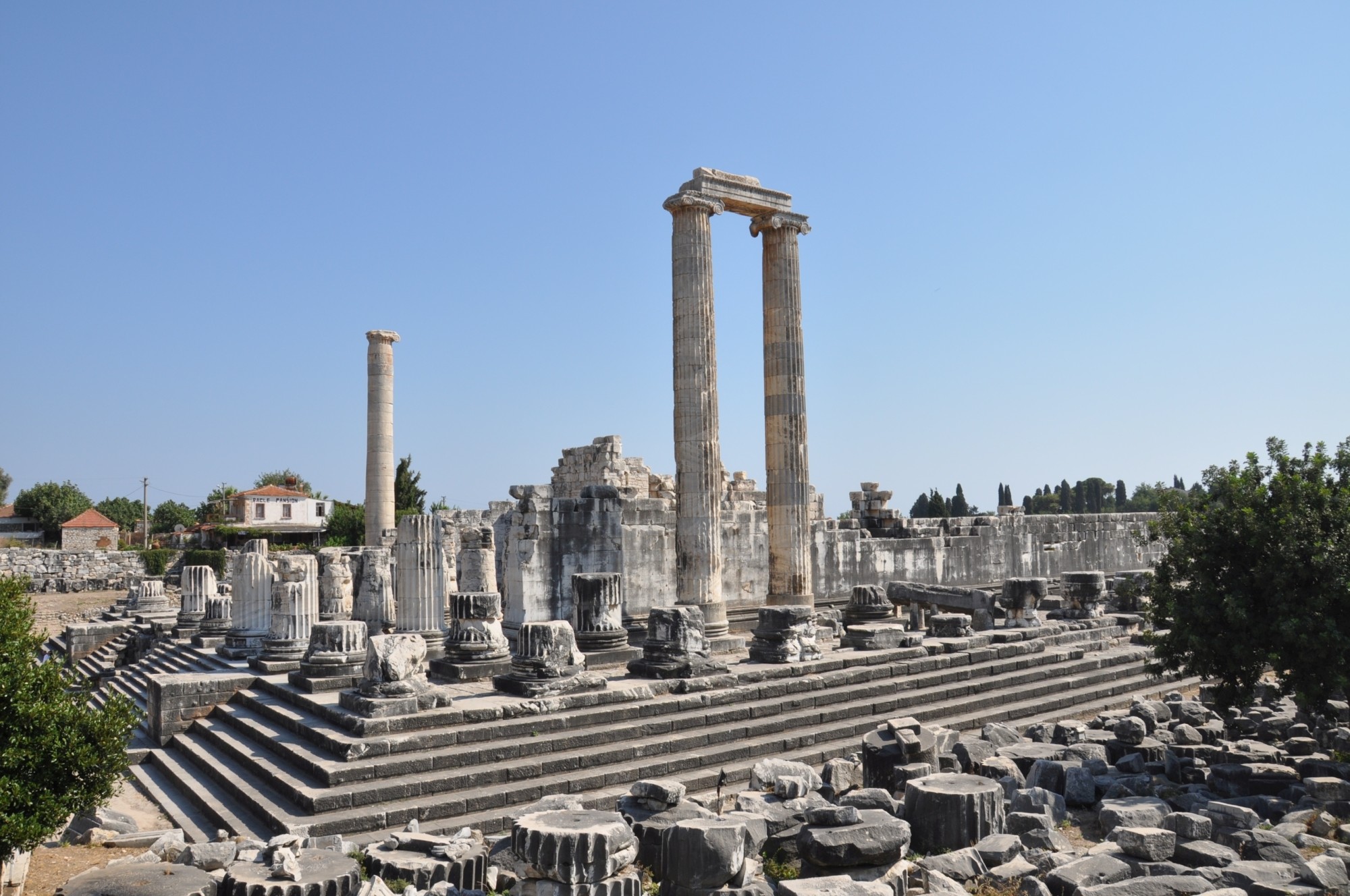
The Didyma Temple of Apollo
The notion that the golden ratio was used in the design is contested by several more recent studies. According to Lothar Haselberger, the Didyma Temple of Apollo, which was created by Paionios of Ephesus and Daphnis of Mileto, had golden proportions. This represents another significant example of golden ratio in buildings from the ancient world.
Chichen Itza, Mexico
The Chichen Itza Castle‘s interior design follows the golden ratio. The golden ratio connects the exterior areas to the inside space. Studies by Manuel Amabilis between 1950 and 1960 analyzed the El Castillo pyramid and found proportions derived from polygons, circles, and pentagrams that relate to the golden ratio. This Mesoamerican structure stands as one of the remarkable buildings designed with the golden ratio outside the Western tradition.

Credit: Chichen Itza Ruins | Ancient buildings found at Chichen Itza
Great Mosque of Kairouan, Tunisia (c. 670 CE)
The golden ratio was also used on Great Mosque of Kairouan in Tunisia. The plan, prayer area, court, and minaret of the Great Mosque of Kairouan are all said to have been created using the golden ratio. This is one of the oldest mosques in North Africa and demonstrates how the golden ratio in architecture transcended cultural boundaries. The mosque exemplifies how applying golden ratio in buildings creates sacred spaces with profound visual harmony.

Credit: Kairouan (sacredsites.com)
Borobudur Temple, Indonesia (8th-9th Century)
Buddhist architecture had used golden ratio. According to Pile, the ratio between the diameter of the greatest circular terrace and the square base of the largest Buddhist stupa in the world is 1.618:1 at Borobudur Template in Java, Indonesia. This is one of the most impressive examples of golden ratio in architecture from Southeast Asia.

Credit: Borobudur travel – Lonely Planet | Indonesia, Asia

Credit: Borobudur & Dieng Plateau Private Day Trip from Yogyakarta (civitatis.com)
How Did the Golden Ratio Travel From Antiquity to the Renaissance?
The proportion did not disappear after antiquity. Gothic builders working on cathedrals such as Notre-Dame de Paris and Chartres organised facades, rose windows, and bay rhythms around proportional grids, and several elements of these elevations sit close to phi. Medieval masons rarely wrote down their methods, so what survives is the geometry itself rather than an explanation of it — which is exactly why the Gothic cases remain contested. For a detailed reading of one cathedral, see our study of the golden ratio in Notre Dame Cathedral.
The Renaissance brought the proportion back into print. In 1509 the friar and mathematician Luca Pacioli published De Divina Proportione, illustrated by Leonardo da Vinci, which framed phi as a near-sacred rule of harmony. That book put the ratio directly in the hands of architects like Leon Battista Alberti and Andrea Palladio, who built proportional theory into the facades and plans of palazzi and villas across Italy. Islamic architecture ran a parallel track: the courts and muqarnas of the Alhambra in Granada are frequently analysed through proportional grids of the same family.

📌 Did You Know?
The name “golden ratio” is far younger than the buildings linked to it. The German term goldener Schnitt appears in the early 19th century, and the English “golden ratio” became common only in the 20th. The Greeks and Renaissance writers used phrases like “extreme and mean ratio” and “divine proportion” instead — so any claim that an ancient architect “used the golden ratio” is using a modern label for an older idea.
Historical Timeline of the Golden Ratio in Architecture
The table below maps the major moments when the golden ratio appeared in, or was written into, architectural practice. Note how far apart the buildings and the mathematics sit: the structures usually come first, the formal definition much later.
| Period | Event or structure | Why it matters |
|---|---|---|
| c. 2560 BCE | Great Pyramid of Giza | Earliest structure whose proportions approximate phi — slant height to half base. Intent is debated. |
| c. 500 BCE | Pythagorean study of ratios | Early Greek interest in mathematical proportion and harmony as a design principle. |
| 447–438 BCE | Parthenon, Athens | Front elevation approximates a golden rectangle; scholars dispute this against the documented 4:9 system. |
| c. 300 BCE | Euclid’s Elements | First formal definition, as “extreme and mean ratio”. The mathematics is finally written down. |
| 1163–1345 CE | Notre-Dame de Paris | Gothic facade divisions and rose window layout read close to phi; masons left no written method. |
| 1202 CE | Fibonacci’s Liber Abaci | Introduced the sequence whose consecutive ratios converge on phi. |
| 1509 CE | Pacioli’s De Divina Proportione | First book devoted to the ratio, illustrated by Leonardo da Vinci; reaches Alberti and Palladio. |
| 16th century | Palladian villas | Proportional systems applied to room dimensions and plans, not only facades. |
| 1943–1955 | Le Corbusier’s Modulor | First complete measurement system built on the golden ratio and human proportion — and documented by its author. |
| 1952 | UN Secretariat, New York | Slab facade proportioned through the Modulor; Le Corbusier contributed to the design team. |
💡 Pro Tip
When you study a historical building for the golden ratio, measure the bounding rectangle of the main facade first, then check internal divisions such as the colonnade or window band. Starting from the overall envelope keeps you from forcing 1.618 onto small details that happen to fit by chance.
Golden Ratio Buildings: Which Claims Are Documented and Which Are Disputed
Most lists of golden ratio buildings repeat the same examples without separating the cases where an architect actually used the ratio from the cases where somebody measured a photograph afterwards and found it. The distinction matters, because only the first group tells you anything about how the ratio is used in practice.
| Building | Architect and date | Status of the claim | Why |
|---|---|---|---|
| Unité d’Habitation, Marseille | Le Corbusier, 1952 | Documented | Le Corbusier used the golden ratio explicitly through his Modulor proportioning system |
| Villa Stein, Garches | Le Corbusier, 1927 | Documented | Designed on a proportional grid derived from the ratio |
| Parthenon, Athens | 5th century BC | Disputed | Widely claimed, but recent studies dispute that the ratio was used in the design |
| Great Pyramid of Giza | c. 2560 BC | Disputed | Claimed by pyramidologists; other historians propose unrelated geometric explanations |
| Notre-Dame de Paris | 12th–13th century | Disputed | Claimed by Frederik Macody Lund; scholars note the ratio was unknown to builders before 1509 |
| UN Secretariat, New York | Harrison and others, 1952 | Disputed | Often described as three golden rectangles; the three visible rectangles have different heights |
The pattern is consistent: documented use appears in the twentieth century, when architects wrote down their proportioning systems, and disputed use appears in buildings that predate the ratio being known to European builders at all. The dispute for each of these cases is set out in Wikipedia’s list of works designed with the golden ratio.
Where Does the Golden Ratio Appear in Real Life and Nature?
Beyond buildings and artworks, the golden ratio appears throughout the natural world and everyday life. Sunflower seed spirals, pinecone scales, DNA double helix proportions, hurricane formations, and even galaxy arms all exhibit ratios close to 1.618. These golden ratio in nature examples help explain why this proportion feels so familiar to the human eye — our brains have evolved surrounded by these patterns. The golden ratio on earth manifests at every scale, from microscopic cell structures to the proportions of continents. This deep connection to the natural world is a key reason why architects who incorporate the golden ratio in design create spaces that feel inherently comfortable and well-ordered.
How Does Modern Architecture Use the Golden Ratio?
Le Corbusier’s Modulor System
Perhaps no modern architect embraced the golden ratio more explicitly than Le Corbusier. In 1943, he developed the Modulor—a proportional system based on the golden ratio combined with human body measurements. Le Corbusier described it as “a range of harmonious measurements to suit the human scale, universally applicable to architecture and to mechanical things.” This system was influenced by earlier work on human proportions, including Leonardo da Vinci’s Vitruvian Man.
The Modulor divided the human body at the navel according to the golden ratio, then further subdivided at the knees and throat — linking the golden mean ratio to the human body in a practical, measurable way. This system influenced several of his major works and demonstrated how is the golden ratio used in modern architecture:
- Unité d’Habitation, Marseille (1952): The entire building, apartments, and prefabricated furniture follow Modulor proportions
- Villa Savoye, Poissy (1931): Golden ratio-based regulating lines determined façade dimensions and window placements
- UN Headquarters, New York (1952): Co-designed with Oscar Niemeyer, the building’s height-to-width ratio reflects golden proportions

Contemporary Examples of Buildings with Golden Ratio
The golden ratio in architecture continues to influence modern architecture. Here are notable buildings with the golden ratio from the contemporary era:
- CN Tower, Toronto: The observation deck’s position relates to the tower’s total height by approximately 1.618
- Sydney Opera House: The sail-like roof shells exhibit golden ratio proportions in their curved forms
- Apple Park, Cupertino: Foster + Partners’ circular headquarters incorporates golden ratio principles in its ring structure
- Sagrada Familia, Barcelona: Antoni Gaudí used golden ratio relationships in the façade and spire proportions
- The Eden Project, Cornwall: The geodesic biomes demonstrate Fibonacci-related geometric patterns
- National Gallery of Art East Building, Washington D.C.: I.M. Pei’s design incorporates triangular geometries related to golden proportions
These building golden ratio in architecture examples show how is the golden ratio used in the architecture of our time.

How Is the Golden Ratio Used in Indian Architecture?
Indian temple architecture demonstrates sophisticated use of proportional systems, including relationships close to the golden ratio. These examples of the golden ratio in architecture from the subcontinent showcase the universal appeal of these proportions:
Taj Mahal, Agra (1648)
Often called an example of the “Divine Proportion,” the Taj Mahal exhibits golden ratio relationships in several elements. The Taj Mahal golden ratio connection has been studied extensively by researchers. This masterpiece of Indo-Islamic architecture demonstrates how mathematical principles transcend cultural boundaries. As one of the most iconic buildings designed with the golden ratio, the Taj Mahal includes:
- The height of the main building to the base of the dome follows the golden ratio
- The main dome’s curvature approximates the golden spiral
- The four minarets’ height and width adhere to golden proportions
- Decorative Pietra Dura patterns follow golden ratio placement

Brihadeeshwarar Temple, Thanjavur
Research by Velmurugan and Raja (2020) documented the existence of golden ratio proportions in this 11th-century Chola dynasty temple, demonstrating how golden ratio is used in architecture in traditional Indian temple construction.

The Debate: Does the Golden Ratio Really Work?
While the golden ratio has been celebrated for centuries, modern research raises important questions about its actual effectiveness. This skepticism is important for understanding architectural proportion more broadly:
Scientific Skepticism
Mathematician George Markowsky’s research produced two significant findings:
- People do not consistently prefer golden rectangles over other rectangles in controlled studies
- People cannot reliably identify golden rectangles when placed among other shapes
Additionally, many claims about the golden ratio in architecture of ancient buildings rely on:
- Approximate measurements rather than precise calculations
- Selective measurement points that favor the desired ratio
- No documented evidence that builders intentionally used phi

Alternative Explanations
Some scholars argue that ancient builders used simpler geometric systems:
- Ad quadratum: Designs based on squares and their diagonals (√2 ratio)
- Whole number ratios: Simple proportions like 4:9 or 2:3
- Practical construction methods: Using ropes and simple tools that naturally produce pleasing proportions
The Balanced View
The truth likely lies somewhere between myth and mathematics. While not every claimed use of the golden ratio is accurate, the proportion does appear in many successful designs—whether intentionally or through intuitive aesthetic judgment. The golden ratio in architecture may be one of several proportional systems that produce pleasing results, rather than the single key to beauty.

How to Apply Golden Ratio in Architecture: A Practical Guide
For architects and designers who want to learn how to apply golden ratio in architecture, here’s a practical approach. Understanding how to use golden ratio in architecture begins with mastering basic geometric principles. You can also explore our bubble diagram guide for early-stage space planning before applying golden ratio in buildings:
Step 1: Create a Golden Rectangle
Learning how to use the golden ratio in architecture starts with creating the fundamental golden rectangle:
- Draw a square of any size
- Find the midpoint of one side
- Draw an arc from that midpoint to the opposite corner of the square
- Extend the base to meet the arc
- Complete the rectangle
Step 2: Apply to Design Elements
Once you understand the basics of how to apply golden ratio in architecture, apply it to specific building elements:
- Façades: If your building is 10 meters wide, consider a height of approximately 6.18 meters (or vice versa)
- Rooms: A room 5 meters long could be 3.09 meters wide
- Windows: Position key elements at 61.8% of the total dimension
This demonstrates how to use golden ratio in architecture for the golden ratio in building design process. The same principle applies to art — using the golden ratio in art means dividing your canvas or composition at the 1.618 proportion to create natural focal points.
Step 3: Use Digital Tools
Modern design software makes applying golden ratio in buildings easier than ever:
- AutoCAD/Revit: Create golden rectangle templates for proportional guides
- Grasshopper/Rhino: Parametric scripts can automatically generate golden ratio relationships
- SketchUp: Use plugins like “Golden Section” for quick proportional layouts
- Online calculators: Input one dimension to calculate the golden ratio complement using tools like Omni Calculator
- illustrarch Diagram Tools: Start with spatial planning before applying proportional systems

How Does the Golden Ratio Apply Beyond Buildings, at Urban Scale?
Beyond individual buildings, the golden ratio also plays a subtle role in urban design and spatial sequencing. When applied to circulation paths, courtyards, public squares, and transitions between open and closed spaces, proportional balance can improve wayfinding and spatial clarity. Users may not consciously recognize these mathematical relationships, but they often report environments that feel more intuitive and easier to navigate. The golden mean in interior design follows the same logic — rooms divided according to the golden section feel more comfortable and naturally organized, whether in residential or commercial spaces. Understanding how the golden ratio is used in architecture extends beyond individual structures to entire urban environments.
However, the true strength of the golden ratio in architecture lies in measured and intentional use. Overapplication or forced geometries can lead to artificial or restrictive designs. Contemporary architects increasingly treat the golden ratio as a reference system rather than a strict formula—allowing flexibility, cultural context, and functional requirements to guide final decisions. Used thoughtfully, it enhances architectural quality without overpowering creativity or context.
Beyond the Building: Furniture, Objects and Drawings
The same proportional logic scales down as easily as it scales up. Leonardo’s Vitruvian Man is the best-known attempt to tie human proportion to geometry, and twentieth-century designers carried that thinking into objects: Mies van der Rohe’s Barcelona Chair is routinely analysed through proportional divisions of the same family. For architects this matters practically — a facade grid, a furniture elevation, and a presentation board can all be regulated by one ratio, which is part of why the proportion survives as a working habit rather than a historical curiosity.
Final Thoughts: Why the Golden Ratio Still Matters in Architecture
Despite the rapid evolution of architectural technology and design methodologies, the golden ratio in architecture continues to hold lasting relevance. Its importance lies not in nostalgia or tradition, but in its ability to align built environments with human perception and natural visual preferences. Spaces designed with proportional harmony tend to feel more comfortable, legible, and emotionally engaging.
In contemporary practice, the golden ratio has evolved from a hand-drawn proportional tool into a digitally embedded design principle. With parametric modeling, generative design, and AI-assisted workflows, architects can now integrate golden ratio relationships dynamically—testing, adapting, and optimizing proportions across complex forms and scales. This makes the ratio more flexible and practical than ever before. Understanding how is the golden ratio used in modern architecture helps designers create timeless yet innovative buildings.
Ultimately, the golden ratio endures because it transcends style, era, and technology. Whether applied subtly or explicitly, it supports architecture that feels coherent, intentional, and human-centered. As architecture continues to balance innovation with well-being, the golden ratio in architecture remains a quiet but powerful constant—connecting mathematics, beauty, and lived experience.

Frequently Asked Questions: Golden Ratio in Architecture
What is the golden ratio in architecture?
The golden ratio in architecture is a mathematical proportion of approximately 1:1.618 (represented by the Greek letter Phi, Φ) used to create visual harmony and balance in building design. Architects apply it to determine relationships between elements like height and width, window placement, and room proportions. Understanding what is golden ratio in architecture is fundamental for designers seeking to create aesthetically pleasing spaces.
Is the golden ratio really used in architecture?
Yes, the golden ratio in architecture has been used for centuries, particularly in classical and Renaissance design. Today, it is often applied as a guiding proportion rather than a strict rule, especially in modern and parametric architecture. However, some claims about ancient buildings with golden ratio are disputed by scholars.

How do architects apply the golden ratio in building design?
Understanding how to apply golden ratio in architecture involves defining proportional relationships between elements such as façade width and height, room dimensions, window placement, and structural grids. Digital tools now allow these proportions to be tested and adjusted dynamically during the golden ratio in building design process.
What famous buildings use the golden ratio?
Buildings with the golden ratio include: the Great Pyramid of Giza, the Parthenon in Athens, Notre-Dame Cathedral in Paris, the Taj Mahal, the Great Mosque of Kairouan, Le Corbusier’s Villa Savoye and Unité d’Habitation, and the UN Headquarters in New York. These represent the most significant examples of golden ratio in architecture.
What is the difference between the golden ratio and Fibonacci sequence?
The Fibonacci sequence is a series of numbers (0, 1, 1, 2, 3, 5, 8, 13, 21…) where each number is the sum of the two preceding ones. The golden ratio (1.618) emerges when you divide consecutive Fibonacci numbers—the higher in the sequence, the closer the ratio gets to 1.618. Both are connected to how the golden ratio is used in architecture.
Who discovered the golden ratio?
Euclid first formally described the golden ratio around 300 BCE in his treatise “Elements,” making him the earliest known mathematician to define the golden section. However, ancient civilizations — including the Egyptians and Mesopotamians — may have used similar proportions intuitively long before. The Fibonacci connection was introduced to Western mathematics by Leonardo of Pisa in 1202.
What are the names for the golden ratio?
The golden ratio goes by many names: Phi (Φ), the golden mean, the golden section, the divine proportion, the divine ratio, the divine section, the golden number, the golden proportion, the golden cut, the sacred ratio, and aurea proportion (from Latin). The symbol Phi honors the Greek sculptor Phidias, who is believed to have used these proportions in his work.
Why is the golden ratio important in architectural aesthetics?
The golden ratio in architecture is important because it aligns with natural visual patterns that humans find pleasing. Spaces designed with balanced proportions often feel more harmonious, readable, and comfortable, even when users are unaware of the mathematical logic behind them. The golden proportion in architecture creates timeless appeal.

Is the golden ratio a strict rule in modern architecture?
No, modern architecture treats the golden ratio in architecture as a flexible reference rather than a fixed formula. Architects often combine it with functional requirements, cultural context, and sustainability goals instead of applying golden ratio in buildings rigidly.
Can the golden ratio be used in contemporary and parametric design?
Absolutely. Parametric and computational design tools make it easier to integrate the golden ratio in architecture into complex geometries. Understanding how is the golden ratio used in modern architecture allows architects to explore proportional harmony while maintaining design freedom and adaptability.
How is the golden ratio used in art and architecture?
The golden ratio in architecture and art serves as a unifying proportional system. In both disciplines, the 1.618 ratio creates compositions that feel naturally balanced. How is the golden ratio used in art and architecture can be seen in Renaissance paintings, classical sculptures, and building façades that share the same mathematical foundation for beauty.
Where does the golden ratio exist in architecture?
Where does the golden ratio exist in architecture varies from façade proportions and column spacing to room dimensions and decorative details. Golden ratio in buildings appears in structural grids, window placement, entrance proportions, and spatial sequences. Where does the golden ratio exist in architecture art includes both building design and the artistic elements within architectural spaces.
What is Le Corbusier’s Modulor system?
The Modulor is a proportional system developed by Le Corbusier in 1943, combining the golden ratio with human body measurements. It provided a “range of harmonious measurements to suit the human scale” and demonstrated how to use the golden ratio in architecture. It was applied in buildings with golden ratio like the Unité d’Habitation and UN Headquarters.
What is the golden ratio in math?
In mathematics, the golden ratio is an irrational number approximately equal to 1.6180339887, represented by Phi (Φ). The formula states that a/b = (a+b)/a = Φ ≈ 1.618. It appears in algebra, geometry, and number theory, and has deep connections to the Fibonacci sequence, the golden triangle, and various patterns in sacred geometry.
Does the golden ratio guarantee beautiful architecture?
No, the golden ratio in architecture alone does not guarantee aesthetic success. Many beautiful buildings do not strictly follow the golden ratio, while forced application can lead to awkward designs. The ratio is one tool among many that architects use to achieve visual harmony in building with golden ratio proportions.
Related Articles
- 10 Examples of the Golden Ratio in Iconic Buildings
- Golden Ratio in Notre Dame Cathedral
- Greek and Roman Classical Architecture
- The Importance of Proportion and Scale
- The Importance of Scale in Architecture
- The Role of Math in Architecture
- What Is an Architectural Parti Diagram?
- Free Online Golden Ratio Calculator
Further Reading and Resources
- Wikipedia: List of Works Designed with the Golden Ratio
- GoldenNumber.net: Phi in Architecture
- Interaction Design Foundation: Golden Ratio
- ArchDaily: Golden Ratio Articles
- Britannica: Golden Ratio
- Wolfram MathWorld: Golden Ratio
- Khan Academy: Golden Ratio
- Getty Museum: Luca Pacioli’s De Divina Proportione
- Wikipedia: Golden Ratio
Last updated:



2 Comments






Oscar Niemeyer’s Cathedral of Brasília: The Hyperboloid Concrete Hymn
The Cathedral of Brasília reads as a single gesture, yet it stood...
 Furkan Sen7 Mins read

What Technology Does a Modern Workplace Need?
A modern workplace needs more than fast computers. A framework covering network,...
 illustrarch Editoral Team8 Mins read
How Do You Choose Durable Shutters That Suit Your Budget?
Shutters can look identical in a showroom and perform very differently after...
illustrarch Editoral Team8 Mins read
How Can Window Coverings Improve Indoor and Outdoor Comfort?
Window coverings work as a home’s adjustable climate layer. A practical guide...
illustrarch Editoral Team9 Mins read




This article talks about the golden ratio in nature and architecture. It seems interesting how it connects to so many things around us.
I really enjoyed this article! The Golden Ratio is so fascinating, and I didn’t know it was everywhere in nature and architecture. It’s amazing how it has influenced so many beautiful things around us. Thanks for sharing this interesting information!