

Exploring Arizona Architecture: Fundamental Elements of Grand Canyon State Homes
Arizona architecture is characterized by Southwestern style, which integrates local materials and cultural influences to create homes designed for the desert climate.
 Furkan Sen22 January 20245 Mins read395
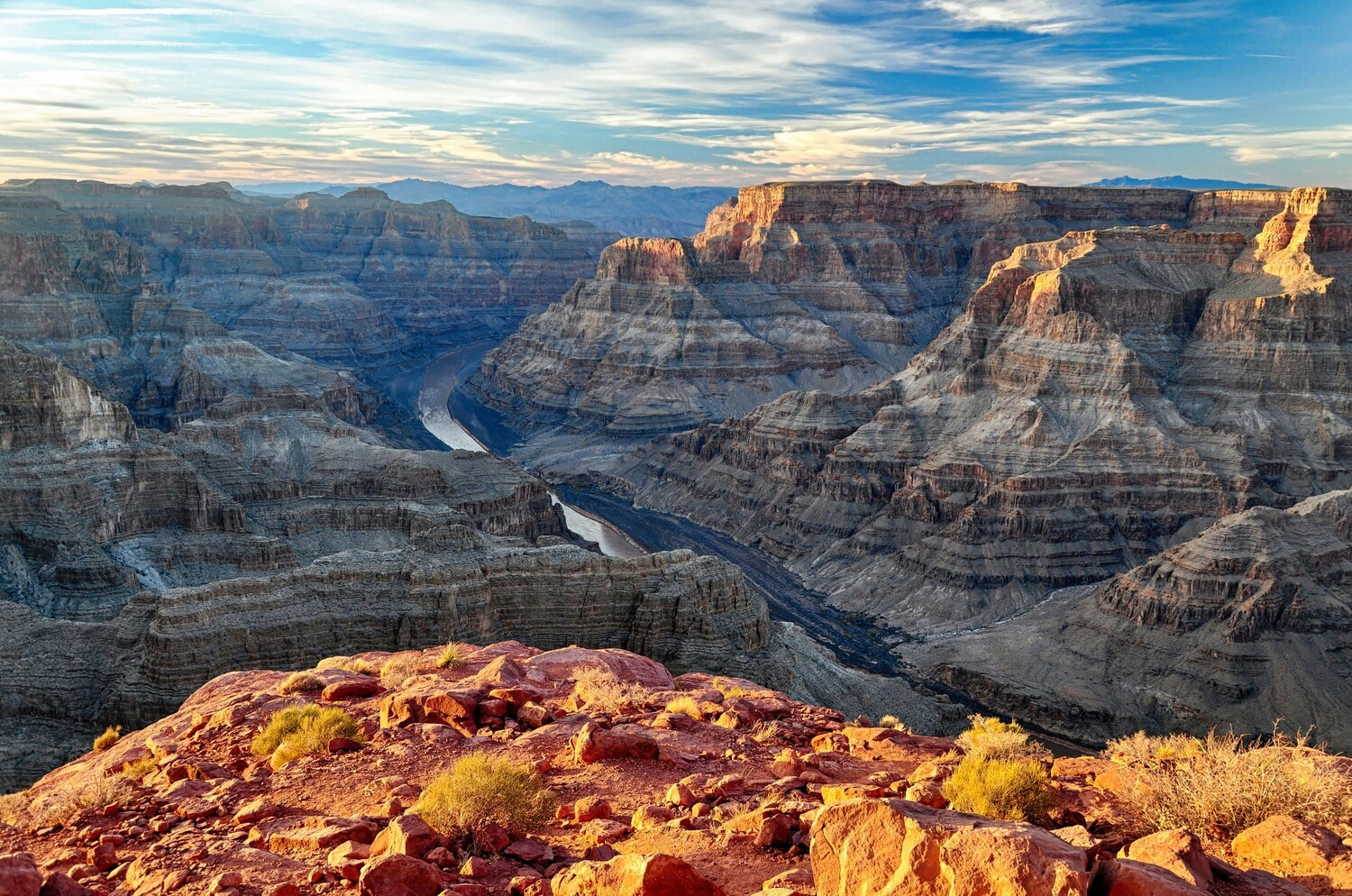
Table of Contents Show
Arizona architecture is best known for the Southwestern style, a building tradition shaped by desert heat, local clay and stone, and centuries of mixed cultural influence. Homes across the Grand Canyon State rely on thick earthen walls, shaded forms, and earthy color palettes that keep interiors cool while echoing the surrounding land.
The state is famous for its dramatic terrain, especially in the northeast corner. The Grand Canyon, one of the Seven Natural Wonders of the World, is a steep-sided gorge carved by the Colorado River, exposing over two billion years of geologic history. The way people build here is tied to that same landscape. The Southwestern look that defines so much of Arizona architecture is really a mosaic of styles drawn from several parts of the world, blended into something the state can call its own.
What Defines Arizona Architecture?
Arizona architecture leans on the palette of the Southwest: browns, reds, and whites built from materials found in the landscape itself. Clay and rock do most of the work, often finished in a stark white stucco. The result reads as one coherent style, yet it grew from several traditions rather than a single movement.
The Many Influences Behind Southwestern Style
Southwestern design builds on Spanish Mission, Mission Revival, Mediterranean, Hacienda, and Pueblo roots. Many of these arrived with Spanish colonists who built homes across the region, but the style also absorbed native building knowledge, most clearly in the Pueblo Revival branch. You can trace some of these threads through broader American house design styles, where regional climate consistently shapes form.
Pueblo Revival takes direct inspiration from ancestral sites across the state, such as Wupatki National Monument and Tonto National Monument. Restored examples at museums in the Phoenix area show how imported elements, like the smoothly rounded rooflines of Mission Revival, sit comfortably alongside indigenous materials and methods. For more on this style, the Pueblo Revival overview traces its spread through New Mexico and Arizona.
These designs work together because the imported styles were built to handle the same conditions: high heat, strong sun, and very little rain. Each aims to create cool, shaded interiors that buffer against daytime temperatures and adjust as the desert cools into a chilly, arid night.
📌 Did You Know?
Frank Lloyd Wright’s Taliesin West in Scottsdale is part of “The 20th-Century Architecture of Frank Lloyd Wright,” inscribed on the UNESCO World Heritage List in 2019. It was built largely from desert masonry gathered on site, tying the building directly to the Arizona ground it sits on.
Core Elements of Grand Canyon State Homes
Once you see how the style formed, the parts that make it up become easier to read. Southwestern homes mix soft, rounded corners with sharp straight lines, much like the natural features of the land. A house might carry an ornate rounded frontispiece over the front door, then gently rounded corners across the rest of the structure. Boxy forms are common too, often topped with overhanging roofs that throw shade across the walls.
Building Materials: Adobe and Rammed Earth
Two materials anchor the look: rammed earth and adobe. Both are sustainable building materials made from local products. Rammed earth uses compacted silt, clay, and gravel compressed in layers to form a strong, slightly banded solid. Adobe is a brick of clay, sand, water, and straw, sun-dried until firm enough to build with. Adobe can be left bare or coated in bright white stucco for extra insulation and a Mission or Mediterranean feel. Modern wood-frame homes often get the same stucco finish to match the style.
💡 Pro Tip
When working with adobe or rammed earth, plan for thermal mass rather than fighting it. Thick earthen walls absorb daytime heat and release it slowly after dark, so pairing them with shaded openings and deep overhangs does more for comfort than adding mechanical cooling later. Detail the wall base for moisture protection, since earth walls fail fastest where they meet the ground.

Roofs, Forms, and Color Palettes
Many Southwestern homes carry clay tile roofing, which holds up well in dry, hot Arizona weather. This roof type rarely thrives elsewhere, since frequent rainstorms or hail can crack it. The color story stays grounded in the desert: muddy reds through bright whites, with contrasting accents that change by substyle. A Mediterranean treatment pairs white with blue, like the Greek islands, though Arizona roofs stay brown rather than blue. Hacienda style sets white walls under clay tile, Pueblo Revival adds orange or yellow accents, and Spanish Mission favors sandy browns against tile.
🏗️ Real-World Example
Taliesin West (Scottsdale, 1937): Frank Lloyd Wright built his winter home and studio from local rock and sand mixed into concrete, with low, angled forms that hug the desert floor. It remains a working school and a clear study in how Arizona architecture can grow straight out of its site.
Why Arizona Architecture Suits the Desert Climate
Every signature element here answers a climate problem. Thick walls slow heat transfer. Small, shaded windows cut glare and solar gain. Overhanging roofs and covered porches extend usable outdoor space into the hottest hours. Light stucco reflects sun rather than holding it. These moves predate modern air conditioning, which is why they still hold up as low-energy strategies today. Orientation matters as much as material here, since a wall facing the harsh western sun behaves very differently from one shaded by a deep porch. Designers who plan around the daily heat curve, rather than around a fixed floor plan, tend to end up with homes that stay comfortable on far less energy. The same logic links Arizona homes to wider ideas in organic architecture, where buildings respond to place instead of resisting it.
🎓 Expert Insight
“In the desert, the most effective cooling system is the building itself. If the form, mass, and orientation are right, mechanical systems just trim the edges.”, notes a licensed architect with more than 20 years of practice in the Southwest.
This reflects why traditional Southwestern features keep returning in new desert homes, even as construction methods change.
Building an Authentic Arizona Home
If you are ready to look into mortgages in Arizona and build your own desert home, start by deciding how pure or blended you want the style to be. The shortcut is to think natural: local materials and organic lines first, decoration second.
Palettes usually run from muddy red to bright white, with accent pops in contrasting tones. A Mediterranean flavor uses white and blue, while Hacienda style pairs white walls with clay tile. Pueblo Revival reaches for orange or yellow contrast, and Spanish Mission settles into sandy browns. Because Southwestern design borrows from many traditions, you can mix the purer forms into your own blend, perhaps the rounded shapes of Pueblo Revival with a sloped Hacienda roof. Working with an architect who knows the style well pays off, especially if you plan to lean on the natural materials that make the region so distinct. It helps to study related regional home styles before you settle on a direction.
The Bigger Picture
The strongest examples of Arizona architecture do not copy the desert so much as cooperate with it. Long before terms like passive design existed, builders here were reading the sun, the soil, and the temperature swings and shaping homes around them. Anyone planning a new build in the Grand Canyon State inherits that conversation, and the smartest projects are the ones that keep listening to the land first.






What Is Minimalist Architecture? Principles, Origins, and Iconic Buildings
Minimalist architecture strips a building to its essentials so space, light and...
 illustrarch Editoral Team9 Mins read

Interior Design for Commercial Spaces: Enhancing Functionality and Brand Identity
Commercial interior design has to serve brand, function and regulation at once....
 Begum Gumusel4 Mins read

Georgian Architecture: Features, History & Examples
Georgian architecture (1714-1830) is defined by strict symmetry, classical proportion, sash windows...
illustrarch Editoral Team9 Mins read
Neoclassical Architecture: Features, History & Examples
Neoclassical architecture emerged in the mid-18th century, reviving Greek and Roman forms...
illustrarch Editoral Team8 Mins read


Leave a comment