

How Housing Market Forces Shape Architectural Design Today
Housing market dynamics significantly influence architectural design, dictating aspects like density, scale, and spatial organization in response to economic pressures.
 Bahattin Duran23 December 20255 Mins read200

Table of Contents Show
Architecture never exists in isolation. Buildings rise from a mix of ambition, constraint, speculation, regulation, and hope. Housing markets sit at the center of that mix. Prices rise. Land tightens. Credit shifts. Zoning flexes or hardens. Design responds.
For architects, designers, and students, understanding this relationship matters. Not as theory alone, but as a practical lens for making decisions about form, scale, materials, and spatial organization. Housing markets don’t just react to design. They quietly instruct it.
This article explores how economic pressures tied to housing shape architectural outcomes today. It draws on academic research, planning data, and built examples to connect market signals with design responses. The goal is simple: bridge economic logic and architectural practice without losing nuance.
Housing Markets as Design Drivers
Housing markets operate through signals. Prices, absorption rates, vacancy, and financing terms all influence what gets built and how fast. These signals often arrive long before a pencil touches paper.
When land values rise faster than construction costs, buildings grow taller. When financing favors speed and predictability, design repetition increases. When affordability becomes the dominant concern, spatial efficiency replaces ornament.
This isn’t accidental. It’s structural.
According to research published in Cities by Elsevier, quantitative features of the built environment correlate directly with property values. In a study of 1,120 properties across New York City blocks, design qualities like imageability and transparency were positively associated with higher prices (ScienceDirect). Design choices, even subtle ones, carry measurable market weight.
One sentence.
Architecture listens.

Density, Scale, and the Price of Land
Floor Area Ratio as an Economic Signal
Few metrics reveal the market–design relationship more clearly than floor area ratio (FAR). FAR translates land value into built volume. As prices rise, pressure builds to extract more square meters from the same footprint.
The same Cities study found a Pearson correlation of 0.611 between FAR and property values in New York City (ScienceDirect). That’s strong. It suggests that higher density isn’t just a planning outcome. It’s a market response.
Design implications follow:
- Taller residential blocks in central areas
- Reduced unit sizes
- Shared amenities replacing private space
- Vertical stacking of programs
Density reshapes not just skylines, but daily life.
Urban Scaling and Metropolitan Pressure
Large cities behave differently. Their housing prices don’t just rise. They scale.
An urban economics analysis published on arXiv examined millions of French real estate transactions between 2017 and 2021. The study found that housing price profiles scale with city population according to a 1/5 power law. Central prices rise faster in larger cities than peripheral ones.
Design follows demand.
In high-pressure cores, architecture compresses. Floor plans tighten. Circulation becomes optimized. Peripheral areas, under different price gradients, allow larger units and looser layouts. Market geometry becomes spatial geometry.
Form, Complexity, and Market Preference
When Simplicity Wins
Architects often celebrate complexity. Markets don’t always agree.
The New York City study also revealed a negative correlation between complexity of built form and property values (ScienceDirect). In other words, more intricate forms didn’t translate into higher prices.
Why?
Because complexity introduces uncertainty:
- Higher construction risk
- Longer timelines
- Maintenance concerns
- Financing hesitation
Markets reward clarity.
This helps explain the prevalence of rectilinear forms, modular grids, and repeated façades in housing projects today. These choices aren’t aesthetic defaults. They’re financial strategies.
Materials, Cost, and Construction Logic
Affordability and Material Selection
Material choices reflect budgets before ideals. As affordability pressures grow, architects work within tighter cost envelopes. This has consequences.
Common outcomes include:
- Increased use of engineered timber
- Prefabricated concrete panels
- Lightweight steel framing
- Reduced material variation
These materials aren’t inferior. But they demand different design thinking. Detailing shifts. Tolerances matter. Assemblies prioritize speed and predictability.
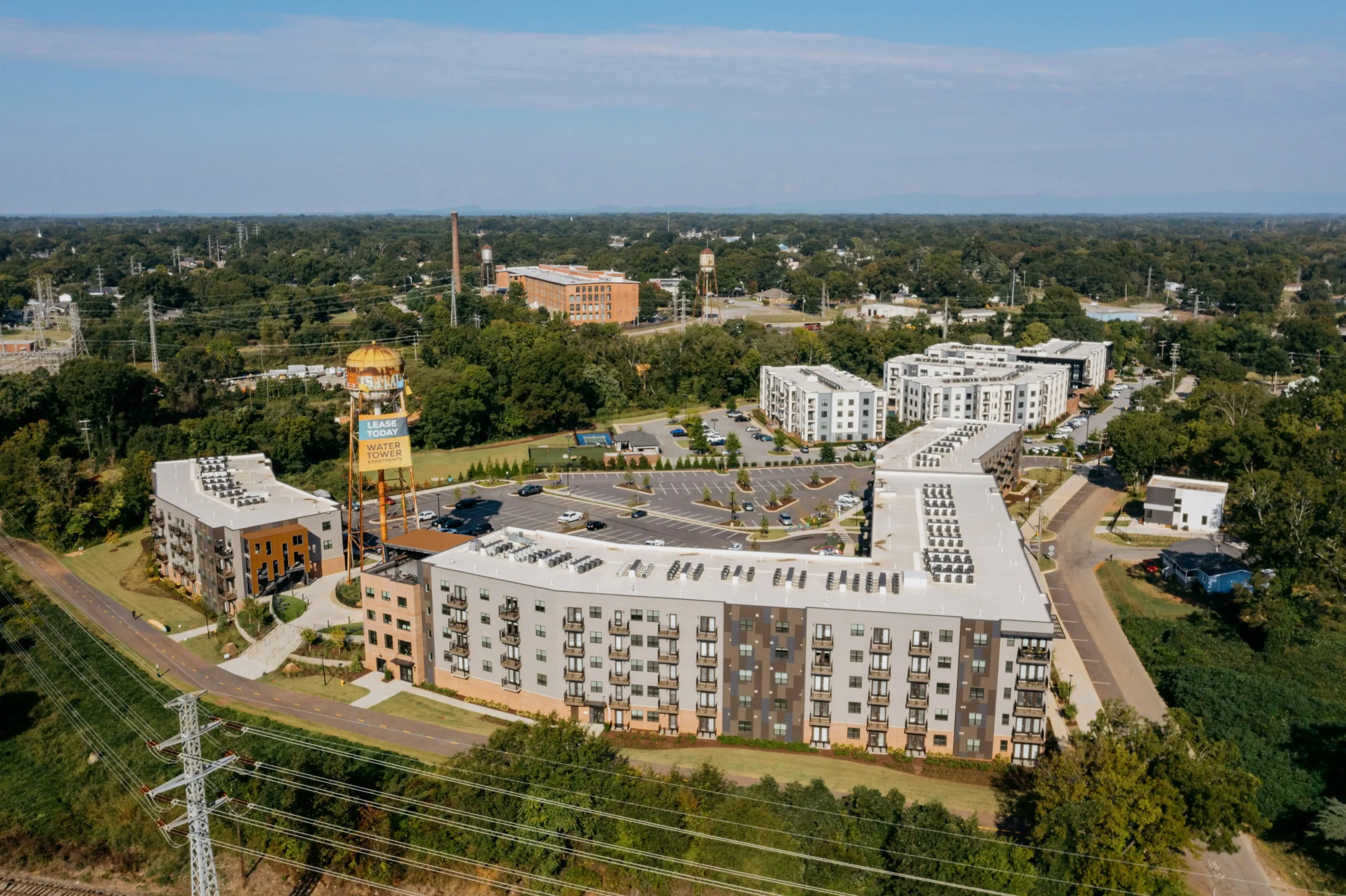
Developers and investors often rely on specialized platforms and investor marketing solutions to communicate project viability to capital partners. That communication loop reinforces material choices that read as safe, legible, and finance-friendly.
Architecture becomes a negotiation between craft and cost.
Modular Construction as Market Response
Modular construction isn’t just about efficiency. It’s about aligning design with lending models.
Shorter build times reduce interest exposure. Standardized components reduce uncertainty. For housing markets facing rapid demand, modular systems offer speed without sacrificing scale.
Design adapts:
- Repetition becomes intentional
- Flexibility moves inside the unit
- Façade articulation masks standardization
Constraints, again, shape creativity.
Light, Space, and Quantified Value
Daylight as a Price Variable
Light sells.
An empirical study on Shanghai housing markets demonstrated that daylight access carries measurable price premiums, even after controlling for structural and locational factors (ScienceDirect). Orientation, spacing, and building height mattered.
For designers, this confirms what intuition already suggests. But the numbers matter.
In dense housing contexts, access to sunlight drives:
- Building spacing decisions
- Massing setbacks
- Unit orientation strategies
- Window-to-wall ratios
Design decisions become financial decisions.
One word.
Tradeoffs.
Environmental Amenities and Spatial Economics
Housing value isn’t only about the unit. It’s about context.
A ScienceDirect study on Minnesota housing used hedonic price models combined with GIS data to show that local environmental amenities significantly affect sale prices (ScienceDirect). Parks, transit access, and environmental quality added explanatory power beyond standard variables.
For architects, this shifts responsibility outward.
Buildings no longer end at their envelope. They engage streets, courtyards, edges, and shared spaces. Market logic pushes design toward:
- Active ground floors
- Visual permeability
- Public-facing amenities
Urban design and building design blur.
Architectural Quality vs. Market Recognition
When Design Excellence Goes Unpriced
Not all architectural value is rewarded.
A study published in Sustainability analyzed 3,705 residential units in Turin and found that only 15% of 20th-century housing stock qualified as high architectural quality (MDPI). Of that group, just 20% carried recognized quality status in the market.
That gap matters.

It suggests that many design attributes valued by architects don’t translate into listing prices. Markets prioritize location, size, and condition over compositional nuance.
This tension shapes practice:
- Architects must argue for value
- Clients seek measurable returns
- Design intent adapts to market literacy
Education helps. So does evidence.
Bridging Theory and Practice
Economic models explain patterns. Architects work with people.
Bridging the two means understanding that housing markets don’t dictate design, but they set boundaries. Within those boundaries, designers still choose how spaces feel, how buildings age, and how cities read.
Good practice today often involves:
- Reading market data early
- Aligning design ambition with financial logic
- Using research to justify spatial decisions
- Designing flexibility into fixed systems
The most resilient architecture doesn’t resist market forces. It interprets them.
Conclusion
Housing markets quietly shape architectural design at every scale. From FAR-driven density to material selection, from daylight optimization to modular systems, economic pressure leaves a physical trace.
Research shows clear links between design features and property values. Transparency, light, spatial efficiency, and context matter. Complexity, unless carefully managed, often doesn’t pay.
For architects, designers, and students, the lesson isn’t resignation. It’s fluency. Understanding how housing markets operate allows design decisions to land with intention rather than compromise.
Architecture sits between numbers and narratives. When it listens carefully, it can respond with clarity, restraint, and purpose.
And that’s where good buildings begin.






Futuro House Production Revived in Finland After Decades-Long Hiatus
A Facebook listing for abandoned moulds led to the first new Futuro...
 illustrarch Editoral Team3 Mins read

How Developers Are Building Package Rooms Into New Multifamily Properties
Parcel volume now shapes a multifamily ground floor as much as parking...
illustrarch Editoral Team3 Mins read
Building Your Dream Home in NSW: What You Should Know About Montgomery Homes
Montgomery Homes has been building across Sydney, Newcastle, the Hunter, Wollongong and...
illustrarch Editoral Team4 Mins read

Designing a Home Theater: Where Drapery Fits Into the Plan
In a media room the curtains are a performance layer, not decoration....
illustrarch Editoral Team3 Mins read


Leave a comment