

Burj Khalifa: How Many Floors, Height, Cost & Views Guide
Standing at 828 meters with 163 floors, the Burj Khalifa in the United Arab Emirates is the world's tallest building. Explore its Y-shaped structural design inspired by Islamic architecture, the USD 1.5 billion construction story by SOM and Emaar Properties, observation decks on the 124th and 148th floors, luxury Armani Hotel, residential apartments, sustainability features, and what makes this Dubai icon an enduring case study in modern architectural ambition.
 Sinan Ozen7 February 20267 Mins read1.1k

Table of Contents Show
In the history of architecture, height has never been a neutral ambition. From Gothic cathedrals reaching toward the heavens to early skyscrapers signaling industrial confidence, verticality has consistently carried cultural meaning alongside technical challenge. Standing at 828 meters (2,717 feet) with 163 floors, the Burj Khalifa in the United Arab Emirates emerges from this lineage not simply as a record-breaking object, but as a contemporary expression of how architecture, engineering, capital, and global identity converge. Rising from the desert landscape of Dubai, the tower is at once a feat of structural ingenuity and a symbol of a city repositioning itself within a global network of finance, tourism, and spectacle. To understand how many floors the Burj Khalifa has—and why each matters—is to engage with a project that encapsulates the tensions of modern architecture: between icon and infrastructure, ambition and responsibility.
More than a singular object, the Burj Khalifa operates as a test case for how far architectural imagination can stretch when paired with advanced engineering and unprecedented investment. Its presence invites reflection on what contemporary architecture values, how cities narrate their futures through form, and whether the pursuit of extremes enhances or complicates the discipline’s relationship with human scale and urban life.

Burj Al Khalifa: How Many Floors and Stories Does It Have?
One of the most frequently asked questions is: how many floors does Burj Khalifa have? The answer is 163 above-ground stories plus one basement level—the highest number of stories in any building worldwide. The Burj Khalifa tower’s floors encompass a remarkable variety of functions. The lower levels house the Armani Hotel Dubai, floors 9–16 contain Armani Residences, and floors 19 to 108 are dedicated to Burj Khalifa apartments—over 900 private units in total. Upper levels from floors 111 to 154 serve as premium corporate offices.
The Burj Khalifa’s highest floor accessible to the public is the 148th-floor observation deck at 555 meters. A second observation deck sits on the 124th floor at 452 meters. Above level 156, the structure transitions from concrete to steel, and the spire adds 242.6 meters to reach a total Burj Khalifa height in feet of 2,722 (829.8 meters to tip)—roughly three times the Eiffel Tower and nearly twice the Empire State Building.
Vertical Ambition and Global Symbolism
The Burj Khalifa’s verticality is not merely a structural condition; it is a deliberate act of urban storytelling. In a relatively short period, Dubai transformed from a regional trading hub into a city defined by architectural icons. Its unprecedented height positions it as a global landmark, reinforcing architecture’s ability to function as a tool of branding and geopolitical visibility. The Burj Khalifa demonstrates how form can operate as narrative—asserting confidence, technological prowess, and participation in a globalized architectural discourse where cities compete symbolically as well as economically.
Yet this symbolism is not superficial. The tower reflects a broader cultural shift in which architecture is expected to perform beyond utility, embodying aspirations and projecting futures. It challenges architects to negotiate between expressive form and ethical responsibility, particularly when projects represent entire cities on the world stage.

Structural Innovation and Engineering Intelligence
At the core of the Burj Khalifa lies a sophisticated structural system that redefined supertall construction. Its buttressed core design, developed to counteract wind forces and gravitational loads, represents a significant advancement in high-rise engineering. The tower’s Y-shaped plan distributes forces outward, stabilizing the structure while allowing extreme height—underscoring how innovation arises when architectural vision and engineering logic are inseparable.
The Burj Khalifa illustrates how computational modeling, material science, and collaborative design have become central to architectural practice. The construction required 330,000 cubic meters of concrete, 55,000 tonnes of steel rebar, and 22 million man-hours of labor. For architects and students of high-rise engineering, the building serves as a reminder that visionary architecture must be underpinned by rigorous technical intelligence.
Burj Khalifa Builders and Construction Team
The Burj Khalifa builders represent a truly international collaboration. The tower was designed by Skidmore, Owings & Merrill (SOM), with Adrian Smith as consulting design partner. Construction was carried out by Samsung C&T (South Korea), BESIX (Belgium), and Arabtec (UAE), with Turner Construction as project manager. Developer Emaar Properties oversaw the project from groundbreaking in January 2004 to the official opening on January 4, 2010.
How Much Did the Burj Khalifa Cost to Build?
How much did the Burj Khalifa cost to build? The total construction cost was approximately USD 1.5 billion—encompassing foundation engineering, structural concrete and steel, the glass façade, mechanical systems, elevator installation, and architectural services over six years. During the 2008 financial crisis, the project was renamed from “Burj Dubai” to “Burj Khalifa” in honor of Sheikh Khalifa bin Zayed Al Nahyan, then-president of the UAE, whose government provided essential financial support. Remarkably, this investment was reportedly recovered within the first year of inauguration through tourism revenue, property sales, and global recognition.
Form, Geometry, and Cultural Reference
While often perceived as purely futuristic, the Burj Khalifa’s form draws from regional and historical influences. Its stepped silhouette and spiraling geometry echo patterns found in Islamic architecture, particularly the Great Mosque of Samarra in Iraq. The Y-shaped floor plan was inspired by the Hymenocallis flower—a desert lily native to the region—whose petals radiate from a central core. This synthesis of cultural reference and modern expression positions the tower within a broader conversation about identity in global architecture.
This approach highlights an important architectural strategy: engaging with context symbolically rather than literally. In an era where global styles risk homogenization, the Burj Khalifa demonstrates how cultural specificity can coexist with international aesthetics. Its form becomes a bridge between past and future, suggesting that innovation need not erase heritage but can transform it into new spatial expressions—a tension explored across ancient and modern architectural styles.

Burj Khalifa View: Observation Decks and the Experience from the Top
The Burj Khalifa view from the top is one of the most celebrated urban vistas in the world. From the 148th-floor “At the Top SKY” deck, visitors can see the entire Dubai coastline, the surrounding desert, and—on clear days—even the shores of Iran roughly 95 kilometers away. The 124th-floor “At the Top” deck features an augmented reality telescope that lets visitors explore the landscape under different weather conditions and times of day.
Beyond its skyline presence, the Burj Khalifa shapes the urban experience of Downtown Dubai. Anchoring a mixed-use development, the tower functions as a vertical city with residential, commercial, and hospitality spaces.
The experience of the tall Burj Khalifa is defined as much by movement as by form. The building contains 57 elevators, including double-deck units traveling at 10 meters per second, covering the longest elevator travel distance of any building at 504 meters. As cities grow vertically, architects must consider how such structures integrate into lived urban reality.
Visit Burj Khalifa Dubai: What to Expect
For those planning to visit Burj Khalifa Dubai, the tower offers the “At the Top” observation deck on the 124th floor with panoramic views and interactive displays, plus the premium “At the Top SKY” on the 148th floor with the world’s highest outdoor observation deck. Advance ticket booking is strongly recommended. The Burj Khalifa at night is particularly spectacular—its LED-illuminated façade hosts choreographed light shows visible across the city, while the nearby Dubai Fountain performs synchronized water and music displays at the tower’s base.
Hotel in Burj Khalifa Tower and Burj Khalifa Apartments
The hotel in Burj Khalifa tower is the Armani Hotel Dubai, the world’s first hotel designed by Giorgio Armani, with 160 guest rooms alongside restaurants, a spa, and event spaces. Above the hotel, the Burj Khalifa apartments range from studios to four-bedroom units with Persian Gulf views. With over 900 residential units and 304 hotel rooms, the tower accommodates around 10,000 people at any given time.
Sustainability, Climate, and Architectural Responsibility
Constructed in a harsh desert climate, the Burj Khalifa confronts issues of sustainability that are impossible to ignore. Its advanced façade systems—comprising 28,261 hand-cut glass panels with silver coating for improved insulation—and climate-responsive technologies reflect attempts to mitigate environmental impact at scale. The building collects approximately 15 million gallons of condensation water annually from its air conditioning system for irrigation and the Dubai Fountain, while solar panels heat up to 140,000 liters of water daily. Still, it embodies the contradictions of contemporary mega-projects: technological efficiency alongside enormous resource consumption.
This tension is central to current architectural discourse. The Burj Khalifa forces the profession to ask whether sustainability is defined by performance metrics alone or by broader considerations of necessity and long-term impact. As climate awareness reshapes architectural priorities, the tower stands as both an achievement and a provocation—challenging future architects to reconcile ambition with ecological responsibility.

Burj Khalifa’s Legacy and the Future of Supertall Architecture
The Burj Khalifa occupies a complex position in architectural history—simultaneously an engineering marvel, a cultural symbol, and a subject of critical debate. Its significance extends beyond record-breaking height, offering insights into how architecture operates at the intersection of technology, identity, and urban ambition. Notably, the Jeddah Tower in Saudi Arabia—designed by the same architect, Adrian Smith—aims to surpass it as the first building to exceed 1,000 meters.
For contemporary practice, the Burj Khalifa demonstrates interdisciplinary collaboration, contextual sensitivity, and the ethical questions embedded in large-scale development. Its lesson is not that we can build higher, but that we must reassess why we build, for whom, and at what cost. The tower’s true legacy lies in the conversations it inspires within architectural culture.


1 Comment

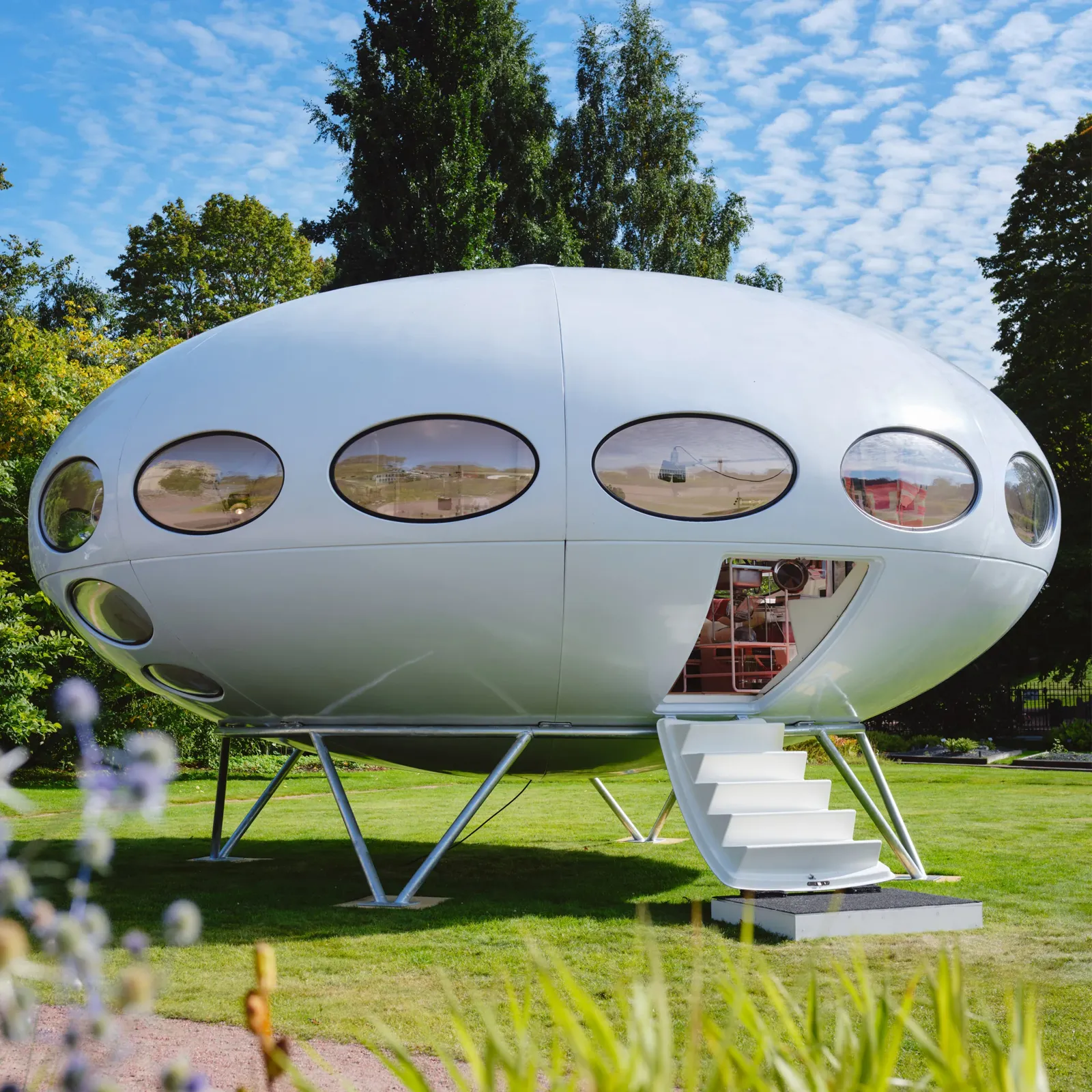
Futuro House Production Revived in Finland After Decades-Long Hiatus
A Facebook listing for abandoned moulds led to the first new Futuro...
 illustrarch Editoral Team3 Mins read
Building Your Dream Home in NSW: What You Should Know About Montgomery Homes
Montgomery Homes has been building across Sydney, Newcastle, the Hunter, Wollongong and...
illustrarch Editoral Team4 Mins read
Designing a Home Theater: Where Drapery Fits Into the Plan
In a media room the curtains are a performance layer, not decoration....
illustrarch Editoral Team3 Mins read
Oscar Niemeyer’s Cathedral of Brasília: The Hyperboloid Concrete Hymn
The Cathedral of Brasília reads as a single gesture, yet it stood...
 Furkan Sen7 Mins read


This article talks a lot about the Burj Khalifa and its importance. It seems like a big deal for Dubai and architecture, but I don’t know much about these topics. It’s interesting how it combines different ideas, but I’m not sure I understand everything.