

8 Ancient Architectural Styles That Shaped Our World
From ancient Greek architecture columns to Chinese timber-frame design and Roman engineering domes, discover eight foundational architectural styles that shaped cities, cultures, and global design principles still used by architects today.
 Begum Gumusel14 December 20259 Mins read322

Table of Contents Show
Ancient architecture laid the groundwork for how we design, build, and experience spaces today. From ancient Greek architecture and ancient Chinese architecture to the step pyramids of Mesoamerica, early civilizations developed architectural languages that responded to climate, materials, beliefs, and social structure. These styles were not merely functional solutions; they carried deep symbolic meaning and established principles of proportion, monumentality, and spatial order that continue to influence contemporary architecture. The following eight ancient architectural styles represent foundational systems that shaped cities, cultures, and the evolution of global architectural thought.
1. Egyptian Architecture
Ancient Egyptian architecture is defined by monumentality, permanence, and a strong connection to the afterlife. Built primarily with stone, Egyptian structures such as pyramids, temples, and tombs emphasized axial alignment and symmetry. Massive columns, sloping walls, and hieroglyphic carvings expressed religious beliefs and political power. The enduring nature of these buildings reflected the Egyptian worldview of eternity, establishing architecture as a medium for spiritual continuity and collective identity.
The Great Pyramid of Giza, completed around 2560 BCE, remains one of the most studied structures in the history of architecture. Egyptian architects also pioneered the use of post-and-lintel construction on a monumental scale, a technique that directly influenced classical architecture centuries later. Temples at Luxor and Karnak featured hypostyle halls with towering columns, creating dramatic spatial sequences that guided worshippers through layered ceremonial spaces.

2. Architecture of Ancient Mesopotamia
The architecture of ancient Mesopotamia developed in response to limited stone resources, relying heavily on mud brick as its primary material. The most iconic structure of this civilization was the ziggurat, a stepped temple tower that served as a spiritual bridge between earth and sky. Cities such as Ur and Babylon demonstrated early urban planning with defensive walls, organized streets, and public spaces. This architectural style introduced early forms of monumental religious architecture that influenced later civilizations.
Mesopotamian builders developed advanced techniques in brick construction, including the use of glazed bricks for decorative facades. The Ishtar Gate of Babylon, adorned with molded reliefs of dragons and bulls, demonstrated that even utilitarian materials could produce visually stunning results. The urban grid layouts and infrastructure planning pioneered in cities like Babylon established foundational concepts for civic architecture worldwide.
3. Ancient Greek Architecture: Columns, Proportion, and Lasting Influence
Ancient Greek architecture established principles of proportion, harmony, and visual balance that remain central to architectural education. Defined by column-based systems such as Doric, Ionic, and Corinthian orders, ancient Greek buildings and architecture emphasized structural clarity and mathematical precision. Temples like the Parthenon demonstrate refined optical corrections and carefully calibrated proportions. Greek architecture transformed buildings into rational compositions, reinforcing the relationship between mathematics, philosophy, and aesthetics.
Ancient Greek Architecture Columns: The Three Classical Orders
The characteristics of ancient Greek architecture are best understood through its three column orders. The Doric order, the earliest and most austere, featured sturdy, fluted columns without bases. The Ionic order introduced scrolled capitals and more slender proportions, reflecting elegance. The Corinthian order, the most ornate, showcased elaborate acanthus leaf carvings. These ancient Greek architecture columns became a universal vocabulary that architects have drawn from for millennia.
| Feature | Doric | Ionic | Corinthian |
|---|---|---|---|
| Origin Period | ~7th century BCE | ~6th century BCE | ~5th century BCE |
| Capital Style | Plain, cushion-shaped (echinus) | Scrolled volutes | Ornate acanthus leaves |
| Column Base | No base | Molded base | Molded base |
| Proportions (Height:Diameter) | 4:1 to 6:1 (sturdy) | 8:1 to 9:1 (slender) | 10:1 (tallest) |
| Shaft | 20 shallow flutes | 24 deep flutes | 24 deep flutes |
| Entablature | Triglyphs & metopes frieze | Continuous sculpted frieze | Continuous sculpted frieze |
| Character | Masculine, austere, powerful | Feminine, elegant, refined | Lavish, decorative, grand |
| Famous Example | Parthenon (Athens) | Erechtheion (Athens) | Temple of Olympian Zeus (Athens) |
What Advancements Did Ancient Greece Make in Architecture?
Among the key ancient Greek achievements in architecture were the development of entasis (a slight curvature applied to columns to correct optical illusions), the refinement of the Greek temple as both a religious and civic symbol, and the invention of open-air theaters carved into hillsides. The Theatre of Epidaurus, for example, demonstrated advanced acoustic engineering. What type of architecture did the ancient Greeks develop? They created a system rooted in mathematical ratios and human-scale design, where every detail served both function and beauty. This approach is why ancient Greek architecture is important: it provided the foundational design language that informs Western civic and institutional buildings to this day.
How Did Ancient Greek Architecture Influence Us Today?
Ancient Greek art and architecture continues to shape contemporary design across government buildings, museums, courthouses, and university campuses worldwide. The Neoclassical movement of the 18th and 19th centuries directly revived ancient Greek temple architecture, while modern architects still reference Greek proportioning systems in minimalist and modernist projects. Ancient Roman and Greek architecture together established the classical tradition that became the dominant design language of Western civilization.

4. Ancient Roman Architecture: Engineering, Domes, and Public Space
Ancient Roman architecture expanded upon Greek principles while introducing groundbreaking engineering innovations. The extensive use of concrete allowed Romans to construct arches, vaults, and domes at unprecedented scales. Structures such as aqueducts, amphitheaters, and basilicas prioritized functionality alongside monumentality. Roman urban planning also established concepts of infrastructure and public space, making architecture an instrument of governance, connectivity, and daily life.
Ancient Roman Architecture Dome: The Pantheon and Beyond
The ancient Roman architecture dome reached its greatest expression in the Pantheon, whose unreinforced concrete dome remains the largest of its kind in the world. The central oculus reduces structural weight while flooding the interior with natural light, demonstrating how Roman engineers achieved both beauty and structural performance. This innovation in dome construction directly influenced structural design through the Byzantine, Renaissance, and Baroque periods.
Ancient Roman Architecture Buildings That Shaped History
Among the most significant ancient Roman architecture buildings are the Colosseum, the Roman Forum, the Baths of Caracalla, and the extensive network of aqueducts like the Pont du Gard. The Colosseum introduced the concept of stacked arcades and efficient crowd circulation, a design model still used in modern stadiums. Roman basilicas established the spatial template later adopted for Christian churches, illustrating how ancient Roman and Greek architecture provided the structural grammar for centuries of Western building.
| Building | Date | Key Innovation | Modern Legacy |
|---|---|---|---|
| Pantheon | ~125 CE | Unreinforced concrete dome (43.3 m span) with central oculus | Inspired domes in Renaissance, Baroque, and Neoclassical architecture (e.g., St. Peter’s Basilica, U.S. Capitol) |
| Colosseum | ~80 CE | Stacked arcades, efficient crowd circulation for 50,000+ spectators | Template for modern stadiums and arena design worldwide |
| Roman Forum | ~7th c. BCE – 4th c. CE | Integrated civic, religious, and commercial public space | Model for public plazas, civic centers, and urban design |
| Baths of Caracalla | ~216 CE | Large-span vaulted interiors, underfloor heating (hypocaust) | Influenced public bath design, recreation centers, and HVAC concepts |
| Pont du Gard | ~19 BCE | Three-tiered aqueduct bridge using precise arch engineering | Foundation for civil engineering and modern water infrastructure |
| Basilica of Maxentius | ~312 CE | Massive coffered barrel vaults and groin vaults | Spatial template for Christian churches and courthouses |

5. Persian Architecture
Ancient Persian architecture is characterized by grandeur, axial planning, and ceremonial spaces that reflected imperial authority. Palaces such as Persepolis featured large columned halls, elevated platforms, and intricate reliefs. Persian architects emphasized processional movement and spatial hierarchy, creating architecture that guided ceremonial experience. The fusion of artistic craftsmanship with large-scale organization influenced later Islamic architectural traditions.
The Apadana at Persepolis, with its 72 slender columns and relief carvings depicting delegations from across the empire, showcased the Persian approach to multicultural synthesis in architecture. This blending of diverse artistic influences within a unified spatial vision laid groundwork for the richly decorated mosques, madrasas, and palaces of the later Islamic world.

6. Ancient Indian Architecture
The architecture of the Indus Valley Civilization stands out for its advanced urban planning and civic infrastructure. Cities like Mohenjo-daro and Harappa followed grid-based layouts with standardized brick construction. Sophisticated drainage systems, public baths, and residential zoning demonstrate a high level of social organization. Unlike more monument-focused civilizations, ancient Indian architecture of this period emphasized functionality, hygiene, and urban efficiency, setting early standards for sustainable city planning.
Beyond the Indus Valley, ancient Indian architecture evolved to include rock-cut temples such as Ajanta and Ellora, and the towering gopurams of Dravidian temples in southern India. These structures demonstrate a mastery of stone carving, spatial storytelling, and symbolic ornamentation. The stupa, first popularized under Emperor Ashoka in the 3rd century BCE, became a defining architectural form that spread across Asia, influencing Buddhist temple design from ancient Japanese architecture to Southeast Asian pagodas.

7. Ancient Chinese Architecture: Timber, Harmony, and Modular Design
Ancient Chinese architecture focused on harmony, hierarchy, and alignment with natural forces. Timber construction, modular planning, and courtyard-based layouts defined palaces, temples, and residential complexes. Buildings were organized along central axes, reflecting Confucian social order and cosmic balance. Roof curvature, structural brackets, and layered spatial sequences established a flexible yet deeply symbolic architectural system that continues to influence East Asian design.
Characteristics of Chinese Ancient Architecture
Chinese ancient architecture is defined by four key features: the timber framework system using interlocking dougong brackets, bilateral symmetry reflecting philosophical balance, courtyard-based spatial organization, and ornamental roof designs with symbolic ridge figures. Unlike Western stone construction, the Chinese preference for wood allowed structures to flex during earthquakes and be repaired modularly over centuries. The Forbidden City in Beijing remains the most comprehensive example of these principles, with its 980 buildings arranged symmetrically along a north-south axis.
How Ancient Chinese Architecture Influenced East Asia
Starting with the Tang dynasty, ancient Chinese architecture had a profound impact on building traditions across Japan, Korea, Vietnam, and Mongolia. The modular timber-frame system, courtyard planning, and dougong bracket technology were adopted and adapted by neighboring cultures, creating a shared architectural vocabulary across East Asia. Ancient Japanese architecture, for instance, drew heavily from Tang-dynasty models while developing distinctive elements like the tatami module and shoji screen.

8. Ancient Mayan Art and Architecture
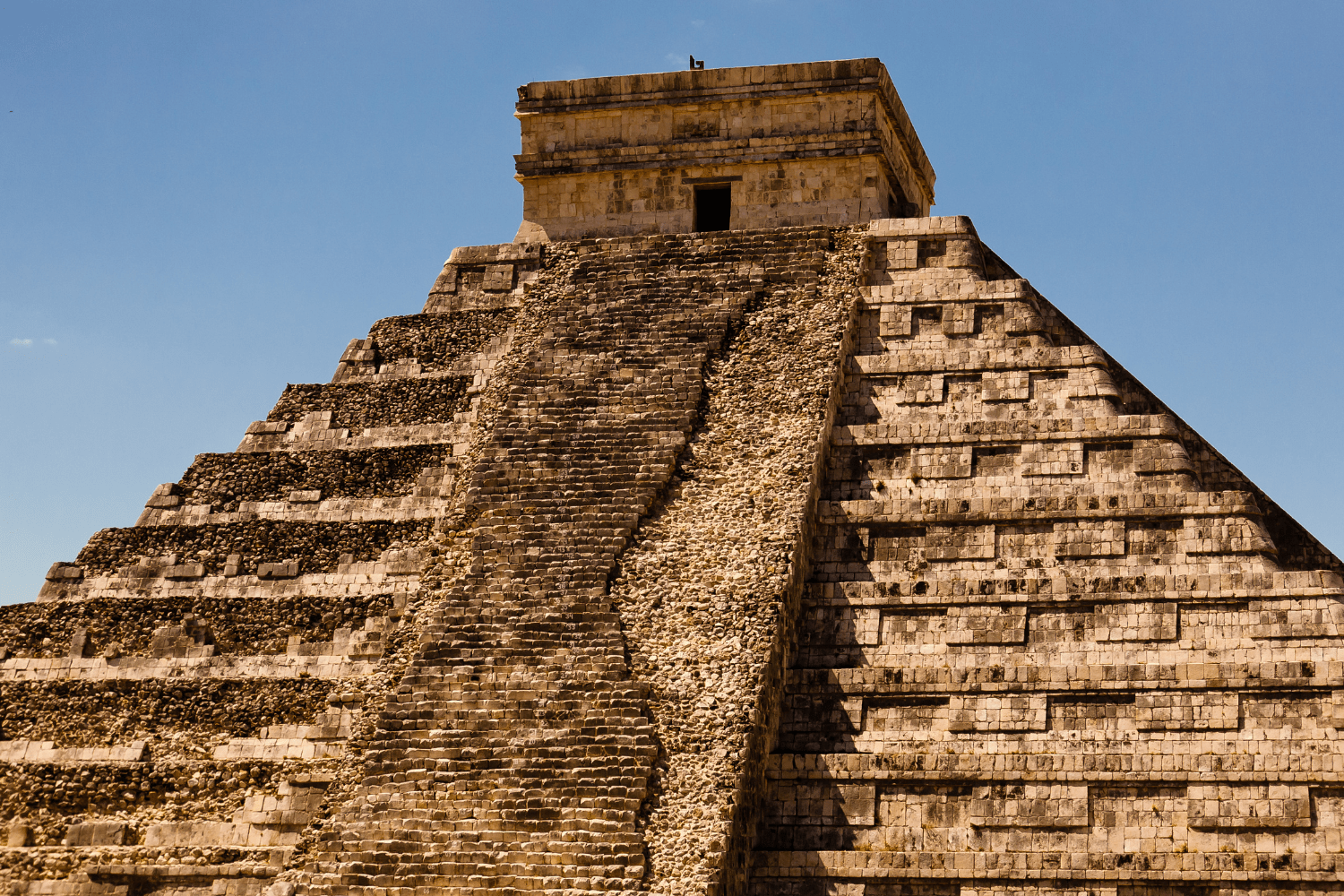
Mesoamerican civilizations such as the Maya and Aztec developed architecture rich in symbolism, astronomy, and ritual significance. Ancient Mayan art and architecture featured step pyramids, ceremonial plazas, and ball courts that defined urban centers. These structures often aligned with celestial events, reinforcing cosmological beliefs. The integration of architecture with landscape and ritual performance highlights how built form functioned as both spatial and spiritual framework in ancient societies.
The Pyramid of Kukulcán at Chichén Itzá, for example, creates a visual serpent shadow during equinoxes, demonstrating the advanced astronomical knowledge embedded in Mayan building design. Cities like Tikal and Palenque reveal sophisticated urban planning where monumental architecture, water management, and landscape integration worked as a unified system. The influence of Mayan architecture on contemporary landscape urbanism and site-responsive design remains a rich area of study for architects today.

Comparative Overview: 8 Ancient Architectural Styles at a Glance
| Architectural Style | Period | Primary Material | Defining Structure | Key Structural Innovation | Primary Function | Modern Legacy |
|---|---|---|---|---|---|---|
| Egyptian | ~3100–30 BCE | Stone (limestone, granite) | Pyramids, temples, hypostyle halls | Post-and-lintel on monumental scale | Funerary, religious | Monumentality, axial planning, obelisk symbolism |
| Mesopotamian | ~3500–539 BCE | Mud brick, glazed brick | Ziggurats, city walls, gates | Advanced brick construction, glazed decorative facades | Religious, civic | Urban grid planning, civic infrastructure |
| Ancient Greek | ~800–31 BCE | Marble, limestone | Temples, theaters, stoas | Classical column orders, entasis, optical refinements | Religious, civic, cultural | Neoclassicism, proportional systems, Western civic buildings |
| Ancient Roman | ~509 BCE–476 CE | Concrete, stone, brick | Domes, amphitheaters, aqueducts, basilicas | Concrete construction, arches, vaults, domes | Public, civic, infrastructure | Stadium design, dome engineering, urban infrastructure |
| Persian | ~550–330 BCE | Stone, mud brick, wood | Palaces, columned halls (apadana) | Axial processional planning, multicultural synthesis | Ceremonial, imperial | Islamic architectural traditions, palace design |
| Ancient Indian | ~3300–1300 BCE (Indus Valley); evolving thereafter | Standardized brick, stone | Grid cities, stupas, rock-cut temples | Advanced urban planning, drainage systems, rock-cut carving | Civic, religious | Sustainable city planning, Buddhist temple design across Asia |
| Ancient Chinese | ~2000 BCE onward | Timber (wood) | Courtyard complexes, pagodas, palaces | Modular timber frame, dougong brackets, earthquake flexibility | Residential, religious, imperial | East Asian design traditions, modular construction |
| Ancient Mayan | ~2000 BCE–1500 CE | Limestone, stucco | Step pyramids, ceremonial plazas, ball courts | Astronomical alignment, corbel arch, landscape integration | Religious, astronomical, civic | Landscape urbanism, site-responsive design |
| Structure | Civilization | Approximate Date | Location | Architectural Significance |
|---|---|---|---|---|
| Great Pyramid of Giza | Egyptian | ~2560 BCE | Giza, Egypt | Largest ancient stone structure; precision engineering with 2.3 million blocks |
| Karnak Temple Complex | Egyptian | ~2055–100 BCE | Luxor, Egypt | Largest religious complex ever built; hypostyle hall with 134 massive columns |
| Ziggurat of Ur | Mesopotamian | ~2100 BCE | Ur, Iraq | Pioneering stepped temple platform; mud-brick monumental construction |
| Ishtar Gate | Mesopotamian | ~575 BCE | Babylon, Iraq | Glazed brick decorative facade; symbolic urban gateway |
| Parthenon | Greek | ~447–432 BCE | Athens, Greece | Peak of Doric order; optical corrections and mathematical proportions |
| Theatre of Epidaurus | Greek | ~340 BCE | Epidaurus, Greece | Advanced acoustic engineering; seats 14,000 with near-perfect sound |
| Pantheon | Roman | ~125 CE | Rome, Italy | Largest unreinforced concrete dome (43.3 m); oculus design |
| Colosseum | Roman | ~80 CE | Rome, Italy | Stacked arcades; crowd management for 50,000+; model for modern stadiums |
| Persepolis | Persian | ~515 BCE | Fars, Iran | 72-column Apadana; multicultural relief program; ceremonial axial planning |
| Mohenjo-daro | Indian (Indus Valley) | ~2500 BCE | Sindh, Pakistan | Advanced urban grid; standardized brick; sophisticated drainage |
| Forbidden City | Chinese | 1406–1420 CE | Beijing, China | 980 buildings on axial symmetry; timber frame with dougong brackets |
| Pyramid of Kukulcán | Mayan | ~900–1000 CE | Chichén Itzá, Mexico | Equinox serpent shadow effect; astronomical precision in architecture |
Why Ancient Architectural Styles Still Matter Today
These eight ancient architectural styles reveal how early civilizations transformed shelter into cultural expression and spatial identity. Their approaches to materials, proportion, symbolism, and urban organization continue to inform contemporary architectural practice. From the mathematical precision of ancient Greece art and architecture to the modular ingenuity of Chinese ancient architecture, these traditions offer lessons in sustainability, cultural sensitivity, and design integrity. By studying these foundational styles, architects gain insight into the origins of design principles that remain relevant today, proving that ancient architecture is not a relic of the past but a living influence shaping our built world.



1 Comment






Florence Renaissance Architecture: How Building Became an Authored Art
Florence Renaissance architecture is usually told as a list of buildings. The...
 Furkan Sen6 Mins read

Architectural Styles History: Why Some Styles Fail and Others Endure
A look at architectural styles history through the decisions that actually keep...
Furkan Sen6 Mins read

Architectural Styles: Why Some Endure and Others Fade
Some architectural styles last for centuries while others are demolished within a...
Furkan Sen5 Mins read

Postmodern Architecture vs Deconstructivism: Playful Irony or Radical Disruption?
Postmodern architecture and deconstructivism both rejected modernism but took opposite paths. This...
 Sinan Ozen5 Mins read


This article talks about different ancient architectural styles. It seems interesting how these styles still affect buildings today.