

Side Hustles for Architects: 10 Ways to Earn More
Ten realistic side hustles for architects who want a second income stream, covering freelance design, visualization, writing, photography, teaching, and property.
 Elif Ayse Sen17 May 20247 Mins read748

Table of Contents Show
Side hustles for architects are part-time income streams that build on skills you already use, such as freelance design, 3D rendering, writing, photography, teaching, and product design. Most need little extra training, fit around a full-time job, and can grow into an independent practice or a steady second income over time.
Many licensed and early-career architects look for ways to earn beyond a single salary. A side project can cover student loans, fund travel, or test a business idea before you go independent. The drawing, modeling, and visual communication you already do at the office transfer directly into work people will pay for. Below are ten realistic options, the skills each one needs, and how to start without burning out.
Why Architects Are Taking On Side Hustles
Architectural salaries often lag behind the long hours and licensing costs the profession demands, especially in the first decade of practice. A second income stream adds financial breathing room and a creative outlet that day-to-day project work does not always allow. It also spreads risk: if a firm slows down or lays off staff during a construction downturn, a working side business keeps money coming in.
There is a career angle too. Running a small venture teaches client communication, pricing, and project scoping, the exact skills that separate a salaried employee from a future practice owner. For architects who eventually want their own studio, a side hustle is a low-stakes way to learn the business side before committing fully.
📌 Did You Know?
According to Upwork’s Freelance Forward 2023 study, 64 million Americans performed freelance work that year, around 38 percent of the workforce. Design and creative services were among the fastest-growing categories, which is part of why architects find ready demand for project-based work.
Design-Based Side Hustles for Architects
The most direct path is selling the design work you already know. These options use your core training, so the learning curve is short and your portfolio doubles as marketing.
Freelance Architectural Design
Residential extensions, small commercial fit-outs, and permit drawings are steady sources of freelance work. Many homeowners and small developers cannot justify a full firm but still need stamped drawings or design concepts. You set your own schedule, choose projects that interest you, and keep the full fee rather than a salaried share. Platforms like Upwork list architectural and drafting briefs, though most architects find better-paying work through local referrals and past clients. For a deeper walkthrough, see our guide on how to become a freelance architect step by step.
💡 Pro Tip
Put a written contract and a clear scope in place before any freelance design job, even a small one for a friend. Spell out revision rounds and what counts as extra. The disputes that cost freelancers the most time almost always trace back to a vague verbal agreement and unlimited “quick changes.”
3D Rendering and Architectural Visualization
Visualization is one of the highest-paid side hustles for architects who enjoy software. Firms, developers, and estate agents pay well for photorealistic stills, animations, and VR walkthroughs because they sell projects before a single brick is laid. Tools such as Blender, V-Ray, Lumion, and Enscape make a freelance pipeline affordable to set up. If you want to start with free software, our piece on architectural visualization with Blender is a good entry point.
Furniture and Product Design
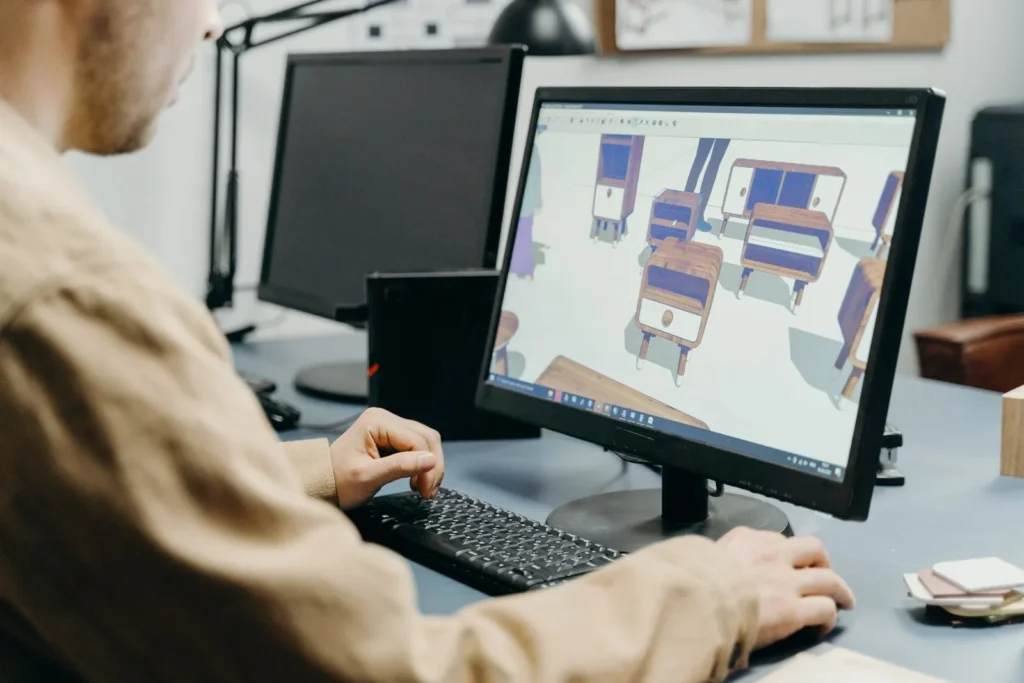
An understanding of form, structure, and materials carries straight into furniture, lighting, and homeware. You can sell limited runs through your own site, work with a local maker, or license a design to a manufacturer. The same modeling skills you use for buildings let you prototype and document a product cleanly, which gives you an edge over hobbyist designers.
Content and Media Side Hustles
If you write, photograph, or teach well, your knowledge itself becomes the product. These options scale better than one-to-one design work because you create something once and sell it many times.
Architectural Writing and Blogging
Trade publications, software companies, and architecture sites like ArchDaily pay for or feature clear, accurate writing from people who actually practice. Technical explainers, product reviews, and opinion pieces all have a market. Beyond direct fees, regular writing builds a public profile that brings in design clients and speaking work later.
Architectural Photography
Architects already read light, proportion, and composition, which is most of the battle in shooting buildings. Firms need professional images of finished projects for awards and websites, and stock libraries buy well-composed interior and exterior shots. Start by photographing your own completed work, then offer the service to colleagues whose projects you admire.

💡 Pro Tip
For visualization and photography work, agree on usage rights up front and charge separately for them. A render licensed for a single planning submission is worth far less than one a developer can reuse across years of marketing. Pricing by use, not just by hours, is how experienced freelancers raise their rates.
Selling Digital Templates and CAD Assets
Revit families, CAD block libraries, Photoshop entourage packs, and portfolio or presentation templates sell steadily on marketplaces and your own store. You build the asset once and earn from it repeatedly, which makes this one of the most passive income options on the list. Designers fresh out of school often buy the presentation tools that working architects can produce in an afternoon.
Teaching, Consulting, and Investment
Experience itself has value. Once you have a few years behind you, other people will pay to learn from you or to borrow your judgment.
Online Teaching and Tutoring
Architecture students and self-taught designers pay for software tutorials, portfolio reviews, and licensing-exam coaching. You can run live sessions, sell a recorded course, or tutor one-to-one. Software skills like Revit, Rhino, and Grasshopper are especially easy to package because the results are clear and in demand.
📐 Technical Note
In most jurisdictions, the title “architect” and the act of offering architectural services are legally protected and tied to registration. A side business offering drafting, visualization, or design consulting is usually fine, but stamping drawings or calling yourself an architect without an active license is not. Check your registration board, such as NCARB in the United States, before you advertise.
Property Investment and Real Estate Consulting
Architects read sites, layouts, and renovation potential better than most buyers. Some apply that to small property investments or to advising buyers and developers on feasibility, layout efficiency, and refurbishment scope. This route needs more capital and carries real risk, so treat it as a longer-term play rather than quick income.
Side Hustles for Architects at a Glance
The table below compares the main options by the skills they draw on and a quick note on earning potential, so you can match one to your own strengths and free time.
| Side Hustle | Skills Needed | Earning Note |
|---|---|---|
| Freelance design | CAD, codes, client management | High, project-based |
| 3D rendering and VR | Blender, V-Ray, Lumion, Enscape | High, scales with quality |
| Writing and blogging | Clear writing, subject knowledge | Low to moderate, builds profile |
| Architectural photography | Camera work, composition, editing | Moderate, repeat firm clients |
| Furniture and product design | Modeling, materials, prototyping | Variable, royalties possible |
| Digital templates and assets | Revit, CAD, Photoshop, design | Mostly passive after setup |
| Teaching and tutoring | Software mastery, communication | Moderate, scalable with courses |
| Property investment | Feasibility, finance, site reading | High but capital-heavy and risky |
How to Start a Side Hustle Without Burning Out
Start narrow. Pick one option that fits your current skills. A single repeatable service, such as render packages for two local firms, beats trying to launch five offers at once. Set fixed working hours for the side business so it does not bleed into every evening, and price your time honestly from the start.
Treat your first paying jobs as both income and proof. Each finished project becomes a portfolio piece and a referral source, which lowers how hard you have to chase the next one. If you are weighing pay across the profession before you commit, our breakdown of architecture career salaries at every stage gives useful context.

⚠️ Common Mistake to Avoid
Many architects underprice side work because they compare it to an hourly salary instead of a freelance rate. As a freelancer you cover your own tax, software, insurance, downtime, and admin, so a sustainable rate is often two to three times the hourly figure on your payslip. Charging too little leads straight to overwork and resentment.
Finally, keep the legal and tax side clean from day one. Register the business if your country requires it, track income and expenses separately, and check whether your employment contract restricts outside work. Professional bodies such as the American Institute of Architects publish guidance on independent practice and ethics that is worth reading before you take on clients.
Earning figures and demand for each side hustle vary widely by region, experience, and market conditions, so treat the notes above as general guidance rather than guaranteed income.
Frequently Asked Questions
Can architects legally freelance on the side?
In most cases yes, as long as you respect your registration board’s rules and your employment contract. Offering drafting, visualization, consulting, or design help is generally fine. Stamping drawings or calling yourself an architect requires an active license, and some employers restrict competing outside work, so check both before you start.
What is the best side income for architects?
It depends on your strengths. Architects who enjoy software usually earn the most from 3D rendering and visualization, while strong communicators do well with writing, teaching, or selling courses. For near-passive income, digital templates and CAD asset libraries are hard to beat once they are set up.
How much can architects make from a side hustle?
Income ranges from a few hundred dollars a month for occasional writing or template sales to several thousand for steady freelance design or visualization work. Earnings depend on your rates, your reputation, and how many hours you can give it without affecting your main job.
Do I need my own website to start?
Not at first. Many architects land early work through referrals, social platforms, and freelance marketplaces. A simple portfolio site helps once you have a few projects to show, because it makes you easier to find and signals that you take the work seriously. See our architecture portfolio tips for building one.
Where to Go From Here
Your Next Step: Choose one side hustle from the table that matches your strongest skill, then set a single, concrete goal for the next month, such as packaging one render service or publishing two writing samples. Starting small and finishing one real job teaches you more than months of planning ever will.





How to Become a Freelance Architect Step by Step: From License to Loyal Clients
How to become a freelance architect, step by step: licensing, legal setup,...
 Sinan Ozen4 Mins read

Freelance Architect: Salary, Skills & How to Get Started
Learn how to build a freelance architecture career with updated 2026 salary...
Elif Ayse Sen17 Mins read

The Rise of Freelance Architects: Why Having the Right Contacts Matters More Than Ever
Freelance architects increasingly rely on strong professional networks to secure projects and...
 Bahattin Duran6 Mins read

Can Architects Work From Home? Exploring Remote Opportunities and Challenges
Explore how remote work is reshaping the architecture industry in our insightful...
 Begum Gumusel5 Mins read


Leave a comment