

Doge’s Palace: Gothic Architecture and the Architecture of Governance in Venice
Doge's Palace in Venice stands as one of the finest examples of Venetian Gothic architecture ever built. This guide examines the palace's structural design, its role as the seat of the Venetian Republic's government, the architects behind its construction, and why its inverted facade logic continues to fascinate architects and historians today.
 Sinan Ozen4 June 20268 Mins read190
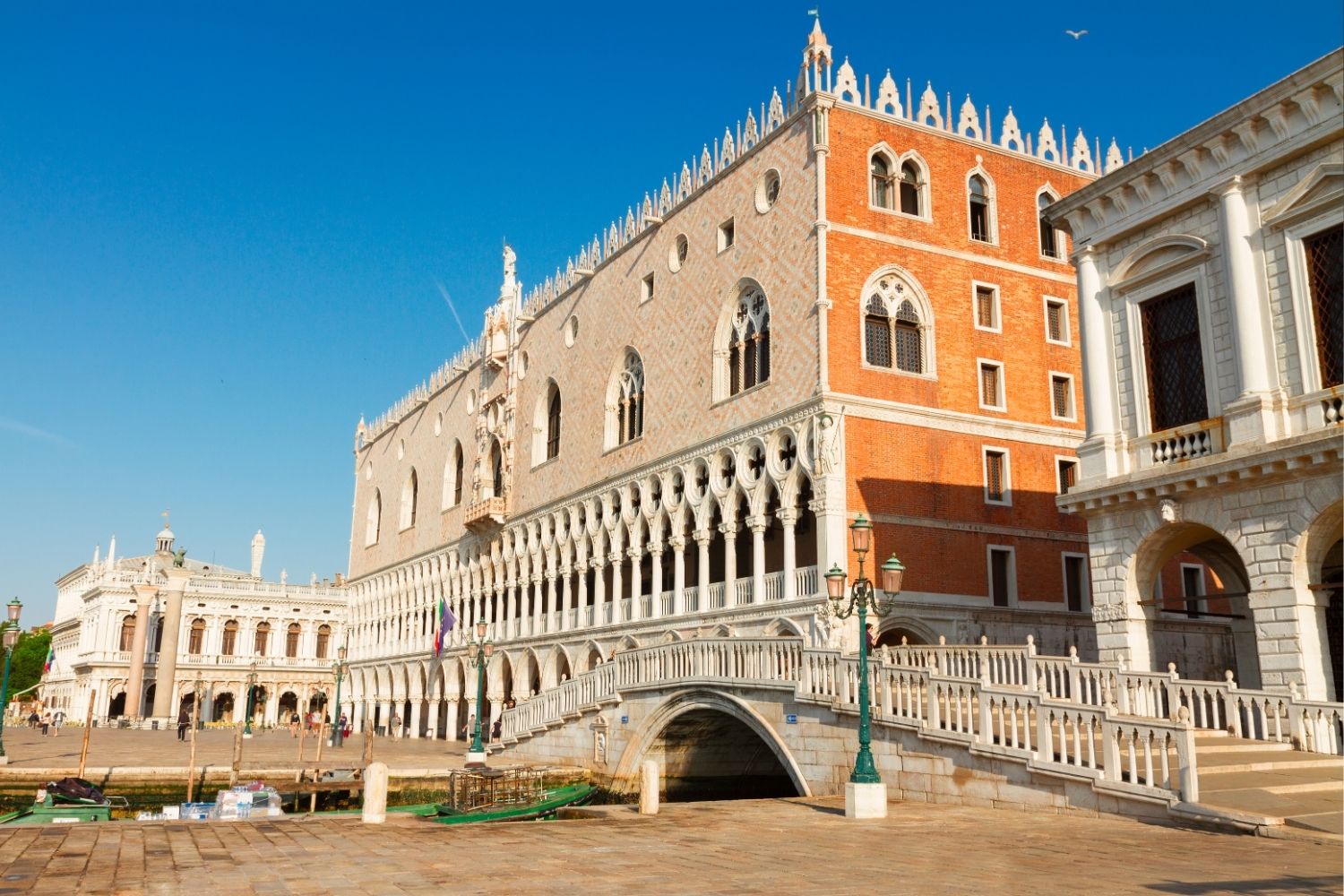
Table of Contents Show
Doge’s Palace (Palazzo Ducale) is a Venetian Gothic palace on Piazza San Marco in Venice, Italy, originally built in 810 and reconstructed in the 14th century. It served as the residence of the Doge, the seat of government, the supreme court, and the state prison of the Republic of Venice for nearly a thousand years. Its design inverts the structural logic of typical Gothic buildings, placing heavy marble walls above open arcades.
Walk through any European capital and you will find government buildings designed to project strength: thick stone walls, fortified gates, narrow windows. The Doge’s Palace in Venice did the opposite. Its architects placed two tiers of open, light-filled arcades at the base and a massive pink-and-white marble wall on top. The result looks, at first glance, structurally impossible. That deliberate inversion of weight and openness was not a structural accident. It was a political statement, built into stone, about how the Venetian Republic understood power. For those interested in how Gothic architecture shaped cathedral design across Europe, the Doge Palace offers a very different chapter of the same story: Gothic principles applied not to worship, but to governance.
A Brief History of Doge’s Palace Venice
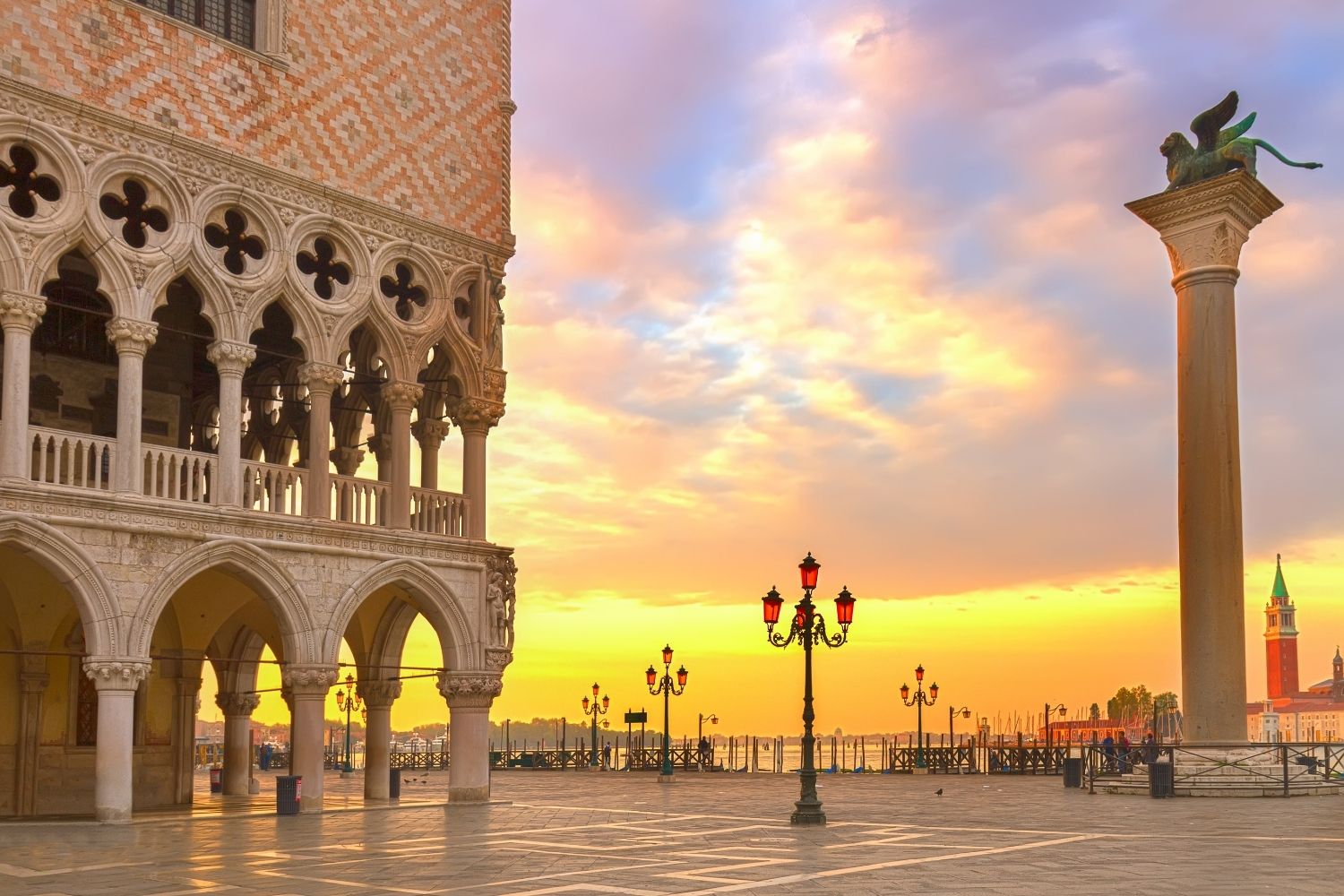
The first ducal palace on this site dates to 810, when Doge Agnello Participazio moved the seat of Venetian government from the island of Malamocco to the Rialto area. That early structure was a fortified, Byzantine-style compound, destroyed by fire in 976 and rebuilt multiple times. The palace visitors see today is largely the product of a major reconstruction that began in 1340 under Doge Bartolomeo Gradenigo. The south wing, facing the lagoon, was completed first, followed by the west wing facing the Piazzetta in the 1420s and 1430s.
Two devastating fires in 1574 and 1577 destroyed large sections of the interior, including paintings by Bellini, Titian, and other masters. The Venetian Senate debated whether to demolish the palace entirely and rebuild in a Renaissance style, but architect Antonio da Ponte argued successfully for restoration within the existing Gothic framework. That decision preserved one of the most important examples of Italian architecture through the centuries. The palace became a museum in 1923 and today receives roughly 1.4 million visitors per year.
📌 Did You Know?
After the fire of 1577, Andrea Palladio proposed replacing the Doge’s Palace with an entirely new classical building. The Senate rejected his proposal, choosing instead to restore the Gothic structure. Had Palladio won the argument, one of the world’s greatest Gothic civic buildings would have been lost, and Venice’s skyline would look fundamentally different today.
The Venetian Gothic Style: What Makes Doge Palace Unique?
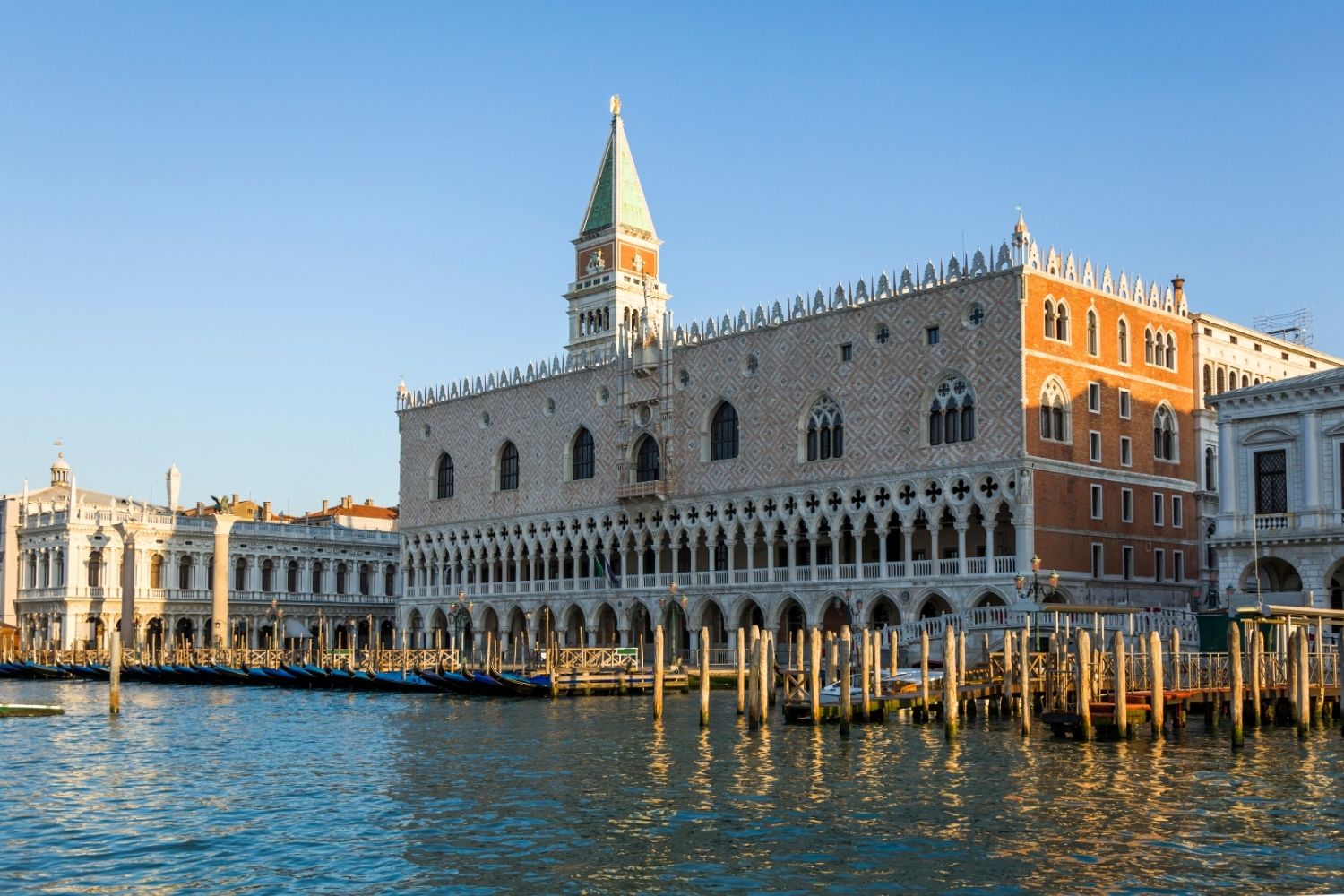
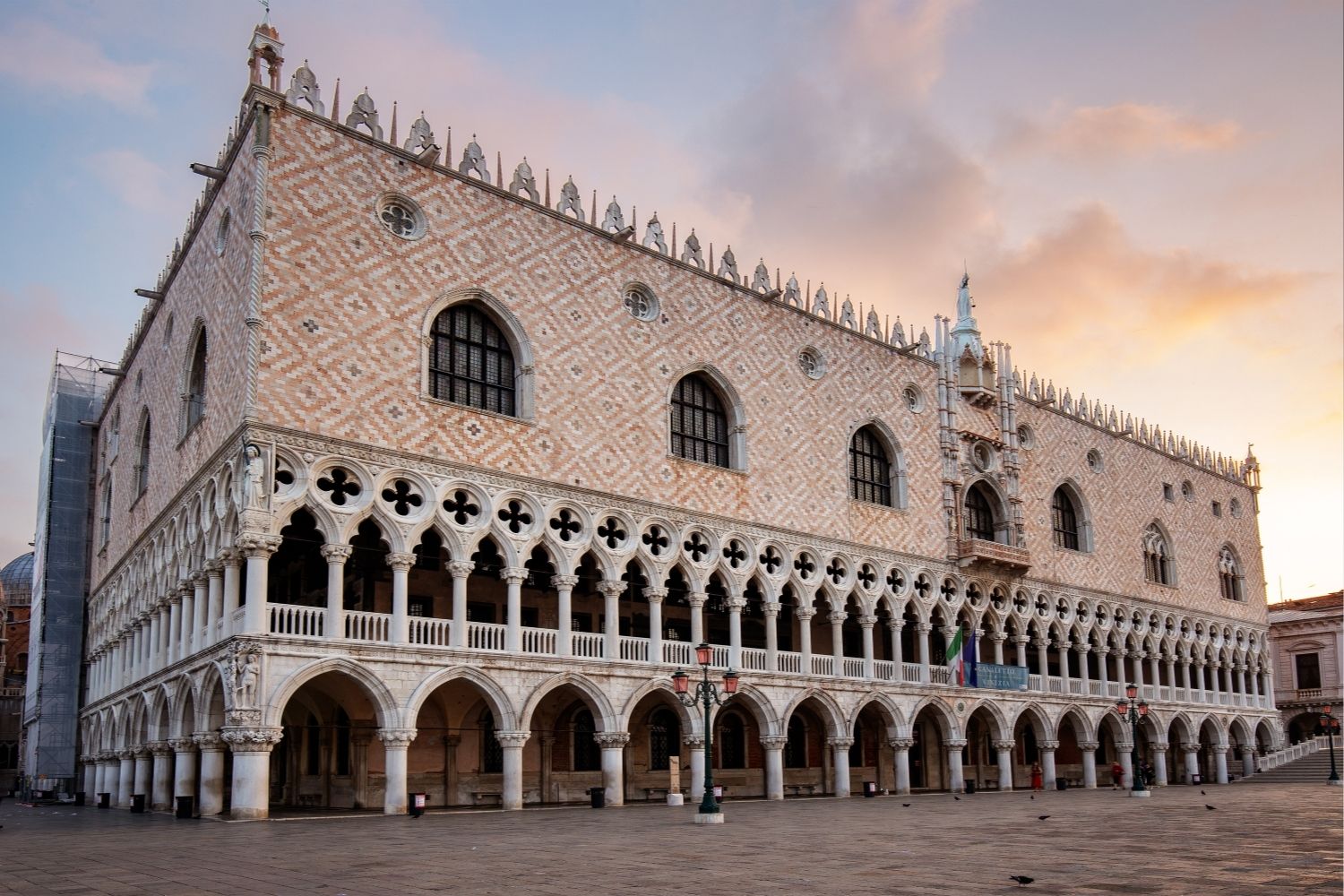
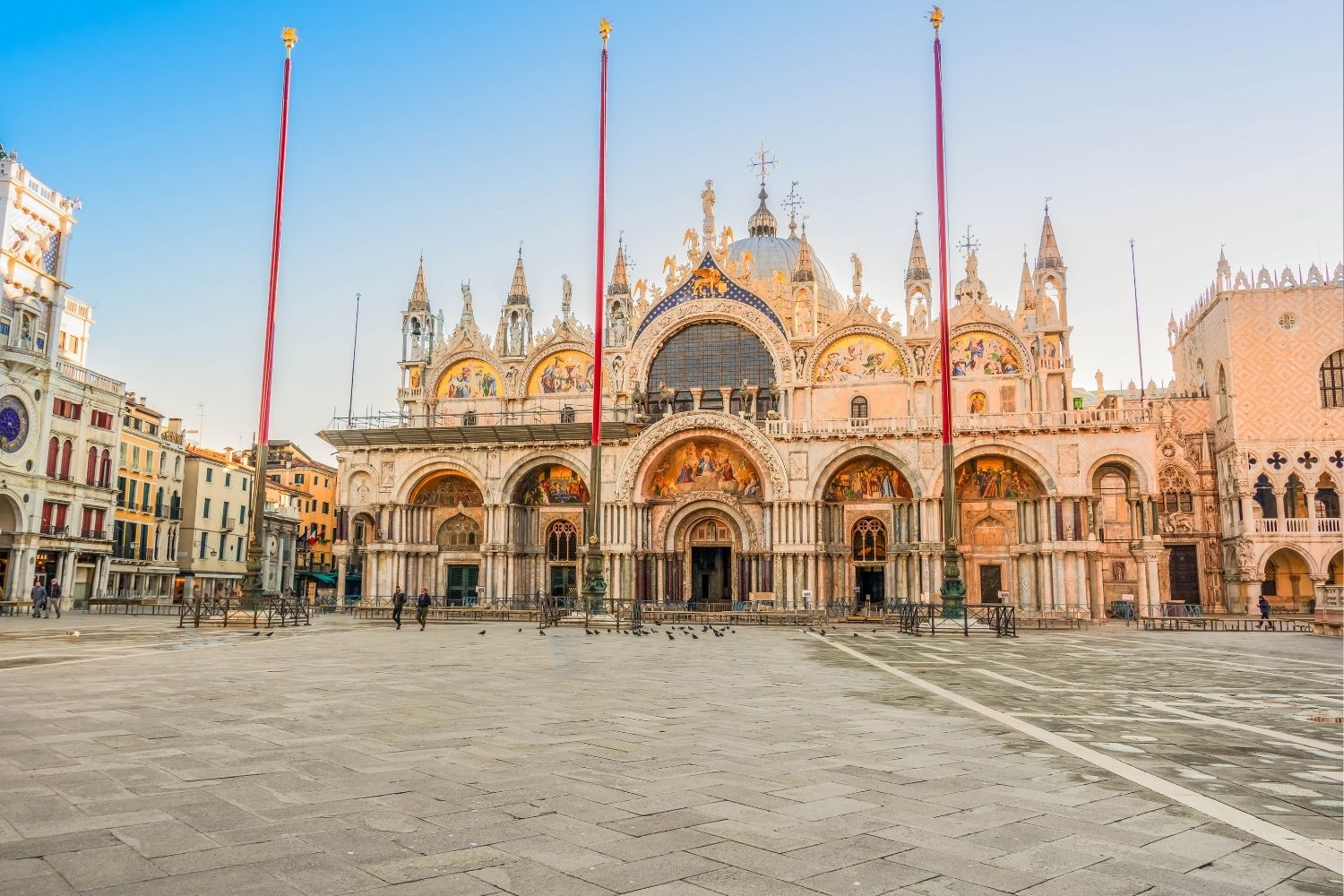
Standard Gothic architecture, as seen in Notre-Dame Cathedral and other French cathedrals, places heavy masonry at the base and becomes lighter as it rises. Flying buttresses transfer lateral thrust outward, and walls dissolve into stained glass at the upper levels. The Doge’s Palace reverses this logic entirely. The ground floor consists of a continuous pointed-arch arcade with sturdy columns. Above that sits a loggia of more delicate, tracery-filled Gothic arches. The top half of the building is a solid, flat wall faced in a diamond pattern of pink Verona marble and white Istrian stone.
This arrangement creates the visual effect of a heavy mass floating above an open, permeable base. Structurally, the thick upper walls act as a deep beam, distributing loads laterally across the arcade columns below. The result is a building that feels both monumental and approachable, a combination that suited Venice’s republican self-image. Unlike the fortress-palaces of Florence or Milan, the Doge’s Palace was designed to be walked through, not fortified against its own citizens. The open arcades at street level invited public life rather than shutting it out.
💡 Pro Tip
When visiting the Doge’s Palace, start from the waterfront side (south facade) and study the arcade columns before entering. The corner sculptures at the building’s three exposed corners depict the Judgment of Solomon, Adam and Eve, and the Drunkenness of Noah. These are not random decorations; each scene relates to justice, sin, and moral failure, setting up the themes of the courtrooms and government chambers inside.
Structural Design and Key Architectural Elements
The palace covers roughly 85 by 72 meters in plan, organized around a central courtyard. The exterior is defined by three main components working together. The ground-floor arcade uses 36 columns with carved capitals depicting allegorical scenes, trades, animals, and historical figures. Each capital is different, and together they form one of the largest programs of Gothic sculptural carving in Italy.
Above the arcade, the loggia level doubles the number of columns and introduces quatrefoil tracery between the arches. This pattern of interlocking circles within pointed arches creates a screen effect that filters light into the interior corridor. The tracery design draws on Islamic geometric patterns that Venetian traders encountered in the eastern Mediterranean, a visible reminder that architectural history often crosses cultural boundaries.
The upper wall, which makes up roughly half the building’s height, is broken only by large pointed-arch windows grouped in clusters. The diamond pattern on this wall surface is not applied tile; it is structural masonry, with alternating blocks of pink and white marble laid in a precise geometric pattern. The roofline is crowned by a delicate row of pinnacles and a crenellation pattern that softens the transition between wall and sky. This combination of tracery, patterned masonry, and sculptural carving defines what architectural historians call the Venetian Gothic style, distinct from both the French Gothic and the Neoclassical traditions that followed.
📐 Technical Note
The ground-floor columns of the Doge’s Palace are made of Istrian stone, a dense limestone quarried from the Istrian peninsula (modern-day Croatia). Istrian stone has a compressive strength of approximately 120-180 MPa and exceptional resistance to salt water, which is why it was the preferred building material for foundations and load-bearing elements across Venice. The columns support loads estimated at several hundred tonnes per column due to the massive wall above.
How Did Architecture Serve Governance in Venice?
The Doge’s Palace was not simply a residence. It housed the entire apparatus of the Venetian state under one roof. The ground floor contained offices, storage, and the pozzi (prison cells at water level). The first floor (loggia level) held additional government offices and the Avogaria, Venice’s public prosecutors. The second floor, behind the solid marble wall, contained the Republic’s most important rooms: the chambers of the Great Council, the Senate, the Council of Ten, and the Doge’s private apartments.
This vertical organization mapped political hierarchy onto architecture. Citizens could walk freely through the open arcades, but access to the upper floors required passing through controlled points. The Scala dei Giganti (Giants’ Staircase) in the courtyard, flanked by colossal statues of Mars and Neptune, marked the ceremonial threshold between public space and state power. New Doges were crowned at the top of this staircase, visible to the crowd below but elevated above them.
The Great Council Chamber (Sala del Maggior Consiglio) is one of the largest rooms in Europe without internal supports, measuring 54 meters long by 25 meters wide. Its ceiling is supported by massive wooden trusses hidden above the decorative painted ceiling. This open span was a deliberate choice: the Great Council, which at its peak included over 2,000 members of the Venetian nobility, needed a single room large enough to assemble, debate, and vote. The architecture physically embodied the republican principle that decisions were made collectively, not in private chambers.
🎓 Expert Insight
“The Ducal Palace is the central building of Venice in every sense: it was at once chapel, fortress, senate house, law court, and prison.”
John Ruskin, The Stones of Venice (1851-1853)
Ruskin’s three-volume study of Venetian architecture remains one of the most detailed analyses of the Doge’s Palace ever written. His observation captures how Venice concentrated all functions of the state into a single building, a decision that shaped both its architecture and its political culture.
The Bridge of Sighs and the Palace Prisons
The Ponte dei Sospiri (Bridge of Sighs), completed in 1600, connects the Doge’s Palace to the Prigioni Nuove (New Prisons) across the Rio di Palazzo canal. Designed by Antonio Contino, the enclosed limestone bridge uses a Baroque style that contrasts with the Gothic palace. Despite its romantic name, popularized by Lord Byron in the 19th century, the bridge served a purely functional purpose: transporting prisoners from the courtrooms inside the palace to their cells across the canal.
The older prison cells within the palace itself, known as the pozzi (wells) and piombi (leads), held prisoners in very different conditions. The pozzi, located at ground level, were damp, dark, and partially flooded during high tides. The piombi, located directly under the lead-covered roof, were stifling in summer. Giacomo Casanova famously escaped from the piombi in 1756, an account he published in detail. These spaces remind visitors that the Doge’s Palace was not only a monument to beauty and governance but also an instrument of state control. The same building that hosted lavish state banquets in the Great Council Chamber held prisoners in cells a few floors below.
Tintoretto, Veronese, and the Art Inside Doge Palace Italy
After the fires of 1574 and 1577 destroyed earlier paintings, Venice’s leading artists were commissioned to redecorate the palace interiors. Tintoretto’s Paradise, painted on the end wall of the Great Council Chamber, measures approximately 22 by 7 meters and is one of the largest canvas oil paintings ever created. Veronese contributed ceiling panels in the Sala del Collegio and the Anticollegio, blending allegorical figures with bold color and a deep integration of art and architectural space.
The decorative program was not random. Each room’s paintings reinforced the function of that space. The Senate chamber featured allegories of Venice’s wisdom and justice. The Council of Ten’s chamber depicted divine punishment of treachery. The Doge’s private chapel connected spiritual authority to political power. This intentional relationship between iconography and architectural space makes the palace one of the most complete surviving examples of Renaissance political art integrated into a Gothic structure.
💡 Pro Tip
If visiting the Doge’s Palace museum, book the “Secret Itineraries” tour in advance. This guided tour takes visitors through rooms not accessible on the standard route, including the Inquisitors’ chambers, the torture room, Casanova’s cell in the piombi, and the administrative offices behind the public halls. It provides a much more complete picture of how the building actually functioned as a seat of government.
Video: Exploring the Doge’s Palace in Venice
This walkthrough of the Doge’s Palace covers its major halls, the courtyard, and the architectural details of the facade, giving a clear sense of the building’s scale and spatial organization.
Why Does Doge’s Palace Venice Still Matter?
The Doge’s Palace influenced civic architecture across the Mediterranean, and its design ideas traveled wherever Venetian trade routes reached. The Venetian Gothic style appeared in palaces along the Dalmatian coast, in Crete, and in Cyprus. Within Venice itself, buildings along the Grand Canal, including Ca’ d’Oro and Palazzo Foscari, adopted the same logic of open arcades and patterned upper walls, creating the city’s distinctive waterfront character.
For architects and historians, the palace raises a question that remains relevant: how should the architecture of governance relate to the public it serves? The Venetian answer, openness at ground level, collective assembly spaces above, and artistic programs that linked political authority to moral and divine order, offers a model very different from the closed, security-driven government buildings common today. The evolution of architectural styles shows that every era builds its political values into its public buildings, and the Venice Doge’s Palace is one of the clearest examples of that principle in action.
⚠️ Common Mistake to Avoid
Many visitors and even some guidebooks describe the Doge’s Palace as a purely Gothic building. In reality, the palace is a layered structure spanning multiple periods. The exterior is Venetian Gothic (14th-15th century), the Bridge of Sighs is early Baroque (1600), and the interior decoration is largely Renaissance (late 16th century). Understanding this layering is essential to reading the building accurately.
Visiting Doge’s Palace Museum: Practical Information
The Doge’s Palace museum is part of the Fondazione Musei Civici di Venezia network, which manages 11 museums across Venice. The palace is accessible from Piazza San Marco and opens daily, with extended hours during the summer season. Advance ticket booking is strongly recommended, especially between April and October, when the palace sees its highest visitor numbers. Combined tickets with the Museo Correr and other civic museums are available and offer better value than single-entry passes.
The standard museum route covers the courtyard, the Scala d’Oro (Golden Staircase), the Doge’s apartments, the institutional chambers (Senate, Great Council, Council of Ten), and the armory collection. The restoration of Notre-Dame Cathedral showed how historic buildings can be preserved with modern techniques, and the Doge’s Palace has undergone its own ongoing conservation work, including structural monitoring systems adapted to Venice’s unique challenges of rising water levels and salt corrosion.
For a deeper understanding of the Venetian Gothic tradition and the city’s broader architectural heritage, the official website of the Palazzo Ducale provides updated visiting information, and ArchDaily and Wikipedia’s entry on the Doge’s Palace offer further reading on the building’s construction phases and art collection. The Britannica entry on Doge’s Palace provides an accessible scholarly overview of the building’s history and significance within Venetian Gothic architecture.






A 2,500-Year-Old Solar Observatory in Puebla Is the First Group E Complex Found Outside the Maya Area
Archaeologists working for Mexico's INAH have confirmed that two platforms at Teteles...
 illustrarch Editoral Team2 Mins read

Donald Insall, the Conservation Architect Who Led Windsor Castle’s Restoration, Dies at 100
Donald Insall, the British architect who turned conservation into a planning discipline...
illustrarch Editoral Team2 Mins read
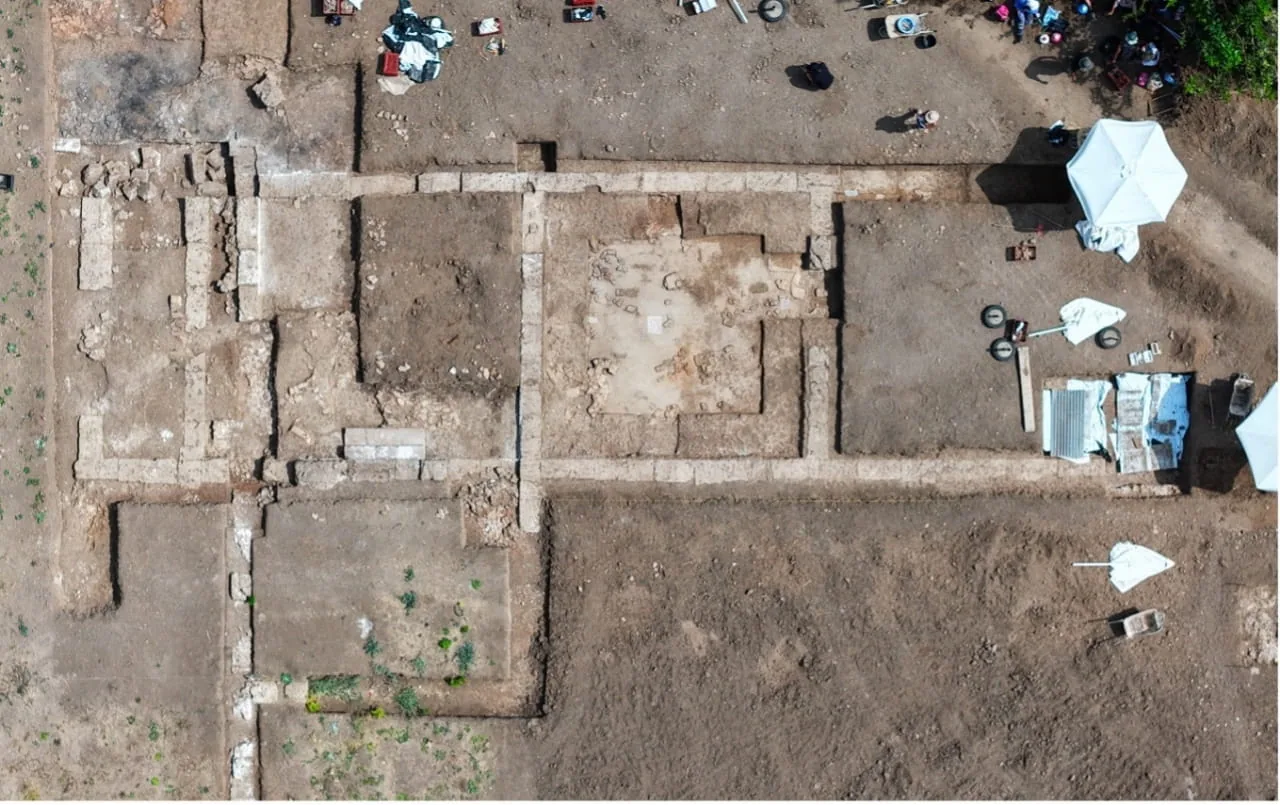
New Digging Season at the Mieza Gymnasium Uncovers Alexander’s School Complex
New digs at Mieza uncover teaching halls and mosaic banquet rooms at...
illustrarch Editoral Team2 Mins read

A Record El Niño Threatens More Than 10,000 Adobe Heritage Sites on Peru’s Coast
With a possibly record-breaking El Niño under way, Peru's coastal adobe heritage...
illustrarch Editoral Team2 Mins read


Leave a comment