

8 Essential Elements of a Good Bubble Diagram
A comprehensive guide to the eight essential elements of an effective architectural bubble diagram, exploring spatial hierarchy, adjacencies, circulation, zoning, and design clarity to support strong early-stage planning.
 Elif Ayse Sen25 April 20264 Mins read157
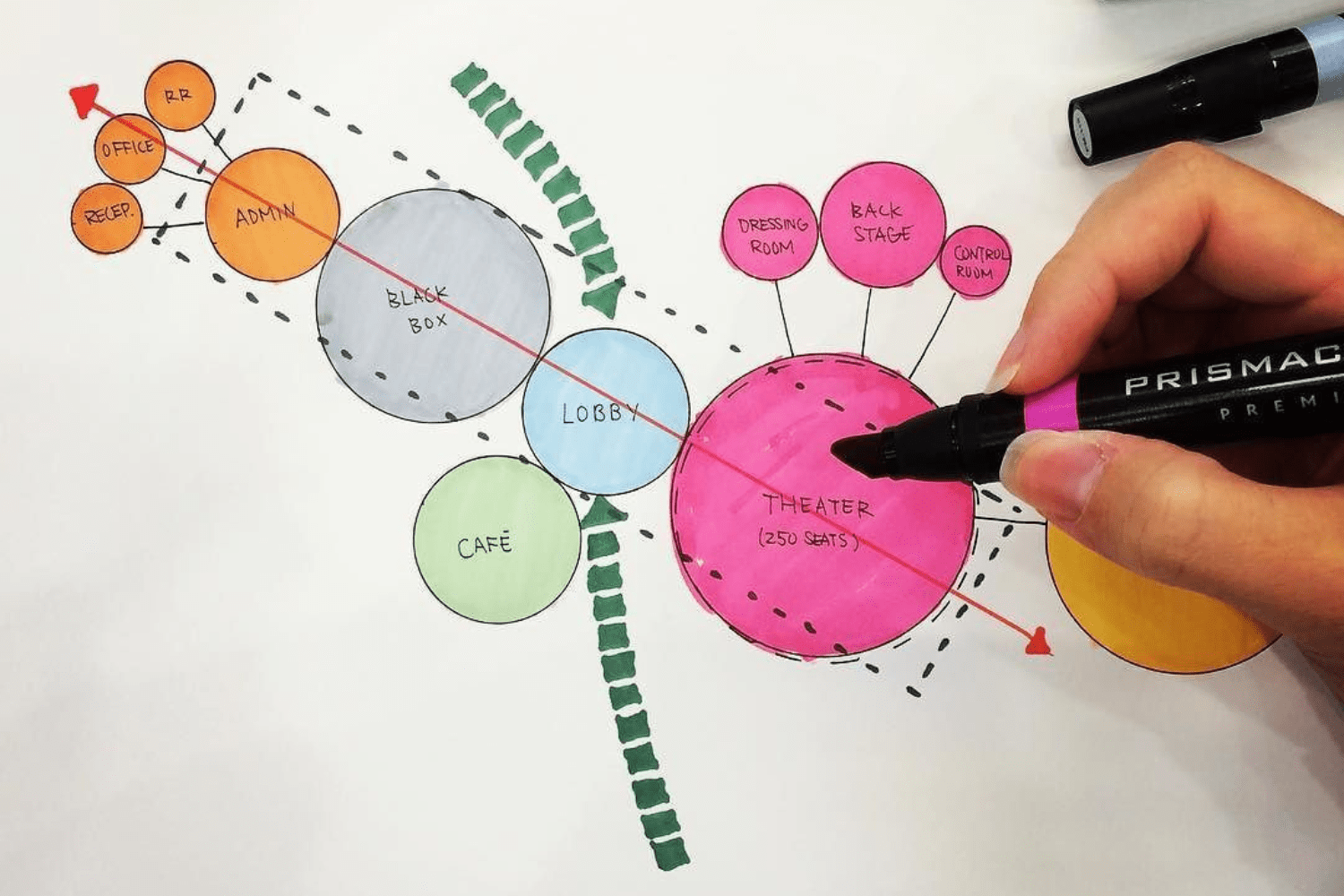
Table of Contents Show
In architectural design, the bubble diagram stands as one of the earliest yet most influential tools for shaping a project’s spatial logic. Before form, materiality, or façade expression come into play, architects rely on bubble diagrams to translate project requirements into a clear spatial narrative. These diagrams provide a conceptual roadmap of relationships, adjacencies, circulation paths, and spatial hierarchies, offering a simplified yet highly informative visual overview. A well-crafted bubble diagram is not merely a sketch but a strategic exploration of how people will experience and navigate space. The following eight essential elements outline what makes a bubble diagram effective, purposeful, and capable of guiding the design process toward coherent architectural solutions.
Explore more in our complete guide: read the full guide.
Clear Spatial Hierarchy
A good bubble diagram establishes a clear spatial hierarchy to convey which areas hold primary, secondary, or supportive roles within the project. By visually emphasizing certain “bubbles” through size, placement, or spacing, designers articulate the relative importance of each zone. This helps stakeholders understand the central focus of the project—whether it is a main lobby, a classroom cluster, or a core residential space. A strong hierarchy ensures that the architectural concept remains grounded in the project’s priorities and that overall spatial composition follows logical organizational patterns.
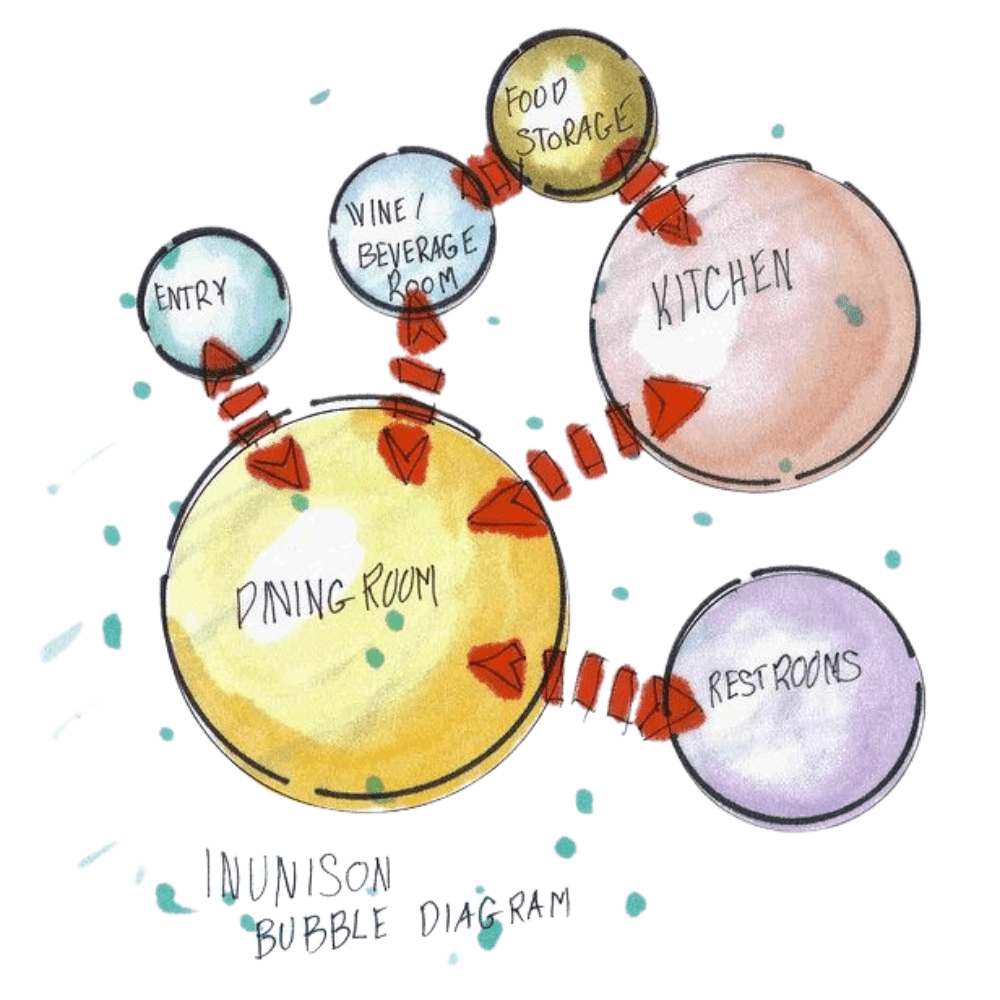
Logical Adjacencies
A successful diagram also demonstrates logical adjacencies between spaces, reflecting how users will move and interact within the building. When relationships are carefully considered, key functions remain conveniently connected while conflicting or disruptive uses are strategically separated. For example, public and private areas can be distanced, while service zones stay close to operational cores. Capturing these adjacency relationships in the bubble stage prevents circulation bottlenecks, noise conflicts, and programmatic inefficiencies later in the design.
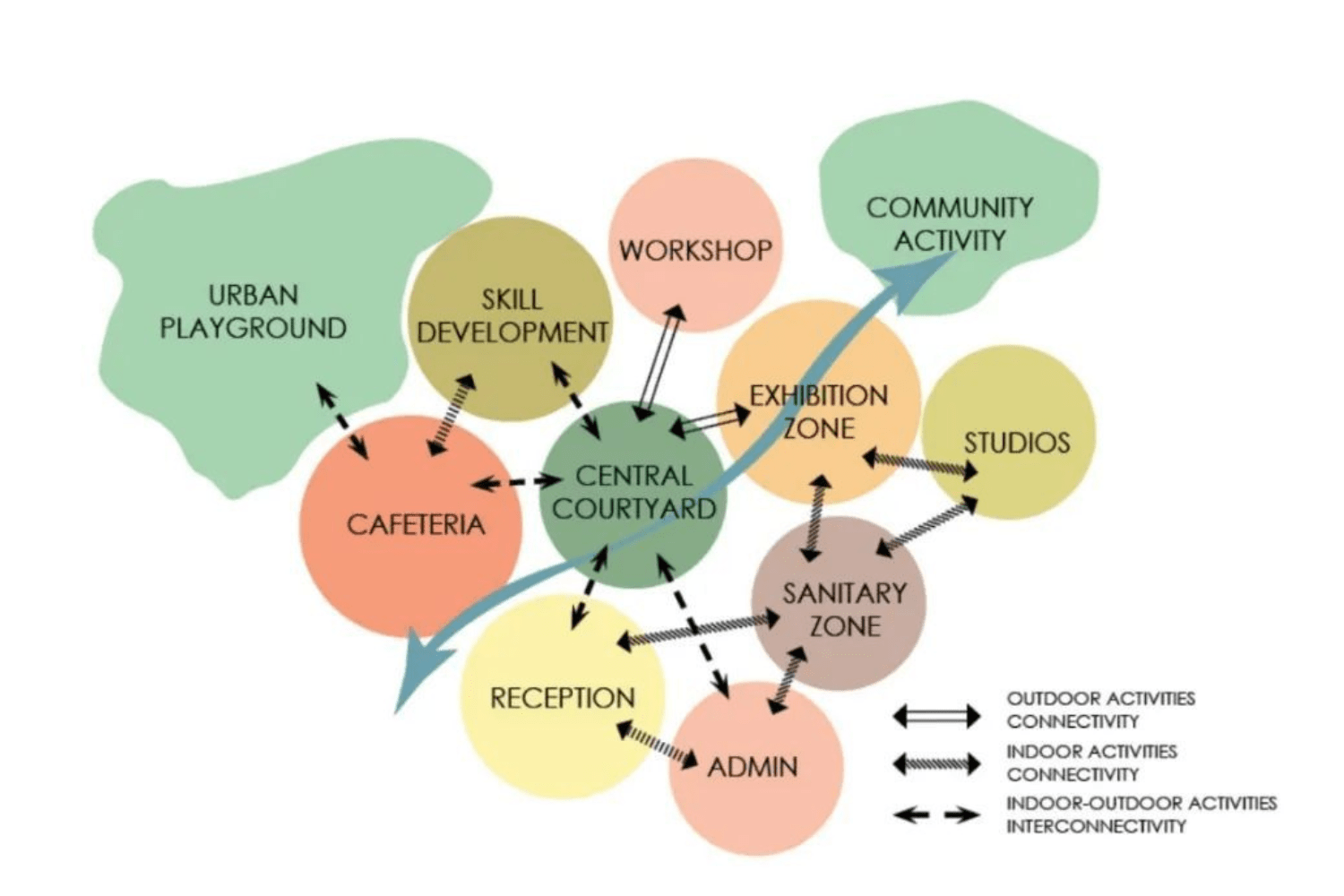
Defined Circulation Paths
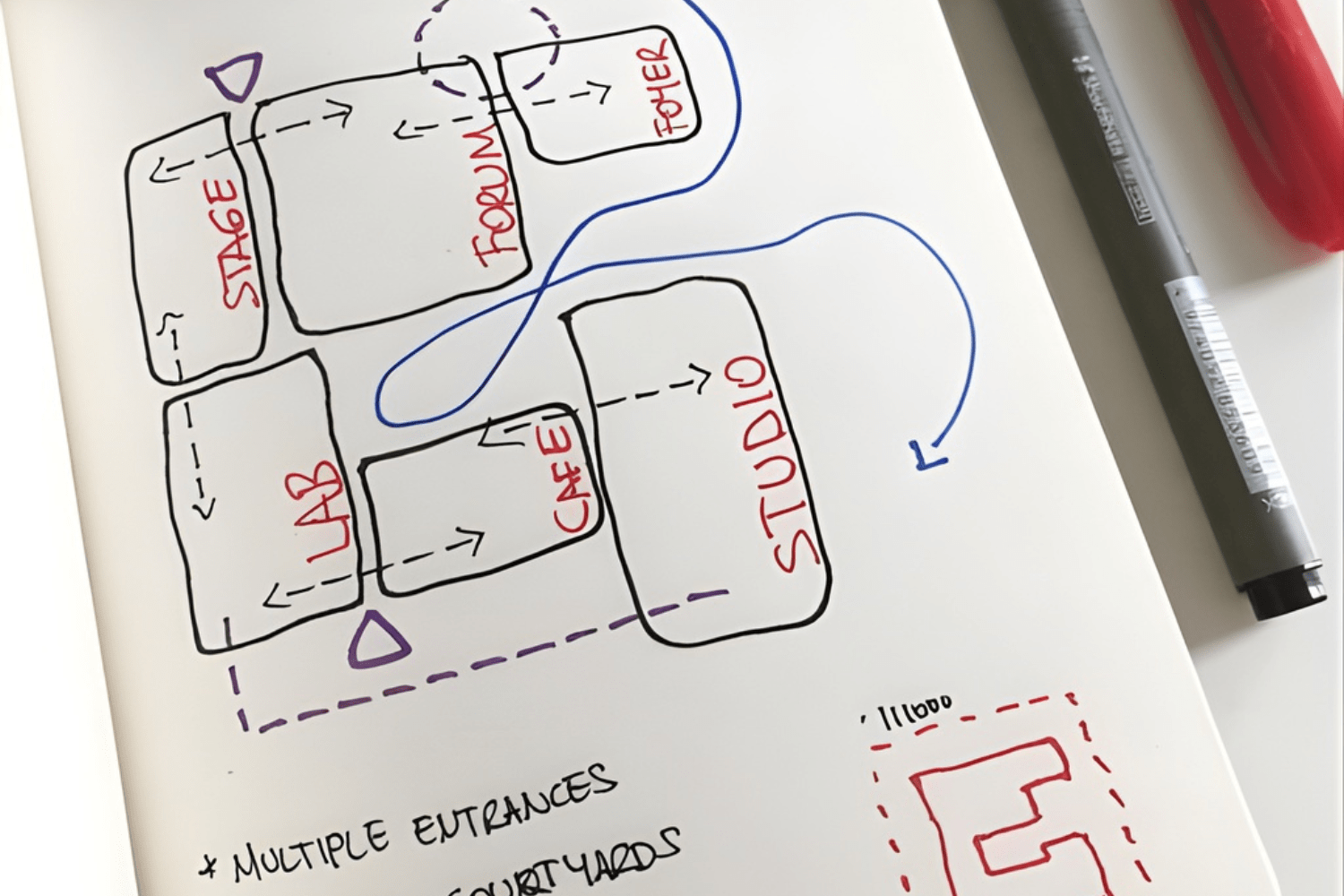
Circulation is the backbone of architectural flow, and an effective bubble diagram must clearly indicate how people travel from one space to another. While the diagram remains conceptual, directional arrows, connecting lines, or the placement of bubbles themselves should imply intuitive routes. This early mapping of movement helps anticipate transitions, access points, and potential areas of congestion. By shaping circulation concepts early on, architects establish a framework that will guide the development of corridors, transitions, and spatial rhythm in later design phases.
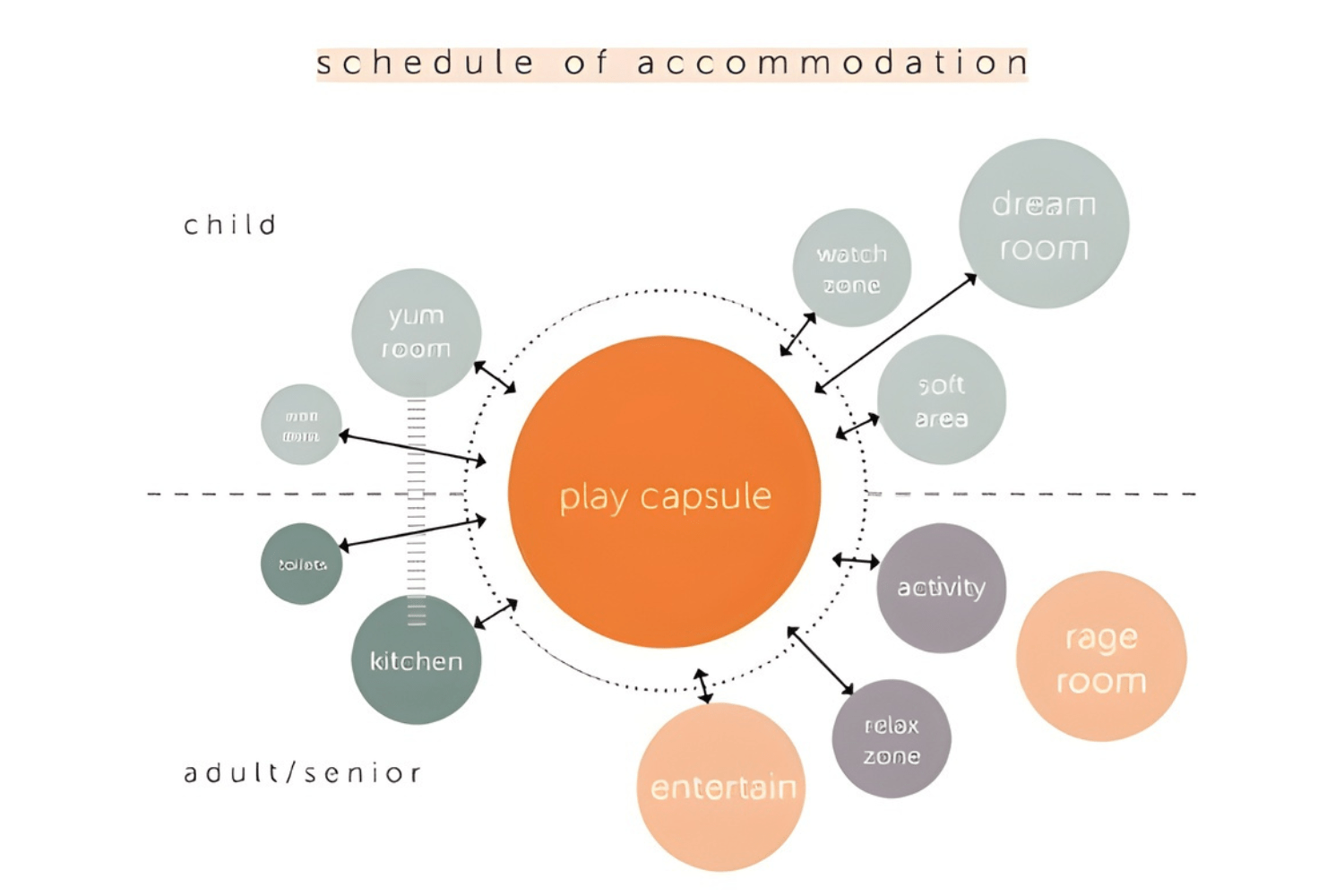
Appropriate Scale and Proportion
Although bubble diagrams are not yet floor plans, they should reflect general scale relationships that correspond to the project’s functional requirements. Larger bubbles can represent more spatially demanding areas, while smaller ones denote compact or secondary functions. This proportional thinking ensures that the final design will not feel forced when dimensions become more precise. Proportion in bubble diagrams also helps maintain functional balance and reinforces the overall organizational logic of the emerging architectural program.

Functional Zoning
A strong bubble diagram includes clear functional zoning to group related activities and separate incompatible functions. Whether organizing residential, administrative, public, or technical areas, zoning defines the general structure of the project. These zones guide spatial atmosphere, privacy levels, and acoustic expectations while establishing a coherent identity for each section of the building. Early zoning improves operational efficiency and enhances user experience by aligning spatial arrangements with programmatic intent.
Flexibility and Adaptability
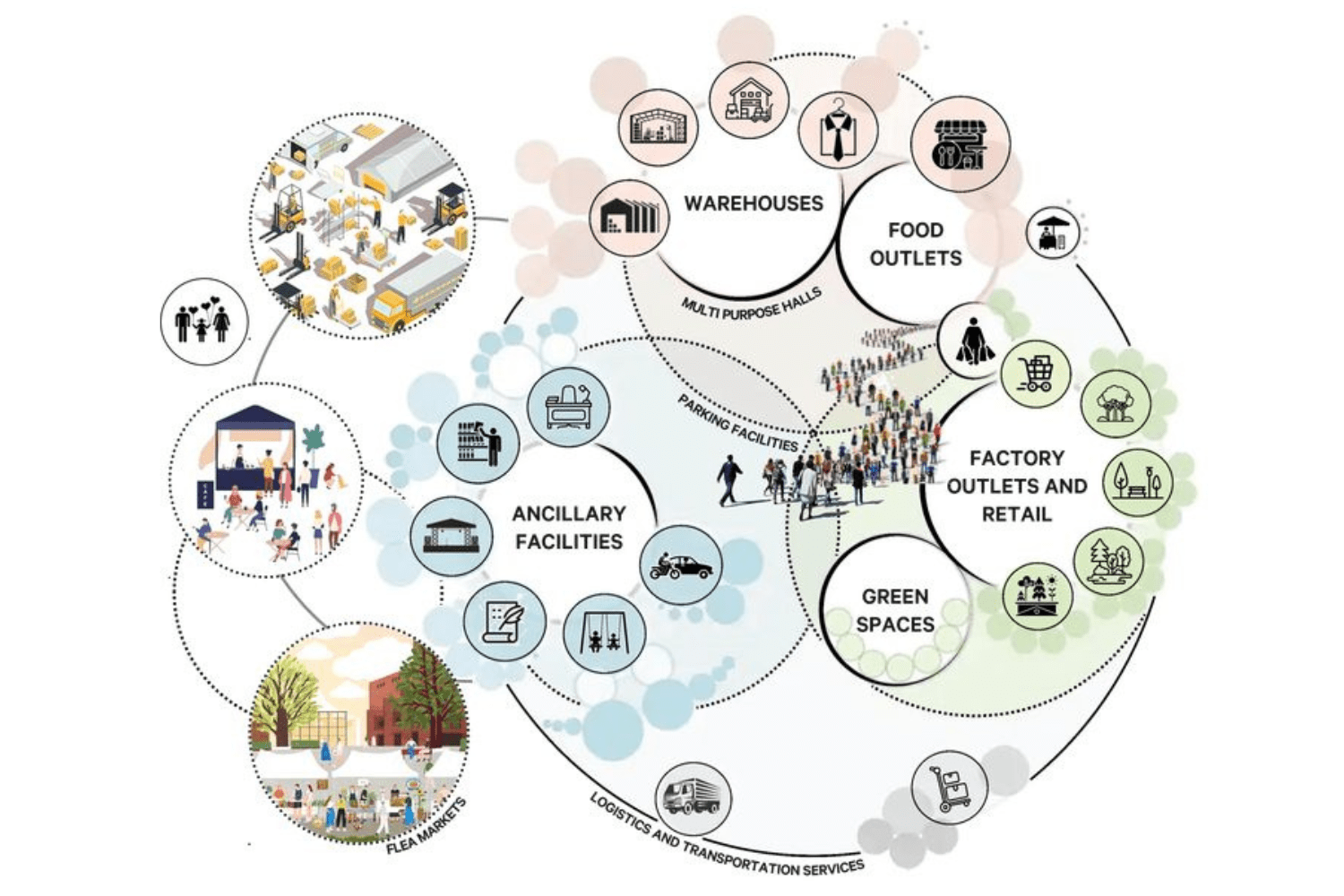
While bubble diagrams provide structure, they must remain flexible enough to accommodate revision as the design evolves. A good diagram leaves room for reinterpretation, expansion, or rearrangement without losing its core logic. This adaptability is essential in early design phases, where new insights or changing client needs often influence the direction of the project. Maintaining conceptual fluidity ensures that the diagram continues to serve as a dynamic planning tool rather than a restrictive template.
Clear Visual Simplicity
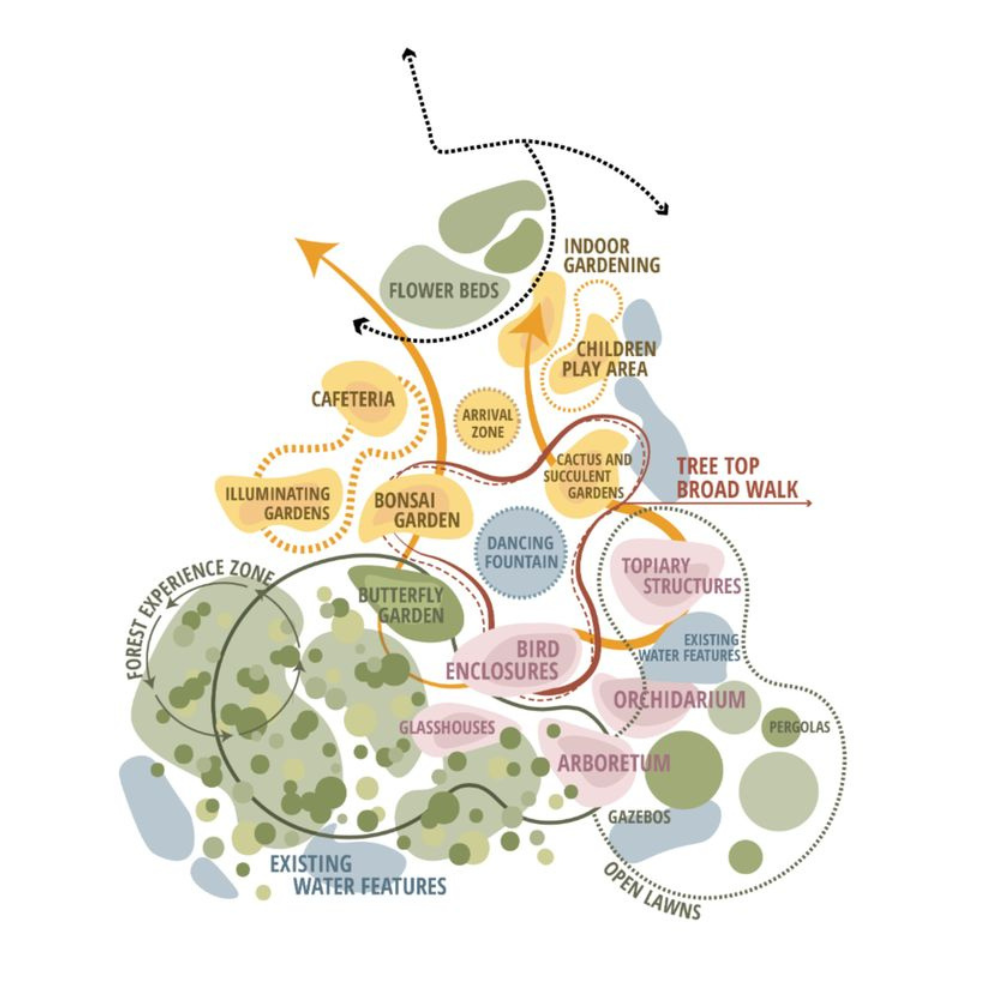
Simplicity is a defining characteristic of an effective bubble diagram. The graphic must remain easy to read, uncluttered, and visually coherent so its purpose can be understood at a glance. Clean lines, consistent bubble shapes, and minimal but meaningful annotation help communicate the design intent effectively. A visually simple diagram enhances collaboration, allowing clients, consultants, and team members to quickly grasp the overall spatial strategy without being overwhelmed by detail.
Direct Expression of Program Requirements
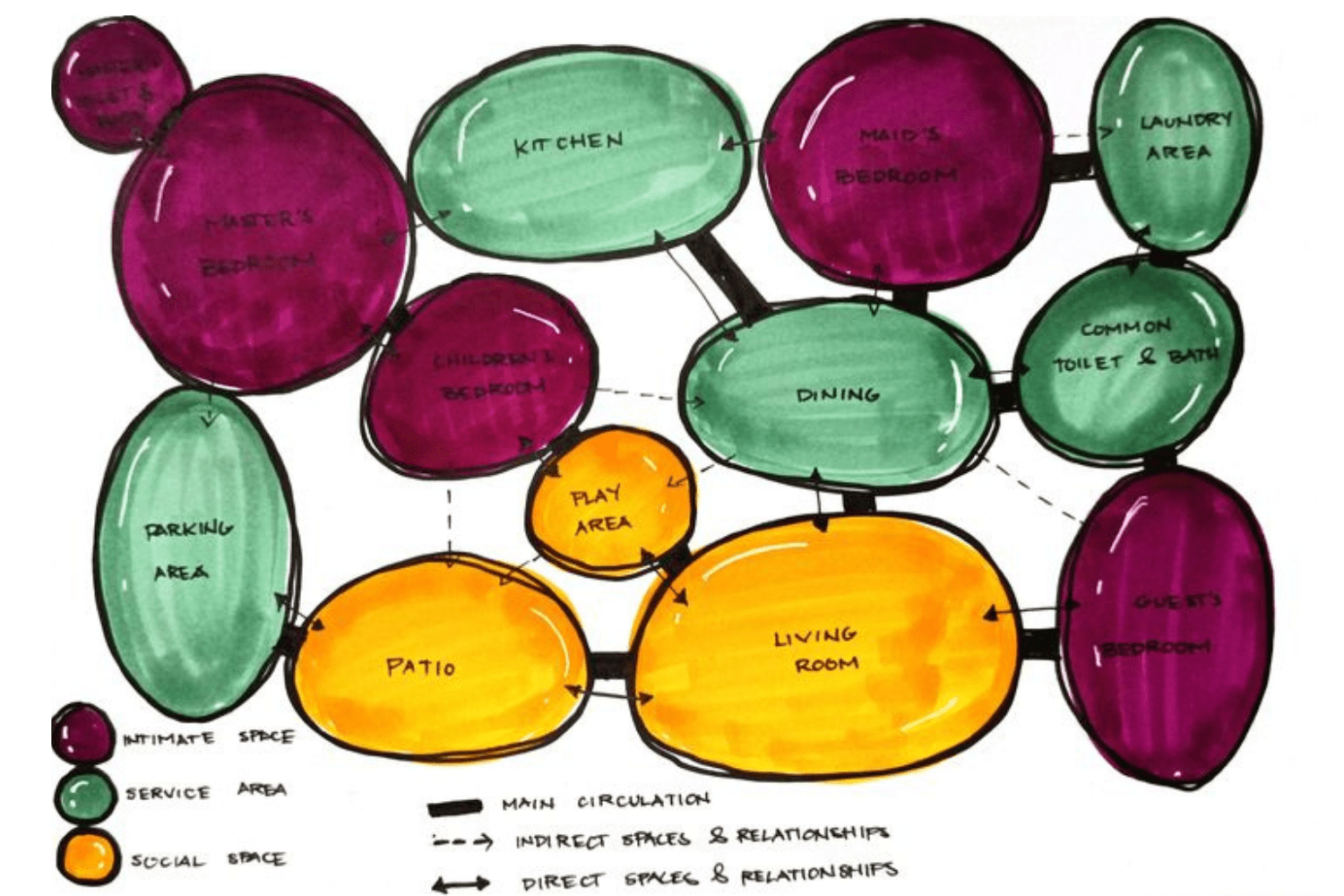
Finally, a strong bubble diagram responds directly to the project’s programmatic needs. Each bubble should represent a distinct functional component, ensuring nothing essential is overlooked and everything included has purpose. By aligning spatial relationships with real operational needs, the diagram transforms the written program into a visual planning tool. This link between program and diagram ensures that the architecture grows from a foundation of clarity and functional logic.
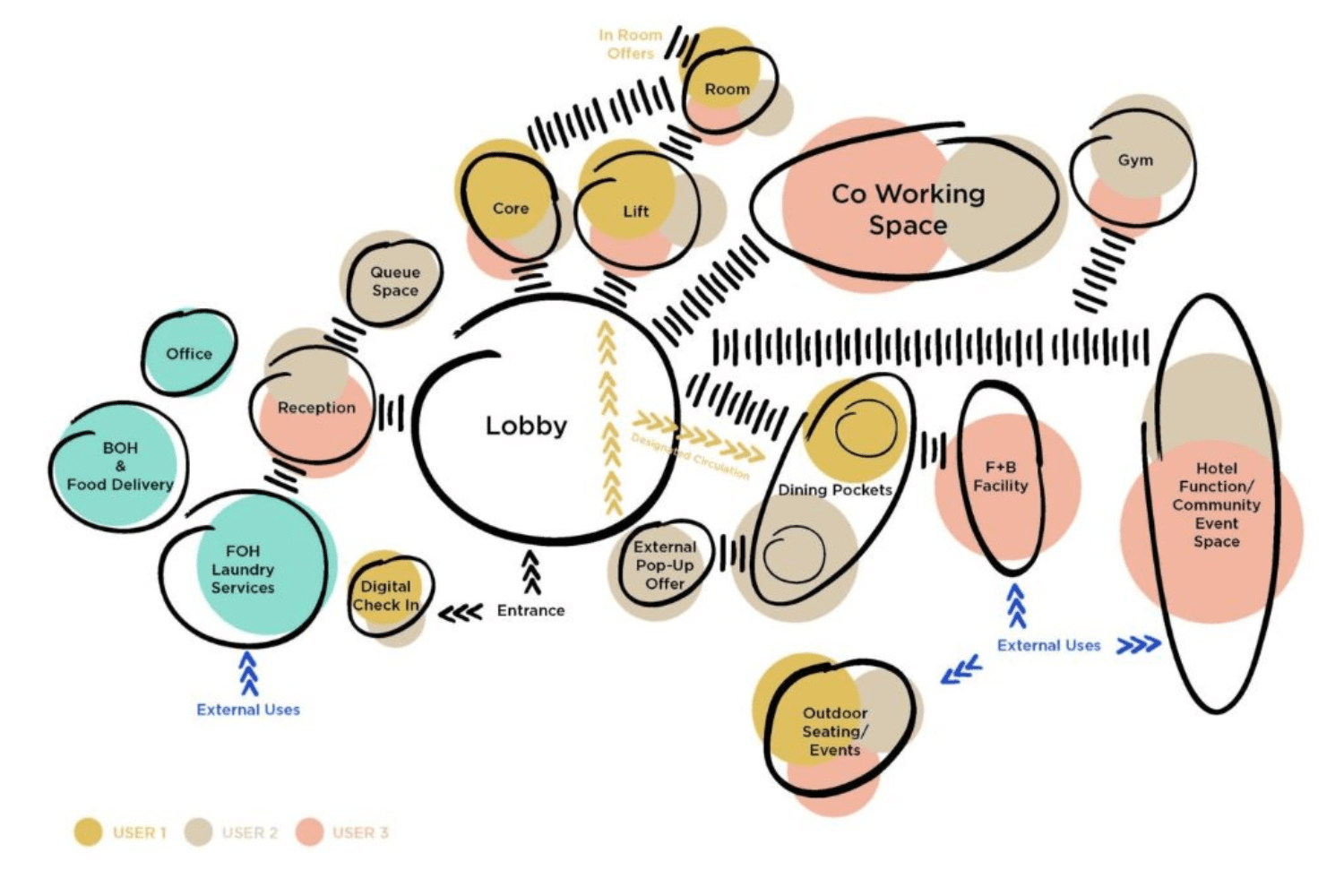
A well-designed bubble diagram serves as the conceptual backbone of an architectural project, shaping how spaces relate, flow, and support the intended user experience. By incorporating clear hierarchy, logical adjacencies, circulation insight, and functional clarity, architects create early-stage diagrams that meaningfully influence the design journey ahead. When executed with simplicity, proportional awareness, and adaptability, the bubble diagram becomes more than a sketch—it becomes a strategic framework that guides the development of coherent, human-centered architecture.








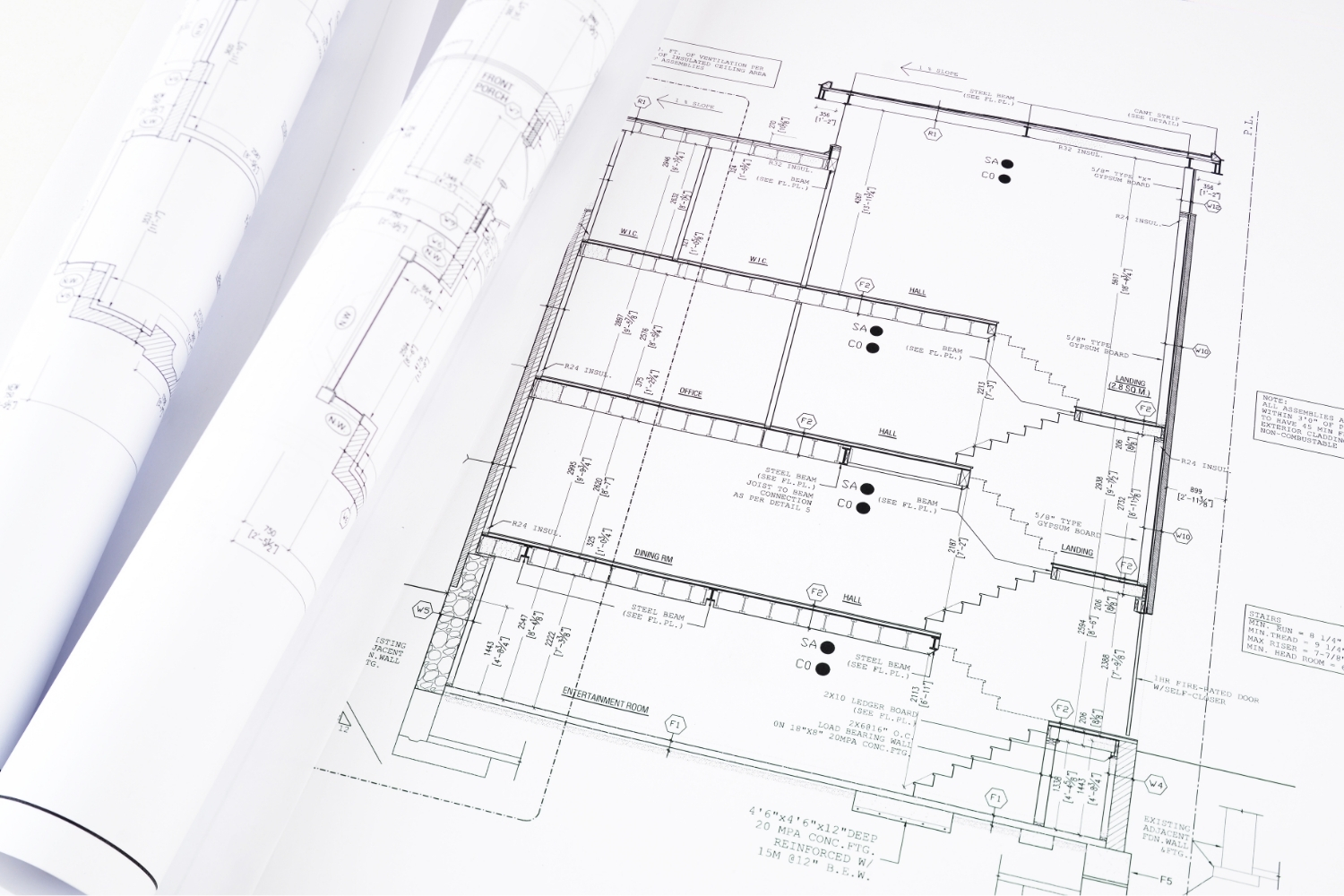
What Is an As-Built Drawing and When Is It Required?
As-built drawings are the corrected record of a project, showing how a...
 Sinan Ozen8 Mins read
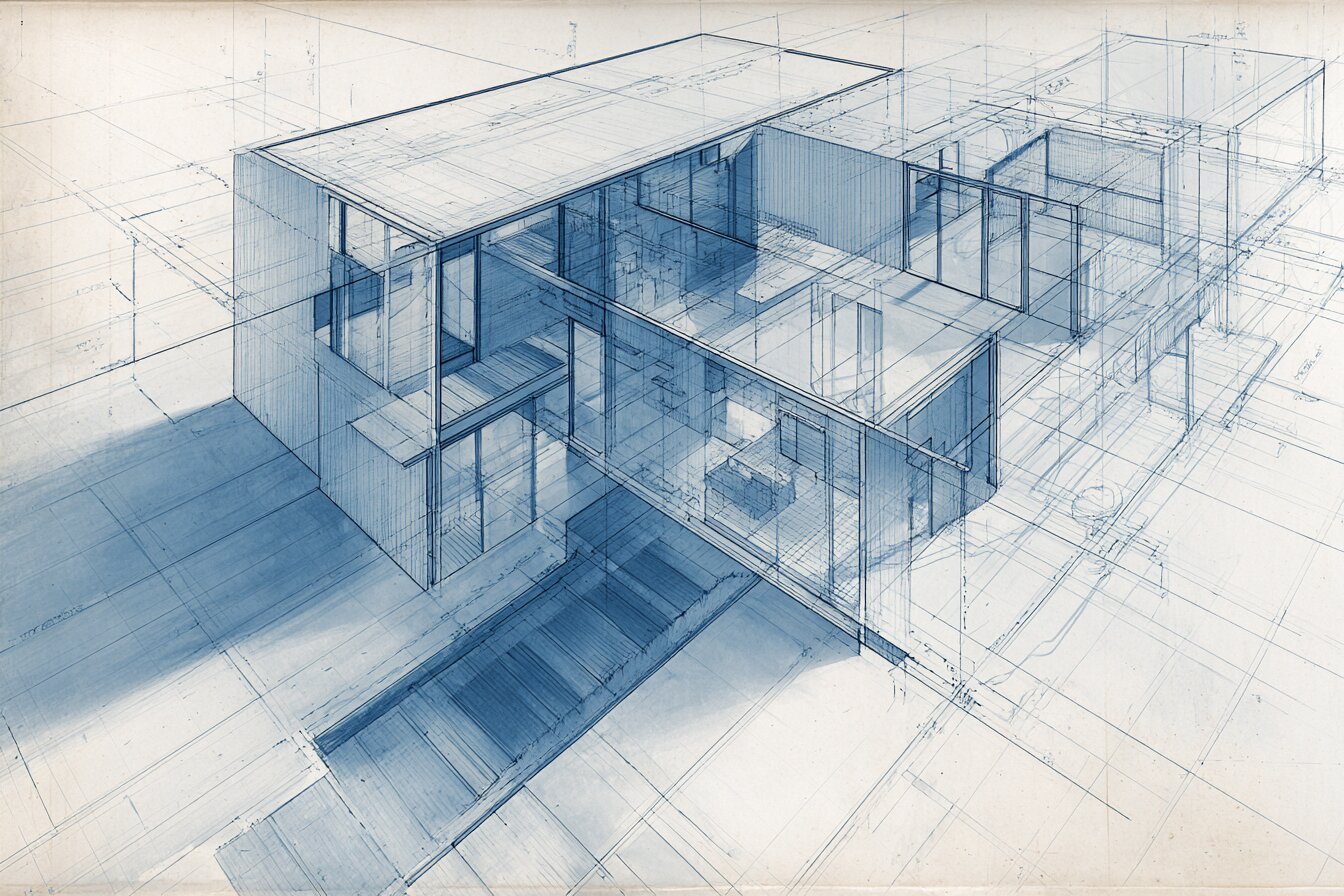
What Is an Isometric Drawing in Architecture?
A clear look at isometric drawing in architecture, covering how the 120-degree...
Elif Ayse Sen6 Mins read
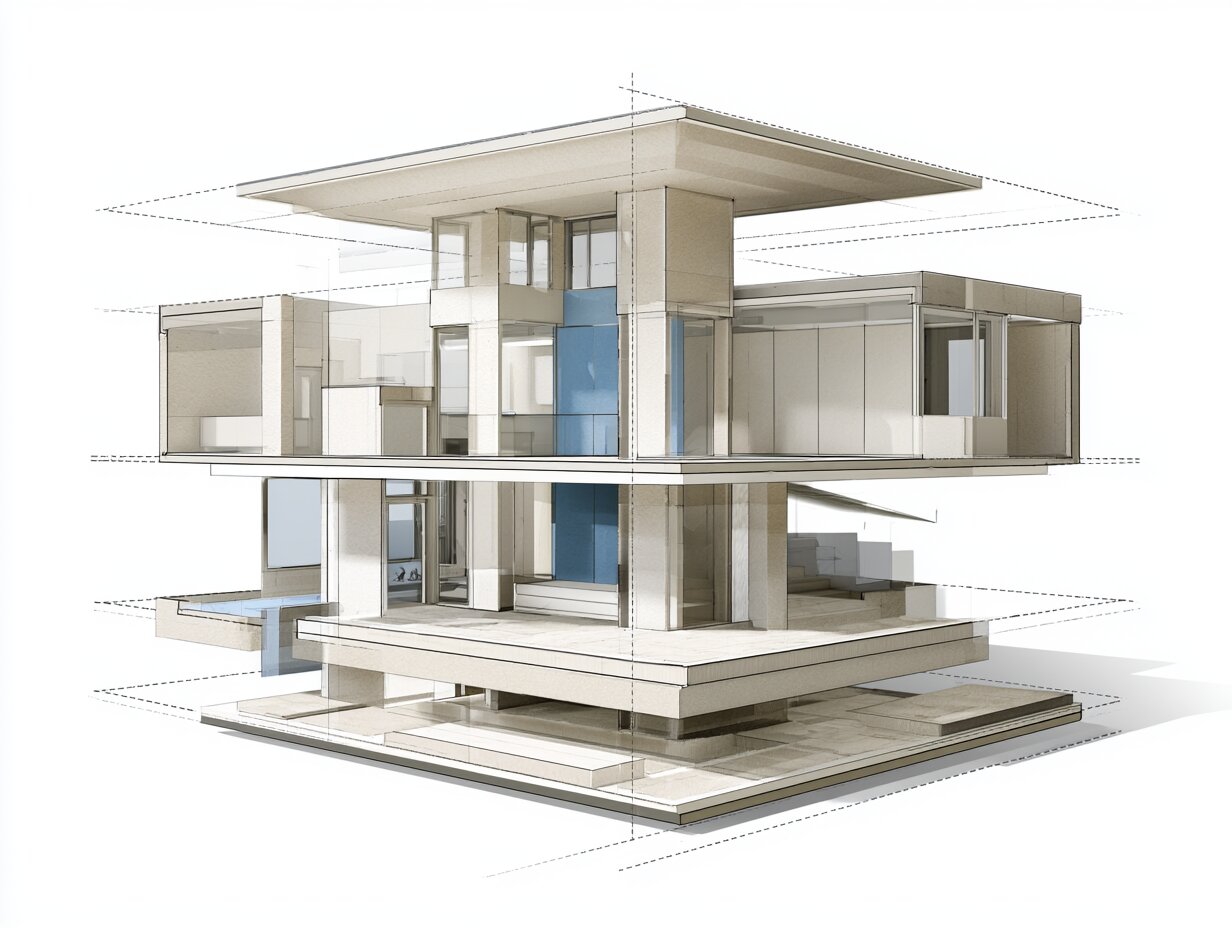
Exploded Diagram Architecture: What It Is and How to Draw One
An exploded diagram in architecture lifts a building into its real assembly...
Elif Ayse Sen6 Mins read

Construction Documents Architecture: From Schematic to Working Drawings
A plain-language look at construction documents architecture, tracing the path from schematic...
Elif Ayse Sen6 Mins read


Leave a comment