

Brandenburg Gate: How Architecture Becomes a Political Symbol
Built in 1791 as a neoclassical city gate, the Brandenburg Gate in Berlin has witnessed Napoleon's conquest, two world wars, Cold War division, and German reunification. This article traces how Berlin's Brandenburg Gate evolved from a Prussian royal entrance into one of the most politically charged architectural landmarks in the world, and what its changing symbolism reveals about the relationship between architecture and power.
 Sinan Ozen3 June 20268 Mins read190
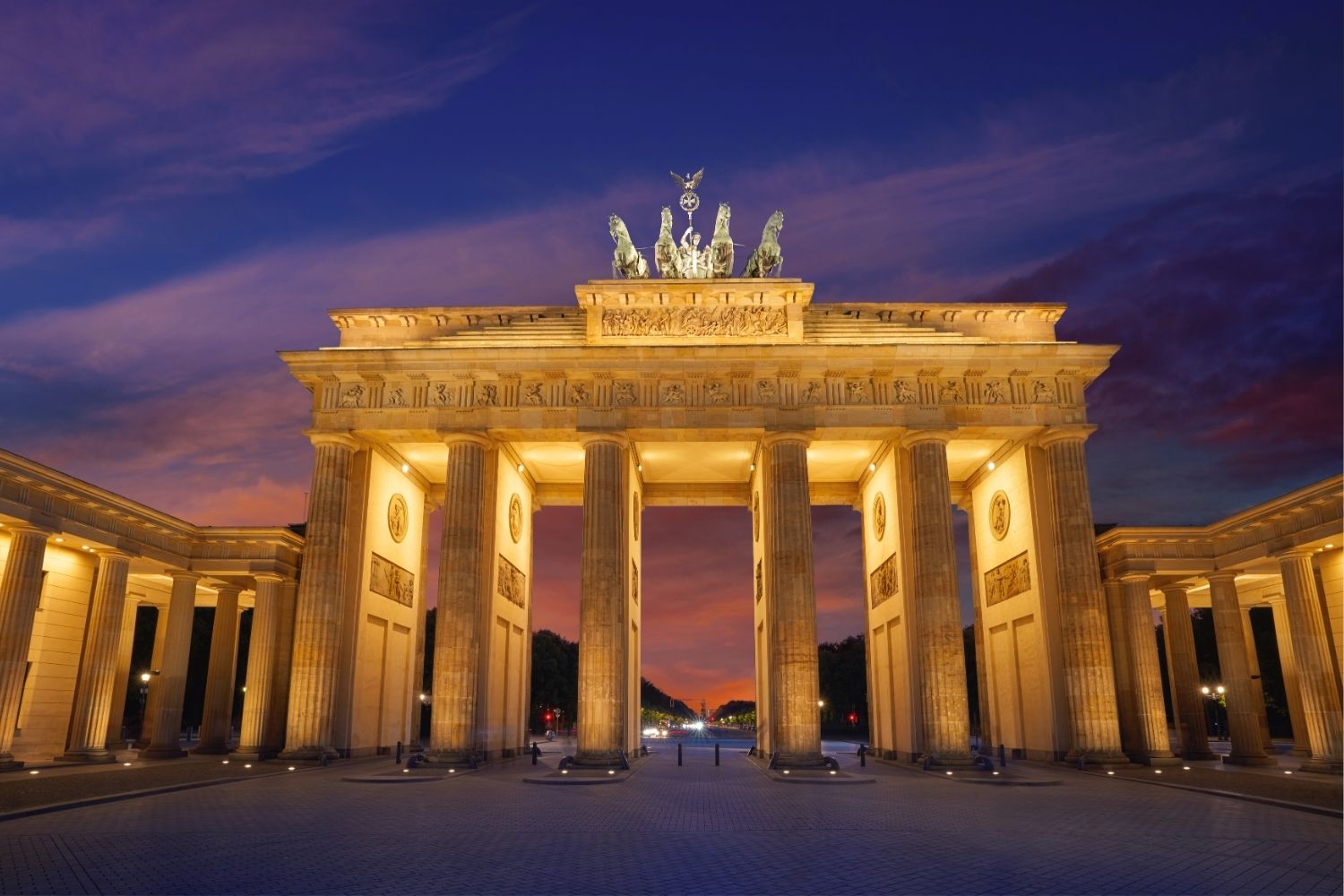
Table of Contents Show
The Brandenburg Gate is an 18th-century neoclassical monument in Berlin, Germany, that has served as a symbol of Prussian military power, Nazi propaganda, Cold War division, and German reunification. Its shifting political meaning over more than 230 years makes it one of the clearest examples of how a single building can absorb and reflect the ideologies of successive eras.
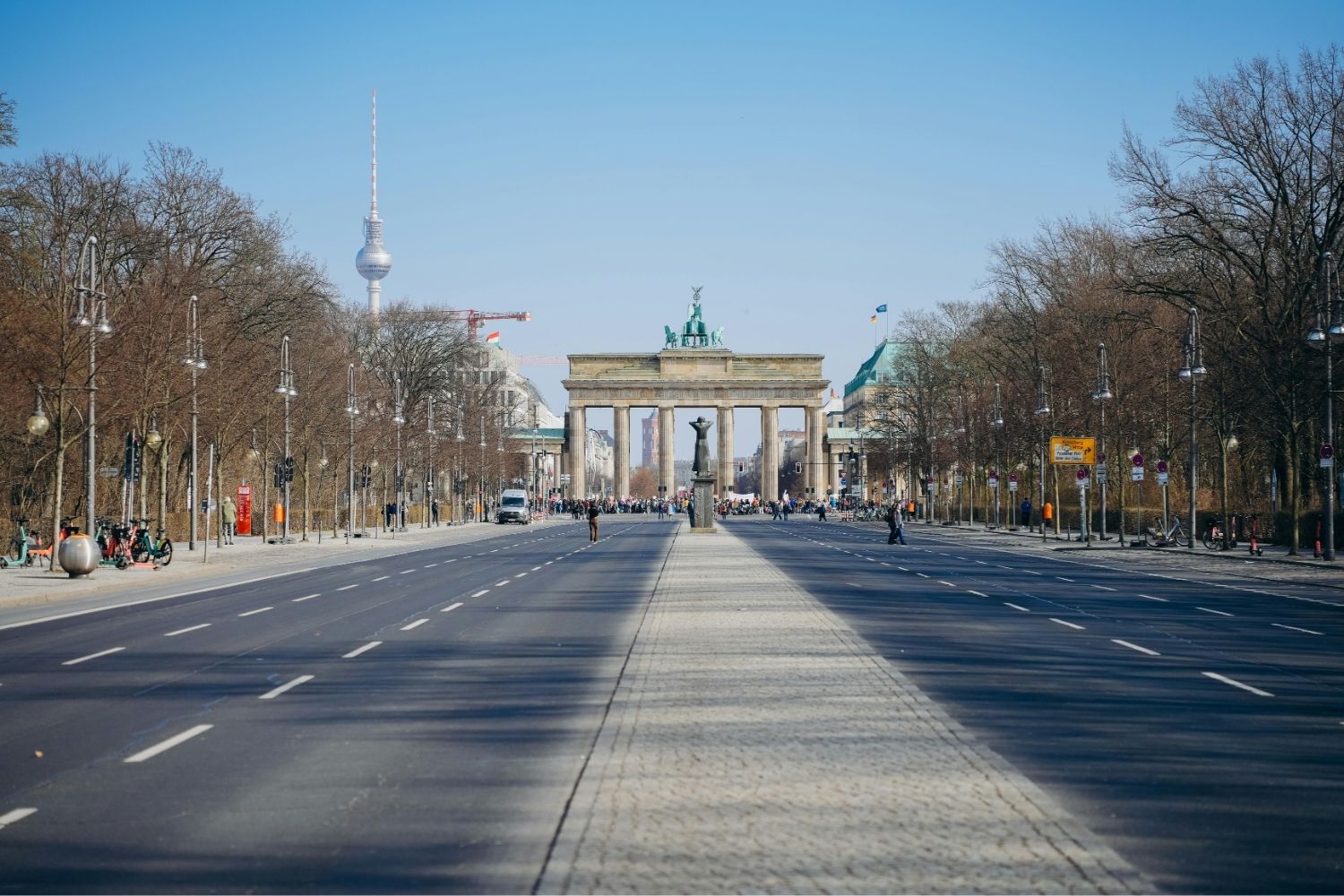
Few buildings carry as much political weight as the Brandenburg Gate. Standing at the western end of Unter den Linden boulevard in central Berlin, this sandstone structure has been claimed by kings, emperors, dictators, and democrats. It has been a triumphal arch for Napoleon, a backdrop for Nazi rallies, a sealed border crossing during the Cold War, and a stage for reunification celebrations in 1989. What makes the Brandenburg Gate in Berlin so enduring is not just its classical proportions or its prominent location, but the way each political era has projected its own narrative onto the same set of columns and stone.
The Origins of the Brandenburg Gate: Prussian Power in Neoclassical Form
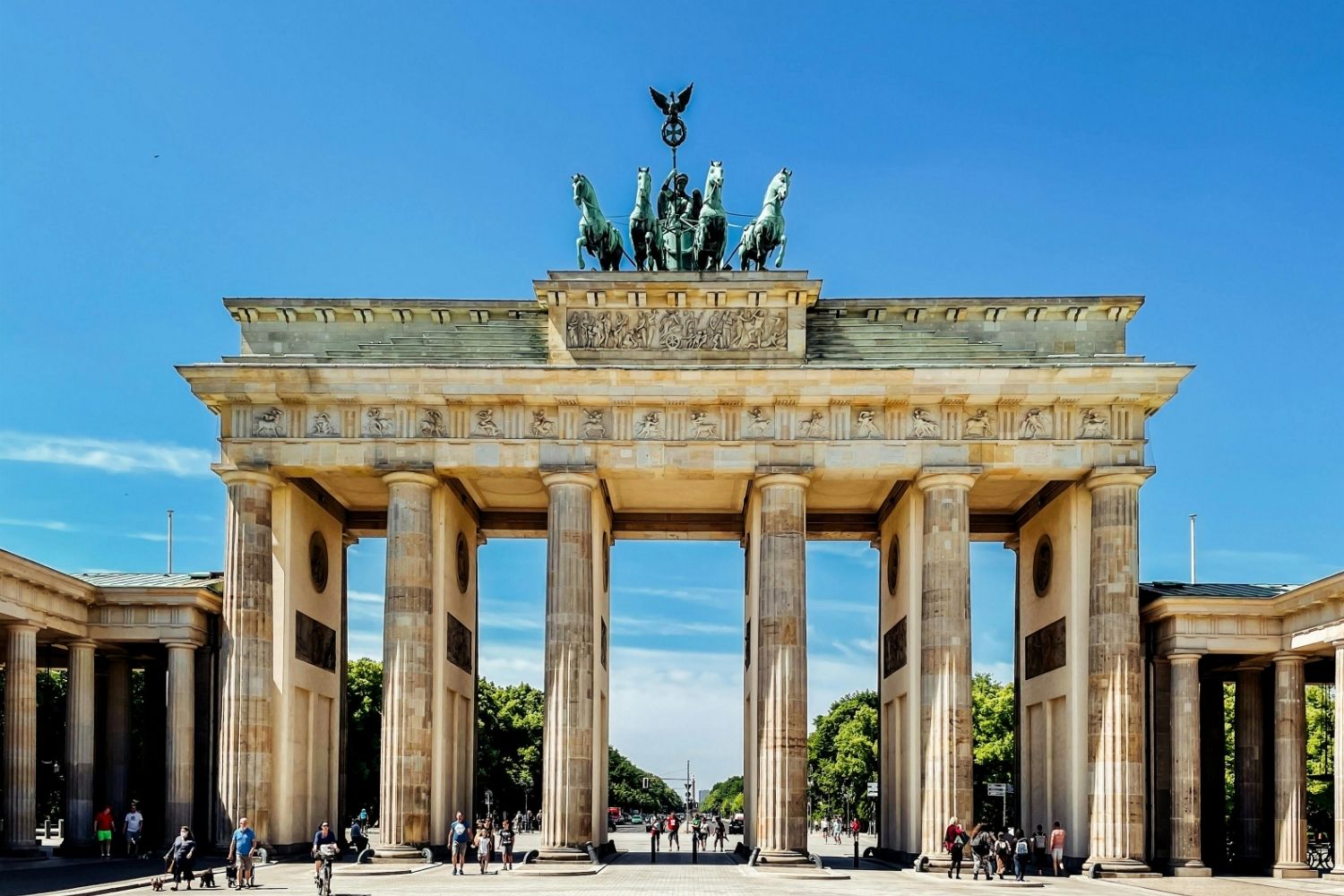
The Brandenburg Gate was commissioned by King Frederick William II of Prussia and completed in 1791. The architect, Carl Gotthard Langhans, modeled it after the Propylaea, the monumental gateway to the Acropolis in Athens. Langhans chose the Doric order for the gate’s twelve columns, arranged in two rows of six, creating five passageways. The central passageway was originally reserved for the royal family.
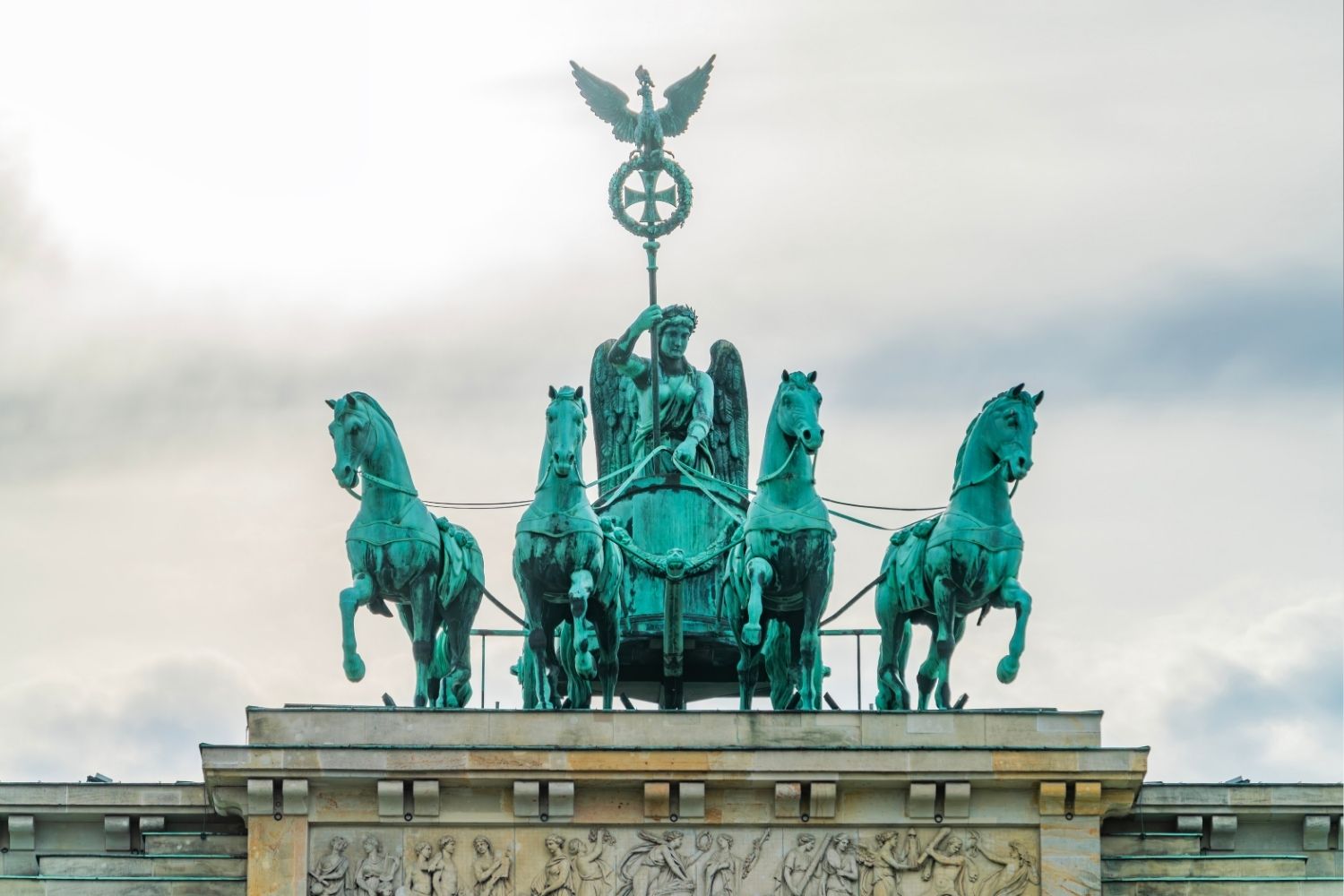
The design reflected the Enlightenment-era fascination with ancient Greece, and its construction signaled Prussia’s ambition to present itself as a modern heir to classical civilization. The gate was originally called the Peace Gate (Friedenstor), and the Quadriga statue placed on top in 1793, sculpted by Johann Gottfried Schadow, depicted the goddess of peace driving a four-horse chariot. The choice of a peace goddess was deliberate: Prussia wanted to project stability after the wars of the late 18th century.
📌 Did You Know?
The Quadriga atop the Brandenburg Gate was seized by Napoleon in 1806 and taken to Paris as a war trophy after his conquest of Berlin. After Napoleon’s defeat at the Battle of Waterloo, Prussian troops recovered the statue in 1814 and returned it to the gate. The goddess was then redesigned to hold a Prussian Iron Cross and eagle, transforming her identity from a symbol of peace into a symbol of military victory.
This early episode set the pattern that would define the Brandenburg Gate in Germany for centuries: every new regime repurposed the same structure to tell its own story. The physical form stayed the same, but its meaning shifted with each transfer of power. The neoclassical vocabulary of columns and pediments gave the gate an air of timelessness, which made it especially useful as a political prop. Neoclassical architecture, with its roots in Greek and Roman classical architecture, was deliberately chosen to convey authority and permanence.
What Is the Brandenburg Gate’s Architectural Design?
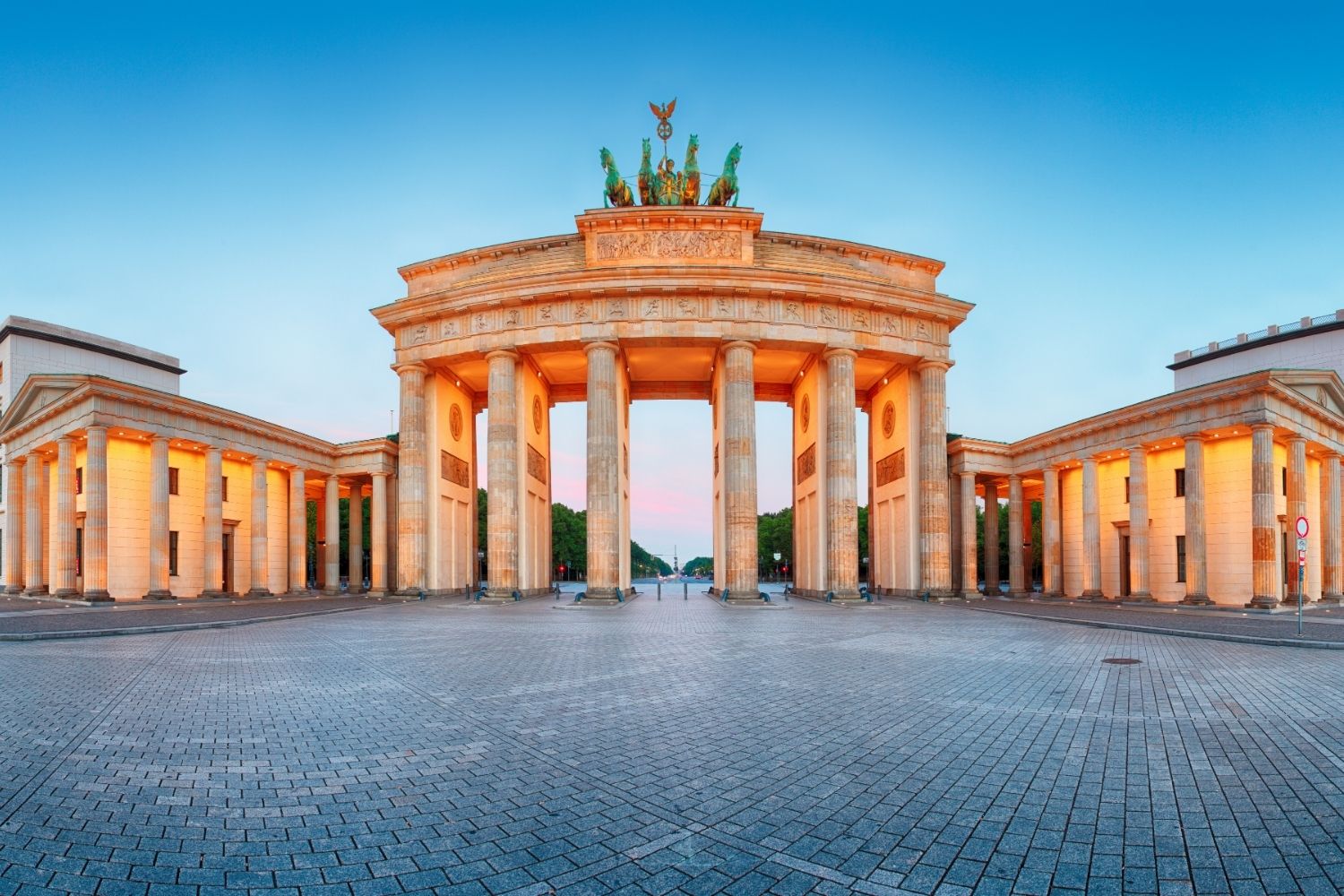
The Brandenburg Gate stands 26 meters high, 65.5 meters wide, and 11 meters deep. It is built from sandstone and structured around twelve Doric columns, each 15 meters tall and 1.75 meters in diameter. The five passageways are flanked by six pairs of columns, with the widest central passage measuring approximately 5.5 meters. The overall form echoes the proportions of a Greek classical architecture gateway, though Langhans adapted the design to fit an urban boulevard rather than a hilltop sanctuary.
📐 Technical Note
The Brandenburg Gate’s Doric columns follow a simplified version of the Greek Doric order, omitting the fluted shafts found on the Parthenon’s columns. Each column has a height-to-diameter ratio of approximately 8.5:1, which is slightly more slender than the canonical Greek Doric ratio of 5.5:1 to 7:1. This adaptation was common in 18th-century neoclassical architecture, where designers adjusted ancient proportions to suit larger urban scales.
The Quadriga crowning the gate adds approximately 5 meters to the total height. Two adjacent buildings, known as the guardhouses (Wachhäuser), were added on either side to frame the composition. These side structures originally served as toll collection points and guard stations. Together, the gate, guardhouses, and Quadriga formed a carefully controlled civic ensemble at the entrance to one of Berlin’s most politically significant public spaces.
Berlin’s Brandenburg Gate During the World Wars
The 20th century placed the Brandenburg Gate at the center of Germany’s most destructive political chapters. Within the broader timeline of architectural history, few single structures have absorbed as many conflicting political narratives in so short a span. During the Weimar Republic, the gate served as a gathering point for political demonstrations from all sides. After the Nazis came to power in 1933, they staged torchlight parades through the gate to project an image of national revival. The gate became a recurring backdrop in Nazi propaganda films and photographs, its classical columns lending an illusion of historical legitimacy to the regime.
During World War II, the area around Pariser Platz and the Brandenburg Gate Berlin suffered heavy bombardment. By 1945, the gate was severely damaged, pockmarked with bullet holes and shrapnel scars. The Quadriga was almost entirely destroyed. Soviet soldiers raised the Red Army flag over the ruins of the gate in April 1945, turning it once again into a trophy for a conquering force.
💡 Pro Tip
If you study how totalitarian regimes use architecture, pay close attention to which historical buildings they choose to keep and which they demolish. The Nazis preserved the Brandenburg Gate because its neoclassical form aligned with their aesthetic ideology, while they razed structures associated with the Weimar Republic. The survival of a monument often says as much about a regime’s values as the buildings it commissions from scratch.
The postwar period brought a joint East-West restoration effort in 1956 and 1958. Both German states cooperated to rebuild the Quadriga using surviving molds from the original casting. However, the restored goddess was stripped of the Iron Cross and Prussian eagle that had been added in 1814, neutralizing its military symbolism. East Germany placed a new wreath of oak leaves in the goddess’s hand instead. Even this small modification reflected how the gate’s meaning was continuously revised to serve current political needs, a recurring pattern visible across major architectural styles throughout history.
The Brandenburg Gate and the Berlin Wall
The construction of the Berlin Wall in August 1961 placed the Brandenburg Gate in the most politically charged strip of land on Earth. The gate stood in East Berlin, just meters from the wall, within the restricted “death strip” that separated the two halves of the city. For 28 years, the Brandenburg Gate Berlin Wall relationship defined Cold War imagery. No civilian from either side could approach it. The gate became visible but unreachable, a symbol of division experienced through photographs and television broadcasts rather than in person.
Western leaders recognized the gate’s symbolic power and used it deliberately. U.S. President John F. Kennedy visited West Berlin in 1963, and his “Ich bin ein Berliner” speech was delivered within sight of the wall and the gate. In 1987, President Ronald Reagan stood at the Berlin Wall near the Brandenburg Gate and delivered his famous challenge: “Mr. Gorbachev, tear down this wall!” The gate itself said nothing new in those moments. Its power came from what people already projected onto it.
🎓 Expert Insight
“The Brandenburg Gate was never just a gate. It was always a screen onto which the ruling power projected its version of history.” — Dr. Brian Ladd, Urban Historian and author of “The Ghosts of Berlin”
Ladd’s observation highlights why the gate has survived so many political transformations. Its neoclassical form is generic enough to serve any ideology, yet grand enough to lend authority to whichever regime claims it. That architectural neutrality is precisely what makes it so politically useful.
The Reichstag building, located just one block north of the gate, underwent its own dramatic political transformation during this period and beyond. Norman Foster’s 1999 renovation of the Reichstag, with its transparent glass dome symbolizing democratic openness, offers an instructive contrast to the Brandenburg Gate’s more ambiguous symbolism.
Reunification and the Gate’s Modern Political Role
On November 9, 1989, the Berlin Wall fell. Tens of thousands of people gathered at the Brandenburg Gate on December 22, 1989, when the crossing point was officially reopened. The images from that night, with crowds standing on top of the wall in front of the illuminated gate, became the defining visual of German reunification and, more broadly, of the end of the Cold War in Europe.
Since reunification, Berlin’s Brandenburg Gate has served as the backdrop for state ceremonies, New Year’s Eve celebrations, public mourning, and political protests. It was illuminated in the colors of the French flag after the 2015 Paris attacks and in the Ukrainian flag colors after Russia’s 2022 invasion. This ongoing use shows that the gate continues to function as a political surface, absorbing new meanings as global events unfold.
⚠️ Common Mistake to Avoid
Many people assume the Brandenburg Gate was part of the Berlin Wall itself. The gate was not a section of the wall. It stood in East Berlin, in the restricted zone immediately behind the wall. The wall ran in front of the gate on its western side, cutting it off from West Berlin. Understanding this distinction matters because it explains why the gate could be seen from the West but never accessed by its citizens during the Cold War.
The area around the gate has also been reshaped. Pariser Platz was fully reconstructed in the 1990s and 2000s with strict design guidelines that required new buildings to maintain a uniform height and restrained facade treatment, ensuring the gate remains the visual anchor of the square. The Axel Springer Campus by OMA, completed nearby in 2020, sits on the former path of the Berlin Wall and directly engages with the city’s divided history through its architectural form.
Why Architecture Becomes a Political Symbol
The Brandenburg Gate in Germany demonstrates a broader principle: architecture becomes political not through its design alone, but through its location, its survival, and the events that accumulate around it. The gate’s Doric columns carry no inherent political message. What gives them meaning is the parade that passed through them, the wall that blocked them, and the crowd that celebrated in front of them.
This pattern repeats across many neoclassical buildings worldwide. Government buildings, courthouses, and national monuments use the same classical vocabulary of columns, pediments, and symmetrical facades to project authority. The U.S. Capitol, the British Museum, and the Pantheon in Paris all draw from the same Greek and Roman sources that Langhans used for the Brandenburg Gate. What distinguishes the Brandenburg Gate is the sheer density of political events it has witnessed within a relatively short stretch of history.
Architecture’s role as a political symbol also depends on its physical durability. Buildings that survive wars and regime changes accumulate layers of meaning that newer structures cannot match. Architectural history is full of examples where a building’s longevity gives it a symbolic weight far beyond its original purpose. The Brandenburg Gate, built as a city gate and toll barrier, now carries the entire narrative of modern Germany on its facade.
Video: The Brandenburg Gate, a Berlin Landmark
This documentary by DW traces how the Brandenburg Gate became a symbol of Germany’s division and reunification, examining its architectural and political history through archival footage and expert commentary.
Final Thoughts
The Brandenburg Gate stands as proof that a building’s political meaning is never fixed. Over 230 years, it has been a peace gate, a war trophy, a propaganda backdrop, a sealed border monument, and a symbol of unity. Each transformation happened without altering a single column. The architecture remained constant; the politics changed around it. For architects, urban planners, and historians, the role of architects in creating iconic monuments is only part of the story. What happens to a building after it is completed, the events that play out on its steps, the regimes that claim it, and the crowds that gather before it, determines its true significance. The neoclassical style gave the Brandenburg Gate the visual grammar of permanence. History gave it meaning.




Relocated Maya Structures at Mexico’s Balam Tun Memory Park Face Legal Challenge
INAH archaeologists have filed a complaint against 26 officials over Balam Tun...
 illustrarch Editoral Team2 Mins read
Allies and Morrison Win Approval to Restore Barbican Sculpture Court
City of London Corporation approves Allies and Morrison's plan to restore the...
illustrarch Editoral Team2 Mins read
The Great Wall of China: History, Architecture, and Enduring Legacy
A detailed architectural exploration of the Great Wall of China covering its...
 Furkan Sen7 Mins read
Prague Architecture: How Charles Bridge and Prague Castle Built Bohemian Gothic
Charles Bridge and Prague Castle explained as architecture: the 1357 bridge under...
Furkan Sen6 Mins read


Leave a comment