

Rome’s EUR Convention Center “The Cloud” and Its Architectural Significance
The EUR Convention Center, known as The Cloud (Nuvola), is one of the most significant contemporary architectural projects in Rome. Designed by Massimiliano and Doriana Fuksas, the building introduces a free-form structure within the rigid rationalist context of the EUR district.
 Elif Ayse Sen20 December 20252 Mins read209
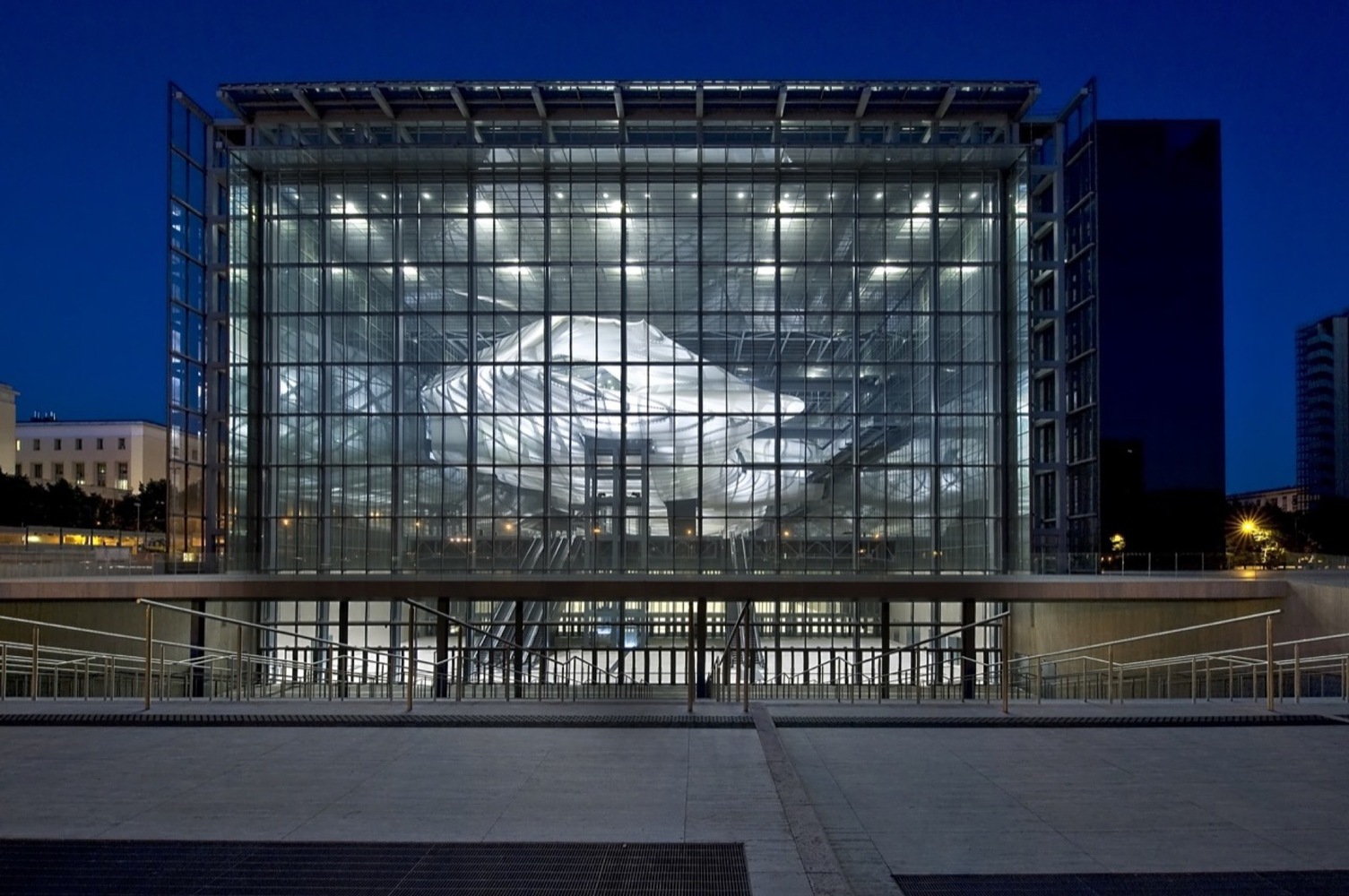
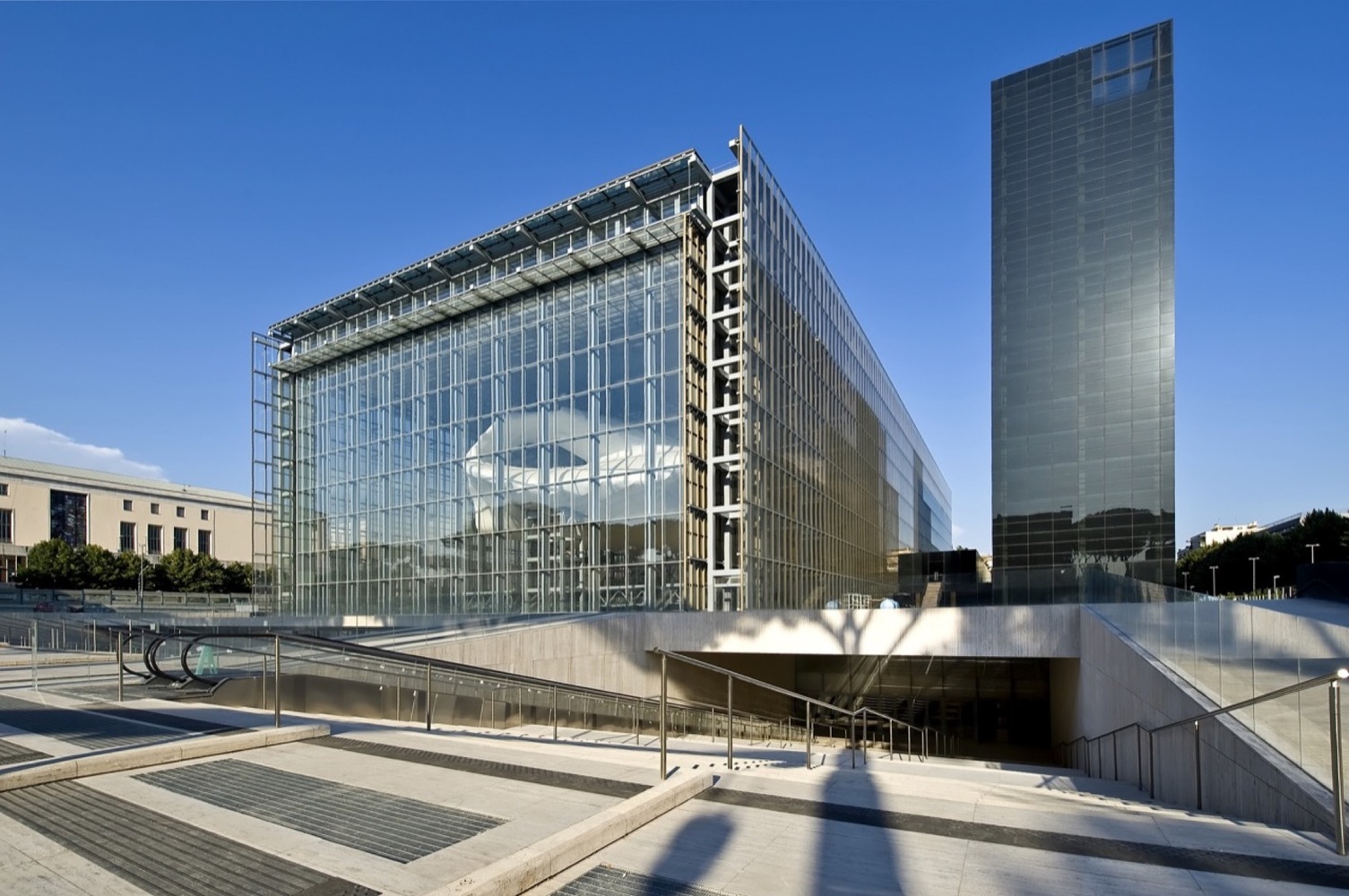


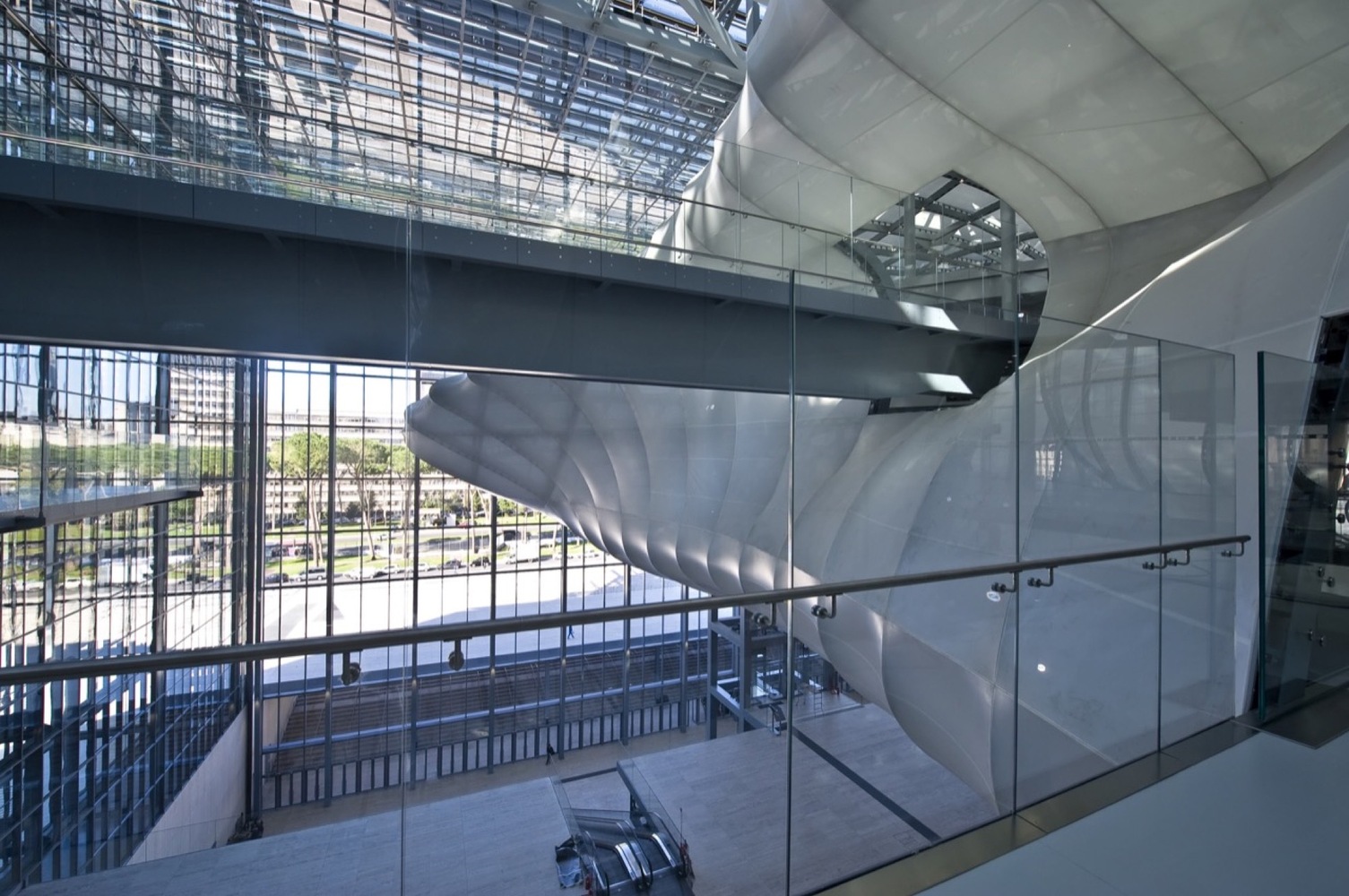

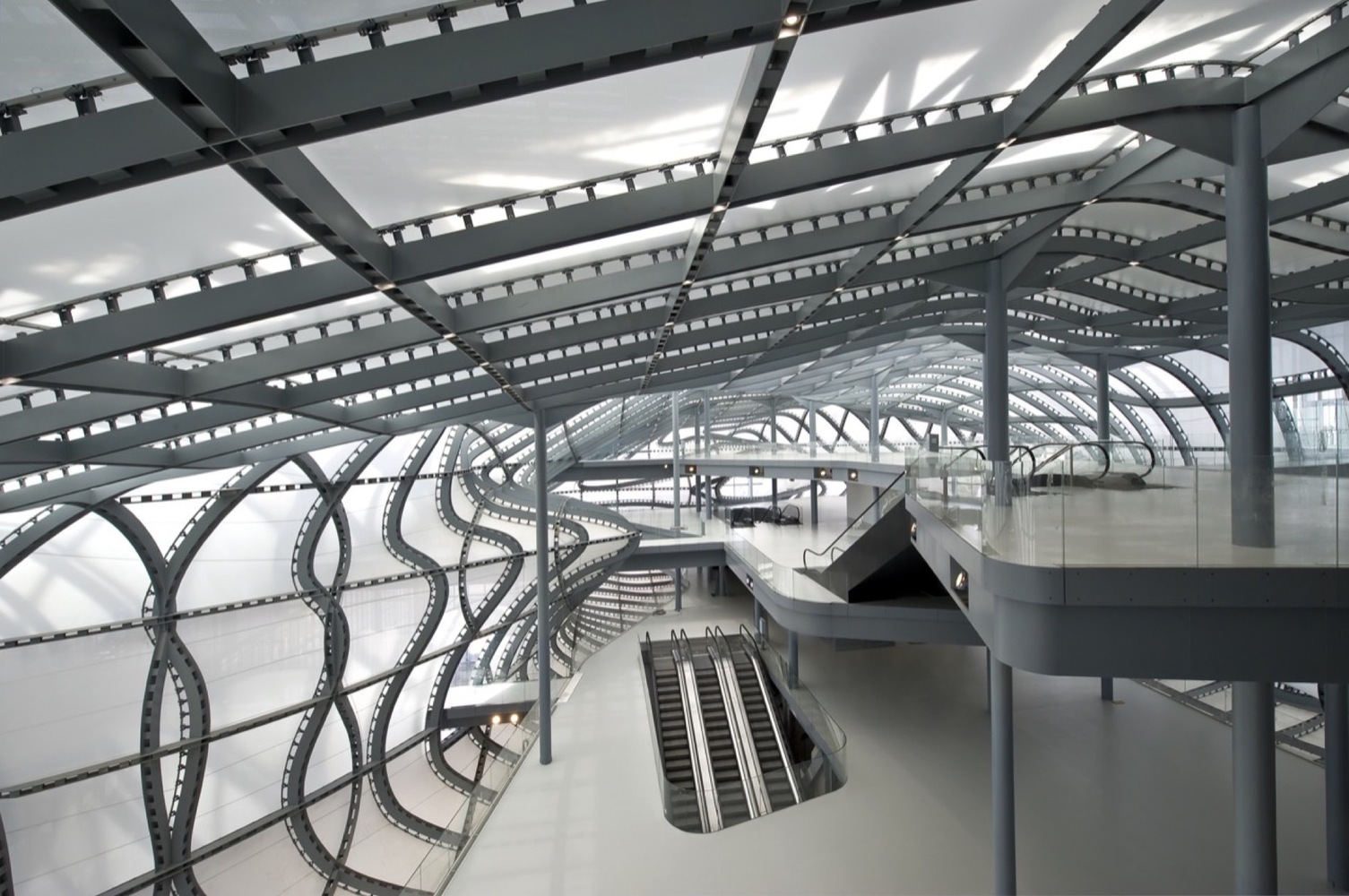
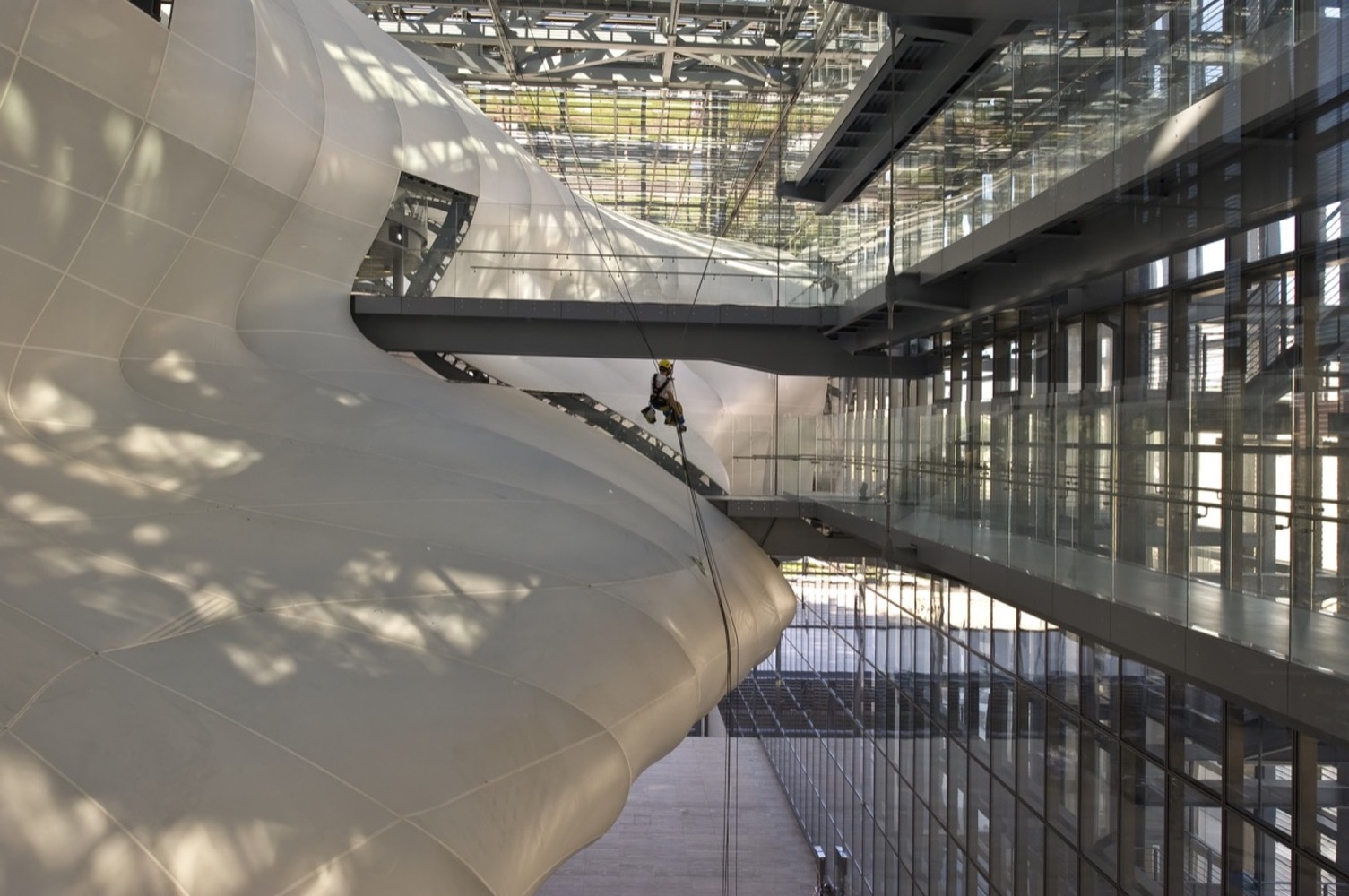

Table of Contents Show
The EUR Convention Center, widely known as The Cloud (Nuvola), is one of the most significant contemporary architectural projects realized in Rome in recent decades. Designed by Massimiliano and Doriana Fuksas, the building opened in 2016 and represents the largest new architectural intervention in the city in more than half a century.
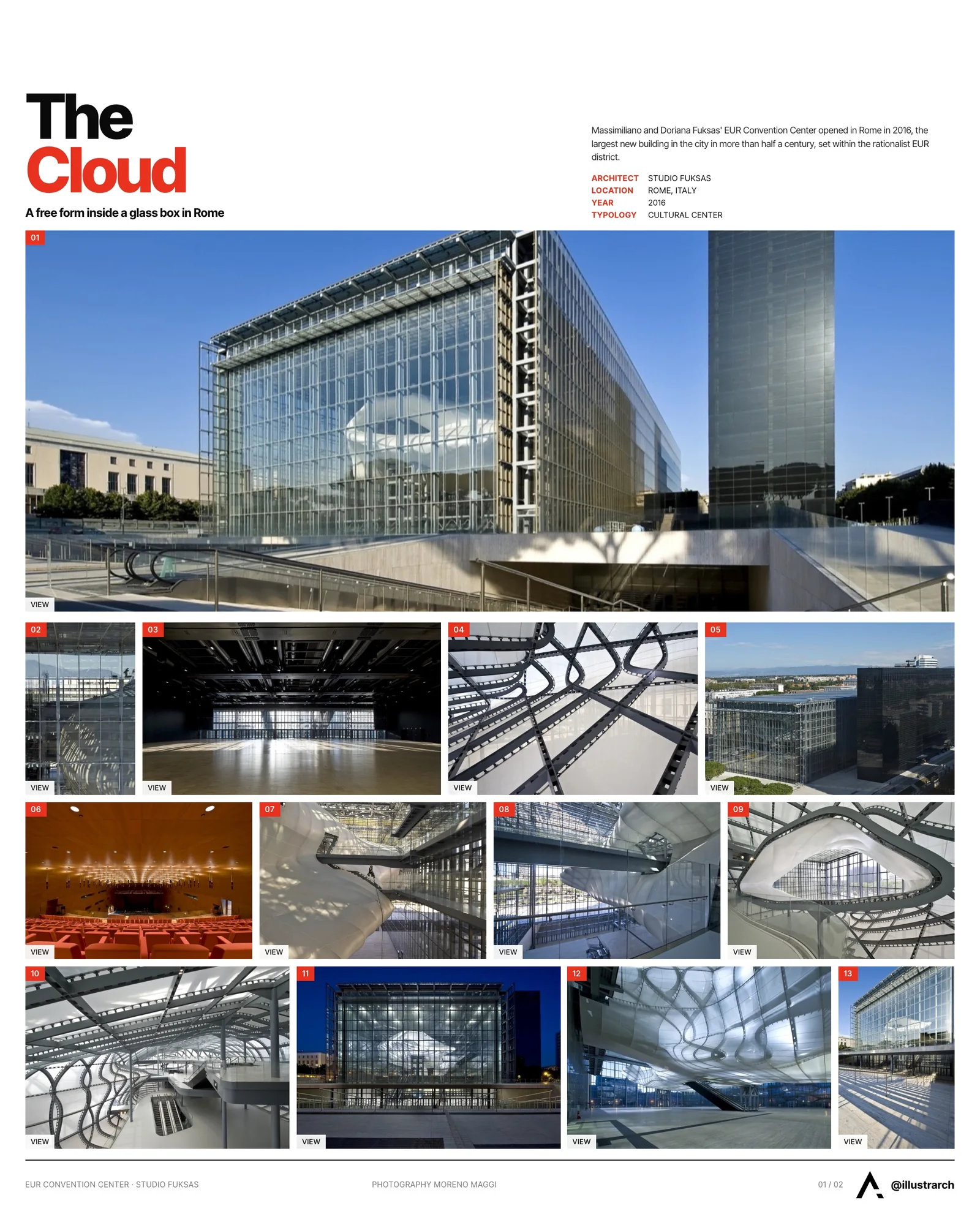
The project is located in Rome’s EUR district, an area developed in the late 1930s as part of a planned World’s Fair. Characterized by strict geometry, monumental scale, and rationalist principles, the district includes works by architects such as Adalberto Libera and Marcello Piacentini. The Cloud positions itself within this context by engaging with the district’s proportions while introducing a contrasting architectural language.
Architectural Composition and Structure
The convention center is composed of three primary elements:
- The Theca, a large transparent glass enclosure
- The Cloud, a free-form steel and fiberglass structure suspended within the enclosure
- The Blade, a linear dark volume designed to function as a hotel
This composition establishes a clear dialogue between rigid geometry and organic form, which forms the conceptual basis of the project.
Interior Organization and Spatial Sequence
The interior is organized around a carefully designed architectural promenade. A large entrance hall connects visitors to the main functional spaces, including a flexible exhibition hall with a capacity of up to 6,000 people and an auditorium housed within the Cloud. Material choices, such as travertine, glass, fiberglass, and wood, are used deliberately to distinguish spatial zones and guide movement.
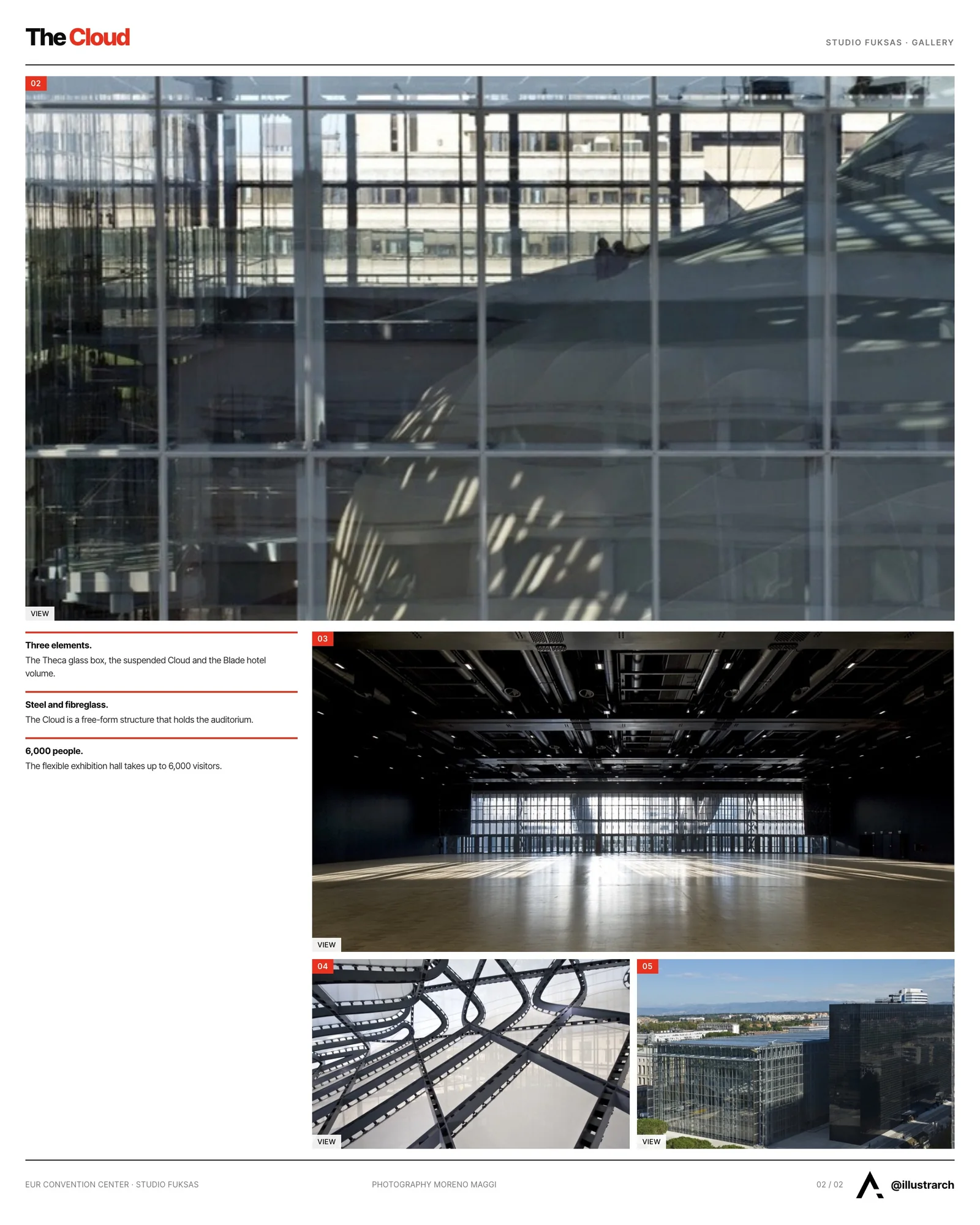
Conceptual Approach
The architects describe the project as an exploration of opposites: order and freedom, enclosure and fluidity, rationalism and expression. The Cloud introduces a sculptural presence that contrasts with the controlled urban fabric of EUR, referencing Rome’s layered architectural history from classical and baroque forms to modernist planning.
Criticism and Ongoing Discussion
Since its completion, the project has been subject to debate, particularly regarding its construction cost, extended timeline, and long-term economic viability. Questions also remain about the future use of the Blade volume. These discussions continue to shape the building’s public and professional reception.
A Contemporary Intervention in Rome
Regardless of criticism, the EUR Convention Center stands as a distinct contemporary landmark within Rome’s architectural landscape. By introducing a free-form structure into a rationalist setting, The Cloud expands the architectural narrative of the city and reflects the complexity of building contemporary architecture within a historically layered urban context.
Photography: Moreno Maggi



CCA Tashkent Opens in Studio KO’s Revamped 1912 Tram Depot
Studio KO has converted a 1912 Tashkent tram depot into CCA Tashkent,...
 illustrarch Editoral Team2 Mins read

People’s Theatre Opens Permanent Inwood Home After 18 Years
WORKac's ramp-driven design gives Mino Lora's People's Theatre its first permanent home...
illustrarch Editoral Team2 Mins read
MAD to Convert 1923 Rotterdam Warehouse into Dance Center
MAD will convert a 1923 Rotterdam warehouse into Danshuis, a dance center...
illustrarch Editoral Team1 Mins read
Bawan Village Visitor Center by TAO
On the site of an abandoned petrol station in Yunnan, TAO builds...
illustrarch Editoral Team2 Mins read


Leave a comment