

Art School Bernolákovo
Art School Bernolákovo is designed as a modular, timber-framed building that accommodates diverse artistic disciplines while integrating seamlessly into its village context.
 illustrarch Editoral Team24 July 20191 Mins read398


Art School Bernolákovo is a proposal by Slovak architect Juraj Potočár for a new school of art, covering music, dance, drawing and related disciplines, in the village of Bernolákovo near Bratislava, Slovakia. The design begins from a simple rectangular shape built on a 7.5 by 7.5 metre module, a disciplined grid that organises the plan and keeps the building legible from the first sketch to the finished room. Load-bearing walls carry the structure, completed with wooden columns that also frame a covered gallery wrapping the volume.
An art school is a distinct building type because it has to host very different ways of working under one roof. A music room needs acoustic separation, a dance studio needs open uninterrupted floor space, and a drawing room needs steady, even daylight. Resolving these competing demands within a single clear geometry is the central challenge here, and the repeating square module gives each activity a room of consistent proportions while keeping circulation simple. The covered gallery formed by the wooden columns acts as a threshold between inside and outside, a sheltered edge where students can pause, gather or move between rooms without stepping into the weather.
Module, structure and the village setting
Choosing timber for the columns connects the building to a long tradition of timber framing, where the structure itself becomes the visible order of the architecture rather than something hidden behind a finish. A grid of this kind suits an institution that may grow or change use over time, since rooms defined by a regular module can be reassigned without fighting the structure. The covered gallery is a familiar device in educational architecture, giving young students a clear, safe route around the building and a generous shared space that belongs to no single class.
Placing the school in Bernolákovo rather than in central Bratislava reflects a wider interest in bringing cultural and creative facilities closer to where people live. A modest rectangular form on a clear module sits comfortably within a village fabric, neither overwhelming its neighbours nor pretending to be a monument. Potočár’s scheme shows how restraint can be productive, letting one simple idea carry a varied programme. The result reads as a calm framework ready to be filled with the noise and movement of children learning to make art.



Herzog & de Meuron Builds Amherst College Student Center Atop Old Foundations
Herzog & de Meuron built a mass-timber student center at Amherst College...
illustrarch Editoral Team2 Mins read
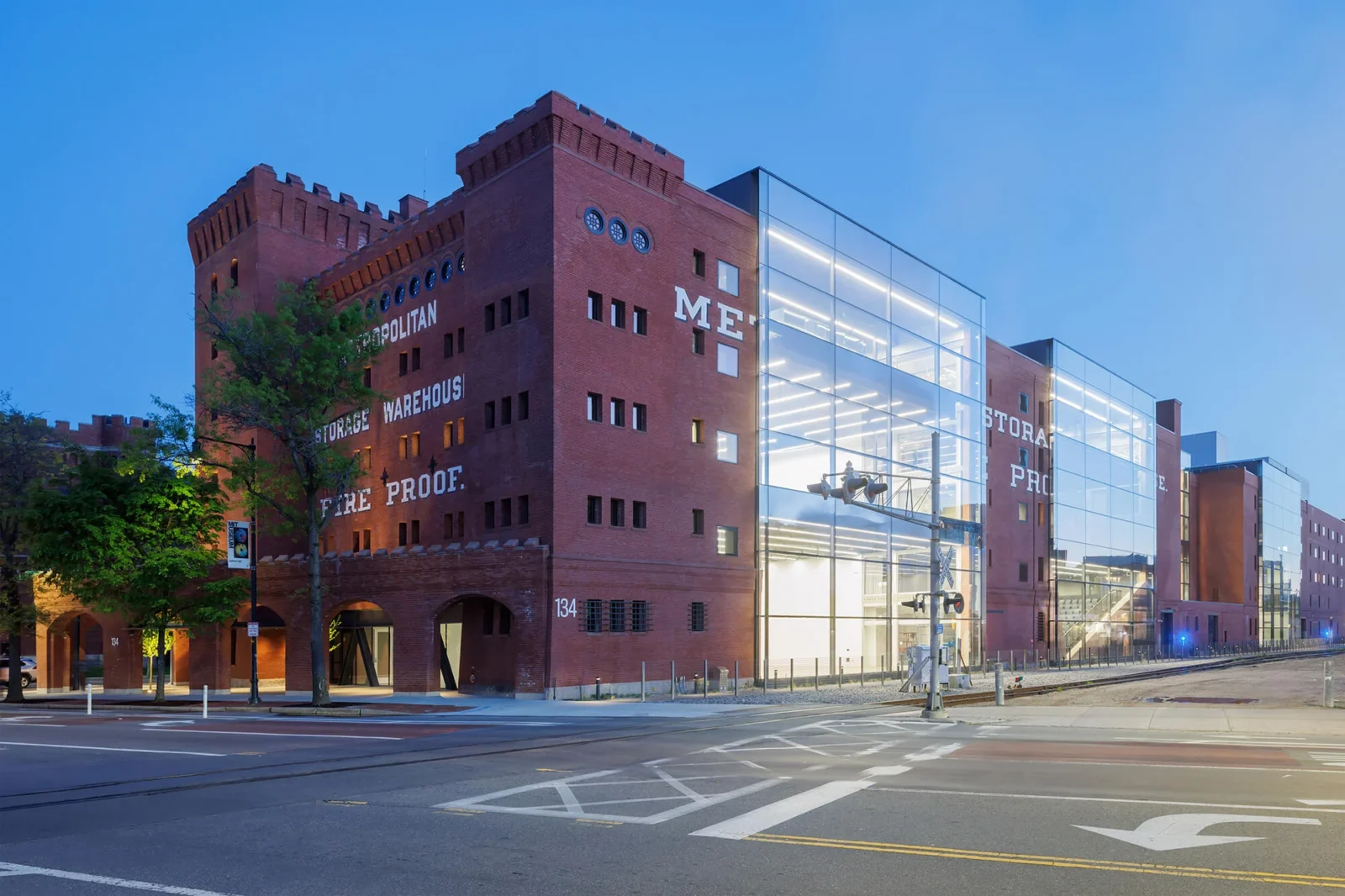
MIT Architecture School Moves Into DS+R-Converted Metropolitan Storage Warehouse
MIT's architecture school has moved into a DS+R-converted 1894 warehouse in Cambridge,...
illustrarch Editoral Team3 Mins read

SENA Tunja Training Center by TAP Arquitectura
TAP Arquitectura's unbuilt competition proposal for SENA in Tunja wraps a 4,400...
illustrarch Editoral Team2 Mins read
Best Software in Architecture School and What to Learn First
A practical look at the best software to learn in architecture school,...
 Elif Ayse Sen6 Mins read


Leave a comment