

Kakapo Creek Children’s Garden by Smith Architects
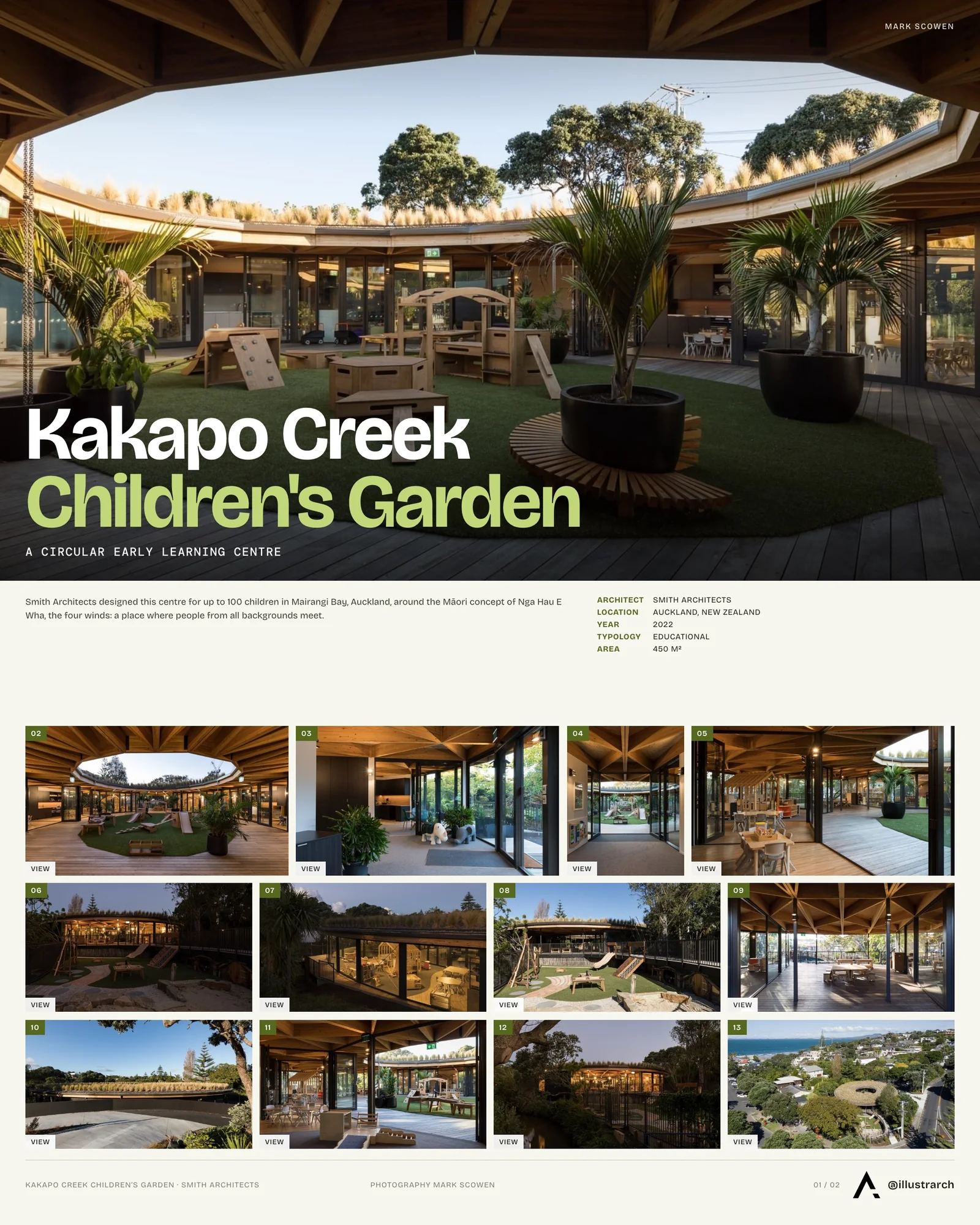
Kakapo Creek Children’s Garden by Smith Architects reimagines early learning through a circular, nature-integrated design inspired by the Māori concept of Nga Hau E Wha.
 Begum Gumusel6 January 20263 Mins read196
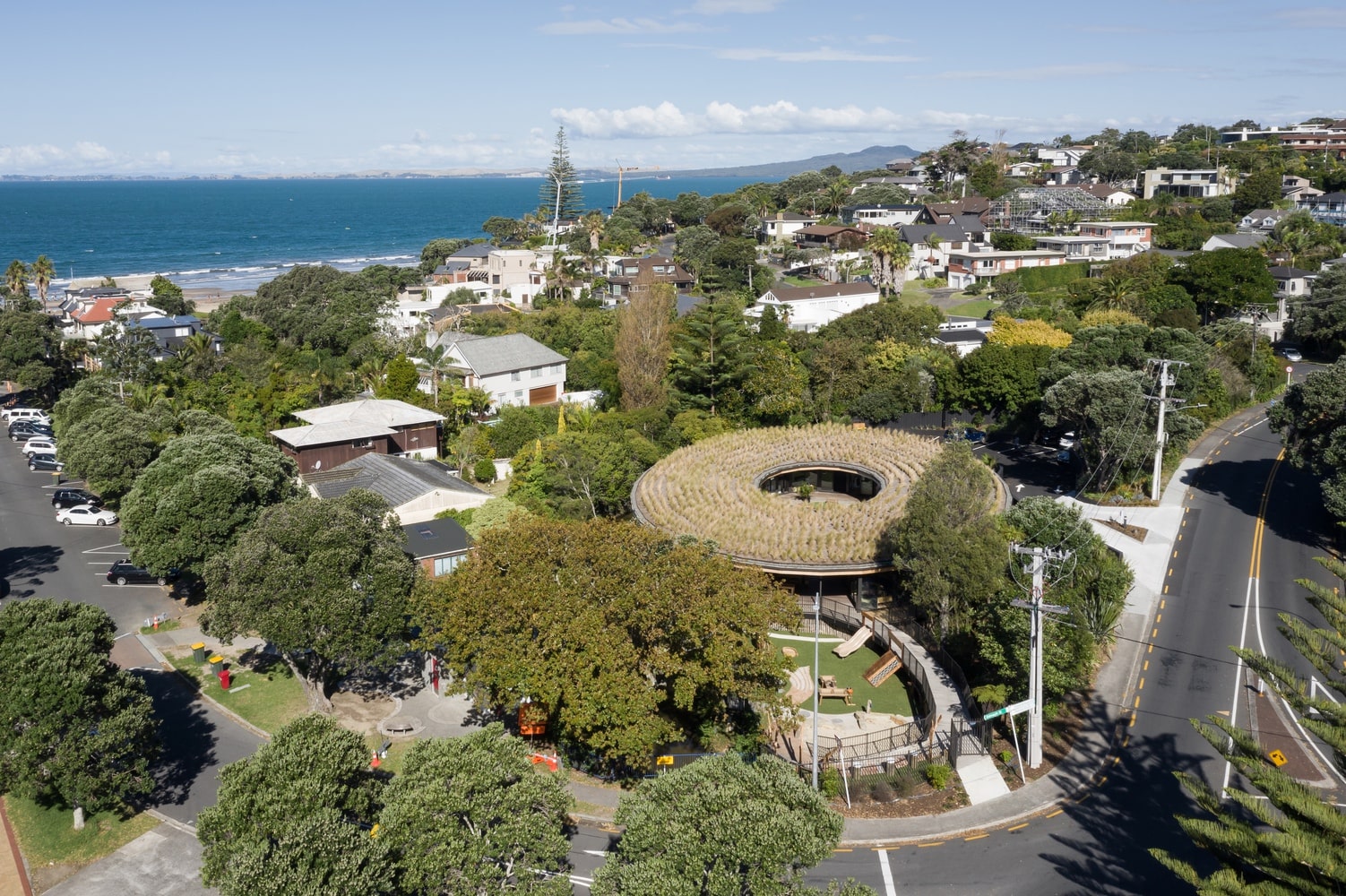
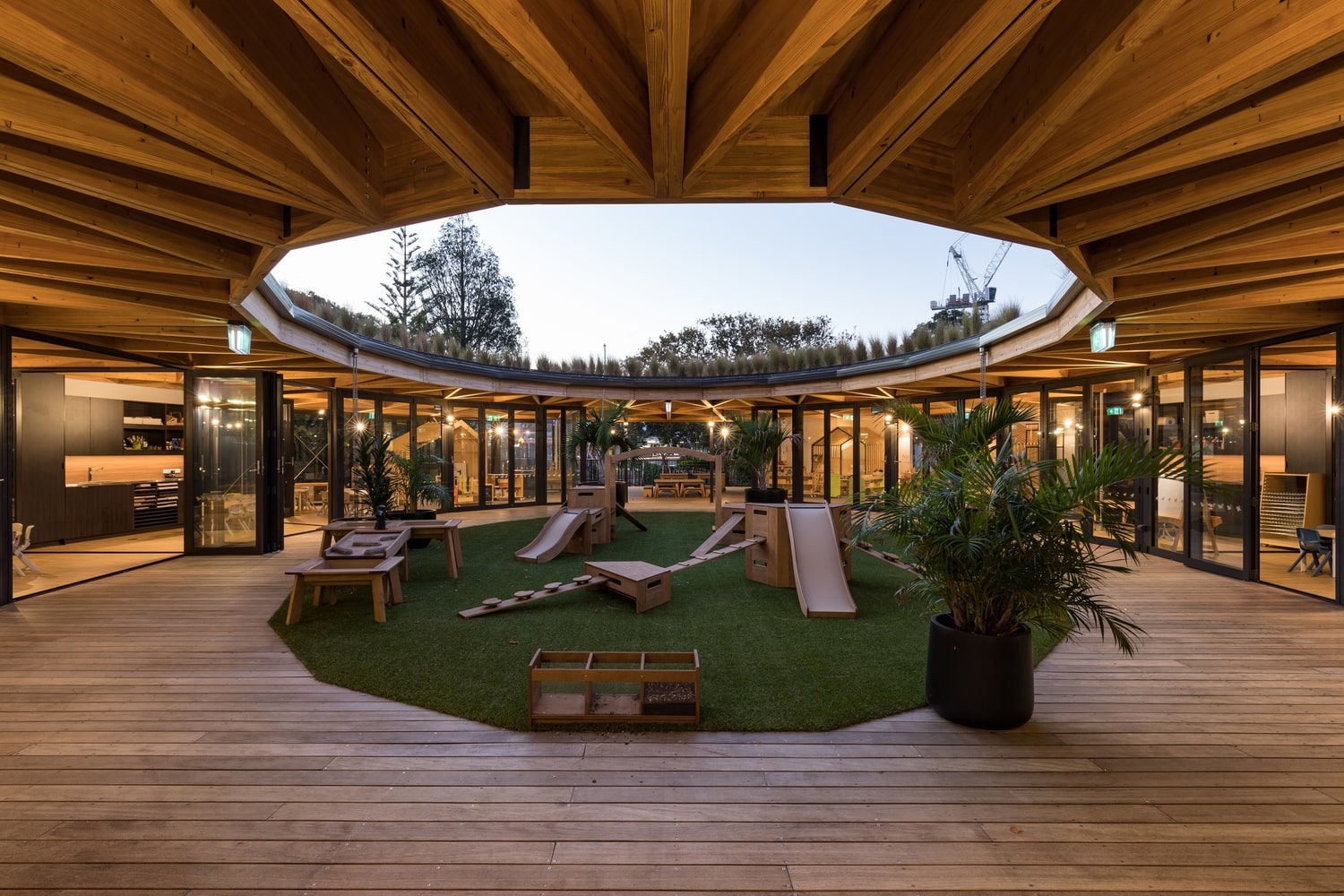


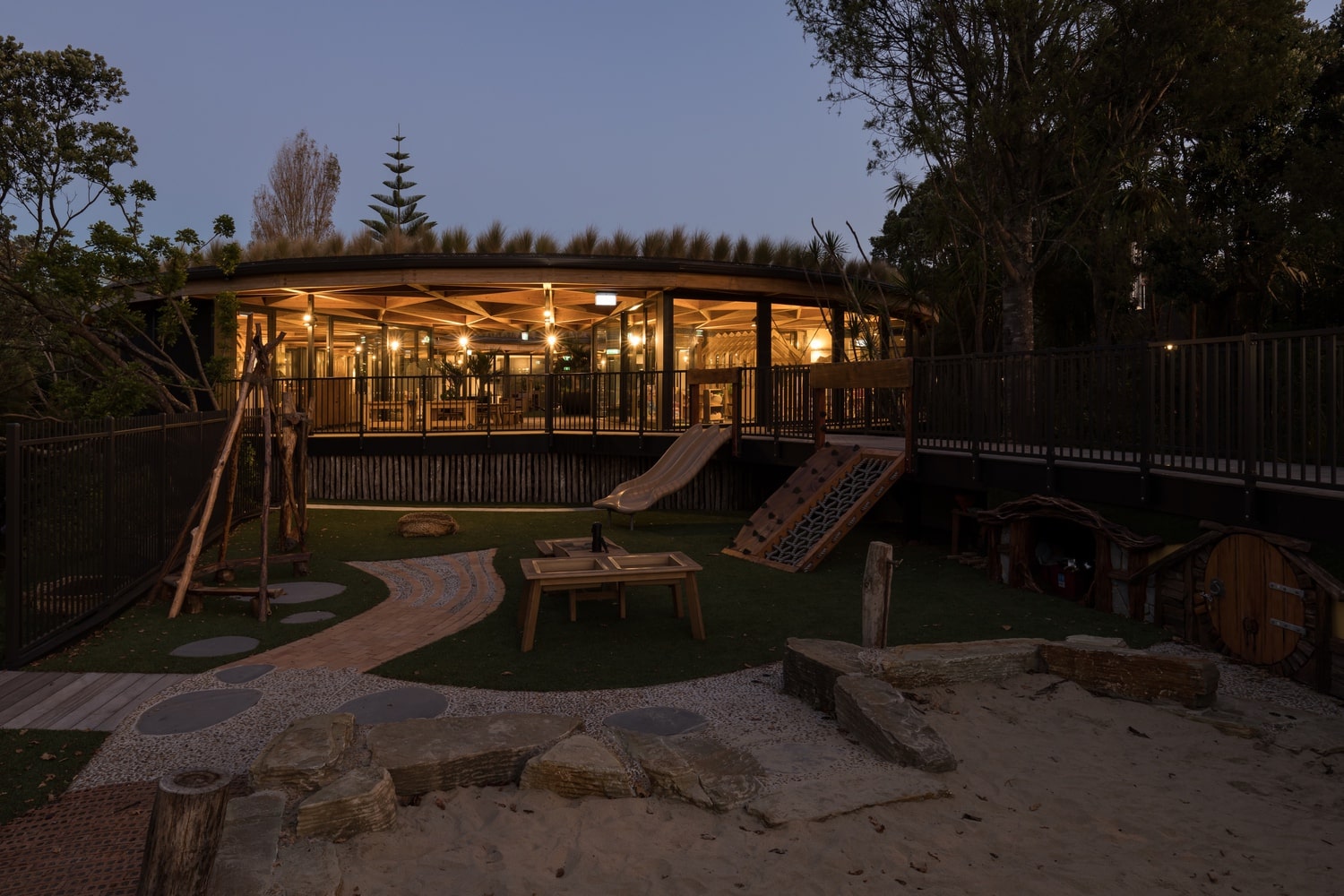
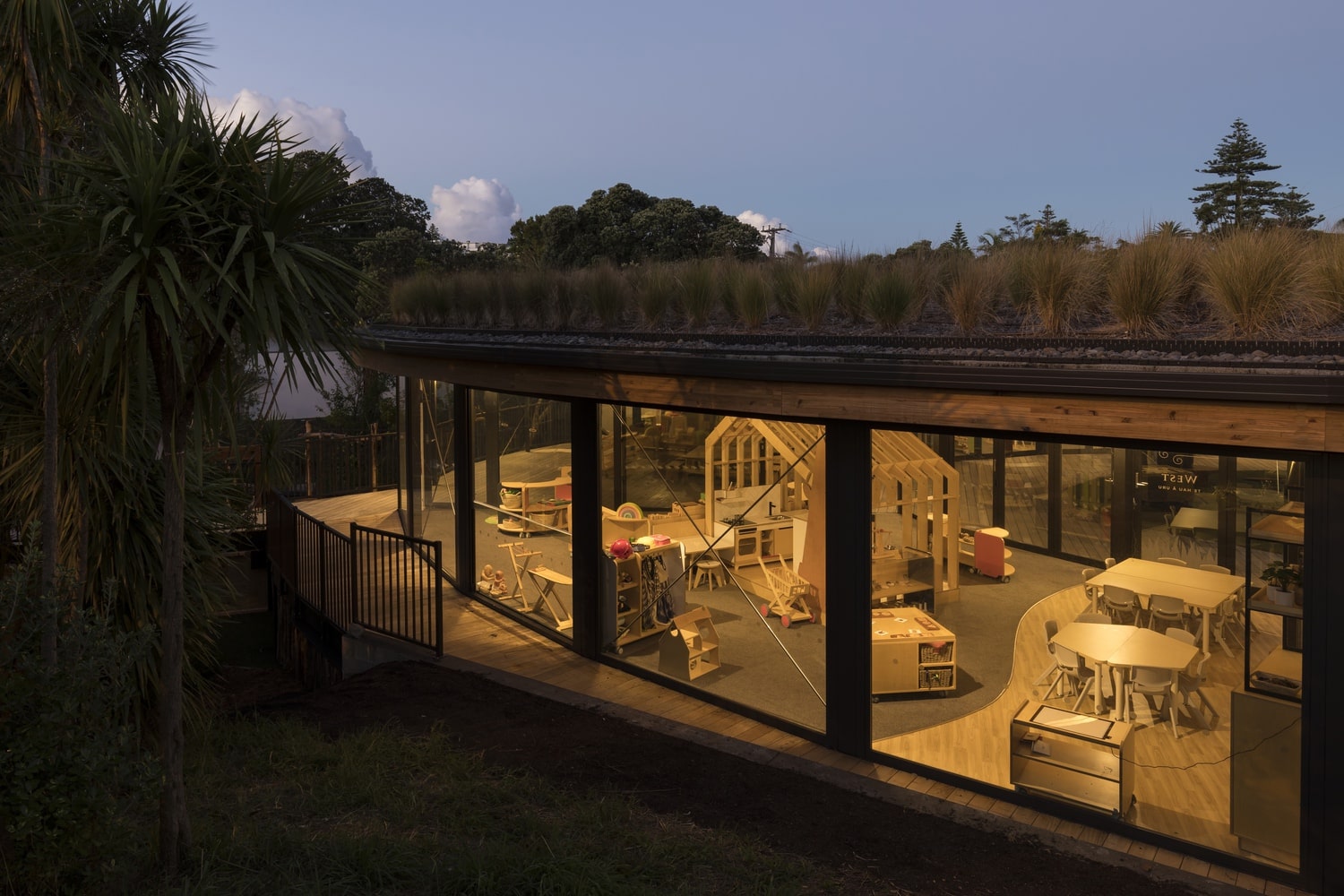
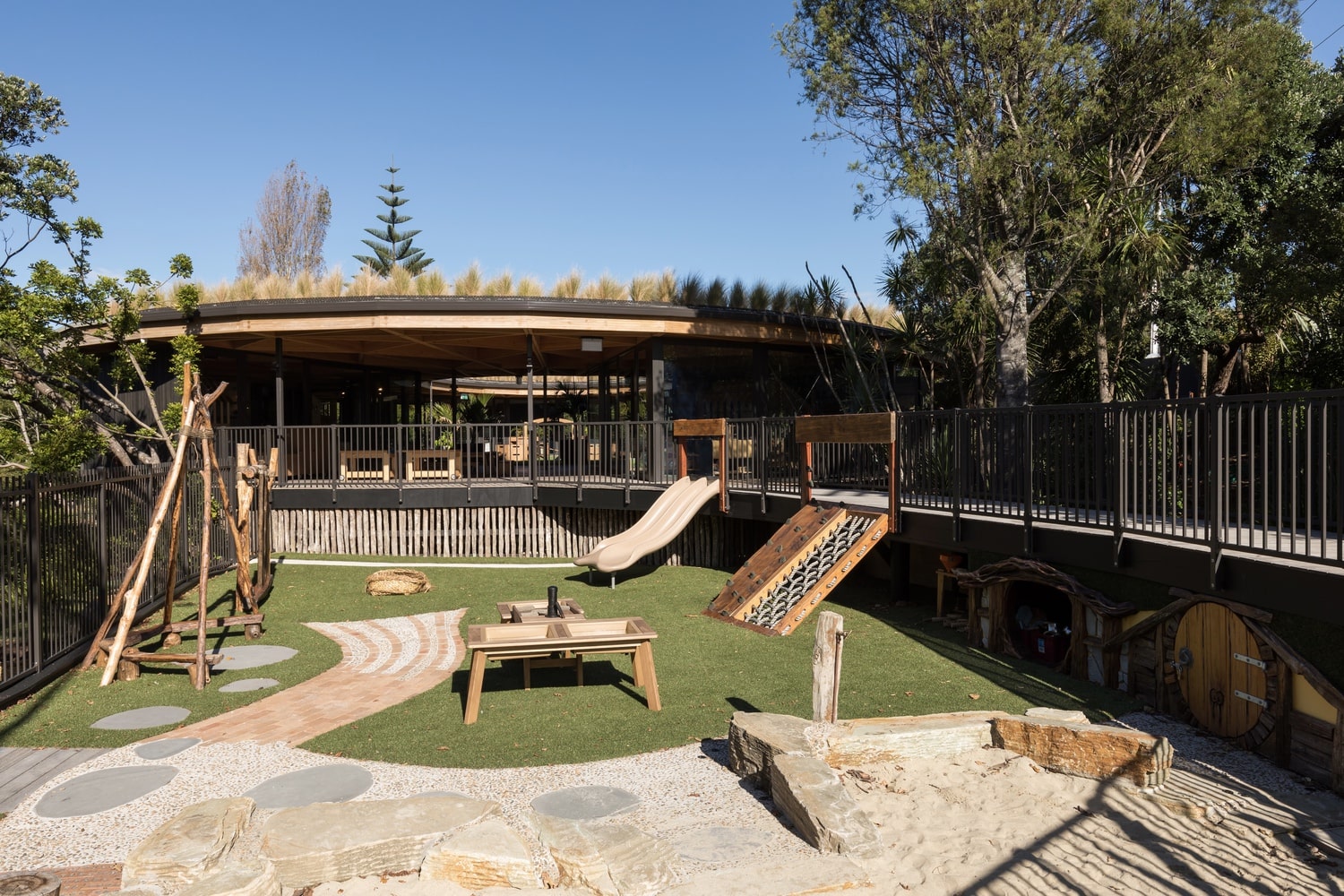
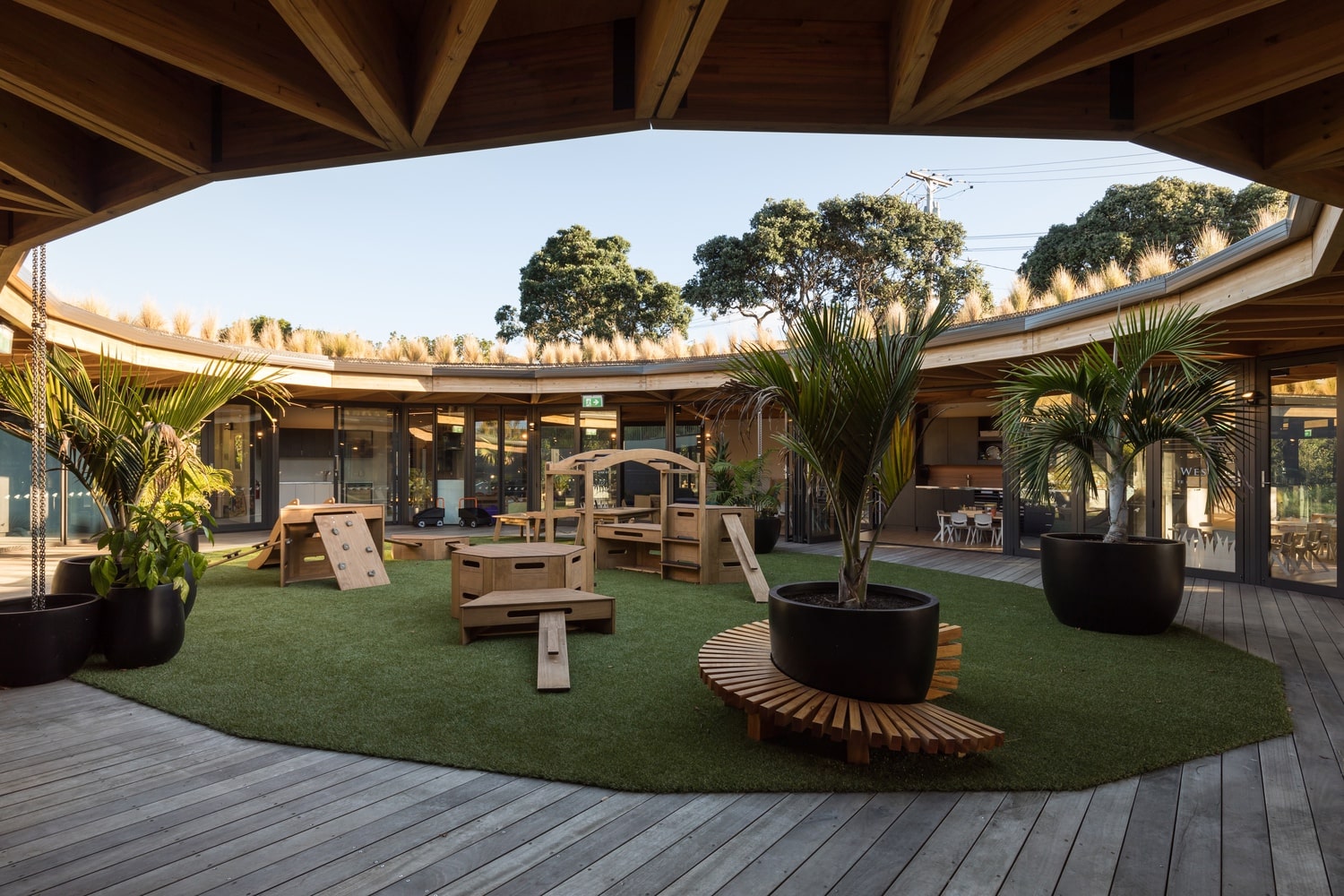


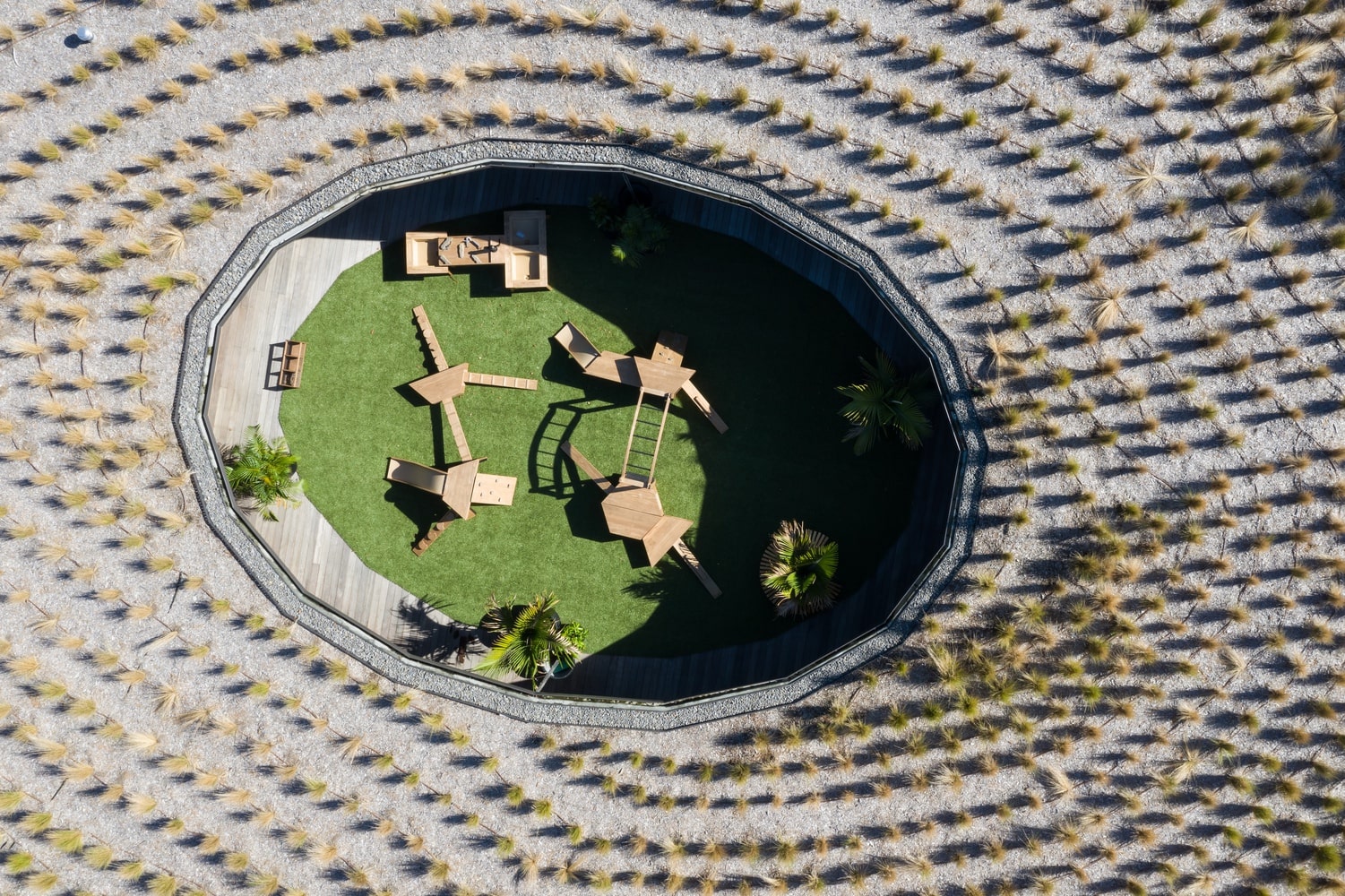
Table of Contents Show
Situated in the heart of Mairangi Bay, Kakapo Creek Children’s Garden is an early learning centre designed for up to 100 children, offering a nurturing environment rooted in cultural symbolism, sustainability, and connection to nature. Designed by Smith Architects, the project is founded on the Māori concept of Nga Hau E Wha, the four winds, representing a place of gathering where people from all backgrounds meet. This philosophy directly informs both the spatial organization and architectural form, resulting in a building that is as meaningful culturally as it is functional educationally.
Nga Hau E Wha as a Spatial Framework
The guiding concept of Nga Hau E Wha is translated into architecture through a circular building form that embraces inclusivity and togetherness. At the heart of the plan lies a shared central courtyard, a symbolic and physical meeting space, around which four primary classrooms are arranged. This configuration reinforces the idea of equality, with no single classroom privileged over another, while encouraging interaction and shared experiences among children and educators.
The gentle curve of the building is not arbitrary. Its geometry is derived from the natural meander of the stream that defines the site’s northern boundary, anchoring the architecture to its landscape context and reinforcing a sense of place.
Blurring Boundaries Between Inside and Outside
Connection, between people, spaces, and nature, is a recurring theme throughout the design. Each classroom is fully glazed toward the central courtyard, creating visual and physical continuity between indoor learning areas and outdoor play spaces. This openness allows children to move intuitively between environments, supporting curiosity, independence, and exploration.
The courtyard functions as an extension of the classrooms rather than a separate space, strengthening social interaction while maintaining clear sightlines for supervision. Through this arrangement, the building becomes a single, unified learning environment rather than a collection of isolated rooms.
A Unified Roofscape and Natural Material Palette
Above the circular plan, a timber glulam and plywood roof canopy spans across the building, visually tying all spaces together beneath a single architectural gesture. This roof not only provides shelter but also reinforces the idea of collective identity and shared experience.

Crowning the structure, a green roof blends the building seamlessly into its surroundings while contributing to environmental performance. Internally, exposed timber beams and warm material tones create a calm, tactile atmosphere well suited to early childhood education, where sensory comfort plays a vital role in well-being.
Environmental Design and Wellbeing Strategies
Sustainability is deeply embedded in the project’s design, with numerous strategies enhancing both environmental performance and occupant comfort. Natural ventilation is achieved through operable glazed doors and windows, significantly reducing reliance on mechanical systems and supporting a carbon-zero approach to ventilation.
Heating and cooling are provided by efficient electric heat pump units, discreetly concealed above bathroom ceilings. Extensive native landscaping, both around the building and on the roof, supports local biodiversity and strengthens children’s connection to the natural ecosystem.
Rainwater management is carefully addressed: the green roof reduces runoff by more than 50%, while all roof water is filtered naturally through soil and gravel before returning clean to the adjacent stream. Daylighting is maximized through extensive glazing, eliminating the need for artificial lighting during daytime hours.
Additional sustainable measures include low-e glazing, insulation levels exceeding building code requirements, LED low-wattage lighting, and all building services routed beneath a raised floor system, allowing easy access for future maintenance or adaptation.
Adaptability and Long-Term Resilience
Beyond its current use as a childcare facility, Kakapo Creek Children’s Garden was designed with future adaptability in mind. Its unique yet flexible form has led local residents to mistake it for a café or community venue, highlighting its potential for reuse should programmatic needs change.
Materials from an existing house on the site were recycled into playground finishes, minimizing waste, while careful site planning ensured that only three small trees were removed, far fewer than replaced through new planting. This thoughtful approach reinforces the project’s long-term resilience, both environmentally and socially.
A Community-Centered Learning Environment
Kakapo Creek Children’s Garden demonstrates how early learning architecture can move beyond functionality to become a cultural, ecological, and social anchor within its neighborhood. By combining indigenous concepts, landscape-driven form, and sustainable building strategies, the project creates an environment where children can learn, play, and grow in close connection with nature and community. It stands as a compelling example of how architecture can gently shape meaningful experiences from the earliest stages of life.
Photography: Mark Scowen


Herzog & de Meuron Builds Amherst College Student Center Atop Old Foundations
Herzog & de Meuron built a mass-timber student center at Amherst College...
 illustrarch Editoral Team2 Mins read
MIT Architecture School Moves Into DS+R-Converted Metropolitan Storage Warehouse
MIT's architecture school has moved into a DS+R-converted 1894 warehouse in Cambridge,...
illustrarch Editoral Team3 Mins read

SENA Tunja Training Center by TAP Arquitectura
TAP Arquitectura's unbuilt competition proposal for SENA in Tunja wraps a 4,400...
illustrarch Editoral Team2 Mins read
Best Software in Architecture School and What to Learn First
A practical look at the best software to learn in architecture school,...
 Elif Ayse Sen6 Mins read


Leave a comment