

Ukaji, Tanzanian Housing Competition for the Jorejick Family
 illustrarch Editoral Team21 March 20211 Mins read334


Ukuaji is a Tanzanian housing competition proposal designed by Lloyd Martin as more than a home, treating the dwelling as a framework for the Jorejick family’s spatial and economic growth. The Swahili name signals the central idea: a house that should not only shelter the family now but also give it room to expand over time. Rather than spending every resource on a finished object, the proposal organizes the budget across three categories, the core built structure, investment in additional sustainable technologies and infrastructure, and education and upskilling of family members to operate that infrastructure.
The core structure uses just 75 percent of the total budget, leaving 25 percent for sustainable technologies and for education. While even the core building would offer significant lifestyle improvements, the layered investment across the site is what makes the project potentially transformational. The home is modular, providing the spaces the family currently needs while leaving deliberate gaps in the framework for future development as circumstances change.
A house that grows with the family
Designing a single-family home in a rural setting carries a distinct set of challenges that differ from urban housing. Climate response, local material logic, and long-term maintainability matter far more than image, because the people who live in the building will also adapt and repair it. Incremental and adaptable housing, where a structural framework is completed in stages by its residents, is a well-studied approach to delivering durable shelter on a constrained budget. Ukuaji follows that logic by treating the first build as a foundation rather than a final state.
The design draws directly on the historical Iraqw sunken earthen home, a vernacular type rooted in the highlands of northern Tanzania. By partly setting the dwelling into the ground and limiting the external wall area exposed to driving rain and sun, the scheme improves thermal inertia and reduces weathering. It relies on passive lighting, cooling, and heating drawn from the immediate cultural surroundings, an approach consistent with broader principles of passive solar building design and the wider tradition of vernacular architecture.
What gives Ukuaji its weight is the refusal to separate building from livelihood. By pairing a climate-tuned core with training and infrastructure that the family can use and extend, Martin frames housing as an ongoing project the residents author themselves.






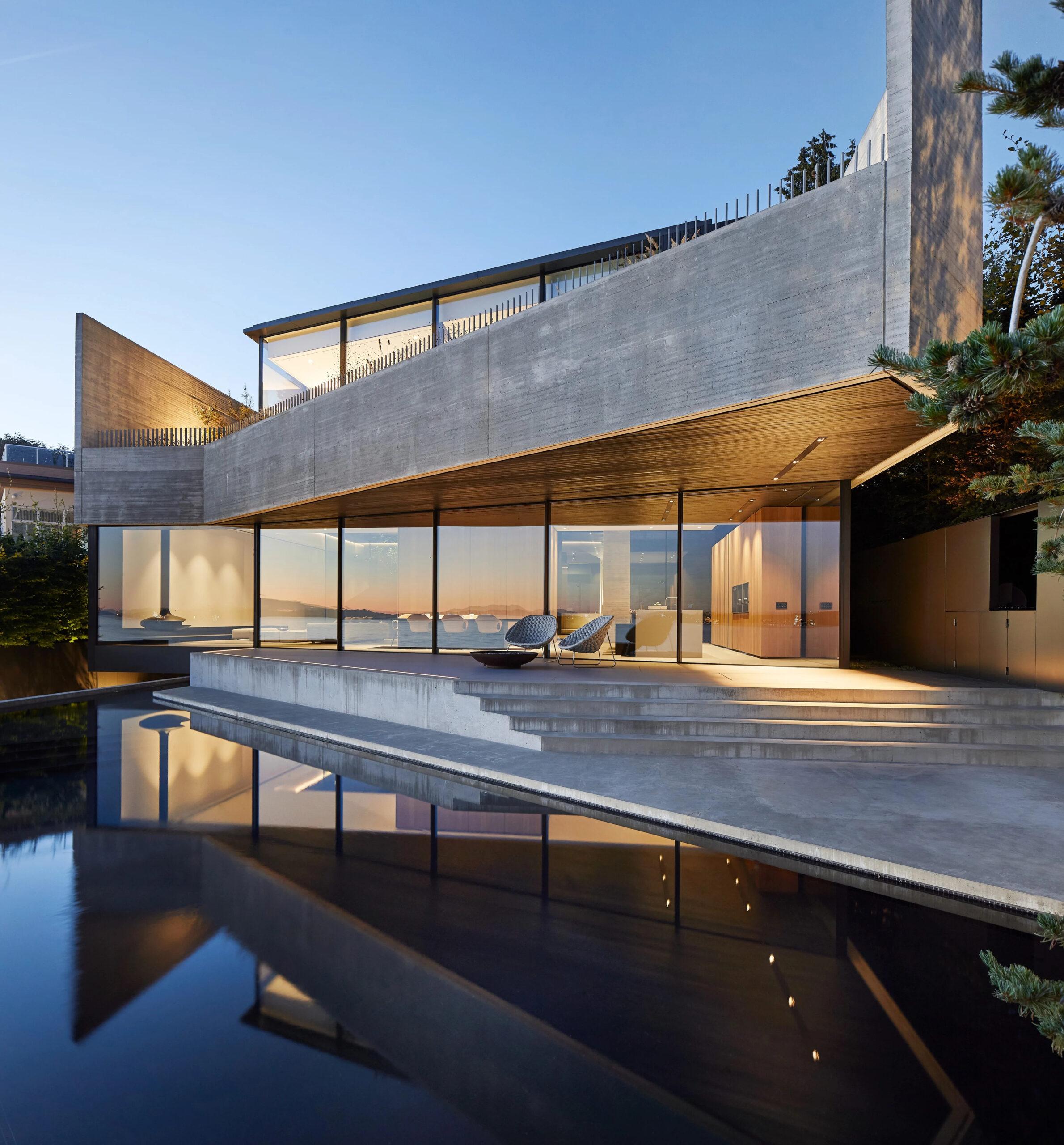
Designing a Liminal Space Where Urban Meets Coastal
The Liminal House by Mcleod Bovell Modern Houses in West Vancouver is...
 Elif Ayse Sen5 Mins read
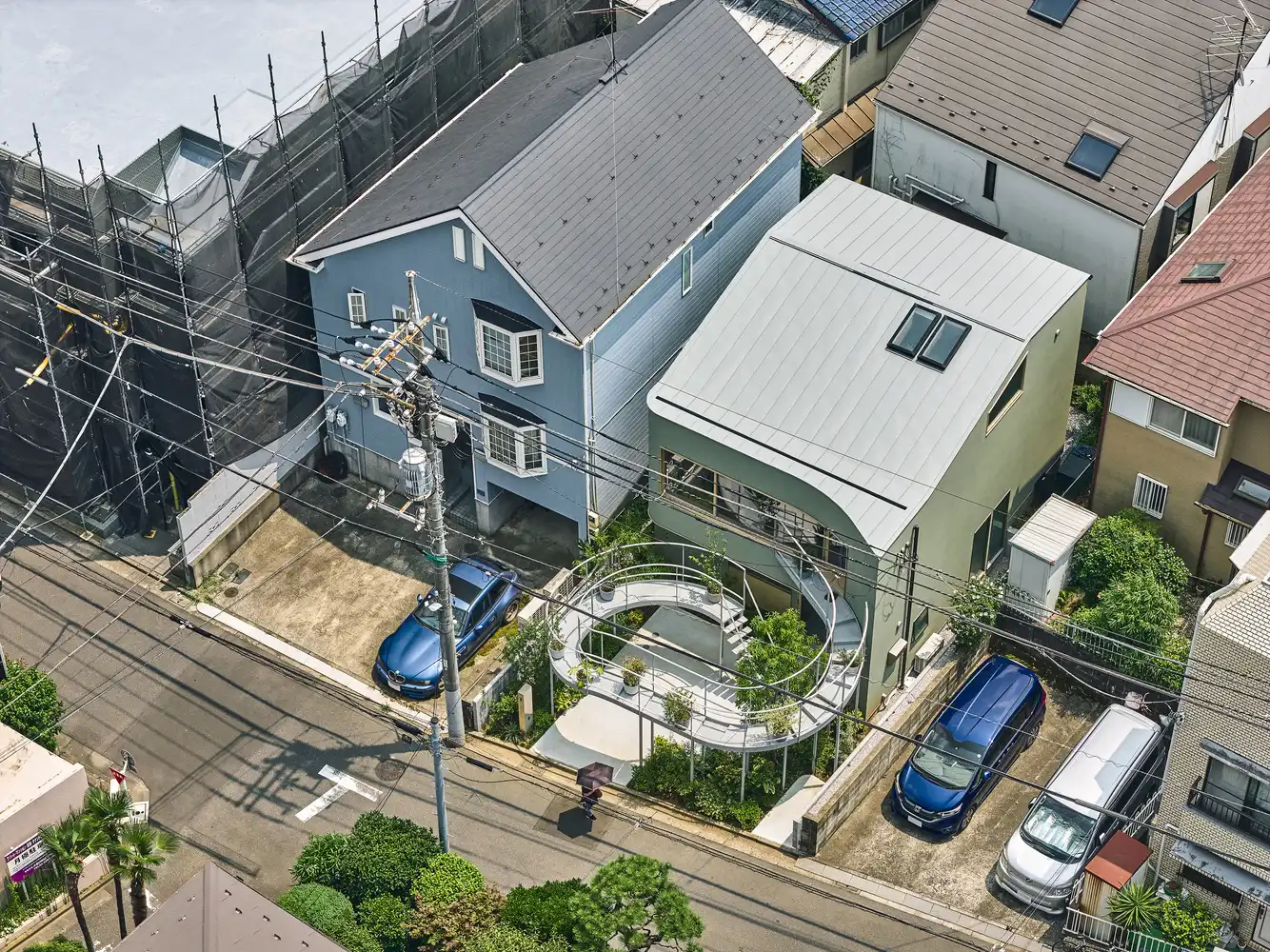
House in Nakano: A 96 m² Tokyo Architecture Marvel by HOAA
Project Completed Architect HOAA (Hiroyuki Oinuma) Location 🇯🇵 Nakano, Tokyo, Japan Typology...
 Bahattin Duran5 Mins read

Bridleway House by Guttfield Architecture
Bridleway House by Guttfield Architecture is a barn-inspired timber extension that reframes...
 Begum Gumusel3 Mins read

BINÔME Multi-residence by APPAREIL architecture
Binôme by APPAREIL Architecture is a five-unit residential building that redefines soft...
Begum Gumusel3 Mins read


Leave a comment