

Water No Get Enemy
Water No Get Enemy is a speculative urbanism proposal for Lagos that envisions resilient, floating communities designed to adapt to rising sea levels and flooding.
 illustrarch Editoral Team10 April 20211 Mins read456


Water No Get Enemy is a speculative urbanism proposal by Lloyd Martin for Lagos, Nigeria, that treats rising water not as a threat to be walled out but as a permanent condition to design with. As climate change drives rising sea levels, heavier rainfall and recurring flooding into the daily life of the city, the project imagines a settlement that holds firm above the water while letting communities grow around it.
The core move is structural. Rather than the floating platforms commonly used for water-based housing, which tend to have a short life span and often fail after heavy rains, the scheme adopts the monopile construction system borrowed from offshore wind farms. A single sturdy pile driven into the seabed gives each cluster a secure and solid base, lifting homes clear of flood levels and giving residents ground they can build on with confidence.
Designing for a flood-prone coastal city
Building above water carries challenges that ordinary land-based housing never faces. Foundations must resist tides, storm surge and the slow corrosion of a marine environment, while access, sanitation and supply have to be planned for a site with no fixed street grid. The proposal answers this by organising life around shared infrastructure: each community cluster is supported by Service Platforms, Biorefineries and Market and Sports fields, so that essential functions sit within reach of every home. The clusters are not fixed master plans but grow organically over time, adapting to the steady demand for housing in a city expanding as fast as Lagos.
Each home is conceived as an enclosed loop in which the circular economy and metabolism of the dwelling come first, so that water, waste and energy cycle within the system instead of draining away. That logic connects the project to wider thinking about circular economy design and to the broader question of how cities adapt to sea level rise. The title borrows from Fela Kuti: to live in harmony with nature is to be as inevitable and indispensable as water itself. Lloyd Martin offers it less as a finished building than as an argument for a different relationship between people and the water that surrounds them.



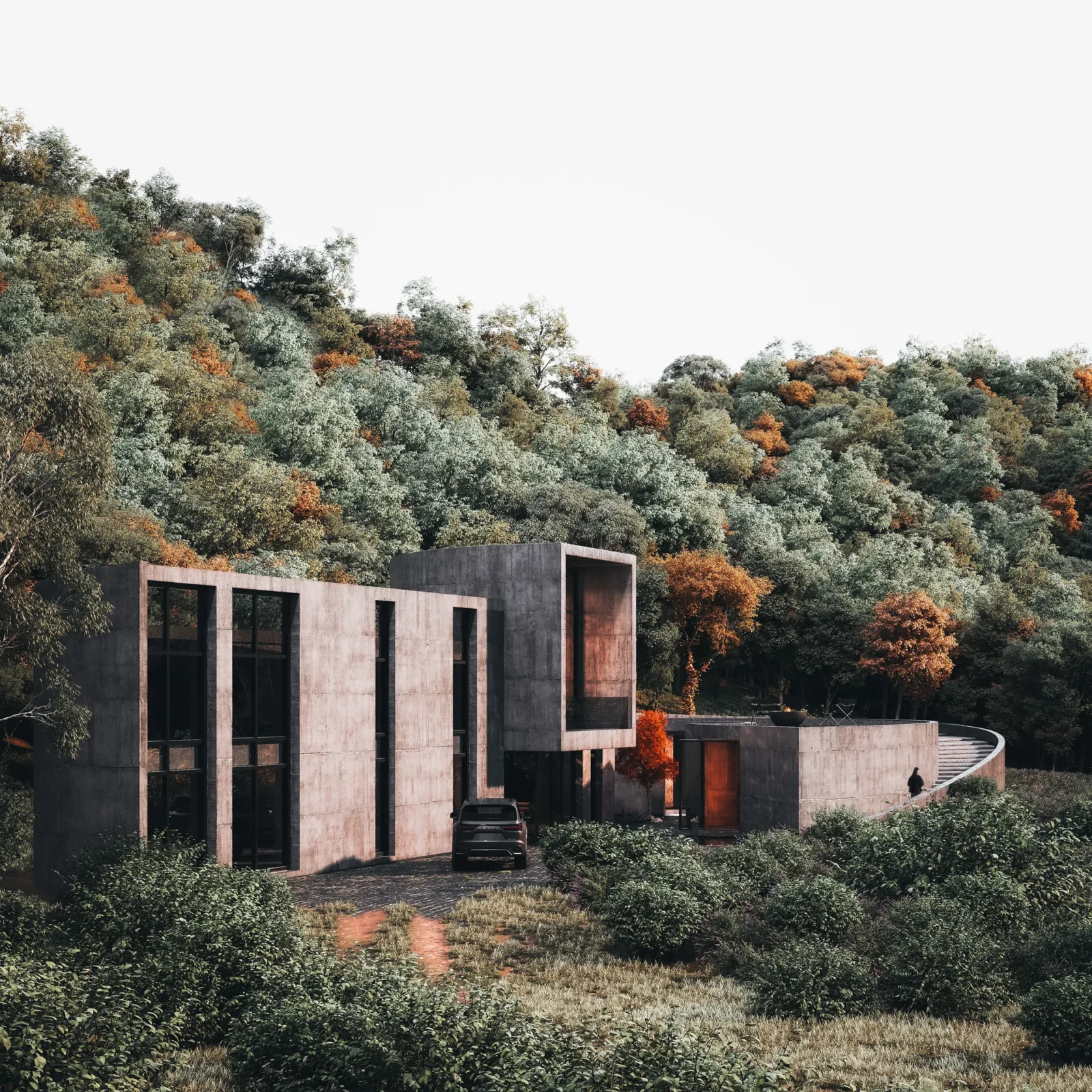
Savan House by Nobico Studio
Savan House is Nobico Studio's unbuilt concept for a forested hillside in...
illustrarch Editoral Team3 Mins read

Renaatus Irumathi
Renaatus Irumathi Residence features 69 spacious apartments designed with contemporary aesthetics, maximizing...
illustrarch Editoral Team2 Mins read

White Khamovniki
White Khamovniki is a residential tower project in Moscow that combines urban...
illustrarch Editoral Team1 Mins read

Millennium Horizon
Millennium Horizon is an innovative architectural project in the UAE that uses...
illustrarch Editoral Team2 Mins read


Leave a comment