

Refik Anadol’s Dataland: The World’s First AI Art Museum Opens in Los Angeles
Dataland, co-founded by Refik Anadol and Efsun Erkilic, opens June 20, 2026, at The Grand LA in downtown Los Angeles. The 25,000-square-foot museum features five galleries powered by the Large Nature Model, an open-source AI trained on ecological datasets from the Smithsonian, Cornell Lab of Ornithology, and London's Natural History Museum.
 Elif Ayse Sen1 May 202610 Mins read315
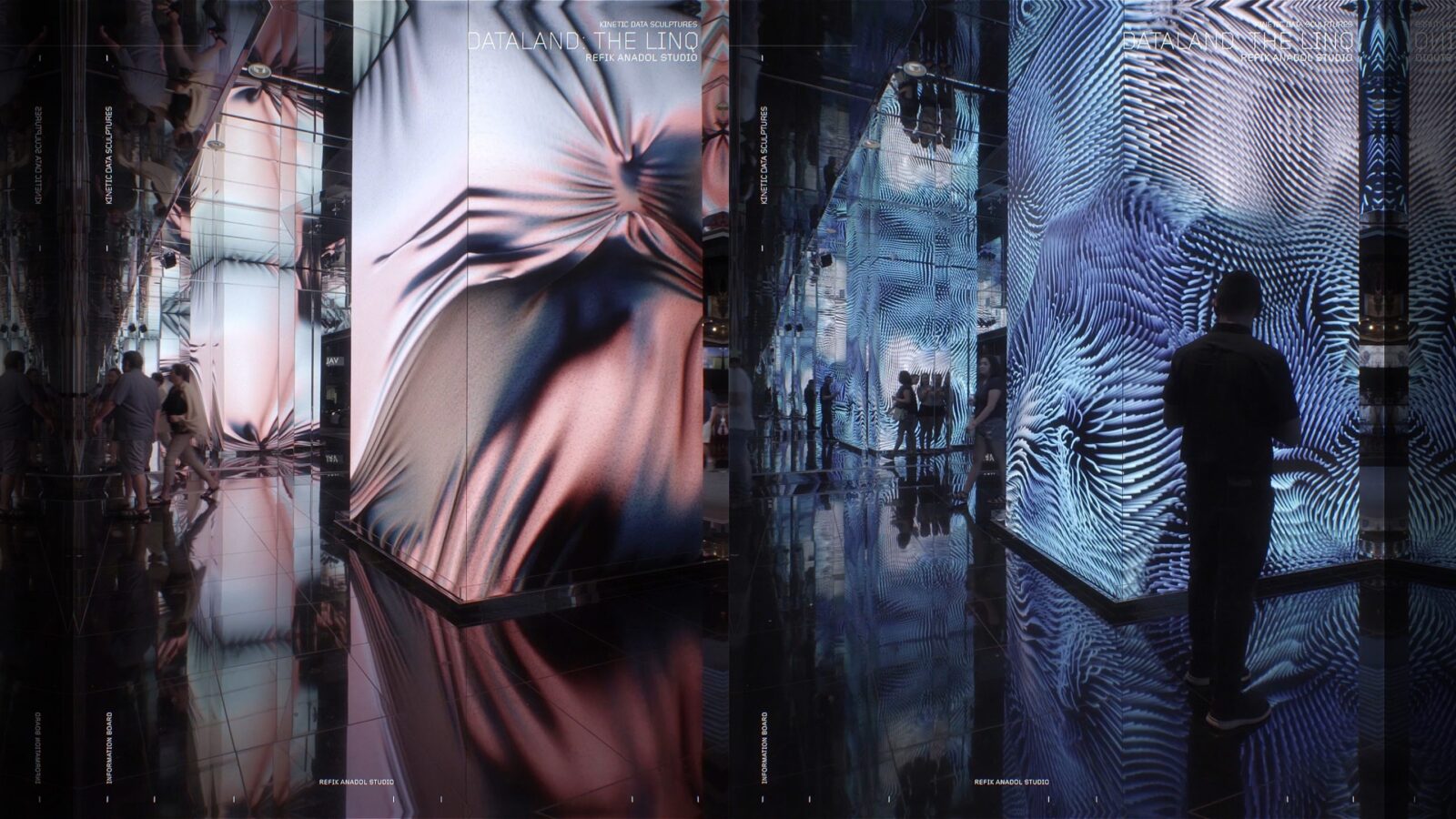
Table of Contents Show
Refik Anadol is opening Dataland, the world’s first museum dedicated entirely to AI-generated art, on June 20, 2026, inside The Grand LA complex in downtown Los Angeles. Designed by Gensler and Arup, the 25,000-square-foot museum features five galleries powered by the studio’s Large Nature Model and opens with its inaugural exhibition, Machine Dreams: Rainforest.
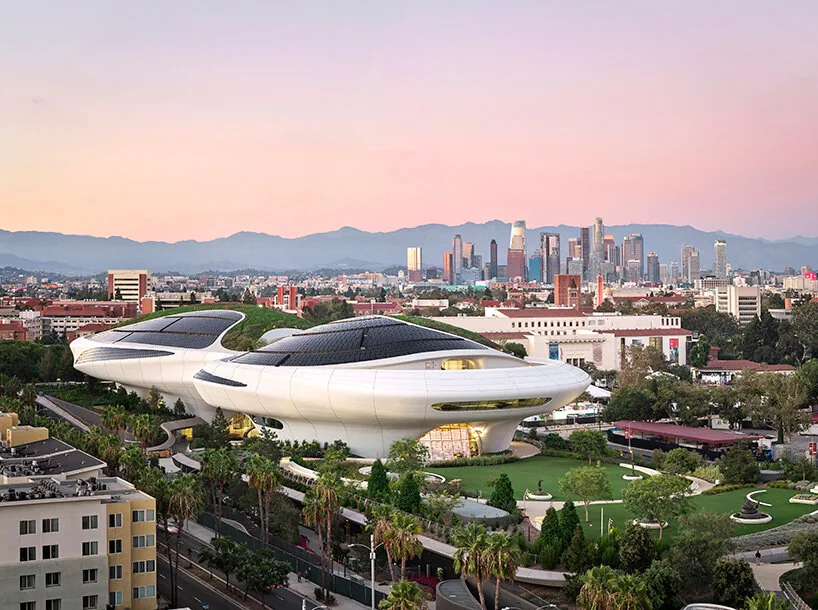
Los Angeles is in the middle of one of the most significant museum-building periods in its history. The Peter Zumthor-designed David Geffen Galleries at LACMA opened its doors in April 2026. The Lucas Museum of Narrative Art is expected in September. And now Dataland adds a third major institution to this wave, one that introduces an entirely new category: a permanent home for art created through machine intelligence. For architecture and design professionals, Dataland raises questions about how immersive digital experiences shape interior space, how AI infrastructure demands a rethinking of building systems, and how a museum without traditional objects redefines what gallery architecture needs to do.
What Is Dataland Museum?
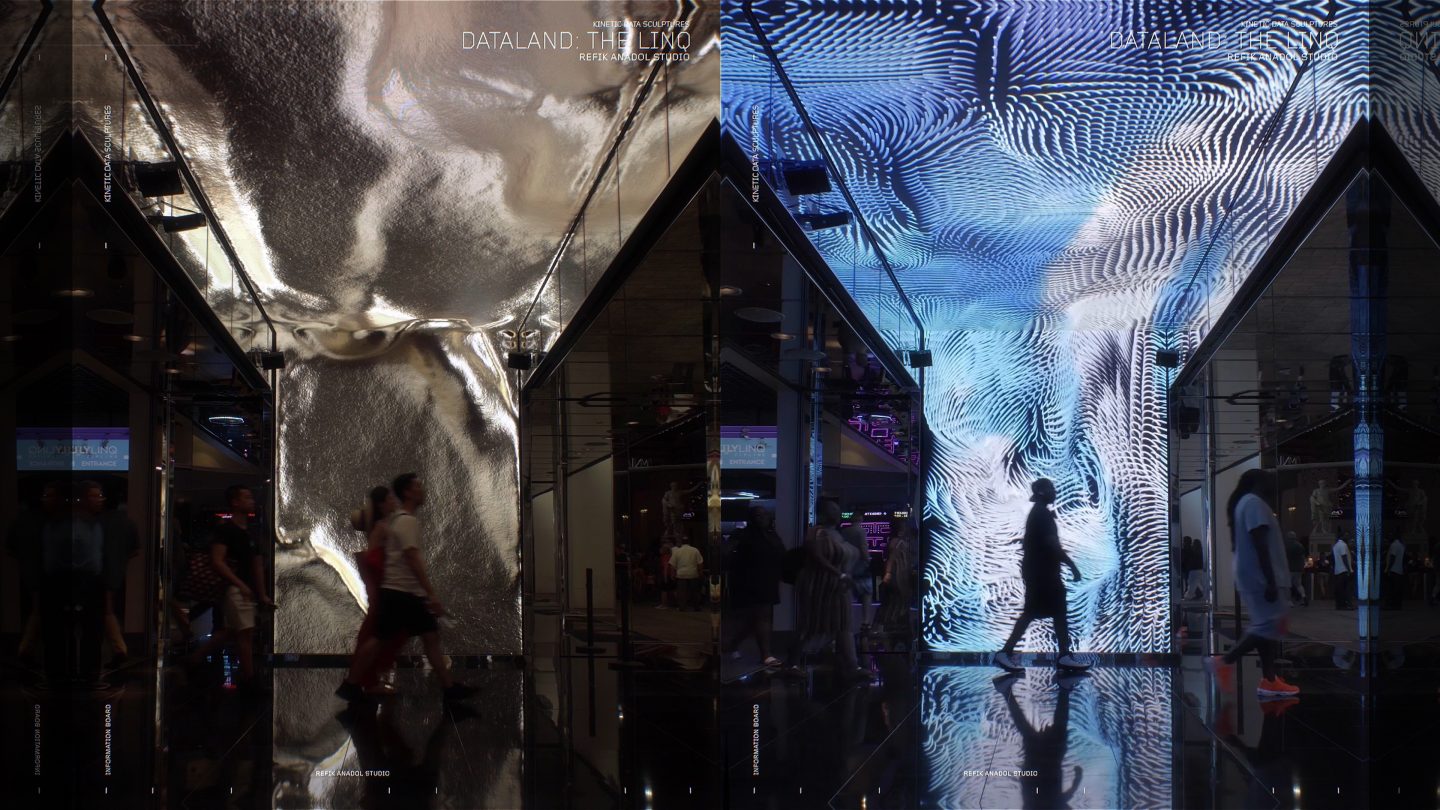
Dataland is a privately funded museum co-founded by media artist Refik Anadol and artist-entrepreneur Efsun Erkilic. It sits inside The Grand LA, a mixed-use complex designed by Frank Gehry that includes the Conrad Los Angeles hotel, over 436 residences, restaurants, and retail spaces. The museum occupies roughly 2,320 square meters (about 25,000 square feet) within the complex, positioned along the Grand Avenue Cultural District alongside The Broad, the Museum of Contemporary Art (MOCA), and the Walt Disney Concert Hall.
The museum is designed in collaboration with architecture firm Gensler and global engineering consultancy Arup. One of the most unusual aspects of its floor plan is that nearly a third of its total area, roughly 10,000 square feet, is dedicated to the computing hardware that runs the AI models behind the exhibitions. That ratio of back-of-house technology to public gallery space is far higher than what you would find in a traditional art museum and signals a fundamental shift in how buildings for digital art need to be planned.
💡 Pro Tip
When designing spaces for AI-driven immersive installations, plan for significant mechanical and electrical loads from GPU server clusters. Dataland dedicates roughly one-third of its footprint to computing infrastructure, a ratio that traditional museum programming guides do not account for. Factor cooling, power redundancy, and acoustic isolation into early schematics if you are working on similar projects.
Refik Anadol: From Istanbul to Los Angeles
Refik Anadol was born in Istanbul in 1985. He moved to Los Angeles in 2012 to study design media arts at UCLA, where he has since taught for over a decade. In 2014, he co-founded Refik Anadol Studio with Efsun Erkilic (born in Istanbul, 1982). The studio has exhibited work in more than 80 cities across six continents, building a reputation for large-scale data sculptures that turn massive datasets into fluid, moving visual experiences.
Anadol’s breakthrough came in 2022 with Unsupervised at the Museum of Modern Art (MoMA) in New York. The installation used AI to interpret 200 years of MoMA’s collection, generating constantly shifting visual compositions in the museum’s lobby. According to the museum, the piece attracted nearly three million visitors in its first year. MoMA later acquired it into its permanent collection, making Anadol the first artist to have a generative AI work enter MoMA’s holdings.
Other major projects from the studio include Machine Hallucinations at The Sphere in Las Vegas, Living Architecture: Casa Batllo in Barcelona, Echoes of the Earth at London’s Serpentine Galleries, and WDCH Dreams, a 2018 projection on the Walt Disney Concert Hall that visualized 100 years of Los Angeles Philharmonic recordings using 42 large-scale projectors. That project was mapped directly onto the Frank Gehry-designed stainless steel exterior, creating nightly live performances visible from across downtown LA.
🎓 Expert Insight
“L.A. is the center of creativity. It is a city that defines the future of art, music, cinema, architecture, and more.” — Refik Anadol, Co-founder of Dataland
Anadol’s decision to base Dataland in Los Angeles reflects the city’s growing role as a global hub for museums and cultural institutions. With three major museum openings in 2026 alone, LA’s Grand Avenue corridor is becoming one of the densest cultural districts in the United States.
Dataland’s Five Galleries and the Inaugural Exhibition
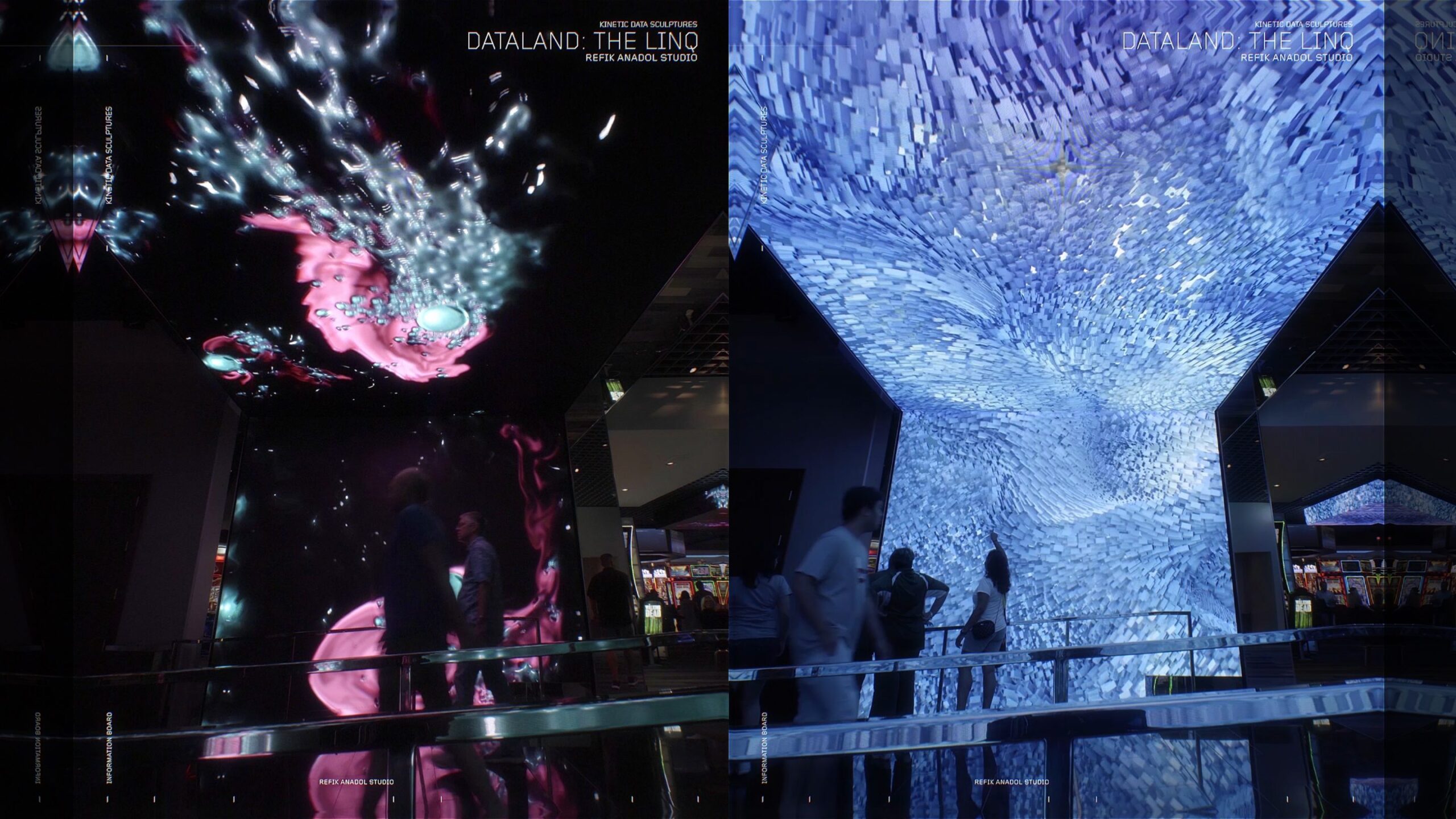
The museum contains five distinct galleries spread across its public-facing space. The inaugural exhibition, titled Machine Dreams: Rainforest, runs from June 20, 2026, through January 31, 2027. It was inspired by a trip Anadol and Erkilic made to the Amazon, where Anadol began to think of the rainforest as a single interconnected intelligence.
The show processes large quantities of ecological data, including birdsongs, plant life information, and weather patterns collected from 16 rainforests around the globe. These inputs are run through the studio’s Large Nature Model (LNM), an open-source AI model trained on datasets from the Smithsonian Institution, London’s Natural History Museum, the Cornell Lab of Ornithology, Getty, and iNaturalist. The result is what Anadol calls “digital sculptures,” constantly evolving visual and auditory compositions that simulate alternate, possible rainforests.
Among the five galleries, Gallery C houses the Infinity Room, an evolved version of one of the studio’s most recognized installations. The original Infinity Room was developed at UCLA in 2014 as Anadol’s first immersive data sculpture. Over the past decade, it has traveled to 35 cities worldwide and been experienced by more than 10 million visitors. The Dataland version incorporates AI-generated scents produced by the Large Nature Model and is the first immersive environment to use World Models, a form of generative AI that simulates real-world physics and spatial dynamics.
📌 Did You Know?
Dataland’s founding digital collection, called Biome Lumina, is a series of 1,000 unique AI data sculptures that sold out in just 34 minutes when it was released in early 2025. This marked one of the fastest-selling digital art collections in recent history and helped fund the museum’s development.
Architectural Design: Gensler, Arup, and the Challenge of AI Infrastructure
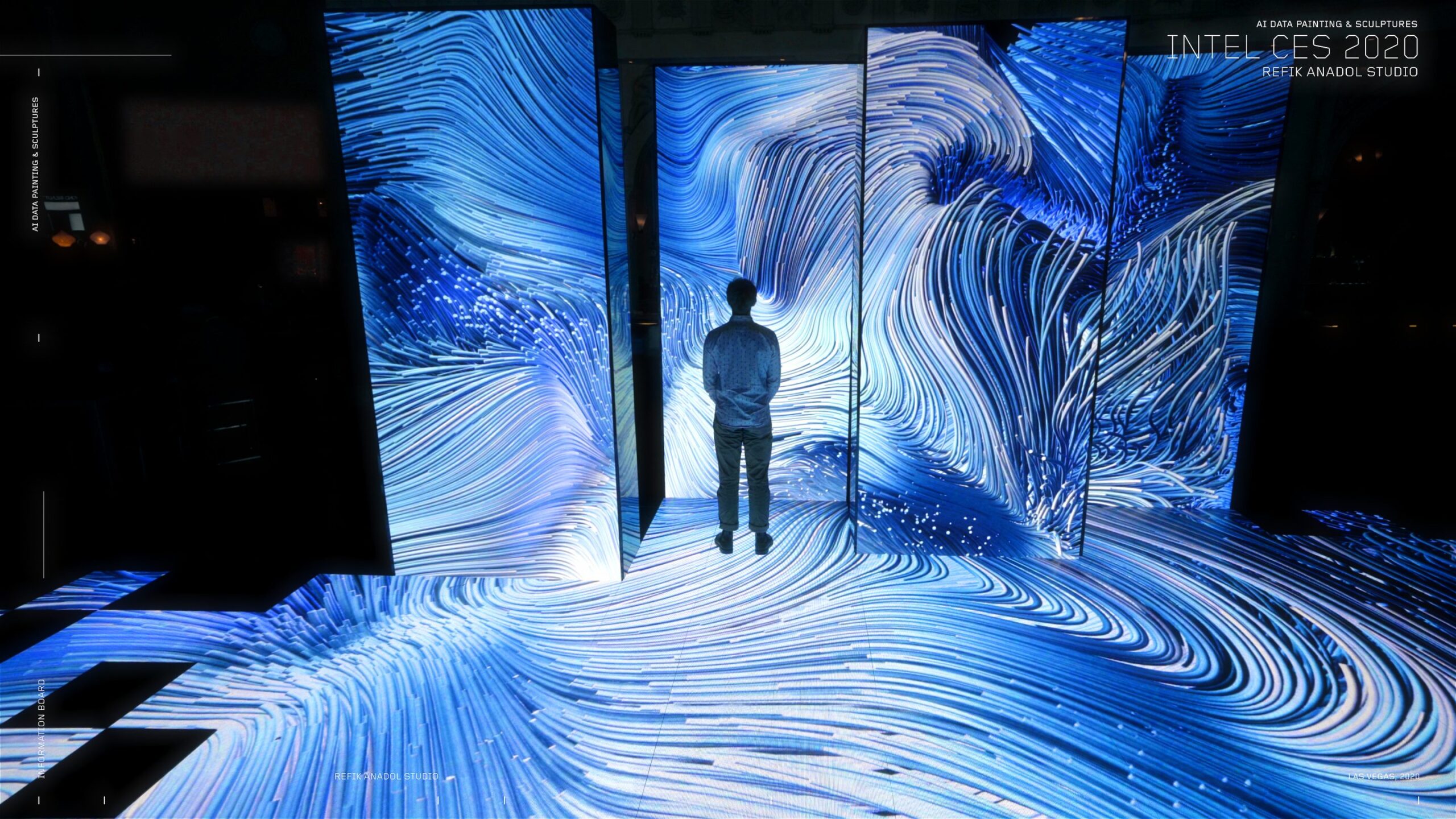
Dataland represents an unusual brief for Gensler and Arup. A traditional museum is designed around objects: climate-controlled cases, lighting rigs, hanging systems, conservation-grade air handling. Dataland has none of those requirements. Instead, the building needs to support massive computational loads, real-time rendering across multiple projection surfaces, spatial audio systems, and scent delivery technology, all while keeping the visitor experience immersive and comfortable.
The computing infrastructure runs on what the museum describes as an 87 percent carbon-free energy service based in Oregon. Dataland claims that one visitor’s stay uses roughly as much energy as charging a smartphone, an efficiency figure that addresses one of the most common criticisms of AI-driven art: its energy footprint.
The museum also sits in a significant architectural context. The Grand LA complex, designed by the late Frank Gehry (who passed away in December 2025 at the age of 96), is directly across from Gehry’s own Walt Disney Concert Hall. This creates a direct physical link between Dataland and one of the most celebrated architectural landmarks in the United States. For Anadol, who projected his WDCH Dreams installation onto the Concert Hall in 2018, the location brings his work full circle.
From an architectural design perspective, Dataland introduces a new typology: the technology-first museum. Where conventional museums allocate the majority of their floor area to galleries, circulation, and storage, Dataland flips the ratio. The server rooms, cooling systems, and networking infrastructure take up as much space as the galleries themselves. This has implications for architects working on future cultural projects that rely heavily on real-time computation, virtual reality, or AI-generated content.
How Does Dataland Fit Into LA’s Cultural Corridor?
The Grand Avenue Cultural District in downtown Los Angeles is one of the most concentrated clusters of cultural institutions in the country. Within walking distance of Dataland, visitors can reach The Broad, MOCA, The Music Center, the Walt Disney Concert Hall, REDCAT, and The Colburn School. The addition of the David Geffen Galleries at LACMA (April 2026) and the Lucas Museum of Narrative Art (September 2026) further expands the district’s reach.
This clustering of institutions has urban design implications. It creates pedestrian foot traffic, supports mixed-use development, and positions downtown LA as a cultural destination that competes with New York’s Museum Mile or London’s South Bank. For architects and urban planners, the Grand Avenue corridor is a case study in how cultural buildings anchor neighborhood revitalization, a dynamic that Frank Gehry helped pioneer with the Guggenheim Museum Bilbao in 1997.
💡 Pro Tip
If you are studying cultural district planning, compare LA’s Grand Avenue approach (multiple institutions added incrementally over two decades) with purpose-built cultural districts like Abu Dhabi’s Saadiyat Island or Hong Kong’s West Kowloon. The organic, building-by-building model tends to create stronger pedestrian networks and more diverse programming than master-planned alternatives.
The Large Nature Model: Open-Source AI for Art and Science
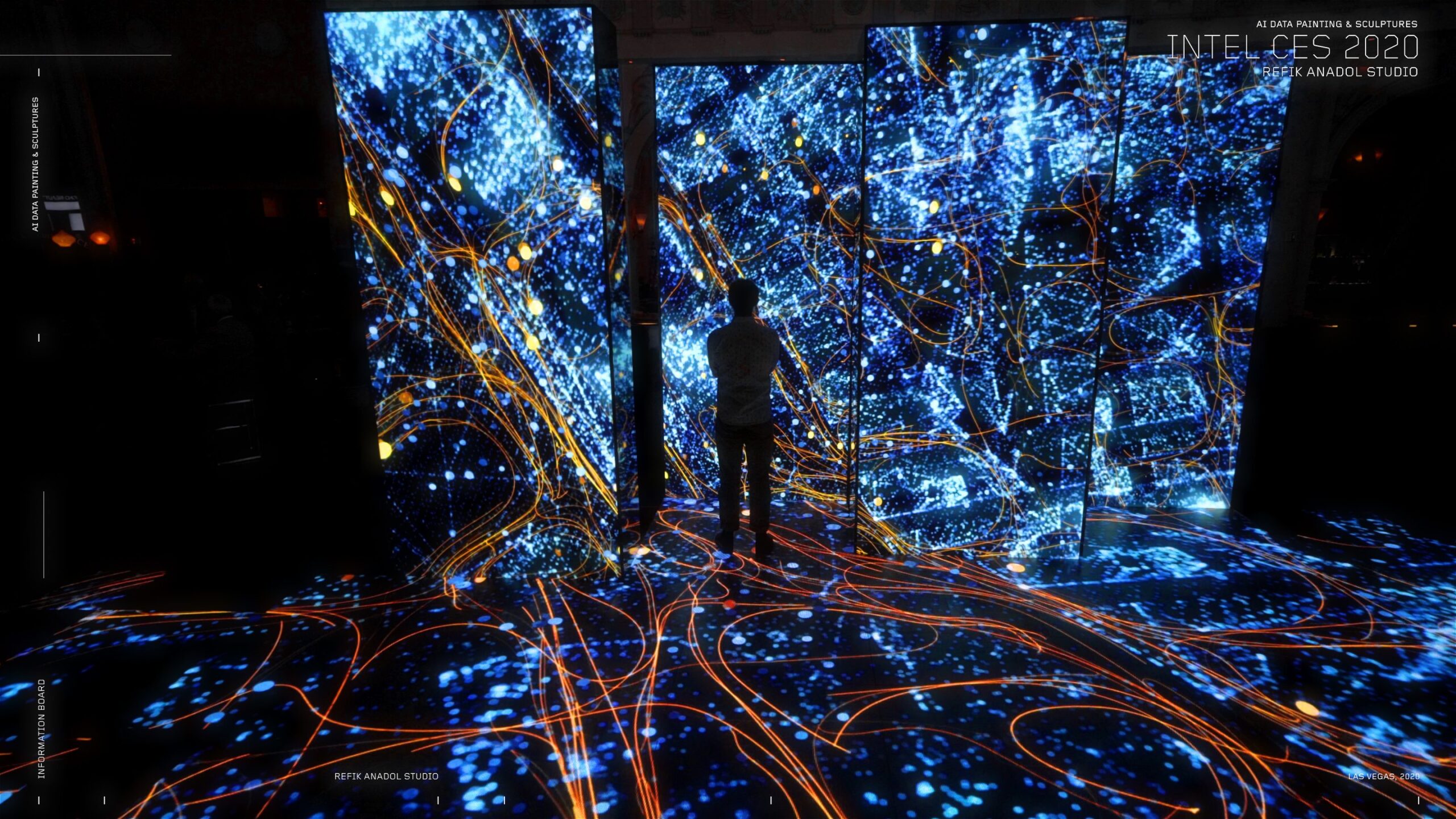
Central to Dataland’s operation is the Large Nature Model (LNM), which Refik Anadol Studio describes as the world’s first open-source AI model trained exclusively on natural data. The training dataset includes first-hand recordings from 16 rainforests, combined with data partnerships with major scientific institutions.
The open-source aspect is significant. Most AI art tools, from Midjourney to DALL-E, rely on models trained on internet-scraped image datasets, which has generated intense debate around copyright and consent. Anadol has taken a different approach. In an interview with NPR, he stated that the studio builds its own models and maintains full transparency about data sources. The LNM’s training data comes from permissioned partnerships, not web scraping.
This matters for the architecture and design community because it demonstrates a model for ethical AI use in creative practice. As AI tools become standard in architectural workflows, questions about training data provenance, intellectual property, and responsible deployment are becoming unavoidable. Dataland positions itself as a test case for how these issues can be addressed at institutional scale.
The partnership with Google Arts & Culture extends the model’s reach. Dataland has launched an artist residency program in collaboration with Google, where three selected artists will spend six months exploring human-machine collaboration. Their work will be presented at the museum through immersive installations, artist talks, and lectures.
Video: Dataland Launch Teaser
The official teaser for Dataland’s June 20 opening gives a first look at the museum’s five galleries and the Machine Dreams: Rainforest exhibition.
The Debate Around AI Art and Dataland’s Response
Dataland opens at a moment when AI-generated art faces significant criticism. Many artists and critics argue that AI art lacks genuine human agency and that it devalues the work of human creators. Some have been vocal about their objections. The debate is not purely theoretical; it has legal dimensions around copyright, ethical dimensions around consent and attribution, and economic dimensions around how AI tools change creative labor markets.
Anadol’s response has been consistent: transparency and data accountability. Rather than using models trained on copyrighted images scraped from the internet, Dataland’s exhibitions are powered by the LNM, which uses permissioned datasets. The studio also positions its work within a lineage of digital and media art that predates the current AI boom, pointing to decades of experimentation with data visualization, generative systems, and computational creativity.
Barry Threw, executive and artistic director at the Gray Area Foundation in San Francisco, has described Dataland as an institution that turns complex data into lived experience. From an architectural standpoint, this positions the museum as a spatial argument: can a building designed around AI-generated content create the same kind of emotional resonance as a gallery filled with paintings, sculptures, or photographs?
⚠️ Common Mistake to Avoid
Many people assume all AI art relies on the same type of training data. This is not accurate. There is a major difference between models trained on scraped internet images (which raises copyright issues) and models trained on permissioned, first-party datasets like Dataland’s Large Nature Model. When evaluating AI art projects or tools for your own practice, always ask where the training data comes from before making judgments about ethical compliance.
What Dataland Means for the Future of Museum Architecture
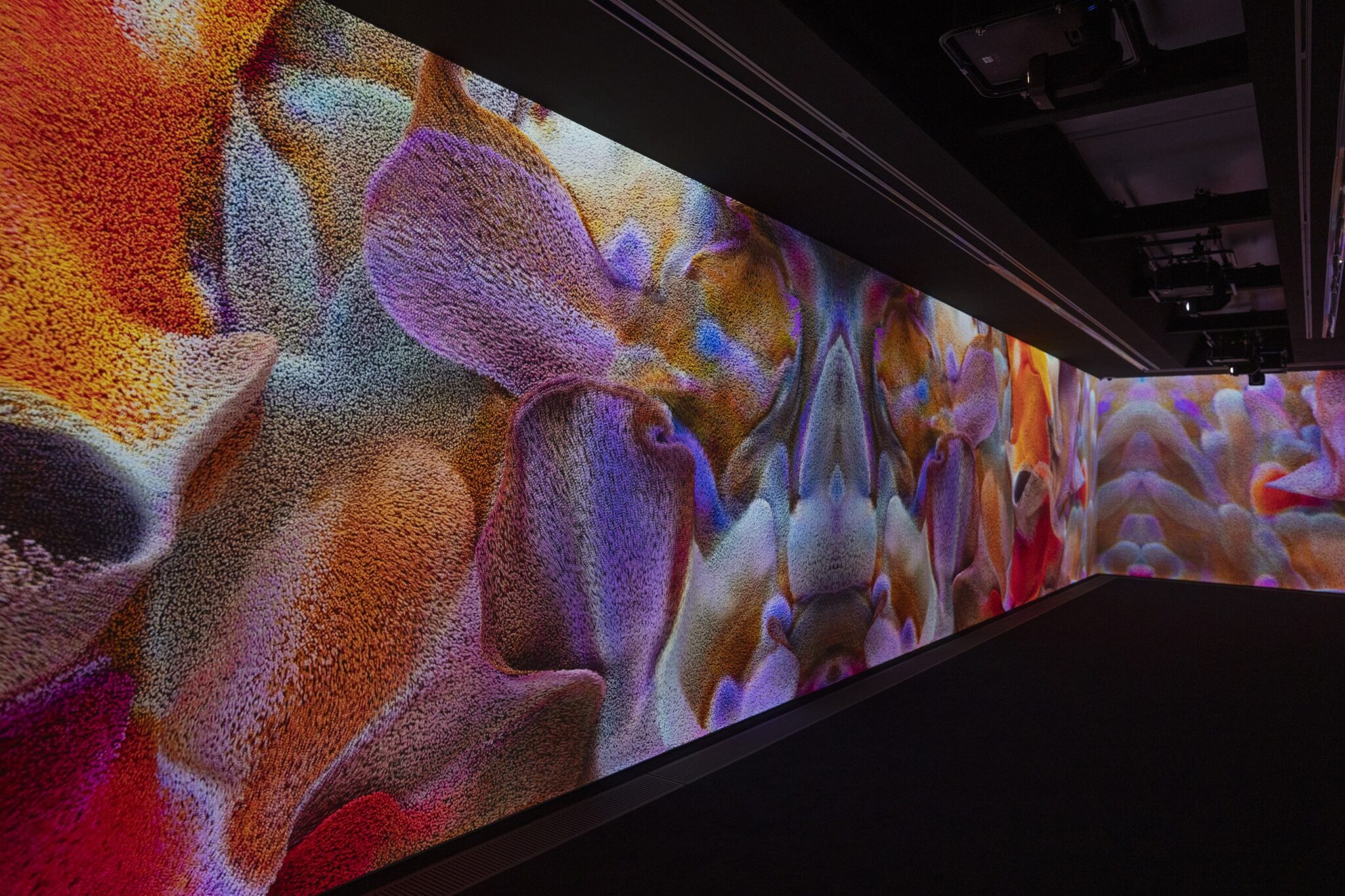
Dataland is not simply a new museum. It is a new building type. Traditional museum architecture has evolved around specific functional requirements: climate control for fragile objects, natural and artificial lighting for visual art, security systems for valuable collections, and flexible wall systems for changing exhibitions. Dataland needs none of these things. Instead, it needs server rooms, high-bandwidth networking, advanced projection systems, spatial audio, scent delivery mechanisms, and visitor flow patterns designed around immersive experiences rather than object viewing.
For architects, this creates both challenges and opportunities. The challenge is that most existing museum design standards, from the American Alliance of Museums guidelines to ASHRAE humidity specifications for art conservation, do not apply to a building like Dataland. The opportunity is that AI-driven museums can be designed with far more spatial freedom, since there are no objects to protect, no UV-sensitive materials to shield, and no display cases to accommodate.
The evolution of museum architecture in the 21st century has already been moving toward more flexible, visitor-centered designs. Dataland accelerates that trend by removing physical art entirely and replacing it with data-driven environments that can theoretically change every day. This raises a question for the profession: if the content of a museum is entirely digital, how much of the architectural experience can be delegated to software, and how much must still be shaped by the building itself?
Visiting Dataland: Practical Information
Dataland opens to the public on Saturday, June 20, 2026. The inaugural exhibition, Machine Dreams: Rainforest, runs through January 31, 2027. The museum is located at The Grand LA, 100 S. Grand Avenue, Los Angeles, CA 90012, in the Grand Avenue Cultural District.
Ticket pricing has not been publicly announced as of late April 2026. The Dataland website currently offers presale sign-ups and membership options starting at $350 per year. Memberships include early access before the public opening, ongoing entry, and digital programming tied to the exhibitions.
The museum is within walking distance of several other major institutions including The Broad, MOCA, and the Walt Disney Concert Hall, making it easy to combine a Dataland visit with a broader cultural itinerary along Grand Avenue.
✅ Key Takeaways
- Dataland, co-founded by Refik Anadol and Efsun Erkilic, opens June 20, 2026, as the world’s first museum dedicated to AI-generated art.
- The museum occupies 25,000 square feet inside Frank Gehry’s The Grand LA complex, with nearly one-third of its space dedicated to computing infrastructure.
- The inaugural exhibition, Machine Dreams: Rainforest, runs through January 31, 2027, powered by the open-source Large Nature Model trained on permissioned ecological datasets.
- Designed by Gensler and Arup, Dataland introduces a new architectural typology: the technology-first museum, where server infrastructure and digital systems take priority over traditional gallery requirements.
- Dataland joins a historic wave of museum openings in Los Angeles in 2026, alongside LACMA’s David Geffen Galleries and the Lucas Museum of Narrative Art.
Final Thoughts
Refik Anadol has spent over a decade building a practice around the idea that data can be beautiful, and that machines can be creative collaborators rather than replacements for human artists. Dataland is the physical expression of that idea: a permanent, purpose-built space where visitors can experience AI art at museum scale. Whether it changes minds about the value of AI-generated art remains to be seen. But as a piece of architecture, as an institutional model, and as a statement about the direction of cultural programming, Dataland is a project that every architect, designer, and creative technologist should pay attention to.
For more on how AI is changing design practice, see our detailed guide on AI architectural design tools in 2026 and our breakdown of architectural technology and modern design workflows.






MAD to Convert 1923 Rotterdam Warehouse into Dance Center
MAD will convert a 1923 Rotterdam warehouse into Danshuis, a dance center...
 illustrarch Editoral Team1 Mins read
George Lucas’s Narrative Art Museum Set to Open in LA in 2026
George Lucas's museum of narrative art, designed by Ma Yansong, opens in...
illustrarch Editoral Team3 Mins read

BIG Completes First Art Museum With Suzhou MoCA on Jinji Lake
BIG's first completed art museum, a 60,000 sqm cluster of pavilions, has...
illustrarch Editoral Team2 Mins read
Foster + Partners to Test Robot Swarms Building Timber from the Top Down
Foster + Partners wins €4m EU grant to build robot and drone...
illustrarch Editoral Team2 Mins read




Leave a comment