

Centre Pompidou Hanwha Seoul: A New Cultural Landmark Opens in June 2026
Centre Pompidou expands to Seoul in June 2026 with a new 11,000 square meter museum at the base of the 63 Building. Designed by Wilmotte & Associés, the Hanwha Center transforms a former aquarium into a translucent "box of light" for modern and contemporary art, marking a major milestone in France-Korea cultural cooperation.
 Elif Ayse Sen24 April 202611 Mins read278
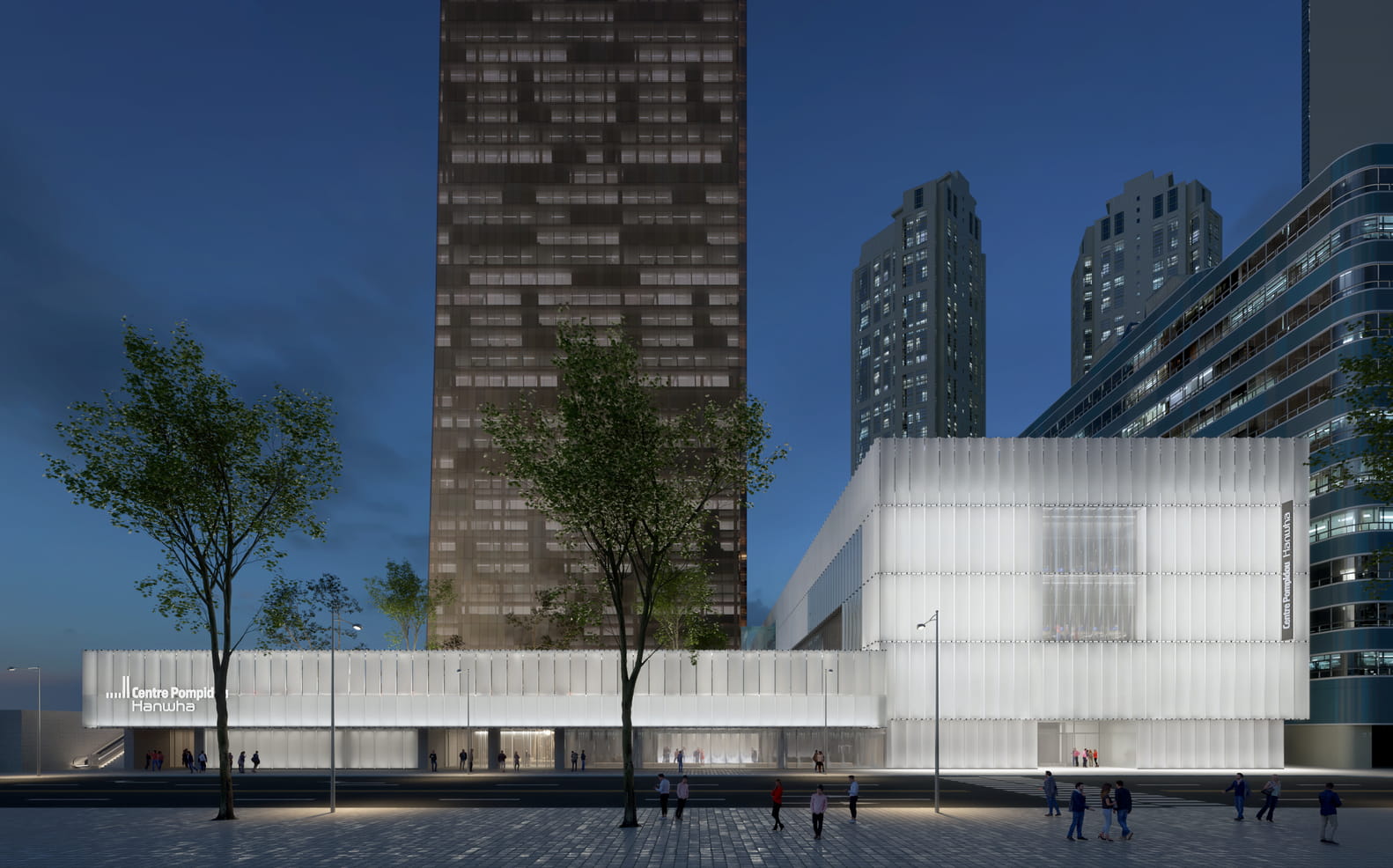
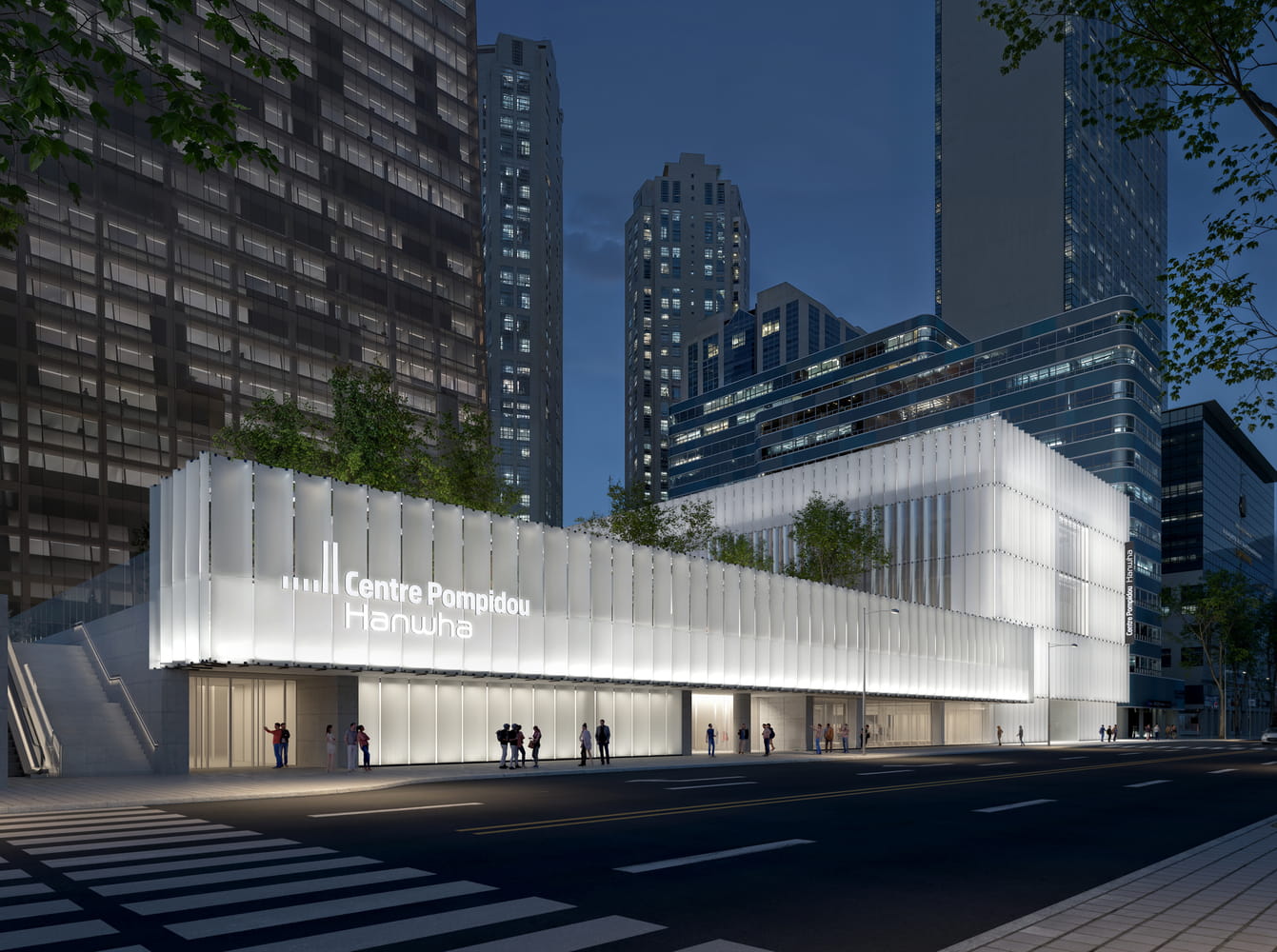
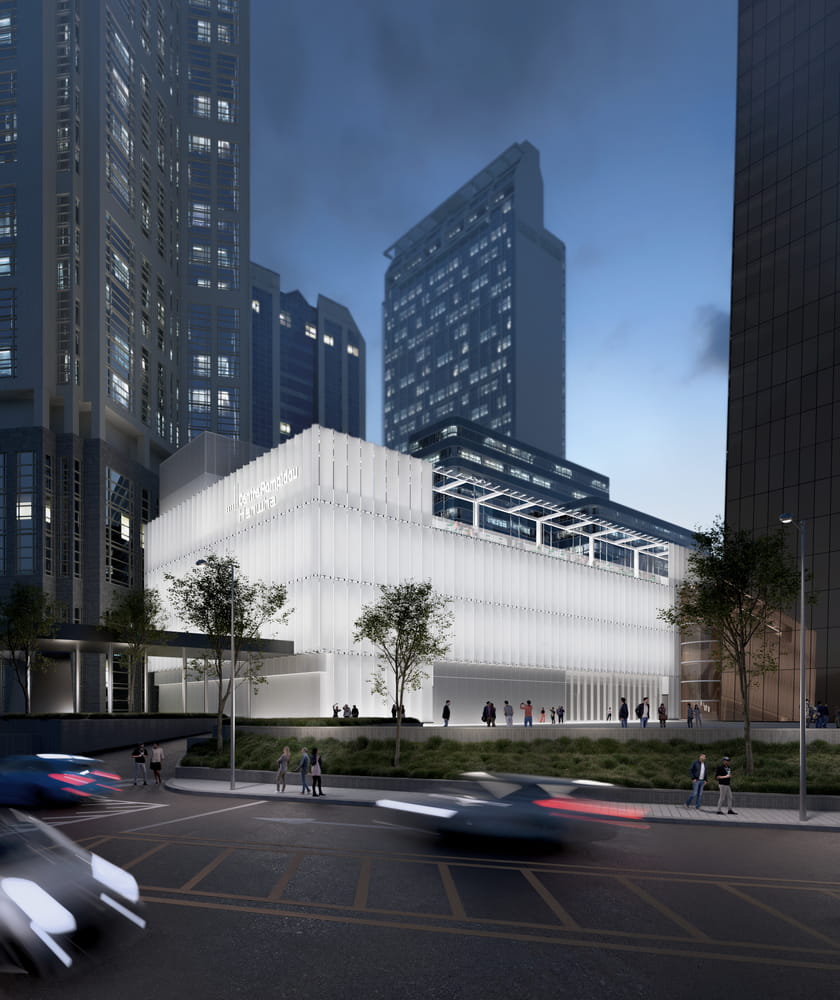
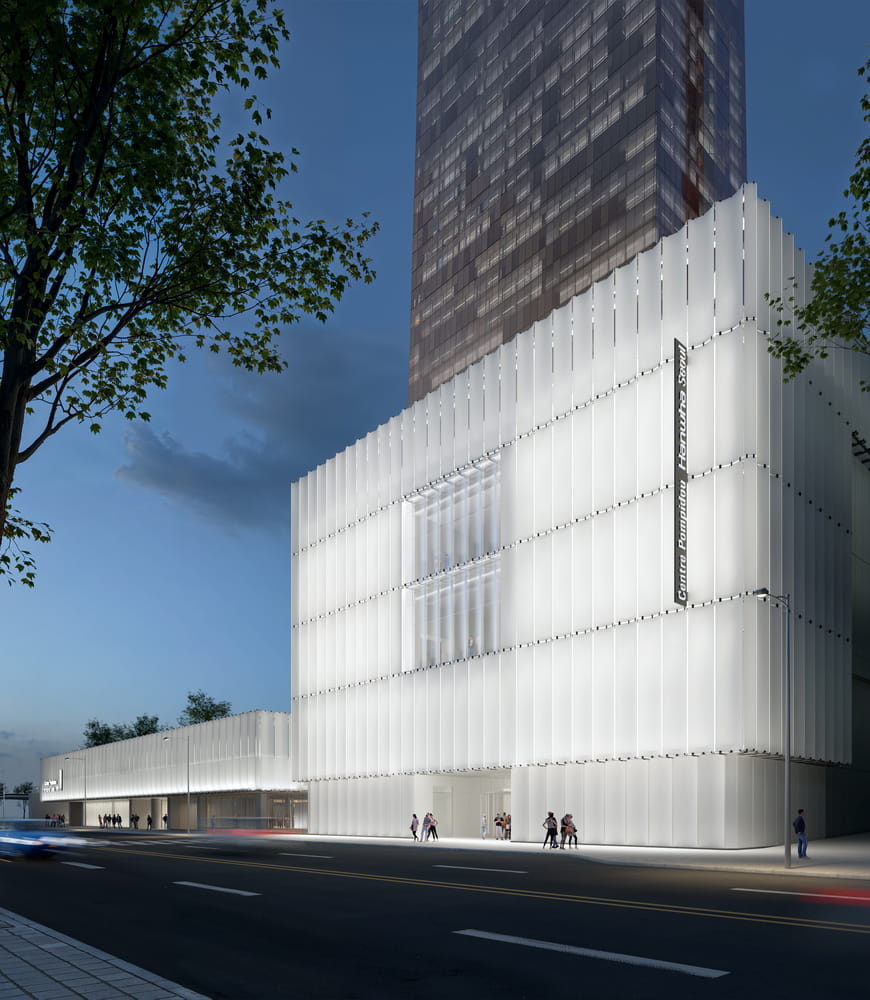
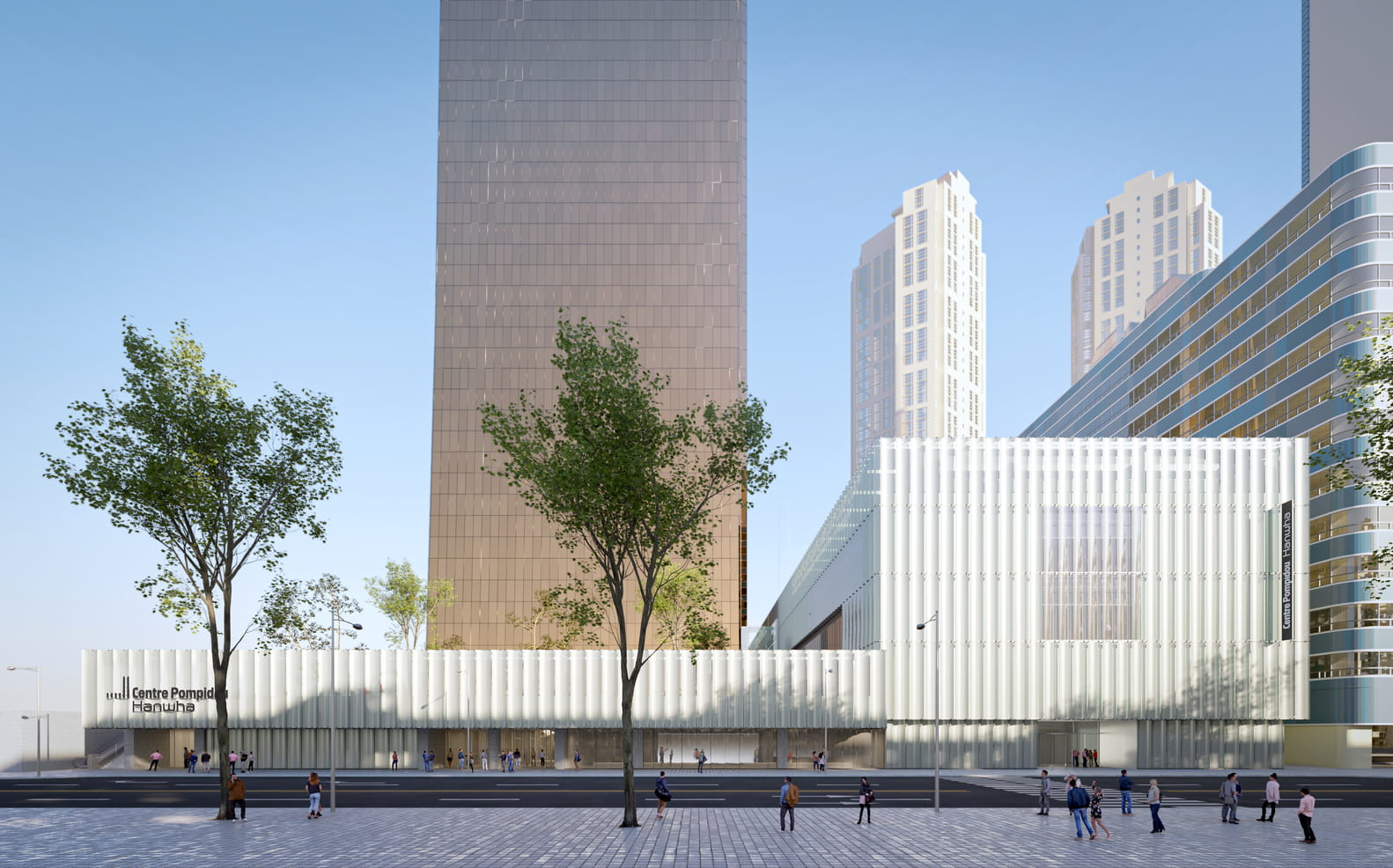
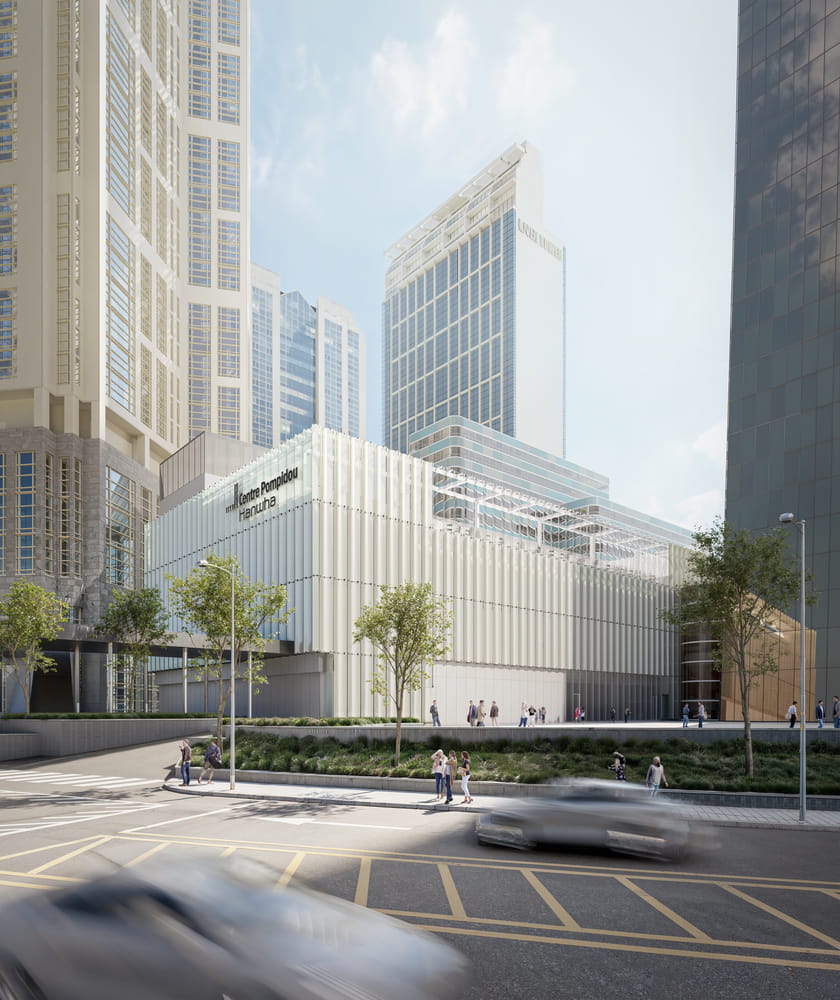
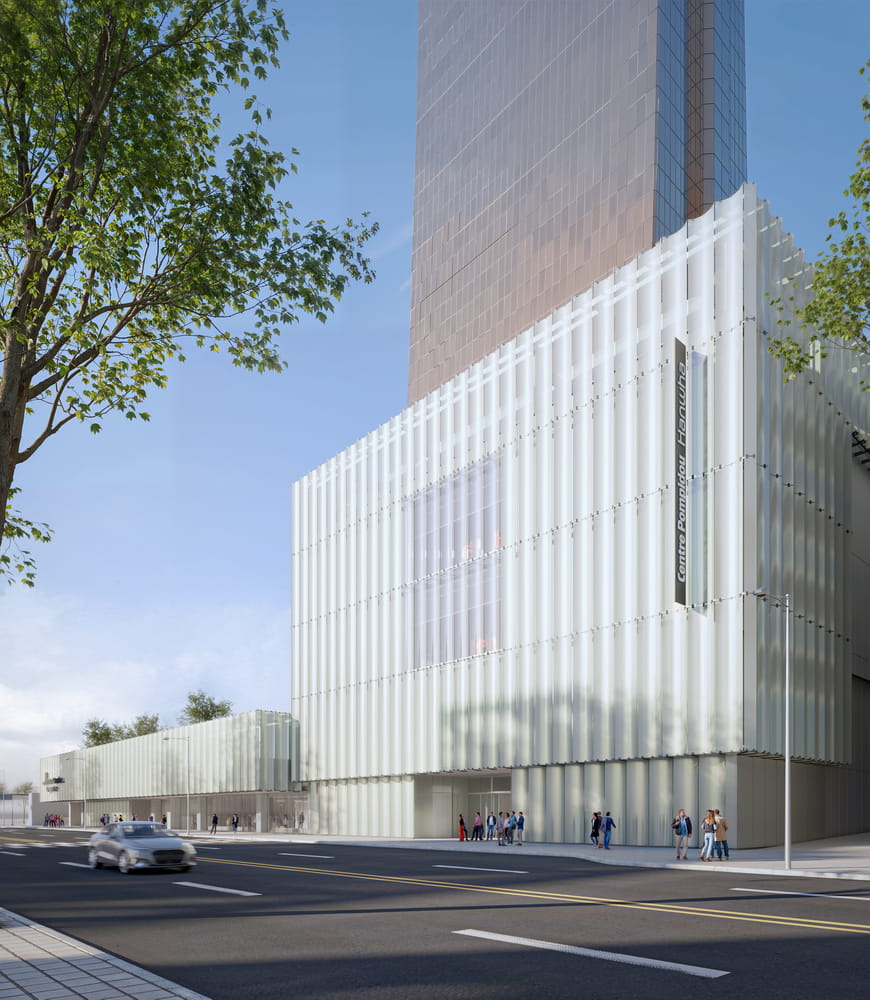
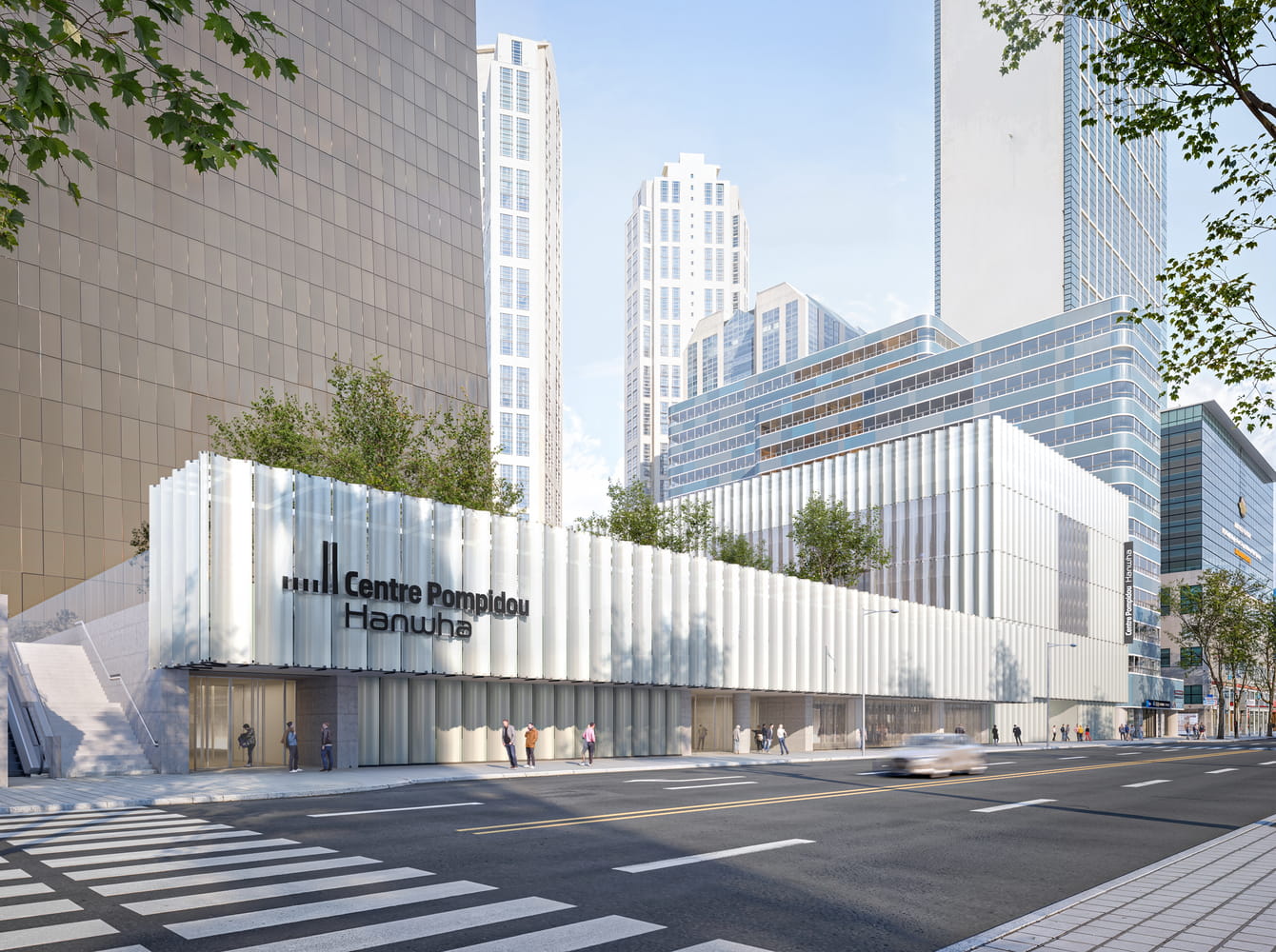
Table of Contents Show
Centre Pompidou expands to Seoul on June 4, 2026 with the opening of Centre Pompidou Hanwha, an 11,000 square meter museum designed by Wilmotte & Associés at the base of the iconic 63 Building in Yeouido. The new satellite venue marks the 140th anniversary of diplomatic relations between France and South Korea.
The news that Centre Pompidou expands to Seoul represents one of the most significant cultural architecture announcements of 2026. Following partnership agreements signed in 2023 between the Centre Pompidou and the Hanwha Foundation of Culture, the French institution has reimagined a former aquarium space at the base of Seoul’s 63 Building as a translucent “box of light” that will host two major exhibitions per year drawn from the collection of the Musée national d’art moderne in Paris.
This expansion arrives during a carefully planned transitional period for the Paris flagship, which closed on September 22, 2025 for a five-year renovation led by Moreau Kusunoki and Frida Escobedo Studio. The Seoul outpost joins a growing international constellation of Centre Pompidou venues that now spans Spain, Belgium, China, and the United Arab Emirates.
A Partnership Rooted in Diplomatic History
The agreement that led Centre Pompidou to expand to Seoul was signed in 2023 under the joint auspices of the French Ministry of Culture and the Ministry of Foreign Affairs. French President Emmanuel Macron visited the site on April 3, 2026, accompanied by Minister of Culture Catherine Pégard and Centre Pompidou President Laurent Le Bon, in a highly publicized state visit that confirmed the political significance of the project.
The timing of the opening is no accident. June 4, 2026 falls within the year marking the 140th anniversary of diplomatic relations between France and South Korea, making the museum both a cultural institution and a symbol of bilateral friendship. Laurent Le Bon has described the international dimension as essential to the Centre Pompidou’s identity, positioning the Seoul venue as an opportunity for exchange with new audiences and the Korean cultural scene.
The partner on the ground is the Hanwha Foundation of Culture, the philanthropic arm of the Hanwha Group, one of South Korea’s largest conglomerates. Sungsoo Lee, president of the Hanwha Foundation of Culture, has framed the project as a place where art, technology, and the future converge in the daily life of Seoul.
💡 Pro Tip
When studying international museum partnerships like Centre Pompidou Hanwha, pay attention to the contractual duration and exhibition rotation schedule. The current agreement covers four years with two monographic exhibitions per year, meaning curatorial programming is locked in through 2030. This structure shapes how architects must design flexible gallery systems that can handle eight distinct exhibition installs without heavy reconstruction between shows.
The 63 Building: A Cultural Home in a Financial Landmark
The choice of the 63 Building as the home for Centre Pompidou Hanwha carries substantial symbolic weight. Completed in 1985 on Yeouido Island along the Han River, the 249.6-meter skyscraper was the tallest building in Asia at the time of its opening and remained South Korea’s tallest structure for 18 years. Designed by the American firm Skidmore, Owings & Merrill in collaboration with Korean architect Park Choon-myeong, the tower was built as a landmark for the 1988 Seoul Olympic Games and became an enduring symbol of South Korea’s industrialization and economic rise.
The building is known globally for its golden-tinted glass facade, composed of more than 13,500 panes coated with a thin film of 24-carat gold that shifts in color throughout the day. It currently serves as the headquarters of Hanwha Life Insurance and other major financial companies, anchoring the Yeouido financial district that is often called Seoul’s Manhattan.
The museum occupies the podium spaces at the tower’s base that were previously used for conferences, exhibitions, weddings, and events, including the Aqua Planet 63 aquarium and the 63 Art observatory, both of which closed permanently on June 30, 2024. Transforming these former leisure spaces into a museum is a clear example of cultural repurposing within a commercial landmark, a strategy that is gaining traction globally and aligns with wider trends in adaptive reuse architecture.
Quick Facts About the 63 Building
| Feature | Detail |
|---|---|
| Completion Year | 1985 |
| Height | 249.6 meters (60 floors above ground, 3 below) |
| Original Architects | Skidmore, Owings & Merrill with Park Choon-myeong |
| Current Owner | Hanwha Group (since 2002) |
| Facade | Over 13,500 gold-coated glass panes |
| New Cultural Anchor | Centre Pompidou Hanwha (opening June 4, 2026) |
Wilmotte & Associés: The Architects Behind the Transformation
The architectural transformation has been entrusted to Wilmotte & Associés, the Paris-based firm founded by Jean-Michel Wilmotte in 1975. Born in 1948 in Soissons, France, Wilmotte graduated from the Camondo school of interior design and has built a career that spans architecture, interior design, museography, urban planning, and industrial design. He became a member of the Académie des Beaux-Arts in 2015.
The firm operates offices in France, the United Kingdom, Italy, Senegal, and South Korea, and currently manages more than 100 projects across 23 countries. It entered the ranking of the world’s 100 largest architecture firms in 2010 and sat at 52nd place in 2023.
Wilmotte’s portfolio in museography is particularly relevant to the Seoul commission. His studio has worked on the interior spaces of major cultural institutions including the Musée d’Orsay and the Louvre in Paris, the Punta della Dogana in Venice (where he staged Damien Hirst’s 2017 exhibition within Tadao Ando’s renovated shell), and the Bunkamura cultural center in Tokyo, one of his early Asian projects. He was also responsible for work at the Museum of Islamic Art in Doha and Incheon International Airport near Seoul, giving him direct experience with Korean design culture.
🎓 Expert Insight
“I am not a specialist, I don’t want to get locked inside a specialisation: I like to be there where I am least expected.” — Jean-Michel Wilmotte, founder of Wilmotte & Associés
This design philosophy of refusing specialization helps explain why Wilmotte’s studio was selected for the Seoul project. The brief required a team equally capable of heritage restoration, museum-grade interior design, and contemporary facade innovation, a rare combination of skills that reflects the firm’s multidisciplinary ethos.
An “Architecture of Subtraction” Inside the Tower
Wilmotte’s approach to the Seoul project has been described as an “architecture of subtraction.” Rather than adding new mass or volume, the team has carved into the existing steel structure of the tower’s podium, removing elements to open up flexible exhibition spaces. This strategy preserves the structural identity of the 1985 skyscraper while creating museum-grade environments in what were previously closed, compartmentalized event halls.
The renovation is concentrated across five levels of the building’s base and spans the full 150-meter width of the site. A new lobby organized around a large lightwell welcomes visitors with a powerful first impression, illuminating the interior and framing views toward a sculpture garden on the first floor. The garden is paired with a multifunctional space designed for events, encounters, and quieter moments of contemplation within the dense financial district.
On what the architects call the “promenade level,” visitors will find an auditorium and a double-height cafeteria designed to support educational programming. The fourth floor houses a restaurant and a private terrace with views of the Seoul skyline, integrating hospitality into the cultural experience in a way that mirrors the best practices of 21st-century museum architecture.
📐 Technical Note
The museum features two main exhibition galleries of approximately 1,500 square meters each. The spaces are arranged across four levels within an 11,000 square meter total footprint. The intervention focuses on podium levels rather than the tower core, which allows the 60-story office functions of the 63 Building to continue uninterrupted during and after the conversion.
The Facade: A Box of Light Above the Han River
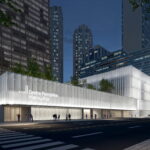
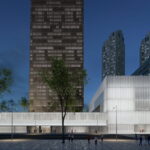
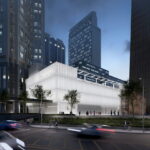
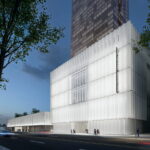
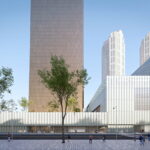
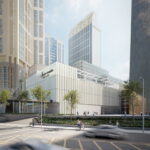
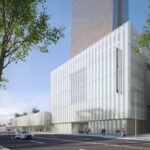
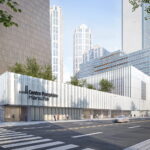
The most visible architectural gesture of the new Centre Pompidou Seoul is its facade. Wilmotte & Associés has enveloped the existing structure in a double-glazed translucent envelope that the architects describe as a “box of light.” During the day, the facade filters natural daylight into the galleries. At night, backlighting transforms the 150-meter-long glass wall into a horizontal luminous signal that can be seen from across the Han River.
The facade panels are gently curved, referencing traditional Korean roof tiles in a subtle dialogue between local heritage and contemporary architectural language. This contextual response is a hallmark of Wilmotte’s work, which consistently seeks to root international projects in the cultural specificity of their setting.
The contrast is intentional and effective. The verticality of the golden 63 Building is answered by a horizontal band of soft, diffused light at its base, creating a new urban rhythm within Yeouido. The result is both a museum and an urban landmark, visible to commuters, residents, and tourists alike.
Interior Materials and Spatial Continuity
Inside the galleries and public spaces, Wilmotte has specified a restrained material palette anchored by grey limestone and light-grey terrazzo, which form the structural backbone of the interior. Curved translucent glass is used along the circulation routes, extending the logic of the facade into the interior experience. The interplay of daylight and diffused artificial light reinforces spatial continuity and supports a symmetrical composition that unifies the five levels of the museum.
What Will Visitors See? The Exhibition Program
The curatorial program for Centre Pompidou Hanwha has been structured around a four-year agreement that will bring eight major exhibitions to Seoul, two per year, drawn primarily from the Musée national d’art moderne collection in Paris. Each exhibition will occupy approximately 1,500 square meters and will be co-curated by French and Korean teams.
The inaugural exhibition, announced by the Centre Pompidou, is “The Cubists: Inventing Modern Vision,” which traces the international impact of Cubism through works from the Paris collection. The 2026 to 2027 season will also feature monographic exhibitions dedicated to Marc Chagall, Wassily Kandinsky, Henri Matisse, and the Fauvist movement. Subsequent years will focus on Surrealism, abstract art, and a particular emphasis on women artists. The museum will also host the first major retrospective in Korea dedicated to Constantin Brancusi.
Beyond the main exhibitions, a second gallery will rotate contemporary Korean artists, while a dedicated educational space has been designed for younger visitors to explore and interact with works of art. This dual focus on international canonical art and local contemporary practice follows the template that has shaped Centre Pompidou’s earlier satellite venues.
⚠️ Common Mistake to Avoid
Many observers assume that the Centre Pompidou Hanwha is a permanent branch of the Paris museum like the Louvre Abu Dhabi. It is not. The current agreement is a four-year cultural partnership with the Hanwha Foundation of Culture, not a long-term brand licensing arrangement. The distinction matters because it defines how long the Pompidou collection will be present in Seoul and the conditions under which the partnership could be renewed or concluded.
Centre Pompidou’s Global Constellation
The decision that Centre Pompidou expands to Seoul fits within a broader international strategy the institution has named “Constellation.” The Paris flagship, designed by Renzo Piano and Richard Rogers and opened in 1977, closed for renovation in September 2025 and will remain closed through approximately 2030. During this period, the Constellation program keeps the collection in active circulation through partner venues in France and abroad.
The international venues now include Centre Pompidou Málaga in Spain, Centre Pompidou West Bund in Shanghai, a partner museum in AlUla, Saudi Arabia, and the upcoming KANAL-Centre Pompidou in Brussels (expected to complete in November 2026). A partner museum for Brazil is also in development. A planned Centre Pompidou x Jersey City project designed by OMA was recently cancelled after prolonged negotiations.
Centre Pompidou International Venues
| Venue | Location | Status |
|---|---|---|
| Centre Pompidou Paris | Paris, France | Under renovation until 2030 |
| Centre Pompidou-Metz | Metz, France | Open (Shigeru Ban, 2010) |
| Centre Pompidou Málaga | Málaga, Spain | Open (since 2015) |
| Centre Pompidou West Bund | Shanghai, China | Open (since 2019) |
| Centre Pompidou Hanwha | Seoul, South Korea | Opening June 4, 2026 |
| KANAL-Centre Pompidou | Brussels, Belgium | Expected November 2026 |
How Does the Seoul Project Relate to Other Cultural Buildings in the City?
Seoul has built one of the most dynamic cultural landscapes in Asia over the past decade. The arrival of Centre Pompidou Hanwha adds to a growing ecosystem that includes the Leeum Museum of Art, the National Museum of Modern and Contemporary Art (MMCA), the Amorepacific Museum of Art designed by David Chipperfield, and the recently opened Seoul Robot & AI Museum designed by Melike Altınışık Architects.
Yeouido itself has been repositioning as a cultural destination, with the Seoul International Finance Center, Park One Towers, and the 2020 overhaul of the Yeouido Hangang Park transforming the island from a purely financial district into a mixed-use waterfront neighborhood. The addition of a major European modern art institution at the base of one of Seoul’s most recognizable towers accelerates this shift in a way that few other projects could.
Video: The Paris Pompidou Closes for Renovation
The Seoul expansion takes on special meaning given the simultaneous closure of the Paris flagship. This France 24 report provides context on the scope of the Paris renovation and how the Constellation program, including the Seoul venue, will keep the collection accessible to the public during the five-year closure.
Why Does the Seoul Expansion Matter for Architecture?
The Centre Pompidou Hanwha project carries broader significance for the architecture field beyond its immediate cultural programming. It represents a sophisticated case study in several trends that are reshaping contemporary museum architecture.
First, the project demonstrates how major cultural institutions can embed themselves within existing commercial skyscrapers rather than occupying standalone iconic buildings. This “museum as tenant” model reduces embodied carbon, preserves urban fabric, and creates interesting adjacencies between commerce and culture. Second, the “box of light” facade strategy offers a masterclass in how to insert a contemporary architectural identity into an older host building without dominating or erasing it.
Third, the project reflects a mature approach to international cultural partnerships. Unlike the Louvre Abu Dhabi, which created a new building from scratch with a thirty-year brand licensing agreement, the Pompidou Hanwha model uses an existing structure and a shorter-term curatorial partnership, a more flexible and arguably more sustainable approach to global museum expansion.
📌 Did You Know?
Wilmotte & Associés is also behind the interior architecture of the Grand Paris Express metro stations, one of the largest public infrastructure projects in Europe. This dual capacity, working on intimate museum interiors and large-scale urban infrastructure at the same time, is part of what positioned the firm to handle the complex brief of inserting a world-class museum inside a functioning office tower in Seoul.
Key Considerations for Visitors
Centre Pompidou Hanwha is scheduled to open to the public on June 4, 2026. The museum is located at 50 63-ro, Yeouido-dong, Yeongdeungpo-gu, Seoul, inside the 63 Building complex. Access is straightforward from central Seoul via subway Line 5 (Yeouinaru or Yeouido stations) or via the Han River ferry services that stop at Yeouido.
For architecture students and professionals, the site offers a rare opportunity to study a contemporary adaptive reuse project in real time. The combination of a 1985 modernist skyscraper, a 2026 contemporary facade intervention, and the curated French modern art collection inside creates a layered architectural experience that few museums can match. The building itself becomes a case study in how contemporary museum architecture can work with, rather than against, existing structures.
✅ Key Takeaways
- Centre Pompidou Hanwha opens in Seoul on June 4, 2026, marking the 140th anniversary of France-Korea diplomatic relations.
- The 11,000 square meter museum occupies the base of the 63 Building, a 1985 landmark designed by Skidmore, Owings & Merrill.
- Wilmotte & Associés leads the renovation, using an “architecture of subtraction” strategy that carves flexible galleries from the existing steel structure.
- The signature element is a 150-meter-long translucent glass facade, curved to reference traditional Korean roof tiles, that lights up the Han River waterfront at night.
- The partnership with the Hanwha Foundation of Culture covers four years of programming with eight major exhibitions drawn from the Paris Musée national d’art moderne.
- The project is part of Centre Pompidou’s Constellation international strategy, which keeps the collection in circulation during the 2025-2030 renovation of the Paris flagship.
Final Thoughts
The announcement that Centre Pompidou expands to Seoul with the new Hanwha Center designed by Wilmotte & Associés marks more than the opening of another satellite venue. It represents a careful convergence of diplomatic ambition, architectural intelligence, and curatorial strategy at a moment when the Paris flagship is undergoing its most significant transformation in nearly half a century.
The project invites a rethinking of what museum architecture can be in the second quarter of the 21st century: less about creating new iconic volumes, more about threading cultural institutions through the existing fabric of cities. By inserting a world-class modern art museum inside a golden 1985 skyscraper that already anchors the Seoul skyline, Wilmotte & Associés has produced a building that is both respectful of heritage and forward-looking in its public presence.
For Seoul, the museum adds a major European cultural voice to an already rich urban landscape. For the Centre Pompidou, it confirms that the institution’s ambition to operate as a global network of spaces, rather than a single Parisian monument, is entering a new and mature phase. When the doors open on June 4, 2026, visitors will walk into both a major modern art collection and a significant work of contemporary architecture.




Groupwork Completes 10-Storey Loadbearing Granite Flats in London
Groupwork's Petra Heights on Finchley Road is a 10-storey block of 22...
 illustrarch Editoral Team2 Mins read
Ai Weiwei Installs 500 Cast-Iron Helmets Outside Sydney Museum
Ai Weiwei's 500 cast-iron helmets opened outside Sydney's MCA on 25 September,...
illustrarch Editoral Team2 Mins read
Isamu Noguchi at Lever House Traces Sculptor’s Decades-Long Collaboration with Bunshaft
Lever House's new exhibition pairs Noguchi sculptures with unbuilt garden designs made...
illustrarch Editoral Team2 Mins read
Relocated Maya Structures at Mexico’s Balam Tun Memory Park Face Legal Challenge
INAH archaeologists have filed a complaint against 26 officials over Balam Tun...
illustrarch Editoral Team2 Mins read


Leave a comment