

Top AI Tools Transforming Architectural Design Workflows in 2026
The leading AI tools for architectural design in 2026 span four core workflow stages: concept generation, site analysis, rendering, and BIM automation. This breakdown covers the most adopted platforms, what each one does well, and how professional firms are combining them to cut project timelines without sacrificing output quality.
 Sinan Ozen20 April 20268 Mins read392
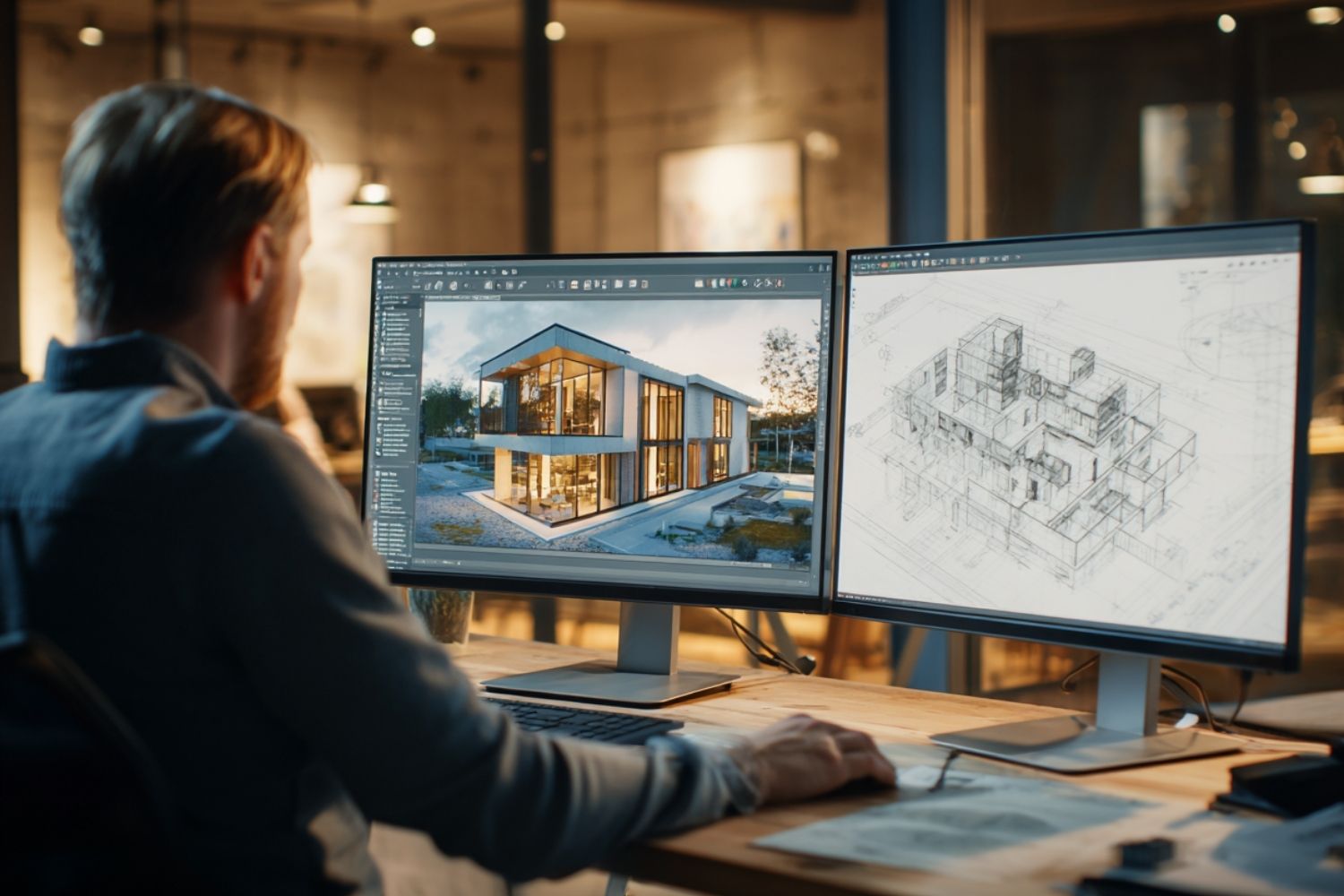
Table of Contents Show
AI tools for architectural design have moved well past the experimental stage. In 2026, they are embedded across the full project lifecycle, from early massing studies and site feasibility checks to photorealistic client renders and BIM coordination. This breakdown covers the most useful platforms by workflow stage, with a clear look at what each one actually does and where it fits in a professional practice. For the most extensive platform-by-platform list, the 26 best AI architectural rendering tools in 2026 covers the full range from general image generators to architecture-specific engines.
Why AI Architecture Design Tools Are Moving Into Everyday Practice
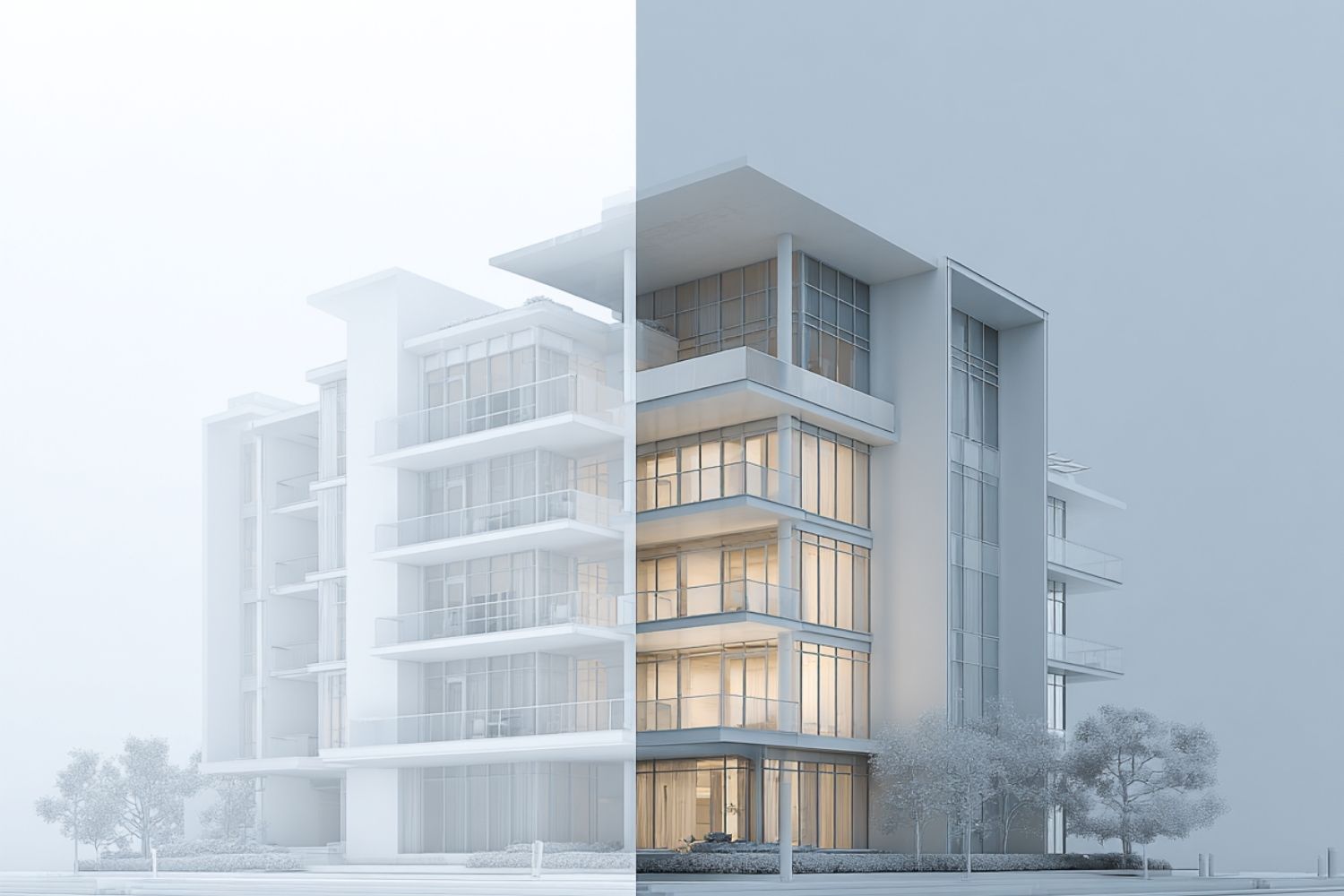
The numbers make a strong case. According to a 2025 survey of nearly 800 architecture professionals conducted by Chaos and Architizer, 64% of respondents have already experimented with AI tools, and depending on how much they use AI today, between 73% and 93% plan to increase their use in the coming year.
Those figures have translated into measurable output changes. AI rendering platforms can return a first image in minutes rather than the hours a traditional render setup takes, and parts of the documentation workload are being automated. The tools covering the widest ground share a few common traits: they integrate with software firms already use, they produce outputs architects can actually hand to clients, and they do not require a dedicated visualization specialist to operate.
🔢 Quick Numbers
- 86% of architects who use AI tools say AI saves time or speeds up their workflow (Chaos and Architizer survey, via ArchDaily)
- The generative AI in architecture market was valued at $1.48 billion in 2025 and is projected to reach $5.85 billion by 2029, growing at 41.1% annually (The Business Research Company, 2025)
What Makes a Good AI Architectural Design Tool in 2026?
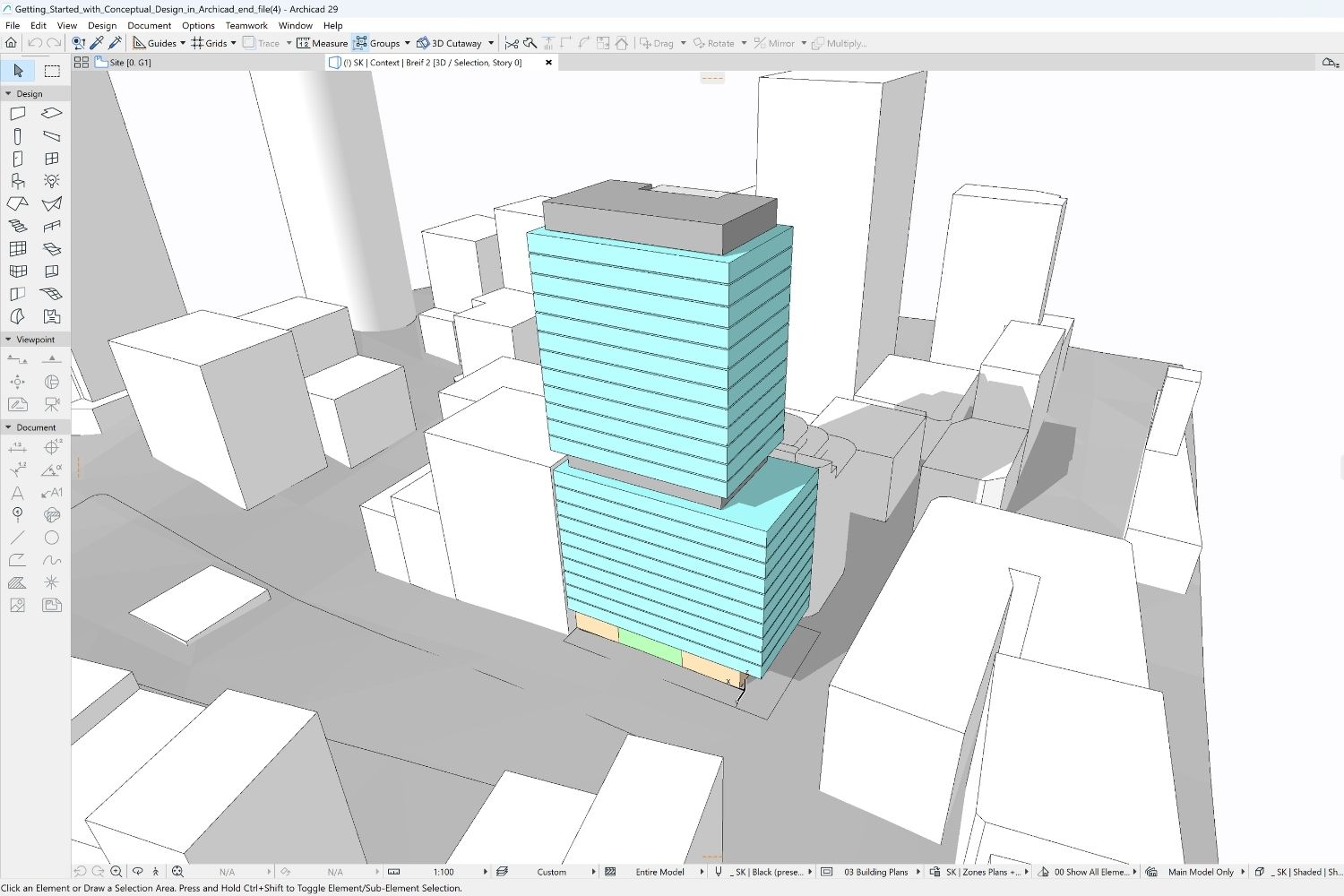
Not every platform marketed as “AI-powered” delivers measurable value. The tools that consistently make it into professional workflows share several qualities. First, they accept input from software architects already use daily, such as Revit, Rhino, SketchUp, or ArchiCAD, rather than requiring a full re-export process. Second, they offer enough output control that architects can guide results toward a specific design intent, not just generate random variations. Third, they produce files or images architects can use directly in client presentations or permit submissions without significant rework. RIBA Journal has published ongoing analysis of how UK and international firms are evaluating exactly these criteria when selecting platforms.
The market has also segmented clearly by workflow phase. Tools that serve early concept generation are different from those that handle BIM coordination, which are in turn different from rendering platforms. Using the right tool at the right phase is where most of the time savings actually come from. For a broader look at software across all design stages, the best architecture tools of 2026 overview covers both AI and non-AI platforms in detail.
💡 Pro Tip
Before committing to any AI platform, run a short pilot on a live project rather than a test file. Most tools look capable in demo conditions but behave differently with real geometry, real material requirements, and a client deadline attached. A two-week pilot on a schematic design phase will reveal integration gaps that a product walkthrough never will.
AI Architectural Rendering Tools: Speed and Visual Output
Rendering is where AI architectural tools first gained serious traction, and it remains the category with the deepest market development. The core use case is the same across all platforms: take a 3D model or sketch and return a photorealistic image in seconds rather than hours.
Archfine AI has become one of the most architecture-specific platforms in this category. Its workflow is designed to accept rough Rhino massing models, SketchUp exports, or low-resolution site photos and return photorealistic interior and exterior renders within seconds. The platform’s ability to maintain spatial proportion and material consistency through rapid iterations makes it particularly useful during client review meetings, where multiple design directions need to be visualized in real time. You can explore it directly at app.archfine.com.
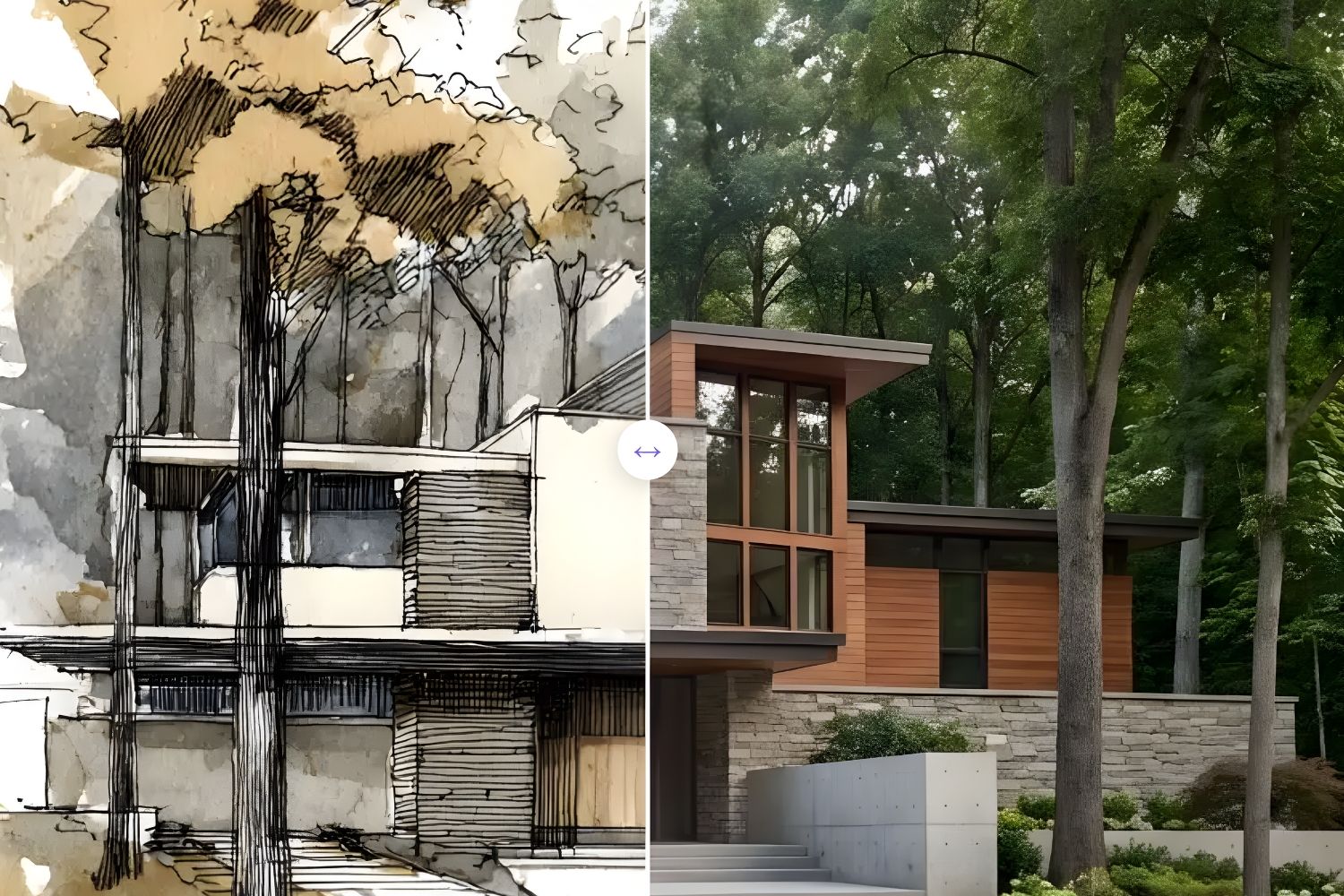
Veras by EvolveLAB takes a different approach by working as a plugin directly inside Revit, SketchUp, Rhino, Vectorworks, ArchiCAD, Forma, and AllPlan. This means architects generate AI renders from their live model without exporting to a separate tool. The Geometry Override slider controls how far the AI is allowed to depart from the original geometry, which gives firms the ability to balance creative interpretation with technical accuracy. For Revit-heavy practices, this is the most friction-free option currently available.
D5 Render adds real-time ray tracing to AI-assisted visualization. Its 2026 update includes automated lighting suggestions and cloud rendering, which removes the hardware bottleneck for smaller studios. It is particularly effective for producing cinematic exterior walkthroughs and is widely used in competition entries where visual impact carries significant weight.
For a detailed comparison of these and other platforms, the AI render tools vs traditional rendering breakdown on illustrarch covers real time savings, cost differences, and hybrid workflow strategies used by firms in 2026.
🏗️ Real-World Example
Foster + Partners (Global, ongoing): The firm has publicly discussed using generative AI to automate design iterations and analyze structural behaviors across its global project teams. By integrating AI tools into early-stage design exploration, the studio has been able to evaluate hundreds of massing configurations against environmental performance data before committing to a direction, a process that previously required weeks of manual modeling and analysis.
AI Architecture Design Tools for Concept Generation and Site Analysis
Before a single render is produced, architects make their most consequential decisions: site orientation, massing, program distribution, and environmental performance targets. AI tools for this phase are less about visual output and more about processing large datasets quickly enough to inform design choices early.
Autodesk Forma (formerly Spacemaker) is the most widely adopted platform in this category among professional firms. It runs directly in the browser, connects with Revit for downstream handoff, and is included in the AEC Collection for existing subscribers. Its site analysis capabilities include daylight simulation, wind analysis, noise mapping, and density optimization, all produced fast enough to test alternatives during a design meeting rather than waiting for a specialist report. For teams already in the Autodesk ecosystem, the full scope of AI-integrated tools is covered on the Autodesk architecture solutions page.
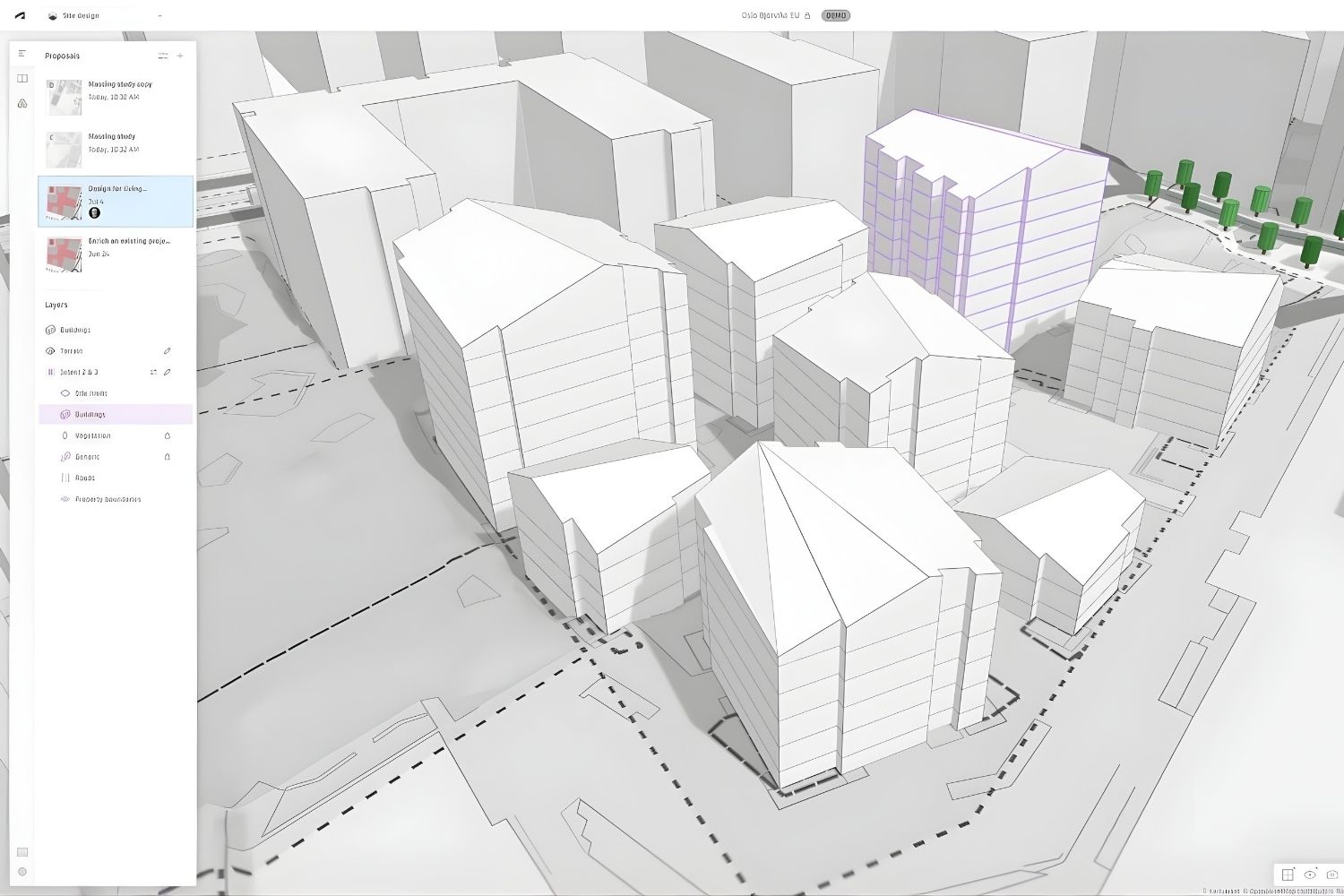
TestFit focuses on building feasibility for residential, hotel, and commercial typologies. Input a site boundary, zoning constraints, unit mix, and parking ratios, and it returns complete building massings with unit counts and pro forma metrics in real time. For development-driven projects where financial feasibility shapes design decisions early, this is the tool that collapses what used to be weeks of iteration into a single session.
For a deeper look at how these tools change the early-stage workflow, the article on Revit vs AI masterplan tools covers the specific decision points firms are navigating in 2026.
⚠️ Common Mistake to Avoid
Many architects treat AI concept tools as presentation generators rather than design decision tools. Running a site analysis in Autodesk Forma at the end of schematic design to validate a direction already committed to is far less valuable than running it at the beginning to inform which direction to pursue. The time savings come from using these tools before design decisions are locked in, not after.
AI Architectural Drawing and BIM Automation Tools
The documentation phase consumes a disproportionate share of architectural labor. AI drawing and BIM tools are targeting this directly, automating coordination checks, updating dependent views, and drafting outline specifications from brief data.
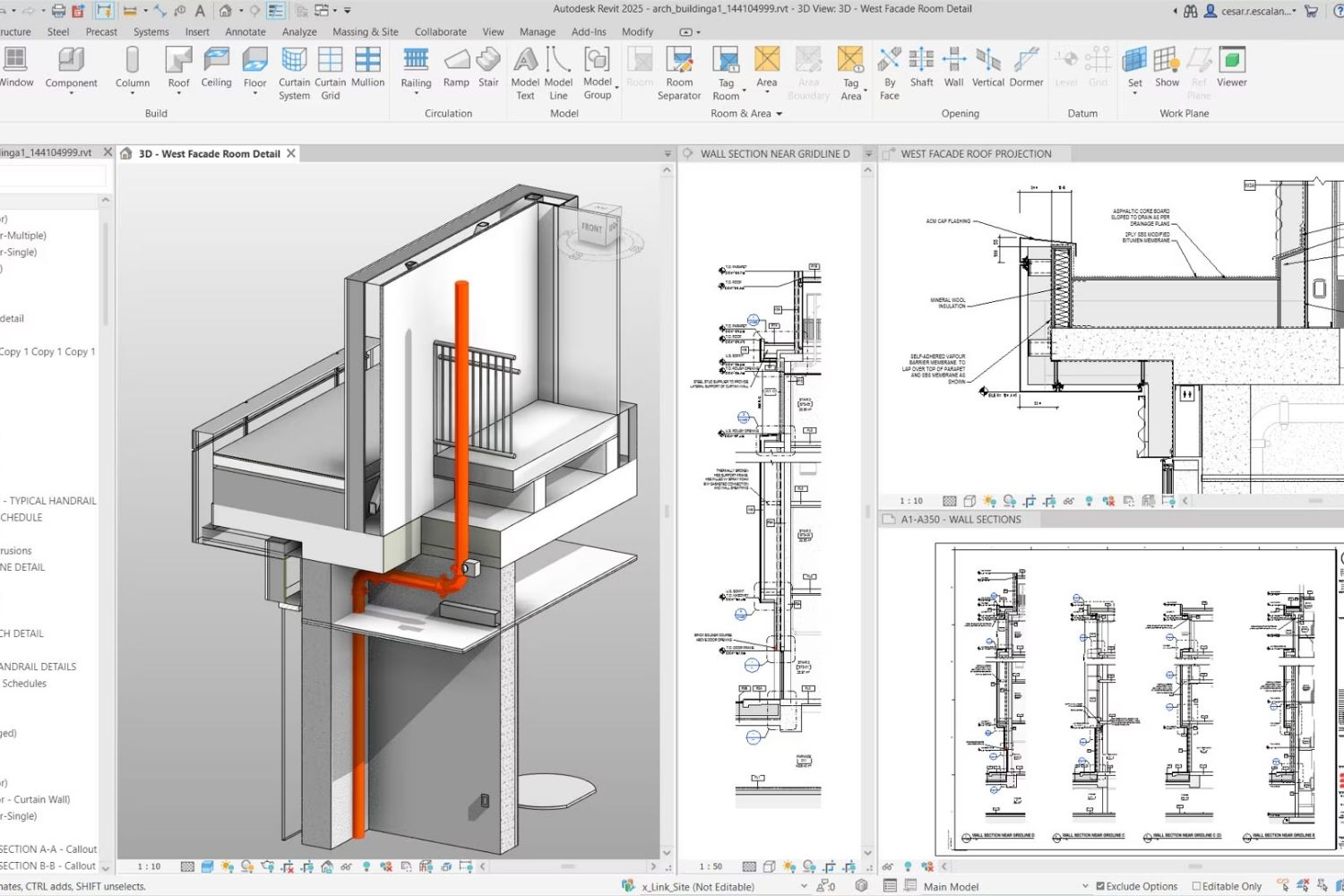
Within Revit and ArchiCAD, machine-learning components now flag coordination errors, suggest clash resolutions, and update linked views automatically when design elements change. The practical impact varies by firm size. Larger practices running multi-disciplinary coordination across dozens of linked models see the largest gains. Smaller studios benefit most from the specification drafting assistance, where AI tools trained on architectural data can produce a first draft of an outline spec in minutes rather than half a day.
UpCodes addresses one of the most time-intensive early-phase tasks in documentation: code research. By indexing building codes across jurisdictions and flagging compliance issues against uploaded drawings, it reduces research time significantly. The tool is particularly useful during schematic design, where catching a zoning conflict or an egress issue early is far less costly than discovering it during permit review.
For firms curious about how AI tools are cutting time across all these phases, the guide to AI tools that save 10+ hours per week in architecture breaks down the specific workflows with practical examples.
💡 Pro Tip
When using AI for BIM automation inside Revit, always set up a clearly named “AI output” file layer before running any batch automation. This keeps AI-generated updates isolated from manually authored content, so you can review and accept changes selectively rather than accepting all modifications at once. Experienced BIM managers report this simple step prevents the majority of coordination errors when mixing AI output with manually detailed drawings.
How Architects Are Combining AI Tools Across the Full Workflow
The firms seeing the most consistent time savings are not using a single AI architecture tool in isolation. They are building layered workflows where each tool covers a specific phase and hands off to the next. A pattern that has emerged across mid-size practices in 2026 looks roughly like this: Autodesk Forma or TestFit for early feasibility, Midjourney or a sketch-to-render AI for initial concept communication with clients, Veras or Archfine for design development renders, and AI-enhanced Revit for documentation and coordination.
The key is treating AI tools as phase-specific assets rather than general-purpose platforms. Midjourney is excellent for generating emotionally resonant concept imagery from text prompts, but it cannot replace geometry-accurate renders for permit submissions. Veras is strong inside Revit workflows, but it requires an existing 3D model to work from. Matching the tool to the design phase is where the time savings compound.
Adobe Firefly, now integrated with Photoshop, has also become a useful final-pass tool. After a primary render is produced in D5 or Lumion, Firefly handles color grading, sky replacement, and atmospheric refinements without requiring a full re-render. This hybrid approach, covered in more detail in the Photoshop vs AI rendering comparison, is how many studios are maintaining output quality while cutting total visualization hours.
For practices specifically focused on generative design and diagramming, AI-generated architecture diagrams have also become a practical time-saver for circulation studies, spatial hierarchy maps, and BIM coordination documents.
🎓 Expert Insight
“AI has had an influence in all areas of architectural practice. These tools enhance design speed, breadth of ideas proposed, and the quality of visualization.”
Indrit Alushani, Research Associate and Lecturer, University of Miami School of Architecture
Alushani’s observation reflects what leading schools are now teaching as standard practice: AI is not one tool but a set of capabilities layered across the design process, from rapid concept generation to photorealistic visualization and 3D prototyping from real-world site constraints.
What to Expect as These Tools Continue Developing
The current generation of AI architecture design tools has made significant progress, but the integration gaps are still real. Commonly cited limitations include inconsistent output quality when input geometry is under-defined, integration barriers when switching between different software ecosystems, and the learning curve involved in writing effective prompts for image generation tools.
According to the Chaos and Architizer 2025 survey, most architects who use AI are at least somewhat satisfied with the results, and firms that have fully integrated AI report the highest satisfaction. Later-stage deliverables that require geometric accuracy and material precision are where current tools are least proven, and that is the clearest signal about where the technology is still maturing and where traditional rendering and documentation workflows will remain necessary for the foreseeable future.
The trajectory points toward AI tools taking on more of the documentation phase over the next few years, with compliance checking, specification drafting, and coordination automation as the primary development areas. For architects building their tool stack now, the most durable choice is to start with the phases where AI already reliably saves time (concept visualization and early-stage site analysis) and layer in documentation tools as they mature.
✅ Key Takeaways
- 64% of architects surveyed have already experimented with AI tools, and between 73% and 93% plan to expand their use in the coming year (Chaos and Architizer, 2025).
- The biggest time savings come from matching the right tool to the right phase: site analysis and feasibility tools early, rendering AI during design development, and BIM automation for documentation.
- Rendering tools like Archfine AI, Veras, and D5 Render each serve different workflow contexts, the correct choice depends on your existing modeling software and output requirements, not brand preference.
- AI tools still underperform traditional rendering and documentation methods for late-stage deliverables requiring geometric precision; hybrid workflows remain the most reliable approach for client-facing and permit-ready outputs.
- AI architectural drawing and BIM automation tools are the fastest-developing category right now, targeting the documentation phase where architects currently spend the most non-design time.





Seedance 3.0 for Home and Garden Concepts: Making a Renovation Story Easier to Discuss
Seedance 3.0 can turn a renovation idea into a short concept video....
 illustrarch Editoral Team5 Mins read

From SketchUp View to Client-Ready Render: A Hands-On Look at Vizbase
Vizbase co-founder Mikus Zarāns shows how the browser-based AI renderer turns SketchUp...
illustrarch Editoral Team4 Mins read

Best AI Interview Assistant for Architects: 9 Tools Compared
We compare nine AI interview assistants for architects on speed, drawing awareness,...
illustrarch Editoral Team12 Mins read

OpenAI’s Astra Model Aims to Turn AI Into an Architecture Workflow Operator
OpenAI's Astra model, launched Sept. 3, 2026, runs multi-step tasks across software,...
illustrarch Editoral Team3 Mins read


Leave a comment