

Architecture Inside Out: How High-Tech Buildings Turned Structure Into Spectacle
From the Centre Pompidou in Paris to Norman Foster's HSBC tower in Hong Kong, inside out architecture reversed centuries of design convention by exposing a building's structural and mechanical systems on the exterior. This article examines five landmark projects, the architects behind them, and why the concept remains influential today.
 Furkan Sen19 June 20266 Mins read4

Table of Contents Show
What Is Inside Out Architecture?
Most buildings hide their working parts. Pipes run behind walls. Ducts sit above suspended ceilings. Elevators occupy a central core. The inside out architecture concept flips that logic entirely. Structural columns, air-handling ducts, water pipes, electrical conduits, staircases, and elevators are pulled to the outside of the envelope, where they become visible, accessible, and architecturally expressive. The practical benefit is significant. By removing services from the interior, architects can offer large, column-free floor plates that tenants or curators can reconfigure at will. Maintenance becomes easier, too, because engineers can reach mechanical equipment without tearing open walls. But the inside out architecture style also carries an ideological charge. It rejects the idea that a building should present a polished mask while concealing the machinery that keeps it alive. Instead, it treats technology as something worth celebrating.🎓 Expert Insight
“Whereas the frame of the building has a long life expectancy, the servant areas, filled with mechanical equipment, have a relatively short life. The servant equipment sits loosely in the tower framework, easily accessible for maintenance and replaceable in the case of obsolescence.” — Richard Rogers, Architect of Lloyd’s Building and Centre Pompidou
Rogers articulated a core principle behind inside out design architecture: separating long-life structure from short-life services so each can evolve independently. This thinking shaped every major high-tech project that followed.
Centre Pompidou Paris: The Building That Started It All
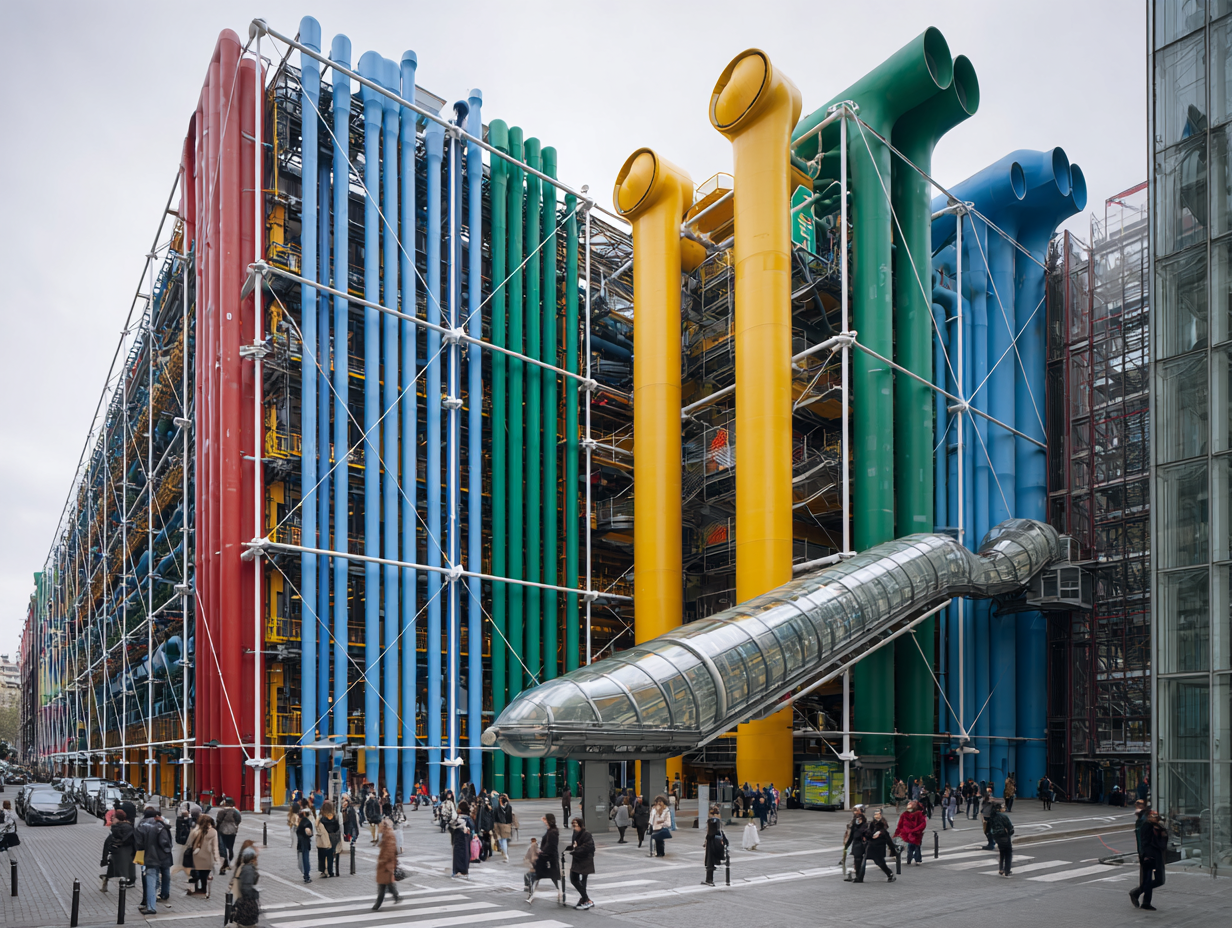 When the Centre Pompidou opened in Paris in 1977, critics called it everything from a refinery to a spaceship. Designed by Renzo Piano and Richard Rogers, the cultural center placed its entire skeleton on the outside. Structural steel gerberettes, cross-braced frames, and color-coded pipes wrap the facade: blue for air conditioning, green for plumbing, yellow for electrical wiring, and red for the famous exterior escalator tube.
The Centre Pompidou Paris was not just an architectural statement. It was a political one. Piano and Rogers wanted a public building that felt open rather than intimidating. By pushing all services outward, they created six storeys of completely flexible gallery space inside, a decision that allowed the Musee National d’Art Moderne to become Europe’s largest modern art museum. The surrounding piazza, slightly sloped to merge with the surrounding Beaubourg neighborhood, extended the building’s public character into the street. Nearly fifty years later, the Pompidou still draws over three million visitors annually.
When the Centre Pompidou opened in Paris in 1977, critics called it everything from a refinery to a spaceship. Designed by Renzo Piano and Richard Rogers, the cultural center placed its entire skeleton on the outside. Structural steel gerberettes, cross-braced frames, and color-coded pipes wrap the facade: blue for air conditioning, green for plumbing, yellow for electrical wiring, and red for the famous exterior escalator tube.
The Centre Pompidou Paris was not just an architectural statement. It was a political one. Piano and Rogers wanted a public building that felt open rather than intimidating. By pushing all services outward, they created six storeys of completely flexible gallery space inside, a decision that allowed the Musee National d’Art Moderne to become Europe’s largest modern art museum. The surrounding piazza, slightly sloped to merge with the surrounding Beaubourg neighborhood, extended the building’s public character into the street. Nearly fifty years later, the Pompidou still draws over three million visitors annually.
📌 Did You Know?
The design competition for the Centre Pompidou attracted 681 entries from architects around the world. The jury, which included Oscar Niemeyer and Philip Johnson, selected Piano and Rogers’ radical inside-out proposal. At the time, both architects were largely unknown.
Lloyd’s Building London: Rogers’ Second Inside-Out Masterpiece
Richard Rogers carried the inside out architecture concept further with the Lloyd’s Building in London, completed in 1986. Designed as headquarters for one of the world’s oldest insurance markets, the tower earned the nickname “the Inside-Out Building” almost immediately. Twelve external glass elevators, stainless-steel service towers, prefabricated toilet pods, and exposed ductwork wrap around a central rectangular atrium. Where the Pompidou used color to differentiate systems, the Lloyd’s Building London used material contrast. Brushed stainless steel dominates the exterior service towers, giving the building an industrial, almost mechanical appearance against the stone and brick of the surrounding City of London. Inside, the underwriting room (known simply as “the Floor”) sits beneath a barrel-vaulted glass roof, offering a vast, adaptable trading space that can expand or contract with market demands. In 2011, the building became the youngest structure ever to receive Grade I listed status from Historic England, placing it in the same heritage category as the Tower of London and Buckingham Palace.How Norman Foster Advanced the Inside Out Design Style
While Rogers pursued a raw, expressive version of inside out architecture, Norman Foster refined the concept with a sharper focus on environmental performance and structural elegance. Three of his major projects show how the inside out design architecture idea evolved across different climates and building types.HSBC Building Hong Kong
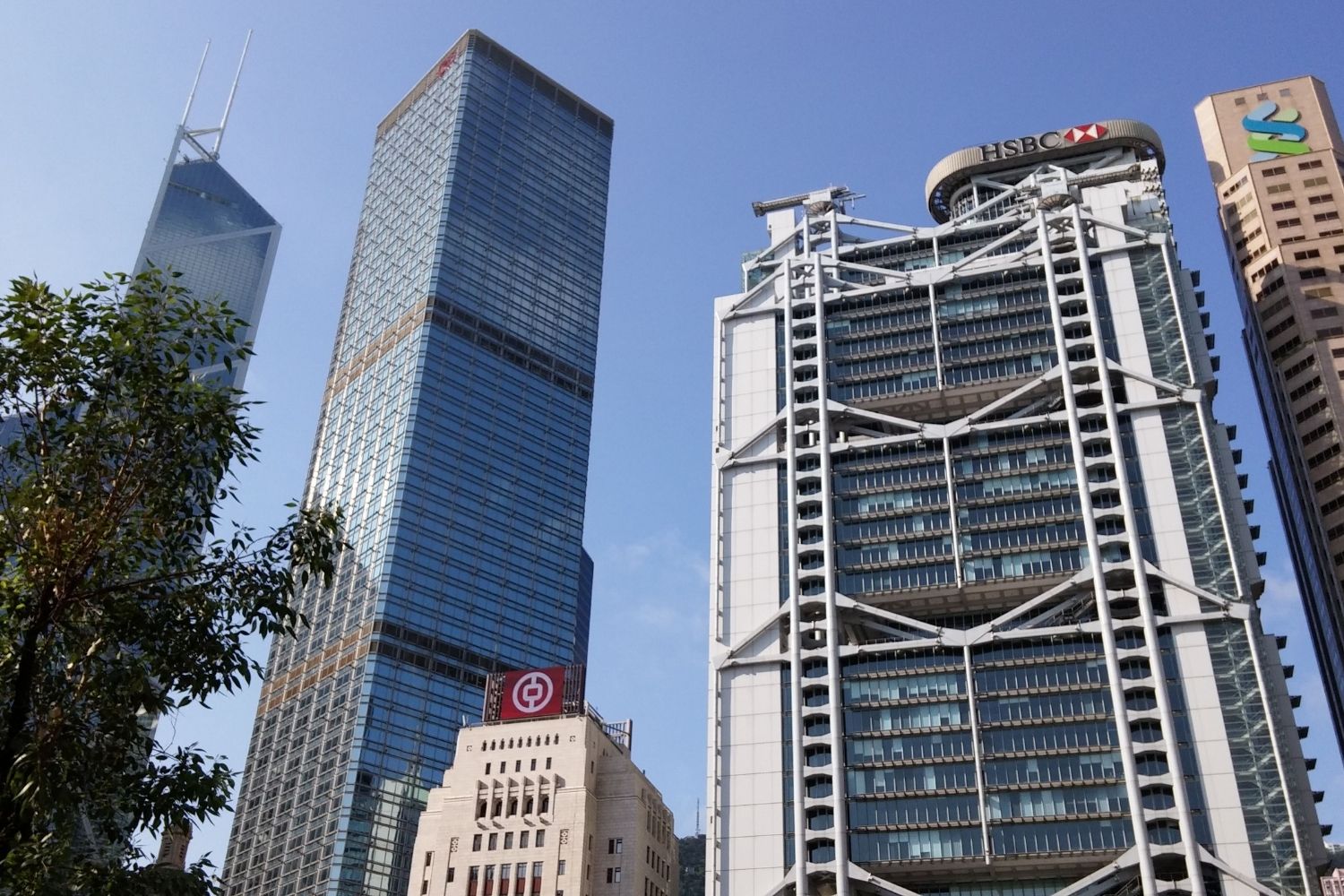 Completed in 1985, the HSBC Building Hong Kong was the most expensive building in the world at the time. Foster eliminated the conventional central core, relocating elevators, staircases, and mechanical equipment to the tower’s edges. Eight massive steel trusses, visible on the exterior, suspend the floors in groups, creating five “vertical villages” connected by escalators and a full-height atrium. A system of mirrors at the base reflects sunlight into the ground-floor plaza, which remains open to the public as a pedestrian thoroughfare. The building’s modular steel components were prefabricated in the UK, USA, Japan, Germany, and Italy, then shipped and assembled on site in Hong Kong.
🏗️ Real-World Example
HSBC Main Building (Hong Kong, 1985): Foster described this as “the first tower without a central core.” By pushing all circulation and services to the exterior, the 44-storey headquarters achieved open, daylit floor plates of up to 99,000 square meters, a scale of interior flexibility that had never been attempted in a skyscraper before. In April 2025, the building celebrated its 40th anniversary, still serving as HSBC’s Hong Kong base.
The Gherkin London
The Gherkin London, formally known as 30 St Mary Axe, took a different path. Completed in 2004, the 41-storey tower does not expose pipes or ducts on its surface. Instead, Foster expressed the building’s structure through its aerodynamic diagrid exoskeleton, a diamond-patterned steel lattice that is both the load-bearing frame and the visual identity of the tower. Spiraling light wells between the double-skin glass panels draw fresh air through the building naturally, reducing energy consumption by roughly 50 percent compared to a standard office tower of similar size. The Gherkin represents a quieter evolution of inside out architecture: the structure itself becomes the ornament, but without the raw industrial aesthetic of the Pompidou or Lloyd’s.Commerzbank Tower Frankfurt
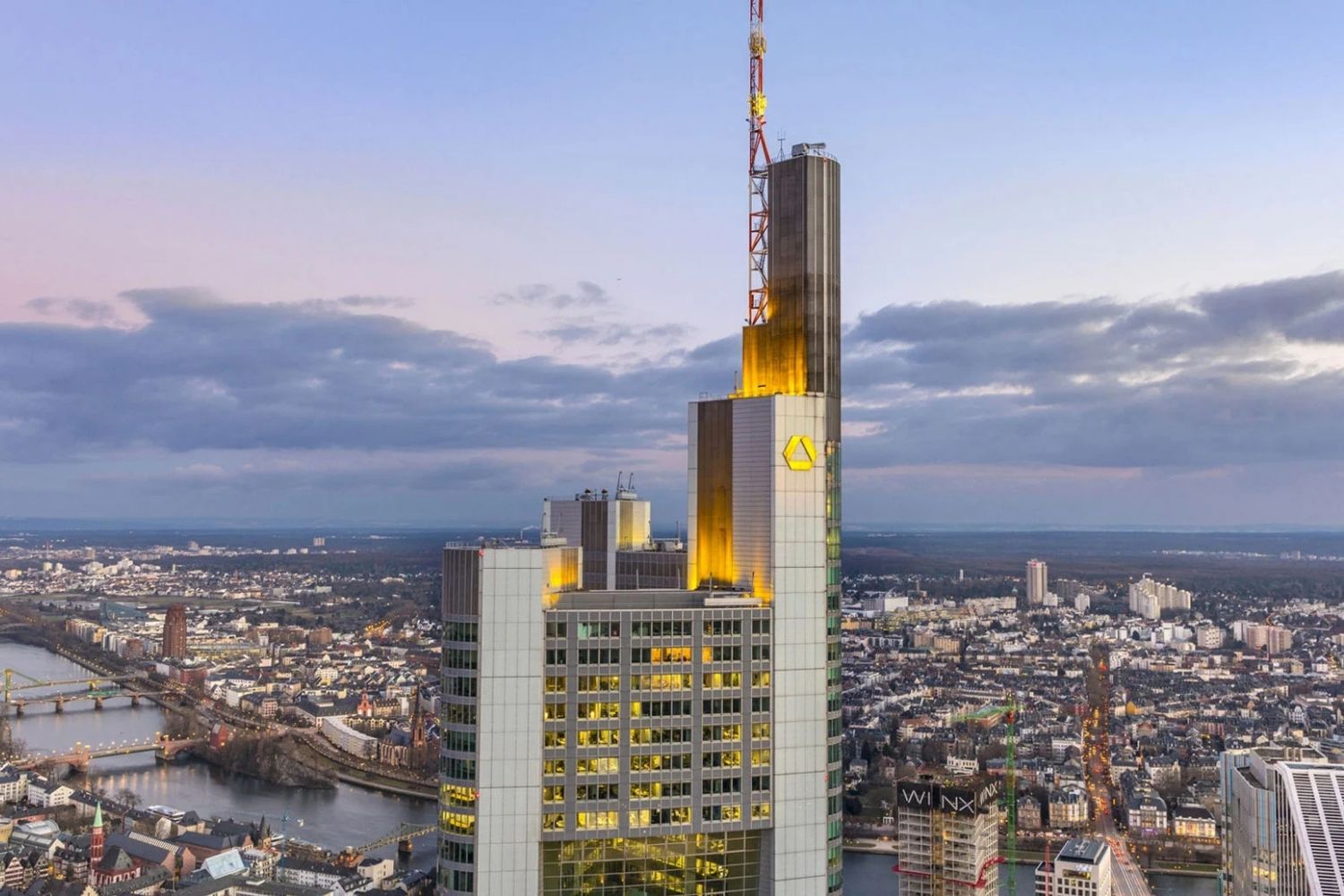 The Commerzbank Tower Frankfurt, finished in 1997, was Europe’s tallest building at the time, standing 259 meters high. Foster designed it around a triangular plan with a full-height central atrium that acts as a natural ventilation chimney. Four-storey sky gardens spiral up the tower, giving every office floor access to greenery and daylight. The result is a skyscraper where offices are naturally ventilated for 85 percent of the year, consuming roughly half the energy of a conventional high-rise. Foster called it a “garden in the machine,” a phrase that captures how inside out thinking had matured from exposing pipes to rethinking the entire relationship between a tall building and its environment.
💡 Pro Tip
When studying inside out architecture for design studio or exam prep, focus on how each architect handled the “served versus servant” space distinction. Rogers kept services raw and visible; Foster integrated them into the structural expression itself. Understanding that difference clarifies why two architects working within the same movement produced buildings that look so different from each other.
Key Traits of Inside Out Architecture at a Glance
Comparison of Five Landmark Inside Out Buildings
The following table highlights how the inside out architecture style was applied differently across five major projects:| Building | Architect | Year | Exposed Elements | Primary Innovation |
|---|---|---|---|---|
| Centre Pompidou, Paris | Piano & Rogers | 1977 | Color-coded pipes, escalators, structure | Fully flexible gallery floors |
| Lloyd’s Building, London | Richard Rogers | 1986 | Glass elevators, service towers, toilet pods | Modular, replaceable service units |
| HSBC Building, Hong Kong | Norman Foster | 1985 | Suspension trusses, edge-mounted lifts | Core-free skyscraper with sunlight mirrors |
| Commerzbank Tower, Frankfurt | Norman Foster | 1997 | Triangular frame, sky gardens, atrium chimney | Natural ventilation in a 259 m tower |
| The Gherkin, London | Norman Foster | 2004 | Diagrid exoskeleton, spiraling light wells | Structure as ornament with passive ventilation |
Why Does the Inside Out Architecture Concept Still Matter?
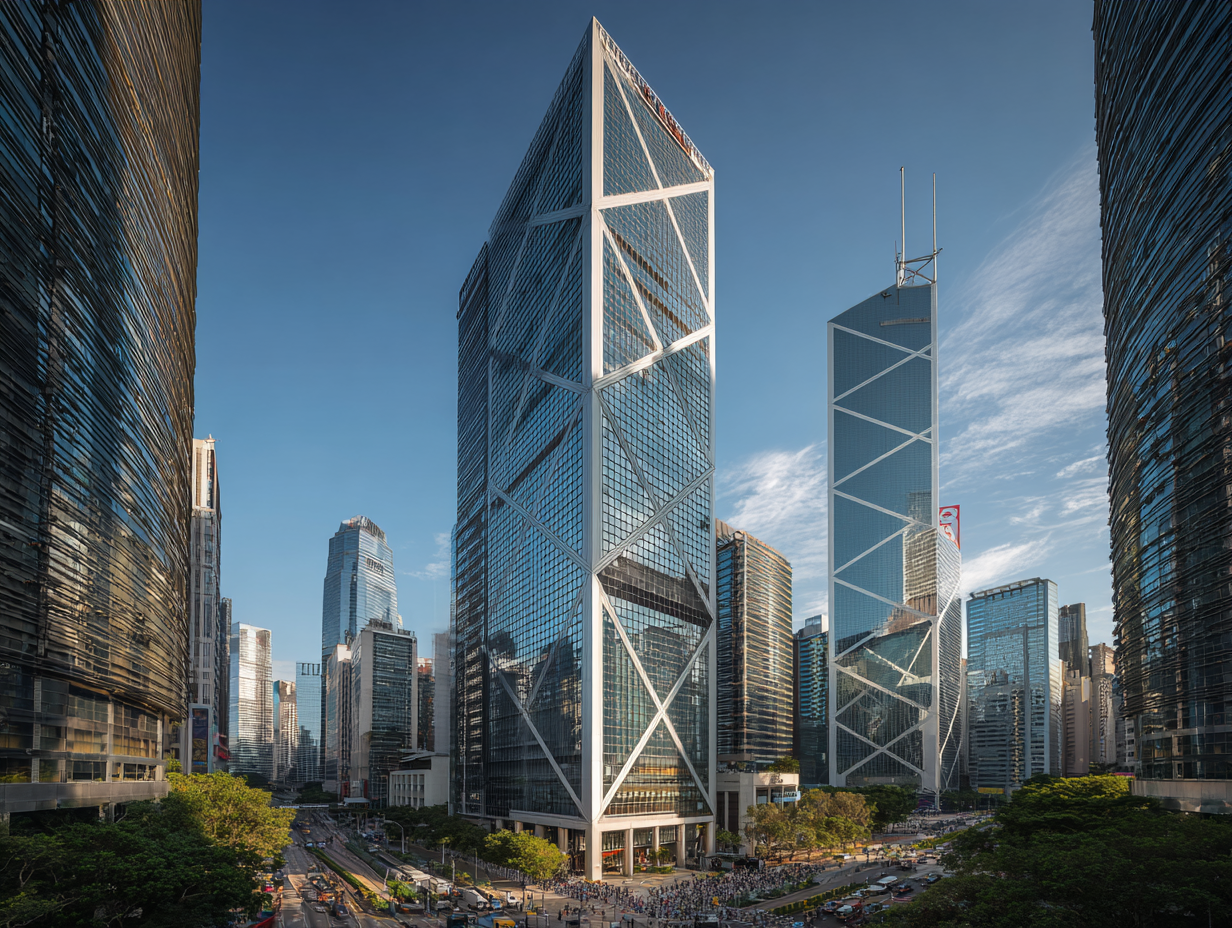 The buildings discussed here are decades old, yet the principles behind them keep showing up in current practice. Exposed structure reduces material waste by eliminating redundant cladding layers. External services simplify retrofits and repairs, extending a building’s useful life. Natural ventilation strategies first tested at the Commerzbank Tower are now standard expectations in sustainable design codes across Europe.
Perhaps more importantly, the architects who changed architecture through the inside out approach proved that honesty about how a building works can be just as beautiful as any ornamental facade. Their influence runs through contemporary projects by firms like Foster + Partners, Rogers Stirk Harbour + Partners, and the Renzo Piano Building Workshop, as well as emerging practices that treat transparency and adaptability as design priorities rather than afterthoughts.
The buildings discussed here are decades old, yet the principles behind them keep showing up in current practice. Exposed structure reduces material waste by eliminating redundant cladding layers. External services simplify retrofits and repairs, extending a building’s useful life. Natural ventilation strategies first tested at the Commerzbank Tower are now standard expectations in sustainable design codes across Europe.
Perhaps more importantly, the architects who changed architecture through the inside out approach proved that honesty about how a building works can be just as beautiful as any ornamental facade. Their influence runs through contemporary projects by firms like Foster + Partners, Rogers Stirk Harbour + Partners, and the Renzo Piano Building Workshop, as well as emerging practices that treat transparency and adaptability as design priorities rather than afterthoughts.
The Bigger Picture
Most architectural movements add something to a building’s surface. Inside out architecture is rare in that it subtracts, stripping away the conventional skin to reveal the systems that keep a structure alive. The result is a kind of radical honesty that asks occupants and passersby to see a building not as a finished object but as a working organism. In a profession increasingly focused on lifecycle performance and material accountability, that willingness to show everything may turn out to be the movement’s most lasting contribution.Related Articles







Best Examples of Modern Architecture: Steel and Glass Buildings That Shaped a Movement
Six buildings changed architecture forever by proving that steel and glass could...
Furkan Sen7 Mins read
Willis Tower (Sears Tower): Chicago’s Engineering Marvel
Willis Tower, formerly the Sears Tower, remains one of the tallest buildings...
Furkan Sen6 Mins read
The 20 Best Architecture Firms in the World Right Now
A ranked look at the best architecture firms in the world right...
 Sinan Ozen5 Mins read
Building a Home in Melbourne in 2025: What You Need to Know Before You Commit
Table of Contents Show Why Melbourne’s Housing Market Makes Building the Right...
 illustrarch Editoral Team8 Mins read


Leave a comment