

The Nano Banana Prompt: Mastering Micro-Bionic Architecture in Midjourney v6
Nano Banana Prompt explores the innovative fusion of biomimicry and architectural design in Midjourney v6, focusing on translating organic structures into advanced digital architecture.
 Bahattin Duran10 June 20263 Mins read215
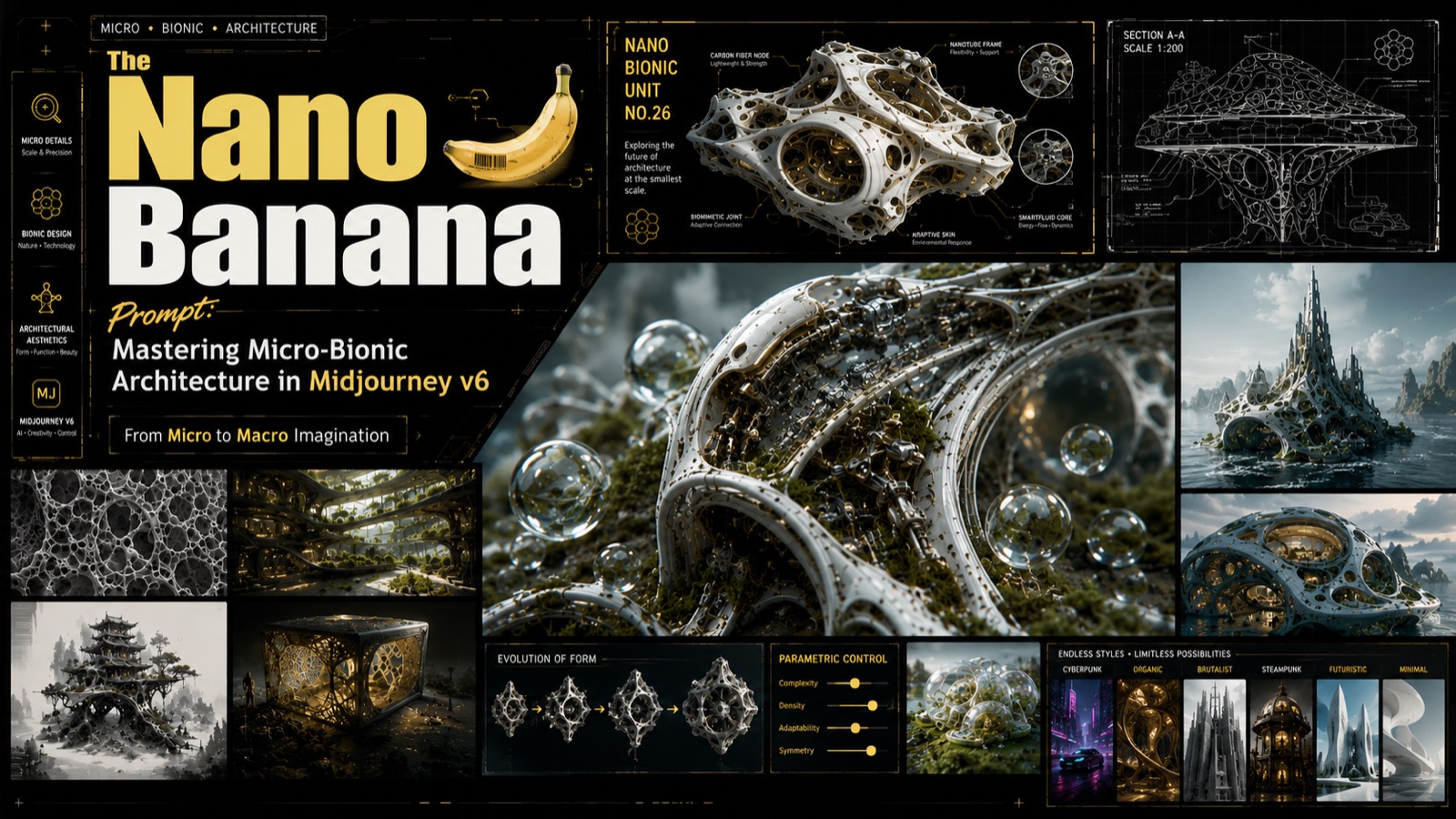
Table of Contents Show
In the landscape of modern digital design, architectural visualization tools have reached a tipping point. As AI workflows become mainstream, the competition shifts from who can write the longest prompt to who can engineer the most unexpected conceptual keywords. If you are tired of generating the same repetitive “Zaha Hadid style” fluid curves, it is time to look at nature through a microscopic lens. Today, we are breaking down a viral design methodology that is taking AI architecture communities by storm: The Nano Banana Prompt. By blending the fibrous micro-structures and organic peeling mechanics of biomimicry into Midjourney v6, the nano banana prompt creates a striking, high-contrast architectural language that balances futuristic tech with natural fluid forms. Here is your complete guide to mastering this advanced workflow.
| Core Component | Architectural Layer | Key Elements / Design Attributes |
|---|---|---|
| The Nano Banana Prompt Blueprint | 1. Visual Aesthetic | Organic Peeling Shells; Kinetic Layering & Fluid Form |
| 2. Material Syntax | High-Gloss Polymer Yellows; Matte Carbon Fiber Ribs |
1. Deconstructing the “Nano Banana Prompt” Logic
To make the nano banana prompt generate a professional-grade architectural masterpiece rather than a literal piece of fruit, we must translate the physical traits of a banana into advanced architectural syntax. When Midjourney interprets the keyword combination of “nano” (microscopic, engineered, precise) and “banana” (curved, peeling, yellow/black contrast), it triggers a unique structural logic. The sweeping outer shell mimics the peel, while the internal spaces leverage the fibrous, stringy textures of the fruit’s interior.
2. Parametric Matrix: Text-to-Architecture Translation
The key to unlocking the full potential of the nano banana prompt lies in pairing your conceptual keywords with strict architectural modifiers. Use the production matrix below to structure your Midjourney parameters:
Material & Structural Mapping
| Core Keyword | Architectural Modifier | Visual Output Target |
|---|---|---|
| nano banana prompt | Parametric peeling canopy, kinetic layered facade | Overlapping, aerodynamic outer shells that naturally shade the structure. |
| yellow texture | High-gloss chrome yellow polymer, saffron PVDF coating | Vibrant, light-reflective accents that contrast with raw industrial materials. |
| fibrous core | Tensile cable network, micro-organic structural ribs | Intricate, complex interior patterns that look engineered and structural. |
| translucent flesh | ETFE cushions, frosted smart-glass panels | Soft, diffused daylight penetrating the deep interior lounge spaces. |
3. Step-by-Step Practical Guide & Master Prompts
To implement the nano banana prompt workflow in your design studio, use these three carefully calibrated prompts designed for exterior, interior, and conceptual diagrammatic phases.
Phase 1: The Exterior Hero Shot
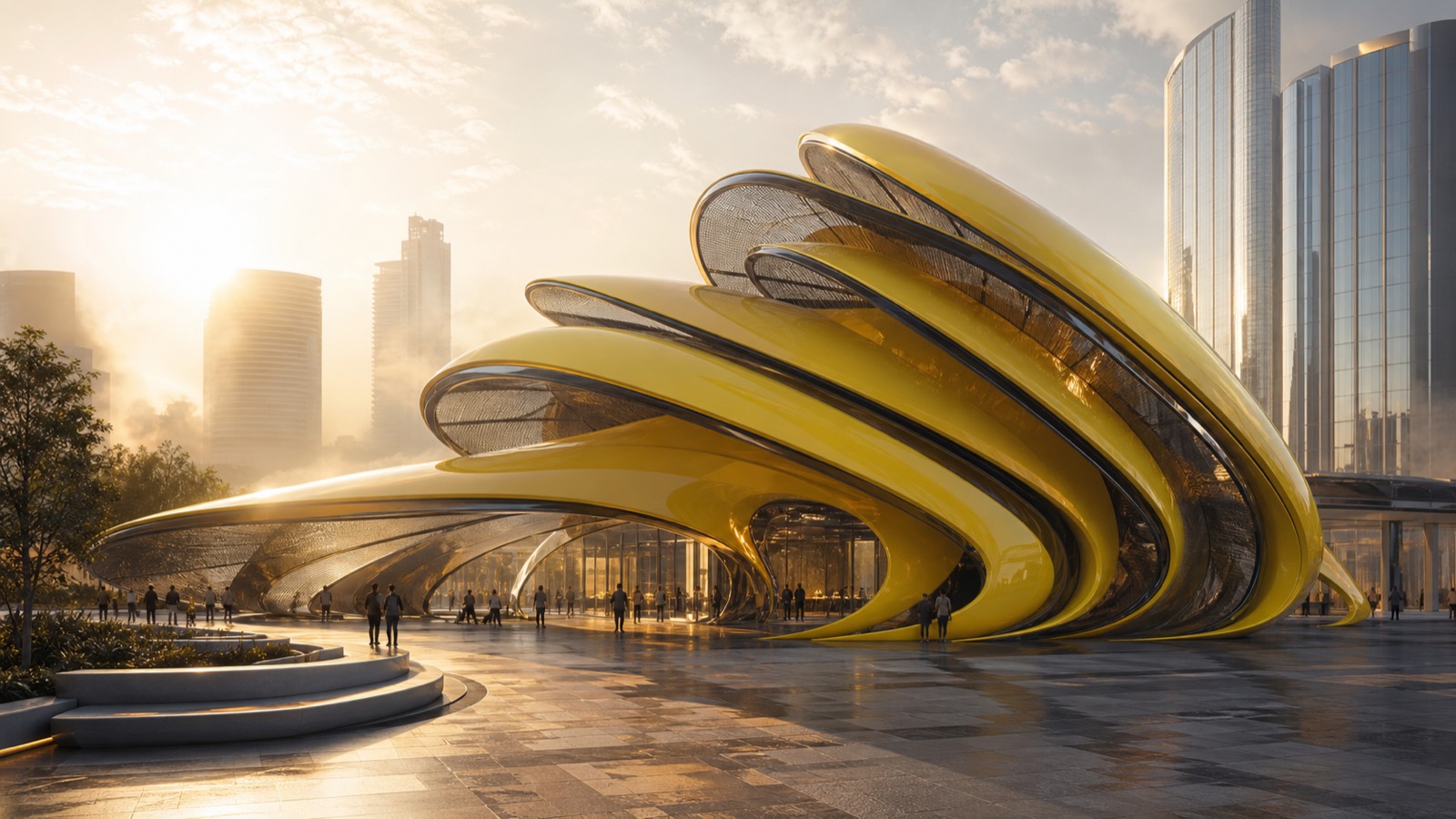
This prompt places the structure into a realistic, high-end public context, mimicking the style of top-tier design magazines. Master Exterior Prompt:
/imagine prompt: A cutting-edge public pavilion designed via the nano banana prompt methodology, biological peeling forms, seamless flowing curves, organic parametric architecture. Materials consist of glossy chrome yellow polymers and matte translucent carbon fiber ribs. Set in a futuristic public plaza at golden hour, realistic cinematic lighting, atmospheric fog, high-end architectural rendering, photorealistic, 8k resolution, ArchDaily style, shot on 35mm lens --ar 16:9 --v 6.0 --style raw
Phase 2: The Interior Bio-Lounge
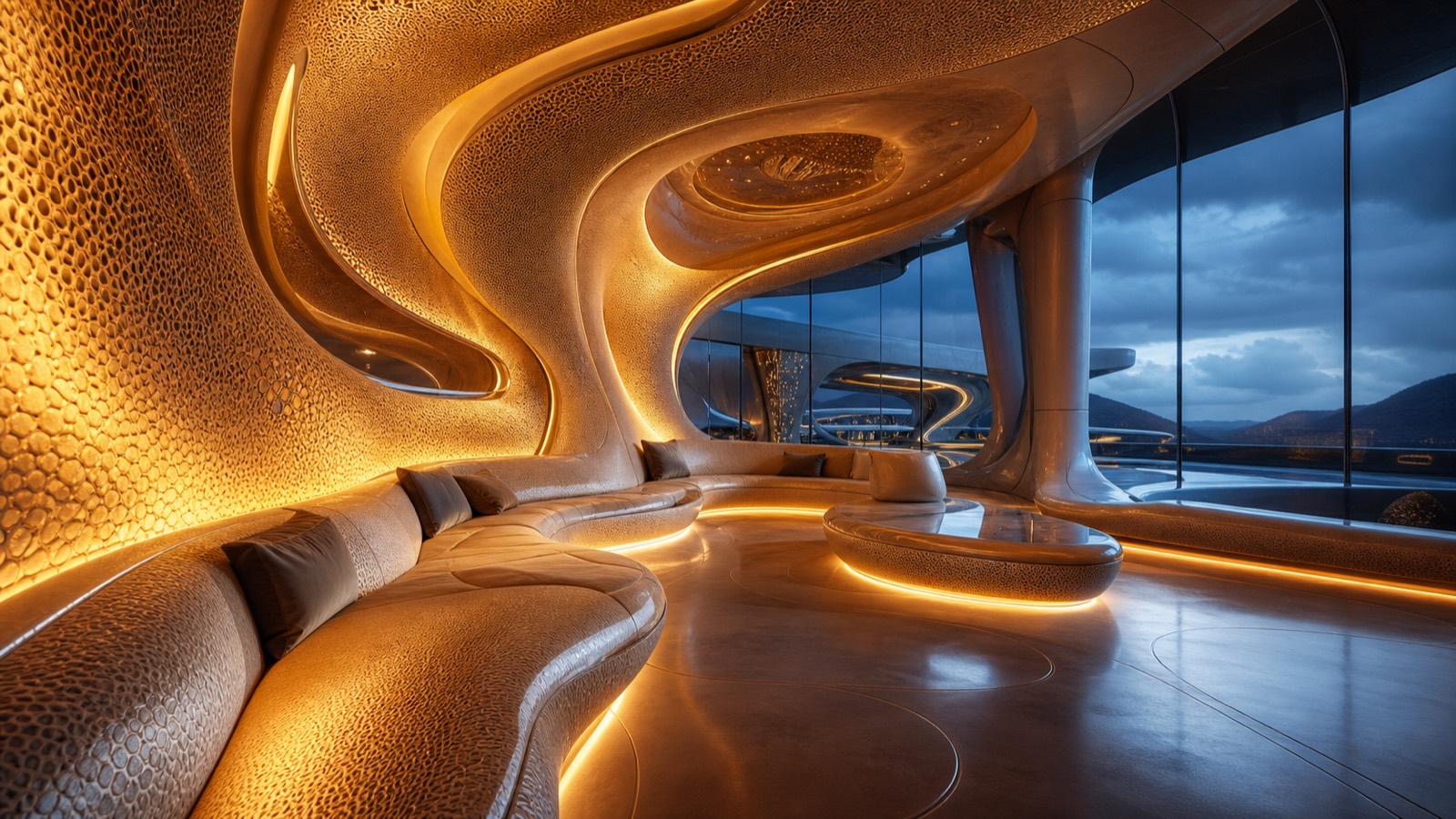
Move inside the structure to showcase how the microscopic fibers convert into functional, futuristic interior elements. Master Interior Prompt:
/imagine prompt: High-end interior view of a futuristic lounge designed with the nano banana prompt framework, micro-nano organic texturing on sweeping walls, curving parametric seating integrating with the architecture, warm internal bioluminescent yellow glow contrasting with cool exterior evening light, ultra-detailed architectural photography, vray render --ar 16:9 --v 6.0
Phase 3: The Concept Diagram (Axonometric)
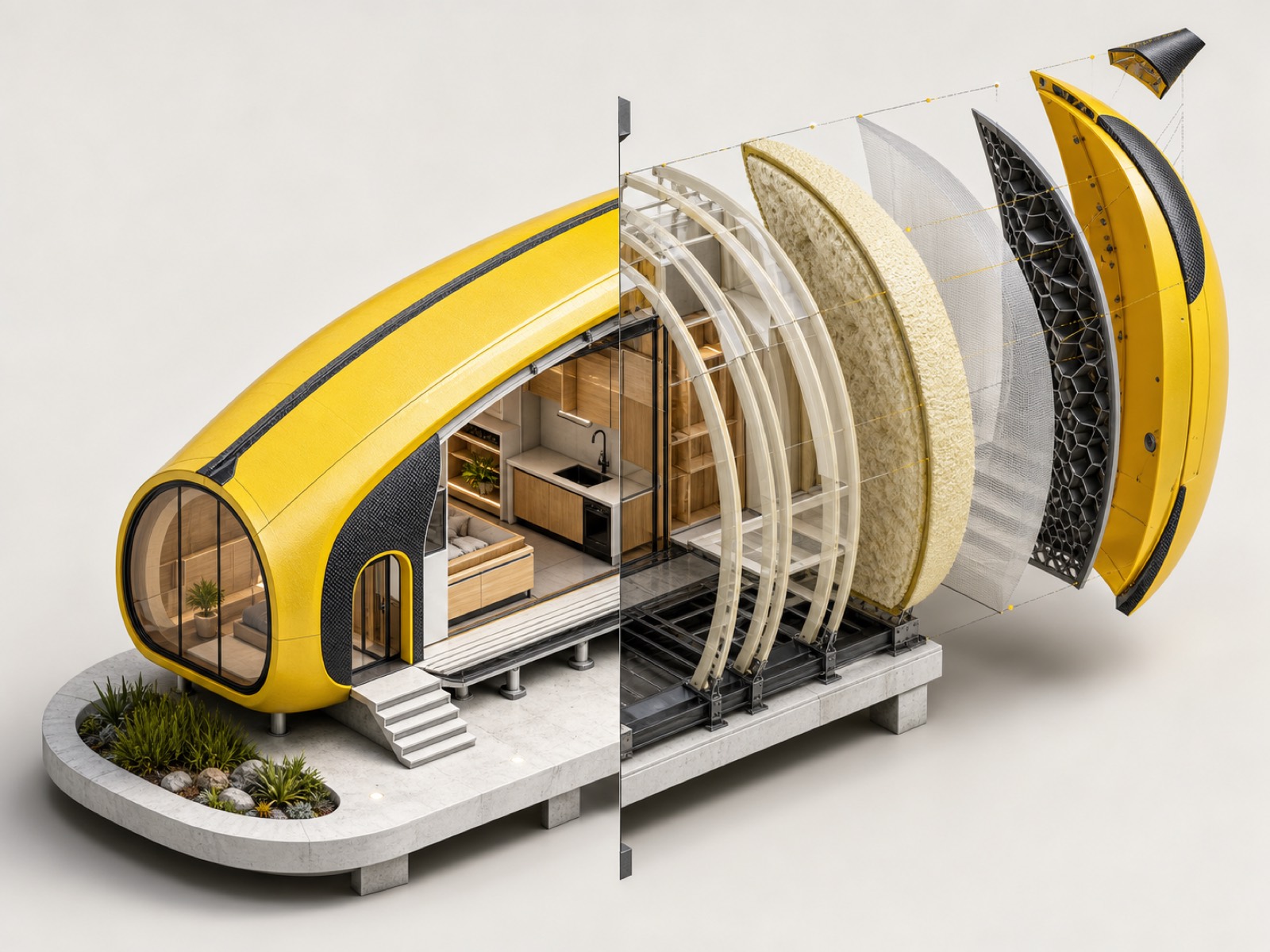
Perfect for presentation boards, this variant strips away the environment to focus purely on the architectural layers and building logic. Master Diagram Prompt:
/imagine prompt: An isometric 3D architectural diagram of a micro-housing unit inspired by the nano banana prompt anatomy, conceptual design showing structural layers, split-screen effect, vibrant banana yellow and stark white concrete, minimalist studio background, clean linework, ambient occlusion, octane render style --ar 4:3 --v 6.0
4. Benchmarking the Output Variations
When running the nano banana prompt, small changes to your aspect ratio or style parameters can drastically shift the architectural typology.
| Style Variation | Modification Strategy | Visual Impact |
|---|---|---|
| 1. Minimalist Mono-Chrome | Append “stark white concrete” into the core prompt | Suppresses the heavy saturation, achieving a subtle, museum-like muted aesthetic. |
| 2. Hi-Tech Cyberpunk | Append “neon cyber accents, dark obsidian textures” | Transforms the organic structure into a dramatic, premium dark-themed sci-fi installation. |
5. The Verdict: Why Micro-Concepts Win
By utilizing highly targeted, micro-bionic workflows like the nano banana prompt, boutique design studios can break away from generic AI aesthetics. This approach allows architects to generate completely proprietary visual languages in seconds, turning a playful organic concept into a sophisticated, buildable architectural vision.




Seedance 3.0 for Home and Garden Concepts: Making a Renovation Story Easier to Discuss
Seedance 3.0 can turn a renovation idea into a short concept video....
 illustrarch Editoral Team5 Mins read

From SketchUp View to Client-Ready Render: A Hands-On Look at Vizbase
Vizbase co-founder Mikus Zarāns shows how the browser-based AI renderer turns SketchUp...
illustrarch Editoral Team4 Mins read
Best AI Interview Assistant for Architects: 9 Tools Compared
We compare nine AI interview assistants for architects on speed, drawing awareness,...
illustrarch Editoral Team12 Mins read

OpenAI’s Astra Model Aims to Turn AI Into an Architecture Workflow Operator
OpenAI's Astra model, launched Sept. 3, 2026, runs multi-step tasks across software,...
illustrarch Editoral Team3 Mins read


Leave a comment