

Lego Sagrada Família is Coming: 12,060-Piece The Biggest Set Ever
Lego just revealed the Sagrada Família (set 21065), a 12,060-piece Architecture model that recreates Gaudí's Barcelona basilica and becomes the largest Lego set ever made. Here is a clear look at the specs, the staged build, the price, and why these sets matter for architects.
 Elif Ayse Sen10 June 20268 Mins read293
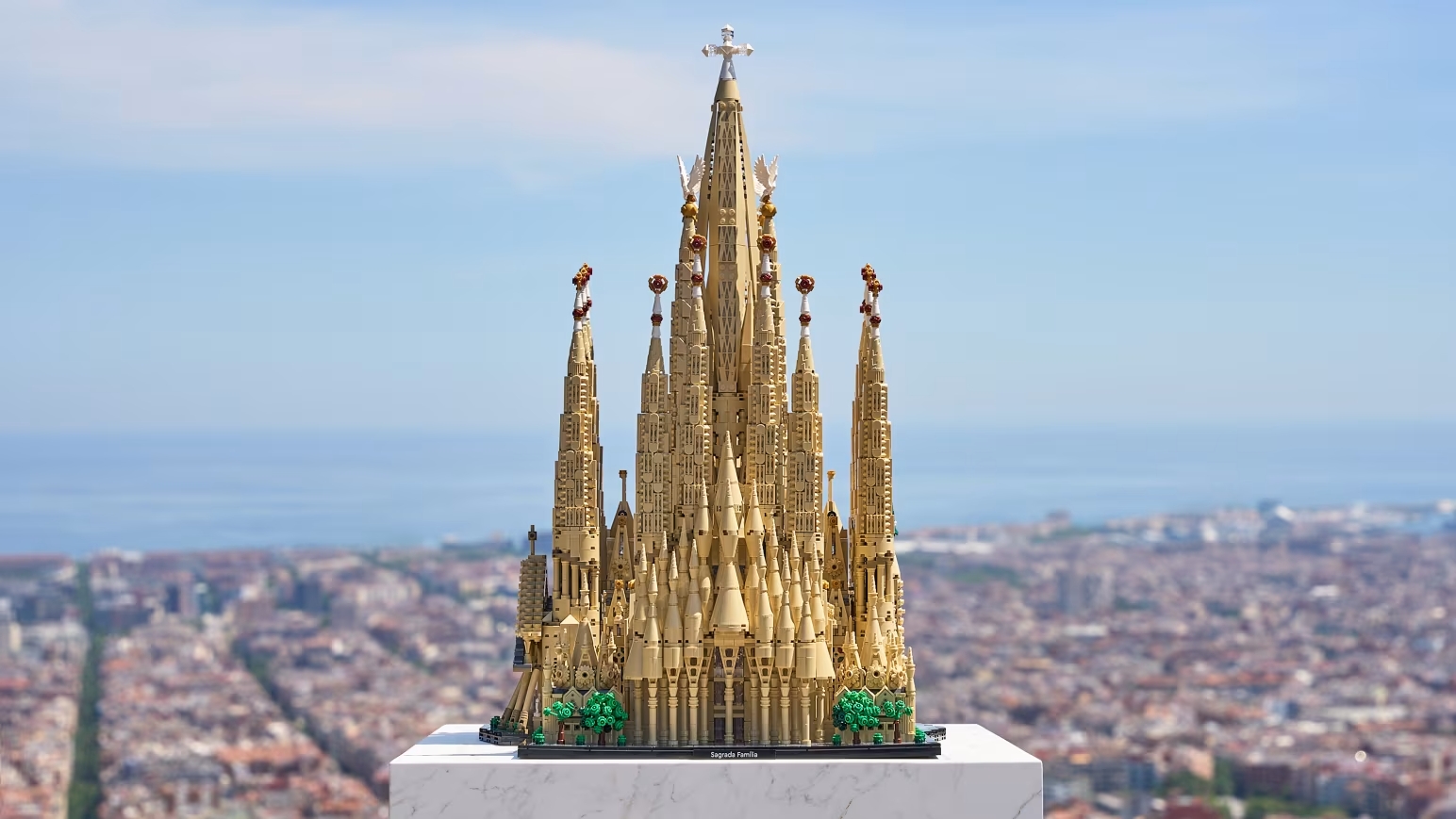
Table of Contents Show
Lego Sagrada Família (set 21065) is the largest Lego set ever made, with 12,060 pieces. The Architecture model recreates Antoni Gaudí’s Barcelona basilica, including a stained-glass light effect, and launches on November 1, 2026, priced at $799.99. The finished build stands about 24 inches (62 cm) tall.
Lego revealed the set to mark a meaningful date: 2026 is the centenary of Gaudí’s death, and the real basilica is closing in on completion after more than 140 years of construction. For architects and design students who already collect models of the Sagrada Família and its sacred geometry, the timing turns a toy release into something closer to a tribute. This piece breaks down what is in the box, how the build works, what it costs, and why Lego sets keep earning shelf space in design studios.
What Is the Lego Sagrada Família Set?
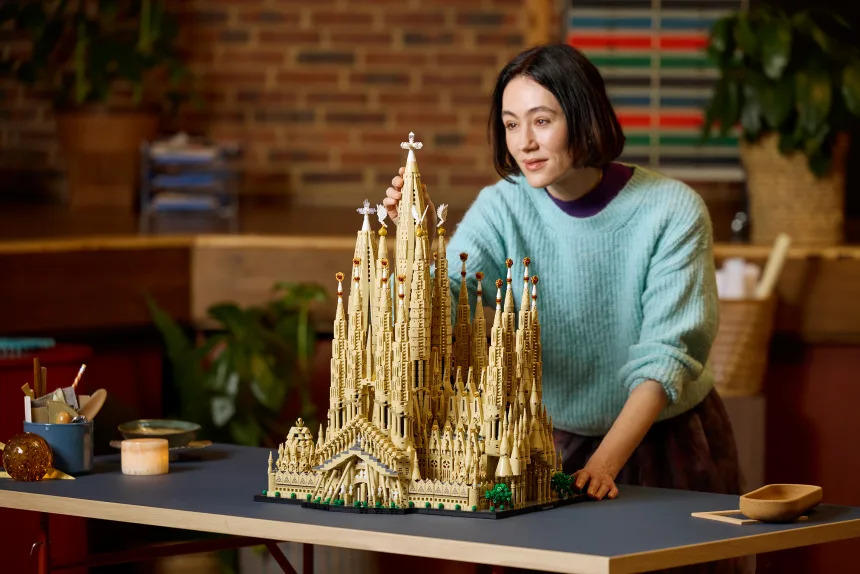
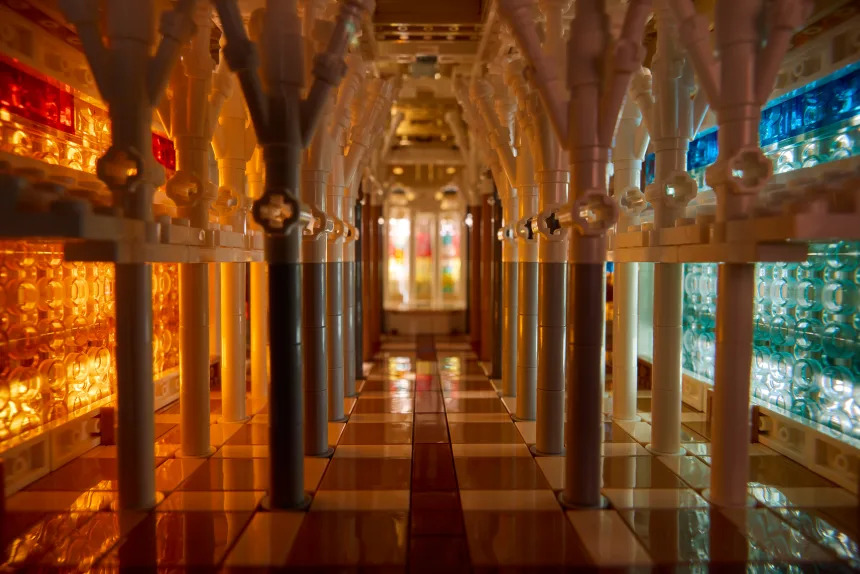
The Lego Sagrada Família is a 12,060-piece Lego Architecture set numbered 21065. It models Barcelona’s basilica at micro-scale, with three carved façades, a forest-like interior of branching columns, and 18 symbolic towers. A translucent element design recreates how light filters through the real stained glass, which is one of the building’s defining qualities.
At 12,060 pieces it passes every Lego set that came before it. The Lego Icons Eiffel Tower holds 10,001 pieces and the Lord of the Rings Minas Tirith holds 8,278, so the basilica is now the brand’s largest model by a clear margin. Lego rates it 18 and up, which signals an advanced build rather than a children’s toy.
The set was designed by Rok Žgalin Kobe, the Lego Architecture designer behind the Colosseum, the Taj Mahal, and the in-stock Eiffel Tower. His comments on the launch point to the weight of the assignment. Gaudí’s work resists simplification, and translating its geometry into a clean stud-based model is a real design problem, not a decorative one.
📐 Technical Note
Set 21065 measures roughly 24 in. (62 cm) high, 18.5 in. (47 cm) wide, and 15 in. (39 cm) deep when complete. Lego estimates a build time of 25 to 35 hours and provides 3D instructions through the free Lego Builder app, which lets you zoom, rotate, and track progress across a build that often runs over several weeks.
How the Lego Sagrada Família Compares to Other Large Sets
Piece count is the headline number, so it helps to see where this set lands against the other giants in the catalog. The table below lists the largest Lego sets and how the basilica took the top spot from the Lego World Map.
| Set | Pieces | Theme | Year |
|---|---|---|---|
| Sagrada Família (21065) | 12,060 | Architecture | 2026 |
| World Map (31203) | 11,695 | Art | 2021 |
| Eiffel Tower (10307) | 10,001 | Icons | 2022 |
| Titanic (10294) | 9,090 | Icons | 2021 |
| Minas Tirith (10316) | 8,278 | Lord of the Rings | 2024 |
You can pre-order the set now from the official Lego Architecture product page, with shipping starting November 1. It is sold exclusively through Lego.com and Lego Stores rather than third-party retailers.
Why Lego Chose the Sagrada Família
The choice is tied to a date. Gaudí died in 1926 after being struck by a tram in Barcelona, and 2026 marks 100 years since his passing. Lego positioned the release as a way to honor that anniversary while the basilica itself approaches structural completion, a moment generations of visitors assumed they would never see.
Gaudí architecture is built on natural geometry rather than straight lines, which is exactly what makes it hard to model and worth modeling. His columns branch like trees, his vaults behave like inverted suspended membranes, and his façades read as eroded rock rather than cut stone. If you want the structural logic behind that approach, our look at how Gaudí turned engineering into form covers the catenary arches and hyperboloid surfaces that hold the building up with surprisingly little mass.
📌 Did You Know?
For decades the Sagrada Família was considered unbuildable. Many of Gaudí’s original plans and plaster models were destroyed during the Spanish Civil War (1936 to 1939), and later architects had to reconstruct his intentions from surviving fragments, photographs, and the mathematics embedded in his surfaces. Digital modeling eventually made the remaining work possible.
That history is part of why the set carries weight for designers. It is not just a famous skyline in brick form. It is a building whose design method, ruled surfaces generated by straight lines rotated in space, anticipated the parametric tools architects use today. For more on Gaudí’s full Barcelona output beyond the basilica, our guide to his major Barcelona buildings traces the same ideas through Casa Milà and Park Güell.
How the Build Mirrors Gaudí’s Real Construction
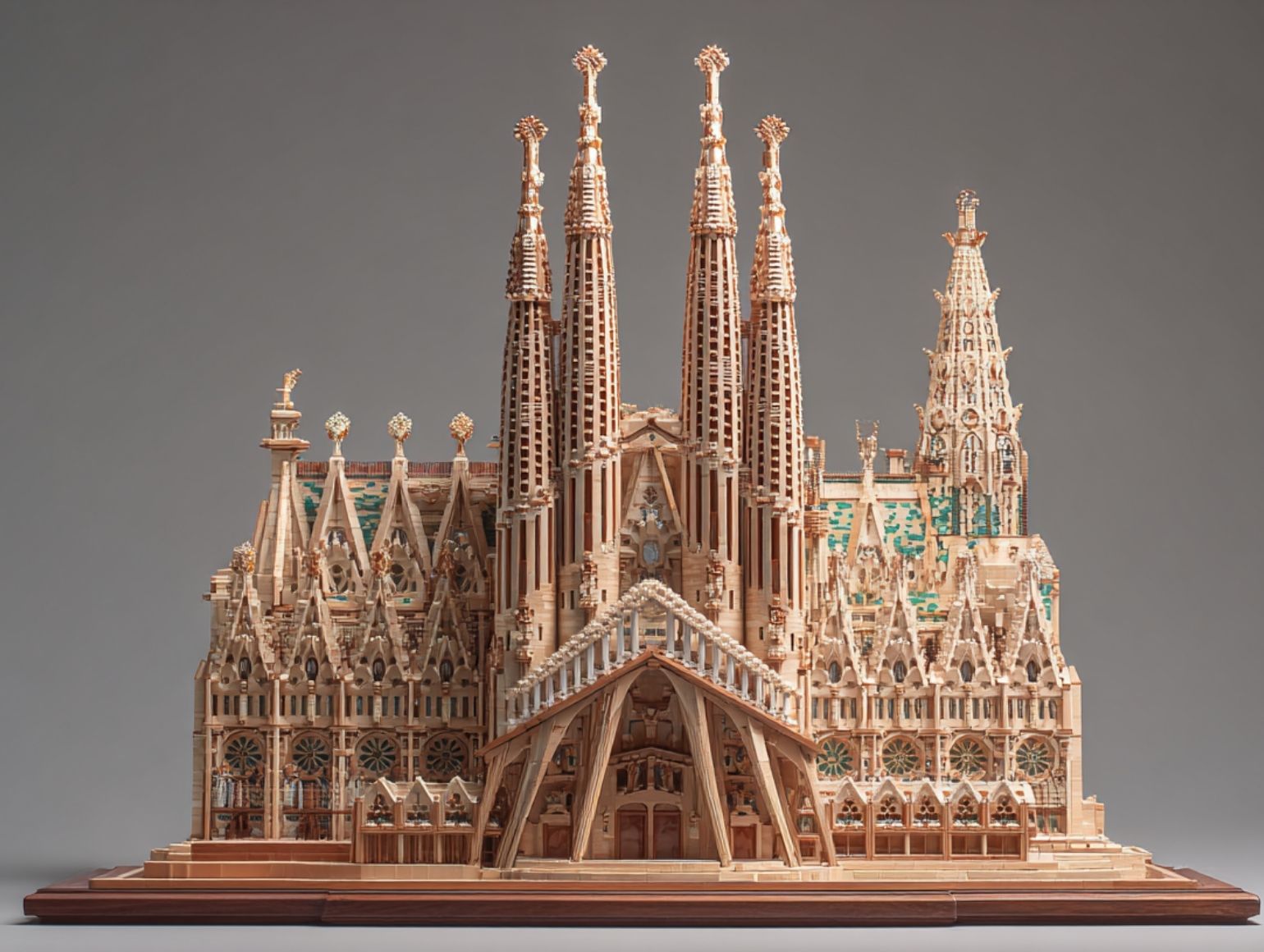
One detail separates this set from a standard landmark model. The build sequence follows the basilica’s actual construction order, so assembling it becomes a walk through the building’s timeline rather than a random parts grind.
You begin with the Apse and Crypt, the oldest parts of the structure. From there the model moves through the Nativity façade, the only major façade Gaudí saw substantially completed before his death, then the dramatic Passion façade. The naves and Western Sacristy come next, followed by six of the iconic towers. The final stage adds the Eastern Sacristy and the Glory façade, the section still being finished in real life. Lego used a similar near-chronological approach on its Notre-Dame set, and it works especially well here because the real basilica has always been a building defined by time.
💡 Pro Tip
If you plan to use the finished model as a teaching piece or a studio reference, photograph each construction stage as you complete it. Capturing the Apse, then the Nativity façade, then the towers in sequence gives you a clean visual record of how the basilica’s massing developed, which reads far better in a presentation than a single shot of the completed model.
Once the last brick is placed, the model sits on a base with a nameplate, designed to be viewed from any angle the way the real towers resolve differently depending on where you stand. The stained-glass effect is the piece most builders single out, since it carries Gaudí’s central idea that light is a building material in its own right.
Why Are Lego Sets Worth It for Architects?
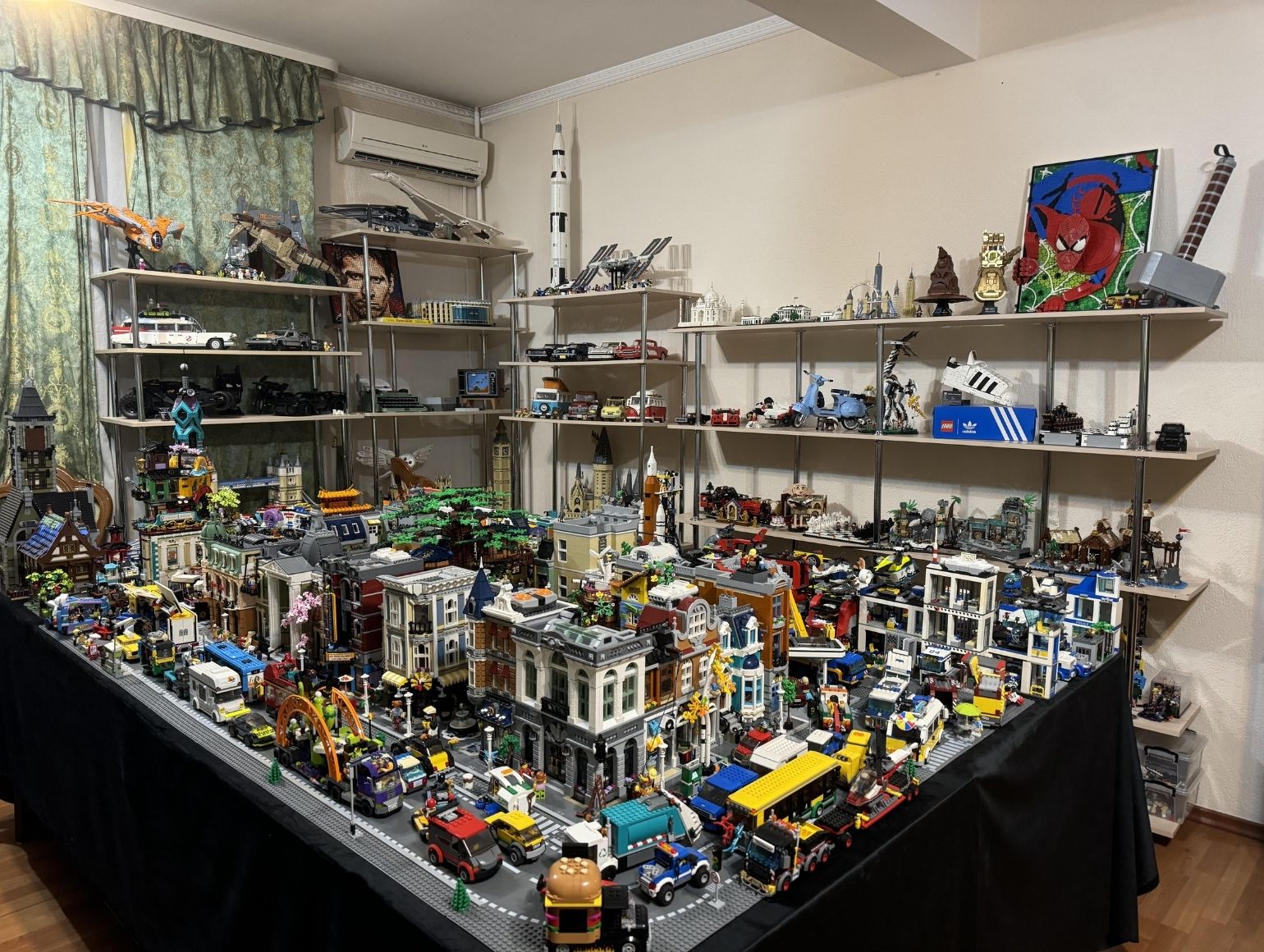
Lego sets for architects are popular for a practical reason: they turn a famous building into a tactile object you can study, rotate, and keep on a desk. Working through a model forces you to read a structure as a sequence of parts and decisions, which is a different kind of understanding than looking at a photograph or a plan.
Lego bricks for architects also work as a low-stakes way to test massing and proportion. Plenty of designers keep a box of loose bricks for quick spatial sketching, and some take that further into real construction thinking. Our walkthrough on building a house model with Lego bricks shows how the modular logic of the system maps onto actual prefabrication and modular design ideas.
As for the best Legos for architects, the answer depends on what you want from the set. Landmark models like the Sagrada Família, the Eiffel Tower, or Fallingwater reward people who want a finished display piece tied to a real building. The monochrome Architecture Studio set rewards people who want open-ended design practice with no instructions. The Sagrada Família sits firmly in the first camp, and it is aimed at builders who want a serious, long-term project rather than a weekend one.
💡 Pro Tip
A 12,060-piece build is a sorting problem before it is a building problem. Set aside an hour at the start to organize pieces by bag and color into labeled containers or trays. Builders who skip this step routinely lose time hunting through thousands of bricks, and on a set this size that lost time adds up to whole evenings.
If you are buying the set as a gift rather than for yourself, the audience is wide. Sagrada Família Lego bricks land well with travel lovers, history readers, and anyone who has stood inside the real basilica. Our running list of gift ideas architects will actually use puts Lego Architecture sets near the top for the same reason: they double as a hobby and a display object.
How Much Does the Lego Sagrada Família Cost?

The Lego Sagrada Família costs $799.99 in the United States, £649.99 in the United Kingdom, and €749.99 across much of Europe. It launches on November 1, 2026, and is available for pre-order now through Lego directly. At that price it sits among Lego’s premium adult sets, in line with the cost-per-piece of other models in the 10,000-plus range.
Whether that price is reasonable comes down to how you value the object. As a single evening’s entertainment it is expensive. As a 25 to 35 hour build that ends in a two-foot display piece of one of the most studied buildings in history, the math reads differently for most collectors and designers.
Cost figures are approximate and may vary by region, retailer, and currency at the time of purchase.
✅ Key Takeaways
- The Lego Sagrada Família (21065) is the largest Lego set ever made, with 12,060 pieces, launching November 1, 2026 at $799.99.
- It marks the centenary of Antoni Gaudí’s death and arrives as the real basilica nears completion after more than 140 years.
- The build follows the basilica’s actual construction order, from the Apse and Crypt to the Glory façade, making assembly a timeline rather than a parts grind.
- A stained-glass light effect carries Gaudí’s idea that light is a structural element, the building’s most recognized quality.
- For architects, Lego sets work as tactile study tools, massing sketches, and display pieces, with landmark models like this one aimed at long-term builders.
A 12,060-piece model will not teach anyone the structural engineering behind catenary arches, and it does not pretend to. What it offers is closer attention. Spending 30 hours assembling Gaudí’s towers in the order they were actually raised is a slow, deliberate way to understand a building that took more than a century to design and construct. For a profession that often moves fast, that kind of patience has its own value. If you want to go deeper on the design thinking before the box arrives, start with Gaudí’s architectural style and the secrets behind it, then plan your own build of the real thing in brick.
Frequently Asked Questions
How many pieces is the Lego Sagrada Família?
The Lego Sagrada Família (set 21065) has 12,060 pieces, making it the largest Lego set ever released by piece count. It passes the previous record holder, the Lego World Map, and the Lego Icons Eiffel Tower at 10,001 pieces.
When does the Lego Sagrada Família come out?
The set launches on November 1, 2026, and is available for pre-order now. It marks the 100th anniversary of Antoni Gaudí’s death and is sold exclusively through Lego.com and official Lego Stores.
How much does the Lego Sagrada Família cost?
It is priced at $799.99 in the United States, £649.99 in the United Kingdom, and €749.99 across much of Europe. Prices may vary by region and currency, so confirm the current figure on the official Lego site before ordering.
How long does the Lego Sagrada Família take to build?
Lego estimates 25 to 35 hours for the full build, though many people spread that across several weeks. The free Lego Builder app provides 3D instructions you can zoom and rotate, plus progress tracking that helps on a set this large.
Is the Lego Sagrada Família good for architects?
Yes. As a Lego Architecture set, it works as a tactile study of one of history’s most ambitious buildings, and the staged build mirrors the basilica’s real construction sequence. It suits architects and design students who want a long-term display project rather than a quick build.







A 2,500-Year-Old Solar Observatory in Puebla Is the First Group E Complex Found Outside the Maya Area
Archaeologists working for Mexico's INAH have confirmed that two platforms at Teteles...
 illustrarch Editoral Team2 Mins read
India Art, Architecture & Design Biennale 2026: Ministry of Culture Opens Delhi Monuments
Delhi's monuments, including Purana Quila and the Red Fort, will host the...
illustrarch Editoral Team2 Mins read

Allentown Art Museum Leaves Its Venturi, Scott Brown Addition for a New Studios Architecture Building
The Allentown Art Museum is moving to a new Studios Architecture building...
illustrarch Editoral Team2 Mins read

Donald Insall, the Conservation Architect Who Led Windsor Castle’s Restoration, Dies at 100
Donald Insall, the British architect who turned conservation into a planning discipline...
illustrarch Editoral Team2 Mins read


Leave a comment