

Al Maktoum International Airport: Dubai’s 2032 Aviation Megaproject
Dubai's Al Maktoum International Airport has entered large-scale construction, with Phase 1 on track for 2032. Designed by Coop Himmelb(l)au, the AED128 billion project will eventually handle 260 million passengers across five runways.
 Elif Ayse Sen19 June 20269 Mins read235
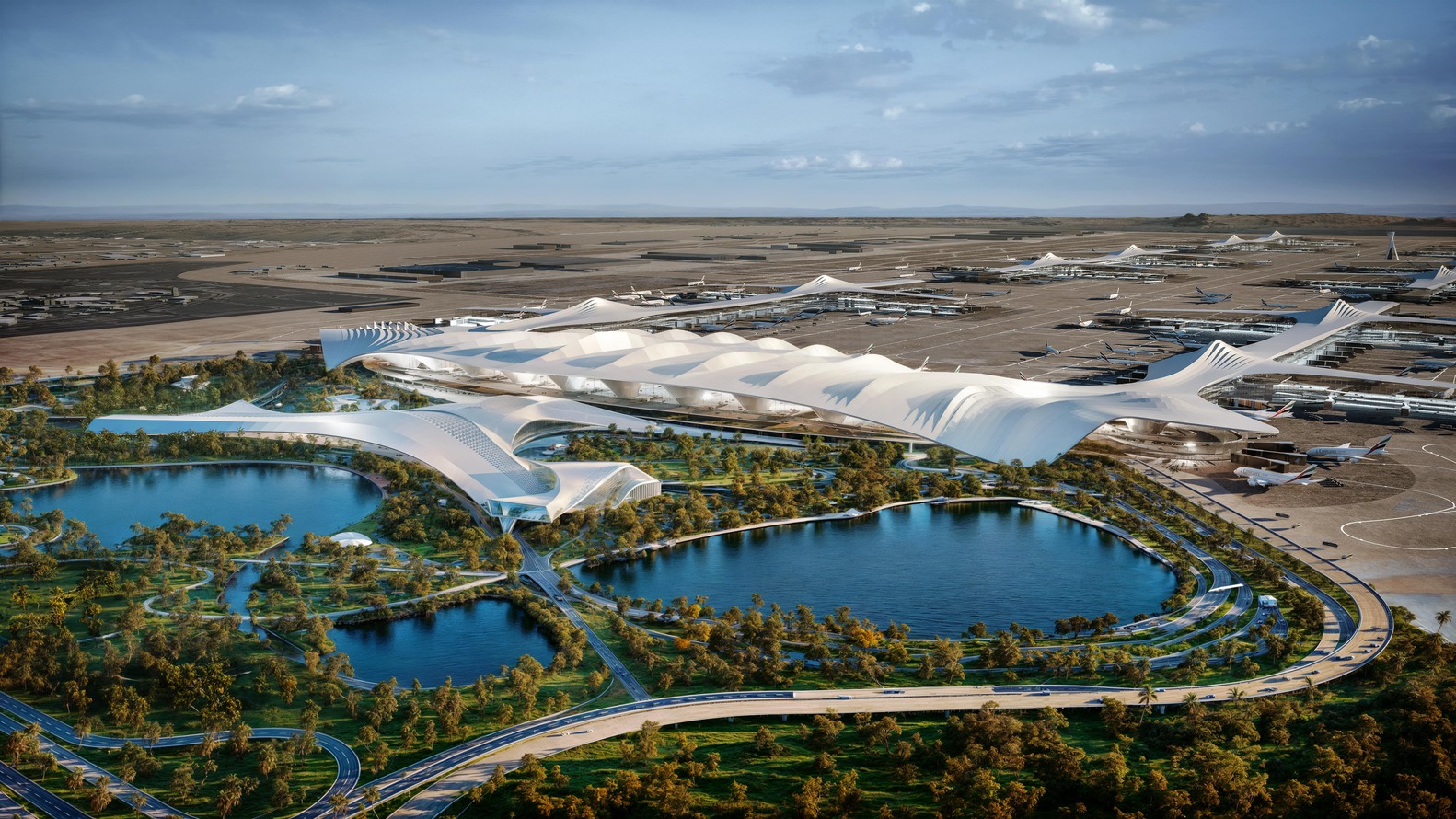
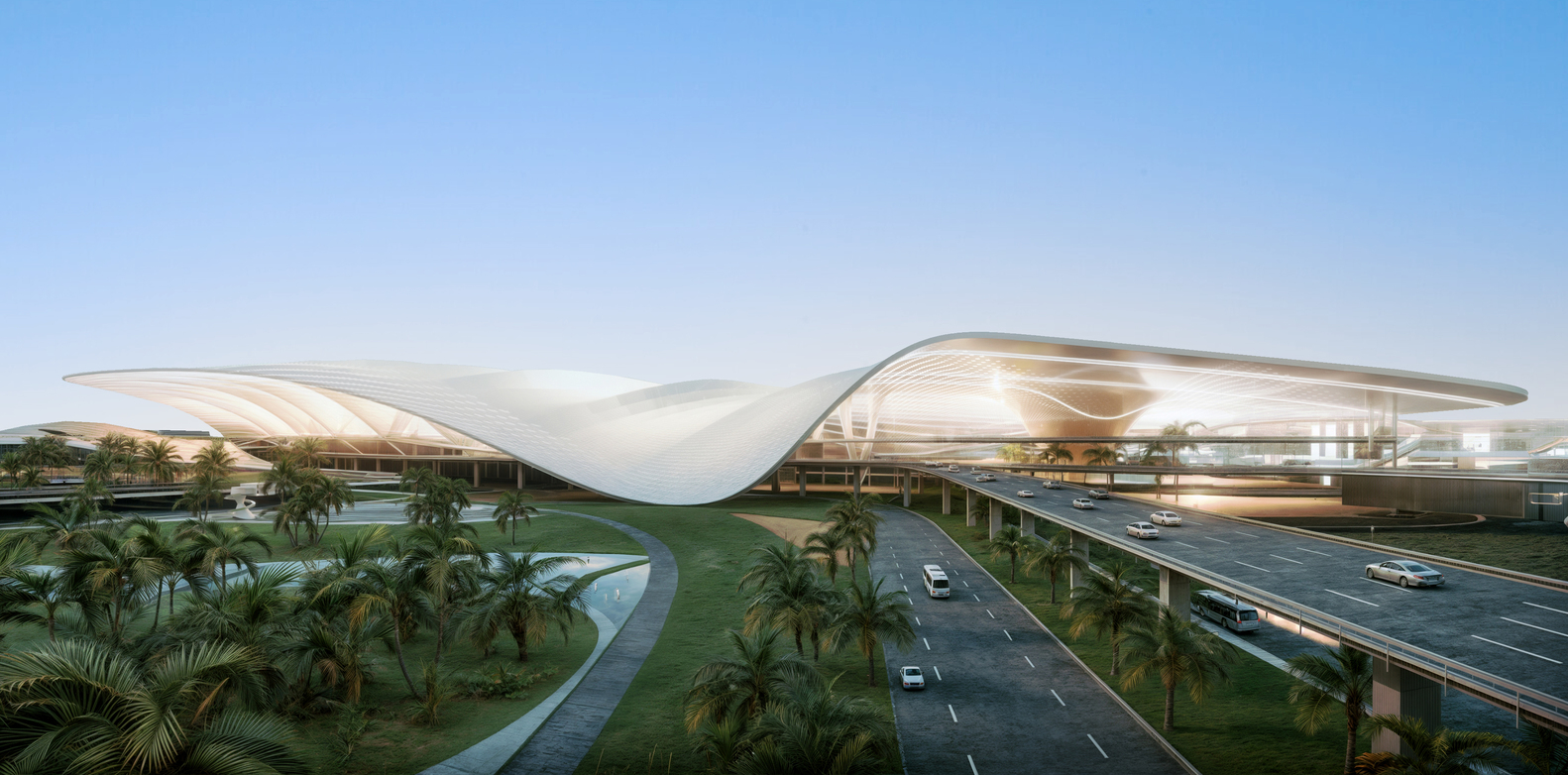
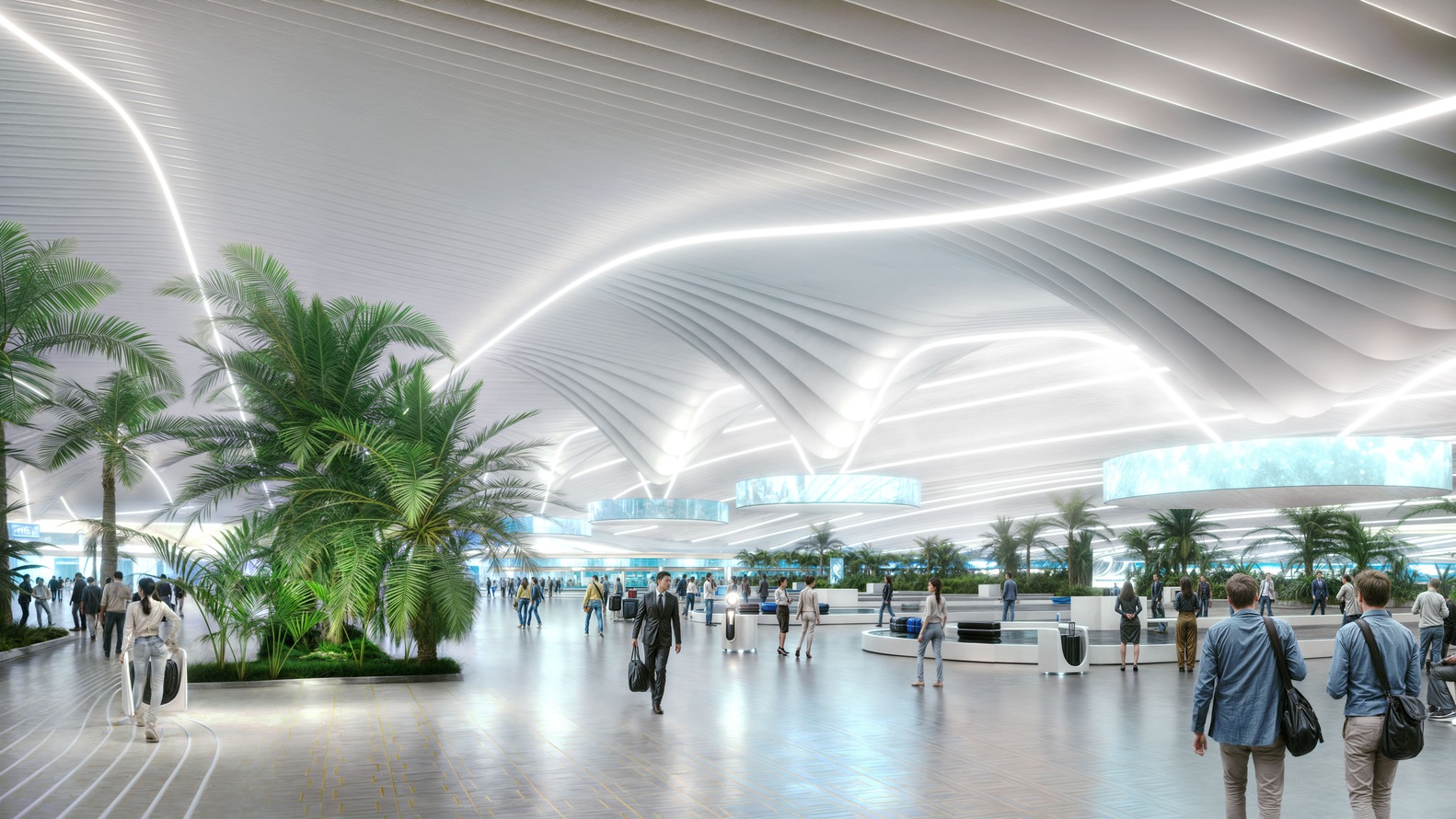
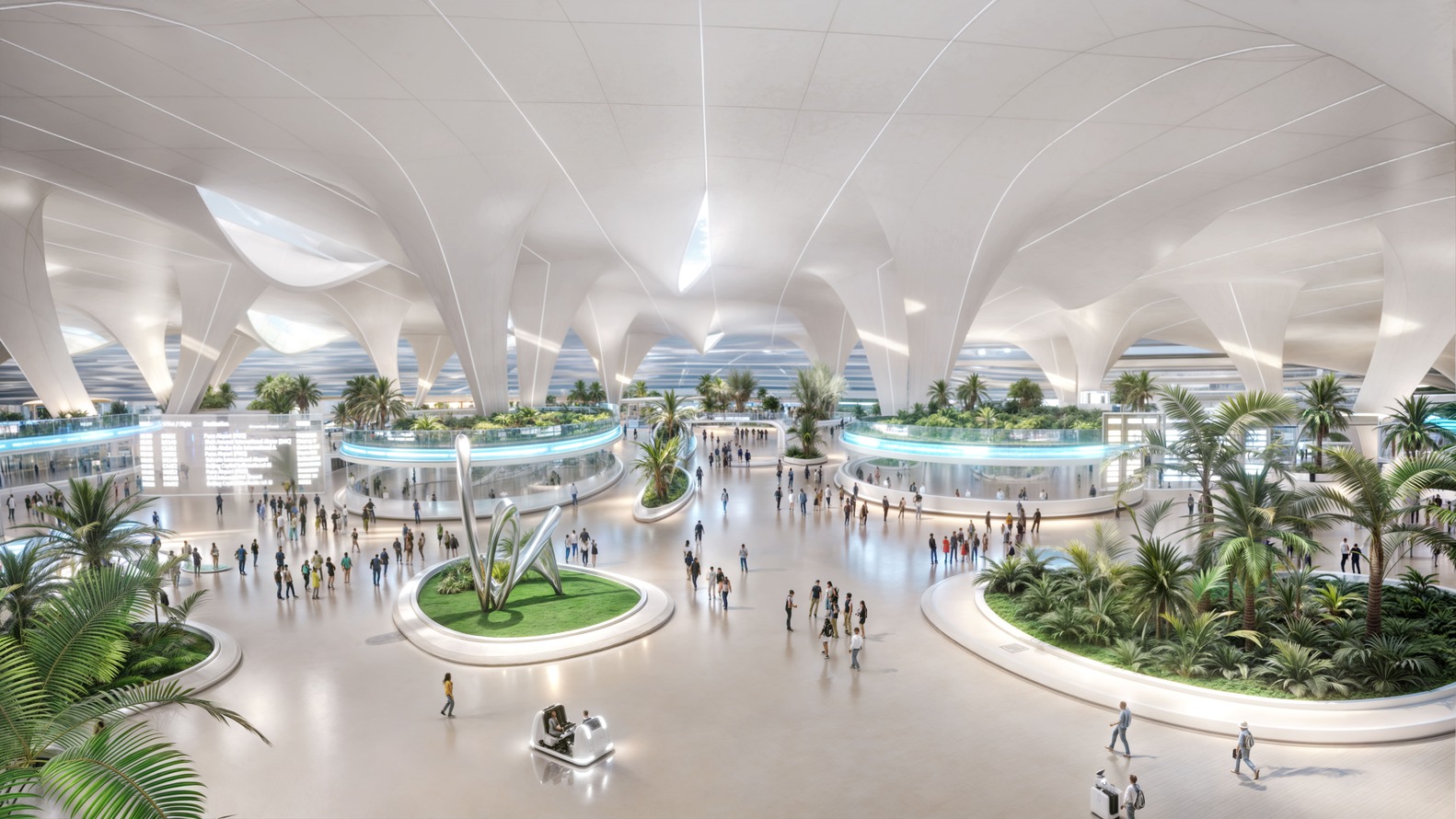
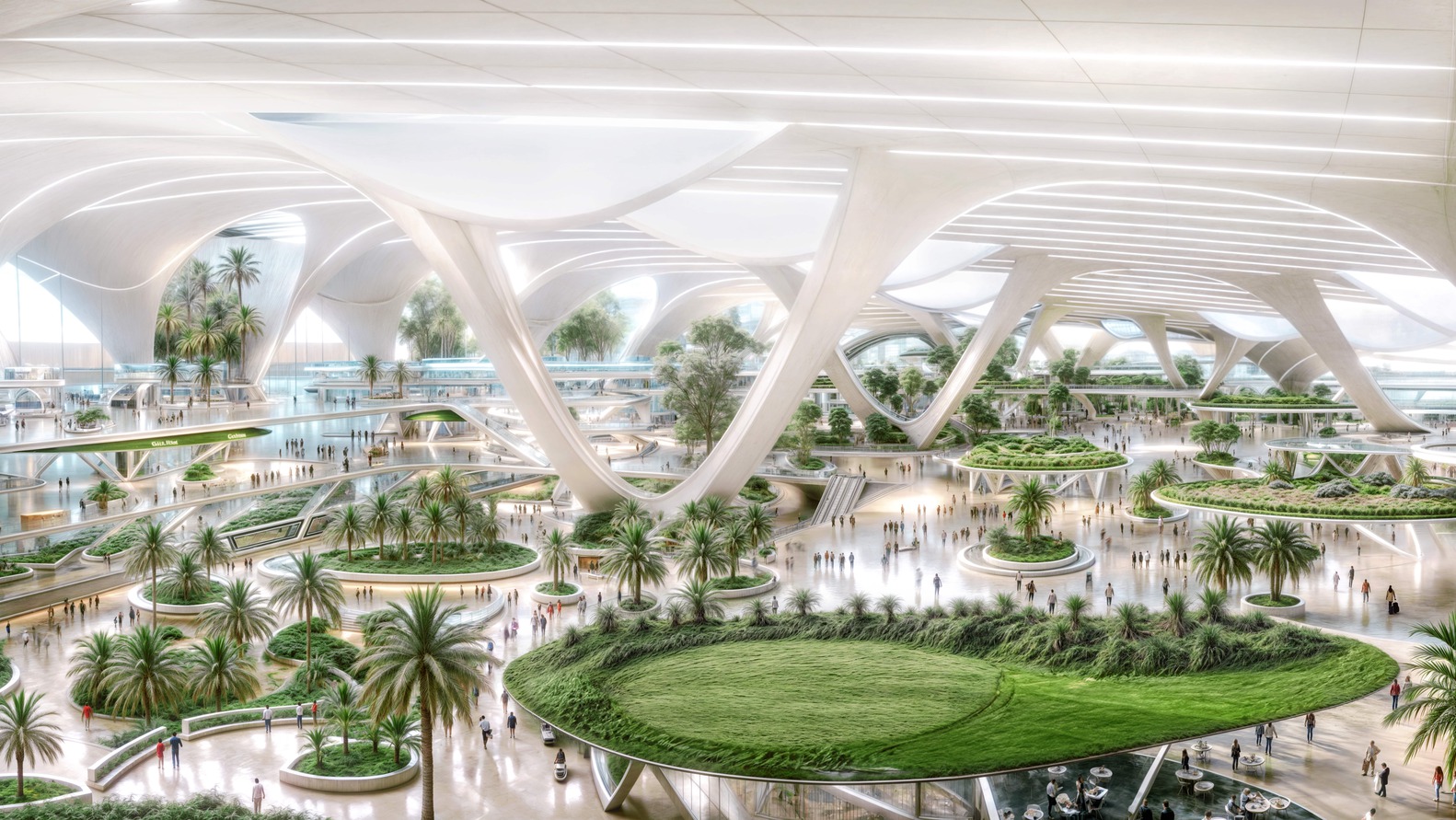
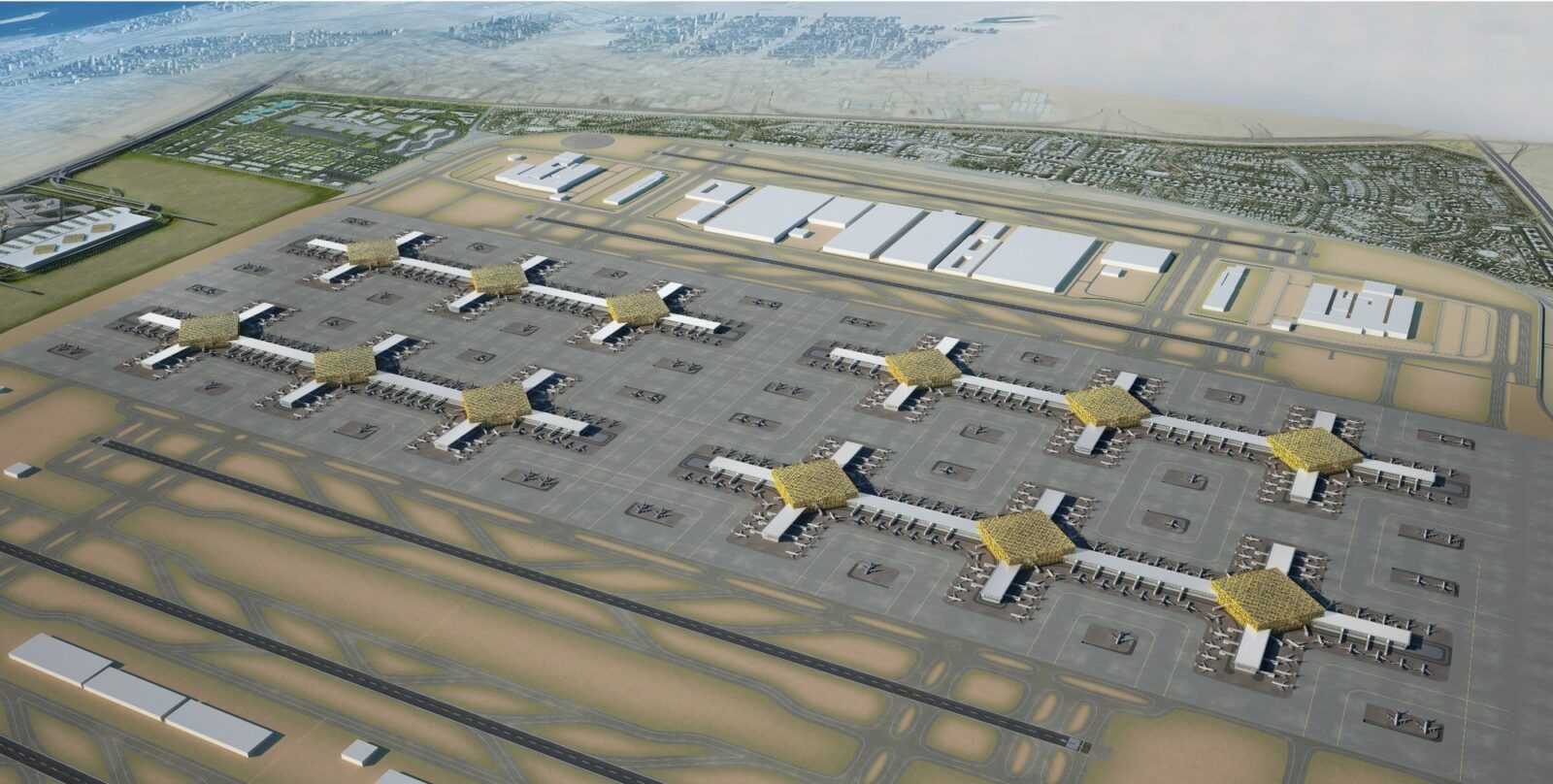
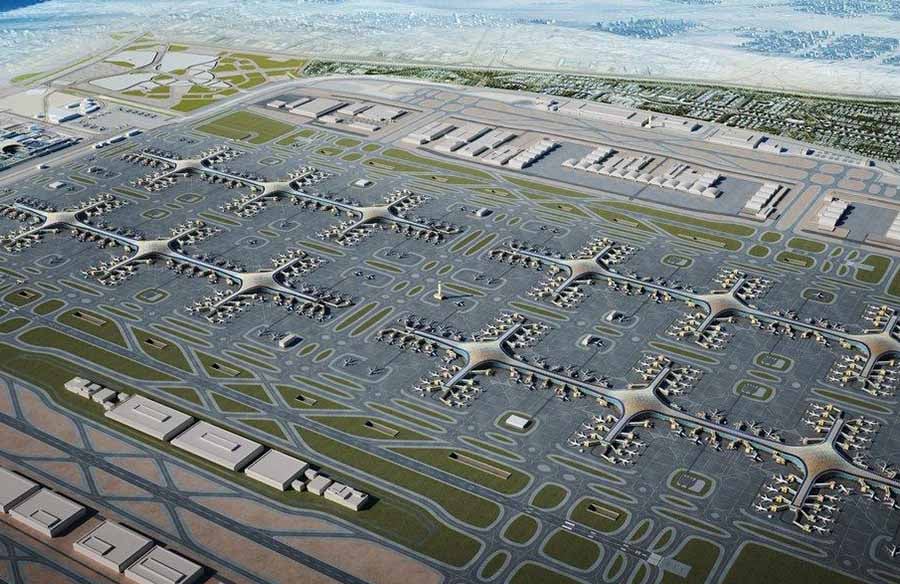
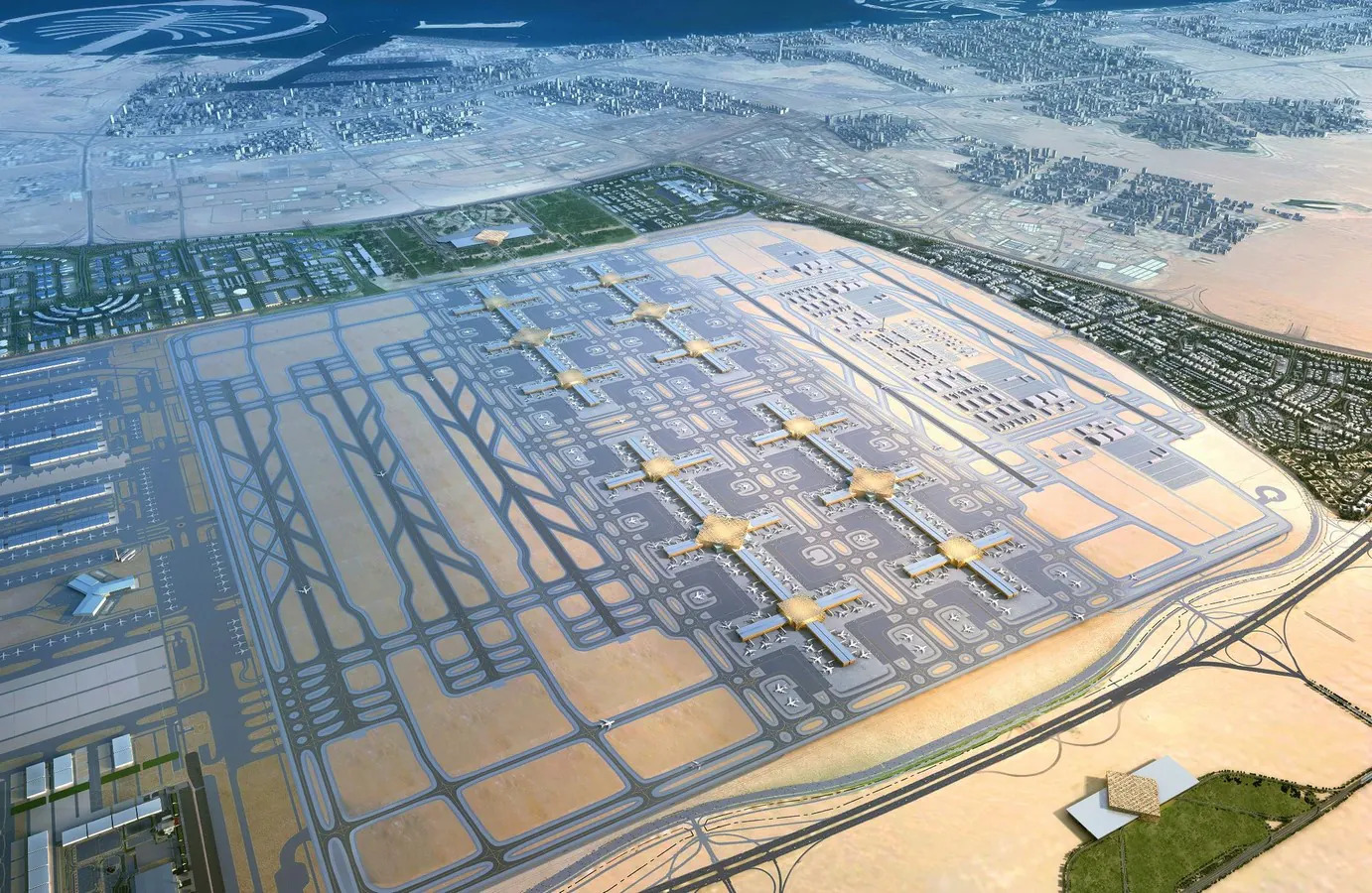
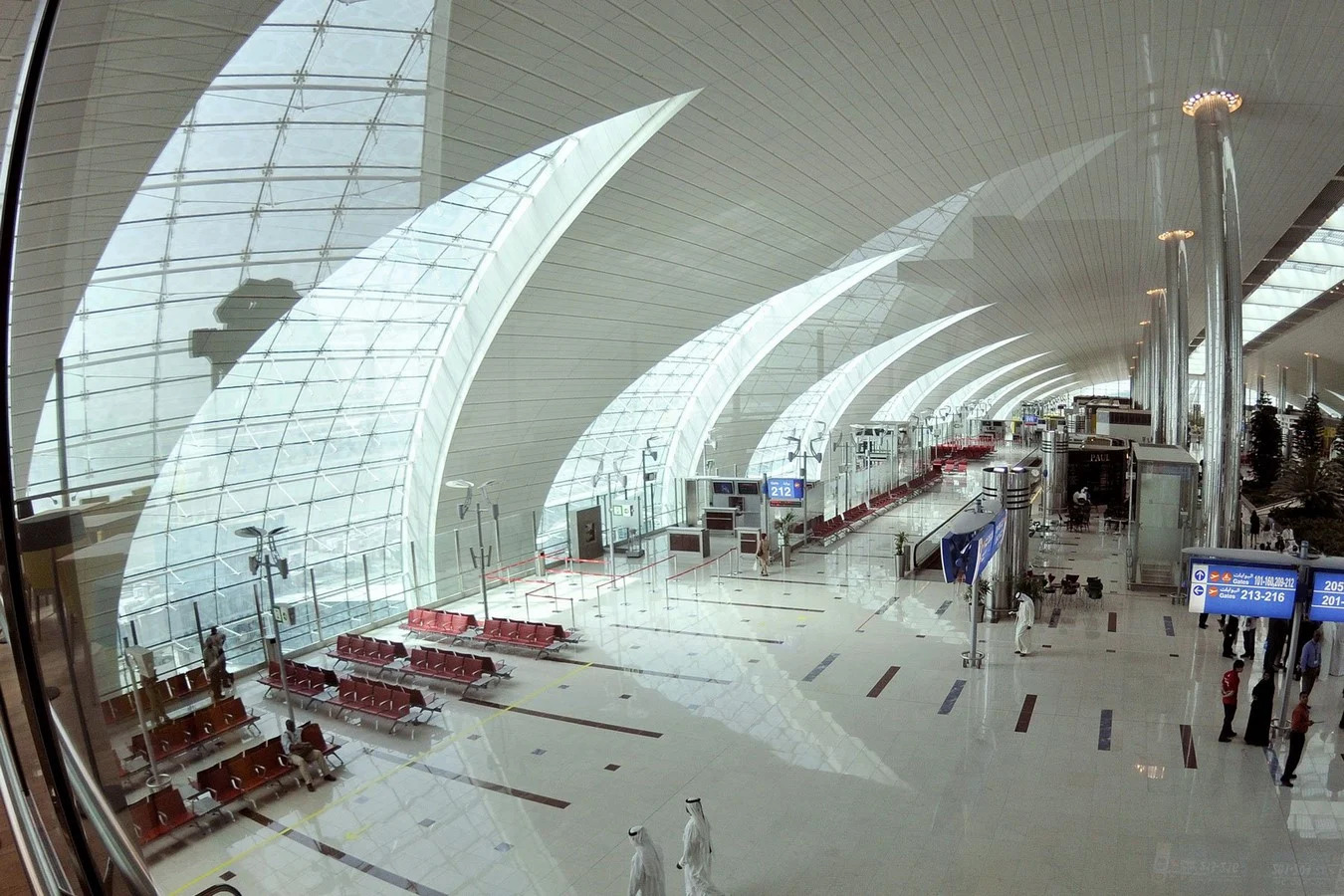
Table of Contents Show
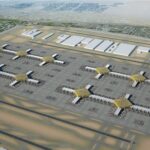
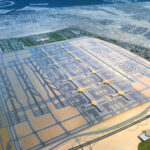
Al Maktoum International Airport (DWC), located in Dubai South, is being expanded into what is planned to be the world’s largest aviation hub, with its first phase scheduled to open in 2032. The AED128 billion project will eventually handle more than 260 million passengers a year across five parallel runways, seven concourses, and over 430 aircraft stands. Dubai is building one of the most ambitious airports the world has ever seen, and the scale of it is hard to overstate. After years of planning, the expansion of the airport has moved into a large-scale construction phase in Dubai South, with billions of dirhams in contracts already under way. The goal is a single aviation city designed to carry the emirate’s air traffic for decades, eventually replacing Dubai International Airport (DXB) as the city’s main gateway. Here is what the project involves, who is designing it, and why it matters for the future of airport architecture.
What Is Al Maktoum International Airport?
Al Maktoum International Airport, also known as Dubai World Central (DWC), is an international airport in the Jebel Ali area of Dubai, in the United Arab Emirates. It first opened in 2010 with a focus on cargo and a small number of passenger flights. The current project turns it from a secondary facility into Dubai’s primary aviation hub. The two names point to the same place, which sometimes causes confusion: “Al Maktoum International” is the official airport name, while “Dubai World Central” describes the wider development built around it. The airport sits at the heart of Dubai South, a planned district that brings together aviation, logistics, business, and residential communities. When Sheikh Mohammed bin Rashid Al Maktoum, ruler of Dubai, approved the AED128 billion (around 34.8 billion US dollars) expansion in April 2024, it set in motion a plan to gradually move all of Dubai’s air operations from DXB to this new site. Dubai International Airport handled over 95 million passengers in 2025, and that pressure on existing infrastructure is a key reason the city needs the extra capacity. What makes this dubai world central al maktoum international airport project different from a standard terminal upgrade is its ambition. The masterplan treats the airport as the core of an entire city, with rail, road, and metro links planned to connect it to the rest of the emirate. Recent airport projects around the world, from the mountain terminal at Lishui Airport in China to new Gulf mega-hubs, show how aviation buildings have grown into architectural landmarks in their own right.
🔢 Quick Numbers
- AED128 billion (about 34.8 billion US dollars) total investment, approved April 2024 (Dubai Government, 2024)
- More than 260 million annual passenger capacity at full completion (Dubai Media Office, 2026)
- 12 million tonnes of annual cargo capacity once complete (Dubai Media Office, 2026)
- Five parallel runways and more than 430 aircraft stands in the final masterplan (Dubai Media Office, 2026)
A 2032 Opening and a Phased Construction Plan
The development is being delivered in phases rather than all at once. The first operational phase is on track to open in 2032 and will provide capacity for roughly 150 million passengers a year through one new passenger terminal and four concourses. Later phases will add the remaining runways, the second terminal, and the additional concourses that take the airport to its full size. According to Dubai’s government, the project has entered a serious build stage. Contracts worth AED13 billion are currently under execution across packages that include enabling works, runway infrastructure, and the first foundations for terminals and gates. Authorities have said that further contracts exceeding AED55 billion are due to be awarded in the months ahead, which signals how quickly the work is ramping up. The numbers behind the groundwork give a sense of the effort involved. Dubai Aviation Engineering Projects reported that more than 10 million work hours had been completed over a recent 15 month span, with the on-site workforce expected to climb from around 9,000 today to roughly 120,000 at peak construction. That kind of staffing tells you this is less a building project than the construction of a small city.
📐 Technical Note
Early works on the site include more than 17,000 concrete piles, over 45 million cubic metres of excavation, and around 4.5 million cubic metres of concrete in the core infrastructure package, according to Dubai Aviation Engineering Projects (2026). The terminal plan is built around 407 Code-E contact gates, the gate standard sized for large wide-body aircraft such as the Boeing 777 and Airbus A380.
Who Is Designing Al Maktoum International Airport?
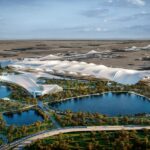
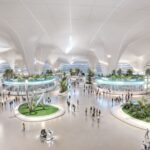
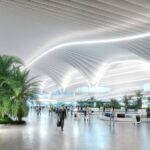
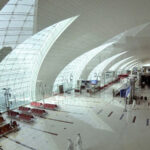
The design of Al Maktoum International Airport is led by the Austrian architecture firm Coop Himmelb(l)au, working with Dar Al-Handasah as the main consultant for master planning and design. The client is Dubai Aviation Engineering Projects (DAEP), and the construction group Mace was appointed as delivery partner. You can see the firm’s own account of the scheme on the Coop Himmelb(l)au project page and the wider aviation portfolio on the Dar Al-Handasah website. At the center of the concept is the roof. The architects describe it as both a working part of the building and a statement of ambition, designed with wide spans and tall, open interior spaces that let in plenty of daylight. Rather than a sealed box, the terminal is meant to feel open and connected, with smart wayfinding and natural light guiding people through it. Coverage of the design on ArchDaily highlights how the team used algorithmic and parametric methods to work out the geometry of these large structures. That computational approach is becoming standard for projects at this scale. The firm has said it analysed daylight levels and prevailing winds to fine-tune the orientation and shape of the terminal, a process that draws on the same toolset covered in our introduction to parametric architecture. Coop Himmelb(l)au also sits among the global studios profiled in our look at the top parametric architecture firms shaping large public buildings today.
🎓 Expert Insight
“The design for Al Maktoum International Airport is intended as the airport for the future. Passengers will not be treated like suitcases and the journey begins as soon as they enter the airport building.”, Wolf D. Prix, co-founder of Coop Himmelb(l)au (speaking to Newsweek)
Prix’s comment points to a shift in how large terminals are being designed. Instead of treating travelers as cargo to be processed, the airport tries to make the experience itself part of the architecture, from the moment of arrival at the building.
The design also looks to local identity. Coop Himmelb(l)au has said the architecture references Dubai’s heritage, mixing traditional design cues with modern materials and engineering. That balance, a building that reads as both forward-looking and rooted in its place, is one of the harder problems in airport design, where the pull toward generic, repeatable terminals is strong. For more on how the discipline’s leading practices approach work at this size, see our roundup of the best architecture firms in the world.
💡 Pro Tip
When designing large terminal roofs for hot, sunny climates like the Gulf, run daylight and solar gain studies early and pair them with prevailing wind analysis before fixing the building’s orientation. Getting the roof geometry and orientation right at the concept stage lets you bring in soft natural light while cutting cooling loads, which is far cheaper than correcting an overheating glass hall after the structure is built.
Runways, Terminals, and Total Capacity
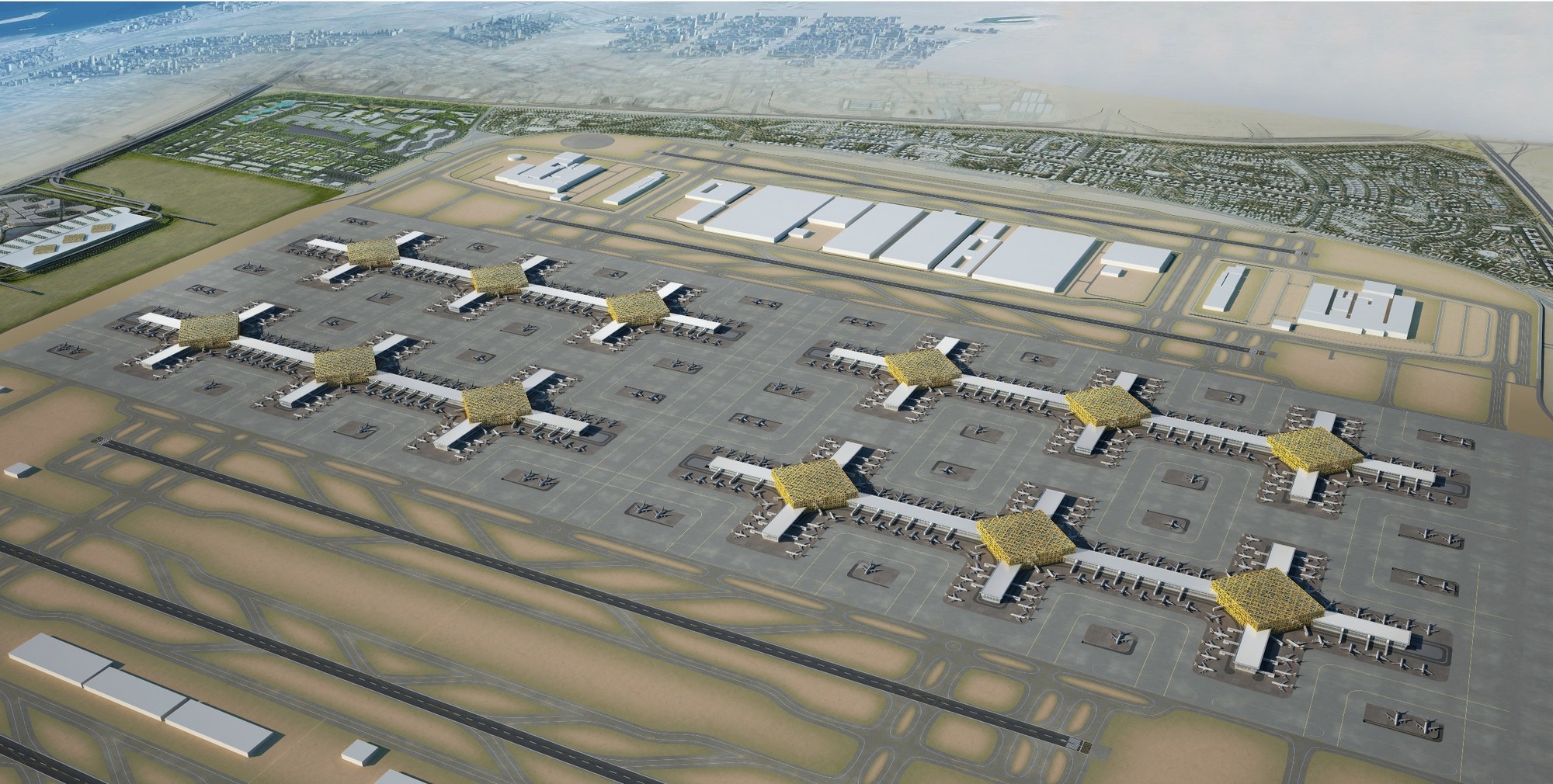
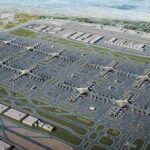
At full completion, the airport is designed around five parallel runways able to operate independently of one another, which is what allows for very high aircraft movement rates. The plan also includes two passenger terminals, seven concourses, and more than 430 aircraft stands, alongside an Automated People Mover to carry passengers between distant parts of the site. Multimodal links to future rail, metro, and road networks are part of the masterplan, with design work already under way on a metro extension toward the new terminal. The cargo side is just as large. The airport is built to handle up to 12 million tonnes of freight a year, reinforcing Dubai’s role as a logistics gateway between Europe, Asia, and Africa. To put the ambition in context, it helps to compare the dubai al maktoum international airport plan against the airport it is set to replace.
How Al Maktoum International (DWC) Compares to Dubai International (DXB)
The table below sets the planned figures for the new airport next to the current numbers for DXB. The DWC values describe the project at full completion, while the DXB values reflect its existing capacity and 2025 traffic.
| Feature | Al Maktoum Intl (DWC) | Dubai Intl (DXB) |
|---|---|---|
| Operational status | Phase 1 opens 2032 (under construction) | Operational since 1960 |
| Ultimate passenger capacity | 260+ million per year | About 90 million per year |
| 2025 passenger traffic | Not yet operating at scale | 95.2 million |
| Parallel runways | 5 (planned) | 2 |
| Annual cargo capacity | 12 million tonnes | 2.2 million tonnes (2025) |
| Site area | About 70 square kilometres | About 29 square kilometres |
The contrast explains the strategy. DXB is already running close to its ceiling, with 2025 traffic slightly above its rated capacity, and it has little room left to grow on its current footprint. The new airport offers room to roughly triple Dubai’s passenger throughput while consolidating operations on a single, much larger site.
How the Airport Fits Into Dubai South
The new airport is not being planned as a standalone terminal. It anchors Dubai South, a district designed for a population of around one million people, with logistics, aviation, business, and residential zones arranged around the runways. The idea is an aviation city where living, working, and moving cargo all sit within the same masterplan, an approach often called an aerotropolis. The economics are central to the case for it. Officials have tied the project to the Dubai Economic Agenda, known as D33, framing it as a driver of investment, jobs, and trade for decades to come. Emirates, which will use the new airport as its single hub, has signalled an investment of 10 to 12 billion US dollars in the development, while low-cost carrier flydubai is also expanding its operations in the same area. Once the new airport is fully operational, Dubai plans to move all flights there and eventually retire DXB, opening up one of the city’s largest future redevelopment sites.
Al Maktoum and the Race for the World’s Largest Airport
Dubai is not building in isolation. Across the Gulf, Saudi Arabia is developing King Salman International Airport in Riyadh, master-planned by Foster + Partners, which is set to span around 57 square kilometres with six runways and capacity for more than 100 million passengers a year, timed for the Riyadh Expo 2030 and the 2034 FIFA World Cup. Both projects are competing, in part, for the title of the world’s largest airport. That competition matters beyond bragging rights. It is pushing the design of very large terminals forward, with each project testing new ideas in roof structure, climate control, passenger flow, and automation. For architects and students, these mega-airports have become live experiments in how far a single building type can be stretched, much as earlier eras produced the expressive terminals featured in our look at the most influential architects of the 20th century.
What the New Airport Means for Travelers and Architecture
For travelers, the change will be gradual rather than sudden. For some years, flights will operate from both DXB and the expanding al maktoum international airport dubai site as the transition is managed, so checking which airport a flight uses will matter. Over time, though, the new hub is intended to carry the full load, with faster transfers, more gates, and a passenger experience shaped around the building rather than bolted onto it. For architecture, the significance is larger. A terminal designed for a quarter of a billion passengers, built with parametric tools and tuned to its desert climate, sets a reference point for what airports can be. Alongside landmarks like the Jewel at Changi, profiled in our piece on the world’s most beautiful structures, it signals that aviation buildings are now judged on design ambition as much as on throughput.
✅ Key Takeaways
- Al Maktoum International Airport (DWC) is being expanded into a planned world’s largest aviation hub, with Phase 1 opening in 2032.
- At full completion it is designed for more than 260 million passengers and 12 million tonnes of cargo a year, across five parallel runways and seven concourses.
- The design is led by Coop Himmelb(l)au with Dar Al-Handasah, using parametric methods and climate analysis to shape a wide-span, daylight-filled terminal.
- The AED128 billion project anchors Dubai South and is built to gradually replace Dubai International Airport (DXB).
- It is one of two Gulf mega-airports, alongside Riyadh’s King Salman International, redefining the scale of modern airport architecture.
Figures, timelines, and contract values are based on the latest available announcements and projections, and may change as the project moves through its phases.
Final Thoughts
The project is one of the clearest signs of where large-scale aviation architecture is heading. It combines a phased delivery plan, a vast site, and a design that treats the terminal as a civic landmark rather than a processing shed. Whether it ends up holding the title of world’s largest airport or shares that distinction with Riyadh, the project will shape how the next generation of airports is planned, built, and experienced. For anyone following architecture, infrastructure, or the future of travel, the work taking shape in Dubai South over the coming years is worth watching closely.
Frequently Asked Questions
When will Al Maktoum International Airport open?
The first phase of the expanded airport is scheduled to begin operations in 2032. That phase is planned to handle around 150 million passengers a year, with later phases taking the airport to its full capacity of more than 260 million passengers annually.
Will Al Maktoum International Airport replace Dubai International Airport (DXB)?
Yes. Dubai’s plan is to gradually move all air operations from DXB to the new airport once enough capacity is in place. During the transition, both airports will operate, and DXB is expected to close as the main hub only after the new airport is fully running.
How big will Al Maktoum International Airport be?
At full completion the airport will cover around 70 square kilometres, with five parallel runways, two passenger terminals, seven concourses, and more than 430 aircraft stands. That makes it roughly the size of a small city and far larger than Dubai International Airport.
Who is the architect of Al Maktoum International Airport?
The lead architecture and design firm is Coop Himmelb(l)au, based in Austria, working with Dar Al-Handasah as the main master planning and design consultant. The client is Dubai Aviation Engineering Projects (DAEP), and Mace is the appointed delivery partner.
- al maktoum international airport dubai
- al maktoum international airport dubai uae
- al maktoum international airport dwc dubai united arab emirates
- al maktoum international airport in dubai
- dubai al maktoum international airport
- dubai international airport al maktoum
- dubai international airport vs al maktoum
- dubai world central - al maktoum international airport
- dubai world central al maktoum international airport

Restorers Uncover 16th-Century Murals Hidden by Nuns in Villa Silvestri Rivaldi
Conservators in Rome are uncovering 16th-century murals hidden for 300 years inside...
 illustrarch Editoral Team3 Mins read

A New Book Records the 1970s Interiors of Ebony and Jet’s Chicago Headquarters
820 Ebony/Jet collects Barbara Karant's photographs of the empty Johnson Publishing Company...
illustrarch Editoral Team2 Mins read
A 2,500-Year-Old Solar Observatory in Puebla Is the First Group E Complex Found Outside the Maya Area
Archaeologists working for Mexico's INAH have confirmed that two platforms at Teteles...
illustrarch Editoral Team2 Mins read
India Art, Architecture & Design Biennale 2026: Ministry of Culture Opens Delhi Monuments
Delhi's monuments, including Purana Quila and the Red Fort, will host the...
illustrarch Editoral Team2 Mins read


Leave a comment