

TPO Roofing: Membrane Pros, Cons and Cost
TPO roofing material is a single-ply thermoplastic polyolefin membrane widely used on flat commercial roofs. This guide covers installation methods, membrane thickness, energy reflectivity, lifespan, cost per square foot, and a direct comparison of TPO vs. EPDM vs. PVC.
 illustrarch Editoral Team24 October 20267 Mins read2
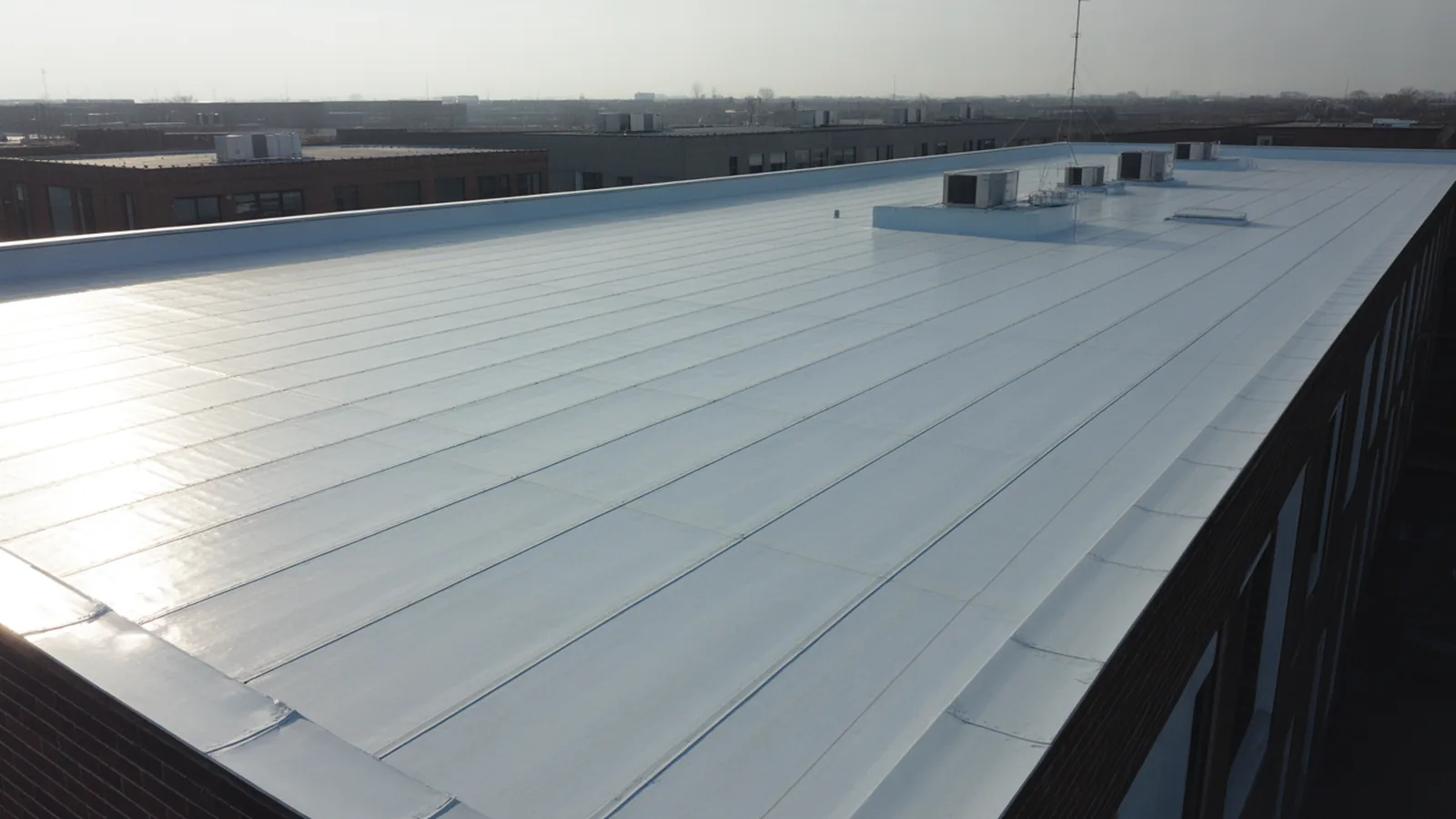
Table of Contents Show
TPO roofing material is a single-ply thermoplastic polyolefin membrane used predominantly on commercial flat and low-slope roofs. Its white or light-colored surface reflects solar heat, which can reduce cooling loads in a building by a measurable amount, while heat-welded seams provide a watertight bond that outperforms adhesive-joined alternatives.
What Is TPO Roofing Material?
Thermoplastic polyolefin is a polymer blend, typically combining polypropylene and ethylene-propylene rubber. According to the Wikipedia entry on Thermoplastic Olefin, roofing applications favor TPO specifically because it resists degradation from solar UV radiation, a weakness of many other polymer membranes. The resulting sheet is flexible, lightweight, and chemically stable across a wide temperature range.
TPO membranes are manufactured in rolls, typically 10, 12, or 20 feet wide. The material is available in several thicknesses, most commonly 45-mil, 60-mil, and 80-mil sheets. Thicker membranes resist puncture more effectively and carry longer manufacturer warranties, but they also cost more per square foot. For most new commercial construction, 60-mil is the industry standard.
📐 Technical Note
ASTM D6878 is the primary standard governing thermoplastic polyolefin roofing membranes. It specifies minimum requirements for thickness, tensile strength, elongation, and heat aging. A 45-mil membrane must retain at least 90% of its original tensile strength after heat aging, while 60-mil and 80-mil membranes face similar retention thresholds. Always verify that a product carries ASTM D6878 compliance before specification.
The market for TPO has grown significantly since the 1990s. According to Carlisle SynTec, one of the largest TPO manufacturers, TPO now represents the largest segment in the commercial roofing industry, and the company alone has installed more than three billion square feet of its Sure-Weld TPO membrane globally.
How Is TPO Installed?
TPO is a single-ply membrane, meaning one layer of material covers the roof deck (with insulation boards beneath it). Three attachment methods are common:
- Mechanically fastened: The membrane is secured to the deck with plates and fasteners along its edges, then overlapping sheets are heat-welded at the seams. This is the fastest and most cost-effective method.
- Fully adhered: Bonding adhesive is applied to both the insulation board and the underside of the membrane. This produces a low-profile roof with no fastener stress and is preferred in high-wind zones.
- Ballasted: The membrane lays loose and is held in place by river stone or pavers. Ballasted systems are uncommon today because the added weight creates structural load challenges.
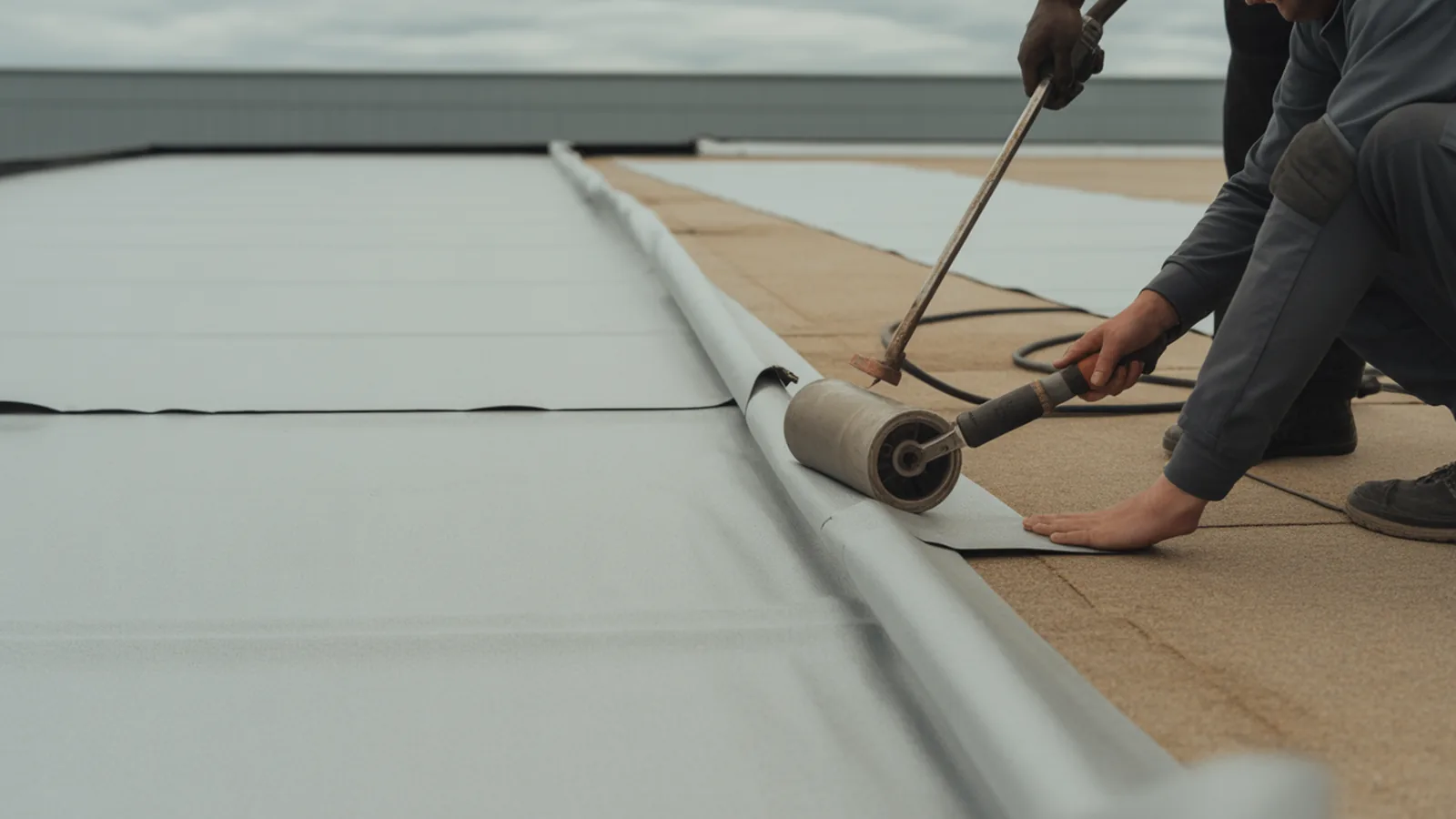
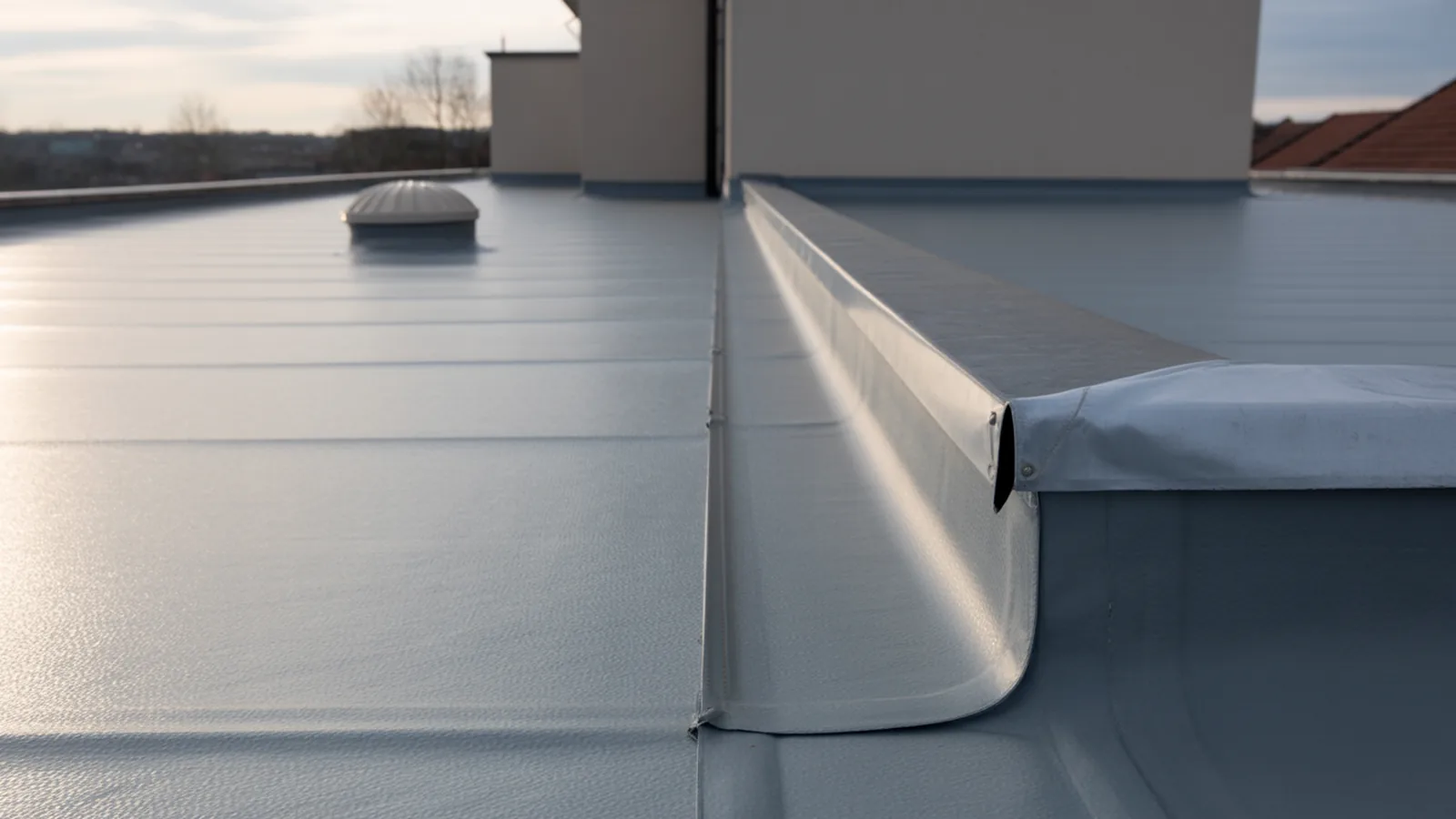
Seam welding is what sets TPO apart from EPDM. A hot-air welder, either a robotic machine or a hand-held device, heats the overlapping membrane edges to roughly 1,000 degrees Fahrenheit. The thermoplastic material melts and fuses into a single homogeneous bond. A proper weld creates a joint that is stronger than the membrane itself. Probing the seam with a blunt tool after cooling confirms whether fusion occurred fully. Improperly welded seams are the leading cause of TPO failures in the field.
💡 Pro Tip
When specifying TPO on a project in a region with wide temperature swings, require the contractor to perform test welds and probe them before the full installation begins. Hot-air welder settings that work in 50-degree weather will produce insufficient fusion at 90 degrees if not recalibrated. A simple 5-minute pre-job check prevents the most common cause of membrane failures.
Energy Performance: The Reflectivity Advantage
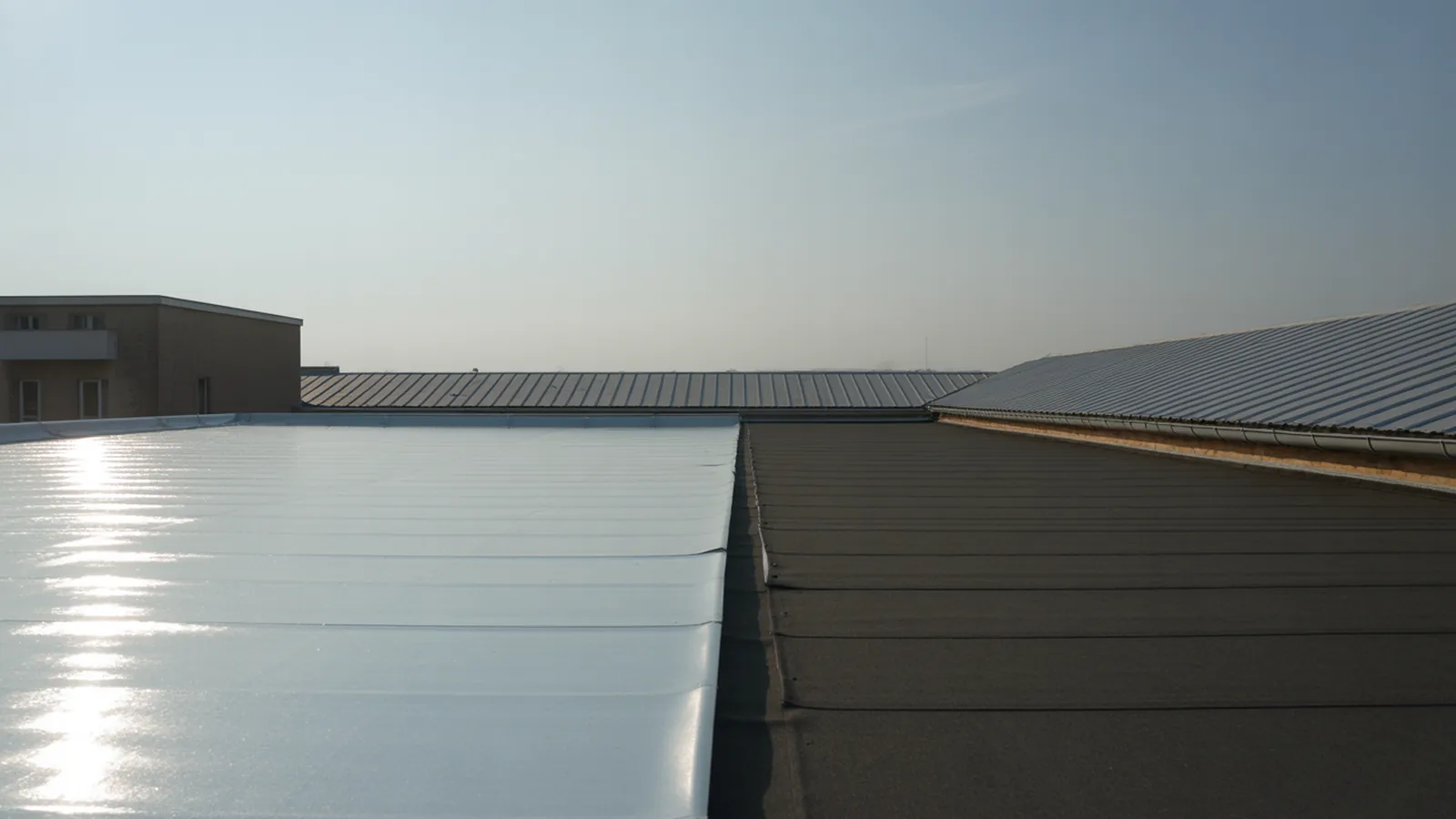
White TPO membranes carry a solar reflectance index (SRI) high enough to qualify under the U.S. Environmental Protection Agency’s ENERGY STAR Roof Products program. A standard white TPO surface typically reflects 70 to 80 percent of incoming solar radiation, compared to roughly 5 to 10 percent for a conventional black EPDM roof. On a hot summer day, this can keep the roof surface temperature 50 to 60 degrees Fahrenheit lower than a dark membrane, directly reducing the heat transferred into the building below.
This reflectivity benefit matters most in climates with long, hot summers. In colder climates, a dark roof that absorbs heat during winter can actually reduce heating loads, which is why some specifiers in northern regions choose gray or tan TPO membranes rather than white.
📌 Did You Know?
The urban heat island effect, documented by the U.S. EPA, shows that city surface temperatures can run 1 to 7 degrees Fahrenheit higher than surrounding rural areas, partly because of dark roofing materials absorbing solar energy. Widespread adoption of white TPO membranes on commercial buildings is one of the few building-scale interventions that directly counters this effect by reflecting solar radiation back into the atmosphere rather than re-emitting it as heat.
How Long Does a TPO Roof Last?
TPO lifespan is genuinely variable and a subject of ongoing industry debate. The material became commercially widespread only in the early 1990s, so the oldest documented installations are roughly 30 years old. Manufacturer warranties on 60-mil membranes typically run 15 to 20 years, with some manufacturers offering up to 30 years on 80-mil products. According to the 2026 rubber roof cost guide published by This Old House, TPO has a lifespan of approximately 7 to 15 years under typical conditions, which reflects observed field performance on early-generation membranes rather than current formulations.
Modern TPO formulations have improved substantially over first-generation products. Early batches suffered from oxidation brittleness and seam failures, issues that manufacturers addressed through reformulation. Today’s 60-mil products from established manufacturers generally perform at the higher end of the range when installed correctly and maintained with periodic inspections.
🔢 Quick Numbers
- 45-mil: minimum TPO thickness for most commercial applications; used in budget-driven projects with shorter warranty terms
- 60-mil: current industry standard; most manufacturer warranties cover 15 to 20 years on this thickness
- 80-mil: premium specification; Carlisle SynTec offers warranties up to 30 years on 80-mil Sure-Weld membranes (Carlisle SynTec, 2025)
- $4.50 to $14/sq ft: typical installed cost range for TPO, per This Old House 2026 Rubber Roof Cost Guide
How Much Does TPO Roofing Cost Per Square Foot?
Installed TPO roofing costs range from roughly $4.50 to $14 per square foot, depending on membrane thickness, building size, attachment method, and regional labor rates. This Old House’s 2026 cost guide places the overall range for a rubber membrane roof at $7,000 to $23,000 for a typical residential flat roof. For commercial projects priced by the roofing square (100 square feet), the cost normally falls between $450 and $1,000 per square.
Material costs account for roughly 40 percent of that total. A 60-mil TPO membrane runs approximately $0.60 to $0.90 per square foot for the sheet alone, before insulation, fasteners, flashings, or labor. Fully adhered systems cost more to install than mechanically fastened ones because adhesive coverage is labor-intensive, but they produce a cleaner finished appearance and perform better in high-wind areas.
💡 Pro Tip
Get at least three bids from certified installers rather than general contractors. TPO requires specialized hot-air welding equipment and training. An uncertified crew that underheats seams can produce a roof that looks finished but leaks within a year. Ask bidders to confirm which membrane brand and thickness they are pricing, since quotes for 45-mil versus 60-mil sheets can differ by 20 to 30 percent while appearing identical in a proposal.
TPO Roofing Pros and Cons
No single membrane material suits every project. Here is an honest look at where TPO excels and where it falls short, based on the range of commercial roofing systems available today.
Advantages of TPO roofing:
- High solar reflectance reduces cooling costs in warm climates
- Heat-welded seams create a monolithic, waterproof membrane
- Resistant to puncture, tears, and impact compared to thinner membranes
- Flexible at low temperatures, reducing cracking risk in cold climates
- Recyclable at end of service life
- Typically 25 to 35 percent less expensive than PVC membranes
- Compatible with most common insulation board types
Disadvantages of TPO roofing:
- Installation quality is highly dependent on welder skill and equipment calibration
- Early-generation formulations had documented durability problems
- Not ideal in heavily shaded or cold-dominant climates where heat absorption reduces energy costs
- Less chemically resistant than PVC, unsuitable near grease or oil exhausts
- Shorter documented lifespan than EPDM on average
TPO vs. EPDM vs. PVC: Which Single-Ply Membrane Fits Your Project?
The three dominant single-ply membrane types each occupy a different performance and cost position. The NRCA Roofing Manual: Membrane Roof Systems 2023 covers all three in depth for specifiers needing code-compliant technical guidance. The table below summarizes the key differences for a typical commercial project.
| Feature | TPO | EPDM | PVC |
|---|---|---|---|
| Material type | Thermoplastic polyolefin | Synthetic rubber (thermoset) | Polyvinyl chloride (thermoplastic) |
| Seaming method | Heat-welded | Adhesive or tape | Heat-welded |
| Standard color | White (also gray, tan) | Black (white-coated available) | White or light gray |
| Solar reflectance | High (70-80%) | Low (5-10% standard black) | High (70-80%) |
| Typical installed cost | $4.50-$14/sq ft | $4.25-$12/sq ft | $6-$16/sq ft |
| Observed lifespan | 7 to 20+ years | 20 to 30 years | 20 to 30 years |
| Chemical resistance | Moderate | Moderate | High (grease, oil) |
| Recyclability | Yes | Limited | Yes (with plasticizer concerns) |
| Best climate fit | Hot, sunny | Cold or mixed | Hot, chemical exposure |
EPDM wins on longevity and cost in cold-climate applications. PVC wins where chemical resistance matters, such as near kitchen exhaust vents. TPO sits in the middle, offering reflectivity and heat-weldable seams at a lower price point than PVC, which makes it the default choice for many commercial new-builds in the U.S.
Is TPO Roofing Right for Your Building?
TPO is a strong match for flat or low-slope commercial roofs in warm to moderate climates, particularly when energy efficiency is a priority and the project budget favors a mid-tier specification. A 60-mil membrane on a properly prepared deck, with certified installation and annual inspections, should perform reliably for 15 to 20 years. Understanding how roofing choices affect a building’s long-term performance can help you weigh those factors before committing to any system.
Where TPO falls short is in environments with heavy chemical exposure, or on buildings where durability is the primary concern over initial cost. In those cases, PVC or a standing-seam metal roof may serve better despite their higher upfront investment.
⚠️ Common Mistake to Avoid
A frequent error is selecting membrane thickness based on price alone. Upgrading from 45-mil to 60-mil TPO typically adds only $0.15 to $0.25 per square foot in material cost, yet it meaningfully improves puncture resistance and extends warranty coverage by 5 or more years. On a 10,000-square-foot roof, that upgrade costs $1,500 to $2,500 more in materials but can defer a full re-roofing project by several years.
Putting It All Together
TPO roofing material has earned its place as the leading single-ply membrane in commercial construction by combining acceptable upfront cost with genuine energy performance and reliable heat-welded seams. Its weaknesses are real but manageable: quality depends heavily on installer skill, and the material is not the longest-lived option available. For a building owner or design team weighing flat roof options, the decision usually comes down to climate, budget, and how long the current ownership expects to hold the asset. In hot climates with energy-conscious tenants and a 15-to-20-year investment horizon, a properly specified 60-mil or 80-mil TPO system is a defensible choice that the market has validated at scale.
📚 Part of our guide to Types of Roofs: The Complete Guide to Shapes, Styles and Materials. See also EPDM Roofing: Rubber Roof Pros, Cons and Cost and Types of Commercial Roofing Systems Explained.




Types of Roofs: The Complete Guide to Shapes, Styles and Materials
An overview of the most common roof shapes (gable, hip, flat, mansard,...
illustrarch Editoral Team12 Mins read
Anatomy of a Wet-Climate Roof: The Engineering Behind High-Performance Roofing
How high-performance roofing protects homes in wet climates: multi-layer systems, flashing, ventilation...
 Bahattin Duran3 Mins read

Benefits of Green Roofing vs Solar Roof: Which Performs Better in Urban Buildings?
Green roof or solar roof? In dense city buildings, the two systems...
 Furkan Sen8 Mins read
How to Select the Most Reliable Shelter Installation Team
Selecting a reliable shelter installation team involves defining project specifications, vetting credentials,...
Bahattin Duran3 Mins read


Leave a comment