Top 10 Examples of Contemporary Vernacular Architecture Around the World
Contemporary vernacular architecture bridges tradition and modernity by reinterpreting local materials, climates, and cultural practices through innovative design. From Gando Primary School and METI Handmade School to Therme Vals and S House, these ten projects show how deeply rooted architectural knowledge can inspire sustainable, meaningful, and context-sensitive buildings. Together, they reveal how architecture can evolve without losing its connection to place and identity.
Contemporary vernacular architecture represents a meaningful dialogue between tradition and modernity, grounded in a deep understanding of place. Rather than copying historical forms, it reinterprets local building techniques, materials, climates, and cultural practices through contemporary design thinking. Across the world, architects are increasingly turning to vernacular principles as a response to environmental challenges, cultural homogenization, and social responsibility. These projects demonstrate that innovation does not require abandoning tradition; instead, it often emerges from engaging with it critically and creatively. The following ten examples illustrate how contemporary vernacular architecture is shaping context-sensitive, resilient, and socially engaged buildings across diverse geographies.
Ruff Well Water Resort by AIM Architecture, Credit: Dirk Weiblen
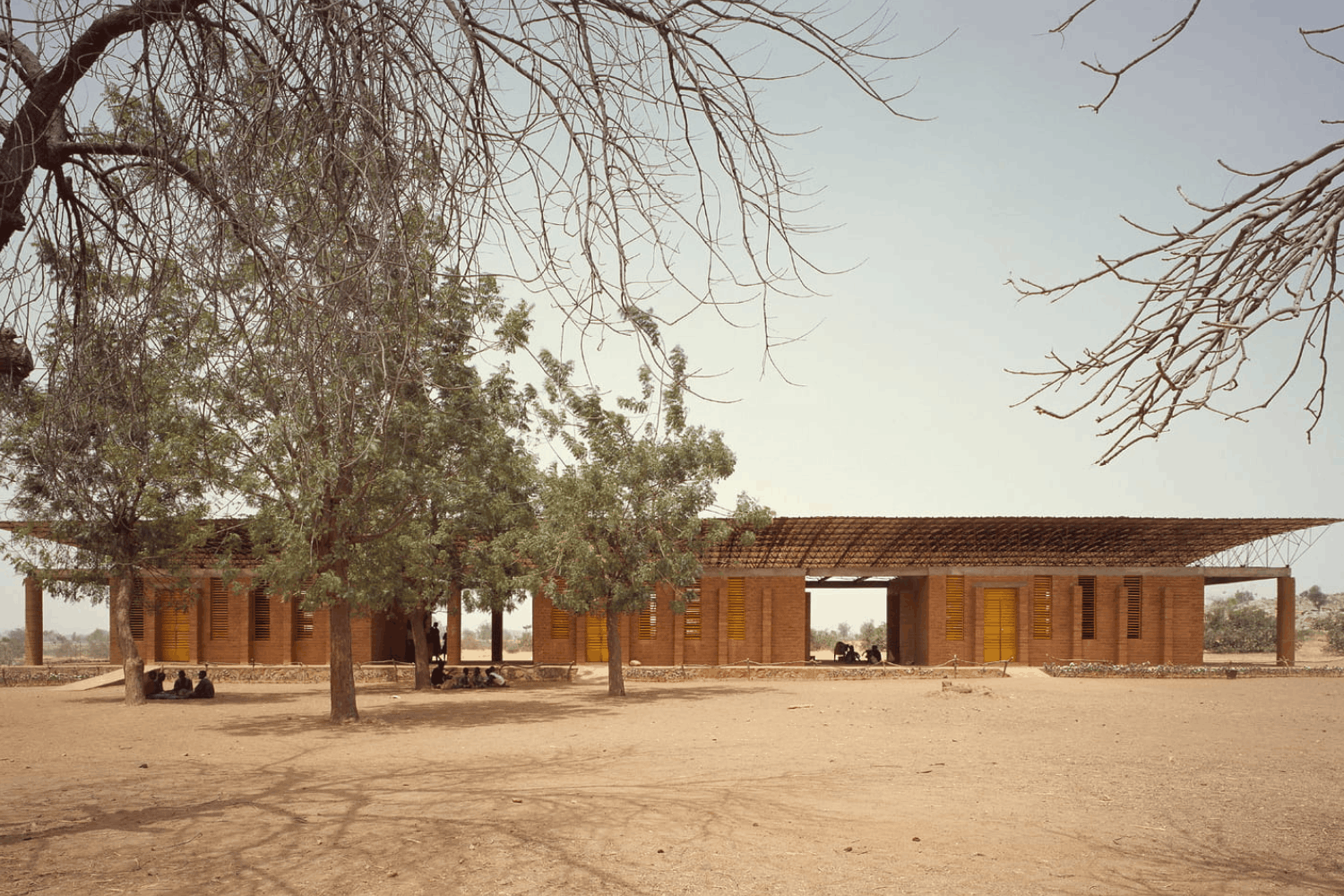
1. Gando Primary School, Burkina Faso
Designed by Francis Kéré, the Gando Primary School has become one of the most influential examples of contemporary vernacular architecture worldwide. Constructed using locally sourced clay bricks, the building responds directly to the harsh climate of Burkina Faso through passive cooling strategies, thick walls, and raised roofs that promote air circulation. Traditional construction knowledge is combined with structural innovation and improved daylighting to create comfortable learning environments. The project’s collaborative construction process, involving local villagers, reinforces cultural continuity while empowering the community. More than a school, it stands as a model for socially responsible, climate-adaptive design.
Gando Primary School by Kéré Architecture, Credit: Siméon Duchoud
2. METI Handmade School, Bangladesh
The METI Handmade School in Rudrapur, designed by Anna Heringer, reimagines traditional earth and bamboo construction within a contemporary educational framework. Built almost entirely by local craftsmen, the school relies on mud walls, bamboo structures, and natural ventilation to create a resilient, low-cost, and environmentally responsive building. Its layered material strategy provides thermal comfort while celebrating local craftsmanship. The project emphasizes dignity, sustainability, and cultural relevance, proving that vernacular materials—often dismissed as “poor”—can meet modern educational and architectural standards with elegance and pride.
Handmade School by Anna Heringer & Eike Roswag, Credit: Kurt Hoerbst
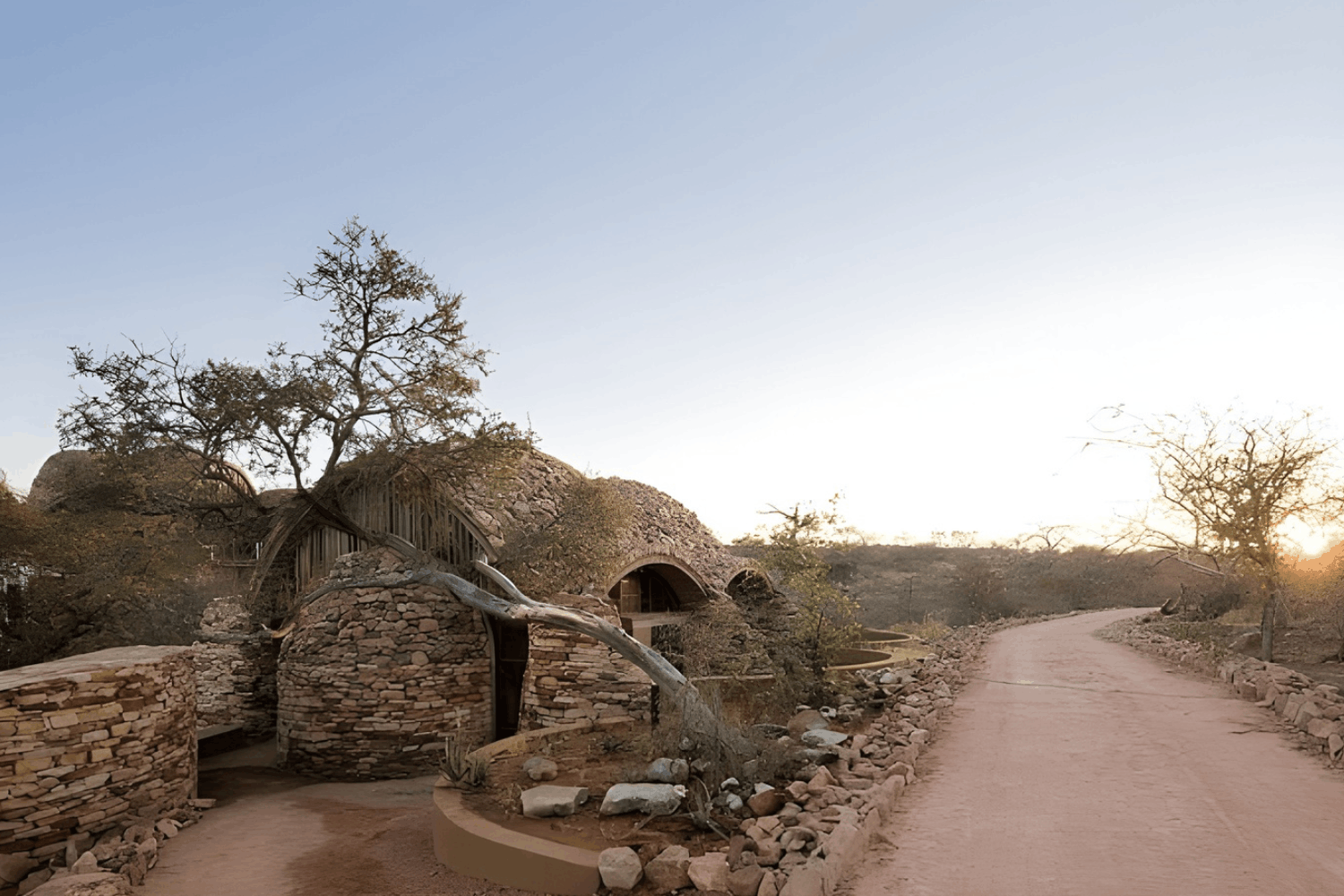
3. Mapungubwe Interpretation Centre, South Africa
Designed by Peter Rich Architects, the Mapungubwe Interpretation Centre draws inspiration from ancient African masonry traditions. The building employs soil-cement tiles and elegant vaulted forms constructed without heavy machinery, relying instead on human skill and local labor. Its architecture reflects the historical significance of the Mapungubwe region while functioning as a contemporary cultural and educational facility. The project demonstrates how vernacular construction logic can inform large-scale public architecture, merging heritage, sustainability, and modern performance.
Mapungubwe Interpretation Centre by Peter Rich Architects, Credit: Iwan Baan
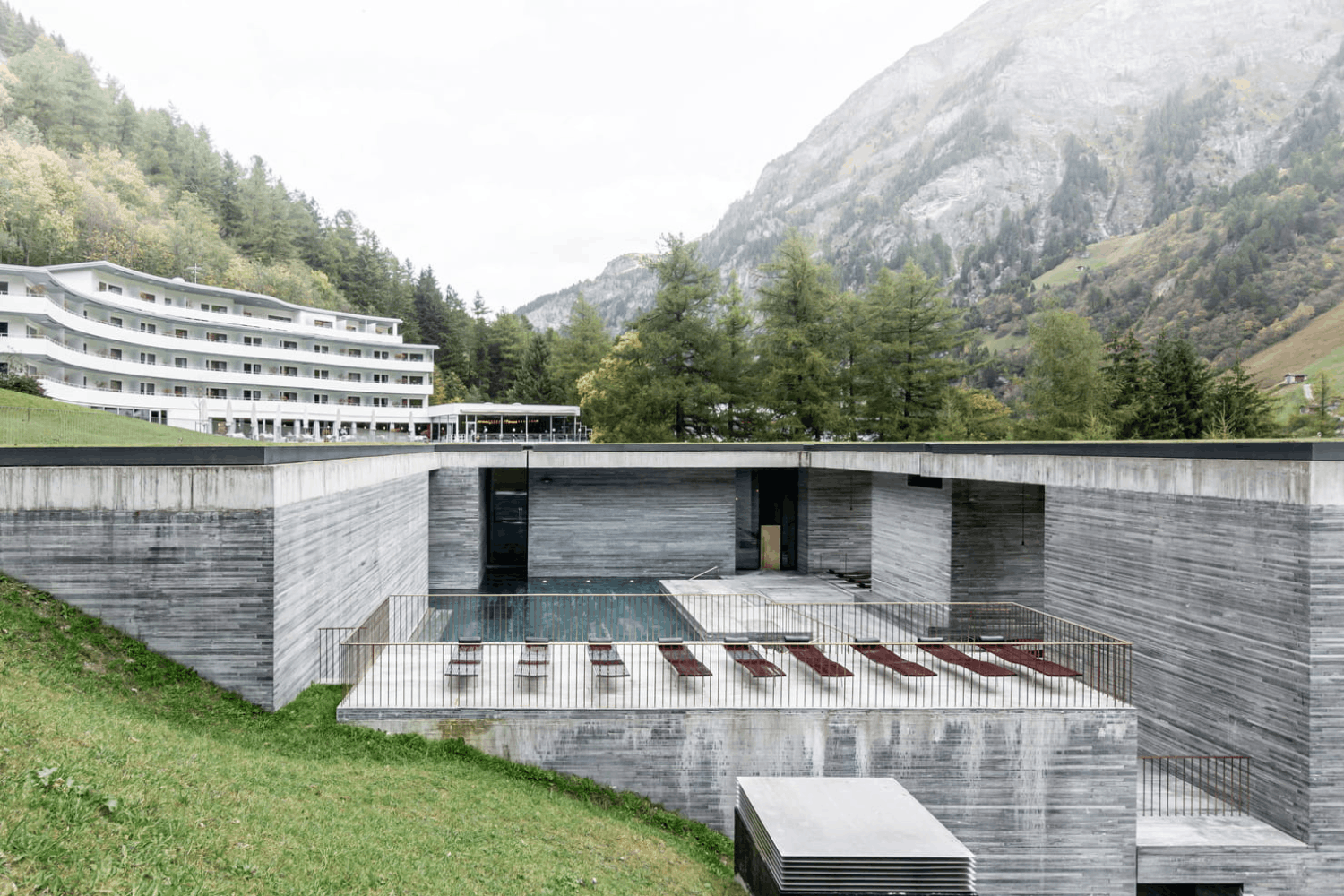
4. Therme Vals, Switzerland
Though highly refined, Therme Vals by Peter Zumthor is deeply rooted in Alpine vernacular traditions. Constructed from locally quarried quartzite, the building feels as though it has been carved directly from the mountain. Its heavy stone walls, controlled light, and sensory spatial sequences echo traditional mountain shelters while achieving a contemporary architectural language. The project illustrates how vernacular architecture can be simultaneously minimal, monumental, and emotionally powerful, grounded in material honesty and place-based experience.
The Therme Vals by Peter Zumthor, Credit: Andrea Ceriani
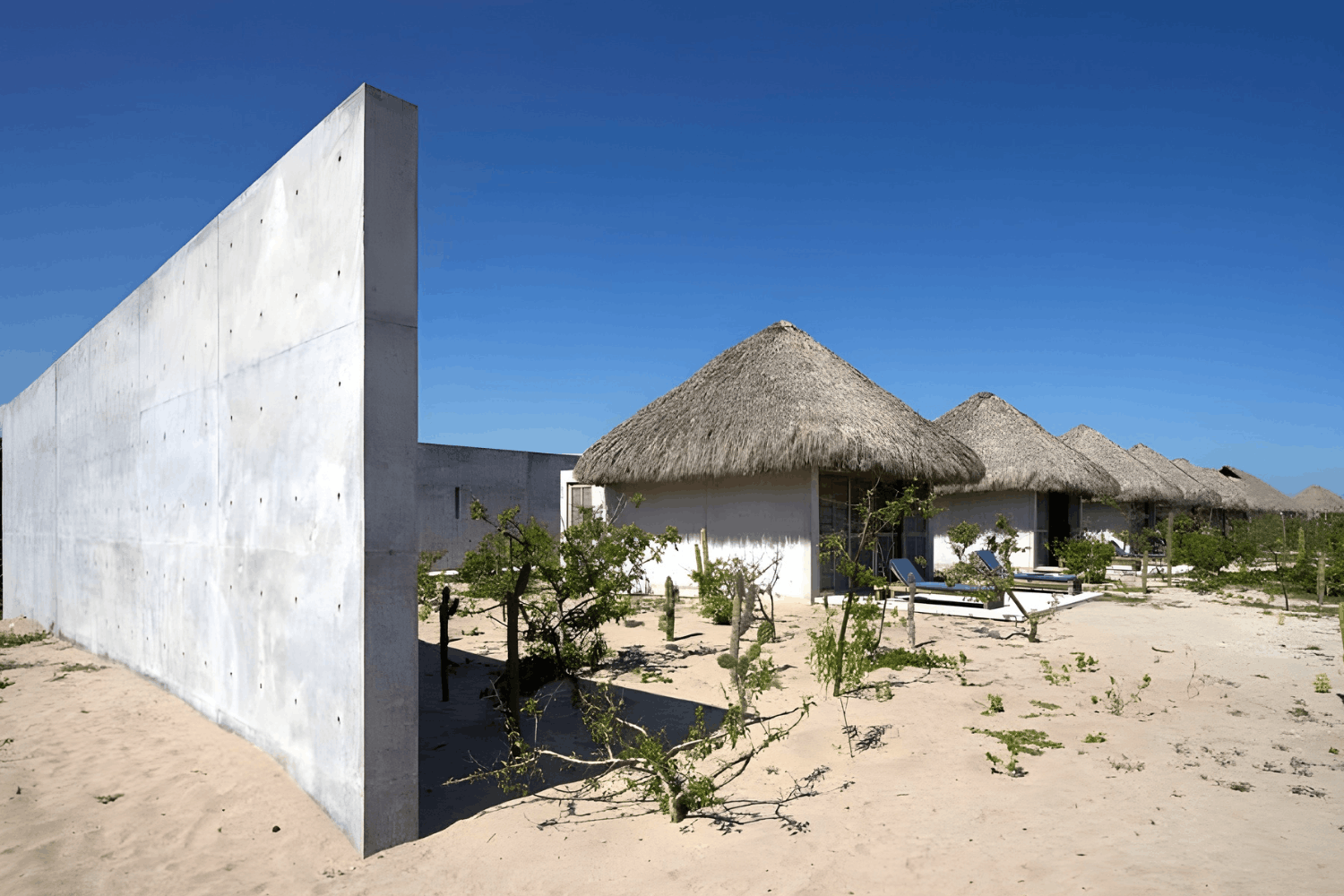
5. Casa Wabi, Mexico
Designed by Tadao Ando, Casa Wabi blends modern concrete architecture with Mexican vernacular spatial principles. Located along the Pacific coast of Oaxaca, the project responds to climate through courtyards, shaded corridors, and long linear walls that frame the surrounding landscape. While the material language is distinctly modern, the spatial organization reflects traditional Mexican architecture’s relationship with openness, enclosure, and outdoor living. The project demonstrates how vernacular ideas can coexist with minimalist contemporary expression.
Casa Wabi by Tadao Ando, Credit: Edmund Sumner
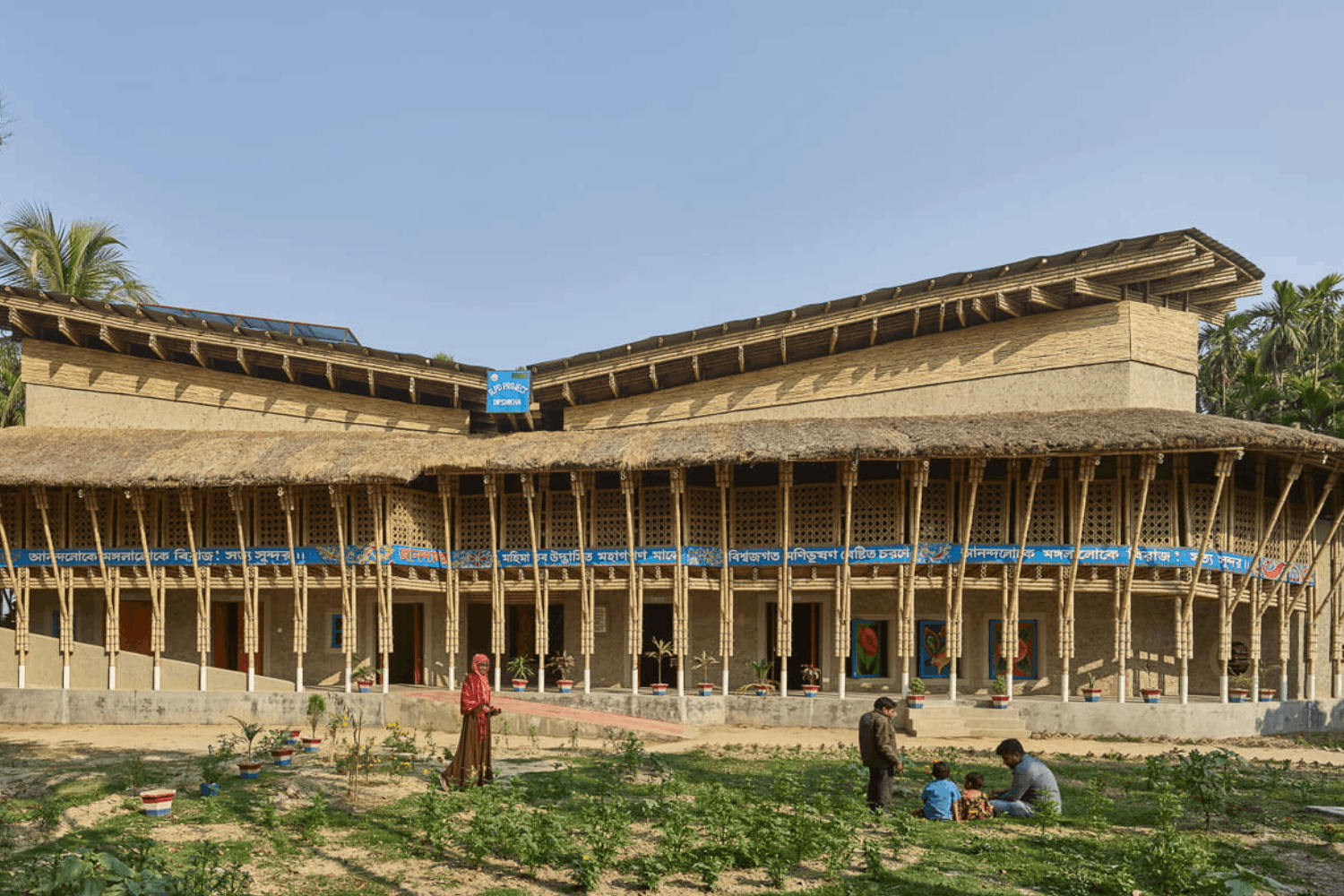
6. Anandaloy Building, Bangladesh
Another significant project by Anna Heringer, the Anandaloy Building combines rammed earth construction with sculptural form and social purpose. Designed as a rehabilitation center and textile workshop, the building challenges stereotypes around vernacular materials, accessibility, and community architecture. Curved ramps, tactile surfaces, and expressive forms redefine what earth architecture can be. The project demonstrates that traditional techniques can be inclusive, experimental, and forward-looking while remaining deeply rooted in local context.
Anandaloy Center by Studio Anna Heringer, Credit: Kurt Hoerbst
7. Rumah Intaran, Indonesia
Rumah Intaran reinterprets the traditional Balinese house through contemporary spatial planning and refined material detailing. The project preserves vernacular principles such as courtyard organization, climatic responsiveness, and spiritual orientation, which are central to Balinese culture. At the same time, it introduces minimalist aesthetics and modern construction methods. This careful balance allows the house to remain culturally grounded while meeting present-day expectations of comfort, durability, and design clarity.
Rumah Intaran by Gede Kresna & Ayu Gayatri, Credit: Sung Kyun Kim
8. Kutch Bhunga Houses, India (Contemporary Adaptations)
In the earthquake-prone regions of Gujarat, contemporary architects have adapted the traditional circular Bhunga house typology using reinforced materials and improved construction detailing. These houses retain thick earthen walls and compact forms that offer thermal comfort and seismic resilience. By enhancing traditional knowledge with modern engineering, the adapted Bhunga houses preserve cultural identity while improving safety and longevity. They stand as a powerful example of how vernacular wisdom can evolve through innovation rather than replacement.
Habitats of Kutch, Credit: www.desource.in
9. Casa de Tierra, Spain
Casa de Tierra revisits Mediterranean earth-building traditions through rammed earth walls and passive design strategies. The house responds sensitively to climate, topography, and local construction culture while embracing contemporary spatial openness and simplicity. Its architecture reflects a growing European interest in low-carbon materials and regional identity. By combining vernacular construction with modern living requirements, Casa de Tierra demonstrates how tradition can inform sustainable residential design in a contemporary context.
Casa de Tierra by Lara Fuster Prieto, Credit: Milena Villalba
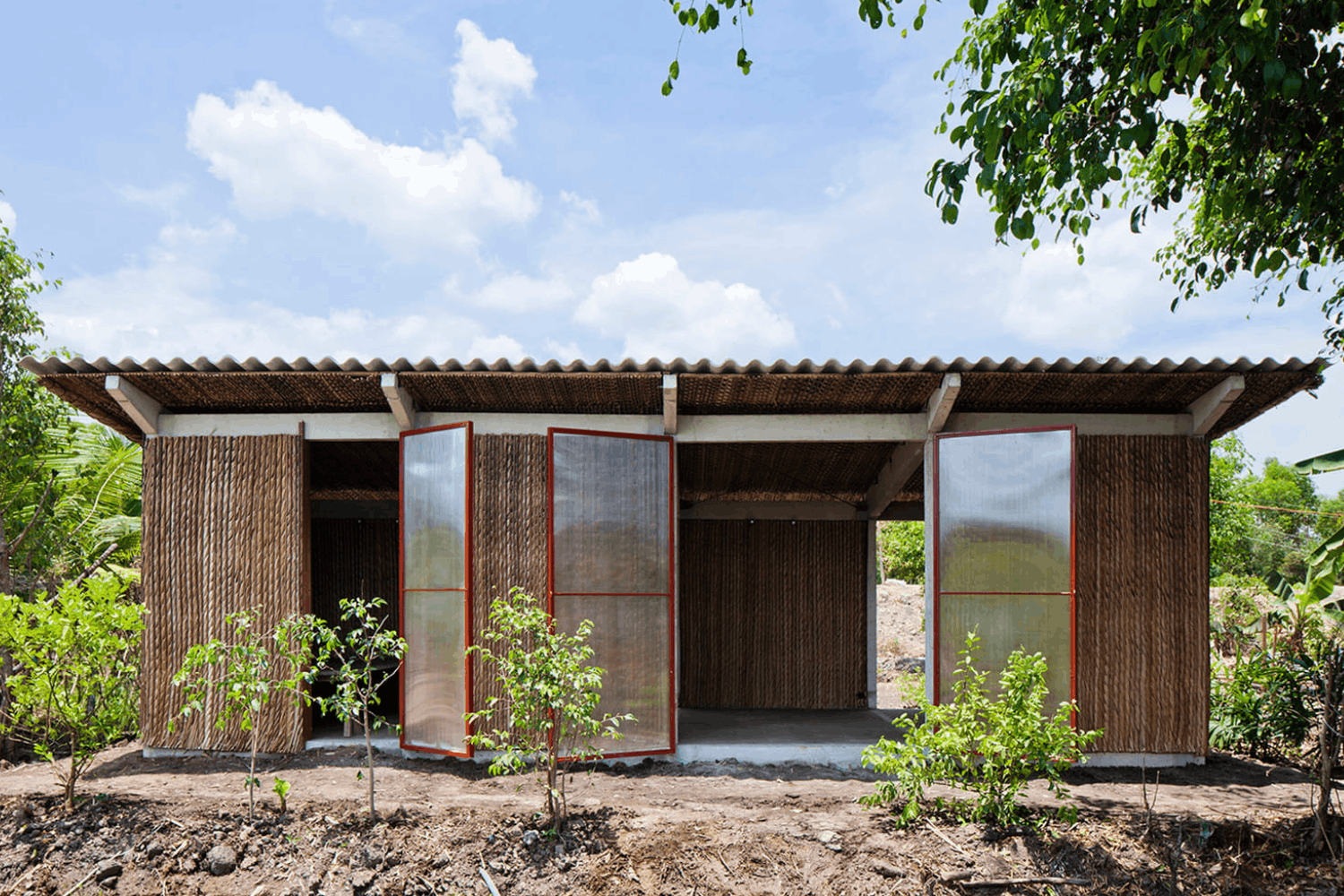
10. S House, Vietnam
Designed by Vo Trong Nghia Architects, the S House is a low-cost, modular dwelling inspired by traditional Vietnamese housing. It employs passive ventilation, lightweight materials, and adaptable layouts suited to tropical climates. Designed for rapid construction and affordability, the project aims to provide dignified housing while preserving vernacular environmental intelligence. The S House demonstrates how contemporary vernacular architecture can address pressing social and housing challenges at scale.
S House by VTN Architects, Credit: Hiroyuki Oki
These ten projects demonstrate that contemporary vernacular architecture is not about nostalgia, but about continuity, adaptation, and relevance. By learning from local materials, climates, and cultural practices, architects create buildings that are sustainable, meaningful, and deeply connected to place. In an increasingly globalized world, vernacular-informed design offers a powerful alternative—one that values identity, resilience, and human experience over uniformity. As these examples show, the future of architecture may well depend on how thoughtfully it engages with its past.
Begum Gumusel is an architecture content editor at illustrarch. She holds a B.Arch from Doğuş University and focuses on visual storytelling, turning projects and design ideas into articles, short-form video, and imagery for the publication's channels.
Upload a sketch, CAD export or 3D model and turn it into a photorealistic architectural render in under 30 seconds. No complex rendering setup, no plugins. Start with 3 free renders.


 Begum Gumusel13 January 20264 Mins read271













 Sinan Ozen8 Mins read
 Elif Ayse Sen6 Mins read
 Furkan Sen8 Mins read


Leave a comment